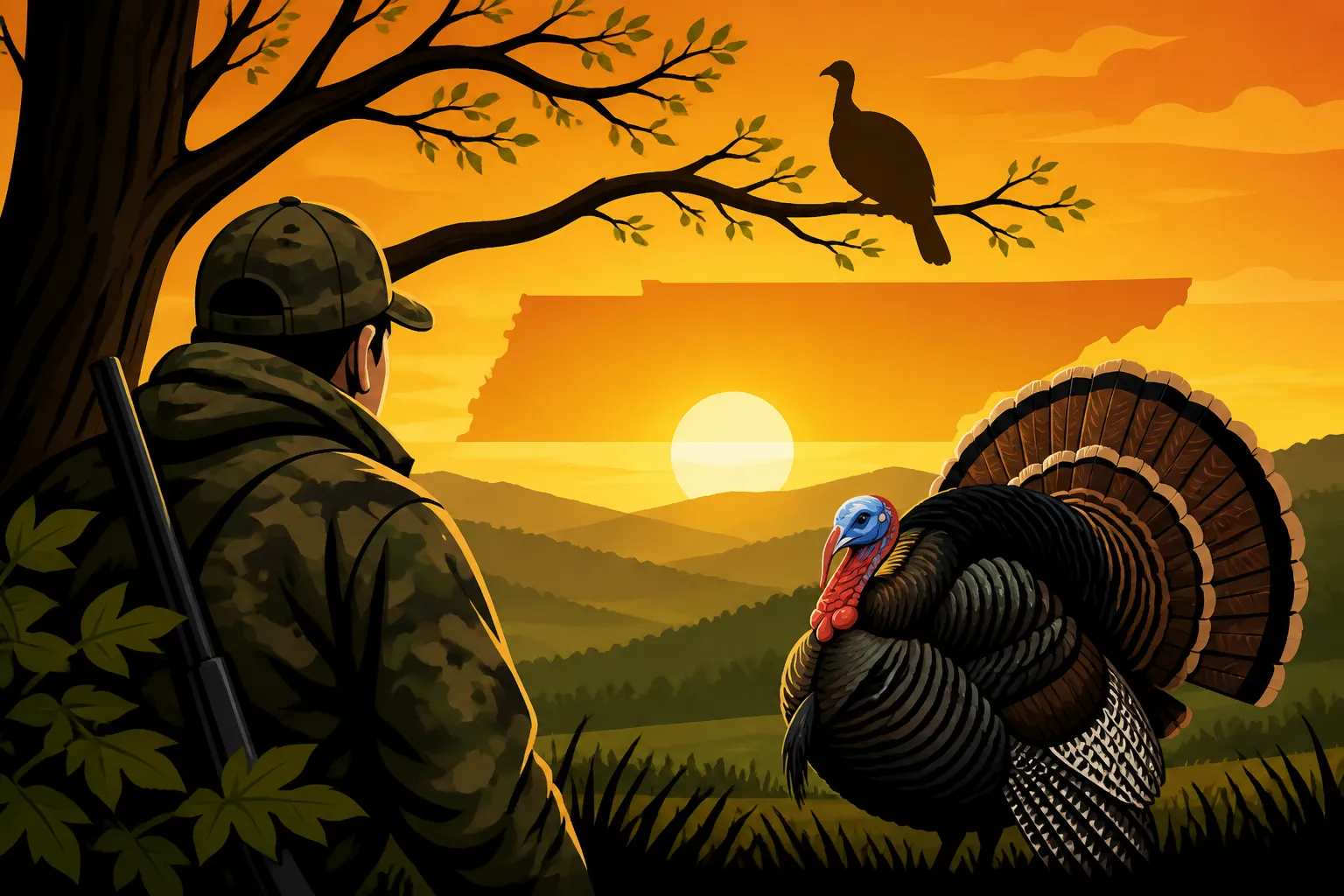
Roost Hunting Tennessee Gobblers
There's nothing quite like that bone-chilling pre-dawn quiet, stumbling through the dark Tennessee woods, only to be jolted by a thunderous gobble directly overhead. That moment is what roost hunting is all about, but getting there consistently, and more importantly, successfully, can be incredibly tricky. This guide is dedicated to helping you unravel the mysteries of where Tennessee gobblers sleep, how to approach them silently, and what to do when that first ray of light hits the treetops.
Understanding Gobbler Roosting Behavior
Before you can effectively hunt a gobbler off the roost, you need to understand why he chooses a particular tree and what factors influence his nightly decisions. It's more than just finding a tall tree; there's a method to their madness.
Why Gobblers Choose Specific Roost Trees
Gobblers, and turkeys in general, don't just pick any old tree to spend the night. They're looking for security and vantage. Often, you'll find them in the tallest trees in a given area, particularly mature hardwoods like oaks or sycamores, especially those with wide, horizontal limbs that offer comfortable perches. These big trees often stand on ridge lines, creek bottoms, or near open fields. The height provides protection from ground predators like coyotes and bobcats, while the open canopy allows them to scan for danger before flying up and down. Think about those big, old "wolf trees" with massive crowns – those are prime roost candidates. They’ll also often choose trees that are somewhat isolated, or on the edge of a field or clearcut, giving them a clear flight path in and out. This preference for specific types of trees and locations is a key piece of information when you're scouting.
Seasonal Changes in Roosting Habits
A gobbler's roosting habits aren't static; they shift throughout the spring turkey season. Early in the season, when temperatures are colder and hens aren't fully committed to nesting, gobblers might roost in larger, more sheltered timber, often congregating in groups. As the season progresses and breeding activity heats up, individual gobblers, or sometimes a gobbler with a few hens, might start roosting closer to areas where they expect to find hens at first light, like feeding areas or strut zones. You might find them closer to agricultural fields or newly greened-up logging roads. Later in the season, as hens begin nesting and become less responsive to gobblers, the birds can become more solitary and less predictable in their roosting, sometimes seeking out denser cover. Understanding these shifts can help you anticipate where to listen and scout.
Impact of Weather and Pressure on Roosting
Weather plays a huge role in where and how gobblers roost. On clear, calm nights, they might be quite vocal flying up and down, and roost in more exposed areas. However, windy, rainy, or foggy conditions can make them choose more sheltered trees, often in dense stands or lower in elevation to escape the elements. Extreme wind can cause them to roost lower to the ground or tuck deeper into thickets. Hunter pressure is another massive factor. If an area gets hit hard, gobblers will become incredibly wary. They might fly up silently, or seek out roosts in the thickest, hardest-to-reach parts of a WMA, far from roads or trails. They might even change their roosting patterns completely if they feel threatened, choosing a different area every night. This is where scouting for fresh sign, rather than relying on old intel, becomes paramount.
Pre-Season Scouting for Roosting Sites
Effective roost hunting doesn't start the morning of the hunt; it begins weeks, or even months, before the season opener. This pre-season work is the difference between a frustrating morning and a successful one.
Locating Potential Roosting Areas on Maps
Before you even step foot in the woods, spend some serious time with a good mapping application like GoHunt. Look for key terrain features that gobblers love. Ridge lines, especially those with mature timber, are prime candidates. River and creek bottoms with large hardwoods, particularly near bends or confluences, are also excellent spots. Identify areas where timber meets open fields, clearcuts, or power lines. These transition zones offer both cover for roosting and open areas for morning strutting. Pay close attention to public land boundaries if you're hunting WMAs or national forest land – sometimes birds will roost just inside public land but fly down to private fields. Mark these potential areas on your map. It gives you a starting point for your on-the-ground efforts. This digital reconnaissance is often the most overlooked, yet most critical, step.
On-the-Ground Reconnaissance and Sign Reading
Once you have your map marked up, it’s time to hit the woods. This is where you confirm your theories. Look for actual turkey sign: droppings, shed feathers, and wing dust. Wing dust marks on the ground directly beneath a roost tree are a dead giveaway, indicating where a bird has flapped its wings upon flying down or up. Look for the "white wash" of droppings on the ground and on limbs. Pay attention to the type and size of trees in these areas; remember, mature hardwoods with wide limbs are favored. You might even find some dusting bowls nearby, which also indicate active turkey use. This is also a good time to identify safe, silent access routes to these potential roosts, and pinpoint good setup locations for the morning hunt. Don't be afraid to walk a little further than you normally would to find these secluded spots, as often the further you get from easy access, the less competition you’ll encounter.
Using Locator Calls at Dusk
The most effective way to pinpoint an actual roost is to be in the woods at dusk and listen for fly-up cackles and evening gobbles. Find a vantage point where you can hear a good distance. As the sun dips below the horizon, try some loud locator calls: owl hoots, crow calls, or even a hawk scream. These calls are designed to trigger a shock gobble without sounding like a hen, which could pull the bird away from its roosting routine. When a gobbler answers, listen intently to triangulate his position. This is how you confirm which tree he's in. Make a mental note or mark it on your GoHunt app. Don't try to get too close on this evening scout; the goal is just to locate, not to engage. If he gobbles once, he might gobble again, so wait a few minutes before calling again. Sometimes just sitting quietly and listening is the best locator call of all.
Here’s a quick overview of common locator calls and their typical range:
| Locator Call Type | Best Use Scenario | Effective Range (Approx.) | Notes |
|---|---|---|---|
| Owl Hooter | Pre-dawn, dusk, calm conditions | Up to 1 mile (calm) | Very effective for prompting shock gobbles. Don't overdo it. |
| Crow Call | Anytime, especially mid-morning | 0.5 – 1.5 miles | Versatile, but can attract real crows, which might spook birds. |
| Hawk Scream | Mid-day, or when birds are quiet | 0.5 – 1 mile | Can be very effective for quiet gobblers, less common. |
| Coyote Howl | Evening fly-up, post-fly-down | Up to 2 miles | Loud and aggressive, can sometimes make gobblers shut up if wary. |
Evening Setup and Roosting Tactics
Once you’ve identified a roosting gobbler, the next critical step is positioning yourself correctly for the morning hunt without alerting him to your presence. This often involves a careful dance of stealth and timing.
Approaching Roost Sites Without Spooking Birds
Approaching a roost site on the evening before the hunt requires extreme caution. You want to get close enough to hear fly-up gobbles and pinpoint the exact tree, but not so close that you alert the bird. Ideally, approach from a downwind direction, using terrain features like ridge lines, creek beds, or dense cover to conceal your movement. Move slowly and deliberately, avoiding crunchy leaves or snapping twigs. It's often better to stop a bit further away than you think you need to be, especially if the woods are dry. If you hear any alarmed putts or see birds flying off, you’re too close. The objective is to listen, confirm, and retreat, or to position yourself in a good setup spot for the next morning. Knowing the terrain from your earlier scouting will be invaluable here.
Effective Locator Calling Before Fly-Up
As the evening light fades and gobblers are preparing to fly up to roost, this is your last chance to confirm their location and gauge their mood. A well-timed series of soft owl hoots or crow calls can often get a gobble, revealing their exact tree. However, resist the urge to overcall. One or two soft gobbles are all you need to confirm. Avoid hen calls entirely at this stage; you don't want to draw him down or disturb his natural roosting behavior. The goal is to simply confirm his location, not to "work" him. Pay attention to the direction of the gobble and visualize his precise spot. Use your GoHunt app to drop a pin. This intel will be gold for your morning setup.
Setting Up for the Morning Hunt
With the gobbler located, your focus shifts to the morning. If you're staying nearby, identify your exact setup location, ensuring you have a clear line of sight in the direction you expect him to fly down. Look for a large tree to sit against for concealment and stability. Consider your backdrop so you don't silhouette yourself against the sky. Plan your entry route for the morning, making sure it’s quiet, avoids any potential obstacles, and keeps you out of the gobbler's direct line of sight. Think about where he'll fly down and where he'll likely walk after. Often, they'll fly down into an open area or along a logging road. Position yourself to intercept him there. This forward planning is crucial, as you won't have much time to adjust in the dark.
Morning Approach and First Light Strategy
The pre-dawn hours are where the magic happens, but also where the most mistakes are made. A silent approach and a well-executed calling sequence are paramount to success.
Silent Entry to Your Predetermined Setups
This is arguably the most critical part of roost hunting. You need to arrive at your pre-scouted setup location well before first light, typically an hour before official sunrise, without making a sound. Use a headlamp with a red or green light setting to preserve your night vision and reduce your visibility to wary birds. Move slowly, placing each foot carefully, avoiding crunching leaves, snapping twigs, or stumbling over roots. If you parked close, you might still need to walk a considerable distance in the dark. Consider wearing soft-soled boots or even moccasins for the last hundred yards. Your goal is to melt into the landscape, becoming part of the woods before the gobbler even knows you're there. If you're still walking and hear him gobble on the roost, freeze and listen. It might be too late to get to your exact spot, so find the best cover immediately. Remember the lessons learned when Finding Ground Others Walk Past – often the quieter, harder-to-reach spots hold the most consistent birds.
First Light Calling Sequences
Once you’re settled in your spot, it's a waiting game. As the first hint of gray appears in the eastern sky, resist the urge to call immediately. Listen for the subtle sounds of the woods waking up, and especially for the gobbler himself. He'll usually gobble on his own a few times as it gets lighter. Let him announce his presence. After his first few gobbles, if he's not hammering, offer a very soft, subtle tree yelp or cluck. Just enough to let him know a hen is nearby. The key is to sound natural, like a hen just waking up on the roost. As it gets brighter and he gobbles more aggressively, you can increase the volume and realism of your calling. A sharp gobble followed by an excited yelp can be incredibly effective. However, never overcall. Let him dictate the conversation. A good strategy is to offer some soft yelps, wait for him to gobble, and then go silent for a few minutes, making him wonder where the hen went. This often makes him eager to fly down in your direction. For a more detailed look at this specific technique, check out our guide on Calling a Tennessee Gobbler Off the Roost.
What to Do When He Fly-Downs in the Wrong Direction
Ah, the classic punch to the gut. You’ve done everything right, he’s hammering on the limb, and then he flies down 100 yards behind you or off to the side, heading in the opposite direction. Don’t panic. Your first instinct might be to move, but often this is a mistake, especially if he’s still within hearing range. If he’s already on the ground and moving away, your chances of stopping him by calling are lower, but not impossible. Try a soft, enticing series of clucks and yelps, perhaps a contented hen sequence, to make him reconsider. If he’s completely out of sight and hearing, and you know he’s not with hens, you might be able to execute a slow, silent move to get ahead of him. However, this is risky. A better strategy often involves sticking with your setup, continuing to call subtly, and waiting him out. Many times, a gobbler will loop back around if he doesn't find the hen he heard. If you're on a ridge, consider how Wind and Thermals on a Ridge System might be affecting his movement or your ability to hear him. Sometimes, you just need to wait until he comes back around, or until the heat of the morning pushes him towards your location.
Troubleshooting and Adapting to Roost Hunting Challenges
Even with the best planning, roost hunting for Tennessee gobblers can throw curveballs. Knowing how to adapt on the fly is essential for consistent success.
Dealing with Silent Birds
One of the most frustrating scenarios is a "silent" gobbler. He gobbles on the roost, flies down, and then goes completely quiet, offering no more gobbles to guide you. This often happens if he has hens with him, or if he’s been heavily pressured. When this occurs, don't keep hammering on your call. Instead, go silent yourself and listen intently. He might be sneaking in silently, hoping to catch the hen off guard. Use your eyes, scanning for any movement. You might catch a glimpse of him strutting in the distance. If you don't see or hear anything after a good 15-20 minutes, try a very soft, contented cluck or purr – something that suggests a relaxed hen. If still nothing, it might be time to switch to a more aggressive tactic like "run-and-gun" calling. This involves slowly moving through the woods, calling every 100-150 yards, trying to strike a shock gobble. This is especially useful on large public tracts like those where Run-and-Gun Turkey Tactics on Public Land are often employed.
Managing Pressure from Other Hunters
Tennessee public land, especially on opening day or during peak season, can feel like Grand Central Station. Other hunters are a huge factor in roost hunting. If you know an area is likely to have other hunters, plan to get there even earlier, or seek out less accessible spots that others might overlook. If you hear other hunters calling or talking, try to move away from them, or find a natural barrier like a creek or a thicket to separate yourself. Never "cut" another hunter off if you know they're working a bird. If a gobbler flies down to another hunter's calls, accept it and move on. You can often salvage a morning by simply walking away from the noise and finding fresh ground. This is where having multiple scouted roost sites comes in handy – if one gets blown out, you have a backup plan. Always prioritize safety and respect for fellow hunters.
When to Change Your Strategy Mid-Morning
Sometimes, despite your best efforts, the roost hunt just doesn't pan out. Maybe the gobbler flew down with hens and disappeared, or he went completely silent. Don't waste the entire morning sitting in a dead spot. Mid-morning, after the initial roost excitement has faded, can actually be a very productive time to hunt. This is when gobblers might be on the move, looking for hens that have finished nesting or are taking a break from their nests. This is a great time to implement Turkey Tactics for Farmland Field Edges if you have access to such areas, or to move to known strutting zones or dusting areas. Consider covering ground, using locator calls intermittently, and trying more aggressive calling sequences. Sometimes, a jake or even a sub-dominant gobbler will respond later in the morning when the pressure is off and the dominant bird is busy elsewhere. Don't be afraid to leave your initial roost spot and embark on a new hunting adventure if the first hour or two yield no results.
Gear and Calls for Roost Hunting
Having the right equipment can make your roost hunting experience much more comfortable and effective, especially when you're moving silently in the dark or sitting for extended periods.
Essential Roost Hunting Gear
Beyond your shotgun and ammunition, a few pieces of gear are non-negotiable for roost hunting. First, a reliable headlamp with a red or green light option is essential for navigating in the dark without spooking birds or ruining your night vision. Next, good camouflage, ideally suited to the Tennessee spring woods – blends with greens, browns, and grays. Layers are key, as mornings can be chilly but warm up quickly. A comfortable turkey vest with a kickstand seat is invaluable for sitting against a tree for extended periods. Binoculars can help you spot subtle movement in the dim light or confirm a bird's identity from a distance. Finally, a compact rangefinder can be crucial for confirming shot distances, especially when a gobbler hangs up just outside what you thought was range. For detailed recommendations on the best equipment, our guide on Turkey Gear for a Tennessee Spring has you covered.
Locator Calls and Their Strategic Use
We've touched on locator calls, but let's dive a bit deeper. Owl hoots are fantastic for pre-dawn and dusk, sounding natural and often prompting a shock gobble. Crow calls are versatile and can be used throughout the morning to get a bird to gobble without alarming them with hen sounds. Hawk screams are less common but can sometimes trigger a gobble from a bird that's heard everything else. The key is knowing when to use them and how much. Early in the morning, before fly-down, you want just enough volume to get a gobble and pinpoint the bird, then go silent. Mid-morning, if birds are quiet, you can be a bit more aggressive. Remember, you're trying to elicit a shock gobble, not draw the bird to you.
Shotguns and Chokes for Close-Range Encounters
For roost hunting, where shots can sometimes be unexpectedly close or in heavy timber, your shotgun and choke setup are critical. Most turkey hunters opt for 12 or 20 gauge shotguns, often with specialized turkey loads like those from Winchester, Federal, or Apex. These loads, often containing heavy shot like #5 or #6 lead, or tungsten super shot (TSS), offer dense patterns and extended range. A tight turkey choke, typically a .660-.675 constriction, is essential to keep that pattern dense for head and neck shots. Pattern your shotgun beforehand at various distances (20, 30, 40 yards) to know your effective range. Sometimes, the bird will fly down and immediately be within 20 yards, so being comfortable with a close shot is just as important as being able to reach out to 40. Knowing your pattern intimately will boost your confidence when that moment of truth arrives.
Disclaimer
Hunting involves inherent risks, including injury and death. Always prioritize safety, follow all local and state regulations, and ensure you have the proper licenses and permits before heading afield. The information provided here is for educational purposes and should not replace professional safety instruction or official Tennessee Wildlife Resources Agency (TWRA) guidelines.