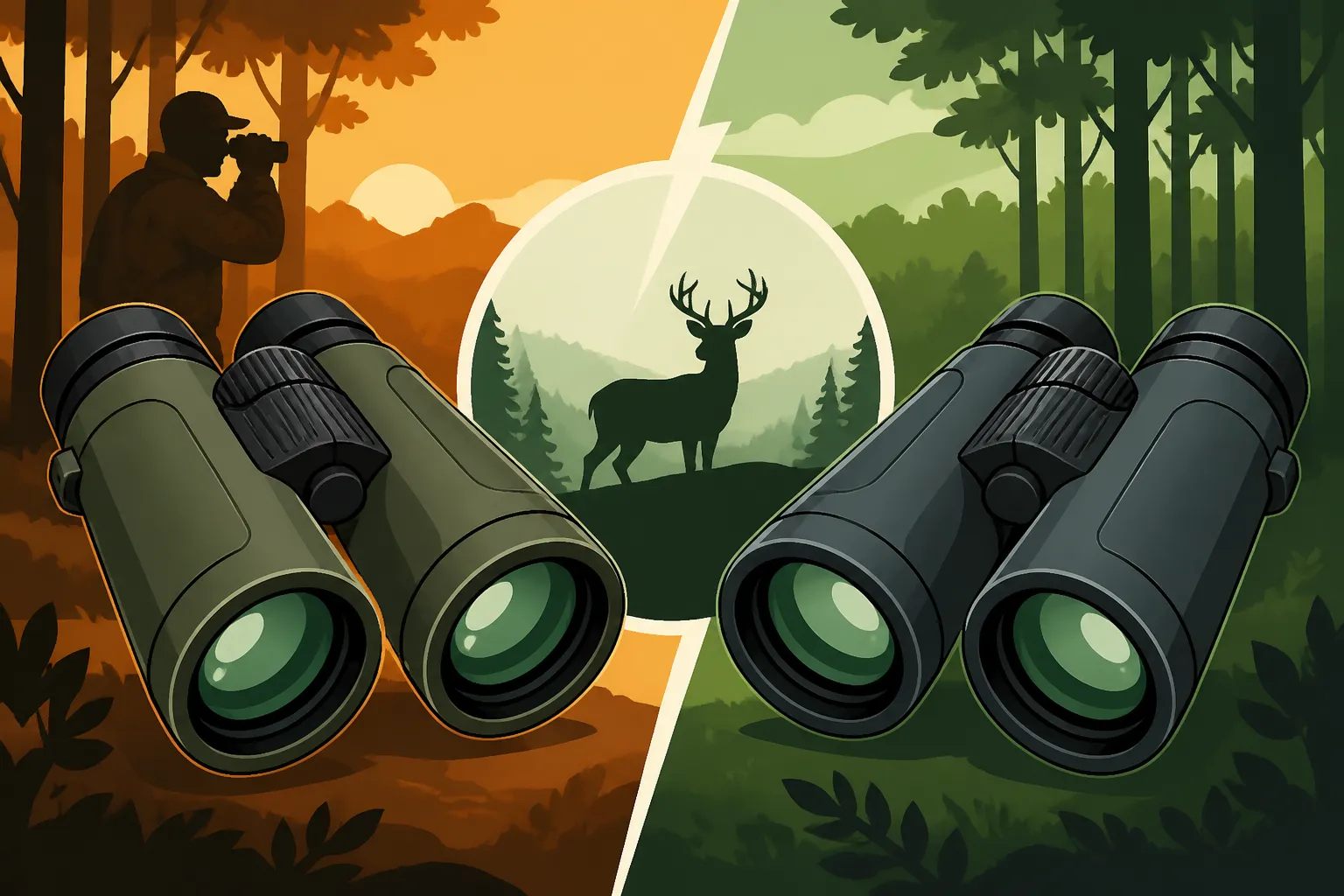
8×42 Versus 10×42 in the Woods
Choosing the right set of binoculars can sometimes feel like trying to pick out a needle in a haystack, especially when you're standing in the store staring at all those numbers. For us Tennessee hunters, who face everything from dense mountain laurel thickets to wide-open soybean fields, the age-old question of 8×42 versus 10×42 isn't just a technical detail – it's a practical dilemma that can seriously impact your success in the woods. This guide aims to demystify those numbers and help you decide which binocular setup will best serve you on your next Tennessee hunt.
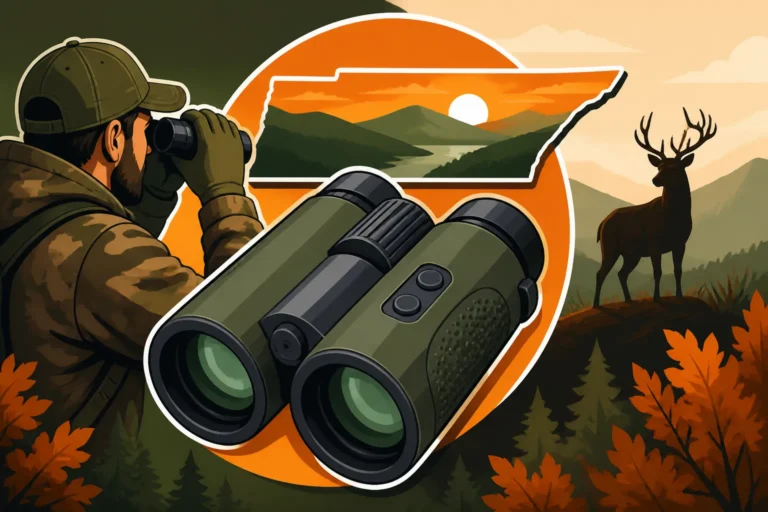
Understanding the Binocular Numbers: 8×42 and 10×42 Explained
Before we dive into the nitty-gritty of why one might be better than the other for a specific hunting scenario in Tennessee, let's break down what those numbers, like "8×42" or "10×42," actually mean. It’s not just tech jargon; it’s fundamental to understanding how these tools perform in your hands.
What Do the Numbers Mean?
The first number, in this case, "8" or "10," refers to the magnification power of the binoculars. Simply put, an 8x binocular makes objects appear eight times closer than they would to the naked eye, while a 10x binocular makes them appear ten times closer. So, if a deer is 800 yards away, an 8x binocular makes it look like it's 100 yards away, and a 10x binocular brings it down to 80 yards. That difference of 2x might not seem like much on paper, but in the field, it can be significant.
Higher magnification brings objects seemingly closer, which sounds great, right? But there's a trade-off. Increased magnification usually means a narrower field of view (how wide of an area you can see at a given distance). It also amplifies any hand shake, making the image harder to hold steady. This is a critical consideration for us hunters who are often glassing while standing, leaning against a tree, or in less-than-ideal positions. Trying to pick out a subtle flick of an ear through shaky optics can be downright frustrating.
The Importance of Objective Lens Diameter
The second number, "42," refers to the diameter of the objective lens (the large lenses at the front of the binoculars) in millimeters. For both 8×42 and 10×42 models, this number is the same, indicating a relatively standard and versatile lens size. The objective lens's primary job is to gather light. The larger the diameter, the more light it can collect, which is absolutely crucial for visibility during those prime hunting hours: dawn and dusk.
In Tennessee, where we often find ourselves deep in shaded hollers or under a thick canopy of oaks in the Cherokee National Forest Hunting, maximizing light gathering is paramount. A 42mm objective lens strikes a really good balance between light transmission and the overall size and weight of the binoculars. You could go bigger, say 50mm, but then you’re lugging around bulkier, heavier optics, which isn't always practical when you're Still-Hunting Cumberland Plateau Ridges or covering miles on public land. So, while the 42mm is a constant in this comparison, its efficiency in gathering light is a huge factor in why both 8x and 10x models with this size lens are so popular among hunters.
The Case for 8×42 Binoculars in Tennessee's Diverse Terrain
When you're out in the Tennessee woods, sometimes less magnification actually means more effective hunting. The 8×42 binocular is often underestimated, but it truly shines in many of our state's common hunting scenarios.
Wider Field of View and Enhanced Stability
One of the biggest advantages of an 8×42 binocular is its wider field of view. Imagine you're sitting in a ground blind near a food plot, or slowly still-hunting through a thick pine plantation. With an 8x, you can scan a much broader area at once. This is invaluable when you're trying to locate a deer that might be moving through dense cover or when you're tracking an animal that just slipped out of sight. That extra peripheral vision can make the difference between spotting a twitching ear or completely missing the deer altogether. For hunters who spend a lot of time in the relatively tight quarters of Tennessee's hardwoods or brushy areas, like when Hunting West Tennessee Bottomland Deer, that wider view helps you pick up movement quicker without constantly panning your binoculars.
Furthermore, the lower 8x magnification means significantly enhanced stability. It's just easier to hold steady. You'll notice less image shake, especially if you're out of breath after a hike or simply trying to glass from an awkward position. This reduced shake translates into a clearer, more comfortable viewing experience over extended periods. You can glass for longer without eye strain or fatigue, which is a huge benefit when you're patiently waiting for movement or trying to pick apart a distant hillside. This stability also makes quick target acquisition much faster – you can throw them up, find what you're looking for, and put them back down with less fumbling.
Low-Light Performance and Ease of Use
While both 8×42 and 10×42 binoculars have the same objective lens size, the 8x model often feels brighter in low-light conditions. This is due to a larger exit pupil, which is the beam of light that exits the eyepiece and enters your eye. To calculate it, you divide the objective lens diameter by the magnification. For an 8×42, that's 42/8 = 5.25mm. For a 10×42, it's 42/10 = 4.2mm.
A larger exit pupil means that more light is delivered to your eye, especially when your pupils are dilated in dim light (like at dawn or dusk). This translates to a brighter image and often a perceived advantage during legal shooting hours when deer are most active in Tennessee's shadowy woods. That extra bit of brightness can help you discern details in the fading light, giving you precious extra minutes of effective glassing time.
Beyond brightness, the 8×42 is generally more forgiving and easier to use. The larger exit pupil means you don't have to perfectly align your eye with the optics to get a full, clear image. This "eye relief" is a subtle but important factor, especially if you wear glasses or if you're in a hurry to get the binoculars up to your eyes. For many hunters, especially those who prioritize comfort and quick, efficient scanning in varied Tennessee environments, the 8×42 is often the unsung hero.
The Advantage of 10×42 Binoculars for Longer Views
Now, let's talk about the 10×42. While the 8×42 excels in close to medium range, the 10×42 steps up when you need to reach out and touch something with your eyes, making it an invaluable tool for certain Tennessee hunting scenarios.
Increased Magnification for Distance and Detail
The primary draw of a 10×42 binocular is, undeniably, its increased magnification. When you're glassing across a vast agricultural field in West Tennessee or trying to pick apart a distant ridge line on the Cumberland Plateau, that 10x power truly shines. It allows you to resolve finer details at greater distances, which is critical for identifying game, discerning antler points, or confirming whether that distant dark spot is indeed a deer or just a stump.
Imagine you're trying to count points on a buck that's just inside the timber line 300 yards away, or you're Glassing a North Cumberland Elk Meadow from a couple of miles off. The 10x will give you that extra reach, that added clarity to make a confident identification. While it comes with a narrower field of view and is more susceptible to hand shake, the ability to zoom in and examine an animal without disturbing it is a significant advantage, especially in open country or when you’re hunting a specific type of animal, like a mature buck with a certain rack configuration. For serious trophy hunters or those who often hunt expansive terrains, the detail provided by 10x can be a game-changer.
Best Scenarios for 10×42 in Tennessee
So, where does the 10×42 truly come into its own in the Volunteer State? Think about our varied landscapes. If you're hunting the open farm country of West Tennessee, where deer might be feeding in a cut cornfield or a distant soybean field, a 10x binocular is invaluable. It helps you pick out deer at range, assess their size, and plan your approach. Similarly, when you're hunting the Cumberland Plateau, with its long views and deep hollows, being able to glass a facing ridge or a distant power line cut with 10x magnification gives you a distinct advantage. This is especially true when you're doing some serious scouting, trying to locate bedding areas or travel corridors from a vantage point. Scouting Tennessee Public Land Before Season often involves long-distance observation, and a 10x provides that necessary detail.
Another prime example is elk hunting in the North Cumberland Wildlife Management Area. These animals are massive and can cover ground quickly. Being able to spot an elk at distance, distinguish it from a bear, and assess if it's a bull or cow requires that extra magnification. For situations like Reading a Ridge for East Tennessee Deer where you're picking apart a complex landscape for subtle signs, the 10x can reveal those nuances. If your primary hunting style involves sitting and observing large areas, perhaps from a Treestand Setups in Cherokee National Forest or a stationary position overlooking a food plot or Hunting a Standing Cornfield in Farm Country, the 10×42 will serve you incredibly well, allowing you to thoroughly scrutinize the terrain.
Making Your Decision: 8×42 vs. 10×42 for Your Tennessee Hunt
Ultimately, there's no single "best" binocular for every hunter in every situation. The choice between an 8×42 and a 10×42 depends heavily on your personal hunting style, the specific terrain you frequent, and your individual preferences.
Matching Magnification to Your Primary Hunting Style
The most crucial step in making this decision is to honestly assess your primary hunting style and the environments you hunt most often.
- For the "Woods Hunter": If you spend most of your time in dense woods, still-hunting through thick timber, or setting up in areas where your shots or observations will be relatively close (under 150-200 yards), an 8×42 is likely your best friend. Its wider field of view helps you find game quickly in thick cover, and its increased stability is a blessing when trying to pick apart shadows in dim light. This is often the case for those hunting the Hunting West Tennessee River Bottoms or most of our smaller, thick public land tracts.
- For the "Open Country Hunter": If you hunt more open terrain, such as large agricultural fields, powerline cuts, clear-cuts, or expansive ridge systems where you need to glass long distances to spot game (200+ yards), then the 10×42 will give you the edge. The added magnification allows you to evaluate animals more thoroughly before committing to a stalk or confirming a target. When you're out Hunting the Cumberland Plateau or observing from afar for Late-Season Food Sources for Tennessee Whitetails, the 10x really shines.
Think about how you use your binoculars. Are you constantly scanning for brief glimpses of movement? Or are you settling in for long periods, meticulously studying distant features? This self-reflection, perhaps even using a mapping tool like those offered by GoHunt to visualize the terrain you frequent, can provide invaluable insight.
Factors Beyond Magnification: Weight, Price, and Ergonomics
While magnification is what we've been focused on, it's important to remember that it's only one piece of the puzzle. When evaluating binoculars, consider these other factors:
- Optical Quality: This is arguably more important than magnification alone. A high-quality 8×42 binocular with superior glass, coatings, and prism design will almost always outperform a cheap 10×42 with inferior optics. Good glass transmits more light, offers better clarity, and provides truer colors. Don't compromise on quality just for a higher magnification number.
- Weight and Size: Both 8×42 and 10×42 models typically come in very similar form factors and weights, usually around 20-30 ounces. This makes them relatively easy to carry around your neck or in a bino harness all day. Larger objective lenses (e.g., 50mm) will add noticeable weight and bulk, which might be a factor if you're putting on a lot of miles.
- Ergonomics: How do they feel in your hands? Can you comfortably hold them steady? Do the focus wheel and diopter adjustment work smoothly? These seemingly minor details contribute significantly to your overall satisfaction and effectiveness in the field. Go to a store and try them out. Walk around with them. You'd be surprised how much difference a good fit makes.
- Budget: Binoculars range from budget-friendly to high-end luxury. Establish what you're willing to spend, and then look for the best optical quality within that range. Remember, this is an investment in your hunting success and enjoyment.
Here's a quick comparison table to help summarize the pros and cons:
| Feature | 8×42 Binoculars | 10×42 Binoculars |
|---|---|---|
| Magnification | 8x (objects appear 8x closer) | 10x (objects appear 10x closer) |
| Field of View | Wider, easier to scan large areas, find moving targets | Narrower, requires more panning, harder to find movement |
| Stability | More stable, less hand shake, easier to hold steady | More susceptible to hand shake, harder to hold steady |
| Low Light | Larger exit pupil, often perceived as brighter, more forgiving for eye placement | Smaller exit pupil, can be slightly dimmer, requires precise eye alignment |
| Detail at Dist. | Good up to moderate distances | Excellent for discerning fine details at longer distances |
| Ideal For | Thick timber, still-hunting, fast target acquisition, close-to-medium range | Open fields, long-range glassing, identifying distant animals, scouting large areas |
| Tennessee Use | Thick woods, Reading a Ridge for East Tennessee Deer in dense sections, still-hunting bottomlands | Open farm fields, Optics for Cumberland Plateau Ridges, elk hunting, long-range scouting |
When you consider the diverse hunting opportunities across Tennessee, from the deep woods of the Smokies to the expansive fields of West Tennessee, having the right optics can truly enhance your experience. Don't just pick a number; pick the tool that best suits your adventure. Consider how Wind and Thermals on a Ridge System might affect your ability to get close to game, making longer-range glassing more appealing, or how the dense cover you hunt necessitates a wider field of view. The right choice will feel intuitive and become an extension of your hunting senses.
Disclaimer
This article is for general informational purposes only and does not constitute professional advice. Laws, prices and regulations vary by location and change over time. Consult a qualified professional for guidance on your specific situation.