Rangefinding Binoculars Worth the Cost
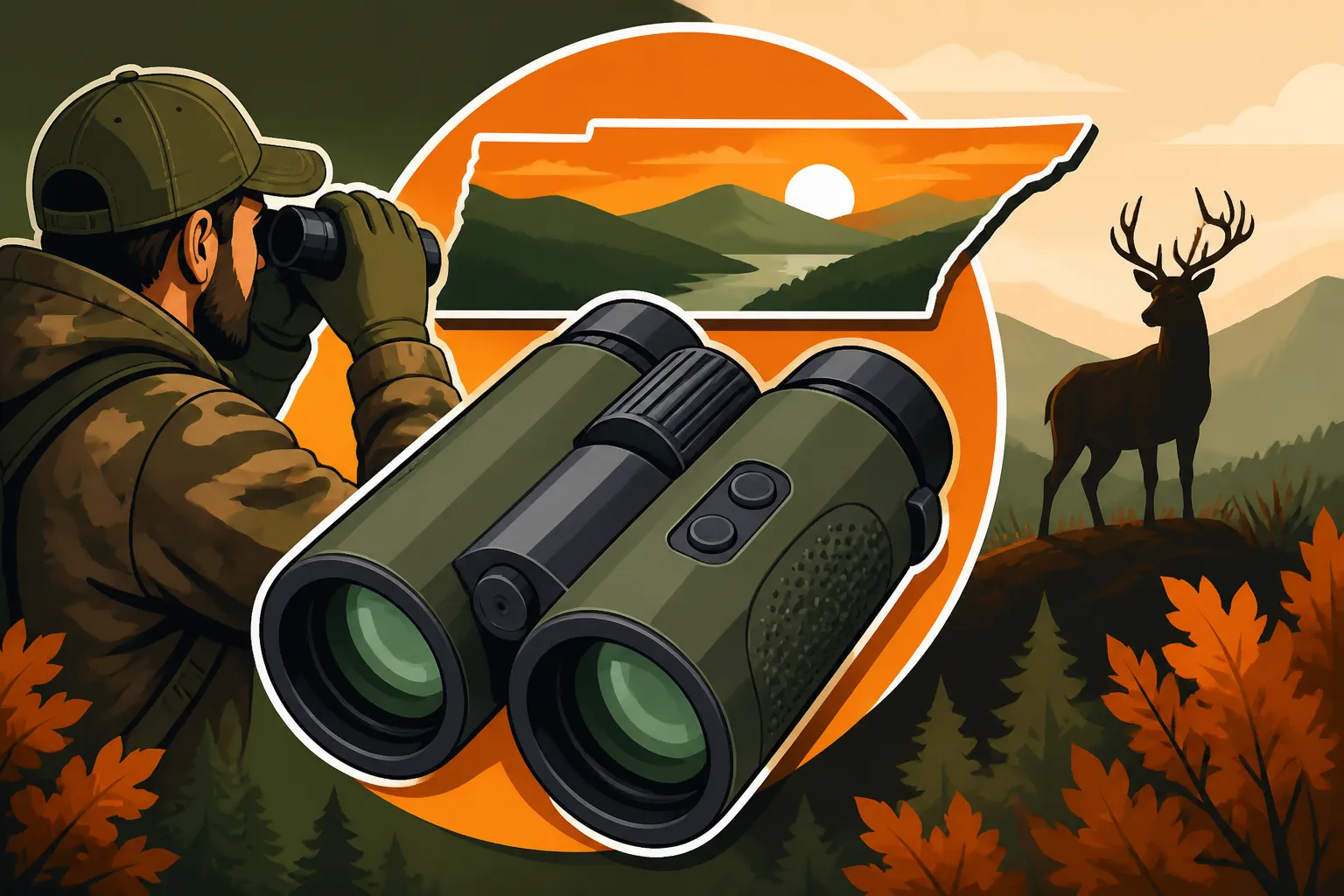
Oh, the age-old dilemma of carrying too much gear into the Tennessee woods! Every hunter knows the feeling: you’re trying to move light and quiet, but your pack feels like it's holding a brick, and your neck is aching from peering through binoculars, then fumbling for a separate rangefinder. It's a dance many of us perform, often leading to missed opportunities or just plain frustration. But what if you could have the best of both worlds, combining critical optics into one sleek, efficient unit? That's exactly the promise of rangefinding binoculars, and in this guide, we're going to dive deep into whether they truly live up to the hype and if they're a worthwhile investment for your Tennessee hunting pursuits.
The All-in-One Advantage Combining Your Optics
Let's be honest, we all love our gear. But there's a point where "having it all" turns into "carrying it all," and that's when things get cumbersome. Rangefinding binoculars aim to solve this by consolidating two essential pieces of equipment into one.
Streamlining Your Pack and Workflow
Think about your typical morning hunt. You're trying to locate that elusive buck in a field edge or spot a gobbler strutting across a distant ridge. First, you pull out your binoculars to scan. You spot something interesting, but now you need to know the distance. So, you lower your binos, reach for your rangefinder, pull it up, get a reading, then maybe go back to your binos to confirm. That's a lot of motion, a lot of time, and a lot of potential to spook game.
With rangefinding binoculars, that entire process is condensed into one fluid motion. You bring them up, glass, and with a simple push of a button, you have your range. This not only cuts down on unnecessary movement but significantly reduces the overall weight and bulk you're carrying. Every ounce counts when you're hiking into a remote area of the Cherokee National Forest Hunting or still-hunting those steep Cumberland Plateau Ridgelines. A single unit means one less item banging around in your pack or swinging from your neck.
Speed and Efficiency in the Field
In hunting, speed often equals success. Whether it's a whitetail pausing for just a moment before slipping into thick cover, or an elk stepping out onto a distant clearing, you often have a tiny window to get a range and make a decision. That fumbling sequence we just talked about? It eats into that critical time.
Rangefinding binoculars allow for lightning-fast target acquisition. Your eyes are already on the target through the high-quality glass, and the range appears almost instantly within your field of view. This efficiency is invaluable, especially in dynamic hunting situations. Imagine a big buck stepping into a shooting lane on a frosty November morning. You don't want to waste precious seconds swapping gear. Being able to range that deer immediately can be the difference between a successful harvest and watching its tail wave goodbye. This seamless transition is a huge confidence booster, letting you focus more on the shot and less on your gear.
Understanding the Technology Behind Rangefinding Binoculars
So, how do these magical devices actually work? It’s not just a fancy gimmick; there’s some serious optical and electronic engineering at play that brings these two tools together.
How the Laser and Display Work
At the heart of any rangefinding binocular is a precision laser and an integrated display system. When you press the button, a nearly invisible laser beam is emitted, traveling at the speed of light to your target. This beam then reflects off the target and returns to the unit's receiver. The binocular's internal processor measures the tiny fraction of a second it took for the laser to make this round trip, and using a simple calculation, determines the distance.
The resulting range is then projected onto a small, internal display, typically an LED or OLED screen, visible within one of the eyepieces. This display is often crisp and clear, providing not just the line-of-sight distance but often also an angle-compensated distance – a crucial feature when shooting uphill or downhill, which is a common scenario in many parts of Tennessee. This angle compensation gives you the "true horizontal distance" to the target, which is what your bullet or arrow will actually respond to.
Key Features and Modes to Look For
Not all rangefinding binoculars are created equal, and understanding the features can help you pick the right tool for your specific hunting style. Beyond the basic range, look for advanced modes that enhance their utility. Angle compensation, as mentioned, is paramount for rifle hunters and especially bowhunters taking shots from a Treestand Setups in Cherokee National Forest. A downhill shot at 30 yards line-of-sight is not the same as 30 yards horizontal, and misjudging that can lead to a missed shot.
Another incredibly useful feature is "scan mode." Instead of getting a single, static reading, scan mode allows you to continually range as you pan across terrain or track a moving animal. This is fantastic for Scouting Tennessee Public Land Before Season to get a feel for distances or when a deer is walking through patchy timber. Some units also offer different reticle options or brightness settings for the internal display, allowing you to customize it for varying light conditions. The magnification power is also important, with 8x and 10x being common choices, each offering a trade-off between wider field of view and magnified detail.
Practical Performance in Tennessee's Diverse Terrain
Tennessee offers such a wide variety of hunting landscapes, from the rolling hills of the Highland Rim to the steep Appalachian ridges and the flat, sprawling agricultural lands of West Tennessee. Rangefinding binoculars truly shine across this diverse topography.
Ranging Across Open Ridges and Fields
Imagine you're perched on a high point of the Cumberland Plateau, glassing a distant clear-cut or a logging road winding through the timber. Spotting a deer at 500 yards is one thing; knowing if that ravine is at 250 or 350 is another. This is where rangefinding binoculars really prove their worth. You can scan, spot, and range without breaking your glassing rhythm.
In open country, like the vast bean fields or cut corn of Hunting West Tennessee Bottomland Deer, the ability to quickly get an accurate read on a deer that might be several hundred yards away is critical. These distances can be deceptive, and without a precise range, estimating could mean a clean miss. High-quality rangefinding binos with good reflective capabilities can pick up deer-sized targets at impressive distances, giving you the confidence to know exactly how far that buck is standing from your fence-row setup. Tools like GoHunt can help you scout these open areas digitally beforehand, making your field ranging even more effective.
Navigating Thick Cover and Broken Ground
While long-range performance is great, much of Tennessee hunting involves dense woods and broken terrain. Think about the tight timber of the Cherokee National Forest or the creek bottoms of Middle Tennessee. Here, shots are often much closer, but the ability to quickly get a range through a maze of branches and undergrowth is just as important. Rangefinders in Thick Cumberland Cover can be notoriously tricky, but good rangefinding binoculars are designed to cut through some of that optical clutter.
Their speed is a massive asset when a deer appears suddenly, or you’re trying to pick a lane through limbs. You don't have time to fumble. The integrated unit lets you stay focused on the animal, quickly getting the distance before it ducks behind a thicket. This capability is especially beneficial when hunting areas where bucks might bed just over a ridge or in a small thicket, forcing you into close-quarters engagements. Being confident in your yardage, even at 40 or 60 yards in dense woods, can prevent a wounded animal and ensure an ethical shot.
Low Light and Early Morning Scenarios
The best hunting often happens during the "golden hours" – dawn and dusk. These are also the times when optical performance is pushed to its limits. Many of us know the frustration of peering through a budget optic as the light fades, trying to discern antler points or confirm a shot placement.
High-quality rangefinding binoculars typically boast excellent low-light performance, thanks to superior glass and coatings. This means you’re not just getting a range, but you’re getting a clear, bright image that allows you to confidently identify your target even when shadows are long. The internal display for the range is also designed to be visible without washing out your field of view or being too dim to read. This combination of stellar glass and integrated ranging capability ensures that you’re not only seeing the deer but also knowing its precise distance, right when it matters most – at the very beginning or end of legal shooting light.
| Feature / Benefit | Traditional Setup (Binos + Rangefinder) | Rangefinding Binoculars |
|---|---|---|
| Weight & Bulk | Two separate units, often requiring two cases/attachments. | One integrated unit, streamlined and lighter overall. |
| Speed in Field | Requires swapping between devices, more movement, takes longer to range. | Instantaneous ranging while glassing, minimal movement. |
| Optical Quality | Varies depending on individual bino choice. | Often features high-quality glass, optimized for clarity. |
| Angle Compensation | Available in most modern rangefinders, but separate step. | Integrated seamlessly into the display with the range. |
| Cost | Can be lower for entry-level models, but high-end can match integrated. | Generally a higher upfront investment for quality models. |
| Fumbling Risk | Higher risk of dropping or fumbling one unit while switching. | Lower risk, one item to manage. |
| Battery Life | Two sets of batteries to manage. | One battery, often good for thousands of readings. |
Is the Investment Truly Worth It for Tennessee Hunters?
This is the million-dollar question, right? High-quality rangefinding binoculars aren't exactly cheap, and for many hunters, it represents a significant investment. Let's break down if that cost truly translates into value for your Tennessee hunting adventures.
Weighing the Benefits Against the Cost
Yes, the initial sticker shock for a good pair of rangefinding binoculars can be real. You might think, "I could buy a decent rifle for that price!" And you're not wrong. However, it’s important to look beyond the immediate price tag and consider the long-term value. You're not just paying for a rangefinder; you're investing in premium glass, advanced laser technology, robust construction, and, perhaps most importantly, efficiency and confidence in the field.
For many, the convenience, speed, and reduced bulk are worth every penny. Think about how many times you’ve fumbled for your rangefinder, or how much more comfortable your neck will be after a long day of still-hunting. The ability to quickly and accurately range an animal, especially under pressure, can make the difference between success and failure. Consider the durability too; reputable brands often build these units to withstand the rigors of serious hunting in all weather conditions, something crucial when you're caught in a sudden rain shower on the Hunting Cumberland Plateau Ridgelines.
Who Benefits Most from This Upgrade?
While any hunter can appreciate the advantages, some benefit more than others. If you're a serious whitetail hunter who spends a lot of time glassing and ranging, especially across varied terrain like those big elevation changes in East Tennessee, then these are a game-changer. For those who chase Tennessee's Restored Elk Herd on North Cumberland, where long-range glassing and accurate ranging in steep, broken country are paramount, rangefinding binoculars are almost a necessity. When you’re Calling a North Cumberland Bull Elk, knowing your distances instantly is critical.
Bowhunters also find immense value, as precise yardage is absolutely non-negotiable for ethical archery shots. If you prioritize moving light and fast, like for a run-and-gun turkey hunt in the spring or when you're trying to Find Ground Others Walk Past on pressured public land, shedding extra gear is a huge plus. Ultimately, if you value precision, efficiency, and a streamlined setup that allows you to focus purely on the hunt, then rangefinding binoculars are definitely something to seriously consider.
Maximizing Your Rangefinding Bino Purchase
Once you've made the investment, how do you make sure you're getting the most out of them? First, practice, practice, practice! Get familiar with the controls, how the display looks in different light, and how quickly you can acquire a range. Don't wait until opening day to figure it out. Use them for general scouting trips to Scouting With the Tennessee TWRA App and to learn the terrain.
Pairing your rangefinding binoculars with a robust mapping app can unlock even greater potential. Services like GoHunt allow you to mark specific ranged distances on your map, giving you a clearer picture of key landmarks or potential shot zones before you even arrive. This digital scouting, combined with real-world ranging, creates an incredibly powerful advantage. Remember to always care for your optics by keeping the lenses clean, especially from dust and smudges which can degrade performance, and storing them properly. With good care, a quality pair of rangefinding binoculars will serve you faithfully for many seasons to come.
Disclaimer
This article is for general informational purposes only and does not constitute professional advice. Laws, prices and regulations vary by location and change over time. Consult a qualified professional for guidance on your specific situation.