Hunting the Cumberland Plateau
Hunting the Cumberland Plateau can be an incredibly rewarding experience, offering rugged beauty and challenging pursuits, but its unique topography and dense forests often leave hunters feeling overwhelmed and unsure where to begin. This guide will walk you through everything you need to know to successfully navigate and hunt this distinctive region of Tennessee, from understanding the terrain to mastering local tactics.
Understanding the Cumberland Plateau Landscape
The Cumberland Plateau isn't just a geographical feature on a map; it's a living, breathing hunting environment unlike any other in Tennessee. Its elevation, distinct geology, and varied forest types create a tapestry of habitats that demand a specific approach from any hunter. Forget flatland tactics; the Plateau will challenge your legs, your lungs, and your navigational skills, but the rewards are often worth the effort.
Geographical Features and Terrain
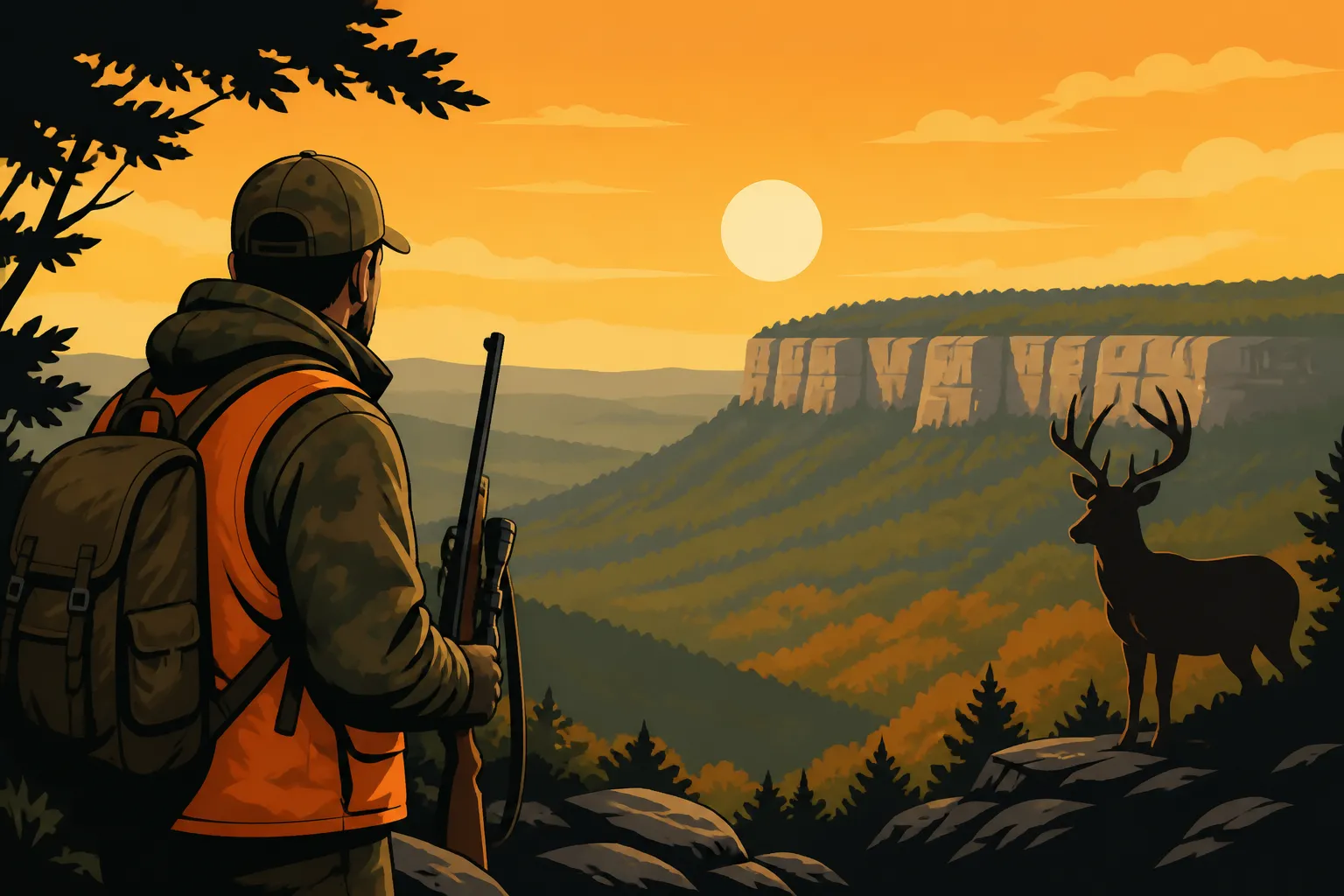
Imagine a vast, elevated tableland carved by eons of water and wind. That's the Cumberland Plateau. Its defining characteristic is a series of steep-sided ridges and deep, winding hollows, often referred to as "gulfs" in local vernacular. These features aren't just scenic; they dictate everything from deer movement to your approach and exit routes. You'll encounter sheer rock bluffs, rocky outcroppings that offer natural vantage points, and endless networks of drainage systems that funnel wildlife. Walking for miles without gaining or losing significant elevation is rare here; you'll constantly be climbing or descending. This broken terrain provides incredible security cover for game, making them notoriously difficult to pattern for those unfamiliar with these specific conditions. It's a place where contour lines on a map suddenly become very real, very quickly.
Navigating this broken country requires a keen eye for subtle changes in elevation and an understanding of how water shapes the land. Dry creek beds can become roaring torrents after a heavy rain, and seemingly insignificant dips in a ridge can be major travel corridors for deer. The sheer scale of some of these features can be daunting; what looks like a small ridge on a map can be a mile-long climb through thick undergrowth. It's a land of vertical challenges and hidden pockets, where persistence and a good understanding of topography are far more valuable than speed. Don't be surprised to find yourself checking your topo map frequently, even with a great app like onX Hunt, just to confirm which "hump" you're on or which drainage you're dropping into.
Forest Composition and Habitat
The Cumberland Plateau boasts a diverse forest, primarily a mixed oak-hickory hardwood ecosystem, but with significant variations. You'll find mature timber stands on the ridge tops and slopes, often dominated by various oak species that are critical food sources. White oaks, red oaks, and chestnut oaks all play a role, providing acorns that draw deer, bear, and turkeys for specific periods of the season. Identifying the mast-producing trees and understanding their cycle is paramount to locating game. One year might be a bumper crop of white oak acorns, while the next might see deer gravitating towards the higher-fat content of red oak acorns later in the season.
Beyond the mature hardwoods, you'll encounter areas of pine plantation, especially on reclaimed mining lands or areas managed for timber production. These dense pine thickets offer superb bedding and thermal cover, especially during cold snaps or heavy rains. Deer will often bed deep within these nearly impenetrable stands, emerging to feed in nearby hardwood bottoms or along the edges. The contrast between these dark, thick pine stands and the more open hardwoods creates distinct habitat boundaries that funnel deer movement. Furthermore, clear-cuts and areas of natural regeneration, sometimes a few years old, create excellent browse and early successional growth that is highly attractive to deer and, in specific pockets, can even hold remnants of Grouse Hunting Cumberland Plateau Cover. Understanding the age and density of these regrowth areas can be a game-changer for finding deer activity.
Water Sources and Game Movement
Water is life, and on the Cumberland Plateau, understanding its availability and how game uses it is crucial. While larger rivers like the Cumberland River itself form boundaries, much of the Plateau relies on smaller, seasonal water sources. Numerous creeks and small drainages crisscross the landscape, many of which only hold water after rain or during the wettest parts of the year. However, even when dry, these creek beds often serve as natural travel corridors, providing easier passage through otherwise rugged terrain. Deer, turkeys, and bears will use these natural funnels extensively, especially when moving between bedding and feeding areas.
Permanent water sources, though fewer and farther between, become magnets for wildlife, especially during dry spells in early archery season or the late season. These might include spring seeps bubbling up from a hillside, small impoundments created for wildlife, or even deeper pools in creek bottoms that retain water year-round. Knowing the location of these reliable water sources can be a key piece of your scouting puzzle. Game trails converging on a small spring can be just as productive as trails leading to a white oak flat. Wind and Thermals on a Ridge System also play a massive role around these water sources, carrying scent up and down drainages, which you must consider when planning your approach.
Key Game Species and Their Habits
The Cumberland Plateau supports a healthy population of diverse game animals, each with its own preferred habitat and behaviors that are uniquely influenced by this rugged environment. To consistently find success here, you've got to think like the animals that call these mountains and hollows home. It's not just about knowing what they eat, but where they eat it in this specific terrain and how they move through it.
Whitetail Deer Behavior and Habitat
Whitetail deer on the Cumberland Plateau are tough, smart, and intimately familiar with their surroundings. They're masters of using the broken topography for security. You'll often find them bedding in thick laurel slicks on steep slopes, deep inside dense pine plantations, or even on small benches just below the ridge tops, giving them a commanding view of their back trail and the ability to slip away unseen. These bedding areas are almost always chosen with an escape route in mind, usually a steep descent into a hollow or a quick dash over a ridge. Knowing Where Cumberland Plateau Bucks Bed is half the battle.
Food sources dictate much of their movement. Acorns, especially from white oaks and chestnut oaks, are prime attractants in the fall. Deer will travel considerable distances from thick bedding areas to feed in productive oak flats, particularly during the early morning and late evening hours. Later in the season, when hard mast is depleted, they switch to browse—tender new growth, green briar, and honeysuckle found in clear-cuts, old logging roads, and creek bottoms. Agricultural fields, if present on the fringes of the plateau, are absolute magnets. Understanding these seasonal food preferences and scouting for fresh sign like droppings, tracks, and rubs along the routes to these areas is crucial. Deer here tend to move slower and more deliberately through the thick cover, often pausing on small benches or points to survey their surroundings before continuing.
Wild Turkey Roosting and Feeding Patterns
Tennessee's wild turkeys thrive across much of the Cumberland Plateau, but their patterns are heavily influenced by the terrain. Roosting is almost exclusively done on the tallest trees along ridge lines or on the steepest slopes overlooking hollows. These elevated positions offer safety from ground predators and allow them to glide down into feeding areas at first light. Locating these primary roosting areas during scouting trips is key to early morning success. You might hear them gobbling from afar, but pinpointing the exact ridge and even tree cluster they prefer can take some dedication.
Once on the ground, turkeys will often work their way along ridge lines, feeding on acorns, insects, and berries, or drop into the bottoms to scratch for food in leaf litter. They often follow old logging roads or deer trails, especially if these offer easier walking. When hens begin nesting, gobblers will be found strutting in more open areas like logging decks, small food plots, or even along less-traveled gravel roads. Later in the spring, as foliage thickens, they become harder to spot and rely more on calling. Successful turkey hunting on the Plateau requires a blend of patient listening, aggressive calling when appropriate, and the physical stamina to traverse their mountainous domain. Run-and-Gun Turkey Tactics on Public Land can be effective here, especially if you're willing to cover serious ground.
Black Bear Presence and Habits
While bears are more commonly associated with the higher elevations of the Great Smoky Mountains to the east, healthy populations exist in parts of the Cumberland Plateau, particularly in the northern reaches and larger WMAs. These bears are primarily mast-eaters, relying heavily on acorns, hickory nuts, and berries like blackberries and blueberries when in season. When these natural food sources are abundant, bears will spread out and feed extensively, making them harder to locate. However, during lean mast years, they may concentrate around specific oak stands or move into agricultural areas if available.
Bear sign, such as claw marks on beech trees, scat, and overturned rocks or logs, can indicate their presence. They often use the same travel corridors as deer and will frequent dense thickets for bedding cover. Bear hunting on the Plateau is generally a spot-and-stalk or still-hunting endeavor, although some areas allow the use of hounds. It's a challenging hunt, requiring patience and a good understanding of bear movements in rugged terrain. Always be aware of your surroundings; while generally shy, bears can be unpredictable, especially if sows have cubs nearby. Familiarize yourself with Bear Hunting Cherokee National Forest if you plan to hunt areas near the eastern edge of the Plateau where their range might overlap.
Small Game Opportunities
Beyond big game, the Cumberland Plateau offers fantastic opportunities for small game hunters, particularly for squirrels. Both gray and fox squirrels are abundant in the hardwood forests. During the early season, when leaves are thick, locating them often involves listening for their barks and the sound of falling nut cuttings. Later in the season, after leaf fall, they become more visible, especially in stands of mature oaks and hickories. Squirrel hunting is an excellent way to introduce new hunters to the woods and can provide a lot of delicious table fare. Squirrel Hunting a Tennessee Oak Ridge is a classic Plateau pursuit.
Rabbit hunting is also popular, especially in areas with briar patches, honeysuckle thickets, and old clear-cuts that offer dense cover. These areas are often found along the edges of farms, old homesteads, or regenerating timber stands. While ruffed grouse once thrived across the Plateau, their populations have significantly declined in Tennessee due to habitat loss, making them a rare and challenging quarry. However, dedicated grouse hunters might still find limited opportunities in specific, very young forest regeneration areas within certain WMAs. Small game hunting on the Plateau often involves extensive walking through thick cover, so durable clothing and good boots are essential.
Public Land Access and Regulations on the Plateau
One of the greatest appeals of hunting the Cumberland Plateau is the sheer amount of public land available. However, navigating the various regulations and specific access rules for each area can feel like trying to solve a puzzle. It's crucial to do your homework before you ever set foot in the woods, not just for safety, but to ensure you're hunting legally and ethically.
Wildlife Management Areas (WMAs)
The Cumberland Plateau is home to some of Tennessee's most expansive and popular Wildlife Management Areas, offering a wide array of hunting opportunities. WMAs like Catoosa, Royal Blue, and Big South Fork are prime examples, each with its own character and rules.
| WMA Name | Primary Game | Terrain Highlight | Special Rules/Permits |
|---|---|---|---|
| Catoosa WMA | Deer, Turkey | Rugged, dense timber, steep hollows | Type 1 Annual Permit required |
| Royal Blue WMA | Deer, Bear | Steep slopes, open hardwoods, ATVs | Type 1 Annual Permit required; ATV access |
| Big South Fork NRRA | Deer, Turkey | River gorges, remote, wilderness | No WMA permit, but federal rules apply |
| Frozen Head State Park | Deer | Mountainous, high elevation | Quota hunts only, no general hunting |
| Prentice Cooper State For. | Deer, Turkey | Managed timber, rolling hills | State forest permit required |
Catoosa Wildlife Management Area is arguably one of the most famous hunting destinations on the Plateau. It's known for its incredibly rugged terrain, dense timber, and the potential for quality deer and turkey. Hunting here requires a specific Type 1 WMA permit in addition to your regular hunting license. This area is intensely managed, often with specific regulations regarding antler restrictions or harvest limits designed to promote older age-class bucks. Catoosa Wildlife Management Area is a true wilderness experience, demanding physical fitness and excellent navigational skills.
Royal Blue Wildlife Management Area offers a different experience, known for its extensive ATV trail system that provides access to vast tracts of hunting land. While the ATV access can make it easier to reach remote areas, it also means you'll encounter more recreational users. Royal Blue holds good populations of deer and, notably, a strong bear population. Like Catoosa, it also requires a Type 1 WMA permit. Understanding the Royal Blue Wildlife Management Area specific regulations, especially concerning motorized vehicle use, is essential to avoid issues.
Big South Fork National River and Recreation Area provides a unique hunting experience that blends state and federal regulations. While no specific WMA permit is required, you must adhere to all Tennessee state hunting laws, and additional federal park service regulations may apply. This area is characterized by its dramatic river gorges, rugged uplands, and a strong emphasis on wilderness preservation. Big South Fork National River Hunting can be incredibly rewarding for those seeking a remote backcountry hunt, but it requires thorough preparation and self-sufficiency. Always check both TWRA and NPS regulations before heading out.
National Forests and State Parks
While the Cumberland Plateau doesn't have large portions of the Cherokee National Forest (which is primarily in eastern Tennessee), its western edge might occasionally brush up against areas with similar terrain. However, the focus here is more on specific WMAs and, in some cases, designated hunting opportunities within Tennessee State Parks or State Forests.
Tennessee State Forests, such as the Prentice Cooper State Forest near Chattanooga, often provide excellent hunting opportunities. These areas are typically managed for timber production but also have robust wildlife management programs. They usually require a specific State Forest Permit in addition to your state hunting license. These lands offer varied habitats, from mature timber to recent clear-cuts, providing diverse hunting scenarios. Access may be restricted to certain roads or periods, so checking the current regulations for the specific state forest you plan to hunt is vital.
Some Tennessee State Parks also offer quota hunts for deer, which are highly sought after. These hunts are managed to control deer populations within the park boundaries and typically involve a lottery application process. While not open to general hunting, these quota hunts can provide an exceptional hunting experience in areas that receive little pressure outside of these specific events. Always consult the TWRA website for application periods and specific rules for Tennessee State Park Hunting Rules.
Permits, Licenses, and CWD Considerations
Before you even consider stepping foot onto the Cumberland Plateau, ensuring you have all the necessary permits and licenses is non-negotiable. First and foremost, you'll need a valid Tennessee Hunting Licenses and What They Cost. For residents, options range from annual licenses to the comprehensive The Tennessee Sportsman License Bundle, which covers most hunting and fishing activities. Non-residents have various options, including annual or shorter-term licenses, but these generally come at a higher cost.
Beyond the basic hunting license, many WMAs on the Plateau, particularly the larger ones like Catoosa and Royal Blue, require an additional WMA permit, often referred to as a Type 1 Annual WMA permit. This permit helps fund the management and maintenance of these crucial public lands. You can usually purchase these online through the Go Outdoors Tennessee portal or from license retailers.
Perhaps one of the most critical considerations today, especially for deer hunters, is Chronic Wasting Disease (CWD). While CWD was initially concentrated in West Tennessee, it has unfortunately been detected in counties that touch or are part of the Cumberland Plateau region. This means that hunters might be operating within a Tennessee's Chronic Wasting Disease Management Zone. Specific regulations apply to CWD zones, including mandatory harvest reporting, carcass transportation restrictions, and voluntary (or sometimes mandatory) CWD testing. Always check the current TWRA CWD regulations for the specific county you plan to hunt to understand requirements like Tennessee Carcass Deboning Requirements or where to find Tennessee CWD Testing for Hunters. Ignoring these rules isn't just illegal; it contributes to the spread of a devastating disease. Utilizing tools like Scouting Tennessee Public Land Before Season with apps like onX Hunt can help you identify county boundaries and stay informed about CWD zones.
Effective Hunting Tactics for the Plateau
Hunting the Cumberland Plateau requires a blend of physical stamina, mental toughness, and a solid understanding of how game uses this unique landscape. Generic hunting advice often falls flat here; you need tactics specifically tailored to the steep ridges, dense forests, and often overlooked pockets that define this region. It's about working smarter, not just harder, though a little 'harder' never hurts.
Still-Hunting and Scouting the Terrain
Still-hunting is perhaps the most effective method for consistent success on the Cumberland Plateau, especially for deer and turkey. This involves moving slowly and deliberately through the woods, pausing frequently to observe, listen, and scan for movement. It's an active form of hunting that puts you in the game, allowing you to adapt to changing conditions and animal behavior. The key to successful still-hunting here is understanding Still-Hunting Cumberland Plateau Ridges. Focus on moving along benches, subtle saddles, and creek bottoms where game naturally travels. Use the terrain to your advantage, keeping ridge lines or dense cover between you and potential game.
Effective scouting is the foundation of still-hunting. Before season, and even during, spend time walking key areas, looking for rubs, scrapes, fresh tracks, and feeding sign like munched acorns or turkey scratchings. Pay close attention to subtle funnels formed by converging drainages, breaks in rock bluffs, or narrow saddles between ridge tops. These are natural pinch points that deer and turkeys will use. Apps like onX Hunt are invaluable for Reading Aerial Photos for Cumberland Plateau Deer and identifying these topographical features before you even step out of your truck. They allow you to mark potential bedding areas, feeding zones, and travel corridors, giving you a strategic advantage in this complex terrain. The elevation change on the plateau also means that Wind and Thermals on a Ridge System are constantly at play; learn how these air currents move up and down slopes with the sun and choose your approach accordingly.
Stand Hunting Strategies and Placement
While still-hunting is highly effective, strategic stand placement can also yield great results, especially for morning or evening sits near primary food sources or bedding areas. Treestands are popular, but the steep, rocky terrain can make hanging them a challenge. Look for trees along benches or at the top edges of steep drops that offer good visibility into a travel corridor or feeding area. Safety is paramount when hanging stands on these slopes; always use a lineman's belt and a full-body harness. Hanging a Stand on a Cumberland Ridge often involves finding a suitable tree on a subtle contour feature that deer follow.
Ground blinds can also be highly effective, particularly in dense pine thickets, along the edges of small food plots, or within heavy cover bordering oak flats. Brushing in a natural ground blind or using a manufactured blind can offer excellent concealment, especially in areas where the foliage is thick. The key is to place them in locations that naturally funnel deer or turkeys, such as narrow strips of cover between two open areas, or along the inside corner of a clear-cut. Remember, game on the Plateau is highly wary, so scent control and quiet entry/exit routes are vital for stand hunting success. Don't be afraid to move your stand if the sign tells you the deer have shifted patterns.
Calling Techniques for Deer and Turkey
Using calls can be a great way to draw game closer, but on the Cumberland Plateau, it's often about subtle realism rather than aggressive volume. For deer, light rattling and soft grunt calls can be effective, especially during the pre-rut and rut phases in November. The thick cover and broken terrain often mean that deer aren't seeing each other from long distances, so vocalizations can pique their curiosity. Rattling Volume in Thick Cover should be adjusted to the conditions; a soft tickle of antlers might be all it takes to draw a buck into bow range in a dense laurel thicket, whereas a more aggressive sequence might be heard across a wider hollow. Similarly, quiet tending grunts or doe bleats can often bring a curious buck closer in the mature timber.
For turkeys, calling is almost always an essential part of the hunt. Locator calls like owl hoots or crow calls can help pinpoint roosted birds at dawn. Once they're on the ground, a variety of hen yelps, clucks, and purrs can entice gobblers. The steep terrain often means you need to get above or level with the birds, as they are often hesitant to come downhill to a call. Don't be afraid to experiment with different calls and volumes. A soft series of tree yelps from a ridge top might be all it takes to bring a gobbler off the roost and heading your way. Patience is key, especially if you're working a bird that's hung up across a hollow.
Hunting Pressure and Overlooked Spots
The Cumberland Plateau, particularly in the more accessible WMAs, can experience significant hunting pressure, especially on opening weekends or during peak rut. This pressure pushes game into the thickest, most inaccessible areas. To find success, you need to be willing to go where others won't. This often means walking farther, climbing steeper hills, and venturing deeper into the hollows and thickets. Look for areas that require extra effort to reach: across a deep drainage, beyond a series of rock bluffs, or a long walk from the nearest access road. Finding Ground Others Walk Past is a time-tested strategy that works exceptionally well on the Plateau.
Utilize topographic maps and aerial photos to identify these overlooked pockets – benches tucked away in steep hollows, small saddles between nearly impassable ridges, or narrow fingers of timber extending into dense cover. These are the places where mature bucks and wary turkeys will seek refuge. Don't discount small, seemingly insignificant changes in elevation or cover. Even a slight dip on a ridge or a small patch of thicker evergreens can provide enough security for a deer to bed down when faced with heavy pressure. Flexibility and the willingness to adapt your plans based on current conditions and observed pressure are crucial for success.
Essential Gear and Preparation for the Plateau
Hunting the Cumberland Plateau is not for the faint of heart, nor for the unprepared. The unforgiving terrain, variable weather, and often remote nature of the hunt demand specific gear choices and a commitment to thorough preparation. Skimping on the right equipment can turn a challenging hunt into a miserable, or even dangerous, experience.
Footwear and Clothing for Rugged Terrain
Your feet are your most important asset on the Plateau. You'll be doing a lot of walking, climbing, and descending over rocky, uneven ground, often through wet leaves or mud. Therefore, durable, waterproof hunting boots with excellent ankle support and aggressive tread are non-negotiable. Look for boots that are well broken in before season, preventing painful blisters that can ruin a hunt. Leather or synthetic boots with a stiff sole will protect your feet from sharp rocks and provide stability on steep slopes. Consider boots with a higher ankle to prevent debris from entering and offer maximum support.
Layering is key for clothing. Tennessee weather, especially on the Plateau, can be incredibly unpredictable. A warm morning can quickly turn into a cold, windy afternoon, or a sunny day can be interrupted by a sudden rain shower. Start with a moisture-wicking base layer to manage sweat, add an insulating mid-layer (fleece or wool works great), and top it with a waterproof and windproof outer shell. Wool is an excellent choice for hunting clothing as it remains warm even when wet and is naturally quiet. Avoid cotton, which absorbs moisture and can quickly lead to hypothermia in cold, wet conditions. Don't forget a warm hat and gloves, as much heat is lost through your head and extremities. Layering for a Tennessee Deer Stand and Wool Versus Synthetics in Wet Cold are vital considerations here.
Navigation Tools and Communication
Getting lost on the Cumberland Plateau is a real possibility, even for experienced hunters, due to the confusing network of ridges and hollows. A reliable navigation system is paramount. While a physical topographic map and compass (and knowing how to use them!) are always recommended as a backup, modern GPS units or smartphone apps like onX Hunt and GoHunt have become indispensable. These apps provide detailed satellite imagery, topographic lines, property boundaries, and allow you to mark waypoints for your vehicle, stand locations, and game trails. GoHunt often provides valuable public land insights for Western states, but onX Hunt is widely considered a gold standard for mapping in the eastern woods.
Ensure your electronic devices are fully charged and consider carrying a portable power bank. Cell service can be spotty or nonexistent in many deep hollows and remote areas of the Plateau, so downloading offline maps before you leave home is crucial. For communication, particularly if hunting with a group, two-way radios can be a lifesaver when cell service is out. A whistle is also a simple, yet effective, emergency signaling device. Always tell someone where you are going and when you expect to return. This simple step is perhaps the most important safety precaution you can take.
Recovery Gear and Meat Care
The reward of a successful hunt on the Plateau often comes with the challenge of recovering your game from difficult terrain. A sturdy deer drag or game sled can be invaluable for pulling a deer out of a steep hollow or across rough ground. Don't forget a sharp, reliable field dressing knife and, if you prefer, a bone saw. Given the physical exertion involved, a small first-aid kit is also a wise addition to your pack, especially with the risk of scrapes, cuts, or twisted ankles. Field Dressing a Deer in Cold Weather or warm weather demands proper technique and the right tools.
For early season hunts, when temperatures can still be warm, proper meat care is critical to prevent spoilage. Game bags are essential for protecting the carcass from flies and dirt. If you're deep in the backcountry, consider deboning the meat on-site to reduce weight and make the pack-out easier. A large cooler with plenty of ice back at your vehicle is a must. Remember that if you're hunting within a CWD zone, there are specific regulations about transporting carcasses out of that zone, often requiring deboning the meat. Deboning Venison Before Leaving the CWD Zone is a practice you'll want to master.
Firearms, Archery Equipment, and Optics
Choosing the right firearm for the Cumberland Plateau involves balancing power with practical range. For rifles, common calibers like .270, .30-06, 6.5 Creedmoor, or .308 are all excellent choices for whitetails, offering sufficient knock-down power and accuracy for shots out to a couple hundred yards. While long-range shots can occur across hollows, much of the hunting here is in thicker timber, so shot placement and bullet construction are more critical than extreme range. Practical Range in Cherokee Forest Timber can apply to much of the Plateau's dense woods, where shots might be closer than you think. For muzzleloaders, a .50 caliber is standard and highly effective during the dedicated muzzleloader season.
For archery hunters, a vertical bow or crossbow set up for accuracy and reliability is essential. Broadheads should be sharp and suited for quick, clean kills through potentially thick hair and bone. Remember that Crossbow Versus Vertical Bow in Tennessee rules may vary depending on the specific season, so always check TWRA regulations. Optics are also crucial. A good quality pair of binoculars (8×42 or 10×42) will help you pick apart dense cover and spot distant game on opposing ridges. A reliable rifle scope with good low-light performance is also a significant advantage in the deep shadows of the Plateau's hollows and during the crucial dawn and dusk hours. Low-Light Performance in a Scope can make all the difference when those trophy animals step out.
Challenges and Safety Considerations
Hunting the Cumberland Plateau, while immensely rewarding, comes with a unique set of challenges and inherent risks. Acknowledging these potential issues and preparing for them is not just about having a successful hunt, but ensuring your safety and the well-being of those hunting with you. This isn't a place to cut corners on preparation or to underestimate the power of nature.
Steep Terrain and Physical Demands
The rugged, broken topography of the Cumberland Plateau is its defining characteristic, and also its greatest physical challenge. Expect constant elevation changes, often steep and unforgiving. What looks like a short distance on a map can translate into a grueling climb or descent over rocky, root-choked terrain. This demands a high level of physical fitness. If you're not used to hiking uphill with a pack, start conditioning well before the season. Incorporate exercises that strengthen your legs, core, and cardiovascular system. Hiking with a loaded pack on varied terrain is excellent preparation.
Twisted ankles, falls, and muscle strains are common injuries in this environment. Proper footwear with excellent ankle support is crucial, as mentioned before. When traversing steep slopes, take your time, watch your footing, and use trekking poles for added stability, especially when carrying a heavy load. Remember that a successful shot often means a difficult recovery, potentially dragging a deer up a steep hill or out of a deep hollow. Having a plan for Recovering a Deer From a Steep Hollow is just as important as knowing where to shoot it. Don't push yourself beyond your limits, and if hunting alone, be extra cautious.
Weather Variability and Environmental Hazards
Tennessee weather on the Cumberland Plateau can change dramatically and rapidly. Warm, sunny days can quickly give way to cold, driving rain, or even snow in the late season. Dense fog often settles into the hollows, severely reducing visibility. Always check the forecast before heading out, but be prepared for unexpected changes. Carry quality rain gear, even if the forecast looks clear, and dress in layers you can easily add or shed. Hypothermia is a real threat if you get wet and cold, especially in remote areas.
Beyond the weather, the Plateau is home to various environmental hazards. Venomous snakes, such as timber rattlesnakes and copperheads, are present, particularly during warmer months. Always watch where you step and where you place your hands. Ticks are also a pervasive nuisance, carrying diseases like Lyme disease; use permethrin on your clothing and always check yourself thoroughly after a hunt. Poison ivy and briars are abundant, so long pants and sleeves are advisable. Being aware of your surroundings and the potential dangers can help you avoid unpleasant encounters.
Wildlife Encounters and Responsible Conduct
While the goal is to encounter game animals, it's essential to be prepared for other wildlife encounters. Black bears, though generally shy, can be present, especially in the northern WMAs. If you encounter a bear, make noise, make yourself look large, and never approach it, especially if cubs are present. Coyotes are also common across the Plateau and, while generally not a threat to humans, can be a concern for small game hunters with dogs. Familiarize yourself with the habits of animals you might encounter.
Responsible hunting conduct extends beyond legal compliance. It means respecting other hunters, leaving no trace, and practicing ethical shot placement to ensure quick, humane kills. Always be aware of your backdrop when taking a shot, especially in broken terrain where bullet trajectories can be unpredictable. Pack out everything you pack in, including spent shell casings and trash. Adhere to Tennessee Firearms Discharge Setback Rules and any specific WMA regulations regarding shooting lanes or proximity to roads. By being a responsible and prepared hunter, you not only ensure your own safety but also contribute to the positive reputation of hunting on the Cumberland Plateau.
Navigational Safety and Emergency Preparedness
Even with modern GPS tools, maintaining navigational awareness on the Cumberland Plateau is critical. The undulating terrain, dense canopy, and lack of prominent landmarks can disorient even experienced woodsmen. Constantly reference your map or GPS, paying attention to your direction of travel, terrain features, and where you are relative to your starting point. Mark your vehicle's location and any key intersections or features you pass. If you do get disoriented, stop, remain calm, and consult your map. If all else fails, stay put and signal for help.
Carrying a small emergency kit is a wise precaution. This should include a first-aid kit, a headlamp or flashlight (even for day hunts, as dark can fall quickly in the hollows), fire-starting materials, a signaling mirror or whistle, and extra water and high-energy snacks. A fully charged cell phone is a given, but understand that service can be unreliable. Consider a satellite communication device if venturing into extremely remote areas. Always let someone know your specific hunting area and expected return time. This practice, often overlooked, can be the most critical safety measure in an emergency.
Disclaimer
This article is for general informational purposes only and does not constitute professional advice. Laws, prices and regulations vary by location and change over time. Consult a qualified professional for guidance on your specific situation.