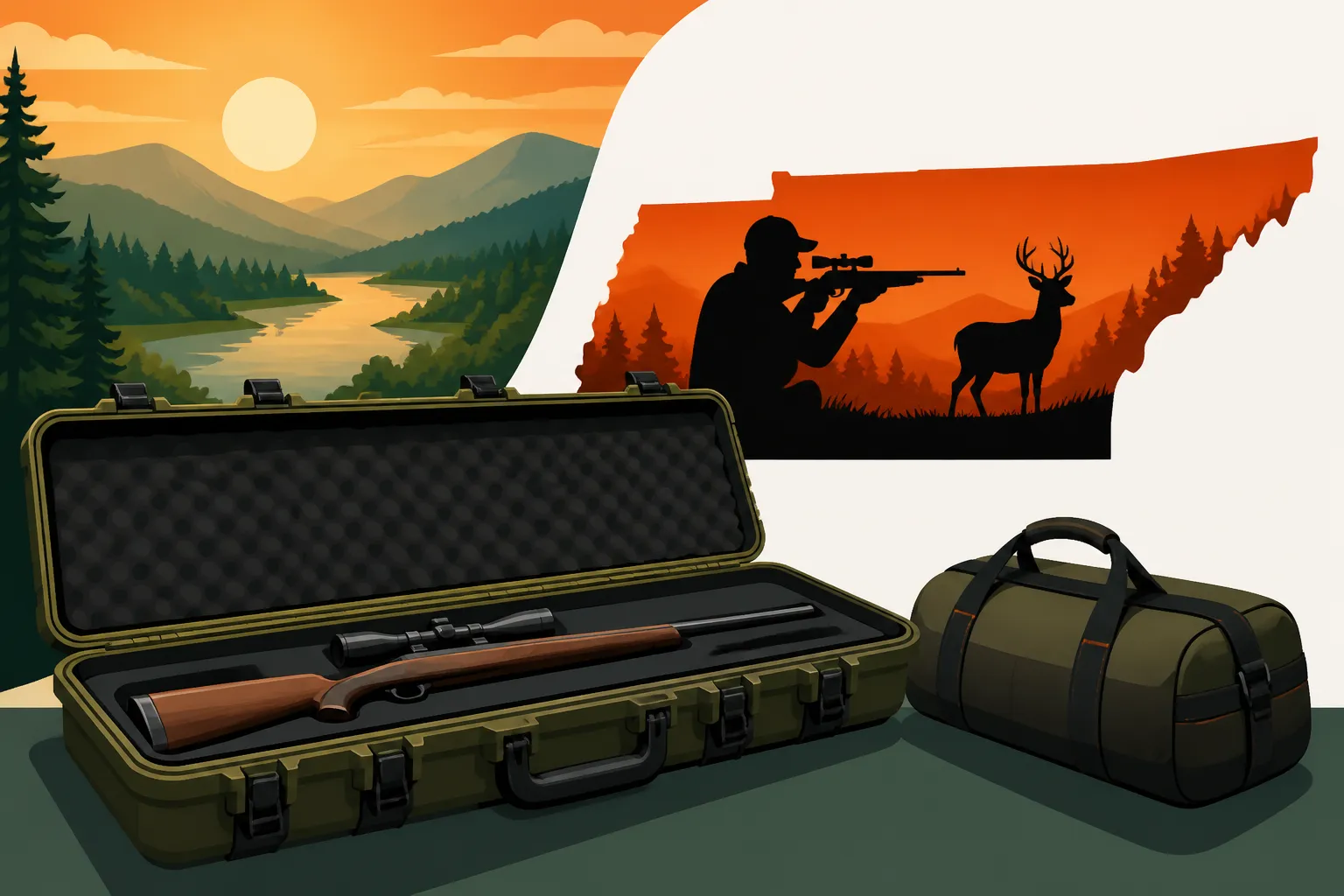
Rifle Cases for Travel to Tennessee
Traveling with your hunting rifle can be a source of real anxiety, whether you're crossing state lines or just heading to a new part of Tennessee. The patchwork of federal and state laws, coupled with the need to protect your valuable firearm, can make the logistics feel overwhelming. This guide is here to untangle that complexity, offering clear, actionable advice on choosing and using rifle cases for safe and legal travel to and within Tennessee.
Understanding Tennessee and Federal Travel Laws for Firearms
Before you even think about which case to buy, you've got to wrap your head around the rules. There's nothing worse than having your trip derailed, or worse, facing legal trouble, because you weren't clear on the regulations. It’s a common pitfall, and it's completely understandable why folks get confused, as laws can sometimes feel like they're written in riddles.
Federal Guidelines for Interstate Firearm Transport
When you're traveling from one state to another, the Firearm Owners' Protection Act (FOPA) is your best friend. This federal law essentially protects law-abiding citizens who are transporting firearms for lawful purposes through states where they might otherwise be illegal to possess. However, there are strict conditions you must meet for FOPA protection to apply. Your firearm must be unloaded, and it must be stored in a locked container that is not immediately accessible from the passenger compartment of the vehicle. This means if you have a trunk, it goes there. If your vehicle doesn't have a trunk, it needs to be in a locked container in the rearmost part of the vehicle, like the bed of a truck or the cargo area of an SUV, as far from you as possible.
For those planning to fly to Tennessee, federal regulations become even more specific. Firearms must be declared to the airline at the check-in counter and transported in a hard-sided, locked container as checked luggage. Only you should have the key or combination to the lock. Ammunition must also be stored securely, often in its original manufacturer's packaging or a similar secure container, and typically not within the same case as the firearm itself, although airline rules can vary slightly on this point. Always check your specific airline's policy before heading to the airport. This layer of security is designed to keep everyone safe and ensure firearms aren't easily accessed during transit.
Tennessee's Specific Rules for Rifle Transport
Once you're within Tennessee's borders, or if you're a resident traveling within the state, state laws also come into play, though they generally align well with federal guidelines concerning safe transport. For rifles, Tennessee law dictates that they should be transported unloaded. While there isn't a strict "case required" rule for vehicles if the firearm is unloaded and not readily accessible, using a case, even a soft one, is always a smart move for both safety and preventing wear and tear on your valuable equipment. This is especially true if you plan on making stops or leaving your vehicle unattended for any period.
It's also worth noting that Tennessee allows for the legal carrying of loaded long guns in vehicles under certain circumstances, particularly for those with enhanced handgun carry permits, but for general hunting travel, the safest and most universally accepted practice is unloaded and secured. Always err on the side of caution. For example, if you're pulling into a gas station or a restaurant on your way to the deer lease, having your rifle cased and out of sight in the trunk or cargo area is far better than having it sitting on your back seat, even if unloaded. Understanding the nuances can save a lot of headaches, and resources like GoHunt can sometimes provide insights into local regulations.
Choosing the Right Rifle Case for Your Journey
Selecting the right rifle case isn't just about protecting your firearm; it's about matching the case to your mode of travel, the level of protection you need, and even the weather conditions you might encounter. There's no one-size-fits-all solution, and what works for a quick truck ride to a local spot might be totally inadequate for a cross-country flight to chase a big Tennessee buck.
Hard-Sided Cases for Air Travel and Maximum Protection
When air travel is on the agenda, or if you simply demand the highest level of protection for your rifle, a hard-sided case is non-negotiable. These cases are built like tanks, designed to withstand the rigors of baggage handlers, accidental drops, and extreme pressure changes in cargo holds. Look for cases made from durable polymers or aluminum, featuring robust latches, and, ideally, multiple padlock points. The ability to secure the case with more than one lock adds an extra layer of peace of mind.
Many quality hard cases also come with customizable foam inserts, allowing you to perfectly cradle your rifle and any optics, preventing movement and absorbing shock. Some even boast features like pressure equalization valves, which are crucial for air travel to prevent vacuum sealing or damage from internal pressure changes. Wheels are another fantastic feature, especially if you're navigating large airports or carrying heavy firearms. Investing in a top-tier hard case means your Rifle Setups for Tennessee Deer Hunting will arrive in pristine condition, ready for the hunt.
Soft Cases for Vehicle Transport and Field Use
For most road trips within Tennessee, or for transporting your rifle from home to a local hunting spot, a soft case offers a great blend of convenience and basic protection. These cases are typically made from durable canvas, nylon, or Cordura, often with padded interiors to guard against scratches and minor bumps. They are lighter, easier to carry, and more flexible, making them ideal for stuffing into the backseat of a truck or the cargo area of an SUV without taking up excessive space.
Soft cases are excellent for everyday field use, offering protection against mud, dust, and light rain when moving from your vehicle to your treestand or ground blind. Many come with external pockets, which are super handy for carrying ammunition, cleaning supplies, a rangefinder, or even a small thermos. While they don't offer the same crush resistance or security as a hard case, for situations where your rifle is always within your immediate control or sight, they are perfectly adequate and much less cumbersome.
Hybrid Cases: Balancing Protection and Portability
Sometimes, you need something that lands right in the middle—more robust than a soft case but not as rigid or heavy as a full hard-sided travel case. This is where hybrid cases shine. These can take various forms, from semi-rigid designs with reinforced panels to soft cases with internal frames or very dense padding that holds its shape. They often offer better impact protection than traditional soft cases while retaining some of their flexibility and lighter weight.
Hybrid cases are fantastic for those long drives where your rifle might get jostled in the back of the truck, or if you occasionally need to ship your rifle via ground courier (always check specific carrier rules!). They provide an added layer of security and protection against the unexpected without committing to the bulk and cost of an airline-approved hard case. They're a great choice for hunters who travel frequently by vehicle across varied terrain, perhaps heading from the flat fields of West Tennessee to the rolling hills of the Cumberland Plateau, offering that crucial balance when you need more than just a sleeve but less than a bomb-proof vault.
Essential Considerations Beyond the Case Itself
A great rifle case is only part of the equation. There are several other critical factors to consider to ensure your firearm travel is safe, legal, and hassle-free. Overlooking these details can lead to unnecessary stress or, in the worst-case scenario, legal complications.
Securing Your Rifle: Locks and Ammunition Storage
The type of locks you use on your rifle case is just as important as the case itself. For air travel, Transportation Security Administration (TSA) approved locks are a common recommendation, allowing TSA agents to open the case for inspection without you being present or requiring your keys to be confiscated. However, some hunters prefer non-TSA locks for maximum security, choosing to remain present during any inspection or providing a key if necessary. The most important thing is that the case is locked, preventing unauthorized access.
When it comes to ammunition, federal regulations for air travel require it to be transported separately from the firearm, in its original packaging or a secure container designed for ammo. It must also be in checked baggage. For vehicle travel, while less restrictive, it's still best practice to keep ammunition separate from your rifle and stored securely. This not only adds a layer of safety but also helps maintain organization. Remember to check Ammunition Availability Before Opening Day if you're considering buying ammo locally in Tennessee.
Preparing Your Rifle for Travel
Before your rifle even goes into its case, a few preparatory steps can make a big difference. First and foremost, always double-check, then triple-check, that your rifle is completely unloaded. Open the action, remove the magazine, and visually inspect the chamber. This seems obvious, but it's the most critical safety step. Disassembling your rifle, if it's designed to do so easily, can sometimes allow for a more compact and secure fit within the case, especially if you have sensitive optics.
If you have a scope, ensure it's either removed and stored separately in its own protective pouch, or, if left mounted, that it's tightly secured within the case's foam inserts. The precision of Rifle Scopes for Low-Light Hollows can be easily compromised by rough handling. After your hunt, especially if it's been a wet one, give your rifle a good clean before packing it for the trip home. Not only does this prevent rust, but it's also a good habit to ensure your firearm is in top condition for its next outing. You can find more tips on this in Cleaning a Rifle After a Wet Sit.
Documentation and Pre-Trip Checks
Never leave home without proper documentation. This includes your Tennessee hunting license, any relevant big game permits, and a valid form of identification. For non-residents, ensure you have all necessary Tennessee Nonresident Hunting License Options sorted out well in advance. Having a copy of pertinent federal and state firearm transportation laws printed out and accessible, though rarely needed, can provide immense peace of mind and clarity if any questions arise during travel.
Before you travel, especially by air, make direct contact with your chosen airline to review their specific firearm and ammunition policies. These can vary, and what's acceptable on one airline might be a no-go on another. It's always better to get the information straight from the source. Additionally, utilizing mapping and regulation apps like GoHunt can help you quickly reference any local regulations or check on specific Wildlife Management Area (WMA) rules along your route or at your destination. This proactive approach significantly reduces the chance of unexpected issues.
Practical Scenarios for Traveling to Tennessee
Knowing the rules and having the right gear is great, but applying that knowledge to real-world travel scenarios is where the rubber meets the road. Whether you're driving across state lines or taking to the skies, a little foresight goes a long way in ensuring a smooth and successful hunting trip.
Driving to Your Tennessee Hunt
For many hunters, especially those coming from neighboring states or traveling within Tennessee, driving is the preferred method. When driving your rifle to your Tennessee hunt, the primary goal is safety, security, and compliance with the "unloaded and not readily accessible" rule. A soft case often works well for securing your rifle in the trunk or the cargo area of your SUV. It keeps the rifle protected from minor bumps and scratches, and perhaps more importantly, out of sight. Remember, visible firearms can sometimes draw unwanted attention, even if you are legally transporting them.
If your vehicle doesn't have a separate trunk, place the cased rifle as far back as possible in the cargo area, perhaps under other gear, and consider using a cable lock through the action for an extra layer of security. This adheres to the spirit of federal FOPA law for interstate travel and Tennessee's general preference for firearms to be secured during transport. Planning your route can also be beneficial, especially if you're crossing through areas with stricter local ordinances, although FOPA generally protects through-travel. Always scout your public land destinations beforehand, perhaps using a tool like GoHunt to check access points, to minimize time spent with your rifle exposed outside of its case. For tips on navigating specific hunting areas, check out Scouting Tennessee Public Land Before Season.
Flying to a Tennessee Destination
Flying with a rifle is undoubtedly more involved than driving, but it's a routine process for many hunters. The golden rule here is proactive communication and strict adherence to federal and airline regulations. You must use a hard-sided, lockable case for your rifle, declared as checked baggage at the airline counter. When you declare it, the agent will usually have you open the case for a quick visual inspection, confirming it's unloaded, before you lock it with your own key or combination.
Ammunition, as mentioned, needs to be in its original packaging or an appropriate container, separate from the firearm, and also in checked luggage. Do not attempt to carry a firearm or ammunition in your carry-on bag. While this might seem like a lot of hoops to jump through, following the procedure exactly makes the process remarkably smooth. Arrive early at the airport to give yourself ample time for the check-in process, as it can sometimes take a few extra minutes. It's also wise to label your case clearly with your contact information, just in case it's temporarily misrouted, though modern tracking systems have made this less common.
| Case Type | Key Features | Pros | Cons | Ideal Use Cases |
|---|---|---|---|---|
| Hard-Sided | Durable polymer/aluminum, multiple latches, padlock points, foam inserts, wheels, pressure valves | Maximum protection, airline approved, highly secure | Heavy, bulky, more expensive, less flexible | Air travel, long-distance shipping, extreme conditions |
| Soft | Padded fabric (nylon/canvas), zippers, external pockets, shoulder strap | Lightweight, convenient, easy to store, affordable | Limited impact protection, less secure, not airline approved | Vehicle transport, short trips, field use, local hunts |
| Hybrid | Semi-rigid construction, reinforced panels, dense padding, some external pockets | Better protection than soft, lighter than hard, good balance | Can still be bulky, not always airline approved, mid-range cost | Frequent vehicle travel, protection against jostling, non-extreme conditions |
Disclaimer
This article is for general informational purposes only and does not constitute professional advice. Laws, prices and regulations vary by location and change over time. Consult a qualified professional for guidance on your specific situation.