Fixed Versus Mechanical Broadheads
For many bowhunters across Tennessee, the question of broadheads often feels like a never-ending debate. Should you stick with the time-tested reliability of a fixed-blade, or embrace the potentially wider cutting diameter and field-point accuracy of a mechanical? This guide dives deep into the nuances of both fixed and mechanical broadheads, helping you understand their pros, cons, and how to choose the right one for your next Tennessee hunt.
Understanding Fixed-Blade Broadheads for Tennessee Hunting
Fixed-blade broadheads are the grandfathers of the arrow tip world, and for good reason. They’ve been around forever, proving their worth season after season. But what exactly makes them tick, and where do they shine (or sometimes fall short) in the varied landscapes of Tennessee?
The Anatomy and Mechanics of Fixed Blades
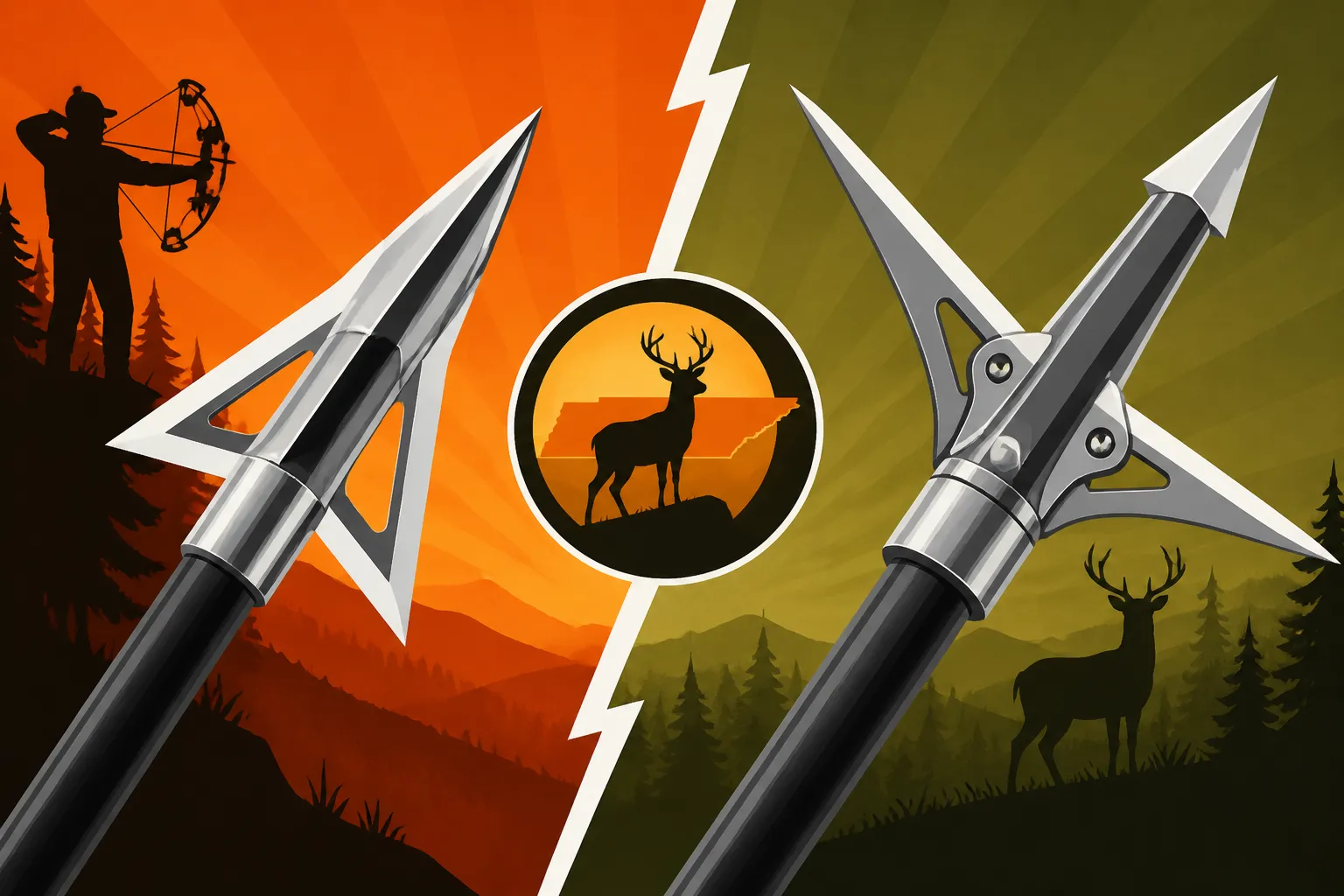
At its core, a fixed-blade broadhead is simple: a ferrule (the body) with blades rigidly attached to it. There are no moving parts, no collapsing pieces, and no deployment mechanisms. They come in various configurations, from two-blade designs that look like mini airplane wings to three-blade and even four-blade options, sometimes with additional bleeder blades. The cutting diameter is, well, fixed—what you see is what you get. This simplicity is both their greatest strength and, for some, their biggest challenge.
For decades, bowhunters relied solely on fixed blades. They understood that the arrow’s flight would be dictated by the broadhead itself, and achieving field-point accuracy meant meticulous tuning of their bow and arrows. This often involves adjusting rest height, nocking point, and even arrow spine to ensure the broadhead flies true, without planing or spiraling. In the thick hardwoods of the Cumberland Plateau or the open agricultural fields of West Tennessee, a broadhead that flies straight is absolutely non-negotiable for an ethical shot.
Advantages of Fixed Broadheads in Tennessee Terrain and Game
The unwavering reliability of fixed broadheads is what keeps many seasoned Tennessee hunters coming back. When you're standing in a frosty November morning, knowing your equipment won't fail is a huge confidence booster.
One of the biggest advantages is their durability and penetration. Because there are no moving parts, a fixed blade broadhead generally holds up better on tough impacts. Imagine hitting a deer’s shoulder blade or a rib on an acute angle – a fixed blade is designed to push through or bust bone rather than deflect or fail to open. This can be critical when chasing mature whitetails across the state or even Hog Hunting Tennessee's Wild Boar, which are notoriously tough animals. The direct force transfer from arrow to broadhead means maximum energy is delivered for deeper penetration, even from bows with lower kinetic energy. This is a huge factor for hunters using lighter draw weights or shorter draw lengths, where every ounce of penetration counts. You’ll hear many a bowhunter in a Tennessee deer camp recount a story of a fixed blade punching through where they believe a mechanical would have simply bounced off.
Another perk is their simplicity. There's less to worry about in terms of maintenance or potential malfunction. You sharpen them, screw them on, and go. No O-rings to check, no retention clips to inspect, no worries about blades accidentally deploying in your quiver. This straightforward nature means one less variable to think about when the pressure is on and a big buck steps into your shooting lane.
Disadvantages of Fixed Broadheads
While reliable, fixed blades aren't without their quirks, and these quirks often lead hunters to consider other options. The primary challenge is flight tuning. Getting a fixed-blade broadhead to fly exactly like your field points can be a real headache. The aerodynamic drag and torque created by the blades require your bow and arrow setup to be perfectly tuned. If your bow isn't spick and span, those broadheads can "plane" or "steer" the arrow, sending it wildly off course, especially at longer distances. Many hunters spend hours at the range meticulously tuning their setup, often needing to adjust their arrow rest in tiny increments. This can be a frustrating process, and for those who don't have the time or expertise for such fine-tuning, it's a significant deterrent.
Additionally, the larger surface area of some fixed blades can make them more susceptible to wind drift. On a blustery fall day, especially when hunting open areas like a West Tennessee field edge or a powerline cut, a strong crosswind can push your arrow off target more noticeably than a sleek field point or a collapsed mechanical broadhead would be affected. That subtle drift can mean the difference between a clean kill and a missed opportunity or, worse, a wounded animal.
Finally, while penetration is often superior, the cutting diameter of most fixed blades is inherently smaller than many mechanical designs. This means that while they might punch through, the initial wound channel might be narrower, potentially leading to less profuse blood trails on well-placed shots.
Diving Into Mechanical Broadheads for Tennessee Hunters
Mechanical broadheads, also known as expandable broadheads, burst onto the hunting scene offering a different approach to delivering lethal force. Their appeal largely centers on solving some of the challenges posed by fixed blades.
The Design and Function of Expandable Broadheads
Mechanical broadheads are characterized by blades that deploy or expand on impact with the target. While in flight, the blades are tucked away, making the broadhead more aerodynamic and resembling a field point. Upon impact, a spring, O-ring, or collar mechanism allows the blades to pivot or slide outward, creating a much larger cutting diameter than the broadhead had in its pre-deployed state.
There are a few main types of mechanicals. Rear-deploying broadheads typically have blades that pivot backward, deploying after the tip has already begun penetration. Front-deploying designs have blades that open forward, often using a cam or lever system triggered by contact. And then there are hybrid designs, which combine small fixed blades with larger expandable blades, aiming to offer the best of both worlds. The specific design affects how quickly and reliably the blades deploy, how much energy is required for deployment, and how robust the broadhead is after impact. Many hunters rely on trusted brands, often discussed in hunting forums or found in stores that partner with resources like GoHunt, to help them make informed choices.
Why Tennessee Hunters Choose Mechanical Broadheads
The most compelling reason many Tennessee bowhunters switch to mechanical broadheads is their field-point accuracy. Because the blades are folded back, mechanicals present a much smaller profile to the wind and air resistance during flight. This often means they fly almost identically to your practice field points, drastically simplifying the tuning process. For hunters who prioritize shooting consistency and don't want the hassle of extensive broadhead tuning, this is a game-changer. You can confidently practice with cheap field points, knowing your mechanical broadheads will follow the same trajectory. This peace of mind is invaluable, especially when preparing for Bowhunting Tennessee's Long Archery Season.
Another huge draw is the large cutting diameter they offer. Once deployed, many mechanicals create massive wound channels, far wider than most fixed blades. This can lead to faster blood loss and typically much better, more profuse blood trails, making tracking downed game significantly easier. For a hunter in the thick woods of East Tennessee, or navigating the dense undergrowth of a river bottom, a strong blood trail can be the difference between recovering a deer quickly and a long, difficult search. The confidence that comes with knowing you’re creating a significant wound channel can be a powerful psychological boost in the stand.
Furthermore, some mechanicals can be a bit more forgiving of minor arrow flight imperfections. While perfect arrow flight is always the goal, a slight wobble that might send a fixed blade off course could be less impactful with a mechanical broadhead that minimizes air resistance. This can translate to better effective range and accuracy for hunters who may not have a perfectly tuned setup.
The Downsides of Mechanical Broadheads
Despite their advantages, mechanical broadheads do come with their own set of potential drawbacks. The biggest concern for many is the potential for failure. Since they have moving parts, there's always a chance that the blades might not deploy correctly on impact. This could happen if they hit heavy bone, dense muscle, or if the deployment mechanism itself malfunctions. A broadhead that doesn't open properly can result in a superficial wound, poor penetration, and a lost animal. This risk is amplified when hunting larger, tougher game like mature elk or bears, where bone structure is formidable. Shot Placement on a Tennessee Black Bear is critical, and you don't want a broadhead that can't reliably get the job done.
Another common concern is energy loss and reduced penetration. The act of deploying the blades consumes kinetic energy from the arrow. While this might be negligible for high-poundage, fast bows, it can be a significant factor for bows with lower kinetic energy. This energy expenditure, combined with the wider cutting surface, can sometimes lead to shallower penetration or even a lack of pass-throughs, especially on quartering-away shots or when hitting heavy bone. A pass-through is often desired as it creates two holes for a blood trail and maximizes damage.
Lastly, mechanicals can sometimes be less durable after a shot. The intricate moving parts can bend or break more easily than a solid fixed blade, especially if they encounter hard resistance. This might mean the broadhead is a one-and-done proposition, even after a successful harvest. They can also be more expensive per broadhead, making practice with them a costly endeavor for some.
Making the Right Choice: Factors to Consider for Your Tennessee Hunt
Choosing between fixed and mechanical broadheads isn't about one being inherently "better" than the other. It's about finding what’s best for you, your setup, and your hunting style in Tennessee.
Your Bow Setup and Tuning Level
This is perhaps the most critical factor. Your bow's kinetic energy (KE) and how well your arrows fly are paramount.
Kinetic Energy (KE): Higher kinetic energy bows (typically those with higher draw weights and longer draw lengths) can generally handle mechanical broadheads more effectively. They have enough stored energy to overcome the deployment resistance and still achieve good penetration. If you're shooting a lighter bow, say under 60 pounds of draw weight, or have a shorter draw length, you might find that fixed blades offer more reliable penetration, especially on less-than-perfect shots. It's often debated, but many experienced hunters lean towards fixed blades for lower KE setups to maximize every inch of penetration.
Arrow Flight and Tuning: This is where the rubber meets the road. If your bow is impeccably tuned, and your arrows fly like darts with field points, then the transition to mechanicals is often seamless. You'll likely achieve that coveted field-point accuracy. However, if your arrows show any wobble, porpoising, or erratic flight with field points, adding the larger surface area of a fixed blade will only magnify those issues. In such cases, a fixed blade can actually help expose tuning problems you might not have noticed. While mechanicals are more forgiving of minor flight issues, a poorly tuned bow will still shoot poorly, regardless of the broadhead type. Don't neglect your bow tuning; it's the foundation of ethical archery hunting.
The Game You're Pursuing
While Tennessee's primary big game animal for bowhunting is the whitetail deer, your choice might be influenced if you also pursue other species.
Whitetail Deer: Both broadhead types are highly effective on whitetail deer when shot placement is precise. If your bow shoots mechanicals with precision and you prioritize a larger wound channel and blood trail, they're a fantastic choice. If you prefer the absolute reliability, maximum penetration, and don't mind the tuning effort, fixed blades are equally lethal. Consider the terrain; a deer hit with a mechanical in dense river bottom might leave a better trail than one hit with a smaller fixed blade, but a fixed blade might punch through the opposing shoulder in a scenario where a mechanical might not. For Hunting West Tennessee Bottomland Deer with their thicker cover, a good blood trail is critical.
Hogs/Bears: These animals generally have tougher hides, heavier bone structures, and can be incredibly resilient. Many hunters, when targeting these species, lean towards robust fixed-blade broadheads for their superior penetration and reliability on hard impacts. While mechanicals can be effective, the risk of deployment failure or insufficient penetration is often higher due to the animal's physical characteristics. If you're preparing for Bear Hunting Cherokee National Forest, you'll want maximum confidence in your broadhead's ability to penetrate tough hide and bone.
Ethical Considerations and Shot Placement
Regardless of the broadhead you choose, nothing, absolutely nothing, compensates for poor shot placement. An ethical hunter strives for a quick, humane kill, and that starts with putting the arrow precisely where it needs to go. Both fixed and mechanical broadheads, when properly placed, are incredibly lethal.
What matters most is a sharp broadhead and adequate penetration. Dull blades create less tissue damage and can slow penetration. Always ensure your broadheads are razor-sharp. For mechanicals, ensure the blades are in perfect working order, free from defects, and that the deployment mechanism is functional. For fixed blades, you'll want to practice sharpening them regularly. The goal is to create as much damage as quickly as possible to vital organs, leading to rapid blood loss and a humane harvest. Many bowhunters consult resources, including those found on platforms like GoHunt, for detailed diagrams on shot placement for various game animals.
Hybrid Broadheads and Practice for Confidence
The broadhead market is constantly evolving, and a third option has emerged for hunters looking for a blend of features. Beyond that, no matter your choice, consistent practice is king.
The Best of Both Worlds?
Hybrid broadheads aim to combine the strengths of both fixed and mechanical designs. Typically, they feature a small, always-exposed fixed blade or tip, backed up by larger expandable blades that deploy on impact. The idea is to get the initial penetration and reliability of a fixed blade, especially if you hit bone early, while still achieving the wider cutting diameter of a mechanical once the main blades open.
This concept can be appealing. You get the peace of mind of a cutting tip from the moment of impact, potentially reducing the risk of a complete deflection, while still getting a wider wound channel. However, they can also inherit some of the challenges. Like full mechanicals, there’s still a deployment mechanism that could potentially fail. And like some fixed blades, the exposed blades can still influence flight, meaning they might require more tuning than a pure field-point-flying mechanical. For some hunters, they hit the sweet spot, while others find they simply add complexity without fully solving the core dilemmas. It's another option worth exploring if you're on the fence.
The Crucial Role of Practice and Familiarity
I cannot stress this enough: practice with the actual broadheads you intend to hunt with. Shooting field points all summer and then screwing on hunting broadheads the week before When Tennessee's Archery Season Opens is a recipe for disaster. Different broadheads, even within the same type, can fly differently. You need to be confident that your hunting arrow and broadhead combination will hit exactly where you aim.
- Shoot plenty of arrows: Spend time at varying distances, practicing from different angles and positions you might encounter in the field.
- Check your setup: Regularly inspect your broadheads for sharpness, straightness, and any damage. For mechanicals, ensure the deployment mechanism works perfectly.
- Simulate hunting scenarios: Practice from your treestand or ground blind. Learn how your broadheads fly when you're slightly off-balance or rushed.
- Test penetration: If possible, shoot into a block target or a ballistic medium to see how your chosen broadhead penetrates. This can give you invaluable insight into its performance, especially if you're concerned about your bow's kinetic energy.
- Use tracking resources: After the shot, knowing how to track a deer, especially in varied terrain and leaf litter, is just as important as shot placement. Apps like GoHunt offer valuable mapping and waypoint features that can aid in tracking downed game.
The confidence that comes from knowing your equipment inside and out, and from practicing relentlessly with your hunting setup, is truly priceless. It allows you to focus on the moment of truth, making the best possible shot when it counts.
| Feature | Fixed-Blade Broadheads | Mechanical Broadheads | Hybrid Broadheads |
|---|---|---|---|
| Design | Blades are rigidly attached, no moving parts. | Blades are retracted in flight, deploy on impact. | Small fixed blades with larger expandable blades. |
| Flight/Tuning | Can require meticulous bow tuning for field-point accuracy. May plane or drift. | Often fly like field points, simplifying tuning. Less susceptible to wind. | Can require some tuning, but often better than pure fixed. |
| Cutting Diameter | Fixed, generally smaller (e.g., 1" – 1.25"). | Expandable, often much larger (e.g., 1.5" – 2.5"+). | Variable, combines smaller fixed cut with larger expandable cut. |
| Penetration | Generally superior, especially on bone or from lower KE bows. Max energy transfer. | Can be reduced due to energy used for deployment; wider cut creates more resistance. | Aims for good penetration with wider cut, but can vary. |
| Reliability | Extremely high; no moving parts to fail. | Risk of deployment failure or insufficient opening on tough impacts. | Risk of deployment failure for expandable blades, but fixed blades offer initial cut. |
| Durability | Very durable, often reusable after sharpening. | Can be less durable, especially after hard impacts; often one-shot. | Durability of expandable blades can be a concern. |
| Blood Trails | Good, but potentially narrower wound channel can mean less initial blood. | Excellent due to large wound channels, often creating more profuse blood trails. | Aims for profuse blood trails with expanded blades. |
| Best For | Lower KE bows, tough game (hogs, bears), dense cover, hunters who tune meticulously. | High KE bows, easier tuning, maximizing blood trails, open country. | Hunters seeking a blend of penetration and large cutting diameter. |
Ultimately, the choice between fixed and mechanical broadheads for your Tennessee hunting adventures boils down to personal preference, your bow setup, and the confidence you have in your equipment. Both types are proven killers in the field, provided they are sharp, properly tuned, and placed precisely. Spend time at the range, get to know your setup, and hunt confidently.
Disclaimer
This article is for general informational purposes only and does not constitute professional advice. Laws, prices and regulations vary by location and change over time. Consult a qualified professional for guidance on your specific situation.