Dove Hunting a Cut Tennessee Field
Finding a prime spot for dove hunting in Tennessee can sometimes feel like chasing a phantom, especially when those early season birds are buzzing around but seem to vanish the moment you step out of the truck. It's a common frustration, isn't it? You scout, you find what looks like perfect habitat, and then opening day arrives with more questions than answers. This guide is all about helping you unlock the secrets to successfully dove hunting a cut Tennessee field, from understanding dove behavior to setting up your perfect ambush.
Understanding Dove Behavior in Tennessee's Agricultural Landscape
Doves aren't just flitting around aimlessly; their movements are dictated by a very specific set of needs: food, water, grit, and roosting cover. When you're looking at a cut field in Tennessee, you're essentially looking at a buffet line and a social club rolled into one. Understanding how they interact with these elements is the foundation of a successful hunt. These birds are creatures of habit, and once you start seeing the patterns, your chances of a full strap go way up.
Why Cut Fields Are Dove Magnets
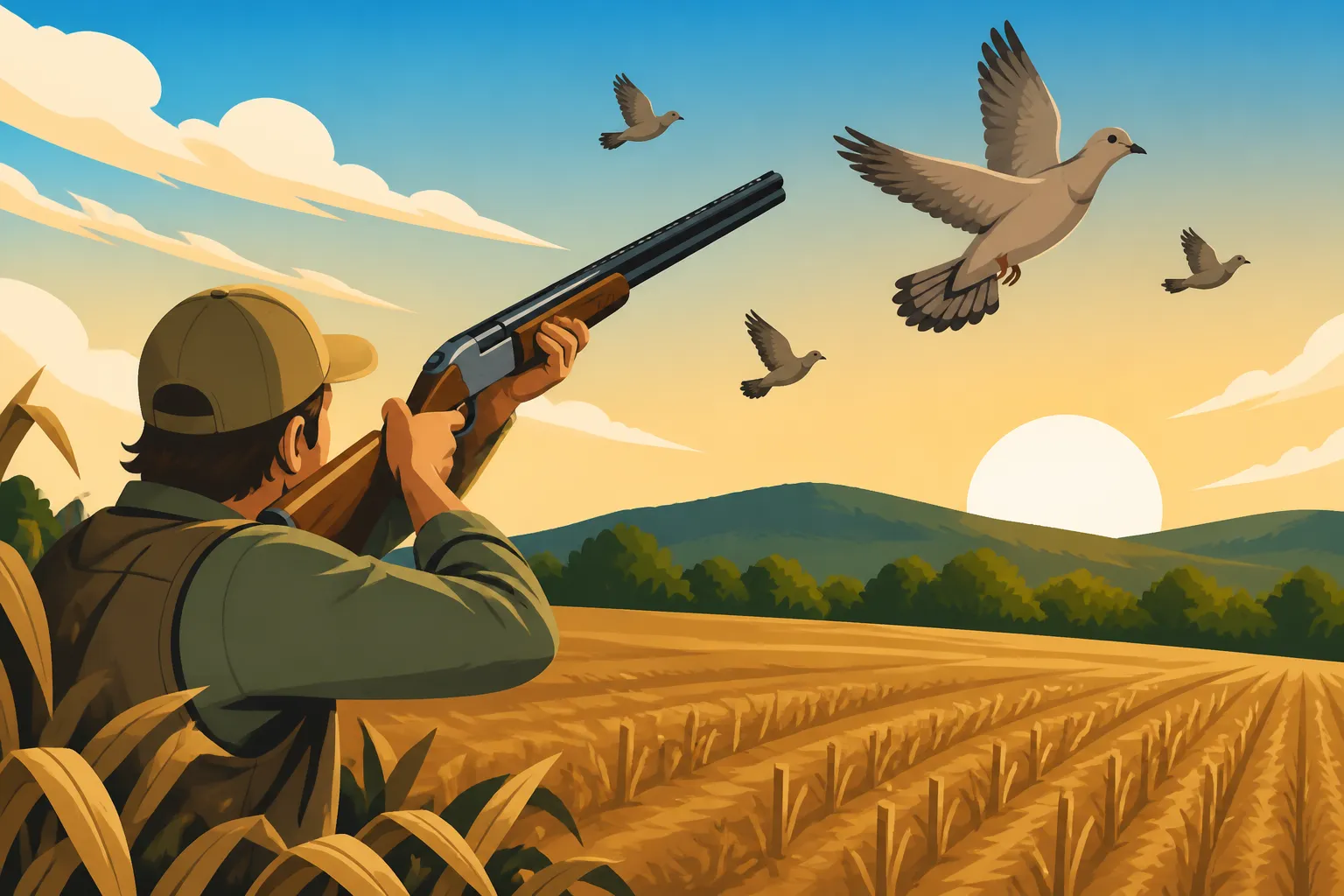
Tennessee's agricultural backbone, particularly in areas like West Tennessee and parts of the Cumberland Plateau, provides an irresistible draw for mourning doves. These birds are primarily seed-eaters, and cut fields, especially those of sunflowers, wheat, corn, or milo, are literal goldmines. When a farmer harvests their crop, countless seeds are left on the ground, making for an easy meal. Doves don't scratch and peck like chickens; they prefer to walk around and pick up readily available seeds. A freshly cut field, particularly one with some bare ground exposed between the stubble, is exactly what they're looking for. The sheer volume of exposed feed creates a continuous dining experience for them throughout the day.
Think about it from a dove's perspective: why work hard searching for individual seeds in thick cover when an entire field has been laid bare for you? This is why these fields act as central feeding hubs. It’s not just about the type of crop, either, but also the stage of its harvest. A field that was cut a week ago might still be good, but one cut just a day or two before the season opens will often be teeming with birds. They quickly learn where the easy meals are, and they’ll return to these spots day after day until the food source is depleted or hunting pressure pushes them elsewhere. This means that a little reconnaissance before the season can give you a significant advantage, often involving a good pair of binoculars and a watchful eye during the golden hours of morning and evening.
Reading Dove Flight Patterns
Once you've identified a promising cut field, the next step is to observe how the doves are using it. They typically have established flight paths that connect their roosting areas, feeding grounds, and water sources. These patterns are critical because they dictate where you should set up your blind or stand. You'll often see them flying relatively low, following tree lines, fencerows, or even the contours of the land. They use these landmarks as highways, and if you can position yourself along one of these highways, you're in business. For example, if you're Setting Up on a West Tennessee Field Edge, pay close attention to the corners of the field or where different field edges meet, as these often funnel birds.
Doves typically fly into a field against the wind when they're preparing to land, allowing them better control. Keep this in mind when choosing your setup location. You want to be positioned so that incoming birds are flying towards you or across your front at a comfortable shooting angle, rather than directly over your head. During midday, when feeding activity might slow, doves might fly higher as they transition between fields or head to water. Later in the afternoon, as the sun dips, you'll see a noticeable increase in activity as they try to get one last meal before heading to their roost. Observing these subtle shifts in flight and timing will drastically improve your success. This also highlights the importance of using tools like the Scouting With the Tennessee TWRA App or aerial photos to identify these key features before you ever set foot on the property.
The Importance of Water and Roosting Sites
While a cut field provides the essential food, doves also need water and a safe place to roost. These three elements form a complete habitat triangle. If your chosen cut field is near a pond, a creek bottom, or even a small, stagnant puddle, that's an enormous bonus. Doves need to drink regularly, especially during the hot early September days of Tennessee's dove season. They'll often visit water sources in the late morning and late afternoon. If you can identify a watering hole they're using, positioning yourself near a flyway between a feeding field and that water source can be incredibly productive. For instance, consider Setting Decoys on a Farm Pond if you have access to such a spot.
Roosting sites are usually dense stands of trees, often pines, cedars, or thick hardwoods that offer protection from predators and the elements. Doves will fly from their feeding areas to these roosts in the evening. Understanding where these roosts are can help you predict their flight paths at the end of the day. A field that’s a mile away from a good roost might still be good, but one that’s right next to it, with a clear flyway between, is usually phenomenal. When you're scouting, make a mental note or even mark on your map any dense patches of trees, especially evergreens, that doves might be utilizing. These key locations dictate where doves will be coming from and going to, and knowing that movement is half the battle.
Scouting and Setup: Making the Most of a Cut Field
Once you've wrapped your head around why doves use certain fields, it's time to put that knowledge into action. This isn't just about showing up with a shotgun; it's about strategic planning, gaining access, and meticulously setting up your hunting location to maximize your opportunities. The difference between a good hunt and a phenomenal one often comes down to the details you nail before the first shot is fired.
Pre-Season Reconnaissance and Permissions
You can’t just roll up to any cut field and start hunting, tempting as it might be. The vast majority of prime dove fields in Tennessee are on private land. This means gaining permission is paramount, and it often requires some legwork long before opening day. Start your scouting drives weeks, even months, in advance. Look for fields of sunflowers, winter wheat, corn, or milo that are being managed for doves or are simply going to be harvested at the right time. Pay attention to fields that have been recently cut. Remember, the earlier you ask for permission, the better your chances. Many landowners are open to dove hunters, especially if you're respectful and offer to help in some small way. Sometimes, just showing genuine interest and appreciation can make all the difference.
When you approach a landowner, be polite, well-dressed, and explain exactly what you're looking for. Offer references if you have them. Carrying a copy of your hunting license and insurance might also help build trust. For more general advice on gaining access, you might look into Knocking on Doors in West Tennessee Farm Country. Don't just ask for access; ask if they have a specific field they prefer you to hunt, or if there are any areas they want you to avoid. Building a relationship with a landowner can secure you a prime spot for years to come. Utilize aerial maps, like those available through services such as GoHunt, to identify potential fields and scout access points without even leaving your home. GoHunt’s detailed satellite imagery can reveal subtle field contours, nearby water sources, and potential roosting areas that might be missed from a roadside glance.
Ideal Blind Placement and Concealment
Doves, while abundant, are not stupid. They have excellent eyesight and will quickly flare if they spot anything out of place. Your blind placement and concealment are absolutely critical. The goal is to break up your human outline and blend seamlessly into the environment. Often, this means utilizing natural cover already present in the field, like the edge of a standing cornfield, a fencerow, or a patch of thick weeds. For guidance on camouflaging yourself effectively, refer to Brushing In a Blind on a Field Edge. If natural cover is scarce, a portable ground blind can be a lifesaver, but it must be well-brushed in. Don't just set up a blind and expect doves to ignore it; collect local vegetation – corn stalks, sunflower heads, cedar branches – and weave it into the blind's netting.
Position your blind to take advantage of those observed flight paths, ideally with the sun at your back in the morning or to the side in the afternoon to avoid shining directly into your eyes. You want to be comfortable but also ready to shoot. Sitting still and minimizing movement is key. Doves will often circle a field before committing to land, giving them ample opportunity to spot you if you’re not concealed. If you're hunting with a group, spread out enough so you're not interfering with each other's shooting lanes, but close enough to work together. Remember, the more you look like a part of the field, the more confident the doves will be in coming in close. For specific advice, consider tactics like Using a Ground Blind on Tennessee Public Land, which offers transferable lessons for private land as well.
Decoy Strategies for Effective Luring
Decoys are an indispensable tool for dove hunting in cut fields. They add realism to your setup and act as a visual magnet, drawing doves closer and often bringing them into comfortable shooting range. There are several types of dove decoys, each with its own advantages. Static clip-on decoys, placed on fences, tree branches, or stubble in the field, mimic resting birds. Spaced out in small groups, they create the illusion of a comfortable feeding area. For insights into general decoy use, you can read more about Decoy Placement for Pressured Tennessee Birds.
However, the real game-changers are motion decoys. Spinning-wing decoys, like Mojo Doves, create a flashing, fluttering effect that mimics a dove landing or taking off. This motion is incredibly effective at catching the attention of high-flying birds and drawing them down into your spread. Place motion decoys high on a pole or along a flyway to maximize their visibility. Combine them with static decoys scattered on the ground around your blind to create a natural-looking landing zone. The key is to make your spread look inviting and natural, as if other doves have already found a prime feeding spot. Don’t be afraid to experiment with different placements and numbers; what works one day might not work the next, depending on weather and bird behavior.
| Decoy Type | Best Use Case | Ideal Placement |
|---|---|---|
| Static Clip-on | Mimic resting/feeding birds | Fence lines, tree branches, stubble, ground |
| Spinning-Wing (e.g., Mojo) | Create motion, attract high-flyers | High on poles, along flight paths, 15-20 yards from blind |
| Full-Body Ground | Add realism to feeding spread, provide landing spots | Scattered on the ground, facing different directions |
| Kite/Flock | Simulate a large group, highly visible from distance | Very high on a tall pole, for long-range attraction |
Essential Gear and Shotgunning Tactics
With your scouting done and your blind perfectly placed, you're almost ready. But having the right gear and knowing how to use your shotgun effectively are the final pieces of the puzzle for a successful Tennessee dove hunt. The early season can be hot, so comfort is as important as camouflage.
Shotguns, Loads, and Chokes for Doves
When it comes to dove hunting, speed and spread are often more important than knockdown power. Doves are small, fast-moving targets, and you'll be taking a lot of shots. A 12-gauge or 20-gauge shotgun is the most popular choice, offering a good balance of pellet count and recoil. Many hunters prefer a semi-automatic or over-under for quick follow-up shots, as doves rarely fly alone. Light target loads, specifically 7.5 or 8 shot, are ideal for doves. These smaller pellets provide a dense pattern, increasing your chances of hitting the bird, and they have more than enough energy to humanely harvest doves at typical ranges.
As for chokes, an Improved Cylinder or Light Modified choke is usually perfect. These chokes provide a wider pattern than a Modified or Full choke, which is very forgiving for fast-moving targets that might be darting across the sky at varying distances. A tighter choke, like a Full, can make it incredibly difficult to hit doves, especially those flying close, often resulting in "smoke balls" (missing entirely) or excessively damaged birds. The goal is a consistent, broad pattern at 20-30 yards. Always pattern your shotgun with your chosen load and choke before the season to understand its capabilities. A little time at the range will make a huge difference in the field.
Camouflage and Comfort for a Long Sit
Dove hunting often involves sitting in a blind for hours, potentially under a warm Tennessee sun. Comfort and effective camouflage go hand-in-hand. Lightweight, breathable camouflage clothing is essential. Early September in Tennessee can still see temperatures climb into the 80s or even 90s, so heavy layers are out. Opt for thin long sleeves and pants to protect from the sun, insects, and minor scrapes. A wide-brimmed hat and shooting glasses are also crucial – the hat for sun protection and the glasses for eye safety and glare reduction.
Don't forget bug spray, as mosquitoes and gnats can be relentless in warm, humid conditions. A comfortable, portable stool or chair is a must for those long waits between flights. Many hunters also bring a cooler with plenty of water and snacks. Staying hydrated is incredibly important. Also, consider investing in a good pair of gloves. Not only do they add another layer of concealment for your hands, but they can also protect against minor scrapes and provide a better grip on your shotgun. When sitting still, your hands and face are often the most exposed, so cover them up.
Field Etiquette and Safety Considerations
Dove hunting, especially on opening weekend, can be a social affair with many hunters sharing a field. Good field etiquette and strict safety practices are non-negotiable. Always be aware of other hunters' positions and never swing on a bird if another hunter or their dog is in your line of fire. Communicate clearly with your hunting partners about shooting lanes and boundaries. For groups hunting on Hunting Small Private Tracts in Tennessee, this is especially important to ensure everyone has a safe and enjoyable experience.
Always treat your shotgun as if it's loaded. Keep the muzzle pointed in a safe direction, and your finger off the trigger until you're ready to shoot. Only load your shotgun when you're in your blind and ready to hunt. When moving between positions or if you step away from your blind, unload your firearm. Pick up all spent shell casings; leaving litter in a farmer's field is a sure way to lose hunting privileges. A well-trained retrieving dog can be a tremendous asset for finding downed birds in thick stubble, but ensure your dog is under control and doesn't interfere with other hunters. Finally, always respect the landowner's property, crops, and livestock. A clean, safe, and respectful hunter is always welcome back.
Disclaimer
Hunting regulations and season dates can change frequently. Always consult the latest Tennessee Wildlife Resources Agency (TWRA) regulations guide before heading afield. It is your responsibility to understand and adhere to all applicable laws and safety guidelines.