How Old a Cut Should Be for Grouse
Finding the elusive ruffed grouse in Tennessee can feel like searching for a needle in a haystack, especially with their numbers declining in many areas. It's incredibly frustrating to walk miles of seemingly perfect woods only to kick up nothing but squirrels. This guide aims to pull back the curtain on one of the most crucial elements of successful grouse hunting: understanding the precise age and characteristics of timber cuts where these "thunder chickens" thrive.
The Elusive Ruffed Grouse and Its Habitat Needs
The ruffed grouse, with its explosive flush and cryptic camouflage, is a true challenge for any upland hunter. What makes them so hard to find isn't just their shy nature; it's often a misunderstanding of their specific habitat requirements. They aren't just in "woods" – they need very particular types of cover that are becoming increasingly rare as forests mature.
Why Young Forest is Critical for Grouse Survival
Imagine being a ruffed grouse, a small, ground-dwelling bird in a world full of keen-eyed predators like hawks, owls, foxes, and even bobcats. What do you need most to survive? Think about it – you need dense, tangled cover that makes it impossible for those predators to spot you or move quickly enough to catch you. This isn't just about hiding; it's about having enough impenetrable branches, thickets, and fallen logs to break up sight lines and give you those crucial split seconds to escape when danger closes in.
This kind of sanctuary is primarily found in what wildlife biologists call "early successional habitat" – essentially, young forests that have recently been disturbed. In Tennessee, this disturbance historically came from natural events like wildfires or tornadoes, but today, it's most often the result of timber harvesting. Without these dynamic changes, our forests tend to grow tall and open, creating what's known as "mature timber." While beautiful and majestic, these older woods, with their high canopy and clear understory, are essentially biological deserts for grouse. There's nowhere for them to hide, nowhere for them to find the tender buds and insects they need to eat, and nowhere safe to nest and raise their chicks. This lack of suitable habitat is a primary driver behind the heartbreaking Tennessee Ruffed Grouse Decline.
The Ideal Age for Grouse Cover: A Sweet Spot
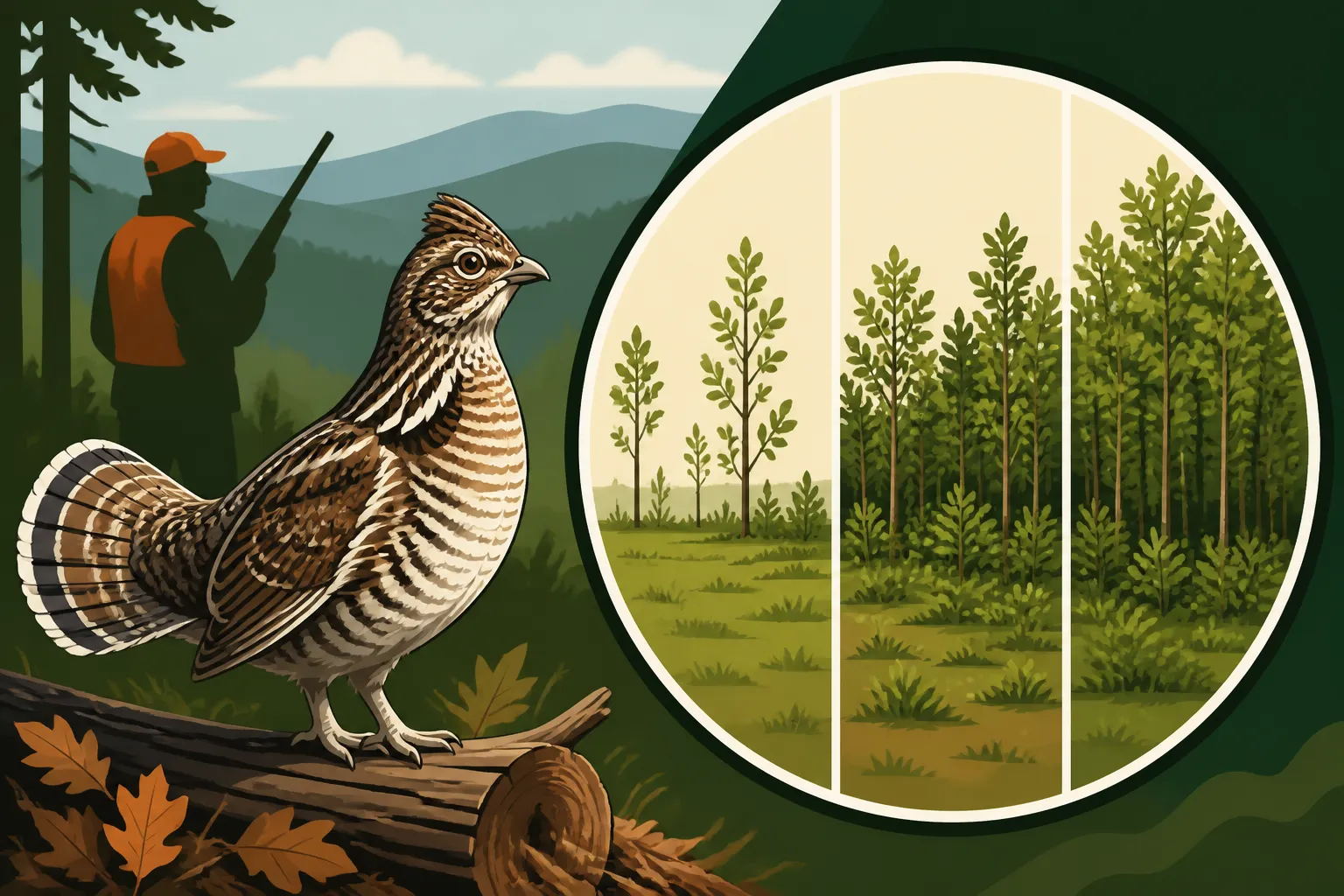
So, what exactly does "young forest" mean in terms of age? It's not just any young trees. There's a definite sweet spot, an optimal age range for timber cuts that provides the perfect balance of cover and food for ruffed grouse. Think of forest succession like a growth chart. When a patch of timber is clear-cut, it immediately springs back to life. For the first few years, say 1-4 years post-cut, it's mostly herbaceous plants, grasses, and very small saplings. While some small game might use this, it's generally too open for grouse. They need something with more woody structure.
The magic truly happens when that cut reaches approximately 5 to 20 years of age. In this window, you're looking at a dense stand of saplings – oaks, maples, poplars, and various shrubs like mountain laurel or rhododendron – often growing so thickly you can barely push through it. The canopy is still relatively low, creating a ceiling of branches, and the ground is a jumbled mess of new growth, stumps, and discarded logging debris. This isn't just fantastic hiding cover; it's also a buffet. The young trees provide abundant buds, catkins, and berries, while the disturbed ground fosters a rich insect population. As the cut progresses past 20-25 years, the trees start to thin out naturally, grow taller, and the understory becomes less dense. This eventually transitions back into that open, mature timber that grouse avoid. Knowing this ideal age range is absolutely vital to Grouse Hunting the Cumberland Plateau or anywhere else they might roam.
Reading the Land: Identifying Productive Cuts
Finding these gold-standard grouse cuts isn't always as simple as looking at a map. You need to know what you're looking for, both on paper and when you're physically out in the woods. It requires a keen eye and a willingness to push through some serious tangles.
Distinguishing a Good Grouse Cut from Overgrown Timber
When you're trying to identify a good grouse cut, you're not just looking for "trees." You're looking for a specific kind of density and structure. On the ground, a prime grouse cover is going to feel like a jungle. We're talking about saplings that are ankle-to-chest high, growing so close together that you literally have to push them aside with every step. You'll see a lot of multi-stemmed growth, where a single stump has sent up several shoots. Mixed in will be briars, honeysuckle, and other thick brush that forms a nearly impenetrable wall. Look for areas with a good amount of downed timber as well – logs and branches left over from the cutting provide additional overhead cover and escape routes for a flushing bird.
Visually, from a distance, these areas might look like an endless green wall, or perhaps a darker, uniform block on a satellite image. But up close, you'll see the messy, chaotic beauty that grouse adore. It's often located on ridge tops, benches, or along creek bottoms, but the key is always that young, dense woody growth. If the woods feel open and airy, with tall trunks and clear sight lines for more than 20-30 yards, you're likely in mature timber that offers very little to a grouse. Tools like a sophisticated mapping application, such as GoHunt, can be incredibly helpful here. You can often see historical logging activity or recent cuts clearly marked, giving you a head start on scouting before you ever set foot in the woods. This is especially useful for Scouting Tennessee Public Land Before Season.
Different Types of Timber Management for Grouse
Not all timber cuts are created equal in the eyes of a ruffed grouse. Understanding the different types of logging and land management practices can significantly increase your chances of finding productive habitat.
- Clear-cutting: This is precisely what it sounds like – nearly all trees in a given area are harvested. While it might look stark and ugly immediately after the cut, clear-cutting is often the most beneficial practice for creating prime grouse habitat in the long run. It resets the forest succession, allowing a dense flush of new growth to emerge. Within that 5-20 year window, these clear-cuts become fantastic grouse factories. In Tennessee, you'll find these primarily in larger state forests or on private industrial timberland.
- Shelterwood Cuts: This method removes most of the mature trees, but leaves a scattering of "shelter trees" to help regenerate the next stand. It's a gentler approach and can still create good grouse habitat, but often less uniformly dense than a clear-cut. The remaining mature trees can sometimes shade out the understory, slowing down the development of that critical thick cover.
- Selection Cuts: This involves removing only individual trees or small groups of trees. While it's great for sustainable forestry and maintaining older stands, it generally does not create the large blocks of early successional habitat that grouse need. You might find a few birds in very small, localized dense patches within a selection cut, but it's not typically the preferred method for widespread grouse management.
- Prescribed Burns: While not a timber cut, prescribed burning is another powerful tool used by land managers, including the Tennessee Wildlife Resources Agency (TWRA), to rejuvenate forest habitat. Burns can reduce competing vegetation, stimulate new growth, and create openings that lead to dense thickets. The timing and intensity of burns are crucial, and the resulting habitat can be excellent for grouse, often creating a mosaic of different successional stages.
The key takeaway is that grouse are specialists. They thrive on disturbance and the vigorous regeneration that follows. So, when you're looking at maps or talking to foresters, ask about recent clear-cuts or large-scale regeneration efforts. These are your best bets for finding those pockets of dense, age-appropriate grouse cover.
| Cut Type | Age for Prime Grouse Habitat (Years Post-Cut) | Description of Habitat | Notes for Hunters |
|---|---|---|---|
| Clear-cut | 5-20 | Dense saplings, briars, fallen logs | Best bet for consistent grouse numbers. |
| Shelterwood | 7-25 | Moderate density, some mature tree influence | Can be good, but may be less uniform. |
| Selection | Patchy, localized | Very limited, only small pockets of new growth | Generally not ideal for primary grouse hunting. |
| Prescribed Burn | 3-15 (post-burn flush) | Varied, dense understory, some open patches | Excellent when combined with other methods. |
Tactics for Hunting Age-Appropriate Grouse Cover
Once you've done your homework and identified those promising young timber cuts, the real fun (and challenge!) begins. Hunting grouse in this type of habitat requires a specific approach, both in how you move and how you anticipate the birds.
Slow and Steady Wins the Race: Working Dense Thickets
Grouse hunting is not about covering ground quickly. In fact, trying to speed through these dense cuts is a recipe for frustration, as birds will flush wild and out of range before you even know they're there. This is why a slow, methodical approach is absolutely essential. Think of it like a carefully choreographed dance through the thick stuff.
If you're hunting with a dog, a good pointing dog is invaluable. Allow your dog to work the cover thoroughly, but keep them close enough that you can get to a point quickly. When the dog locks up, move in cautiously, circling to get into a shooting lane if possible, and be ready for that explosion of feathers. Even without a dog, the principle is the same: take a few steps, pause, listen, and scan. Look for any subtle movements, even just a flick of a tail or a bobbing head. Grouse are masters of stillness. They'll often hold tight, relying on their camouflage, until you're practically on top of them. That's when they explode, sending your heart into your throat. Be prepared to shoot quickly in tight windows. Your shotgun needs to swing fast, and open chokes (like Improved Cylinder or Skeet) are often preferred for the close-quarters shots you'll encounter. Even without a dog, following advice on Flushing Grouse Without a Dog can make a huge difference. You might also want to look into durable footwear, as walking through this type of terrain can be brutal on your feet, so good Boots for Walking Tennessee Ridges are a must.
Timing Your Hunt with Cover Maturation
The "ideal" age of a cut (5-20 years) isn't set in stone; it can flex a little depending on the specific tree species, soil type, and regional climate. For instance, in areas with very fast-growing pioneer species like poplar, a cut might mature and then thin out more quickly, pushing that prime window to the earlier side of the spectrum. Conversely, a cut dominated by slower-growing oak saplings might stay dense and productive a little longer.
Furthermore, the best time of year to hunt these cuts can also depend on their exact stage of maturation. Earlier in the grouse season, when foliage is still relatively thick, even prime cuts can be almost impossible to hunt effectively due to visibility. As the leaves fall, visibility improves dramatically, making those 5-15 year old cuts much more manageable. However, very late in the season, when snow or severe cold arrives, grouse might seek out the densest thermal cover available, sometimes preferring the slightly older, thicker parts of a 15-20 year old cut that still retains maximum overhead protection. Utilizing scouting tools like GoHunt, which can often show satellite imagery changes over time, can help you track these cuts and understand how they're progressing. This kind of detailed information gives you an edge in understanding Where Tennessee Sits in the Grouse Cycle and how to plan your hunt accordingly. And of course, before you head out, make sure you're up to date on all regulations and safety, especially if you're new to the sport; always review the Tennessee Hunter Education Requirements.
Successfully hunting ruffed grouse in Tennessee is a journey of understanding their habitat, not just chasing a bird. By focusing on age-appropriate timber cuts, you're not just increasing your chances of success; you're also developing a deeper appreciation for the intricate relationship between forest health and wildlife. These young, dense thickets are challenging to navigate, but the reward of a thunderous flush and a glimpse of this magnificent bird makes every scratched leg and tired step worth it.
Disclaimer
Please remember that hunting regulations, seasons, and bag limits can change. Always consult the latest Tennessee Wildlife Resources Agency (TWRA) regulations before heading afield. Safety first!