Headlamps for Walking Out After Dark
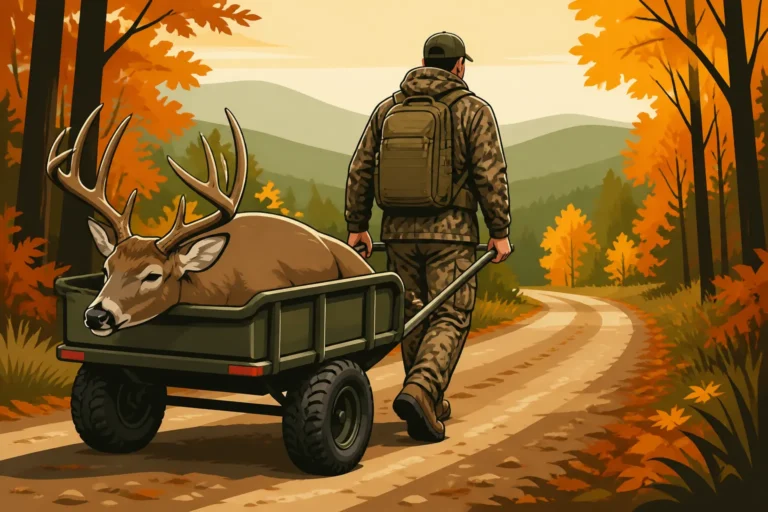
There's nothing quite like the rush of a successful hunt in Tennessee, the chill of the evening air, and the satisfying weight of a harvested animal. But that triumphant feeling can quickly turn to anxiety when dusk deepens into true night and you realize you still have a long walk back to the truck, especially with gear and perhaps a deer in tow. Fumbling with a phone flashlight or a handheld beam just isn't cutting it on those uneven trails or through thick brush. This guide is here to ensure you choose and utilize the right headlamp, turning a stressful stumble into a confident, well-lit walk out after dark.
Why a Quality Headlamp Isn't a Luxury, It's a Necessity
Let's be honest, we've all been there: that last-minute decision to sit "just a little longer" that turns into an unexpected trek in pitch black. Or the excitement of a successful shot right at last light, knowing the real work of tracking and recovery is about to begin under the cloak of night. In these moments, a cheap, dim flashlight simply won't do. A quality headlamp isn't just about convenience; it's a critical piece of safety and efficiency gear for any Tennessee hunter.
The Dangers of Darkness in Tennessee's Backcountry
Tennessee's diverse terrain, from the steep, rocky ridges of the Cumberland Plateau to the tangled creek bottoms of West Tennessee, presents unique challenges even in daylight. Add darkness to the mix, and those challenges multiply. You're not just walking; you might be carrying a rifle, a bow, a pack full of gear, and potentially dragging a substantial deer. Every unseen root, loose rock, or slick patch of mud becomes a major fall hazard. A twisted ankle deep in the woods, far from cell service, is a nightmare scenario no hunter wants to experience.
Imagine trying to navigate a familiar trail that suddenly looks alien in the dark, the shadows playing tricks on your eyes. Creek crossings become treacherous, and that familiar thicket you walked through effortlessly this morning now seems like an impenetrable wall. Beyond the immediate terrain, there's also the subtle worry about nocturnal wildlife. While most game animals will steer clear, it's always wise to be aware of your surroundings, and a strong beam of light certainly helps. A reliable headlamp allows you to see potential hazards well in advance, giving you time to react and move safely through the landscape.
Beyond Just Seeing: Situational Awareness and Hands-Free Operation
Hunting isn't just about walking; it often involves tasks that require both hands, especially after a harvest. Field dressing, for instance, requires precision and good visibility. Trying to hold a flashlight in your mouth or under an arm while working on an animal is awkward, inefficient, and often results in poor light distribution exactly where you need it most. When you're trying to follow a blood trail, every drop matters, and a hands-free light source allows you to scan the ground thoroughly without fumbling. Blood Trailing After Dark in Tennessee becomes a much more manageable task with the right light.
Furthermore, navigation in the dark demands attention. You might be checking a map on your phone, like the detailed layers available on a mapping app, or referring to physical landmarks you noted during daylight. A headlamp keeps your hands free to hold your phone, adjust your pack, or even pull a deer sled without interruption. This hands-free capability also extends to basic tasks like packing up your treestand, securing your weapon, or getting into your vehicle once you finally reach it. It’s about maintaining control and efficiency when circumstances demand it most.
Key Features to Look for in a Hunting Headlamp
When you're outfitting yourself for the Tennessee woods, you want gear that can stand up to the challenge. Headlamps are no exception. There are a few core features that really make a difference between a frustrating dim glow and a dependable beacon of light.
Brightness and Beam Patterns: Lumens, Flood, and Spot
The first thing most hunters think about is brightness, and that's usually measured in lumens. While more lumens generally mean more light, it’s not the only factor. For most hunting scenarios, a headlamp with a maximum output between 200 and 500 lumens is a great starting point, though some models go much higher. This range provides enough power for general navigation, tracking, and camp tasks. However, the type of beam is just as crucial.
Most quality headlamps offer different beam patterns:
- Flood Beam: This provides a wide, diffuse light that's excellent for close-up tasks like field dressing, organizing gear in your pack, or cooking at camp. It illuminates a broad area without creating harsh hotspots, mimicking natural daylight as much as possible.
- Spot Beam: This is a more focused, narrow beam that throws light much further. It's ideal for scanning ahead on a trail, identifying distant landmarks, or shining across a field. When you're trying to locate a specific tree marking your route back to the truck, a strong spot beam is invaluable.
- Combination Beam: Many modern headlamps feature settings that allow you to blend flood and spot beams, giving you the best of both worlds. This adjustability is key for adapting to different situations on the fly, whether you're meticulously searching for a blood trail or quickly covering ground.
Look for a headlamp that allows you to easily switch between these modes or adjust the focus. Some even offer a "boost" mode for a temporary burst of maximum brightness when you really need to see far.
Battery Life and Power Source: Rechargeable vs. Disposable
Battery life is paramount. You absolutely do not want your headlamp to die halfway back to the truck, especially if you're navigating difficult terrain or recovering game. Consider how long your average hunt might extend into darkness and add a generous buffer.
Headlamps typically use one of two main power sources:
- Disposable Batteries (AA/AAA): These are common, easy to find, and simple to swap out. The downside is the ongoing cost and the environmental impact. Cold weather can also significantly reduce their performance, leaving you in the dark sooner than expected when Hunting the Late-Season January Lull. Always carry spares, and make sure they are stored in a waterproof bag.
- Rechargeable Batteries: Many modern headlamps feature integrated rechargeable lithium-ion batteries, often charged via USB-C. These are convenient, more environmentally friendly in the long run, and tend to offer consistent performance. The key is to fully charge them before every hunt and consider carrying a small power bank for recharges in the field if you anticipate extended use. When you're out using a GPS app like GoHunt to mark waypoints or confirm your location, a dying headlamp battery is the last thing you want while trying to manage your phone's battery too.
Some headlamps offer hybrid systems, allowing you to use either a proprietary rechargeable pack or standard disposable batteries as a backup. This can be an excellent compromise for versatility and peace of mind.
Durability, Water Resistance, and Comfort
The Tennessee outdoors is tough on gear. Your headlamp needs to be able to withstand drops, bumps, and whatever the weather throws at it.
- Durability: Look for a housing made from robust materials, capable of surviving an accidental drop from a treestand or a tumble down a rocky incline. IPX ratings are your friend here.
- Water Resistance: An IPX4 rating means it can handle splashes and light rain, which is often sufficient for a sudden shower. An IPX7 rating means it can be submerged for a short period, which is great insurance if it falls into a creek or a puddle. Given Tennessee's unpredictable weather, a good level of water resistance is non-negotiable.
- Comfort: This is often overlooked until you've worn a headlamp for hours. An adjustable, comfortable strap is essential, preferably one that doesn't dig in or slip. Some heavier headlamps distribute the battery pack to the back of the head for better balance. Try it on, jump around a bit – does it stay put? Is it comfortable over a cap or beanie? A stable, comfortable fit means you won't constantly be fiddling with it, allowing you to focus on your walk out or your task at hand.
| Feature | Low-End Model (Basic) | Mid-Range Model (Good Value) | High-End Model (Premium) |
|---|---|---|---|
| Max Lumens | 50-150 | 200-500 | 500-1500+ |
| Beam Patterns | Fixed flood or simple spot | Adjustable flood/spot | Multiple adjustable modes, red light |
| Battery Type | AAA disposable | AAA/AA disposable, USB-C recharg | Integrated recharg., hybrid options |
| Max Runtime | 4-8 hours (high), 15-20 (low) | 8-15 hours (high), 30-50 (low) | 10-25 hours (high), 80-100+ (low) |
| Water Resistance | IPX0-IPX4 | IPX4-IPX7 | IPX7-IPX8 |
| Durability | Basic plastic | Durable plastic, some metal | Aluminum, high-impact composites |
| Comfort/Features | Basic strap, no tilt | Adjustable strap, tilt function | Ergonomic design, balance, sensors |
| Best Use | Backup, short tasks | General hunting, reliable backup | Dedicated recovery, extended hunts |
Practical Tips for Using Your Headlamp in the Field
Having a great headlamp is one thing; knowing how to use it effectively in the field is another. Smart usage can extend battery life, preserve your night vision, and ultimately make your experience safer and more productive.
Strategic Light Use and Night Vision Preservation
It might seem counterintuitive, but sometimes less light is more. Our eyes are incredible adaptive tools, and preserving your natural night vision is crucial.
- Red Light Mode: Many quality headlamps feature a red light option. This is not just for looking cool; red light doesn't constrict your pupils as much as white light, allowing your eyes to retain their natural night vision. It’s perfect for discreetly checking a map, rummaging through your pack, or walking a short distance without blinding yourself or your hunting partners. While most game is recovered after dark, using red light around camp can also reduce the overall light signature, preserving the sense of wildness and not alerting anything truly nocturnal you don't intend to hunt.
- Lowest Effective Setting: Don't always blast your headlamp on its highest setting. Use the lowest lumen output that allows you to safely perform the task at hand. Walking on a well-worn trail might only require 50-100 lumens, while intensely searching for a blood trail will demand more. Constantly using max brightness drains your battery rapidly, a critical concern if you're trying to make the most of your headlamp when Hunting the Late-Season January Lull. Get familiar with the different brightness levels your headlamp offers and use them judiciously.
Be mindful of others, too. If you're walking with hunting buddies, try not to shine your bright white beam directly into their eyes. A quick dip of the head, or switching to red light, is a simple courtesy that goes a long way.
Planning for the Unexpected: Spares and Maintenance
The best headlamp is useless if its batteries are dead or it's malfunctioning. Proactive planning is key.
- Always Carry Spares: Whether your headlamp takes disposable batteries or is rechargeable, always carry a backup power source. For disposable units, that means a fresh set of batteries. For rechargeable models, a fully charged power bank (the kind you use for your phone) can provide crucial extra juice. Store these spares in a dry, protected place within your pack.
- Regular Testing: Don't wait until opening morning to discover your headlamp isn't working. Test it before every hunt, especially if it's been sitting in your gear bag for a while. Turn it on, cycle through the modes, and check the battery indicator. This simple step can save you a huge headache.
- Basic Maintenance: Keep the lens clean. Dirt, mud, and smudges can significantly reduce light output. A soft cloth is usually all you need. Check the strap for wear and tear, and make sure any charging ports are free of debris. Small steps can ensure reliability when you're in a situation like Recovering a Deer From a Steep Hollow and every bit of light helps.
Consider a small, secondary flashlight as a bare-bones backup. While it won't be hands-free, it's better than nothing if your primary headlamp completely fails. Your phone's flashlight is an absolute last resort, as it's not designed for sustained illumination and will quickly drain your phone's battery, which you might need for emergency calls or navigation apps.
Integrating Headlamps with Navigation and Gear
Your headlamp isn't just an isolated piece of equipment; it works in tandem with the rest of your hunting system.
- Navigation: When using a GPS device or a mapping app like GoHunt, your headlamp becomes an extension of your navigation tools. It allows you to clearly see the screen without having to constantly shift a handheld light. This is especially useful when trying to pinpoint your location, follow a track, or verify property lines after dark. The ability to glance down at your map and back up at the trail without interruption greatly enhances safety and efficiency.
- Blood Trailing and Recovery: As mentioned earlier, a hands-free light source is invaluable for Blood Trailing After Dark in Tennessee. It allows you to get low, sweep the ground, and identify subtle signs without distraction. For field dressing, your headlamp illuminates the cavity and allows you to work with both hands. When it comes to dragging out a deer, the headlamp can be invaluable for lighting the path ahead, helping you spot obstacles before you stumble over them. If you're using a deer sled or cart, the light can also help ensure you keep it aligned and moving smoothly.
- Gear Management: Think about setting up or taking down a ground blind or treestand in low light. Using a Ground Blind on Tennessee Public Land often means arriving pre-dawn. A headlamp provides the necessary illumination to silently and efficiently set up your position, attach safety harnesses, and arrange your gear without fumbling. It also helps immensely when packing up after dark, ensuring you don't leave any essential items behind.
Making the Choice: What's Right for You?
With so many options out there, choosing the right headlamp can feel a little overwhelming. But by considering your specific hunting style and priorities, you can narrow down the field and find the perfect fit.
Matching Your Headlamp to Your Hunting Style
Not all hunting trips are created equal, and your headlamp needs might vary depending on what and where you're hunting in Tennessee.
- Deer Hunters (Archery/Gun): If you're primarily a deer hunter, especially if you anticipate late recoveries or pre-dawn walks to a stand, you'll want a versatile headlamp with a good balance of flood and spot beams, ample battery life, and durability. Whether you're hanging a stand in the dark on the Cumberland Plateau or navigating thick river bottoms, reliability is key. For those long walks back from a successful hunt, a comfortable strap is also essential.
- Turkey Hunters: Spring turkey season often means very early mornings and occasional late evenings if you're trying to roost birds. While you might not be dragging heavy game, navigating uneven terrain to a calling setup requires clear vision. A lighter, more compact headlamp might be preferred, but one with a red light mode is great for sneaking into position without disturbing roosted birds.
- Waterfowl Hunters: These are perhaps the most demanding conditions for a headlamp. Setting out decoys in pre-dawn darkness, often in freezing temperatures and potentially waders, requires a highly waterproof and durable light. A strong flood beam is excellent for rigging decoys and arranging your blind. If you're going to be Hunting the Reelfoot Lake Duck Blinds or wading through flooded timber, an IPX7 or higher rating is a smart investment.
- Bear Hunters: Hunting in the dense cover of the Cherokee National Forest for bear often means rugged terrain and challenging tracking situations. If you're performing Spot-and-Stalk Tactics for Cherokee Forest Bears, you need a headlamp that can withstand rough treatment and provide powerful illumination for navigating thick undergrowth and potential recovery efforts. Long battery life is crucial for remote, extended hunts.
Consider the typical distances you walk in the dark, the type of terrain you encounter, and the tasks you perform after legal shooting hours. This self-assessment will guide you toward the right lumen output, battery type, and durability level.
A Quick Comparison of Common Headlamp Types
While many brands offer excellent headlamps, they generally fall into a few categories based on their design and intended use.
- Simple Compact Models: These are often lightweight, small, and powered by AAA batteries. They usually have fewer features and lower lumen outputs (50-150 lumens).
- Pros: Inexpensive, very light, good as a backup.
- Cons: Limited battery life, less durable, minimal features.
- Best for: Short walks, camp tasks, backup light.
- Mid-Range Workhorses: These strike a balance between features, brightness (200-500 lumens), and price. They often include multiple beam patterns, rechargeable options, and better water resistance.
- Pros: Versatile, good battery life, durable enough for most hunting.
- Cons: Can be a bit heavier than compact models.
- Best for: General deer and turkey hunting, everyday use.
- High-Output, Feature-Rich Models: These are the heavy hitters, boasting 500+ lumens, advanced battery management, excellent water resistance, and robust construction. They might have external battery packs for better balance and extended runtime.
- Pros: Maximum brightness, long battery life, highly durable, packed with features (e.g., reactive lighting, red light).
- Cons: More expensive, heavier, sometimes bulkier.
- Best for: Extended backcountry hunts, challenging recovery situations, dedicated night activities.
No matter which model you choose, remember that the most important factor is reliability. You need a headlamp that you can trust when the sun goes down and you're miles from the truck, perhaps after a successful day Hunting a Ridge-Top Saddle for Rutting Bucks or making your way back from Scouting Tennessee Public Land Before Season. Invest wisely, treat it well, and it will be one of your most valued pieces of hunting gear.
Disclaimer
This article is for general informational purposes only and does not constitute professional advice. Laws, prices and regulations vary by location and change over time. Consult a qualified professional for guidance on your specific situation.