6.5 Creedmoor for Cumberland Ridges
Navigating the rugged, steep terrain and dense timber of the Cumberland Plateau presents unique challenges for deer hunters, especially when it comes to shot opportunities that can range from up close and personal in thick cover to surprisingly long distances across hollows or down ridgelines. Many hunters struggle with finding a rifle caliber that offers both precision for those longer shots and sufficient stopping power for close encounters, all without punishing recoil. This guide aims to thoroughly explore why the 6.5 Creedmoor has become such a popular and effective choice for hunting deer on Tennessee's challenging Cumberland ridges, offering practical advice on optimizing your setup for success in this demanding environment.
Understanding the Cumberland Plateau Terrain and Shot Scenarios
Hunting the Cumberland Plateau isn't like hunting flat farmlands or wide-open ag fields. Here, the landscape dictates your approach, your gear, and ultimately, your shot choices. It's a land of sharp elevation changes, mature hardwood forests, and often, surprisingly long lines of sight.
The Dynamics of Ridge and Hollow Hunting
The Cumberland Plateau is characterized by its distinct ridges and hollows, creating a complex topographical puzzle. Deer often travel along these ridges, using saddles and benches as travel corridors. They'll also drop into the hollows for bedding, water, or to escape pressure. This means as a hunter, you're constantly dealing with verticality. A deer might appear below you, above you, or across a narrow hollow, presenting shots at vastly different angles and distances. What seems like a short 50-yard shot straight ahead could quickly become a 150-yard shot at a steep downward angle if a deer steps off the trail. Hunting Cumberland Plateau Ridgelines involves not just finding deer, but understanding how they use these features to their advantage and how you can position yourself for a clean shot.
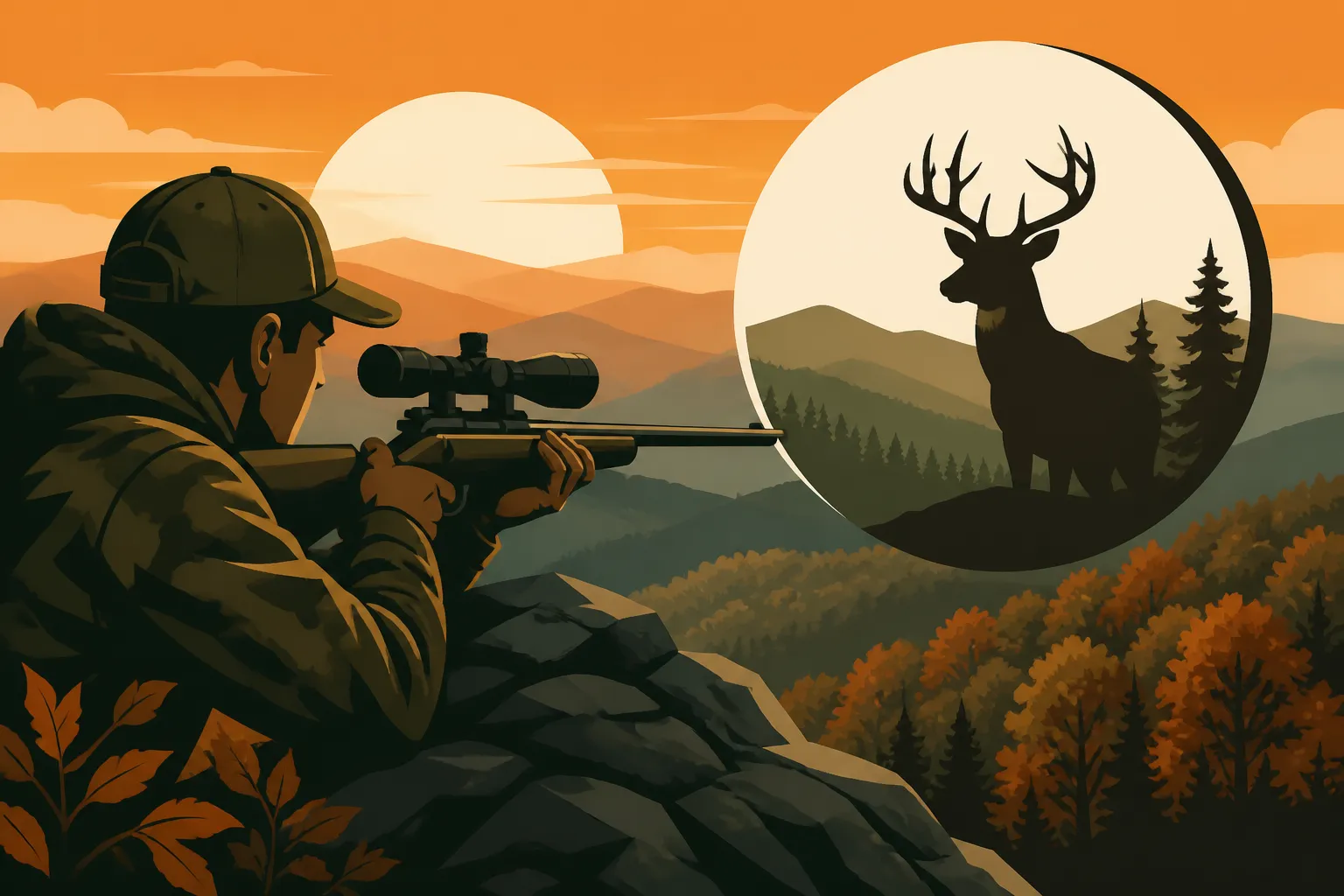
It's this dynamic environment that truly puts a caliber to the test. You need something that can handle the unexpected. Imagine you're carefully still-hunting along a finger ridge, peering down into a steep hollow. Suddenly, a mature buck slips out from behind a thick stand of rhododendrons on the opposing slope, pausing for a moment before disappearing into the next thicket. That shot might be 200 yards, downhill and across a ravine. Or, a buck could bust out of a thick bedding area just 30 yards below your stand, presenting a fleeting, steep downward shot. The ability of your cartridge to perform reliably in both extremes, with minimal holdover and a flat trajectory, becomes paramount.
Dealing with Variable Distances and Angles
One of the biggest frustrations for hunters in this kind of terrain is the variability of shot distance and angle. Unlike flat ground where you might zero for 200 yards and be good, the Cumberland Plateau throws curveballs. A "long shot" here might not be 300 yards horizontally, but 150 yards steeply downhill, or 250 yards with an extreme upward angle as a deer climbs a distant slope. These angles dramatically affect bullet trajectory, often causing shots to impact higher than anticipated if you're not accounting for gravity's reduced effect on steeply angled shots.
This is where a caliber's inherent flatness and predictability truly shine. While no cartridge completely negates the need to understand ballistics, one that minimizes bullet drop over typical hunting distances (say, 50 to 300 yards) makes those quick, on-the-fly calculations a lot less stressful. Add in the dense timber, and you might only have a small window through the trees, making a precise shot even more critical. Many hunters turn to digital mapping tools, and platforms like GoHunt can be incredibly useful for analyzing terrain contours before you ever step foot in the woods. By overlaying your stand location and potential shot lanes on a topo map, you can get a much better feel for what to expect in terms of distance and angle, helping you to mentally prepare and select appropriate zeroing strategies for your chosen cartridge.
Why the 6.5 Creedmoor Shines on Cumberland Ridges
The 6.5 Creedmoor has rapidly gained a reputation as a stellar deer hunting cartridge, and its attributes are particularly well-suited to the demands of hunting Tennessee's Cumberland Plateau. It's a modern cartridge designed for efficiency, accuracy, and manageable recoil, all factors that contribute to confident shooting in challenging environments.
Flat Trajectory and Wind Resistance
When you're looking across a deep hollow or down a long ridge, you want a bullet that flies straight and true. The 6.5 Creedmoor is famous for its inherently flat trajectory, especially with heavier, high-ballistic-coefficient (BC) bullets. This means less bullet drop over common hunting distances, simplifying holdover calculations in the field. For instance, with a 200-yard zero, a typical 143-grain 6.5 Creedmoor bullet might only drop a few inches at 250 yards and around 8-10 inches at 300 yards, far less than many traditional deer cartridges. This reduced drop is a huge advantage when you have a deer step out unexpectedly at an unknown range. Zeroing at 100 Yards for Ridge Hunting is a common starting point, but understanding your bullet's ballistic curve out to 300 yards is key for those longer shots.
Beyond vertical drop, the Cumberland Plateau often presents challenges with swirling winds, especially in the hollows or along exposed ridgetops. The high-BC bullets common in 6.5 Creedmoor loads are designed to cut through the wind more efficiently, minimizing horizontal drift. This combination of flat trajectory and good wind resistance means more consistent accuracy downrange, giving you a better chance of making a clean, ethical kill, even if a gust catches your shot. When you're spending hours glassing from an overlook, hoping a buck steps out, that confidence in your rifle's capabilities is priceless.
Manageable Recoil for Follow-Up Shots and Practice
Let's be honest: shooting a rifle that kicks like a mule isn't much fun, and it certainly doesn't help with accuracy, especially in the field where nerves can already be high. One of the major appeals of the 6.5 Creedmoor is its very manageable recoil. Compared to popular big-game cartridges like the .30-06 Springfield or even a .308 Winchester, the 6.5 Creedmoor generates significantly less felt recoil. This isn't just about comfort; it's a huge factor in practical accuracy.
Lower recoil allows shooters to maintain better sight picture through the shot, facilitating quicker follow-up shots if needed. More importantly, it encourages more practice. If shooting your rifle is comfortable, you're much more likely to spend time at the range, perfecting your technique and building confidence. This practice translates directly to better performance in the woods, whether you're making a precision shot from a steady rest or a quick off-hand shot in a tight spot. Even after a successful shot, if you need to quickly locate your game, the ability to settle back onto the target without flinching is crucial. Regular practice, perhaps tracking your progress with tools like GoHunt's data logging features if available, will build muscle memory and confidence that pays dividends when it matters most.
Terminal Performance on Tennessee Whitetails
While the 6.5 Creedmoor isn't a magnum, its terminal performance on deer is excellent, provided you choose the right bullet. The cartridge is typically loaded with bullets ranging from 120 to 147 grains, often with advanced controlled-expansion designs. These bullets are engineered to perform reliably across a wide range of velocities, expanding consistently to create effective wound channels without excessive meat damage. For Tennessee whitetails, which typically range from 100 to 200 pounds, a well-placed 6.5 Creedmoor shot with a quality hunting bullet is more than sufficient.
The key here is bullet construction. You want a bullet that will expand reliably upon impact but also retain enough mass to penetrate deeply, ideally creating an exit wound for a good blood trail. Brands offer excellent choices like bonded core bullets, monolithic copper bullets, or tipped projectiles designed for rapid expansion. A 143-grain bullet, for example, hitting a deer at 250 yards still carries plenty of energy for a clean kill. The debate around various calibers for deer hunting can be endless, but for the vast majority of Tennessee whitetails, especially in the dense woods of the Cumberland, the 6.5 Creedmoor provides a lethal combination of accuracy and terminal performance.
Optimizing Your 6.5 Creedmoor Setup for Tennessee Hunting
Having the right caliber is only part of the equation; optimizing your entire rifle setup for the specific challenges of the Cumberland Plateau can significantly improve your success. This means considering your rifle's features, the optics you choose, and the ammunition you load.
Rifle Choice and Features
When selecting a rifle chambered in 6.5 Creedmoor for Cumberland hunting, you'll want to balance accuracy with portability. Long, heavy barreled rifles are great for benchrest shooting, but they quickly become a burden when you're hiking steep terrain all day. A rifle with a barrel length between 20 and 24 inches strikes a good balance, offering sufficient velocity for the cartridge's performance while remaining maneuverable in thick timber. Look for a rifle that isn't overly heavy, perhaps with a synthetic stock to shed some ounces and shrug off the inevitable bumps and scrapes of the woods. Practical Range in Cherokee Forest Timber illustrates how compact rifles are advantageous in tight spots.
Consider features like a good quality trigger, which is paramount for precise shot placement. A crisp, clean-breaking trigger allows you to execute the shot without disturbing your aim. Many modern rifles come with adjustable triggers, allowing you to fine-tune them to your preference. While a detachable box magazine can be convenient for quick reloading, it's not strictly necessary for deer hunting where one well-placed shot is usually all you need. Ultimately, choose a rifle that feels comfortable and natural in your hands, as familiarity breeds confidence.
Optic Selection for Varied Light and Distances
The optics you mount on your 6.5 Creedmoor are just as critical as the rifle itself, especially in the diverse light conditions of the Cumberland Plateau. From the dim, shadowed hollows before dawn to bright, open ridgelines at midday, your scope needs to perform. A variable power scope in the 3-9x, 3-10x, or even 4-12x range is a versatile choice. The lower magnification settings are perfect for quickly acquiring targets in close quarters or thick cover, while the higher settings give you the precision needed for those longer shots across hollows. Optics for Cumberland Plateau Ridges delves deeper into choosing the right glass for this environment.
Look for a scope with good light transmission, especially for those crucial minutes at dawn and dusk when deer are most active. A larger objective lens (e.g., 40mm or 42mm) can help gather more light. Reticle choice is also important. A simple duplex reticle is often sufficient, but some hunters prefer a ballistic reticle or one with holdover points for quick adjustments at varying distances. An illuminated reticle can be a godsend in low light conditions, allowing you to clearly see your aiming point without obscuring the target. Always ensure your scope is mounted securely and zeroed properly before heading into the woods. A reliable rangefinder is also an absolute must for accurately determining distances in this undulating terrain.
Ammunition Choices for Performance
The market for 6.5 Creedmoor ammunition is robust, offering a wide array of bullet weights and designs. For deer hunting on the Cumberland Plateau, focus on quality hunting ammunition designed for controlled expansion and good penetration. Avoid strictly match-grade target bullets, as they may not be designed for optimal terminal performance on game. Instead, look for bullets specifically marketed for medium game.
Common bullet weights in the 120-147 grain range all perform well. Lighter bullets might offer a slightly flatter trajectory at extreme ranges, but heavier bullets often carry more kinetic energy and offer deeper penetration. For the typical shots you'll encounter on the Cumberland, a 140-143 grain bullet from a reputable manufacturer is an excellent all-around choice. Experiment with a few different brands and bullet types to see what shoots most accurately in your particular rifle. Consistency is key, and finding a load that groups tightly from your rifle will give you the utmost confidence when that big buck steps out.
Practical Considerations and Field Craft
Beyond the rifle and optics, successful hunting on the Cumberland Plateau with a 6.5 Creedmoor involves smart field craft, from scouting to carrying your gear and understanding shot angles.
Scouting and Understanding Terrain
Effective scouting is paramount for hunting the Cumberland. Before you even set foot with your rifle, spend time walking the ridges, checking game trails, locating saddles, and identifying potential bedding areas or food sources. Modern tools like satellite imagery and topographical maps are invaluable for this. Using an app like GoHunt on your phone can provide a wealth of information, allowing you to mark waypoints, track your movement, and study the terrain features in detail. Look for subtle changes in elevation, pinch points where deer are funneled, or benches where they might pause while traveling. Scouting Tennessee Public Land Before Season is always recommended.
Understanding how deer use the terrain will help you anticipate shot opportunities. They often travel just below the ridgetops to stay out of sight, or use the cover of hollows to move undetected. Predicting these movements will allow you to position yourself for the best possible shot. Knowing the distances between key landmarks, even if it's just a gnarled oak or a specific rock formation, can also give you quick reference points if a deer appears at an unknown range.
Managing Shot Angles and Distances
As mentioned, steep angles are a constant on the Cumberland. It's crucial to understand how they affect bullet impact. For shots taken at steep upward or downward angles, the bullet will typically impact higher than it would at the same horizontal distance on flat ground. This is due to gravity having less time to act perpendicular to the bullet's flight path. While modern rangefinders often have an angle compensation feature that gives you an "equivalent horizontal distance," it's still good practice to understand the principle. Always aim for the vital organs, and if unsure, err on the side of holding slightly lower for steeply angled shots, especially if your rangefinder doesn't compensate.
Practice shooting from elevated positions (like a treestand) or simulating steep uphill/downhill shots at the range. Don't just shoot from a bench rest. The more you practice in varied positions and at angles, the more confident you'll be when a real opportunity arises. Given the varied distances, knowing your bullet's trajectory out to 300 yards is key. Here's a quick comparison of average bullet drop for a few common cartridges, assuming a 200-yard zero and a 10 mph crosswind:
| Cartridge | Bullet Weight (gr) | 200-Yard Zero | Drop @ 250 Yards | Drop @ 300 Yards | Wind Drift @ 200 Yards (10mph) | Recoil (ft-lbs) |
|---|---|---|---|---|---|---|
| 6.5 Creedmoor | 143 | 0 inches | -2.5 inches | -8.5 inches | 3.5 inches | 15 |
| .308 Winchester | 150 | 0 inches | -3.0 inches | -10.0 inches | 4.0 inches | 18 |
| .30-06 Springfield | 180 | 0 inches | -3.5 inches | -11.5 inches | 4.5 inches | 22 |
Note: These figures are approximate and vary based on specific ammunition, barrel length, and environmental conditions.
As you can see, the 6.5 Creedmoor offers a noticeably flatter trajectory and better wind resistance, along with significantly less recoil, making it a very appealing option for these types of shots.
Carrying and Maintaining Your Gear
Hiking the Cumberland can be tough, and your gear needs to be up to the task. A good quality sling is essential for comfortably carrying your rifle over long distances and up steep inclines. Ensure it's adjustable and can distribute the weight evenly. When traversing dense areas, keep your scope caps on to protect your lenses from scratches and moisture. Regular cleaning and maintenance are critical, especially after hunting in wet or dusty conditions. The Cumberland can be damp, so knowing Cleaning a Rifle After a Wet Sit will prolong the life and reliability of your firearm.
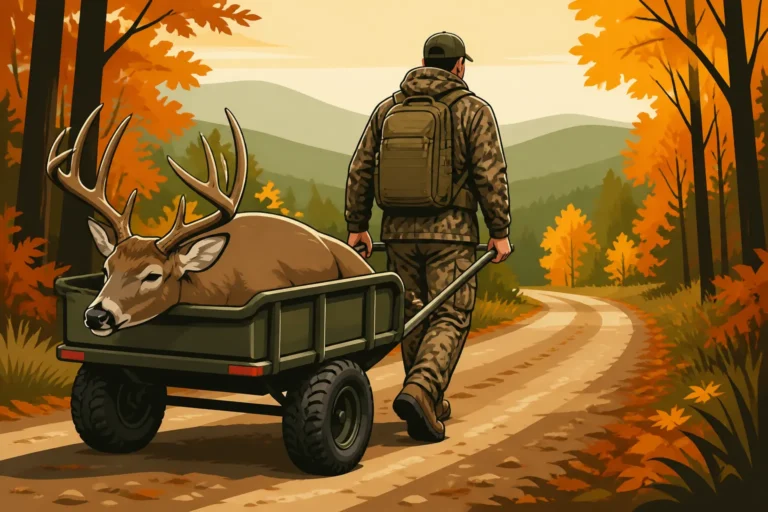
A sturdy backpack is also a must for carrying essentials like water, snacks, a first-aid kit, and perhaps a small game cleaning kit. If you're fortunate enough to harvest a deer, having a plan for extraction is important. Consider a deer sled or game cart if the terrain allows, though sometimes boning out an animal in the field is the most practical option in steep, rugged country. Deer Sleds for Ridge Country can be a lifesaver, but only if the trail allows.
Ultimately, hunting the Cumberland Plateau with a 6.5 Creedmoor is about combining a capable cartridge with smart preparation and good field craft. It's a rewarding experience that demands respect for the land and an understanding of your equipment's capabilities.
Disclaimer
This article is for general informational purposes only and does not constitute professional advice. Laws, prices and regulations vary by location and change over time. Consult a qualified professional for guidance on your specific situation.