Glassing a Powerline Cut at Last Light
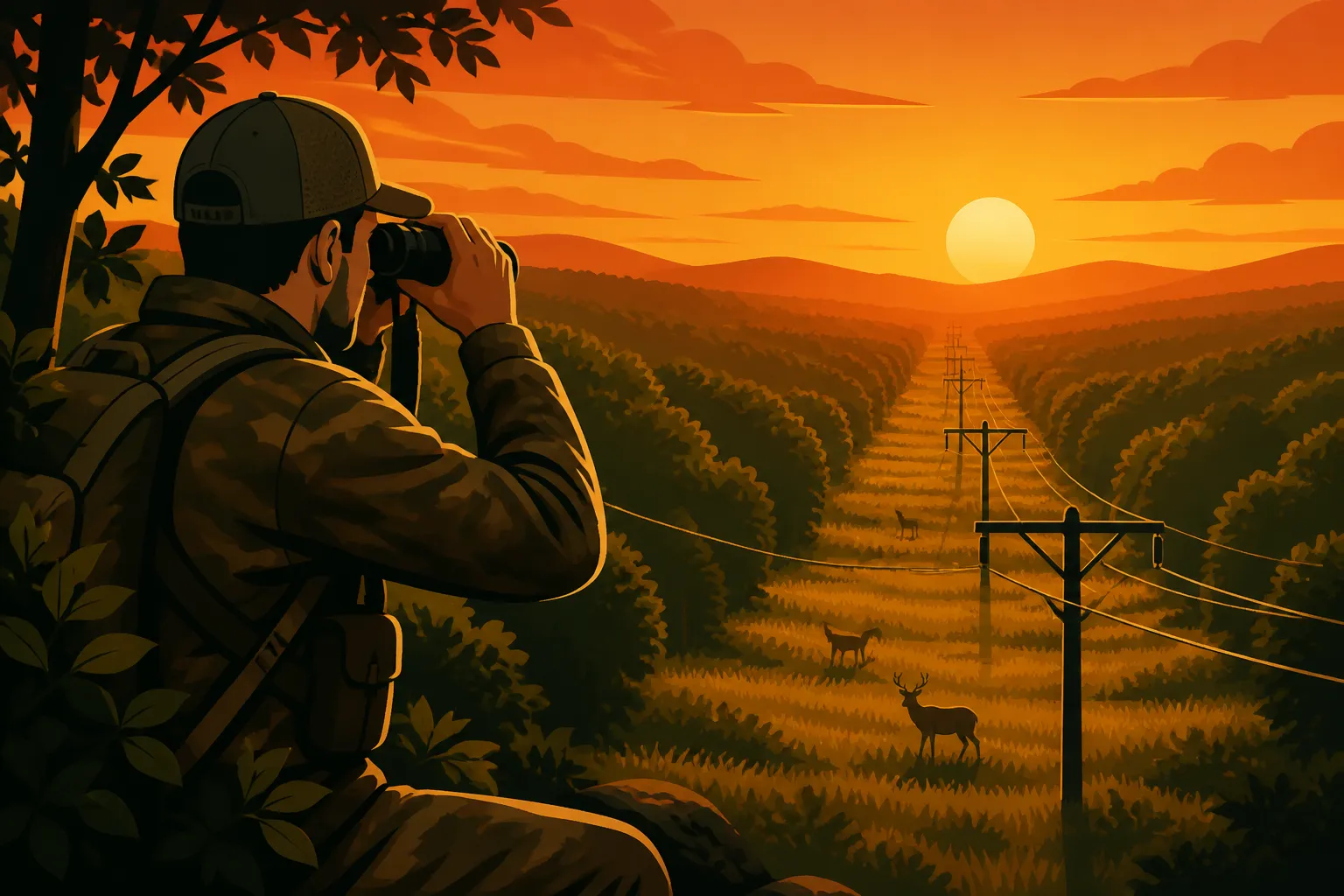
Many of us have spent countless hours in the deer woods, only for the whitetails to appear like ghosts just as the light fades, especially in those frustratingly open powerline cuts. It can feel like they know exactly when to emerge, right when your vision is at its worst. This guide is all about turning that frustration into success, by showing you how to effectively glass a powerline cut at last light, making the most of those prime evening minutes in the Tennessee deer woods.
Why Powerline Cuts are Deer Magnets and Challenges They Present
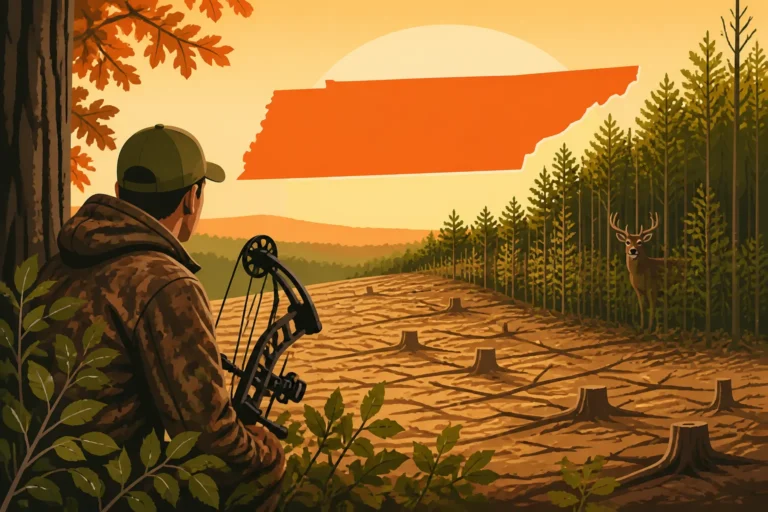
Powerline cuts, despite their industrial appearance, are often absolute magnets for deer in Tennessee. Think about it: they carve wide, open swaths through otherwise dense timber, providing unique ecological features that whitetails absolutely adore. For starters, these clearings let in a ton of sunlight, which encourages the growth of thick, brushy browse plants, briars, and young saplings – all prime deer forage. This isn't just a handful of weeds; we're talking about a buffet line that can stretch for miles, offering a consistent food source in areas where mature timber might otherwise lack understory. Deer, being creatures of opportunity, quickly key in on these areas, especially as the season progresses and other food sources become scarce.
Beyond just food, powerline cuts also offer critical cover. While they look open to our eyes, the regrowth within them, often consisting of dense, tangled briars and shrubbery, provides excellent bedding and hiding spots. A mature buck might not bed right in the middle, but he’ll often lay up on the edge, just inside the timber, keeping an eye on the open cut. These areas often serve as fantastic travel corridors, too. Deer use the path of least resistance just like we do. A powerline right-of-way can connect different bedding areas, water sources, or feeding grounds, effectively acting as a superhighway for deer movement, especially during the low-light hours of dawn and dusk. This is why you often see deer emerge from the timber into these cuts, or cross them to get to another woodlot. Understanding this dual function of food and travel is key to successfully hunting these unique landscapes.
Food, Cover, and Travel Corridors
The ecological advantages of a powerline cut are multifaceted, creating an irresistible draw for Tennessee’s whitetails. Picture a dense stand of hardwoods or pines, where the forest floor is shaded, and browse is sparse. Then, imagine a long, bright strip cut through it, bathed in sunlight. This is where successional vegetation explodes. Young sweetgum, sumac, greenbrier, honeysuckle, and blackberry bushes flourish, providing nutrient-rich forage that deer crave. This is particularly vital in areas where natural food sources, like acorns, might be scarce due to a poor mast year or heavy predation. The deer instinctively know these areas hold sustenance, especially in the late season when other forage has dwindled. You can often see deer actively browsing right in the middle of these cuts as the sun begins to set.
Moreover, while the open nature might seem contradictory, the dense, low-growing cover within the cuts offers phenomenal security. A deer can disappear surprisingly quickly into a patch of head-high briars. This thicket provides excellent thermal cover during cold snaps and acts as a safe haven, allowing deer to stage just inside the cover, observing the open expanse before venturing out. The edges of these cuts, where the brush meets the mature timber, are prime spots for bucks to cruise, checking for does or scent-marking. These corridors aren't just for movement; they're integral parts of a deer's daily life cycle, from feeding to bedding to breeding.
The Unique Challenges of Wide-Open Spaces
Now, while powerline cuts are undeniably attractive to deer, they come with their own set of challenges for the hunter, particularly when you’re trying to spot deer at last light. The sheer openness, which makes them appealing to deer, can make them difficult to hunt effectively. You’re exposed, and deer are naturally wary of wide-open spaces. This means they often wait until the absolute last sliver of daylight, or even until after legal shooting hours, to step out into the middle of the cut. Your traditional ambush spots along trails in dense woods might not work as well here, as deer are less likely to follow predictable trails across such exposed ground.
Furthermore, the linear nature of a powerline cut can create optical illusions and make judging distance a real headache. A deer that looks close might be hundreds of yards away, and vice-versa, especially as shadows lengthen and light fades. The terrain within these cuts can also be surprisingly varied, with dips, rises, and patches of thick brush that can conceal a deer remarkably well, even in what appears to be an open field. This is where the practice of Reading Aerial Photos for Cumberland Plateau Deer becomes invaluable, helping you identify potential hidden terrain features before you even step foot in the woods. These challenges require a different approach than typical timber hunting, relying heavily on observation and patience rather than aggressive movement.
Essential Gear for Effective Last-Light Glassing
When it comes to glassing powerline cuts at last light, your optics are your absolute best friends, and honestly, this isn't an area where you want to skimp. You're trying to resolve details in rapidly fading light, and cheap glass simply won't cut it. For general scanning and locating deer, a good pair of 10×42 binoculars is almost always the standard. They offer a great balance of magnification and field of view, allowing you to cover a lot of ground without excessive hand shake. Brands like Vortex, Leupold, and Maven offer excellent quality for the price, providing bright images even in challenging conditions. The clarity and light-gathering capability of quality glass can literally mean the difference between seeing a rack materialize from the shadows and heading home empty-handed. If you really want to dive deep into what makes a good pair, exploring Binocular Power for Ridge Hunting is a great next step.
For those situations where you're really trying to scrutinize a specific area or confirm if that brown patch is indeed a deer, a spotting scope becomes incredibly useful. While not essential for every hunt, if you're consistently hunting very long powerline cuts or trying to count points on a deer hundreds of yards away, a 60-80mm spotting scope with variable magnification (20-60x or similar) can be a game-changer. Remember, at last light, every photon counts, so look for scopes with excellent objective lens diameter and coatings. Combine these with a solid tripod, and you'll be able to pick apart distant cover with precision that handheld binoculars can't match.
High-Quality Optics: Binoculars and Spotting Scopes
Choosing the right binoculars is paramount for success in low-light conditions. While 10×42 is a fantastic all-around choice, some hunters prefer a 12×50 for increased magnification and light gathering, especially when working vast powerline cuts in West Tennessee or the broader Cumberland Plateau. However, the increased magnification also means any hand movement is amplified, making a tripod even more beneficial. Look for binoculars with high-quality ED (Extra-low Dispersion) glass, which minimizes chromatic aberration and delivers crisper, color-accurate images. Fully multi-coated lenses are also a must, as they reduce glare and maximize light transmission. This attention to detail in your optics can mean the difference between seeing a shadowy form and positively identifying a legal buck just before legal shooting hours end.
For hunters who frequently encounter deer at extreme ranges across these open cuts, a spotting scope mounted on a sturdy tripod is indispensable. It allows you to patiently study distant animals without eye strain, assessing their rack size and ensuring they are indeed deer, not just a patch of brush. This level of optical resolution can also help you identify specific bucks you've seen on trail camera photos. The ability to sit comfortably and systematically scan a distant hillside or the far end of a mile-long powerline cut without fatigue is a huge advantage. Remember, even the best optics are only as good as the hunter behind them, so practice using your gear in varying light conditions to get comfortable with its performance. You might find a great deal of information on selecting proper Optics for Cumberland Plateau Ridges to be helpful.
Support Systems and Comfort
Holding binoculars steady for extended periods, especially when trying to pick out subtle movement, is exhausting and ineffective. This is where proper support systems become absolutely crucial. A good binocular harness is non-negotiable. It distributes the weight across your shoulders, keeping your binoculars secure and readily accessible, while preventing them from swinging around and banging against your chest. Look for one that's comfortable, quiet, and allows for quick deployment. For truly effective last-light glassing, especially with a spotting scope, a sturdy tripod is indispensable. It eliminates shake entirely, allowing you to settle in and patiently dissect the landscape. A lightweight carbon fiber tripod is ideal for portability, but even a heavier aluminum one is better than no tripod at all. Attach a pan head to it for smooth, controlled scanning.
Beyond optics, think about your personal comfort. Last light often means cooler temperatures. Dress in layers, particularly if you'll be sitting still for a while. A comfortable seat cushion or small folding chair can make those long sits far more tolerable. And don't forget a rangefinder! Knowing the exact distance is critical when planning a stalk or evaluating a shot. Even a simple Rangefinders Under 100 Yards model can be a huge asset in the varied terrain of a powerline cut. Having a comfortable, stable setup allows you to focus all your attention on scanning for deer, rather than fighting fatigue or an unstable view.
| Optic Type | Ideal Use Case | Magnification Range | Key Benefit (Last Light) | Best Paired With |
|---|---|---|---|---|
| 10×42 Binoculars | General scanning, identifying deer at medium range (up to 300 yards), ideal for most Tennessee timber-edge hunting | 10x | Excellent light gathering, wide field of view | Binocular harness |
| 12×50 Binoculars | Extended scanning, slightly longer distances (300-500 yards), good for wider cuts or open fields | 12x | Increased detail at distance, more light | Binocular harness, tripod (optional) |
| Spotting Scope | Long-range identification, scoring bucks, detailed observation (500+ yards), confirming antler points | 20-60x | Extreme detail, high magnification | Sturdy tripod |
Mastering the Art of Glassing: Techniques for Powerline Cuts
Just pointing your binoculars randomly isn't "glassing" – that's just looking around. Effective last-light glassing in a powerline cut requires a systematic approach, often called "gridding." Start at one end of the cut, or a specific section, and slowly scan in small, overlapping sections, as if you're reading a book. Move your optics horizontally across a strip of terrain, then drop down slightly and scan back across, slowly covering the entire area you intend to observe. The key is slow. Many hunters make the mistake of scanning too quickly, missing subtle movements or partially concealed deer. A good rule of thumb is to spend at least 30-60 seconds on each small "grid square" before moving on.
Focus on edges where the powerline meets the timber. Deer often linger there, feeling secure with cover close by. Look for shapes that seem "out of place" – a horizontal line in a vertical world of trees, a patch of brown that seems too uniform, or the subtle flick of an ear. Don't just look for an entire deer; look for parts of a deer. An antler tip, a leg, or a back line can give them away. Patience here is your superpower. As the light fades, the contrasts become less defined, making it harder to spot game. This systematic, slow scan allows your brain time to process what your eyes are seeing and pick out those camouflaged forms. This meticulous process is also excellent for Scouting Tennessee Public Land Before Season, helping you learn the nuances of terrain.
Systematic Scanning Techniques
To truly unlock the secrets of a powerline cut at last light, you need to commit to a rigorous and patient scanning method. Instead of just generally sweeping the area, break the entire cut down into smaller, manageable sections. Imagine drawing a grid over the landscape. Start in the top left corner of your chosen section, slowly moving your binoculars to the right, scrutinizing every single detail. When you reach the end of that horizontal strip, drop your binoculars slightly, and scan back to the left, overlapping your previous pass by about 10-20%. Continue this methodical "gridding" until you've thoroughly examined every inch of the powerline cut. This is a critical departure from casual observation; it forces your eyes to slow down and truly process the visual information, preventing you from glazing over potentially hidden deer.
Don't be afraid to pause and hold your binoculars on suspicious spots for an extended period. Is that a stump, or part of a deer? Is that branch really a branch, or could it be an antler tine? The human eye is incredibly good at picking up movement, but when deer are still or partially concealed, you need to rely on shape recognition. Look for the distinct horizontal line of a deer's back, the curve of a neck, or the dark patch of an eye. In areas with dense regrowth, even a subtle twitch of an ear or tail can give away a bedded deer. Remember, the goal isn't just to see a deer, but to see all the deer in the area, and that requires an almost meditative level of focus. This is a skill that takes practice, similar to Glassing a North Cumberland Elk Meadow, albeit on a different scale.
Reading the Landscape for Subtle Clues
Beyond just scanning, truly effective glassing involves reading the landscape, understanding where deer would be, and what subtle clues might give them away. In a powerline cut, think about variations in terrain. Are there small depressions or rises that offer pockets of cover? Deer love to bed or stage in these subtle features, even if they seem insignificant. Look for changes in vegetation density – a thicker patch of briars might be obscuring a bedded deer. Pay close attention to pinch points or natural funnels within the cut, such as where a small creek crosses, or where the width narrows. These are prime areas for deer to cross or bottleneck.
Consider the sun's position. At last light, deer will often prefer areas where they can take advantage of the last rays of warmth, or positions that offer them a visual advantage without staring directly into the setting sun. Shadows can be your friend or your enemy; they can hide deer, but they can also create sharp contrasts that reveal a form. Knowing where to expect deer, based on current conditions and your prior scouting, significantly increases your chances. Tools like the GoHunt app, with its detailed satellite imagery, can help you identify these micro-terrain features and pinch points from home, giving you a strategic advantage before you even step afield. You might find a small draw or a slight ridge within the cut that you didn't notice on the ground, creating a perfect hidden travel lane. Understanding these micro-features can be as important as finding Late-Season Food Sources for Tennessee Whitetails.
Maximizing Your Last-Light Window: Timing and Approach
The "last light window" for hunting powerline cuts is notoriously short and intense. Deer are often at their most active and visible during the final 30-60 minutes of legal shooting light, sometimes even stepping out in the last 15. This means your preparation and positioning need to be flawless. Get into your chosen glassing spot early. At least an hour before sunset is a good benchmark. This allows you to settle in, get comfortable, and thoroughly scan the area in good light, noting any existing deer or potential staging areas. The last thing you want is to be rushing to your spot as the first deer are already making their appearance.
Your position is paramount. You want an elevated vantage point if possible – a slight knoll, a hillside, or even a well-placed Treestand Setups in Cherokee National Forest overlooking the cut. This gives you a broader view and helps you spot deer that might otherwise be hidden by undulating terrain or low brush. Always consider the wind direction. While you're primarily glassing, you might need to make a move, and an unfavorable wind will immediately bust you. Position yourself so the wind is in your face or quartering. The thermal drafts in Tennessee's varied terrain, especially on ridgelines or near creek bottoms, can be unpredictable at dusk, so always be mindful of Wind and Thermals on a Ridge System. If you're utilizing a ground blind, ensure it's brushed in thoroughly, as advised in Brushing In a Blind on a Field Edge, to break up your outline against the open backdrop of the powerline.
Optimal Timing and Position
Successfully capitalizing on the last-light window hinges on impeccable timing and strategic positioning. It's not enough to simply be there; you need to be in the right place at the right time, completely settled and ready to observe. Arriving at least 60-90 minutes before sunset is often ideal. This gives the woods time to calm down after your approach, allows you to rehydrate, check your gear, and scan the area with good daylight still available. You can spot trails, rub lines, or Finding Sign in Big Cherokee Forest Timber that might be missed in the encroaching gloom. This early arrival ensures that when the deer start to move, you're not fumbling with your optics or trying to find a comfortable perch.
Choosing your observation point requires careful thought. An elevated position that overlooks a large portion of the powerline cut, especially where it intersects with dense timber, is usually best. This could be a natural knoll, a ridge finger, or even a strategic spot on a nearby hill. The higher you are, the better your sightlines, allowing you to see into dips and hollows within the cut that might otherwise be obscured. However, an elevated position also means being more exposed. So, ensure you have some form of back cover—a thick tree, a rock outcropping, or a small cluster of cedars—to break up your silhouette. Your scent stream is equally important; position yourself so your scent is blowing away from the most likely deer entry points. Even if you're just Using a Ground Blind on Tennessee Public Land, ensure it's positioned to give you the best view while remaining concealed.
Post-Shot Strategy and Retrieval Considerations
Spotting a deer at last light is exhilarating, but what happens after the shot needs to be carefully considered. The fading light presents significant challenges for tracking and recovery. If you do take a shot, observe everything. Note exactly where the deer was standing, its reaction to the shot, the direction it fled, and any physical landmarks that can help you mark the spot. Immediately look for a blood trail with your binoculars if possible, even if it's faint. Do not rush in. Give the deer time, especially if the shot wasn't perfect. A good rule of thumb is to wait at least 30 minutes for a deer that appears to be well-hit, and several hours for a questionable hit, if possible.
However, "several hours" often means waiting until morning when hunting at last light. This can be agonizing, but it significantly increases your chances of recovery, allowing the deer to expire and stiffen, preventing further movement. Before you even head out, have a plan for Blood Trailing After Dark in Tennessee if necessary, including a powerful headlamp or spotlight. Consider the weather forecast; if rain is expected overnight, it might wash away a blood trail, making immediate tracking more urgent. A mapping app like GoHunt can be incredibly helpful for marking the shot location and the deer's last seen direction, assisting greatly in your Tracking a Deer Through Tennessee Leaf Litter efforts the following morning. Always prioritize a safe and ethical recovery, even if it means sacrificing some sleep or waiting until daylight. This foresight will save you heartache and ensure your harvest is respected. You'll also want to be prepared for Field Dressing a Deer in Cold Weather to preserve the meat if you do recover it late.
Advanced Tips and Common Pitfalls
In today's hunting world, technology can be a powerful ally, especially when glassing powerline cuts. While it doesn't replace boots on the ground, mapping apps like GoHunt (and others like onX Hunt) are invaluable. Before you even leave home, use these apps to study the terrain. Identify potential bedding areas near the cut, subtle draws, water sources, and especially access points that will get you to your glassing spot quietly and efficiently. Mark potential travel corridors or pinch points where deer are likely to cross the cut. You can also use the app to mark the exact location where you spotted deer on previous hunts, building a historical database of movement patterns in that specific powerline. This kind of digital scouting complements your physical efforts, making you a much more informed and effective hunter.
Furthermore, don't underestimate the utility of trail cameras. Placing cameras on trails leading into or out of a powerline cut, or even on a well-used game trail within the cut itself, can provide critical intel on deer movement patterns, preferred entry/exit times, and specific bucks frequenting the area. Check them periodically, especially during the week leading up to your hunt, to confirm current activity. Just be sure to adhere to Trail Camera Rules on Tennessee Public Land if you are hunting on WMA or National Forest land. Combining real-time observation with data from your cameras and mapping apps creates a comprehensive strategy that significantly boosts your chances of success.
Using Technology to Your Advantage
Modern mapping applications are nothing short of a game-changer for planning your hunt, particularly when it involves expansive areas like powerline cuts. Before you ever leave your house, pull up your GoHunt app or other detailed mapping software and zoom in on your hunting area. Look for subtle elevation changes that could provide an elevated glassing point. Identify fingers of timber that extend into the cut, creating natural funnels that deer might follow. Note any small creek beds or ditches within the cut that could offer concealed travel routes or bedding. This kind of "e-scouting" allows you to build a detailed mental map of the area, highlighting key features and potential deer activity zones long before you set foot in the field.
Beyond pre-hunt planning, these apps are indispensable in the field. You can mark your exact glassing location, potential shooting lanes, and the spot where you last saw a deer. This digital breadcrumb trail is vital for post-shot recovery or for returning to a productive area. Many apps also offer public/private land boundaries, helping you ensure you stay on legal hunting ground. By integrating this technology into your hunting strategy, you turn what used to be guesswork into informed decision-making, giving you a distinct advantage in locating those elusive last-light deer.
The Patience Game and Minimizing Pressure
Hunting powerline cuts at last light is fundamentally a patience game. Deer are smart, and they are masters of using the available cover and fading light to their advantage. Rushing the process, moving too early, or making too much noise will often result in blowing out deer before they even show themselves. This is especially true on public lands where deer are more accustomed to human presence and pressure. When you're glassing, sit still, be quiet, and let the landscape come alive around you. The first 15-20 minutes after you settle in might be quiet, but as the woods transition from day to night, deer will often start to move.
Minimizing pressure is also key to repeated success in a powerline cut. If you blow out deer repeatedly from a specific area, they will quickly learn to avoid it during daylight hours, pushing their movement further into the darkness. This means having a quiet entry and exit strategy is crucial. Don't walk directly down the middle of the cut to your spot; instead, approach from the timber edge, using terrain features to conceal your movement. If you've made a shot, and need to retrieve a deer, be as quiet and efficient as possible, especially if you plan to hunt that spot again soon. Respecting the deer's instincts and minimizing your impact will ensure these productive areas remain good hunting spots for years to come. Remember, public land deer are particularly sensitive to pressure, so understanding Hunting Pressure on Tennessee Public Land is vital.
Disclaimer
Please remember that hunting regulations, seasons, and licensing requirements can change. Always consult the most current Tennessee Wildlife Resources Agency (TWRA) regulations before heading afield. This guide provides general information and tactics for hunting powerline cuts, but it is your responsibility to know and follow all applicable laws. Good luck out there, and hunt safe!