Why Williamson County’s First Case Surprised Hunters
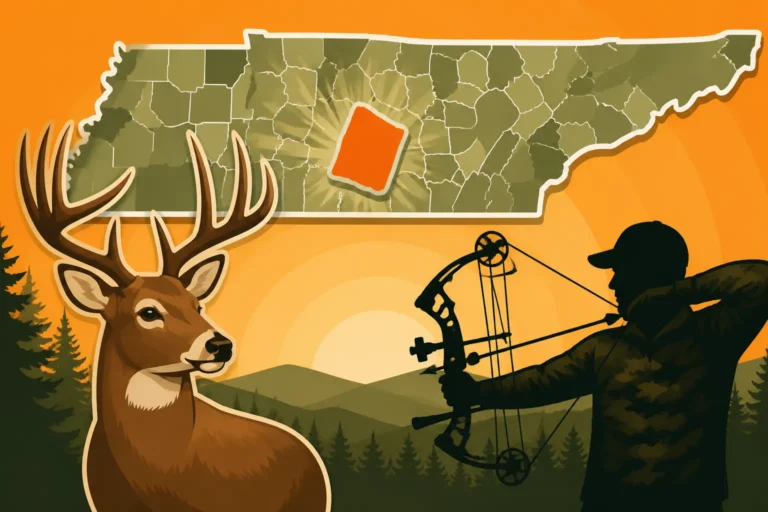
For many Tennessee hunters, the news that Chronic Wasting Disease (CWD) had been detected in Williamson County landed like a true shockwave. This wasn't the open farm country of West Tennessee or the expansive forests of the Cumberland Plateau; this was the heart of Middle Tennessee, a bustling, growing area known more for its rapid development than its widespread deer issues. This guide aims to unravel the layers of surprise surrounding Williamson County's first CWD case and help hunters understand the implications for their cherished pursuits in this unique landscape.
The Alarming Eastern Creep of CWD Across Tennessee
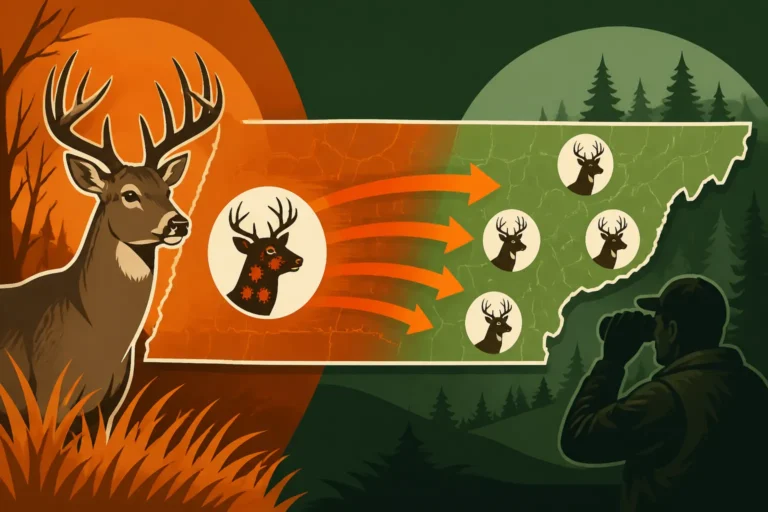
The appearance of CWD in Williamson County was particularly startling because it represented a significant leap eastward for the disease, disrupting the perceived geographical progression many hunters had come to expect. For years, the CWD story in Tennessee had largely been centered around the western part of the state, where the initial outbreaks occurred and the disease became firmly entrenched.
Tracing the Initial Western Outbreak
When CWD was first discovered in Tennessee, it was in Fayette and Hardeman counties, right on the Mississippi border. From there, it seemed to follow a somewhat predictable, albeit deeply concerning, path, radiating outward primarily through the agricultural heartland of West Tennessee. Hunters had grown accustomed to discussions about Which County Found Tennessee's First CWD Case and How CWD Reached Humphreys County, understanding that the highly mobile deer population in these open areas facilitated faster spread. We were constantly hearing about new counties joining the CWD zone, typically neighboring those already affected. The narrative was often about controlling the spread in areas with extensive agricultural practices and dense deer populations, where deer movement and congregation around food sources could accelerate transmission.
This pattern, while alarming, allowed many hunters in other regions, especially further east, to hold onto a sense of distance. There was a natural assumption that the disease would slowly but surely work its way across the state, almost like a slow-moving front. The challenges of Tennessee's Chronic Wasting Disease Management Zone became a major topic of conversation, focusing on the efforts in the western and parts of central Tennessee to mitigate the issue. Hunters in Middle and East Tennessee, while vigilant, perhaps felt a slight buffer, a feeling of "it's not here yet."
The Unpredictable Nature of Disease Transmission
However, CWD doesn't always adhere to neat, linear progression. While deer movement is a primary vector, human activity can also play a significant, sometimes overlooked, role. The transportation of infected carcasses, even accidentally, from a CWD-positive area to a previously unaffected one can effectively "jump" the disease over vast distances. This is why Tennessee Carcass Deboning Requirements are so critical, especially when hunters are traveling from CWD-positive zones.
Furthermore, the disease's persistence in the environment, through prions shed in urine, feces, and saliva, means that once an area is contaminated, it can remain a source of infection for other deer for an extended period. This environmental component adds another layer of complexity to its spread, making it harder to predict where the next case might emerge. The Williamson County case served as a stark reminder that no county, regardless of its perceived isolation from the initial outbreak zones, is truly immune from the potential arrival of CWD. It highlighted that our understanding of its spread, while growing, still holds many unknowns, and that vigilance and adherence to regulations are paramount everywhere.
Williamson County's Landscape: Why Hunters Felt Safe
The shock of CWD's discovery in Williamson County wasn't just about its geographical location, but also about the unique characteristics of the county itself, which, for many, seemed to offer a degree of natural protection.
Suburban Sprawl and Perceived Isolation
Williamson County is famous for its rapid growth, burgeoning suburban communities, and a high population density, particularly in areas like Franklin and Brentwood. When you picture hunting in Tennessee, you might think of vast timber tracts, rolling farmland, or river bottoms. While Williamson County still boasts beautiful rural areas and significant tracts of timber, particularly on its eastern and southern edges, it also has a considerable amount of fragmented habitat. Many hunters assumed that the spread of development, with its roads, fences, and human activity, might act as a natural barrier to widespread deer movement, thus slowing the potential for disease transmission. It felt less like a contiguous deer habitat and more like a patchwork, suggesting a more isolated deer population.
This perception of isolation from heavy hunting pressure and intense deer concentration, especially compared to the agricultural powerhouses to the west, contributed to the surprise. Hunters often discuss Hunting Small Woodlots Near Suburban Nashville and the challenges that come with reduced habitat and increased human presence. The expectation was that if CWD were to arrive, it would be in a more rural, contiguous county with a high deer density and extensive agricultural practices, not one experiencing such rapid residential and commercial expansion. The thought was that the deer herd here, while present, might not have the same level of interconnectivity with other herds that could be a vector for disease.
Deer Behavior in a Developed Environment
Deer in suburban and exurban areas often exhibit different behaviors than their counterparts in purely rural settings. They can become accustomed to human presence, adapting their movements to navigate around roads, neighborhoods, and even backyard fences. Their home ranges might be smaller, and their movement patterns often more constrained by development. While this might seem like it would limit contact with deer from other, potentially infected areas, it also creates unique challenges. Deer can still move through greenways, along creek beds, and between fragmented woodlots.
Furthermore, the presence of supplemental feeding, even if unintentional through garden browsing or bird feeders, can lead to localized concentrations of deer, increasing nose-to-nose contact and the potential for CWD transmission within smaller, localized populations. It's a double-edged sword: development might limit broad-scale migration, but it can also inadvertently create "hot spots" where deer gather in closer proximity. This nuanced understanding of Deer Density by Tennessee Region reveals that even seemingly developed areas can harbor robust deer populations that are perfectly capable of sustaining disease transmission, especially if those populations are tightly knit within a specific urban-adjacent greenspace. The surprise in Williamson County underscored that no matter the landscape, if deer are present, the potential for CWD exists, and understanding local deer behavior is paramount.
Immediate Repercussions and New Regulations for Hunters
The discovery of CWD in Williamson County immediately triggered a cascade of regulatory changes and new responsibilities for hunters, fundamentally altering the way hunting is conducted in the area. This isn't just a minor tweak; it's a significant shift designed to contain and manage the disease.
Understanding the Enhanced CWD Management Zone
Once CWD is confirmed in a county, that county, and often its immediate neighbors, is designated as an Enhanced CWD Management Zone (ECWD Zone). This classification comes with a stricter set of rules than other areas. For Williamson County, this meant a sudden and critical shift in how deer harvests are managed. The primary goal of these zones is to reduce deer density, which helps slow the spread of the disease, and to increase surveillance through testing. This is a critical component of Tennessee's Chronic Wasting Disease Management Zone overall strategy.
One of the most immediate changes hunters face is the mandatory submission of all harvested deer for CWD testing. This isn't optional; it's a legal requirement designed to gather as much data as possible about the disease's prevalence and distribution within the county. This means hunters need to be aware of Finding a Tennessee CWD Sampling Station and plan their hunt accordingly to ensure they can get their deer tested within the required timeframe. It adds an extra step to an already busy hunting day, but it's a vital one for the long-term health of the herd. Additionally, carcass movement restrictions are stringent. Whole carcasses cannot be moved out of the ECWD Zone, except to a licensed taxidermist or meat processor within or immediately adjacent to the zone. This is a big deal for hunters who may live in an adjacent county but hunt in Williamson, or vice-versa.
Mandatory Testing and Carcass Restrictions
The mandatory testing requirement often means a change in routine for hunters. Instead of just field dressing and heading home, you're now responsible for taking your deer to an official CWD sampling station. These can be self-service kiosks or staffed check stations, and knowing their locations and operating hours is crucial. The goal is to obtain lymph node samples for laboratory analysis. Hunters are given a unique number to check their results online later, ensuring transparency in the process.
| CWD Zone | Carcass Movement Rules | Testing Requirements | Earn-a-Buck Program |
|---|---|---|---|
| Standard | Whole carcasses can move within or out of the zone, but debone for movement into non-zone. | Voluntary testing, often encouraged at check stations. | No |
| ECWD | Whole carcasses generally cannot leave the zone (exceptions for adjacent processors/taxidermists). | Mandatory testing for all harvested deer. | Yes |
Beyond testing, the carcass movement restrictions are perhaps the most impactful for hunters. You can debone your deer in the field or at home within the ECWD Zone, and then transport only the deboned meat, skull plate (antlers attached), and hides out of the zone. This is to prevent inadvertently moving infected lymphoid tissue (like brain or spinal cord) to new areas. Hunters who relied on taking their whole deer to a processor outside the county or bringing it home to process themselves in a non-CWD county now need to adjust their plans dramatically. This might involve finding a processor within the zone or learning Butchering a Deer at Camp if they traditionally outsourced the work. This new reality demands more planning and often more physical effort from the hunter right after the harvest.
The Earn-a-Buck Program in Practice
Another significant regulatory shift in ECWD Zones like Williamson County is the implementation of the Earn-a-Buck (EAB) program. This program is designed to incentivize the harvest of antlerless deer, further reducing the overall deer population and helping to slow CWD transmission. Under the EAB program, a hunter must harvest and submit an antlerless deer for CWD testing before they are eligible to harvest an antlered deer. This means your first deer in Williamson County, if you want to shoot a buck, must be a doe, and it must be tested. Only after successfully checking in that antlerless deer can you then legally harvest a buck. For detailed rules on this, check out How the Earn-a-Buck Program Works.
This program can dramatically change a hunter's strategy, especially early in the season. Instead of holding out for a trophy buck, hunters must prioritize doe harvest. It shifts the focus from antler size to herd management and disease mitigation. It also means more time spent scouting for does, and potentially passing up early-season buck opportunities if you haven't yet "earned" your buck tag. This can be a frustration for many, but it's a direct measure to manage the deer population in response to the CWD threat. The TWRA also allows for bonus antlerless deer tags in CWD zones, providing even more opportunity to help reduce the herd size.
Strategies for Adapting Your Hunt in a CWD-Affected County
Hunting in a CWD-affected county like Williamson demands a more informed and strategic approach. It's not about giving up, but about adapting your methods and mindset to the new realities of deer management and disease prevention.
Prioritizing Scouting and Information Gathering
With CWD now present, effective scouting becomes even more crucial. You need to understand local deer movement patterns, identify potential feeding and bedding areas, and recognize signs of healthy versus unhealthy deer. Utilizing aerial photos and mapping tools can be a game-changer. Services like GoHunt offer detailed mapping layers that can help you identify property boundaries, access points, and terrain features. This is invaluable when trying to navigate a fragmented landscape like Williamson County, where private land can abut public access areas or small, huntable woodlots. Knowing Reading Aerial Photos for Cumberland Plateau Deer might be a good starting point for learning how to scout with maps, even though Williamson County's terrain differs.
Beyond physical scouting, staying informed about the latest CWD updates from the TWRA is paramount. This includes knowing the exact boundaries of the ECWD Zone, understanding any specific regulations for Williamson County, and being aware of sampling station locations and hours. Hunters should regularly check the TWRA website or use their Go Outdoors Tennessee app to get real-time information. Understanding How Many Counties Have Found CWD is part of the bigger picture, but specific county-level details are what truly matter for your hunt. Your commitment to gathering this information directly impacts your ability to hunt legally and ethically.
Ethical Considerations and Community Responsibility
Hunting in a CWD-affected area also carries a heightened ethical responsibility. Beyond simply following the law, hunters become front-line participants in disease management. This includes strictly adhering to carcass transport rules to prevent further spread. If you hunt in Williamson County, plan to process your deer within the county or use a local processor. If you're going to debone in the field, ensure you know how to properly dispose of the carcass remains. Many hunters also choose to focus on harvesting older deer, as CWD is more prevalent in older age classes. This might mean adjusting your target animals, even if it's not a strict regulation.
Furthermore, being part of the hunting community in a CWD zone means being an advocate for responsible practices. Educate fellow hunters, landowners, and non-hunters about CWD, its implications, and the importance of testing and compliance. Your participation in the mandatory testing provides crucial data that informs management decisions. Remember, the goal is to protect the health of the deer herd for future generations. For those hunting on public lands in Williamson County, such as sections of Cheatham Wildlife Management Area or similar properties, understanding the additional regulations specific to those areas is also key. By embracing these responsibilities, hunters play a vital role in mitigating the impact of CWD and ensuring the future of hunting in Tennessee.
Disclaimer
This article is for general informational purposes only and does not constitute professional advice. Laws, prices and regulations vary by location and change over time. Consult a qualified professional for guidance on your specific situation.