Why Dickson County’s First Case Matters
For Tennessee hunters, the news of Chronic Wasting Disease (CWD) appearing in a new county always brings a mix of dread and a flood of questions about what comes next. That knot in your stomach when you hear about CWD moving closer to home is completely valid, and the announcement of a confirmed case in Dickson County was a stark reminder of the disease's persistent eastward spread. This guide is here to unravel why that first CWD case in Dickson County was such a significant development, what it means for local hunters, and how it reshapes the broader picture of deer management in our state.
The Troubling Spread of Chronic Wasting Disease in Tennessee
When CWD first reared its head in Tennessee, it sent ripples of concern through the hunting community. It’s not just a statistic; it's a threat to the deer herds we cherish and the hunting traditions we hold dear. Understanding its journey across the state helps us grasp why each new case, especially in a county like Dickson, matters so much.
A Brief History of CWD in Tennessee and its Initial Foothold
Our state first confirmed CWD in white-tailed deer back in 2018 in Fayette, Hardeman, and McNairy counties in West Tennessee. This initial discovery was a wake-up call, immediately ushering in a new era of deer management. Before that, CWD felt like something that happened "out West" or in neighboring states, not right here in our backyard. The Tennessee Wildlife Resources Agency (TWRA) swiftly established a CWD Management Zone, encompassing the initial positive counties and those adjacent to them, initiating mandatory testing and carcass movement restrictions. You can dive deeper into the overarching rules and affected regions in our guide, Tennessee's Chronic Wasting Disease Management Zone. This was a massive undertaking, asking hunters to adapt quickly to new protocols, all designed to try and contain the disease.
The fear, of course, was always that it would spread. Hunters watched nervously as CWD continued to pop up in more counties within the western part of the state. Each new positive brought renewed conversations about containment, about the health of the herd, and about what the future of deer hunting might look like. Learning about Which County Found Tennessee's First CWD Case really puts into perspective the path this disease has taken. It’s a battle that hunters are on the front lines of, and every new hotspot means adapting to a changing landscape.
Why Dickson County's Case Signified a New Chapter
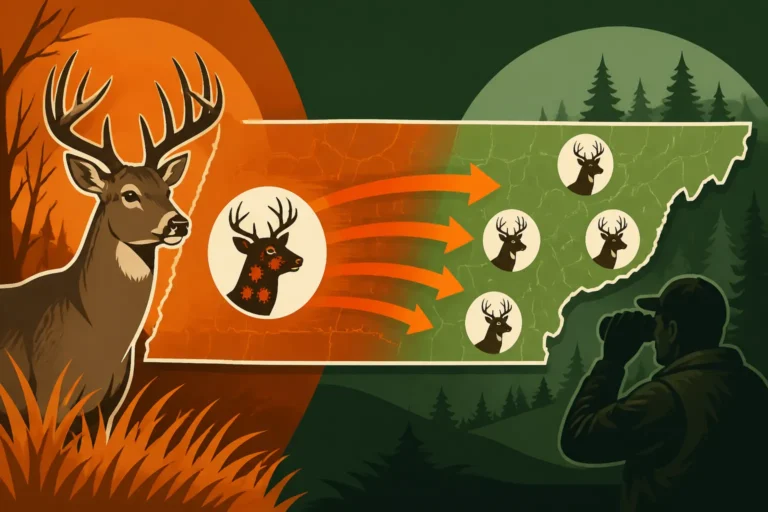
Dickson County's first confirmed CWD case in 2023 was a truly significant moment because it represented a notable jump eastward. While many counties in West Tennessee had already been designated as CWD-positive or CWD-high-risk, Dickson County’s location pushed the known boundaries of the disease significantly closer to the central part of the state, including the Nashville metropolitan area. This wasn't just another contiguous county; it was a leap.
This geographical shift presents new challenges. Containing CWD becomes exponentially more difficult the wider its distribution. A case in Dickson County meant that the disease was now closer to a different set of deer populations, different ecosystems, and a different group of hunters who might not have had the same level of direct exposure or experience with CWD regulations as those in the initial West Tennessee zone. It brought the threat home for many more people and reignited the urgent need for awareness and compliance across a broader region. The question of why CWD keeps spreading east from West Tennessee became even more pressing, as this case highlighted the difficulties in halting its slow, inexorable march.
Immediate and Long-Term Impacts on Local Hunters and Deer Management
When a county goes CWD-positive, it's not just a headline; it triggers a whole cascade of changes that directly impact hunters, landowners, and the way deer are managed in that area. For those hunting in and around Dickson County, this meant a whole new set of rules to learn and live by.
New Regulations and Hunter Responsibilities in Dickson County
Once CWD is confirmed in a county, it's typically designated as part of the CWD Management Zone. This designation immediately brings a series of changes for hunters. The most noticeable are often changes to carcass movement rules and mandatory CWD testing. For instance, hunters taking deer in a CWD-positive county usually cannot move the entire carcass out of that county or an adjacent CWD-positive county. This is a critical measure to prevent the geographical spread of the infectious prions responsible for CWD. You'll need to bone out your deer before transporting it across CWD zone lines, or take it directly to a CWD sampling station or processor within the zone. Our article on Tennessee Carcass Deboning Requirements goes into detail on what this entails.
Hunters also become key partners in disease surveillance. Mandatory CWD testing often comes into play, especially during the opening weekends of gun season or on specific dates. This means bringing your harvested deer to a designated CWD sampling station so biologists can collect tissue samples. Staying informed about these regulations is paramount. The TWRA's website and tools like GoHunt are indispensable for finding current regulations, checking county statuses, and locating nearby sampling stations. These regulations aren't arbitrary; they are the best tools wildlife agencies have to understand the prevalence and distribution of the disease, and to slow its spread.
Understanding the Earn-a-Buck Program and its Role
In many CWD-positive counties, the TWRA implements programs designed to encourage hunters to harvest more antlerless deer, which helps manage deer populations and, in turn, can help mitigate CWD transmission by reducing deer density. One such program is the Earn-a-Buck program, and its implementation in a county like Dickson after a CWD positive case is highly probable.
The Earn-a-Buck program typically allows hunters to earn an antlered deer tag (often a bonus tag beyond their regular season limit) by first harvesting and submitting a specified number of antlerless deer for CWD testing. This incentivizes hunters to not only help with population control but also contribute valuable samples for disease monitoring. It's a prime example of how hunters directly participate in conservation and disease management. To learn more about how this system functions and how you can participate, check out our piece on How the Earn-a-Buck Program Works. It's a tangible way that hunters can make a difference, even in the face of challenging disease outbreaks.
Shifting Deer Behavior and Hunting Strategies
While CWD is a disease that affects the brain and nervous system, its long-term presence in a herd can lead to population declines and changes in deer behavior. For hunters, this might mean adapting their strategies. Deer densities could potentially decrease over time in heavily infected areas, making it harder to find deer. Additionally, deer infected with CWD might exhibit abnormal behavior in later stages of the disease, though these individuals are usually not the ones hunters are seeking.
Hunters in CWD zones might need to adjust their scouting efforts, potentially focusing more on areas with robust deer sign or where healthy animals are consistently observed. Understanding Tennessee Deer Population Estimate trends in affected areas becomes crucial. Using mapping tools like GoHunt becomes even more valuable for identifying potential travel corridors or bedding areas that might hold healthy deer. For those who hunt public land, considering how hunting pressure on Scouting Tennessee Public Land Before Season might shift in response to CWD concerns could inform your approach. On private land, conversations with landowners about management goals and CWD testing will become more frequent. Hunters might also find themselves adjusting their approach to Hunting Small Private Tracts in Tennessee, ensuring that any harvested deer meet the new requirements for reporting and testing.
The Broader Implications for Tennessee's Deer Herd and Future Hunting
The Dickson County CWD case wasn't just about one county; it added another piece to the complex puzzle of managing White-Tailed Deer Across Tennessee in the age of CWD. It forces a wider conversation about the future of our state's most popular game animal and the hunting opportunities they provide.
Monitoring and Testing Efforts Across the State
With CWD now established across a wider geographical area, the TWRA's monitoring and testing efforts are more critical than ever. Every deer harvested in a CWD-positive or CWD-high-risk county offers a data point, helping biologists understand the disease's prevalence, its spread, and its impact. This means hunters must continue to be diligent in submitting samples, even if it adds an extra step to their hunting routine. It's a collective responsibility that affects everyone who loves to hunt in Tennessee.
The process of Tennessee CWD Testing for Hunters is often made as convenient as possible with numerous sampling stations, but hunters need to be aware of where these are and their operating hours. Modern tools and apps, including features provided by brands like GoHunt, can be incredibly helpful resources for locating these stations, understanding specific county regulations, and staying updated on real-time information regarding CWD management zones. These resources empower hunters to be proactive and informed participants in the management process.
Here's a quick look at how CWD impacts regulations:
| Aspect | Non-CWD County Regulations | CWD-Positive County Regulations (Example) |
|---|---|---|
| Carcass Movement | Generally unrestricted within Tennessee | Restricted movement of whole carcasses out of zone; deboning required |
| Mandatory Testing | Voluntary, or targeted for surveillance areas | Often mandatory on specific dates/weekends; additional stations |
| Antlerless Harvest | Based on DMU limits | Often encouraged through programs like Earn-a-Buck |
| Supplemental Feeding | Permitted with some restrictions | Often prohibited to reduce deer congregation and transmission |
| Reporting Harvests | Standard harvest reporting required (Reading a Tennessee Harvest Report) | Standard harvest reporting plus CWD sample submission often required |
The Role of Hunter Cooperation in CWD Mitigation
The success of any CWD management strategy hinges heavily on the cooperation of hunters. Without hunters participating in testing, adhering to carcass movement restrictions, and following supplemental feeding bans, the disease has a much greater chance to spread and intensify. It's a tough pill to swallow to have more rules and regulations, especially when you're just trying to enjoy your time in the woods. But the reality is, every hunter's action plays a part in protecting the health of the entire deer herd.
This cooperative spirit means staying informed about the Tennessee Deer Season Structure Explained as it evolves in response to CWD, understanding the science behind the regulations, and being willing to adapt. It also means spreading awareness among fellow hunters, ensuring that everyone understands the importance of these measures. It's not just about one hunt; it's about preserving hunting for generations to come. When you use tools like GoHunt, you're not just looking up info for yourself, you're helping create a community of informed hunters who are better equipped to deal with challenges like CWD.
Looking Ahead: Long-Term Outlook for Tennessee's Whitetails
The appearance of CWD in Dickson County is a stark reminder that this is a long-term challenge, not a problem with a quick fix. While the initial emotional response might be one of frustration or even despair, it's crucial to remember that wildlife agencies, researchers, and hunters are actively working to understand and manage this disease. The long-term outlook for White-Tailed Deer Across Tennessee will depend on continued research, adaptive management strategies, and the sustained dedication of the hunting community.
We might see continued adjustments to hunting seasons, bag limits, and management unit boundaries in response to CWD's progression. It's a dynamic situation that requires ongoing vigilance and a willingness to embrace change. While no one wants CWD to spread, each new case provides valuable data that helps improve our understanding and strategies. By staying engaged, informed, and compliant, Tennessee hunters can play an indispensable role in safeguarding our whitetail heritage for the future.
Disclaimer
This article is for general informational purposes only and does not constitute professional advice. Laws, prices and regulations vary by location and change over time. Consult a qualified professional for guidance on your specific situation.