When Tennessee Coyotes First Arrived
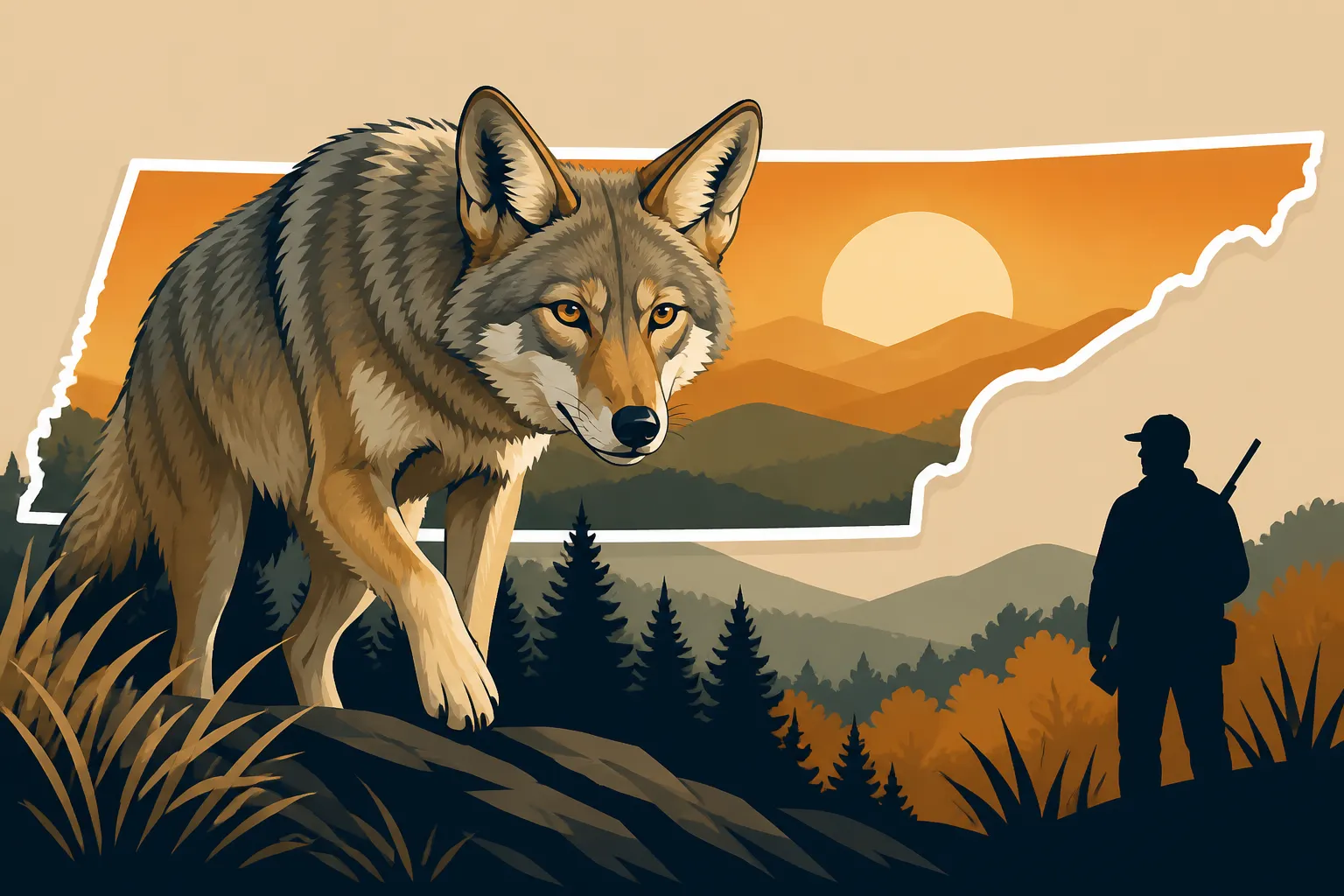
It's a question I hear all the time from folks sitting around the fire after a long day in the woods: "When did we start seeing so many coyotes around here?" For those of us who grew up hunting deer and turkey in Tennessee, it sometimes feels like these wily canids just materialized out of thin air, suddenly an undeniable presence in every corner of our landscape. But the truth is, the coyote's arrival in Tennessee wasn't an overnight phenomenon; it was a gradual, fascinating migration that fundamentally reshaped our state's ecology and hunting traditions. This guide will walk you through their journey, debunk some common myths, and explain just how these adaptable creatures came to call the Volunteer State home.
The Great Western Expansion: Tracing the Coyote's Journey East
The idea of coyotes being a "native" Tennessee species is a common misconception. For much of human history, their traditional range was firmly rooted in the open plains and arid regions of the American West. But as human settlement expanded, so too did the coyote's territory, moving eastward in a remarkable display of adaptability. This wasn't a coordinated invasion, but rather a slow, steady seep driven by ecological changes and their incredible knack for survival.
Dispelling Myths: Not a Release Program
One of the most persistent rumors you'll hear in hunting camps across Tennessee is that coyotes were intentionally introduced, either by state agencies or misguided individuals, to help control deer populations. Let me tell you straight: this is absolutely, unequivocally false. The Tennessee Wildlife Resources Agency (TWRA) has never, ever released coyotes into the wild, nor has any other legitimate wildlife organization. This myth likely stems from a similar (and also false) rumor that circulated in other states as coyotes expanded their range.
The reality is far more interesting. Coyotes simply walked here, expanding their range naturally. They didn't need human help; they needed opportunity, and the changing landscape provided it in spades. As forests were cleared for agriculture and human development, and as competing predators like wolves and cougars were eliminated, a massive ecological void opened up across the eastern United States. The coyote, a highly opportunistic and flexible predator, was perfectly poised to fill that vacuum. They followed river corridors, treelines, and even highways, slowly pushing their way eastward, breeding, establishing new territories, and then sending their offspring further on.
When Did They First Set Paw in Tennessee?
Pinpointing the exact moment the first coyote crossed the Tennessee border is like trying to catch smoke. Early sightings were sporadic and likely dismissed as stray dogs or misidentifications. However, most wildlife biologists and historical accounts agree that coyotes began to establish a consistent, breeding presence in West Tennessee sometime in the late 1970s and early 1980s.
They arrived first in the westernmost counties, likely migrating from Arkansas and Mississippi where populations had already taken hold. From there, they gradually spread eastward, moving across the rich agricultural lands of West Tennessee, through the rolling hills of Middle Tennessee, and eventually into the Appalachian foothills of East Tennessee. This expansion wasn't uniform; some areas saw them earlier or later, depending on habitat suitability and existing predator populations. For example, some anecdotal reports suggest scattered individuals were seen even earlier in the 1960s, but these were likely transient animals, not signs of an established population. The widespread acknowledgment and official tracking of their presence really picked up in the 80s and 90s. When you consider how much ground they covered in just a few decades, it's truly astounding. Looking at current data, a tool like GoHunt can really help visualize just how saturated the state is with these animals now, a stark contrast to their first arrival.
Factors Fueling the Eastern Spread and Establishment
The coyote's journey into Tennessee wasn't just about walking from point A to point B; it was a testament to their incredible biological advantages and the environmental conditions that made their establishment possible. They are truly one of nature's most resilient and adaptable survivors.
The Decline of Large Predators
One of the most significant factors that paved the way for coyotes in Tennessee, and indeed across much of the East, was the historical eradication of larger, apex predators. Historically, the eastern forests were home to gray wolves and Eastern cougars. These powerful predators would have competed directly with coyotes for food and territory, and even preyed upon them. However, by the early 20th century, sustained hunting and habitat loss had driven both species to extirpation from Tennessee.
The absence of these dominant carnivores left a gaping hole in the ecosystem. This created an ideal scenario for a smaller, more generalist predator like the coyote to move in and thrive. With no larger predators to keep their numbers in check, and a vast landscape suddenly open for the taking, coyotes faced significantly reduced competition and predation pressure, allowing their populations to explode and solidify their presence. This is a crucial piece of understanding Tennessee Predator Impact on Fawn Recruitment in today's environment, as coyotes are now at the top of the food chain in many areas.
Adaptability and Reproductive Success
If you want to understand why coyotes are everywhere, you have to appreciate their incredible adaptability. These aren't creatures that specialize in one type of prey or one specific habitat. They are true generalists, capable of thriving in an astonishing variety of environments: from vast wildernesses to suburban green spaces, and even surprisingly close to major cities.
- Dietary Flexibility: Coyotes are opportunistic omnivores. While they certainly prey on deer fawns, rabbits, and turkeys, they also readily consume rodents, birds, insects, fruits, berries, and carrion. This diverse diet means they can find food even when preferred prey is scarce, making them highly resilient to environmental changes.
- Reproductive Prowess: Coyotes have a remarkable ability to regulate their population based on available resources. In areas with abundant food and low coyote density, they can have larger litters (sometimes up to 10-12 pups), ensuring rapid population growth. If populations are high or food is scarce, litter sizes will be smaller. This biological mechanism allows them to quickly fill new territories and rebound from population setbacks.
- Social Structure: While often seen as solitary, coyotes can form family units and even larger packs, especially when hunting larger prey or defending territory. This social flexibility further aids their survival and expansion.
- Behavioral Intelligence: They are incredibly intelligent and wary animals, quickly learning to avoid human threats and adapt to new hunting pressures. This is why tactics for hunting them often require stealth and understanding their movements, as discussed in Coyote Calling in Tennessee Farm Country.
The Ecological and Hunter's Impact of Coyote Arrival
The widespread establishment of coyotes in Tennessee has had ripple effects throughout the ecosystem, altering wildlife dynamics and introducing a new paradigm for hunters. Their presence is now a permanent fixture that wildlife managers and hunters alike must contend with and understand.
Shifting Wildlife Dynamics
The most talked-about impact of coyotes, especially among deer hunters, is their role in fawn predation. Studies across the country, and certainly observations here in Tennessee, confirm that coyotes are significant predators of young deer. While a healthy deer population can often withstand some level of fawn predation, high coyote densities can certainly put pressure on deer numbers, particularly in specific local areas or during years with poor fawn recruitment. This is a frequent topic of discussion, and understanding the nuances of Tennessee Deer Population Estimate and Tennessee Deer Harvest Records often involves considering coyote predation.
But it's not just deer. Coyotes also prey on wild turkeys, especially poults and nesting hens, and small game like rabbits and squirrels. Their presence has added another layer of predation pressure to these species, which were already facing challenges from habitat loss and other factors. It's a complex web, and the impact of coyotes isn't always straightforward. For instance, they might also help control rodent populations, which can benefit some ground-nesting birds by reducing egg predation by those rodents. It's truly a mixed bag, and the full extent of their long-term impact is still being studied and observed.
A New Challenge and Opportunity for Hunters
For generations, Tennessee hunters primarily focused on deer, turkey, and small game. The arrival of the coyote introduced a new "game animal" to the landscape, creating both challenges and opportunities. Initially, many hunters saw coyotes purely as competition for deer and began hunting them with a vengeance, often with no bag limits or closed seasons, a practice that continues today.
This has led to the rise of dedicated coyote hunting, often using specialized calling techniques, high-powered optics, and even night vision or thermal gear where legal. Hunters now actively pursue coyotes not just to reduce predation pressure on other species, but also for sport and to hone their predator hunting skills. Websites and apps like GoHunt provide valuable information on game movements and terrain features that can be critical for successful coyote hunting, helping hunters understand where these elusive animals might be traveling or bedding.
| Period | Coyote Status in Tennessee | Notes | Impact on Hunting/Wildlife |
|---|---|---|---|
| Pre-1960s | Essentially Absent | Traditional range was Western US | Wolves/Cougars were apex predators; no coyotes. |
| 1960s-Early 1970s | Sporadic Sightings, Transient Animals | Beginning of Eastern expansion | Unconfirmed reports, not considered established. |
| Late 1970s-1980s | Established in West TN, Spreading East | First consistent breeding populations identified | Growing awareness, initial concerns from hunters. |
| 1990s-Present | Statewide, Well-Established, Abundant | Rapid population growth across all regions | Major predator of fawns/turkey poults; new hunting focus. |
Understanding the Modern Coyote in Tennessee
Today, the coyote is an undeniable and permanent resident of Tennessee. They are part of the ecological fabric, and understanding their current status and ongoing management is key for anyone involved in wildlife or hunting in the state.
Current Range and Population Density
There is no corner of Tennessee where coyotes haven't made their presence known. From the agricultural fields of the Mississippi River bottoms to the highest peaks of the Appalachian Mountains, coyotes are now found in all 95 counties. Their population density varies, of course, with higher numbers often found in areas with a mix of cover and accessible food sources, such as fragmented forests, agricultural edges, and even suburban greenbelts.
They are incredibly resourceful, adapting to human presence with remarkable ease. This means that whether you're hunting deep in the Cherokee National Forest Hunting or on a small woodlot near a bustling town, you are likely in coyote country. Understanding their current range and density is critical for wildlife managers in assessing overall ecosystem health and for hunters when planning their strategies. Modern mapping tools can show Tennessee Coyote Range and Density in great detail.
Ongoing Management and Research
Given the coyote's established presence, wildlife management agencies like the TWRA recognize them as a naturalized predator. There is no open or closed season for coyotes in Tennessee, and there are no bag limits. This means hunters can pursue them year-round, day or night (with certain restrictions regarding artificial light, which are detailed in Night Hunting Rules for Tennessee Coyotes), using a variety of legal methods. This continuous hunting pressure is often encouraged as a means of population control and to help alleviate pressure on game species.
Beyond hunting, researchers continually monitor coyote populations and their health. Tennessee Wildlife Disease Monitoring includes tracking common ailments like Mange in Tennessee Coyotes and Foxes, which can impact localized populations. The goal is to understand their role in the ecosystem, adapt management strategies for other game animals accordingly, and educate the public about coexistence with these intelligent and pervasive predators. Their arrival was a quiet revolution, and their continued presence ensures that Tennessee's wild places will never be quite the same.
Disclaimer
This article is for general informational purposes only and does not constitute professional advice. Laws, prices and regulations vary by location and change over time. Consult a qualified professional for guidance on your specific situation.