Tennessee’s Place on the Woodcock Flight
Many hunters in Tennessee often overlook one of our most unique migratory game birds: the American Woodcock, affectionately known as the "timberdoodle." If you've ever found yourself wondering where these secretive birds hide or when they make their journey through the Volunteer State, you're not alone. This guide aims to pull back the curtain on the woodcock's fascinating life, offering deep insights into their migration patterns, preferred habitats, and how you can successfully pursue them here in Tennessee.
The Elusive American Woodcock: A Closer Look
Before we dive into their migratory habits in Tennessee, it helps to understand a bit about the woodcock itself. These aren't your typical upland birds, like quail or grouse. They are truly distinctive, from their appearance to their nocturnal activities and even their bizarre courtship rituals. Knowing these fundamental aspects makes it easier to predict where they might be and why they're there.
Identifying the Timberdoodle: Features and Behaviors
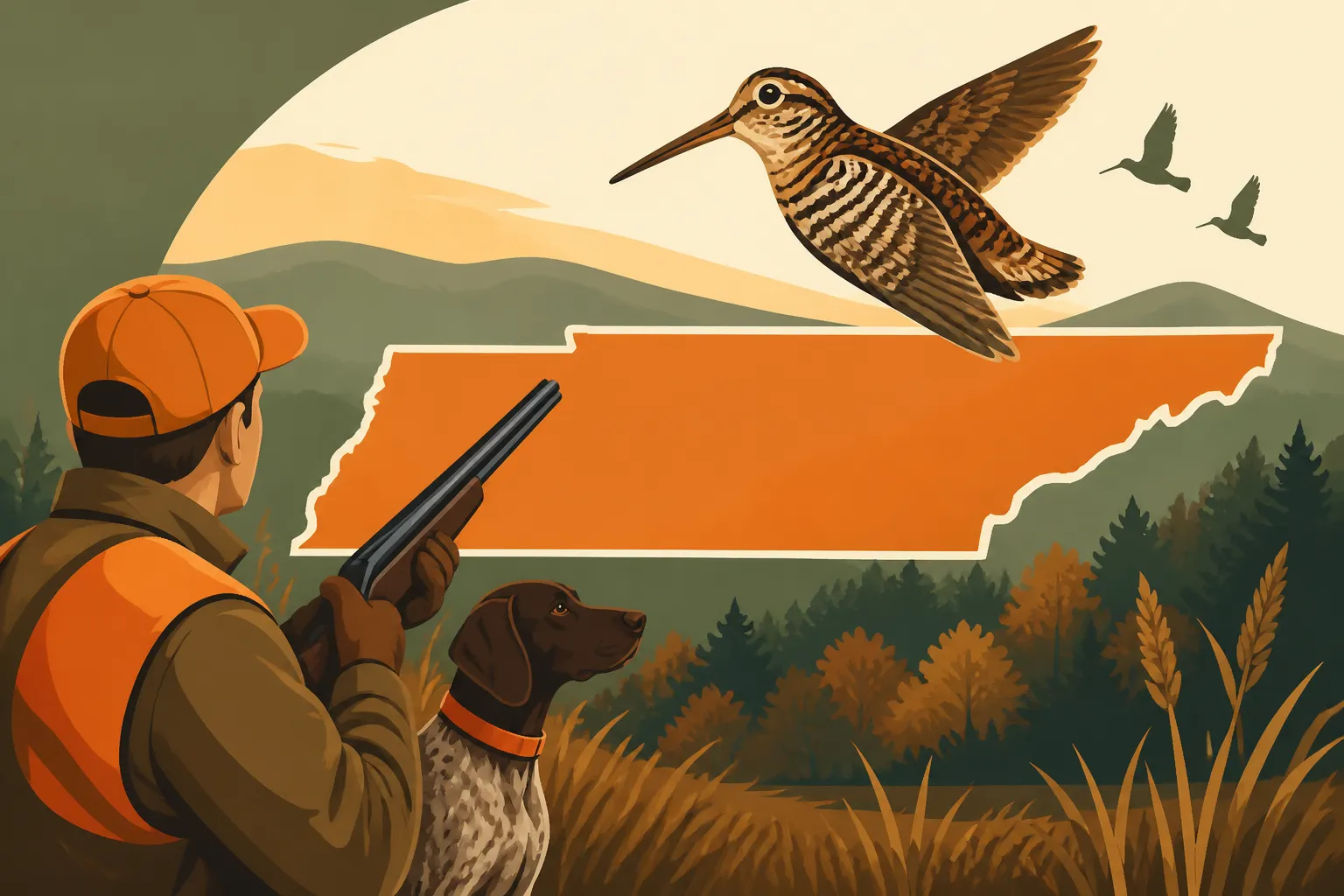
The American Woodcock is truly a bird that looks like it was designed by committee. Picture a plump, camouflaged bird, about the size of a robin, but with a disproportionately long, slender bill, big, dark eyes set high on its head, and a short tail. Their plumage is a beautiful mosaic of browns, grays, and blacks, providing perfect camouflage in the leaf litter of the forest floor. These large, high-set eyes give them an almost 360-degree field of vision, a critical adaptation for a bird that feeds primarily at night and needs to watch for predators from above.
Their most defining feature, that lengthy bill, is perfectly adapted for probing soft, moist soil in search of earthworms, their primary food source. The tip of the bill is flexible and can open to grasp a worm while the rest of the bill remains closed, allowing them to pull their prey from the ground efficiently. During the day, they are mostly sedentary, relying on their incredible camouflage to remain hidden. However, come dusk and dawn, especially during mating season, you might witness the male's spectacular "sky dance" – a spiraling aerial display accompanied by whistling wings and a gurgling song that makes them truly unique among game birds.
A Life of Migration: Why They Travel
The woodcock is a truly migratory bird, driven primarily by the availability of their essential food source: earthworms. Their breeding grounds stretch across the northern United States and southern Canada, where they raise their young in the spring and summer. As autumn approaches and the ground in these northern regions begins to freeze, making earthworms inaccessible, woodcock instinctively begin their southward migration.
Their journey takes them to wintering grounds in the southern United States, typically across states like Louisiana, Mississippi, Alabama, and parts of Florida and Georgia, where the ground remains soft enough for them to probe for food throughout the colder months. This seasonal movement means that states like Tennessee serve as critical stopovers, staging areas, and even minor wintering grounds for portions of the population. Their migration is less about temperature itself and more about the availability of unfrozen, moist soil. A sudden hard freeze up north can send waves of birds pushing south into our state.
Tennessee's Crucial Stop on the Mississippi Flyway
Tennessee, nestled squarely within the vast Mississippi Flyway, serves as a vital corridor for countless migratory birds, and the American Woodcock is certainly among them. Understanding when these timberdoodles pass through and what influences their journey here is key to encountering them. It's not a static event but a dynamic flow shaped by weather and food.
Peak Migration Periods for Woodcock in Tennessee
The woodcock migration through Tennessee isn't a single, massive wave, but rather a series of pushes dictated by weather fronts and conditions to our north. Generally, hunters can anticipate seeing the first birds arrive in late October, though some early vanguard individuals might show up even sooner if a significant cold snap hits the northern states. This initial push often consists of the youngest, most inexperienced birds, eager to move south.
However, the primary migration, offering the best opportunities for hunting, typically occurs from mid-November through early December. This is when sustained cold weather and frozen ground up north force the bulk of the population to move. A really sharp drop in temperatures, especially following a rain event that softens the ground, can deliver a fresh flight of birds almost overnight. While some birds might remain in Tennessee for the winter, especially in the southern counties or during mild winters, the heaviest concentrations are usually seen during these peak migratory windows. Tracking Tennessee Woodcock Singing Ground Surveys can also offer clues about broader population health and migration trends, even if these surveys are primarily focused on breeding populations.
Factors Influencing Woodcock Movement Through the State
Several environmental factors conspire to influence when and where woodcock will be found in Tennessee. The most significant is undoubtedly weather. As mentioned, deep freezes to the north are powerful drivers, pushing birds rapidly southward. However, local weather also plays a role. A prolonged drought in Tennessee can make soils hard and unsuitable for probing, causing birds to bypass certain areas or move on quickly. Conversely, periods of sustained rain, followed by mild temperatures, create the ideal soft ground conditions that woodcock seek.
Moon phases can also influence their nocturnal feeding patterns, potentially affecting their daytime roosting locations. Additionally, the availability of suitable habitat along their migratory route is crucial. If staging areas or wintering grounds in Tennessee have abundant, moist, early successional cover and earthworms, birds are more likely to stop and linger. If these conditions are scarce, they'll simply keep flying until they find more hospitable surroundings further south. Hunters using tools like GoHunt often pay close attention to historical weather patterns and local ground conditions to predict woodcock movements.
Unlocking Prime Woodcock Habitat in Tennessee
Finding woodcock isn't about covering vast stretches of timber; it's about zeroing in on very specific types of cover. These birds have precise habitat requirements, and if you know what to look for, you can greatly increase your chances of finding them. Think moist, dense, and young.
Ideal Cover: Young Forests and Moist Bottomlands
Woodcock are creatures of early successional habitat. This means they thrive in young, regenerating forests, typically less than 20-30 years old, where the canopy hasn't closed, and sunlight can reach the forest floor. They particularly favor areas with a dense understory of brush, saplings, and briars, offering both cover from predators and easy access to the moist soil. Creek bottoms, moist drainage areas, and edges of swamps or wetlands often provide this critical damp environment.
Look for areas with species like alder, willow, dogwood, sweetgum, and young pines mixed with hardwoods. These species tend to grow in dense thickets and often indicate rich, moist soil. Old farm fields that are reverting to forest, clear-cuts that are 5-15 years into regrowth, and power line rights-of-way can also be prime locations. In more mature timber, you might find them along logging roads or in natural openings where sunlight penetrates and promotes dense, young growth. The key is that combination of thick cover and soft, workable soil.
Reading the Land: Scouting for Woodcock Sign
You don't always need to kick up a bird to know you're in good woodcock country. These birds leave tell-tale signs that, once you learn to recognize them, can guide you to productive areas. The most common sign is their "probe holes." These are small, pencil-sized holes in the soil, often appearing in clusters, where the woodcock has poked its long bill into the ground searching for worms. You'll typically find these in soft, damp areas, often near the base of young saplings or under dense brush.
Another clear indicator is their "splash" or droppings. These are distinct white, chalky splatters, sometimes larger than a quarter, usually found in their roosting areas. If you find multiple probe holes and splash marks, you're almost certainly in an area currently holding woodcock or that recently did. Using aerial maps, perhaps with a mapping app like those offered by GoHunt, can help identify likely habitats like regenerating clear-cuts, creek bottoms, and dense edges before you even step foot in the woods. This kind of Scouting Tennessee Public Land Before Season is invaluable for woodcock hunters. Looking for changes in vegetation density and proximity to water sources on satellite imagery can quickly narrow down your search.
Strategies for Hunting Tennessee Woodcock
Hunting woodcock in Tennessee is a truly unique experience, often demanding patience, keen observation, and a willingness to explore dense cover. Unlike the wide-open spaces sometimes associated with bird hunting, woodcock hunting is an intimate affair, often in thickets where you're brushing shoulders with saplings and briars.
Dogs vs. Still Hunting: Choosing Your Approach
For many woodcock enthusiasts, a well-trained bird dog is almost essential. Pointers, like Brittanys, English Setters, or German Shorthairs, are exceptional at locating these scent-rich birds and locking up on point, giving the hunter time to move in for the flush. A good flusher, like a Springer Spaniel or Cocker Spaniel, can also be very effective at working dense cover and pushing birds out. The thick cover that woodcock prefer can make it challenging for even the best dogs, but their ability to pick up the subtle scent of a timberdoodle and hold point can turn a fruitless walk into a memorable hunt.
If you don't have a dog, or prefer a quieter approach, still-hunting for woodcock is absolutely possible, though it requires more deliberate tactics. The key is to move very slowly, pausing frequently, and scrutinizing every clump of cover. Woodcock often sit incredibly tight, sometimes only flushing when you're almost stepping on them. Pay attention to sudden movements or the distinctive whistling of their wings as they burst from cover. Walking slowly through prime habitat, especially after a fresh migration has pushed birds in, can be surprisingly productive. Remember, they are masters of camouflage, so a watchful eye is paramount.
Gear Up for the Timberdoodle: Shotguns and Loads
Given the thick cover and the woodcock's relatively slow, fluttering flight, a fast-handling shotgun with an open choke is the preferred tool. Most hunters opt for a lightweight 20-gauge or 28-gauge shotgun, often with an Improved Cylinder or Skeet choke. These gauges offer sufficient knockdown power without unnecessary recoil, and the open choke provides a wider pattern for quick shots in tight quarters. You'll likely be shooting at ranges from 10 to 25 yards, so a tight pattern isn't necessary and can actually hinder success.
As for ammunition, small shot sizes are ideal. Numbers 7.5, 8, or even 9 shot are perfect for woodcock. They are fragile birds, and these smaller pellets provide a dense pattern that minimizes damage to the meat while ensuring a clean kill. Carrying a shell vest or a small game pouch is also helpful for easy access to shells and for carrying your harvest. When considering Shot Size for Squirrel and Rabbit, you'll find similar recommendations for small, fast-moving targets in dense cover, emphasizing pattern density over pellet energy.
Navigating Regulations and Seasons
Hunting woodcock in Tennessee falls under federal migratory bird regulations, which means there are specific requirements you need to meet. First and foremost, you must possess a valid Tennessee hunting license and a Tennessee Migratory Bird Permit. This permit, also known as the Harvest Information Program (HIP) certification, is mandatory for anyone hunting migratory game birds, including woodcock. It helps the U.S. Fish and Wildlife Service gather data on hunter activity, which is crucial for population management. You can get your Tennessee Migratory Bird Certification when you purchase your annual hunting license.
The season dates for woodcock typically align with portions of Tennessee's small game season, often opening in late October or early November and running through late December or early January, though exact dates can vary slightly year to year. Always check the current TWRA hunting guide for precise season dates and bag limits before heading afield. The daily bag limit for woodcock is usually generous, reflecting their stable population numbers across their range, but adherence to these limits is essential for conservation. Furthermore, all hunters, especially those new to the sport, must complete Tennessee Hunter Education Requirements before purchasing a hunting license, ensuring safe and ethical practices in the field.
The Future of Woodcock in Tennessee: Challenges and Conservation
While Tennessee is a critical stop for woodcock, like many migratory species, they face ongoing challenges. Understanding these issues and the role hunters play in conservation is vital for ensuring future generations can enjoy the thrill of finding a timberdoodle in our state's coverts.
Population Trends and Habitat Loss
Nationwide, the American Woodcock population has experienced a long-term decline, particularly due to habitat loss and degradation. These birds are highly dependent on early successional forests – the young, brushy habitat that typically arises after disturbances like timber harvesting, wildfires, or abandonment of agricultural fields. As forests mature across the landscape, and as development encroaches on rural areas, this critical young habitat shrinks. In Tennessee, this trend is evident as well. Many of our public and private lands are seeing forests mature into older stands, which, while beneficial for some species, are less ideal for woodcock.
The decline in family farms and the shift away from small-scale agriculture also contributes to this problem, as old fields that would naturally revert to brushy cover are either developed or maintained in a more open state. This is why initiatives focused on creating and maintaining young forest habitats are so important for species like the woodcock. Hunters paying attention to Tennessee Woodcock Singing Ground Surveys will note the regional variations in population estimates, highlighting areas where habitat work is most urgently needed.
The Role of Hunters in Conservation
Hunters are, and always have been, key conservationists. The funds generated from hunting license sales, including the Tennessee Migratory Bird Permit, directly contribute to wildlife management and habitat restoration efforts by the Tennessee Wildlife Resources Agency (TWRA). Furthermore, federal excise taxes on firearms, ammunition, and archery equipment, collected through the Pittman-Robertson Act, provide millions of dollars annually for wildlife conservation projects nationwide, including those that benefit woodcock and other migratory birds.
Organizations like the Ruffed Grouse Society & American Woodcock Society actively work with landowners and state agencies to implement habitat management practices, such as timber stand improvement and controlled burns, specifically designed to create and maintain the young forest habitats that woodcock need. By participating in these seasons, adhering to regulations, and supporting conservation organizations, hunters directly contribute to the long-term health of the woodcock population and its habitats in Tennessee. It's a testament to the fact that responsible hunting goes hand-in-hand with wildlife preservation, ensuring these unique birds continue their amazing flights through our state for years to come.
Disclaimer
This article is for general informational purposes only and does not constitute professional advice. Laws, prices and regulations vary by location and change over time. Consult a qualified professional for guidance on your specific situation.