Tennessee Woodcock Singing Ground Surveys
There's a quiet magic that happens in the twilight hours of a Tennessee spring, a sound that many hunters might never even hear unless they're specifically listening for it. We're talking about the American Woodcock, those quirky, long-billed migratory birds that often go unnoticed, even by folks who spend a lot of time in the woods. But for those dedicated few, understanding the nuances of their populations, especially through something like the singing ground surveys, is absolutely crucial. This guide is going to pull back the curtain on these important surveys, helping you understand not just what they are, but why they matter so much for the future of woodcock hunting in our state and how you can even connect with the data they provide.
Understanding Tennessee's Woodcock Singing Ground Surveys
If you're like most hunters, you're probably pretty familiar with deer surveys or turkey population estimates, but woodcock surveys? That might be a new one. Yet, these often-overlooked little birds are a fantastic game species, offering a challenging and rewarding hunt, and their health is monitored just as diligently, albeit differently, through specific survey methods here in Tennessee.
What Exactly Are These Surveys?
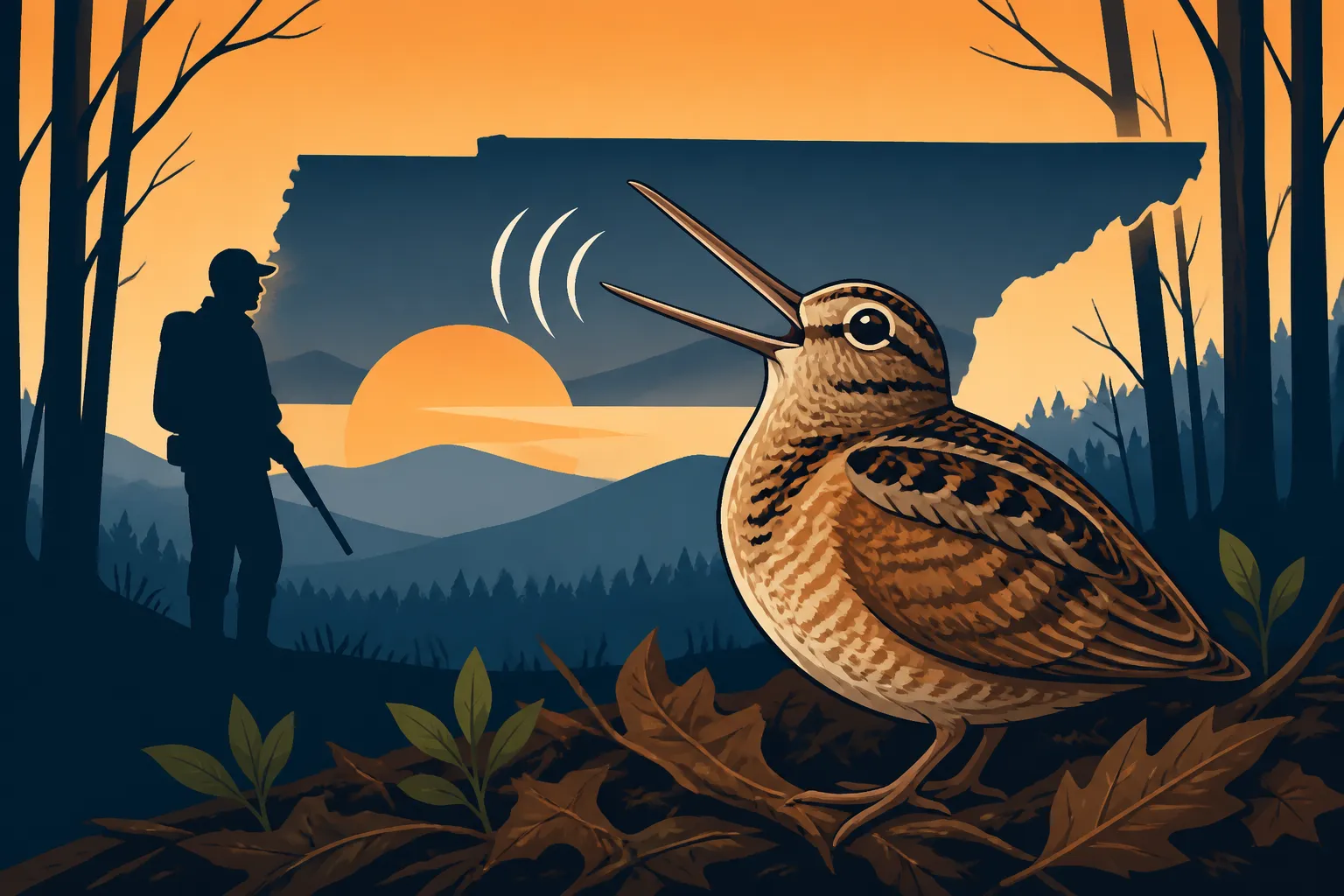
Imagine driving down a quiet, rural road just as the sun dips below the horizon, painting the sky in hues of orange and purple. You pull over at designated stops, turn off your engine, and just listen. What you're listening for isn't the hoot of an owl or the chirp of crickets, but a very distinct, nasal "peent!" sound. This is the call of a male American Woodcock performing his unique courtship ritual, often followed by a spiraling flight display high into the darkening sky, complete with twittering wings. These are the "singing grounds," and the surveys are designed to count these displaying males along specific, predetermined routes.
These routes are typically a few miles long, with a set number of stops where observers listen for a specific amount of time. It's a snapshot, really, of how many active breeding males are in a given area. The consistency of these routes and methods over many years is what makes the data so valuable, allowing biologists to track changes in populations over time, rather than just getting a one-time count. It's a dedicated effort to understand a bird that, despite its charm, loves to keep a low profile.
Why Woodcock Surveys Matter for Conservation
You might wonder why all this effort goes into counting little brown birds that most folks rarely see. Well, the American Woodcock is a migratory game bird, and like all migratory species, their populations are subject to a lot of pressures, from habitat loss to environmental changes. The data gathered from these singing ground surveys provides essential information for wildlife managers and conservationists across the entire range of the woodcock, including right here in Tennessee.
Think of it this way: without accurate population data, how would we know if woodcock numbers are stable, increasing, or declining? How would we make informed decisions about hunting season lengths or bag limits? The surveys are the scientific backbone that allows the Tennessee Wildlife Resources Agency (TWRA) and federal agencies to manage the species sustainably. It ensures that future generations will also have the opportunity to experience the thrill of a woodcock flushing from dense cover. This conservation effort isn't just for the birds; it's for the health of our ecosystems and the continuation of our hunting heritage. It helps us understand Tennessee's Place on the Woodcock Flight and how local conditions impact a broader migratory pattern.
How TWRA Conducts Woodcock Surveys in the Volunteer State
The process of conducting these surveys is quite detailed and relies on a mix of scientific protocol and dedicated effort. It's not just a casual drive; it's a systematic approach designed to yield reliable data that can be compared year after year.
The Science Behind the Routes and Timing
The routes for woodcock singing ground surveys are established and remain consistent from year to year. This consistency is paramount because it allows biologists to compare "apples to apples" over time, revealing true population trends rather than just variations in observer effort or location. In Tennessee, these routes are strategically located in areas known to have suitable woodcock habitat, often in moist, early successional woodlands, young forests, or brushy fields near water sources. Woodcock prefer these areas for both breeding and foraging.
Timing is everything when it comes to these surveys. Male woodcock are most active in their courtship displays during a relatively narrow window in late winter and early spring, typically from late March through early May in Tennessee, depending on local weather conditions. The surveys are conducted at dusk, specifically starting about 20-30 minutes after sunset, and continuing for about 40 minutes. This is when the males are most reliably "peenting" and performing their aerial acrobatics, making them detectable by observers. Doing these surveys outside this precise window would likely lead to inaccurate counts, so adherence to the protocol is crucial.
Who Participates and What They Listen For
The primary participants in Tennessee's woodcock singing ground surveys are often TWRA biologists, wildlife technicians, and sometimes even trained volunteers from local conservation groups or universities. These individuals are trained to recognize the distinct "peent" call and to accurately record the number of individual woodcock heard at each stop. It's not always easy, especially when multiple birds are calling or when background noise interferes, requiring a keen ear and focused attention.
At each stop along a designated route, the observer parks, sets a timer, and listens carefully for any "peenting" woodcock. They record not just the presence, but the number of unique males heard. This isn't about counting every single "peent," but rather identifying how many different birds are displaying. This requires experience and a careful distinction between calls coming from the same bird in different phases of its display versus separate birds in nearby territories. The raw data from these routes is then compiled and sent to regional and national databases, contributing to the larger picture of American Woodcock health.
Key Characteristics of Woodcock Singing Ground Surveys
| Feature | Description | Relevance to Tennessee Hunters |
|---|---|---|
| Purpose | Monitor breeding populations of American Woodcock | Helps determine season lengths and bag limits |
| Timing | Late March to early May (peak migration/breeding) | Indicates prime time for active woodcock behavior |
| Method | Driving established routes at dusk, stopping to listen for "peenting" calls | Focuses on male woodcock displaying for mates, density indicator |
| Data Collected | Number of displaying males heard at each stop | Provides population indices and trend data for specific regions |
| Participants | TWRA biologists, conservation volunteers | Shows commitment to species management, citizen science opportunity |
What the Survey Data Reveals About Tennessee's Woodcock
Once all the listening is done and the data is gathered, the real work of interpretation begins. These numbers aren't just isolated facts; they tell a story about the health and trends of our woodcock population.
Tracking Population Trends Over Time
The beauty of consistent, long-term survey data is its ability to reveal population trends. Are woodcock numbers in Tennessee generally stable, or are we seeing a decline or even an increase in certain regions? This is the kind of critical insight that the singing ground surveys provide. For example, if over several decades, the average number of "peents" heard per route in a given area steadily decreases, that's a red flag. It signals to biologists that there might be issues with habitat, nesting success, or survival rates that need further investigation.
Conversely, if numbers are stable or increasing, it suggests that current habitat conditions and management strategies are largely working. This long-term perspective is invaluable because single-year fluctuations can be misleading due to weather, observer variability, or other transient factors. It’s a similar approach to understanding the health of Tennessee's Black Bear Population or Tennessee Turkey Population Trends, just with a different methodology tailored to the species. This data, combined with other studies on When Woodcock Migrate Through Tennessee, helps paint a more complete picture of the birds' life cycle and challenges.
Interpreting the Numbers for Hunters and Biologists
For biologists, interpreting these numbers involves sophisticated statistical analysis to identify significant trends and inform management decisions. They look at regional differences, compare Tennessee's data to that of other states in the woodcock's migratory flyway, and assess how various factors might be influencing the population. This might lead to recommendations for habitat improvements, adjustments to hunting regulations, or further research into specific aspects of woodcock biology.
For us, as hunters, these numbers are equally important. They directly influence things like Tennessee Woodcock Season Dates and bag limits. If populations are healthy and stable, we can expect hunting opportunities to remain consistent. If there's a significant decline, it's possible that seasons might be shortened or bag limits reduced to ensure the sustainability of the resource. Understanding these numbers helps us be more responsible and informed participants in the conservation process. It’s also crucial for migratory bird hunters to fulfill requirements like Tennessee HIP Certification for Bird Hunters and purchase the necessary Tennessee Migratory Bird Stamp Cost, as these funds directly support conservation efforts.
Connecting Survey Data to Your Tennessee Woodcock Hunt
So, you're not a TWRA biologist, and you're probably not driving survey routes at dusk. How does all this information about woodcock singing ground surveys actually help you as a hunter? More than you might think!
Using Information for Better Hunting Success
While the surveys don't pinpoint exact hunting spots, they provide a valuable macro-level understanding of woodcock distribution and population health across the state. Knowing that woodcock populations are generally stable in certain regions can encourage you to focus your scouting efforts there. You can infer that areas with a high density of singing males during the breeding season will likely have good numbers of birds during migration. The surveys help confirm that Tennessee remains a viable destination for woodcock hunting.
Armed with this broader knowledge, you can then apply more localized scouting techniques. Woodcock prefer young, dense cover with moist soils, often near creeks or beaver ponds. Think about those overgrown fields or young timber clear-cuts on public lands or even small private tracts. If you're using modern mapping tools, perhaps even a comprehensive resource like GoHunt, you can identify potential habitat features and focus your efforts. Knowing what the surveys tell us about the population also empowers us to advocate for habitat conservation. A healthy population means more opportunities to experience that heart-stopping flush, whether you're using an upland vest like those designed for grouse or pursuing Squirrel Hunting Tennessee Bottomland Hardwoods where woodcock also thrive.
Becoming a Citizen Scientist and Advocate
You don't have to be a biologist to contribute to woodcock conservation. While official singing ground surveys require specific training, there are still ways for observant hunters to help. Simply being aware of woodcock habitat and reporting significant observations (like unusually high or low numbers, or even signs of Tennessee Wildlife Disease Monitoring in game birds) to the TWRA can be valuable. Every bit of information helps build a clearer picture of the species' health.
Furthermore, being an advocate for woodcock habitat is one of the most impactful things you can do. The dense, early successional habitat that woodcock thrive in is often overlooked or even cleared. Supporting conservation organizations that focus on creating and maintaining these habitats, participating in habitat improvement projects, or even educating landowners about the value of young forest management can make a huge difference. Understanding the science behind these surveys can also help you appreciate the importance of adhering to Tennessee Small Game Season Rules and practicing ethical hunting. It's about being more than just a hunter; it's about being a steward of the land and its wildlife, ensuring the future of unique opportunities like chasing these fascinating little timberdoodles. Even a tool like GoHunt, while often focused on big game, can offer general land ownership and habitat data that helps you understand the landscape for any species you pursue.
Disclaimer
This article is for general informational purposes only and does not constitute professional advice. Laws, prices and regulations vary by location and change over time. Consult a qualified professional for guidance on your specific situation.