Tennessee Woodcock Season Dates
Finding precise hunting season dates for specific migratory birds like woodcock can sometimes feel like a treasure hunt, especially when you're just trying to plan your fall outings in Tennessee. It's not always as straightforward as deer or turkey season, and missteps can mean a missed opportunity or, worse, a violation. This comprehensive guide is designed to cut through that confusion, giving you all the up-to-date information on Tennessee's woodcock season dates, regulations, and even some practical tips for pursuing these unique "timberdoodles."
Unraveling the Mystery of Tennessee's Timberdoodles
The American woodcock, affectionately known as the "timberdoodle," is truly one of the most intriguing migratory game birds you can pursue in Tennessee. They aren't your typical field-edge pheasant or open-timber quail; these birds are creatures of dense, young cover, with a quirky appearance and an even quirkier flight pattern that makes them a thrilling challenge for wing-shooters. Many hunters overlook them, but those who discover the timberdoodle often find a deep appreciation for this secretive little dynamo.
The Elusive American Woodcock in the Volunteer State
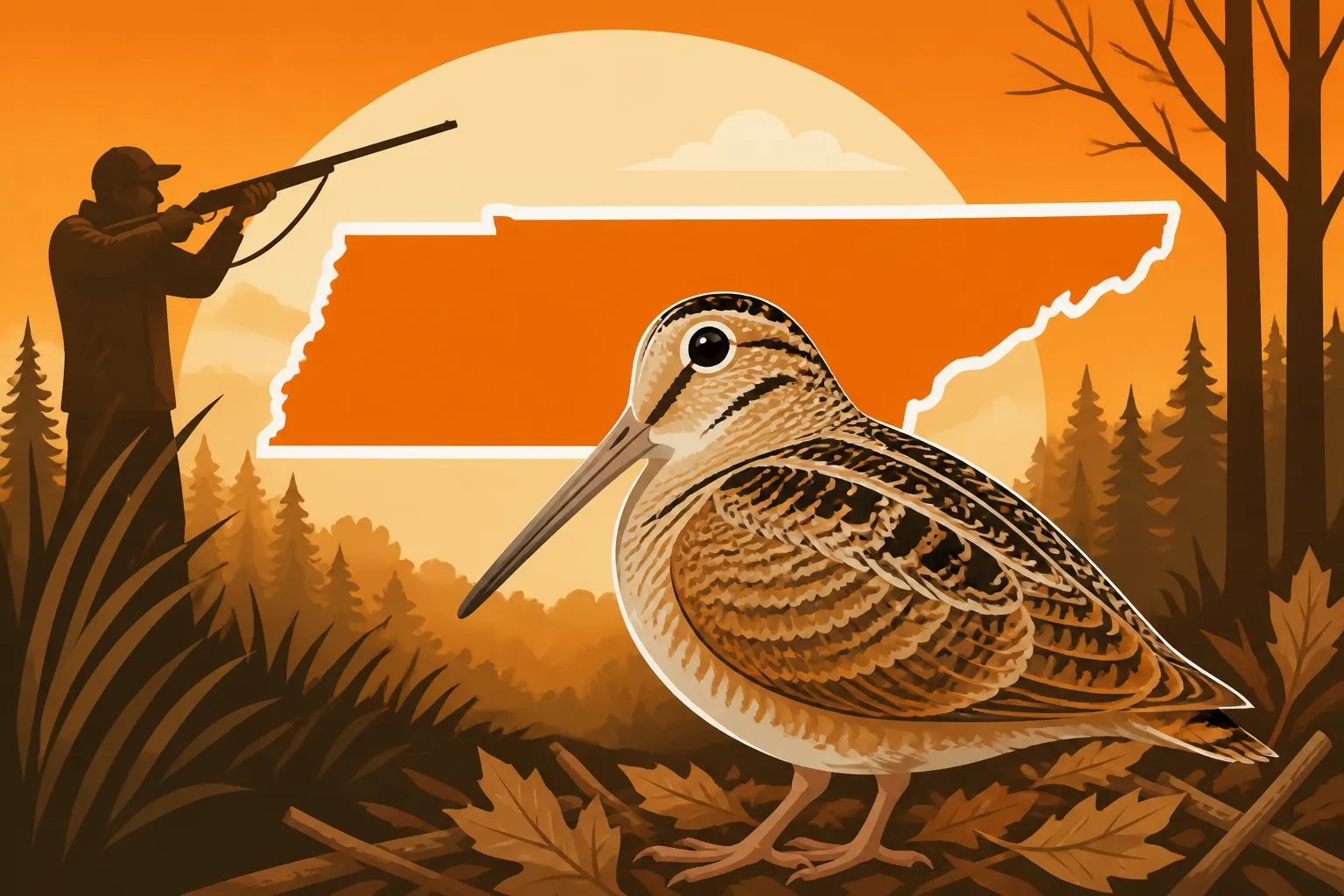
When you first encounter an American woodcock, you might wonder if you've stumbled upon a creature from another planet. With their oversized eyes set high on their heads, perfectly suited for nocturnal vision, and an exceptionally long, sensitive bill designed for probing soft earth for worms, they are uniquely adapted to their environment. Their cryptic brown and black plumage allows them to disappear almost instantly into the leaf litter, and their characteristic "peent" call in the evening or morning twilight is a sound many hunters long to hear. These birds are primarily solitary, only really congregating during migration and breeding, which adds to their mystique.
Woodcock aren't found in wide-open fields or mature, open timber. Instead, they seek out specific habitats – areas with moist, rich soil where earthworms thrive, and crucially, dense, young cover for roosting and protection. Think of thickets of saplings, alder swamps, dogwood stands, and early successional forest edges. These are the places where they feed, rest, and try to avoid predators. While some resident birds might breed in Tennessee, the bulk of the hunting opportunity comes from the migratory flights pushing south. For hunters who spend most of their time chasing deer or turkeys, looking for woodcock might mean exploring entirely different parts of their familiar hunting grounds, often finding themselves in places they usually skirt around.
Their flight is another aspect that sets them apart. When flushed, a woodcock explodes into the air with a whistling wing beat, often climbing vertically before leveling off and darting through the brush. This erratic flight path, combined with their ability to seemingly appear out of nowhere, makes for exciting and challenging shooting. It’s a completely different rhythm than swinging on a fast-flying dove or patterning a turkey. Many a seasoned shotgunner has found themselves humbled by the timberdoodle’s aerial acrobatics, a testament to the bird’s surprising speed and agility in dense cover.
This blend of unique behavior, specialized habitat, and challenging flight makes woodcock hunting a niche pursuit in Tennessee, but a deeply rewarding one. It’s a hunt that often pairs beautifully with a good bird dog, adding another layer of tradition and camaraderie to the experience. While not as universally popular as White-Tailed Deer Across Tennessee or Wild Turkeys in Tennessee, woodcock hunting offers a distinct charm and a connection to the wild, regenerating landscapes that define much of the state's natural beauty. It’s about slowing down, appreciating the smaller details of the woods, and experiencing a different kind of thrill.
Migration Patterns and Peak Hunting Times
Tennessee sits squarely in the Atlantic Flyway, making it a crucial migratory corridor for woodcock moving south from their breeding grounds in the northern states and Canada. While we do have some resident woodcock populations that nest and raise broods here, the real excitement for hunters comes with the arrival of the "flights" – waves of migrating birds pushed south by colder weather. Predicting these flights isn't an exact science, but understanding the general patterns can significantly increase your chances of a successful hunt.
Generally, woodcock migration through Tennessee begins in earnest in late October and peaks throughout November, often extending into early December. A strong cold front sweeping down from the north is usually the catalyst, bringing fresh birds into the state. These birds will stage in suitable habitat, feeding heavily to fuel the rest of their journey to wintering grounds in the Gulf Coast states. This makes November a prime month for Tennessee's Place on the Woodcock Flight, aligning perfectly with many other hunting seasons, adding a fantastic dimension to your fall outdoor pursuits.
Hunters often talk about "new birds" coming in, meaning a fresh influx that hasn't been pressured yet. These birds might hold tighter for dogs or flush more predictably. Knowing how to read weather patterns and understanding the general timing is key. For instance, if you see a significant drop in temperatures across the Midwest and Northeast, coupled with northerly winds, it's a good bet that new woodcock could be arriving in Tennessee within a few days. Checking weather apps and staying connected with other hunters can provide valuable insights into these movements.
While the peak of migration offers the best numbers, don't discount the early parts of the season. You might find resident birds that are already familiar with the local cover, offering good action before the big push. Conversely, late-season hunting, especially after a persistent cold snap, can still be productive as stragglers make their way through or as birds concentrate in areas with persistent soft ground. The beauty of woodcock hunting lies in its dynamic nature, constantly influenced by the ebb and flow of migration and weather. Each hunt offers a unique snapshot of the birds' journey, making every timberdoodle flush a memorable event.
Navigating Tennessee's Woodcock Season Dates and Regulations
Understanding the regulations for any migratory game bird can feel a bit complex, and woodcock are no exception. They fall under federal guidelines because they migrate across state lines, which means Tennessee's specific rules are set within a framework established by the U.S. Fish and Wildlife Service. The good news is that the Tennessee Wildlife Resources Agency (TWRA) provides clear information, but it's always on us as hunters to stay informed and compliant.
Official Season Dates and Bag Limits
For the current hunting season, Tennessee's woodcock season typically runs from November 1 to December 15. It's always crucial to verify these dates directly with the official TWRA regulations guide each year, as minor adjustments can occur due to biological surveys or federal frameworks. This window provides ample opportunity to intercept birds during their peak migration through the state, offering fantastic hunting over a month and a half period.
The daily bag limit for woodcock in Tennessee is 3 birds per hunter. The possession limit, which is the total number of birds you can have on hand at any given time (including those stored at home), is 9 birds. These limits are in place to ensure sustainable harvesting of a migratory species whose population dynamics are monitored across their entire range. It’s not about how many you can shoot, but how many are appropriate to harvest while respecting the resource.
Strict adherence to these limits is non-negotiable. Exceeding the bag limit not only harms the woodcock population but can also result in serious legal consequences. It's a fundamental part of ethical hunting and responsible resource management. Before heading out, make it a habit to quickly review the TWRA's migratory bird regulations to ensure you're up-to-date, as even experienced hunters can sometimes overlook a detail or two.
Remember, these regulations are designed with conservation at their heart. Every hunter's compliance contributes to the health of the woodcock population for future generations. Respecting the bag and possession limits ensures that we can continue to enjoy the unique challenge and charm of hunting these fascinating birds for years to come. It’s a shared responsibility that all hunters proudly bear.
Licensing, Permits, and Crucial Certifications
To legally hunt woodcock in Tennessee, you'll need more than just knowledge of the season dates; specific licenses and certifications are mandatory. It can sometimes feel like a bit of a bureaucratic hurdle, but these requirements are essential for wildlife management and data collection. The good news is that acquiring them is relatively straightforward through the Tennessee Wildlife Resources Agency (TWRA) or authorized vendors.
First and foremost, you'll need a valid Tennessee hunting license. For residents, options range from annual licenses to the comprehensive The Tennessee Sportsman License Bundle, which covers most hunting and fishing activities. Non-residents also have several choices, including annual or shorter-term licenses like the Tennessee Nonresident 7-Day License Cost. Make sure your license is appropriate for big game and small game hunting, as woodcock fall under the small game category, but migratory bird specific requirements are separate.
Beyond the basic hunting license, anyone hunting migratory game birds in Tennessee, including woodcock, must obtain a Harvest Information Program (HIP) certification. This isn't a physical stamp or permit in the traditional sense; it's a simple, free certification that registers you as a migratory bird hunter. When you purchase your hunting license online or at an agent, you'll be asked a few questions about your migratory bird hunting success from the previous year. This data is collected by the U.S. Fish and Wildlife Service and helps biologists estimate harvest numbers and monitor population trends. You can typically add the Tennessee Migratory Bird Certification when purchasing your main license, or separately online through the Go Outdoors Tennessee portal.
A common point of confusion arises with the Federal Duck Stamp. While it's mandatory for hunting ducks, geese, and swans, the good news for woodcock hunters is that the Tennessee Federal Duck Stamp Requirement does not apply to woodcock. You do not need to purchase a Federal Duck Stamp specifically to hunt woodcock, snipe, coots, rails, or gallinules in Tennessee. This can save you a bit of money and is an important distinction to remember. However, if you plan to combine your woodcock hunt with a duck hunt, then yes, the Federal Duck Stamp would be required. Always double-check this when planning your season, especially if you hunt multiple migratory species. Many hunters utilize tools like GoHunt to keep track of their various licenses and tags, ensuring they're always compliant before stepping foot in the field.
Essential Gear and Tactics for Tennessee Woodcock Hunters
Woodcock hunting is a unique pursuit that benefits from specific gear choices and a tailored approach. Because these birds inhabit dense cover and often flush close, the strategies and equipment differ significantly from, say, deer hunting in open timber. Being properly equipped and understanding effective tactics can make all the difference between a frustrating day of bushwhacking and a rewarding hunt with birds in your vest.
Choosing the Right Gear for Thick Cover
When it comes to firearms for woodcock, speed and maneuverability are key. Woodcock typically flush at very close range, offering only a brief window for a shot before they disappear behind brush. This means light, fast-swinging shotguns with open chokes are preferred. Many hunters opt for 20-gauge or 28-gauge shotguns, which are lighter to carry through thickets and offer less recoil for quick follow-up shots. An improved cylinder or skeet choke is ideal, providing a wide shot pattern for those close, darting birds. Forget the tight full chokes you might use for late-season ducks; woodcock rarely offer long-range opportunities.
Regarding ammunition, smaller shot sizes like 7 ½ or 8 are perfect for woodcock. These birds are delicate, and a dense pattern of smaller shot is more effective than larger, more sparse pellets. Ensure you're using lead shot unless you're hunting in an area that specifically requires non-toxic shot (e.g., certain WMAs or within close proximity to water where waterfowl might be present). Always consult the TWRA regulations for any specific non-toxic shot zones, as rules can vary. Carrying a couple of different loads in your vest can be a good idea, just in case you stumble into an area with different requirements.
Beyond the shotgun and shells, protective clothing is absolutely essential. Woodcock live in briar patches, honeysuckle thickets, and dense sapling stands. A good pair of briar pants or chaps will save your legs from countless scratches and tears. You'll also need sturdy, waterproof boots that offer good ankle support, as you'll be navigating uneven, often wet, terrain. Brands like Irish Setter or Lacrosse offer excellent options for tackling the challenging woods. Consider reading up on Boots for Walking Tennessee Ridges to get an idea of what kind of footwear performs well in varied Tennessee terrain, which often includes the type of moist, brushy areas woodcock love.
Finally, a comfortable bird vest with plenty of pockets for shells, water, and downed birds is invaluable. A brightly colored vest, often with blaze orange or pink panels, serves a dual purpose: it carries your essentials and fulfills Tennessee Blaze Orange Requirements if you're hunting during a gun season for deer. Even if not required, wearing blaze orange is always a smart safety practice when hunting in dense cover, especially with a hunting partner or a dog. Staying comfortable and safe means you can focus on the hunt, not on stinging nettles or soaking wet feet.
Hunting Techniques and the Role of a Good Dog
Woodcock hunting is fundamentally a walk-up or flush hunt, meaning you'll be actively moving through likely cover trying to push birds into flight. It's an active, engaging style of hunting, far removed from sitting silently in a treestand. The key is to identify areas with good woodcock sign (their distinctive white splash droppings and probe holes in the soft earth) and then systematically work through them. Walk slowly, pause frequently, and be ready for an explosive flush at any moment. These birds can hold incredibly tight, sometimes flushing right at your feet, so constant alertness is paramount.
While you can certainly flush and shoot woodcock without a dog, a well-trained bird dog elevates the experience dramatically. Dogs, particularly pointing breeds like English Setters or German Shorthaired Pointers, are invaluable for locating these camouflaged birds before they flush, allowing you to prepare for the shot. Their superior scenting ability helps them find birds that you would walk right past, and their training to hold a point until you're in position is a true marvel to witness. Even flushers like Springer Spaniels or Labs can be incredibly effective, covering ground and pushing birds out of the densest cover.
The retrieval of a downed bird in thick cover is another area where a good dog shines. A woodcock, once hit, often tumbles into the nastiest, most impenetrable tangles. Without a dog, finding a small, brown bird amidst brown leaves and briars can be an exercise in frustration, often leading to unrecovered game. A retrieving dog, on the other hand, will quickly pinpoint and bring back your bird, ensuring that every harvested woodcock is brought to hand and respected. This is particularly important for conserving the resource and showing respect for the game we pursue.
However, hunting with a dog also comes with responsibilities. Ensure your dog is visible (many wear blaze orange vests), well-hydrated, and protected from thorns and ticks. Training is crucial; a dog that runs wild will flush birds out of range. Safety is also paramount, especially when hunting with others. Communicate clearly about your positions and shooting lanes. Whether you're hunting with a seasoned pointer or simply walking up birds yourself, the thrill of a woodcock flushing from dense cover is an unmistakable and deeply satisfying part of the Tennessee hunting experience. Consider taking a Tennessee Hunter Education Requirements course if you're new to hunting, as it covers important safety principles that apply to all types of hunting, including upland bird pursuit.
Beyond the Hunt: Conservation and Access
Woodcock hunting offers a unique blend of challenge and reward, but like all hunting pursuits, it comes with the responsibility of understanding the broader picture of conservation and access. Knowing where to find these birds and recognizing the importance of your role in their future ensures that the tradition of timberdoodle hunting can continue for generations.
Where to Find Woodcock in Tennessee
Locating woodcock in Tennessee often means looking for specific habitat characteristics rather than just broad geographic areas. They favor young, regenerating forests, typically less than 20 years old, with dense undergrowth. Think of areas that have been recently timbered, or creek and river bottomlands with moist soil and thick stands of alders, willows, dogwoods, and saplings. These are the food-rich, protective environments the birds seek out. You might find them along the edges of agricultural fields where young trees are encroaching, or in dense thickets within larger wooded areas. River bottoms in West Tennessee, for example, can be prime spots, as discussed in Hunting West Tennessee River Bottoms.
Many of Tennessee's Wildlife Management Areas (WMAs) offer excellent opportunities for woodcock hunting, particularly those with active timber management programs that create early successional habitat. Places like Prentice Cooper State Forest & WMA, or regions within the Cherokee National Forest Hunting that have recent clear-cuts, can hold good numbers of birds, especially during migration. Public access maps, often available through the TWRA or apps like GoHunt, can be invaluable for identifying potential hotspots and understanding land ownership boundaries. Scouting before the season, looking for the characteristic "splashes" and probe holes, is essential for pinpointing productive cover.
Don't overlook small, private tracts of land either. While large expanses of public land offer excellent options, some of the best woodcock cover can be found in small, neglected corners of private property – perhaps an old field growing up, or a wet bottomland that's too thick for anything else. Gaining Getting Private Land Permission in Tennessee can open up fantastic, unpressured hunting opportunities. A polite request, perhaps offering to share some of your harvested game, can sometimes open doors to hidden gems.
Ultimately, finding woodcock is about connecting habitat to biology. The more you understand what these birds need – soft, moist soil for feeding, dense cover for roosting and protection – the better you'll become at identifying prime hunting grounds. It's a different kind of scouting than looking for deer rubs or turkey roosts, but equally rewarding. Learning to read the landscape for the tell-tale signs of woodcock habitat will transform the way you approach your small game hunting. Many of these same habitats also support other small game, making it possible to combine a woodcock hunt with chasing Tennessee Rabbit Season Dates or even Trapping Tennessee Furbearers in the right areas.
The Importance of Woodcock Conservation
The American woodcock, like many ground-nesting and early successional species, faces conservation challenges, primarily due to habitat loss and changes in land use. As forests mature and agricultural practices evolve, the dense, young cover that woodcock thrive in can become scarce. This makes the role of hunters in conservation, and the work of agencies like the TWRA, more crucial than ever. For species like the woodcock, which can often be found in similar habitats to the declining Tennessee Ruffed Grouse Decline, understanding their needs is paramount.
When you purchase your hunting license and obtain your HIP certification, you're directly contributing to conservation efforts. The funds generated from license sales go towards habitat management, wildlife research, and enforcement, all of which benefit woodcock and countless other species. The data collected through the HIP survey helps biologists make informed decisions about season lengths and bag limits, ensuring that hunting remains sustainable and populations remain healthy. It's a direct link between your passion for hunting and the future of the wildlife we cherish.
Beyond financial contributions, ethical hunting practices are a form of conservation. This includes respecting bag limits, making clean shots, and making every effort to retrieve downed birds. Leaving no trace, respecting private property, and promoting a positive image of hunting also play a vital role in ensuring the public support necessary for effective conservation programs. Your actions in the field reflect on the entire hunting community.
The woodcock is a fascinating bird, a true wild gem that connects us to the changing seasons and the dynamic landscapes of Tennessee. Participating in its hunt is not just about the challenge or the table fare; it's about being an active participant in its story, a steward of its future. By staying informed, hunting ethically, and supporting conservation efforts, we ensure that the "peent" of the timberdoodle will continue to echo through the thickets of Tennessee for generations to come.
Tennessee Woodcock Season at a Glance
Here’s a quick summary of the key information for woodcock hunting in Tennessee:
| Category | Detail |
|---|---|
| Season Dates | November 1 – December 15 (Always verify current year with TWRA) |
| Daily Bag Limit | 3 birds |
| Possession Limit | 9 birds |
| Hunting License | Required (Resident or Non-Resident Tennessee Hunting License) |
| HIP Certification | Required for all migratory bird hunters (Free, obtained with license) |
| Federal Duck Stamp | NOT required for woodcock (Only for ducks, geese, swans) |
| Shotgun Gauge | 20-gauge, 28-gauge, or 12-gauge with open chokes (Improved Cylinder, Skeet) |
| Shot Size | #7.5 or #8 lead shot recommended (Check for non-toxic requirements in specific areas) |
| Key Habitat | Young, dense cover, alder thickets, wet bottomlands, regenerating clear-cuts |
Disclaimer
Please remember that hunting regulations can change. While this guide provides the most accurate information available at the time of writing, it is your responsibility to consult the current Tennessee Wildlife Resources Agency (TWRA) Hunting and Trapping Guide or visit their official website before heading afield. These resources are the definitive authority on all Tennessee hunting seasons and regulations.