Best Tennessee Counties for Grouse
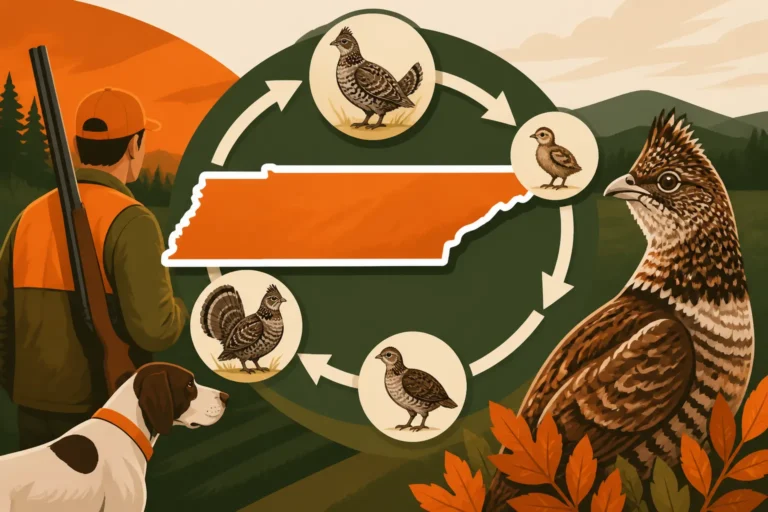
Finding ruffed grouse in Tennessee can feel like chasing a ghost. For many hunters, the very thought of successfully bagging a grouse in the Volunteer State feels like a distant dream, especially with their populations having seen significant shifts over the decades. This guide is dedicated to shedding light on where you might still find these elusive forest birds in Tennessee, delving into the specific counties and habitat characteristics that give you the best chance, and offering practical advice to increase your odds.
Understanding Tennessee's Ruffed Grouse Challenge
Let's be real: Tennessee isn't Maine or Wisconsin when it comes to ruffed grouse. The image of a bird bursting through a thick stand of aspen on a crisp autumn day is often a northern one. Here in the South, particularly in Tennessee, grouse hunting is a much more nuanced and often humbling experience. Our grouse populations have been facing an uphill battle for quite some time, primarily due to habitat changes and other environmental pressures.
The Decline of Ruffed Grouse in the South
The story of the ruffed grouse in Tennessee is largely one of habitat loss and change. These birds thrive in what we call "early successional forest," meaning young, regenerating woodlands, often created by timber harvesting, wildfires, or other natural disturbances. Think dense thickets of saplings, brambles, and brushy cover. Historically, practices like widespread small-scale farming and periodic logging created a patchwork of these ideal conditions across the state's mountainous and hilly regions. As these practices waned, forests matured, and fire suppression became more common, much of that critical young habitat simply disappeared. Mature, open timber, while beautiful, doesn't provide the dense cover and varied food sources a grouse needs to survive and raise chicks. This shift has been a primary driver behind the decline in grouse numbers across many southern states, including Tennessee.
Compounding this habitat issue are other factors. Increased predator populations, particularly those that thrive in mature forests, can take a toll on grouse. Additionally, warmer, wetter spring weather, which is becoming more common, can negatively impact nesting success and chick survival, as young grouse are highly susceptible to cold and damp conditions. It’s a complex web of environmental factors that makes grouse hunting here a true challenge.
Realistic Expectations for Tennessee Grouse Hunting
If you're coming to Tennessee expecting to fill a vest with grouse, you might be in for a rude awakening. While the seasons are open, the reality is that grouse populations are scattered and generally low in many areas. This isn't a numbers game; it's a dedicated pursuit of a truly wild bird in often challenging terrain. Success is often measured not by the birds in hand, but by the flush, the exhilarating roar of wings, and the sheer joy of being in wild country. You might walk for hours, climb steep ridges, and push through dense cover only to hear a single flush, or sometimes none at all.
This means your strategy needs to shift. Instead of focusing on high-volume flushes, you'll need to concentrate on finding extremely specific pockets of prime habitat. It's about being patient, persistent, and appreciating every single encounter. Think of it less as a harvest hunt and more as a test of your woodsmanship, your ability to read the landscape, and your dedication to a challenging pursuit. Many seasoned hunters will tell you that a single grouse flush in Tennessee is often more rewarding than multiple birds in states with higher populations, simply because of the effort and rarity involved.
Key Habitat for Ruffed Grouse in Tennessee
Understanding what makes good grouse habitat is absolutely essential when hunting in Tennessee. Without it, you're essentially just wandering aimlessly through the woods, hoping for a lucky break. Grouse are incredibly particular about their surroundings, and learning to identify these key components, even from a map, can dramatically increase your chances of finding birds.
Young, Disturbed Forests
The single most important factor for good grouse habitat is young forest, specifically areas that have undergone some form of disturbance within the last 5-25 years. This could be from a timber harvest, a prescribed burn, or even a severe wind event. What matters is that the canopy is broken, allowing sunlight to reach the forest floor, which in turn stimulates the growth of dense understory vegetation. Think about areas where logging has occurred, particularly clear-cuts that are now regenerating. These areas, often filled with blackberry briars, greenbrier, sumac, aspen, and young oaks and maples, provide both crucial cover from predators and a diverse food supply.
These disturbances create a mosaic of different age classes of trees, which is exactly what grouse need. They utilize the denser, younger growth for escape cover and nesting, while edges of slightly older stands might offer drumming logs for males or valuable hard mast. Looking for recent logging activity or areas marked for future timber sales (if you're diligent in your scouting) can be key. How Old a Cut Should Be for Grouse is a fascinating read that details the optimal age of these regenerating areas.
Thick Understory and Varied Cover
Beyond just young trees, grouse need dense cover. We're talking about places where you can barely see ten yards in front of you, where you have to push and fight your way through a tangle of vegetation. This thick understory serves multiple purposes: it protects them from aerial predators like hawks and owls, and ground predators like coyotes and bobcats. It also provides roosting sites and places for broods to hide. Look for areas with a mix of evergreen components like rhododendron or mountain laurel, which offer cover even in winter, combined with deciduous shrubs and saplings that provide seasonal food.
A varied understory also means a diverse food source. Grouse aren't picky eaters; they'll forage on buds, catkins, berries, leaves, and insects. Areas that offer a continuous supply of these items throughout the year are far more likely to hold birds. This means paying attention to what's growing on the forest floor, not just the mature trees overhead. Using tools like GoHunt to examine aerial imagery and topographic maps can help you identify areas of dense, brushy cover, especially near water sources or along breaks in topography.
Elevation and Aspect
In Tennessee, especially in the eastern part of the state, elevation and aspect (the direction a slope faces) can play a significant role in grouse distribution. Grouse tend to prefer higher elevations, where the climate can be a bit cooler and certain plant communities thrive. As you move west across the state, grouse become less common, generally correlating with a decrease in elevation and a change in forest types.
North-facing slopes, which tend to retain more moisture, often support different vegetation than south-facing slopes, which are drier and hotter. This difference in moisture and temperature can lead to varied plant growth, creating unique microhabitats. Sometimes, the thermal cover offered by a thick stand of evergreens on a north-facing slope can be just as important as the regenerating deciduous growth. When you're Reading a Ridge for East Tennessee Deer, keep an eye out for these subtle changes in vegetation and elevation, as they can also signal potential grouse haunts. These birds often utilize features like benches, draws, and saddlebacks that offer a blend of dense cover and access to food sources, sometimes surprising you in areas you might typically only associate with deer.
Top Tennessee Counties for Ruffed Grouse Hunting
When it comes to actually finding grouse in Tennessee, you're going to want to focus your efforts primarily on the eastern third of the state. This is where the Appalachian Mountains and the Cumberland Plateau offer the necessary elevation, rugged terrain, and, critically, the remnants of suitable habitat that these birds require.
Counties in the Cherokee National Forest
The Cherokee National Forest is arguably your best bet for finding ruffed grouse in Tennessee. This vast public land spans numerous counties in East Tennessee, providing the kind of large, contiguous blocks of forest that grouse need. Within the Cherokee, you'll want to focus on counties that have undergone some recent timber management or have areas of naturally disturbed forest.
- Monroe County: This county, situated in the southern part of the Cherokee National Forest, has historically been a stronghold for grouse. Its rugged terrain, characterized by steep mountainsides and deep hollows, makes for challenging hunting but also provides the isolation grouse often seek. Look for active timber sales or clear-cuts that are 5-15 years old. The elevation here creates a cooler, more humid environment conducive to the dense understory growth grouse love.
- Polk County: Adjacent to Monroe, Polk County also boasts significant portions of the Cherokee National Forest. Similar to Monroe, the key here is to find areas with a mix of mature timber and regenerating clearings. The reliance on young forest habitat means that areas with a history of logging activity will be your most promising spots. Don't be afraid to put in the miles hiking up and down the steep slopes; grouse often hold tight in the thickest stuff.
- Cocke County: Further north along the North Carolina border, Cocke County offers similar mountainous terrain within the Cherokee National Forest. The remote nature of some of these areas means less human disturbance, which can be a plus for wary grouse. When planning a hunt here, remember that grouse will often be found near water sources or along dense creek bottoms that provide both hydration and additional cover.
- Unicoi and Greene Counties: These counties, nestled further north in the Unaka Mountains section of the Cherokee, also hold potential. The habitat here is often a mix of mixed hardwoods and evergreen stands, offering varied food sources throughout the year. Utilizing online mapping tools and recent satellite imagery from services like GoHunt can help you spot younger forest growth that might not be immediately apparent from a road. This type of scouting is crucial for locating the precise pockets where grouse are most likely to be found. Cherokee National Forest Hunting provides a broader overview of opportunities in this expansive area.
Cumberland Plateau Counties with Potential
While the Cherokee National Forest is prime, the Cumberland Plateau also holds some scattered opportunities, particularly in its eastern and northern reaches where the terrain is more rugged and higher in elevation. These areas are characterized by extensive hardwood forests, steep-sided valleys, and numerous ravines.
- Cumberland County: As the name suggests, this county sits squarely on the Cumberland Plateau and has some potential. The key here is to seek out areas that have seen recent forest management. Many parts of the plateau have matured into older forest, which isn't ideal, but specific wildlife management areas (WMAs) or private timberlands that practice sustainable logging might offer small pockets of suitable habitat. Focus your efforts on the steepest, most remote sections where natural disturbances or historical logging could have created prime cover.
- Fentress and Scott Counties: These northern Cumberland Plateau counties, particularly those bordering the Big South Fork National River and Recreation Area, can offer some grouse encounters. The Big South Fork itself contains some very rugged and wild country, and while not managed primarily for grouse, the diverse ecosystem can occasionally produce the necessary conditions. When hunting these areas, be prepared for tough walking and sparse flushes. Grouse Hunting the Cumberland Plateau offers more specific tips for this challenging region. Look for areas with dense rhododendron thickets, mountain laurel, and patches of greenbrier, especially near seep springs or along the breaks of steep ridges. Even small clearings with regenerating hardwoods can hold a bird or two.
| County (Primary Zone) | Primary Habitat Type | Key Characteristics to Seek | Likelihood of Encounter |
|---|---|---|---|
| Monroe (Cherokee NF) | Steep Mountain Hardwoods / Regenerating Cuts | 5-15 year old clear-cuts, rhododendron thickets, high elevation. | Moderate-Good |
| Polk (Cherokee NF) | Steep Mountain Hardwoods / Regenerating Cuts | Similar to Monroe; focus on recent timber activity. | Moderate-Good |
| Cocke (Cherokee NF) | Rugged Mountain Forests / Dense Understory | Remote areas, dense laurel/rhododendron, steep slopes. | Moderate |
| Unicoi (Cherokee NF) | Mixed Hardwood/Evergreen Mountain Forests | Younger growth adjacent to mature stands, varied food sources. | Moderate |
| Cumberland (Cumberland Plateau) | Mature Hardwoods / Some Regenerating Areas | Specific WMA management areas, historical logging sites, remote hollows. | Low-Moderate |
| Fentress (Cumberland Plateau) | Rugged Plateau Forests / River Breaks | Big South Fork edges, steep ravines, dense underbrush near water. | Low-Moderate |
Tactics for Hunting Tennessee Grouse
Hunting grouse in Tennessee isn't just about knowing where to go; it's very much about how you hunt. Given the low densities and challenging terrain, your tactics need to be sharp, patient, and adaptable. This isn't a casual stroll in the woods; it's a dedicated effort to find and flush one of the craftiest birds in the forest.
Focusing on Habitat and Cover
The most crucial tactic is to be utterly relentless in your pursuit of prime grouse habitat. As we've discussed, this means young, dense, regenerating forest with plenty of thick understory. Don't waste your time in open, mature timber or agricultural fields (unless you're on the edge of prime cover). Utilize mapping applications like GoHunt to identify areas with a history of logging, or those showing dense, low-growing vegetation. Look for contour lines that indicate steep terrain, which often harbors unpressured pockets of habitat.
When you're on the ground, think like a grouse. Where would they feel safe from predators? Where would they find food? These are often the places you least want to walk: the thickest briar patches, the nastiest rhododendron hells, the steepest and brushiest hollows. Grouse will use these impenetrable spots for roosting, escape, and feeding. Focus on the edges of these thickets, transitions between different forest types, and areas where sunlight penetrates to the forest floor, promoting undergrowth. Remember, Reading Cuttings Under an Oak can tell you if squirrels have been around, but for grouse, you're looking for different signs—like tracks in soft dirt near water, or droppings on logs.
Still-Hunting vs. Dog Hunting
Both still-hunting (walking slowly and deliberately) and hunting with a dog have their place for Tennessee grouse, though each comes with its own set of pros and cons in this challenging environment.
Still-Hunting:
Still-hunting for grouse in Tennessee requires extreme patience and a keen eye. You'll need to move very slowly, stopping frequently to listen and scan the cover ahead. The goal is to surprise the bird or force it to flush within shotgun range. Many successful still-hunters recommend focusing on walking into the wind, as it helps carry your scent away from the birds and dulls your own noise. Pay attention to every sound – a rustle in the leaves, a distant drumming, or the soft "peeping" of a nervous grouse. Walk ridge lines, follow old logging roads (sticking to the brushy edges), and traverse dense creek bottoms. Flushing Grouse Without a Dog means relying entirely on your senses and your ability to place yourself in the right spot. It's tough, but it's often the most accessible method for hunters without a dedicated bird dog. Be ready, because when a grouse explodes out of cover, it happens fast.
Dog Hunting:
A well-trained bird dog can be an invaluable asset for grouse hunting anywhere, and Tennessee is no exception. Dogs can cover much more ground, penetrate thicker cover, and, most importantly, pinpoint birds with their superior scenting ability. A good dog will "point" a grouse, allowing you to move into position for a shot. However, hunting with a dog in Tennessee's rugged terrain can be extremely physically demanding for both you and your canine companion. The thick briars, steep slopes, and rocky ground can be hard on a dog's pads and body. You'll need a dog with exceptional grit and endurance, and you'll need to be prepared to follow them into some truly awful places. Furthermore, given the lower grouse densities, your dog might work hard for long periods without finding a bird, which can be frustrating for both of you. But when they do lock up on a bird, the reward is immensely satisfying. Just remember to have good e-collar control and keep your dog hydrated and safe.
Timing Your Hunt
The timing of your grouse hunt in Tennessee can significantly impact your success. The official Tennessee Grouse Season Status often spans several months, but not all of that time is equally productive.
- Early Season (October-November): The early part of the season, coinciding with early fall, can be a great time. The leaves are typically still on the trees, providing camouflage for the birds, but also making visibility a challenge for hunters. However, this is when young birds are still less wary and haven't been pressured. Look for birds along the edges of clear-cuts where they might be feeding on berries and insects. The weather is often pleasant, making for enjoyable walks.
- Late Season (December-February): As winter sets in and the leaves fall, visibility improves dramatically. This can be a double-edged sword: you might see the birds better, but they'll also see you coming. Late season grouse tend to be much warier and will flush at longer distances. However, the colder weather concentrates birds in the densest thermal cover, making their locations more predictable. Focus on areas with evergreen components like rhododendron or mountain laurel, and south-facing slopes that offer more warmth. Food sources like greenbrier berries and tree buds become critical during this time. Winter conditions also mean you'll often have the woods to yourself, which is a huge bonus.
No matter when you go, plan your hunt around mid-morning to late afternoon. Grouse are often most active feeding during the early morning and late afternoon hours, so hunting during the middle of the day can be less productive. Always check the Tennessee Small Game Season Rules for exact dates and bag limits before heading out.
Conservation and the Future of Tennessee Grouse
It's clear that ruffed grouse in Tennessee face significant challenges, and frankly, their future here is uncertain without concerted conservation efforts. As hunters, we have a vested interest in the health of these wild populations, and understanding the conservation landscape is part of being a responsible steward of our natural resources.
Efforts to Support Grouse Populations
State wildlife agencies, often in partnership with conservation groups, are keenly aware of the Tennessee Ruffed Grouse Decline. Many efforts are underway, though often on a localized scale, to try and improve habitat for grouse and other early successional species. These efforts typically involve:
- Timber Stand Improvement (TSI): This means actively managing forests to create the diverse age classes and dense understory that grouse need. This isn't just about clear-cutting; it can also involve thinning operations, selective harvesting, and creating small clearings designed to promote new growth.
- Prescribed Burning: Controlled burns can be a natural way to reset forest succession, stimulating new growth and reducing fuel loads for wildfires. While beneficial, these are complex operations and must be carefully planned and executed.
- WMA Management: Many Wildlife Management Areas (WMAs) in the grouse range of Tennessee, like parts of the Catoosa WMA or Royal Blue WMA within the North Cumberland complex, are actively managed to create habitat beneficial for a variety of game, including grouse. These areas are excellent places to focus your scouting efforts, as they often have dedicated staff working on habitat improvements.
- Research and Monitoring: Wildlife biologists are continually researching grouse populations, tracking their numbers, and studying their habitat needs to better inform management strategies. Understanding the Tennessee Ruffed Grouse Numbers Today is critical for guiding future conservation actions.
How Hunters Can Contribute
As hunters, we play a vital role beyond just purchasing licenses and permits, which directly fund these conservation efforts. Our actions in the field and our advocacy for habitat work are crucial.
- Be a Voice for Habitat: Speak up for responsible forest management that includes creating early successional habitat. Support conservation organizations that actively work on habitat restoration.
- Report Observations: If you regularly encounter grouse (or other wildlife), consider reporting your observations to the TWRA. This anecdotal data, when combined with scientific surveys, can help biologists better understand population trends and distribution.
- Respect Regulations: Adhere strictly to all hunting regulations, including bag limits and season dates. These are set to ensure sustainable hunting opportunities and protect the breeding population.
- Practice Ethical Hunting: Whether you hunt with a dog or still-hunt, strive for quick, clean kills and minimize disturbance to the environment. Pack out what you pack in, and leave no trace.
- Support Local Communities: When you travel to grouse country, support local businesses. Your economic impact reinforces the value of wild places and the species that inhabit them.
- Embrace the Challenge: Understand that grouse hunting in Tennessee is a privilege, not a guarantee. The effort itself, the immersion in wild country, and the occasional flush are the real rewards. It's a testament to the wildness that remains in our state, and something worth protecting for future generations of hunters.
The future of grouse in Tennessee depends on continued dedication to their habitat needs. By understanding the challenges, focusing our efforts, and supporting conservation, we can help ensure that the thunderous flush of a ruffed grouse remains a possibility in the mountains and plateaus of Tennessee for years to come.
Disclaimer
This article is for general informational purposes only and does not constitute professional advice. Laws, prices and regulations vary by location and change over time. Consult a qualified professional for guidance on your specific situation.