Tennessee Opossum and Skunk Trapping
Few things are more frustrating than waking up to your trash cans ransacked, your pet food bowl emptied by an unwelcome guest, or worse, the unmistakable, pungent aroma of a skunk that’s decided your backyard is its new personal spa. Whether it's the waddling opossum causing a nightly ruckus or the perpetually offended skunk making your property smell like a chemical spill, dealing with these critters can be a real headache. This guide is here to walk you through the practical, legal, and humane steps for trapping opossums and skunks in Tennessee, so you can reclaim your peace and quiet.
Navigating Tennessee's Furbearer Regulations for Opossums and Skunks
Before you even think about setting a trap, it's absolutely crucial to understand the rules of the game. Tennessee, like most states, has specific regulations governing furbearers, and both opossums and skunks fall into this category. You don't want a nuisance animal problem to turn into a legal one!
Generally speaking, if you're trapping for the fur market or as a sustained harvest method, you'll need the appropriate hunting and trapping licenses. This includes a valid Tennessee hunting license and a specific trapper's license. The season for trapping furbearers like opossums often runs through the colder months, typically opening in late fall and extending into winter. Tennessee Trapping License Requirements gives a comprehensive overview of what you'll need to be legal.
However, many folks encountering opossums and skunks are dealing with nuisance animals – critters causing damage to property, threatening pets, or simply making life unpleasant. The good news is that Tennessee wildlife regulations often provide exceptions for taking nuisance wildlife outside of regular seasons, especially if they are causing damage or posing a health risk. You still have to follow specific guidelines, like using legal trap types and reporting captures if required, but the immediate threat usually takes precedence over strict seasonal limits. It’s always best to check the latest Tennessee Wildlife Resources Agency (TWRA) regulations directly or use an up-to-date resource like GoHunt to confirm the specific rules for nuisance animal removal in your county, as these can sometimes vary.
Legal trap types are another big consideration. For nuisance animals, especially in residential areas, live traps (cage traps) are overwhelmingly preferred. They allow for the humane capture and, potentially, relocation or dispatch of the animal without causing undue harm. Body-grip traps (like Conibear traps) and foothold traps, while legal for furbearer trapping during season, are generally not recommended for nuisance situations in populated areas due to the risk to non-target animals, pets, or even children. Always double-check local ordinances in your specific city or county, as some areas may have stricter rules on trap placement or type.
| Trap Type | Primary Use | Recommended for Opossums | Recommended for Skunks | Risk to Non-Target |
|---|---|---|---|---|
| Live Trap (Cage) | Nuisance animal removal, relocation | Yes | Yes (covered) | Low |
| Body-Grip (Conibear) | Fur harvesting, quick dispatch | Yes (during season) | Yes (during season) | High |
| Foothold | Fur harvesting, live capture | Yes (during season) | Yes (during season) | Moderate |
Effective Opossum Trapping Strategies in Tennessee
Opossums are creatures of habit and opportunity, and understanding their behavior is key to successful trapping. These marsupials are nocturnal scavengers, constantly on the prowl for an easy meal. Your frustrations with them likely stem from their love for pet food left outdoors, overflowing bird feeders, ripe garden produce, or easily accessible trash cans. They also love to den in cozy, dark spaces like under decks, sheds, or even in attics and crawl spaces.
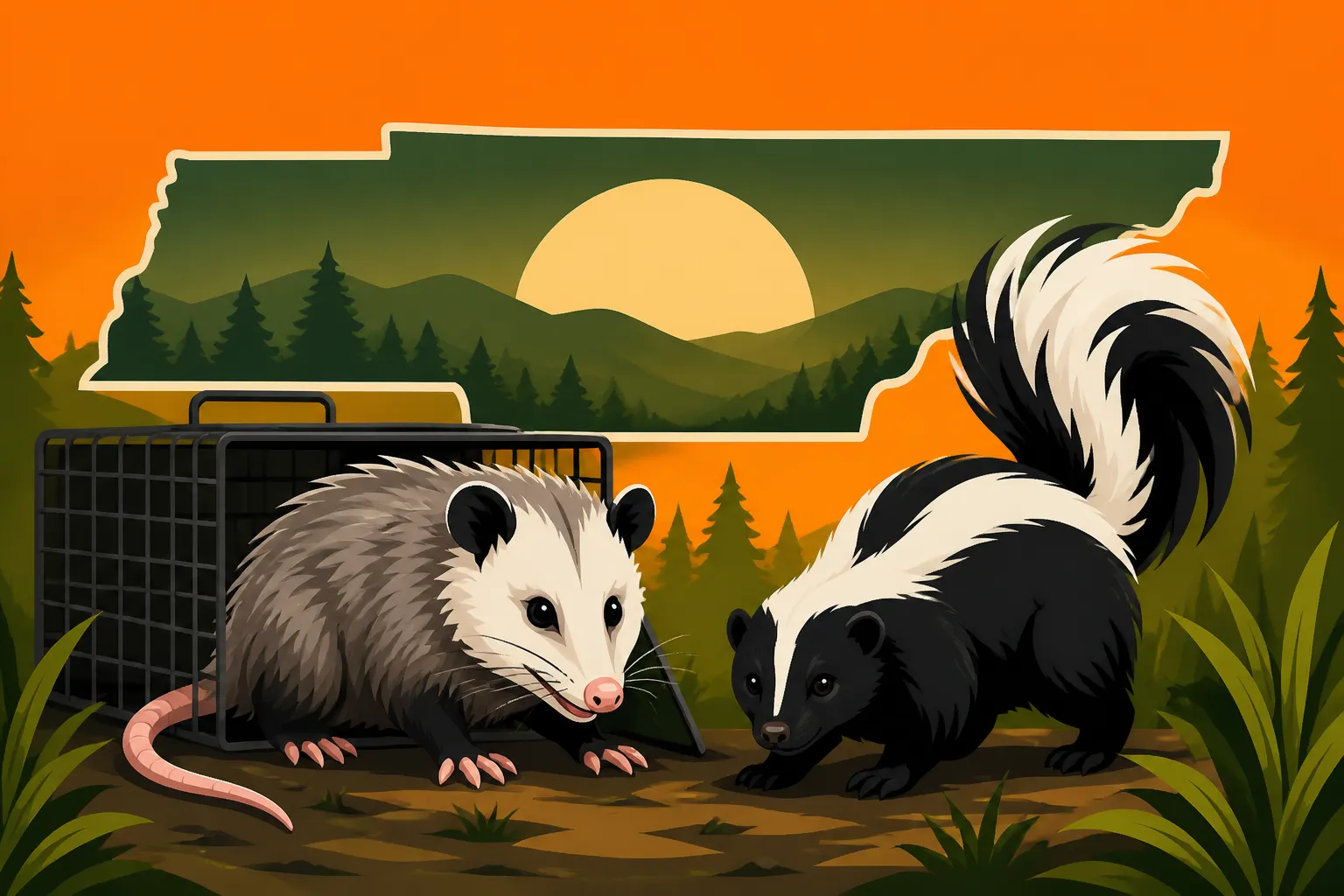
When it comes to trapping opossums, a medium-sized live cage trap is your best friend. A trap that’s roughly 10x12x30 inches is usually sufficient for an adult opossum. Look for traps made from sturdy wire mesh, as opossums, while not typically aggressive, can certainly put up a fight when cornered. The key to success often lies in bait and placement. Opossums aren't picky eaters, which is a blessing and a curse. While almost anything will attract them, some baits work better than others and minimize attracting unwanted species. Think about what they’re already eating on your property. If they're raiding the cat food, that’s your first choice for bait! Other excellent options include ripe fruit (like apples or bananas), marshmallows, strong-smelling canned pet food, or even a piece of fish. Place the bait in the back of the trap, past the trigger plate, to ensure the animal fully enters.
Trap placement is just as important as the bait. Set your trap in areas where you've seen signs of opossum activity – near overturned trash cans, along fence lines, at the entry point under a deck, or close to where you leave pet food out. Since they're nocturnal, set your trap in the evening and check it first thing in the morning. This minimizes the time an animal might spend in the trap, exposed to the elements or predators. It’s a good idea to secure the trap so it can’t be tipped over by a larger animal or a struggling opossum. Many trappers use advanced mapping features available on platforms like GoHunt to identify potential den sites, water sources, and travel corridors, even on private land with owner permission, which can greatly inform trap placement. For more on general furbearer seasons, check out Tennessee Fox and Bobcat Trapping Season.
Navigating Skunk Trapping Challenges in Tennessee
Trapping a skunk requires a whole different level of strategy and caution. The primary challenge, of course, is their potent, lingering spray. Unlike an opossum, a skunk's defense mechanism is far more impactful on your day, your home, and your sense of smell. Skunks, like opossums, are nocturnal omnivores, but they are also prodigious diggers, often creating dens under structures or seeking grubs and insects in your lawn. Their presence is usually announced by digging, damaged plants, or that unmistakable odor. They are also known carriers of rabies, which adds another layer of concern.
For skunks, a live cage trap is almost mandatory, but with a critical modification: it needs to be covered. A standard open-wire cage trap is an invitation for a skunk to spray everything in a wide radius as soon as it feels threatened. Instead, use a trap that is already enclosed on the sides and top with sheet metal, or modify a standard cage trap by draping a heavy tarp or blanket over it, securing it with bungee cords or zip ties. The goal is to make the inside of the trap dark and secure, so when the skunk is caught, it feels less exposed and less likely to spray. The trap should be just large enough to contain the skunk, similar in size to an opossum trap.
Baiting for skunks is similar to opossums, as their diets overlap. Canned cat food, peanut butter, fish, and even sugary treats like marshmallows can work well. However, be mindful that these baits can also attract other animals you might not want to catch, like raccoons or stray cats. Place your covered trap in areas where skunks have been active, ensuring it's on a level surface and stable. Set it in the evening and check it at dawn. The crucial moment comes when you approach a trapped skunk. Move slowly, quietly, and without sudden movements. The heavy blanket or cover should already be in place, making the skunk feel safe in its dark enclosure. If you need to move the trap, hold it at arm's length, keeping the covered end pointed away from you, your vehicle, and your house. For those interested in broader predator management, Coyote Calling in Tennessee Farm Country shares tactics for another common furbearer.
After the Catch: Ethical Considerations and Odor Management
Once you've successfully trapped an opossum or skunk, you're faced with important decisions regarding their fate, along with the practical challenge of skunk odor if your luck ran out.
What to Do with a Captured Animal
This is where ethics, legality, and practicality converge.
- Relocation: For opossums, relocation might seem like a humane option, but Tennessee generally prohibits the relocation of nuisance wildlife without specific permits. This is to prevent the spread of disease, introduce new animals to already stressed habitats, or simply move the problem to someone else's property. If you do attempt relocation (and have permission), it should be a short distance – a mile or two at most – and into suitable habitat away from human dwellings. Remember, a wild animal may not survive in an unfamiliar territory.
- Dispatch: In many nuisance situations, especially with skunks due to rabies risk and their destructive nature, humane dispatch is often the recommended course of action. This is a responsibility that requires careful consideration. A quick, humane method is paramount. Carbon dioxide chambers, which gradually and painlessly render the animal unconscious before death, are one option. Alternatively, a well-placed shot from a small-caliber firearm can be effective, but this requires extreme care, appropriate location, and compliance with local firearm discharge laws. Drowning or gassing with vehicle exhaust are generally considered inhumane and illegal methods.
- Professional Help: If you're uncomfortable with dispatching an animal or unsure about local regulations, contact a licensed Nuisance Wildlife Operator (NWO). They are trained, permitted, and equipped to handle these situations legally and humanely. And for those challenging skunk captures, having a plan for humane dispatch or transport is crucial. Checking the most current TWRA guidelines, perhaps through resources accessible via GoHunt, will help you navigate these sensitive situations ethically and legally. Reporting a Sick Animal in Tennessee provides details if you suspect an animal is unwell.
Conquering Skunk Odor
If a skunk sprays, whether in the trap or during handling, you'll be dealing with the odor. Act quickly!
- Pets: If your dog or cat gets sprayed, do NOT use tomato juice. It's an old wives' tale that doesn't work. Instead, mix a quart of 3% hydrogen peroxide, a quarter cup of baking soda, and a teaspoon of liquid dish soap. Apply it thoroughly to the affected areas of your pet, avoiding the eyes, and let it sit for 5-10 minutes before rinsing thoroughly. Repeat if necessary.
- Clothing and Gear: For clothes, soak them in a strong solution of baking soda and vinegar, or a commercial odor eliminator, before washing in hot water with heavy-duty detergent. For traps or other gear, a diluted bleach solution (1 part bleach to 9 parts water) or specialty skunk odor removers can be effective, but multiple applications and airing out will likely be needed.
- House/Yard: If the spray gets on your house or in your yard, commercial deodorizers are your best bet. You can also try spraying affected areas with a diluted vinegar solution. Time and airing out are the ultimate solutions.
Finally, prevention is always better than cure. Secure your trash cans with bungee cords, bring pet food indoors at night, close off access points under decks and sheds with heavy-gauge wire mesh, and consider removing easy food sources like fallen fruit. Furthermore, keeping detailed records of your trapping efforts – where you set traps, what bait you used, and what you caught – can improve your success rate year after year. Some hunters and trappers use apps or digital tools, like those found within the GoHunt ecosystem, to log this valuable information, helping them adapt and refine their strategies against nuisance wildlife.
Disclaimer
This article is for general informational purposes only and does not constitute professional advice. Laws, prices and regulations vary by location and change over time. Consult a qualified professional for guidance on your specific situation.