Tennessee Coyote Diet in Farm Country
It's a common sight in Tennessee farm country: you're out early, maybe checking fences or heading to a stand, and you catch a glimpse of a shadowy figure slipping through the edge of a field. Chances are, it's a coyote. These highly adaptable predators have made themselves right at home in our agricultural landscapes, and understanding exactly what they're putting in their bellies is key to knowing their impact on local wildlife and livestock, and ultimately, how to best manage their presence. This guide will dig deep into the diverse diet of coyotes in Tennessee's farm country, exploring how their meals change with the seasons and what that means for farmers, landowners, and hunters trying to protect everything from poultry to deer.
The Opportunistic Hunter: What Coyotes Eat in Tennessee Farmland
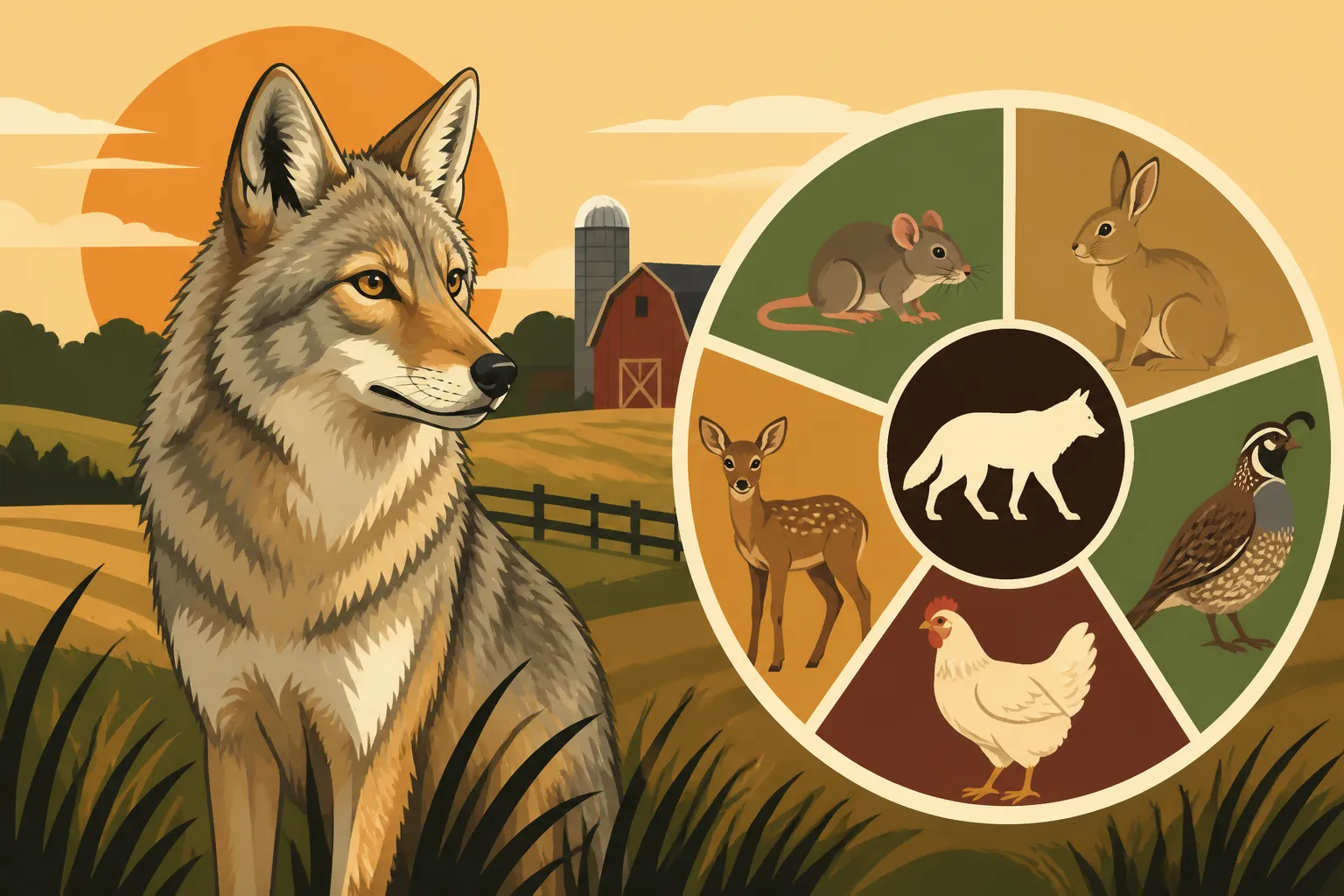
Coyotes in Tennessee farm country are the ultimate generalists, a big part of why they've been so successful. They don't have a rigid menu; instead, they eat what's available, what's easiest to catch, and what provides the most energy. This opportunistic approach means their diet can vary dramatically throughout the year and even from one farm to the next, depending on the local ecosystem. While they are predators, they're not always chasing down big game. Often, it's the smaller, more numerous prey that fills their stomachs.
Seasonal Shifts in Prey Availability
Think about the changing landscape of a Tennessee farm from spring to winter, and you'll get a good idea of how a coyote's diet adapts. When spring arrives, the world awakens, and with it, a vulnerable new generation of wildlife. This is prime time for coyote predation on young, inexperienced animals. They'll actively hunt for deer fawns, making a noticeable impact on Tennessee Fawn Survival Rates, and will also target turkey poults and even raid bird nests, influencing Tennessee Turkey Brood Survey Results. The abundance of newborn and juvenile animals makes them relatively easy targets, and a coyote will certainly take advantage of these calorie-rich opportunities.
As summer heats up, fawns become more agile, and turkey poults grow larger, making them harder to catch. Coyotes then shift their focus to other abundant food sources. Small mammals like rabbits, groundhogs, and various rodent species (mice, voles, rats) become staples. Insects, especially larger ones like grasshoppers and cicadas, are also on the menu. Don't be surprised to learn that during late summer, when wild berries are ripe, coyotes will readily include blackberries, raspberries, and wild grapes in their diet, offering a sweet, juicy treat alongside their protein.
Fall brings a bounty of its own. Agricultural fields are harvested, leaving behind waste grain that attracts rodents. Persimmon trees drop their sweet fruit, and acorn crops blanket the ground in oak timber. Coyotes will forage heavily on these plant materials and capitalize on the surge of small mammals. Furthermore, as deer hunting seasons kick off, any deer that are injured but not recovered by hunters, or those that succumb to natural causes, quickly become valuable carrion for coyotes. This scavenging behavior is crucial for them to build reserves before the leaner winter months.
Winter in Tennessee farm country can be tough, and food sources become scarcer. This is when carrion—dead animals, whether from roadkill or natural mortality—becomes absolutely vital. While they'll still hunt small game like rabbits and rodents, the focus shifts to survival, and any available protein source is fair game. Weakened or diseased deer, often stressed by harsh weather, can also fall prey, though healthy adult deer are rarely a primary target.
The Role of Livestock and Poultry in Coyote Diets
This is where the rubber meets the road for many Tennessee farmers, and it’s a genuine source of frustration. While coyotes primarily feed on wild prey, they absolutely will target domestic animals if the opportunity arises. It’s not a myth or an exaggeration; it's a harsh reality that some farmers face. Young livestock, such as newborn calves, lambs, and goat kids, are particularly vulnerable. They're often smaller, less agile, and sometimes left relatively unguarded in pastures. A coyote sees an easy meal, and the instinct to take it is strong.
Poultry, like chickens, ducks, and geese, are also highly susceptible. A poorly secured chicken coop or free-ranging birds can quickly become a coyote's buffet. The damage can be devastating for a small farmer, wiping out a significant portion of their flock in a single night. This is why measures to protect livestock are so critical in areas with a healthy coyote population. Effective fencing, especially predator-proof netting, and the use of guardian animals like Great Pyrenees or Anatolian Shepherd dogs can make a huge difference in deterring these cunning predators. When talking about Tennessee Coyote Attacks on Livestock, it’s clear this isn't just an occasional occurrence but a consistent challenge for some agricultural operations.
Scavenging and Foraging: More Than Just Hunting
While their reputation as hunters precedes them, coyotes are far from being solely pursuit predators. Their adaptability shines brightest in their willingness to scavenge and forage, filling nutritional gaps and taking advantage of easy meals that require little energy expenditure. This makes them incredibly efficient at surviving in diverse environments, especially those heavily influenced by human activity like our farm country. They are truly the clean-up crew of the landscape, and their scavenger tendencies are a critical component of their overall diet.
The Importance of Carrion and Roadkill
In many parts of Tennessee, especially where deer populations are robust and roads crisscross rural areas, carrion is a consistent and significant part of a coyote's diet. Think about it: a deer struck by a car along a highway, an animal succumbing to EHD (Epizootic Hemorrhagic Disease), or even unrecovered game animals during hunting season. These provide a substantial, easy-to-access protein source. Coyotes are incredibly efficient at finding and consuming these deceased animals, acting as vital scavengers in the ecosystem. This behavior is particularly prevalent during the colder months when live prey is harder to come by and a large carcass can sustain a coyote or even a small family group for days.
Farmers, unfortunately, sometimes contribute to this unknowingly. If a livestock animal dies in a pasture and isn't promptly removed, it becomes an irresistible draw for coyotes. While you might think of a coyote as a stealthy hunter, sometimes their most successful "hunt" involves simply stumbling upon a free meal. This scavenging efficiency is one of the reasons they can maintain healthy populations even in areas with fluctuating live prey availability. Given the number of Tennessee Deer Vehicle Collisions annually, there's always a steady supply of these unplanned meals.
Plant Matter and Other Surprising Food Sources
It might surprise you to learn just how much plant material a coyote will consume, especially during certain times of the year. They aren't strict carnivores; they're omnivores, and they're not picky! In late summer and fall, wild fruits and berries can make up a substantial portion of their diet. We're talking about persimmons, wild grapes, blackberries, and even apples from old, neglected orchards or scattered trees on the edges of fields. These fruits provide essential carbohydrates and vitamins that supplement their meat-heavy diet.
Beyond wild fruits, coyotes are also known to munch on agricultural crops. While they won't necessarily decimate a cornfield like a herd of hogs, they will absolutely eat corn and soybeans, especially when the crops are mature or if they've already been damaged by other wildlife. This foraging behavior demonstrates their incredible adaptability and why they thrive in varied landscapes. If you're using a mapping tool like GoHunt, you can often identify old hedgerows or abandoned fields that might contain these natural food sources, giving you clues to where coyotes might be spending their time. Understanding these dietary nuances helps to paint a more complete picture of the coyote as a survivor in Tennessee's diverse environments.
Impact on Game Species and Farm Operations
The pervasive presence of coyotes in Tennessee farm country isn't without consequences. While they play a natural role in controlling rodent populations and scavenging carrion, their adaptable diet and keen predatory instincts can create genuine challenges for local wildlife populations and agricultural interests. It's a delicate balance, and understanding these impacts is crucial for effective management.
Effects on Deer and Small Game Populations
When we talk about coyotes impacting deer, it's almost always about fawns. Adult, healthy whitetail deer are typically too large and agile for a single coyote to take down, though a pack might attempt to bring down a weakened or injured adult. However, those precious weeks after fawns are born in spring are a vulnerable period. Coyotes are incredibly efficient at locating and preying on these young, inexperienced deer. While fawn recruitment can be affected by many factors, significant coyote predation in localized areas can certainly contribute to lower fawn survival rates. This isn't just conjecture; wildlife biologists study Tennessee Predator Impact on Fawn Recruitment extensively to understand these dynamics.
The impact on smaller game animals is often more direct and consistent. Rabbits, squirrels, and groundhogs are prime targets for coyotes throughout the year, especially when other food sources are scarce. Coyotes are adept at flushing these animals from cover, and their consistent pressure can keep local populations of small game from expanding as readily. For turkey populations, the vulnerability extends to both poults and nests. Coyotes are opportunistic nest predators, and while raccoons and opossums are often blamed, coyotes will readily consume turkey eggs and young poults. This pressure can be a significant factor in Tennessee Turkey Population Trends, especially in years with poor hatches.
Mitigation Strategies for Farmers and Landowners
Facing these impacts, many farmers and landowners are looking for effective ways to mitigate coyote pressure. It's rarely a one-size-fits-all solution, but a combination of strategies often yields the best results. One of the most common and accessible methods is consistent hunting and trapping. Maintaining year-round pressure on coyotes, especially when they begin to frequent specific areas, can help deter them. Learning Coyote Calling in Tennessee Farm Country can be an incredibly effective tactic, drawing curious or territorial coyotes into range. The goal isn't necessarily eradication, which is often impossible, but rather control and deterrence.
Exclusion is another powerful tool for protecting livestock and poultry. Robust, predator-proof fencing, often utilizing woven wire or electric strands, can create a physical barrier that coyotes are reluctant to cross. For poultry, secure coops that are locked at night are non-negotiable. Another excellent strategy, particularly for sheep and goat producers, involves the use of guardian animals. Breeds like Great Pyrenees, Anatolian Shepherds, and even llamas or donkeys are known to actively deter coyotes and protect their charges.
Lastly, habitat management and good husbandry practices play a role. Promptly removing livestock carcasses from pastures eliminates a strong attractant for scavengers. Keeping areas around barns and poultry houses clear of dense brush reduces cover for coyotes to approach undetected. Using mapping tools like GoHunt can help you identify key areas on your property that might serve as travel corridors or den sites, allowing you to focus your mitigation efforts where they'll be most effective. Additionally, being aware of Night Hunting Rules for Tennessee Coyotes can open up more opportunities for control, as coyotes are often most active after dark.
Understanding Coyote Behavior Through Diet Analysis
Unlocking the secrets of a coyote's diet isn't just academic; it provides invaluable clues for hunters, farmers, and wildlife managers to better understand their movements, habits, and overall impact. By carefully observing the signs coyotes leave behind, we can piece together a remarkably accurate picture of what they’ve been eating and, by extension, where they're finding their food. This deep dive into their dietary habits allows for more informed decisions on everything from setting traps to protecting vulnerable livestock.
Reading Sign for Dietary Clues
One of the simplest yet most informative ways to understand a coyote's diet is through scat analysis. Yes, examining droppings might not sound glamorous, but it's a goldmine of information. Coyote scat often contains undigested fragments of whatever they've recently consumed. You might find hair from deer, rabbits, or rodents, small bone fragments, insect chitin, or even seeds and berry skins. For instance, scat heavily laden with deer hair in the spring likely points to fawn predation, while a fall sample full of persimmon seeds tells a different story entirely. Consistent observation of scat in a particular area can reveal patterns in their diet and give you a window into local food availability.
Beyond scat, paying attention to tracks can also offer clues. While tracks themselves don't directly reveal diet, finding them consistently near certain food sources—like a freshly harvested cornfield, a berry patch, or around a livestock pen—suggests a dietary interest. For hunters, learning to interpret kill sites is also crucial. While identifying the specific predator responsible can be tricky, coyotes typically leave behind smaller, more scattered bone fragments and hair than larger predators, and often consume much of the carcass, leaving less evidence. They'll generally chew through smaller bones and consume internal organs more thoroughly than, say, a domestic dog might. For a deeper dive into general animal movement, Reading Tennessee Mud for Fresh Deer Movement can help in understanding where tracks might lead to food sources for various animals, including coyotes.
Regional Dietary Differences Within Tennessee
Tennessee is a state of diverse landscapes, and what a coyote eats in the mountainous east might be very different from what it consumes in the fertile farm fields of the west. These regional dietary differences are a testament to the coyote's incredible adaptability and their ability to exploit whatever food sources are most prevalent in their immediate environment. If you're utilizing tools like GoHunt, visualizing these different habitat types can help you anticipate what local coyotes might be eating.
In East Tennessee, particularly in the rugged terrain of the Cherokee National Forest or the Cumberland Plateau, coyotes often rely more heavily on wild game. Their diet might include a higher proportion of wild deer (especially fawns), turkeys, grouse, and a wider variety of forest-dwelling rodents. Livestock predation is generally less common here simply because there's less livestock per square mile. However, they will still opportunistically take what they can find, particularly small farm animals or pets in rural homesteads.
Move into Middle Tennessee, with its rolling hills, mixed forests, and extensive agricultural operations, and you'll see a blend. Coyotes here will still hunt wild game, but their diet will increasingly include agricultural components. This might mean more rabbits and groundhogs that thrive on farm edges, more rodents attracted to grain storage, and a higher incidence of scavenging on roadkill from busier highways. Livestock and poultry predation, while not always the primary food source, becomes a more significant concern for landowners in this region.
Finally, in West Tennessee, characterized by vast expanses of flat farmland, river bottoms, and cypress swamps, the coyote's diet shifts even more towards an agricultural focus. Here, rodents thriving in crop fields are a major food source. Waste grain, as mentioned earlier, can be a seasonal buffet. With numerous poultry farms and livestock operations, the temptation for coyotes to target domestic animals can be higher, making them more of a direct nuisance to farmers. Understanding these regional variations is vital for anyone trying to manage coyote populations or mitigate their impact on their specific corner of Tennessee. Tennessee Coyote Range and Density also plays a role in how available different food sources are across these regions.
| Season | Primary Diet Components (Farm Country) | Secondary Diet Components (Farm Country) | Common Prey Species in Farm Country |
|---|---|---|---|
| Spring | Fawns, Turkey Poults, Nests | Rodents, Birds, Insects | Young calves/lambs, Chickens |
| Summer | Small Mammals (Rabbits, Rodents), Insects, Wild Fruits | Young livestock, Birds | Groundhogs, Berries, Garden produce |
| Fall | Rodents, Wild Fruits (Persimmons, Acorns), Carrion | Injured deer, Small game | Waste grain, Apples, Squirrels |
| Winter | Carrion (Deer, Livestock), Rodents | Stressed deer, Small game | Roadkill, Field mice, Cottontails |
Disclaimer
This article is for general informational purposes only and does not constitute professional advice. Laws, prices and regulations vary by location and change over time. Consult a qualified professional for guidance on your specific situation.