Hog Hunting Tennessee’s Wild Boar
Wild hogs in Tennessee represent a unique and often frustrating challenge for landowners, farmers, and wildlife managers alike. If you've spent any time in the fields or timber of our beautiful state, you've likely seen the tell-tale rooting, wallows, and rubs that indicate these destructive animals have moved through. They decimate crops, destroy habitat, and even transmit diseases to livestock and native wildlife. This comprehensive guide is here to walk you through everything you need to know about pursuing these intelligent and elusive animals, helping you understand their behavior, where to find them, and the most effective strategies for removing them from Tennessee's landscape.
Understanding Tennessee's Wild Hog Challenge
Tennessee's wild hog population isn't just a nuisance; it's a rapidly growing ecological and agricultural crisis. These animals, often referred to as feral swine or wild boar, are descendants of domestic pigs that escaped captivity and interbred with European wild boar over generations. They are incredibly adaptable, prolific breeders, and have virtually no natural predators, allowing their numbers to explode across the state. Dealing with them requires a proactive and informed approach.
The Invasive Nature of Wild Hogs
Unlike native wildlife, wild hogs are an invasive species, meaning they are not indigenous to Tennessee and cause significant harm to the environment and economy. Their impact is truly staggering. They tear up vast tracts of land with their rooting behavior, searching for tubers, roots, and insects. This disrupts soil structure, damages crops like corn, soybeans, and even hayfields, and destroys valuable wildlife habitat, impacting everything from ground-nesting birds to native plant species. We're talking about millions of dollars in agricultural damage annually, not to mention the long-term ecological consequences. They outcompete native deer, turkey, and small game for food resources, further stressing our wildlife populations.
Their reproductive rate is what truly sets them apart. A sow can begin breeding as early as six months old and can have two litters per year, averaging four to twelve piglets per litter. That means a single sow can contribute dozens of offspring to the population in just a couple of years. This incredible breeding potential makes eradication virtually impossible and management a constant uphill battle. This is why the state encourages aggressive hunting and trapping without traditional seasons or bag limits – it’s a non-stop effort to control their numbers.
Where Wild Hogs Roam in Tennessee
While wild hogs can pop up almost anywhere in Tennessee, certain regions and habitat types are more prone to heavy infestations. Historically, West Tennessee's vast agricultural lands and river bottoms, particularly along the Mississippi River and its tributaries, have been hotspots. These areas offer abundant food sources, from crop fields to mast crops in the hardwoods, and dense cover in the bottomland swamps and thickets. Counties like Lauderdale, Tipton, and Shelby frequently report significant hog activity. The rich alluvial soils are perfect for their rooting behavior, and the dense cover provides ideal bedding and fawning areas.
However, their range has expanded dramatically. You'll now find established populations across the Cumberland Plateau, particularly in areas with a mix of agriculture, timber, and water sources. Even in East Tennessee, especially in the foothills of the Appalachian Mountains and along major river systems like the Tennessee River, sightings and damage reports are becoming more common. They thrive in areas where they have access to water, dense cover for security, and a reliable food supply, whether that's acorns, agricultural crops, or even small reptiles and amphibians. Hunters should pay close attention to areas with good water sources and thickets when considering Hunting West Tennessee River Bottomland Deer or even Hunting the Cumberland Plateau for other game, as these areas are also prime hog habitat.
Impacts on Agriculture and Native Wildlife
The damage wild hogs inflict on agriculture is devastating. Farmers spend countless hours and dollars repairing fences, replanting crops, and trying to mitigate the effects of hog depredation. Imagine a cornfield ready for harvest, only to find wide swaths of it rooted up and trampled by a sounder of hogs overnight. It’s soul-crushing for producers. Beyond direct crop loss, their rooting destabilizes soil, leading to erosion and impacting water quality.
For native wildlife, the consequences are equally severe. Hogs compete directly with deer, turkeys, and bears for crucial mast crops like acorns and berries, especially during critical periods when food is scarce. They also actively predate on the nests of ground-nesting birds, like wild turkeys and quail, consuming eggs and young poults. Fawns are also vulnerable to hog predation, particularly in dense cover. The ecological balance is significantly disrupted when an animal with such destructive tendencies and a high reproductive rate becomes established. The TWRA recognizes hunters as a crucial tool in addressing this invasive species, which is why hog hunting regulations are so liberal.
Legalities and Regulations for Hog Hunting in Tennessee
Unlike deer, turkey, or even bear hunting, pursuing wild hogs in Tennessee operates under a very different set of rules. This is largely because they are classified as a destructive, invasive species rather than game animals. The state wants them gone, period, and the regulations reflect that urgency. It’s essential to understand these rules to hunt legally and effectively.
Year-Round Hunting and No Bag Limit
One of the most significant differences for wild hog hunting in Tennessee is the lack of a closed season and bag limit. You can hunt wild hogs 365 days a year, 24 hours a day, with no restrictions on how many you can harvest. This "no holds barred" approach is designed to encourage hunters to remove as many hogs as possible, whenever and wherever they encounter them, provided it's done legally. This means that if you're out Scouting Tennessee Public Land Before Season for deer or turkey, and you come across a group of hogs, you can legally pursue and harvest them, assuming you have the proper license for the land you're on.
However, it's critical to note that while there's no state bag limit, individual Wildlife Management Areas (WMAs) may have specific rules regarding hog hunting. Always check the regulations for the specific WMA you plan to hunt. Some WMAs may restrict weapon types, hunting hours, or even prohibit hog hunting during certain managed hunts for other species. Ignorance of the rules is no excuse, so always consult the latest TWRA regulations pamphlet or use the Go Outdoors Tennessee map tool to verify WMA-specific rules.
Weapon Choices and Restrictions
Tennessee allows a wide range of weapon choices for hunting wild hogs, again reflecting the desire to maximize harvest opportunities. You can use centerfire rifles, shotguns, muzzleloaders, archery equipment (compound bows, recurves, and crossbows), and even handguns. The flexibility here means you can carry a rifle specifically for hogs or harvest one incidentally with your deer hunting setup. For those looking at Rifle Setups for Tennessee Deer Hunting, many calibers suitable for deer are also excellent for hogs, such as .308, 6.5 Creedmoor, or .270.
A key consideration, especially for night hunting, is the use of artificial lights, thermal imaging, and night vision. Tennessee generally permits the use of these tools for hog hunting, which is a significant advantage given that hogs are often most active after dark, especially in areas with hunting pressure. However, always double-check the specific WMA or private land rules, as some restrictions might apply. Understanding Thermal and Night Vision Rules in Tennessee is crucial if you plan on pursuing hogs during their nocturnal feeding patterns. For private land, ensure you have explicit permission from the landowner for any night hunting activities and the use of specialized equipment.
Private Versus Public Land Rules
The rules for hunting wild hogs differ slightly between private land and public hunting areas like WMAs and National Forests. On private land, with landowner permission, you have a lot more leeway. You can use almost any legal method, including trapping, baiting (where legal for other species, though direct baiting for hogs is a grey area the TWRA discourges to avoid concentrating them), and night hunting with lights or thermal. The most important thing is obtaining explicit written permission from the landowner. This protects both you and the landowner.
On public land, while the year-round, no-limit rule generally applies, you must adhere to all WMA or National Forest-specific regulations. This includes possessing the appropriate Tennessee hunting licenses and permits, such as a basic hunting license and any required WMA permits. You also need to be mindful of open seasons for other game, as your hog hunting activities should not interfere with or jeopardize other hunters. For example, if you're targeting hogs on a WMA that has a specific youth deer hunt weekend, you need to ensure your activities are aligned with all the rules for that specific hunt. The Tennessee Hunting Licenses and What They Cost guide details what you'll need.
Prime Locations for Wild Boar in Tennessee
Finding wild hogs isn't always easy. They are incredibly intelligent, elusive, and can adapt their behavior quickly in response to hunting pressure. However, understanding their preferred habitats and key indicators of their presence can dramatically increase your chances of success.
Focusing on West Tennessee River Bottoms
When you think about prime hog habitat in Tennessee, the vast river bottoms and agricultural lands of West Tennessee often come to mind first. Areas along the Mississippi River, the Obion River, and the Forked Deer River, particularly in counties like Lauderdale, Tipton, and Dyer, provide an ideal environment. These regions are characterized by:
- Dense Cover: Think impenetrable canebrakes, thickets of privet and kudzu, and swampy timber stands that offer excellent bedding and escape routes. Hogs need security, and these areas provide it in spades.
- Abundant Water: Rivers, creeks, sloughs, and cypress swamps are crucial. Hogs love to wallow in mud, not just to cool off, but also to coat themselves in a protective layer against insects and parasites. Look for muddy depressions or low-lying areas.
- Rich Food Sources: West Tennessee is an agricultural powerhouse. Hogs will raid corn, soybean, peanut, and even cotton fields. Beyond crops, the extensive hardwood forests provide a consistent supply of acorns, particularly white oak acorns, which they absolutely crave.
When scouting these areas, look for fresh rooting, which will be churned-up earth, often resembling a plow went through it. Fresh tracks in muddy areas, rubbed trees (hogs will rub against saplings to remove mud and parasites), and distinct "hog trails" through thick cover are all strong indicators. Using a mapping app like GoHunt can help you identify these features and pinpoint likely travel corridors between bedding areas and food sources. It's often where you'd expect to find Hunting West Tennessee Bottomland Deer that you'll also find hogs.
Hunting the Cumberland Plateau and Eastern Foothills
While West Tennessee might be famous for its hogs, the Cumberland Plateau and parts of the Eastern Foothills are rapidly developing into significant hog hunting destinations. These regions present a different landscape but still offer critical components for hog survival:
- Rugged Terrain: The Cumberland Plateau is characterized by its steep-sided ridges, deep hollows, and extensive mixed hardwood forests. Hogs use this broken terrain to their advantage, often bedding in the hollows during the day and moving up onto the ridges to feed at night.
- Mast Crops: Oak and hickory forests are plentiful, providing a crucial food source, especially in the fall and winter. Look for areas with heavy acorn drops.
- Water Sources: Creeks, springs, and small ponds are scattered throughout the plateau, providing essential water and wallowing opportunities.
- Remote Areas: Many parts of the Cumberland Plateau offer vast, unbroken timberland, giving hogs the solitude they prefer, especially if under hunting pressure.
On the plateau, focus your scouting on creek bottoms, natural benches on hillsides, and the edges of clear-cuts or logging roads where they can access new growth and ease of travel. Hog sign might be less apparent than in West Tennessee's soft soils, but look for fresh tracks in soft spots, rubbed trees, and rooted areas around water or feeding sites. Learning to read these diverse landscapes, similar to how you would for Still-Hunting Cumberland Plateau Ridges for deer, can lead to hog encounters.
Utilizing Wildlife Management Areas for Hog Access
Many of Tennessee's Wildlife Management Areas (WMAs) offer excellent opportunities for hog hunting, but as mentioned, it’s vital to check specific regulations for each WMA. Some WMAs, particularly those with extensive timber and river bottom habitat, have established hog populations. Examples might include areas like Cheatham WMA near Nashville, or some of the larger WMA complexes in West Tennessee such as Big Sandy or Camden. In East Tennessee, even parts of the Cherokee National Forest may hold hogs, especially in its lower elevations and along major river systems.
Using the Tennessee Wildlife Management Areas maps and regulations provided by the TWRA is your first step. Many WMAs now specifically address hog hunting in their unit-specific regulations, indicating whether it's allowed year-round, if specific weapons are restricted, or if certain times are off-limits. Tools like the Go Outdoors Tennessee map tool are indispensable for overlaying public land boundaries, habitat types, and even recent hog sighting data (if available). While hogs are not classified as game animals, you still need to possess a valid Tennessee hunting license to hunt them on public land. Always verify current regulations and seasons before heading out.
Effective Strategies for Hunting Wild Hogs
Wild hogs are cunning adversaries, and a successful hunt often requires a blend of patience, persistence, and adaptability. Relying on a single strategy might work once, but consistent success means having a diverse toolkit of tactics.
Spot and Stalk in Open Areas
Spot and stalk hunting can be incredibly effective, especially in areas with a mix of open fields and dense cover. This strategy works best in agricultural regions where hogs move between bedding areas in the woods and feeding areas in crop fields, or on WMAs with large open clearings or food plots.
The key to a successful spot and stalk is careful observation and understanding hog movement patterns. Hogs often move in sounders (groups), and they aren't always silent. Listen for grunts, squeals, and the rustling of leaves as they move.
- Early Morning/Late Evening: This is prime time. Hogs often emerge from cover to feed in fields during low-light conditions. Position yourself to glass fields from a distance, using binoculars or a spotting scope to identify any feeding groups.
- Wind Direction is Critical: Hogs have an incredible sense of smell. Always approach from downwind. One whiff of human scent, and an entire sounder can vanish into thick cover almost silently.
- Use Topography and Cover: Utilize ditches, fencerows, timber edges, and any dips in the terrain to conceal your approach. Move slowly, deliberately, and stop frequently to scan and listen.
- Patience and Stealth: Don't rush. Take your time, make quiet movements, and be prepared to freeze if a hog looks your way. A good pair of binoculars, perhaps an 8×42 or 10×42, can be very useful for confirming identity and planning an approach. Many hunters find Binocular Choice for Tennessee Whitetails guides helpful, and the same principles apply to hogs.
Still-Hunting Through Thick Cover
When hogs are pressured, or when you're hunting dense areas like river bottoms or thickets, still-hunting becomes a powerful tactic. This involves moving slowly and deliberately through cover, pausing frequently to listen, look, and scan for any sign of hogs.
- Slow is Smooth, Smooth is Fast: This adage applies perfectly to still-hunting hogs. Take a few steps, then stop and scan the woods for several minutes. Look for movement, listen for subtle sounds (a twig snap, a grunt, rooting noises), and pay attention to your surroundings.
- Focus on Fresh Sign: If you find fresh rooting, tracks, or recent rubs, slow down even further. Hogs often revisit prime feeding or bedding areas.
- Wind is Your Friend (or Foe): Again, always hunt into the wind. In thick cover, thermals can be tricky, especially in hilly terrain. Understanding Wind and Thermals on a Ridge System is crucial. As the day warms, thermals typically rise, and as it cools in the evening, they fall.
- Shot Opportunities: In thick cover, shots can be quick and close. Be prepared to shoulder your rifle or bow quickly. A good still-hunt is often about anticipating where a hog might be and being ready when it appears. You might only get a small window for a shot through the brush.
Stand Hunting Over Food Sources and Wallows
Stand hunting (from a treestand or ground blind) is a classic tactic that works well for hogs, particularly in consistent feeding or wallowing areas. This strategy relies on finding a location hogs frequent and then waiting patiently for them to appear.
- Identify Key Areas: Scout thoroughly to find active hog sign: heavy rooting, well-used trails, fresh wallows, or consistent feeding activity in a specific crop field or oak flat. Often, hogs will have a predictable travel route between bedding cover and these feeding spots.
- Treestands for Elevated Advantage: A treestand offers an elevated perspective, helping you see over brush and spread your scent above the hogs. Setting up a stand along a major hog trail or overlooking a wallow can be very effective. Ensure your stand setup is safe and secure, particularly on public land where you might use a mobile setup. Hunters often learn about Treestand Setups in Cherokee National Forest for deer, and these principles translate well to hog hunting.
- Ground Blinds for Concealment: If treestands aren't feasible or desired, a well-brushed-in ground blind can offer excellent concealment. Place it downwind of the anticipated hog travel route, and ensure it blends seamlessly with the surroundings. A good quality ground blind, even one suitable for Using a Ground Blind on Tennessee Public Land for deer, will work perfectly.
- Patience is Paramount: Hogs can be unpredictable. They might show up at first light, mid-day, or just before dark. Be prepared for long waits. Bringing water, snacks, and remaining as still and quiet as possible are essential.
Trapping and Night Hunting Considerations
For severe hog problems, especially on private land, trapping and night hunting can be highly effective, complementary strategies.
- Trapping: Trapping is often the most efficient method for removing large numbers of hogs, especially entire sounders. Large corral traps are particularly effective, designed to hold multiple hogs. Baiting these traps with corn, often soured, is a common practice. The goal is to condition the hogs to feed in and around the trap for several nights before setting the trigger, allowing an entire sounder to enter. The TWRA discourages "catch and release" of hogs, so any trapped hogs must be dispatched.
- Night Hunting: As mentioned earlier, hogs are often nocturnal, especially under pressure. Night hunting with thermal or night vision optics allows you to hunt when they are most active. This is primarily done on private land with explicit permission. Using powerful lights (often green or red to minimize startling game) in conjunction with rifles can be deadly effective. Always prioritize safety during night hunts, being absolutely certain of your target and what lies beyond. Reviewing Night Hunting Rules for Tennessee Coyotes can give you an idea of the general framework for nocturnal hunting, though specific hog rules might vary.
Essential Gear and Equipment for Hog Hunting
Successful hog hunting, like any specialized pursuit, benefits from having the right tools for the job. While you can certainly get by with basic gear, investing in a few key items can significantly increase your odds and improve your experience.
Firearms and Ammunition Choices
When it comes to firearms for wild hogs, power and penetration are key. Hogs are notoriously tough animals, with thick hides and often a "shield" of cartilage and scar tissue over their shoulders, especially in older boars.
- Rifles: Centerfire rifles are a popular choice. Calibers ranging from .243 Winchester up to .30-06 Springfield or .300 Winchester Magnum are all effective. The .308 Winchester and 6.5 Creedmoor are excellent all-around choices, offering good bullet energy and manageable recoil. For heavier hogs or in thick cover, larger calibers like the .45-70 Government are superb. Bullet construction is as important as caliber; choose strong, controlled-expansion bullets designed for deep penetration. You might find guidance in articles like Best Rifle Caliber for Tennessee Deer, as many of those calibers translate well to hogs.
- Shotguns: A 12-gauge shotgun loaded with slugs can be devastating at close range, especially in dense cover where quick shots are common. Buckshot is generally not recommended for hogs due to insufficient penetration.
- Muzzleloaders: During the muzzleloader season or if preferred, a large-caliber muzzleloader (.50 caliber and up) loaded with a heavy bullet or sabot can be very effective.
- Archery Equipment: Bows and crossbows are highly effective for hogs, but shot placement is critical. Aim for the "pocket" behind the shoulder to hit the vitals, as a direct shoulder shot can be difficult to penetrate. Use stout, fixed-blade broadheads for maximum penetration. Ensure your setup is appropriate for Bow Draw Weight for Tennessee Whitetails and can handle the tough hide of a hog.
Optics and Thermal Imaging
Optics play a crucial role in locating hogs and making accurate shots, especially in low light or at night.
- Binoculars: A good pair of 8×42 or 10×42 binoculars are essential for scouting and spotting hogs at a distance, particularly during dawn and dusk. Look for models with good low-light performance.
- Rifle Scopes: Choose a durable rifle scope with clear glass and good light-gathering capabilities. For hunting in dense woods, a variable power scope (e.g., 2-7x, 3-9x) offers versatility for both close and longer shots. An illuminated reticle can be a significant advantage in low light. When considering Rifle Scopes for Low-Light Hollows, many of the features discussed are also highly beneficial for hog hunting.
- Thermal and Night Vision: For serious night hunting, thermal imaging monoculars or scopes are game-changers. Thermal allows you to detect heat signatures, making hogs visible even in complete darkness or thick brush where traditional night vision might struggle. Night vision works by amplifying ambient light. Both require a significant investment but can drastically improve success rates for nocturnal hogs. Remember to check Thermal and Night Vision Rules in Tennessee before deploying these tools.
Clothing, Boots, and Scent Control
Comfort, concealment, and scent management are just as important when hunting hogs as they are for deer.
- Clothing: Dress in layers suitable for Tennessee's variable weather. Camouflage patterns that blend with the local vegetation are crucial. While hogs rely heavily on scent, good visual concealment can still make a difference. Blaze orange or pink is generally not required for hog hunting unless you are also hunting deer or other big game concurrently during their open seasons where it's mandated. Always verify WMA-specific rules.
- Boots: Durable, waterproof boots with good ankle support are a must, especially when traversing muddy river bottoms, rocky terrain on the plateau, or dense thickets. Rubber boots are excellent for muddy or wet conditions and also help with scent control. Boots for Tennessee Hollows and Creek Bottoms will serve you well.
- Scent Control: Hogs have an incredible sense of smell, far superior to deer. Practicing stringent scent control is vital. Use scent-free soaps, detergents, and sprays. Store your hunting clothes in airtight containers. Play the wind religiously, as no amount of scent control will fully mask your presence if a hog gets downwind of you.
Processing and Utilizing Your Harvested Wild Hog
Harvesting a wild hog is only half the battle. Proper field dressing, processing, and handling are crucial for ensuring the meat is safe and delicious, and for dealing with potential disease concerns.
Field Dressing and Initial Care
Wild hogs, especially larger boars, can be challenging to handle in the field. They are heavy, often dirty, and can carry a host of external parasites.
- Safety First: Always use sharp knives and exercise extreme caution. Field dressing a hog is similar to field dressing a deer, but be prepared for a strong odor, especially from older boars. Many hunters adapt the techniques from Field Dressing a Deer in Cold Weather but should be prepared for different challenges.
- Gloves are Essential: Wear heavy-duty rubber or nitrile gloves during the entire process to protect yourself from bacteria and potential diseases.
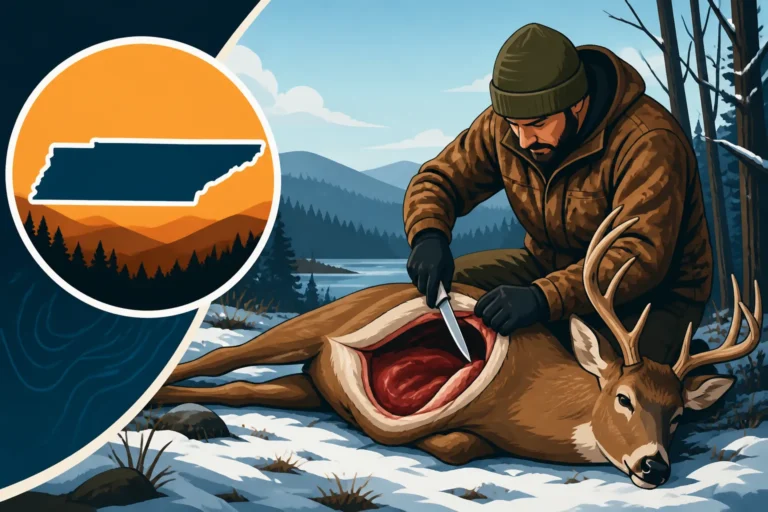
- Quick Evisceration: Get the guts out quickly to allow the carcass to cool down, especially in warm Tennessee weather. Make a careful incision from the breastbone to the pelvis, cutting around the anus. Roll the hog onto its side to help gravity assist in removing the internal organs.
- Bleeding Out: If possible, bleed the hog out immediately after the shot by making a deep cut at the base of the throat, severing the jugular and carotid arteries. This helps improve meat quality.
- Cleaning: Use water if available to rinse out the body cavity, removing any hair or debris. Pat dry with paper towels.
- Cooling: Once field dressed, cool the carcass as quickly as possible. In warm weather, this might mean quartering the animal and placing the meat in coolers with ice. If temperatures are cool, hanging the animal in a shaded, well-ventilated area is ideal. Large hogs may require a Dragging a Deer Out of a Steep Hollow type of effort to extract, so plan accordingly.
Butchering and Meat Preparation
Wild hog meat is lean and flavorful, often compared to venison but with its own distinct taste profile. It's incredibly versatile for cooking.
- Skinning: Skinning a hog is generally easier than skinning a deer, but the hide can be quite tough, especially over the shoulders. Start with the legs, circle the joints, and work your way down.
- Butchering: You can butcher a hog much like a deer, separating it into primal cuts. The hams, backstraps, and shoulders are the most sought-after cuts. The ribs can be fantastic for slow cooking. Use techniques learned from Butchering a Deer at Camp as a guide.
- Cooking: Wild hog meat should always be cooked thoroughly to an internal temperature of at least 160°F (71°C) to kill any potential parasites like trichinosis. It's excellent roasted, grilled, stewed, or ground into sausage. Many people love to slow-cook the shoulders for pulled pork. Marinating can enhance flavor and tenderness.
Dealing with Disease Concerns and CWD
While wild hog meat is generally safe to eat when properly handled and cooked, wild hogs can carry a number of diseases that can be transmitted to humans (zoonotic diseases) or livestock.
- Trichinosis: This parasitic worm is the most well-known concern. It's easily killed by cooking meat to the proper internal temperature. Freezing does not reliably kill trichinosis.
- Brucellosis: Swine brucellosis can cause flu-like symptoms in humans and reproductive issues in livestock. It's transmitted through contact with infected fluids (blood, urine, reproductive organs). Always wear gloves and eye protection when field dressing.
- E. coli and Salmonella: Standard food safety practices, including thorough cooking and preventing cross-contamination, will prevent these bacterial infections.
- Chronic Wasting Disease (CWD): While CWD is a concern for deer and elk, there's currently no evidence that wild hogs can contract or transmit CWD. However, because hogs share habitat with deer, it's a good idea to stay informed about areas with CWD prevalence. Reviewing Tennessee's Chronic Wasting Disease Management Zone information is always a good idea, as it can affect how you handle any deer harvested in addition to hogs.
If you observe any unusual lesions, tumors, or abscesses on a hog, or if it appears sick, it's best to discard the animal and report your findings to the TWRA. When in doubt, always err on the side of caution.
Safety Considerations and Responsible Hunting Practices
Hunting wild hogs comes with its own set of safety concerns, both for the hunter and for the environment. Approaching these animals responsibly ensures a safe and ethical experience for everyone.
Handling Wild Hog Aggression
While wild hogs typically prefer to flee from humans, they can be aggressive, especially large boars or sows protecting piglets. An injured or cornered hog can be extremely dangerous.
- Situational Awareness: Always be aware of your surroundings, especially in thick cover. If you encounter a hog unexpectedly, give it space.
- Charging Hogs: If a hog does charge, don't run. Stand your ground, make yourself look as large as possible, and be prepared to shoot if necessary. Aim for the head or front shoulder to stop the charge. This is where a powerful firearm and quick reflexes are critical.
- Follow-Up Shots: Hogs are tough. Be prepared to deliver quick, accurate follow-up shots if the first one doesn't bring the animal down immediately. Never assume a hog is dead; approach with caution, making sure it's completely expired before getting too close.
- No Retreat for Them: Unlike deer, which will often run away when wounded, a hog may seek refuge in thick cover and then emerge to charge. Exercise extreme caution when blood trailing a hog.
Hunting Near Other Species
Given that hog hunting is open year-round and often overlaps with other hunting seasons, it's crucial to be mindful of other species and hunters.
- Identify Your Target: Always be 100% certain of your target before pulling the trigger. Hogs can sometimes be confused with bears, especially from a distance or in low light. Bears are protected game animals with specific seasons and tags, so a mistake could be costly and illegal.
- Respect Other Hunters: If you're hog hunting during a deer or turkey season, be aware that other hunters might be in the woods pursuing those game animals. Avoid making excessive noise, disturbing potential game, or encroaching on another hunter's setup. A shared space demands mutual respect.
- Blaze Orange/Pink: While not required for hog-only hunting, if you are hunting during a period when big game seasons are open (like Tennessee's Gun Deer Season Into January), and blaze orange or pink is mandated, you must wear it. This is a crucial safety measure to make yourself visible to other hunters. Review How Much Blaze Orange Tennessee Requires to ensure compliance.
Reporting and Management Practices
Hunters play a vital role in wild hog management, and responsible practices extend beyond the shot.
- No Relocation: It is illegal and highly unethical to trap and relocate wild hogs in Tennessee. This only spreads the problem to new areas. Any harvested hogs should be dispatched on site.
- Reporting Sightings: If you're a landowner experiencing hog damage, or even if you're a hunter seeing significant hog activity in an area you don't typically associate with them, report it to the TWRA. This helps wildlife agencies track their spread and allocate resources.
- Data Collection: While not always required, providing information on your harvest (location, number, size) to the TWRA can be beneficial for their ongoing research into wild hog populations.
- Mapping and Scouting Tools: Utilize advanced mapping tools like GoHunt, which can help you understand terrain, property lines, and potential travel corridors. These tools, combined with boots-on-the-ground scouting, are indispensable for effective hog management. The information gleaned from tools like Using the Go Outdoors Tennessee Map Tool can be applied directly to finding prime hog country.
The Role of Hunters in Wild Hog Management
The fight against wild hogs in Tennessee is a continuous battle, and hunters are on the front lines. Your efforts contribute directly to protecting our natural resources and agricultural industries.
Why Hunters Are Essential to Control Efforts
Without hunters, Tennessee's wild hog problem would be far worse. The state explicitly relies on hunters as its primary tool for controlling these invasive animals.
- Economic Impact: Every hog harvested by a hunter potentially saves thousands of dollars in agricultural damage. By reducing populations, hunters directly benefit Tennessee farmers and the broader state economy.
- Ecological Preservation: Removing wild hogs helps to alleviate pressure on native wildlife populations by reducing competition for food and habitat, and minimizing predation on fawns and ground-nesting birds. This helps preserve the ecological balance that defines Tennessee's diverse ecosystems.
- Disease Prevention: Reducing hog populations also helps to mitigate the risk of disease transmission to livestock and humans. The fewer hogs there are, the lower the risk of outbreaks of diseases like brucellosis.
- Year-Round Pressure: The year-round, no-limit hunting regulation means that consistent pressure can be applied to hog populations, which is critical given their rapid reproductive rate. Hunters ensure that hogs are constantly being pursued, disrupting their patterns and reducing their numbers.
The Long-Term Commitment
Hog hunting isn't a "one and done" solution; it's a long-term commitment. Given their intelligence and reproductive capabilities, populations can rebound quickly if pressure isn't maintained.
- Adaptive Strategies: Successful hog hunters learn to adapt. Hogs quickly learn to avoid areas with high hunting pressure, becoming more nocturnal and seeking refuge in denser cover. Hunters must continuously scout, learn new tactics, and be willing to adjust their approach.
- Community Involvement: For landowners, working with hunters is a critical strategy. Landowners can provide access, and hunters can provide a valuable service in removing destructive hogs. This partnership is a cornerstone of effective hog management.
- Education and Awareness: Spreading the word about the destructive nature of wild hogs and the importance of ethical hunting practices is also part of a hunter's role. Educating others helps build a broader understanding and support for management efforts.
Ultimately, hunting wild hogs in Tennessee is more than just a recreational pursuit; it's a vital service to the state's agriculture and wildlife. It's a challenging but rewarding endeavor that directly contributes to the health and prosperity of Tennessee's natural landscapes. So grab your gear, do your homework, and get out there – every hog removed is a victory for Tennessee.
Disclaimer
Please remember that hunting regulations can change. Always consult the latest Tennessee Wildlife Resources Agency (TWRA) regulations guide before heading afield to ensure you are compliant with all current laws and specific WMA rules.