Wild Hogs Across Tennessee
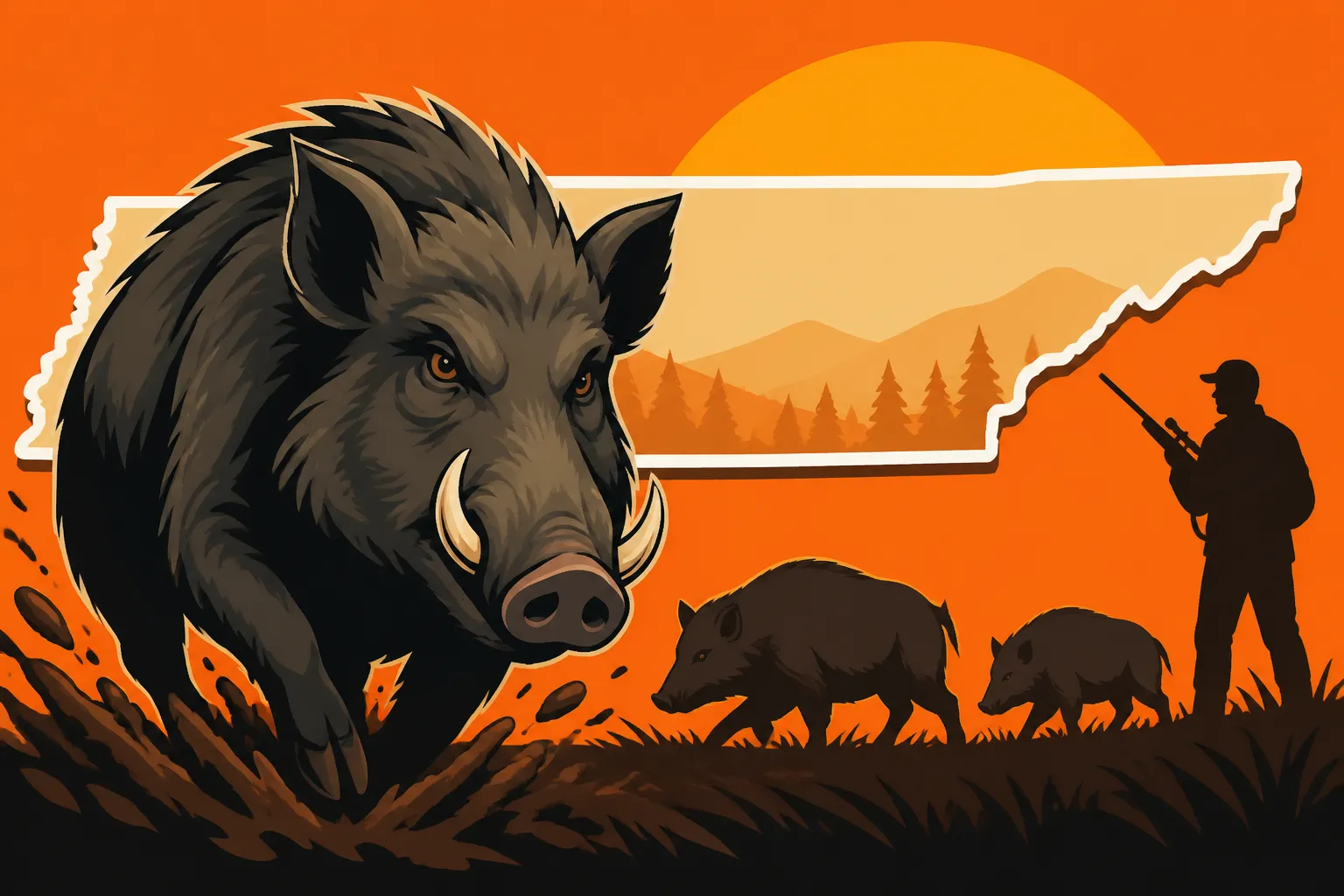
If you've spent any time hunting or even just exploring the Tennessee woods, chances are you've either seen signs of them or heard the stories: wild hogs are a persistent and growing challenge across our beautiful state. These aren't your grandpa's barnyard pigs; these are tough, intelligent, and incredibly destructive animals that wreak havoc on our farmlands, forests, and native wildlife. This comprehensive guide will arm you with everything you need to know about understanding, finding, and effectively hunting wild hogs in Tennessee.
The Wild Hog Problem in Tennessee: An Unwanted Guest
It's a frustrating reality for anyone who cares about our state's natural resources and agricultural health: wild hogs are here, and they're spreading. Unlike deer or turkey, these aren't a native species we're managing for sustainable harvest. They are an invasive threat, and understanding their history and impact is the first step in tackling the problem.
A History of Invasion and Spread
The presence of wild hogs, often called feral swine or wild boars, in Tennessee isn't a new phenomenon, but their proliferation certainly is. Their lineage is a mix of escaped domestic pigs that have "gone wild" and European wild boars introduced for sport hunting decades ago. Over time, these populations interbred, creating the resilient and adaptable animals we see today. What makes them so formidable is their incredible reproductive rate – a sow can have two litters a year, with each litter averaging 4-6 piglets, and those piglets can breed at just 6 months old! This exponential growth is why their numbers explode so quickly, often overwhelming local ecosystems. They’ve gone from being a localized issue in a few counties to a widespread problem across much of the state, with Feral Swine Sightings in Middle Tennessee becoming increasingly common.
For many years, some folks tried to "manage" them as a game animal, perhaps even illegally transporting them to new areas for hunting opportunities. Thankfully, the Tennessee Wildlife Resources Agency (TWRA) and other state agencies now classify them as an exotic, invasive species. This classification is crucial because it removes any perceived value in protecting them or allowing their spread. The goal is now eradication or, at the very least, significant control.
Understanding Their Destructive Impact
The damage wild hogs cause is truly staggering and affects almost every aspect of our natural and agricultural landscapes. Picture this: a sounder (that's what a group of hogs is called) can churn up acres of prime farmland or delicate forest floor in a single night, rooting for food. This rooting behavior destroys crops like corn, soybeans, and even hay fields. Farmers in West Tennessee can tell you firsthand about the extensive Crop Damage Hogs Cause in Tennessee, often wiping out entire sections of their livelihood. It's not just crops, though. Their rooting also disturbs natural vegetation, degrades water quality by increasing erosion and sediment runoff into streams, and damages sensitive habitats.
Beyond the physical destruction, wild hogs pose a significant threat to native wildlife. They compete directly with deer, turkeys, and small game for food sources like acorns, roots, and invertebrates. Even more alarming, they prey on fawns, turkey poults, and the nests of ground-nesting birds. This direct predation can have devastating effects on local wildlife populations. Furthermore, they can carry and transmit a host of diseases, including brucellosis, leptospirosis, and pseudo-rabies, which can be passed to domestic livestock, other wildlife, and even humans. The potential for disease transmission is a serious concern, especially as they expand into new territories.
The Elusive Nature of Feral Swine
Anyone who has tried to hunt wild hogs will tell you they are incredibly intelligent and elusive creatures. They learn quickly, adapt to pressure, and possess keen senses of smell and hearing. While their eyesight isn't top-notch, they compensate with an uncanny ability to detect danger. They are often most active during the cooler parts of the day, particularly dawn and dusk, and frequently become almost entirely nocturnal when pressured. This means that if you're out there trying to find them during daylight hours, you might be looking in the wrong timeframe, especially on public land that sees a lot of activity.
Their ability to disappear into dense cover, even in seemingly open country, is remarkable. A sounder of hogs can melt into a small thicket, making them incredibly difficult to track down without the aid of dogs. They often travel long distances between bedding and feeding areas, making their patterns unpredictable. This elusiveness is precisely Why Hogs Are Hard to Eliminate in Tennessee, as trapping and hunting efforts must be persistent and well-planned to have a significant impact on their numbers. It’s a constant cat-and-mouse game, and the hogs are often winning.
Where to Find Wild Hogs Across Tennessee
While wild hogs can turn up almost anywhere in Tennessee, certain regions and habitat types are more prone to hosting thriving populations. Understanding these hotspots and their expanding ranges is crucial for any hunter looking to encounter these challenging animals.
Hotspots in West Tennessee Bottomlands
When we talk about Which Tennessee Counties Have the Most Hogs, West Tennessee almost always comes to mind first. The vast, fertile river bottomlands, especially along the Mississippi River and its tributaries, provide ideal habitat. Think about the extensive floodplains, dense canebrakes, and agricultural fields that dominate this landscape. These areas offer everything a hog needs: abundant food sources from crops and mast, thick cover for bedding and farrowing (giving birth), and plenty of water. Counties like Lauderdale, Tipton, Haywood, and Dyer have historically dealt with significant wild hog populations.
Hogs thrive in these environments because they can forage on agricultural waste grains, exploit dense riparian corridors for travel and escape, and find refuge in the large tracts of private and public timber. The combination of easy food and nearly impenetrable cover makes these bottomlands a perfect breeding ground. If you're looking for consistent hog sign and greater odds of an encounter, focusing your efforts on these western counties, particularly near major river systems and large agricultural operations, is a smart play.
Expanding Ranges in Middle Tennessee
While West Tennessee might be the historical epicenter, the wild hog problem is definitely not confined there. Over the past decade, Middle Tennessee has seen a noticeable increase in feral swine activity. Areas along the Tennessee River and Cumberland River systems, as well as counties with a mix of agriculture and undeveloped timber, are increasingly reporting issues. Feral Swine Sightings in Middle Tennessee are becoming a more frequent topic of conversation among landowners and hunters alike.
This expansion into Middle Tennessee is largely due to natural dispersion, where hogs simply move into new suitable habitats, but unfortunately, illegal translocation by humans also plays a role. As their numbers grow, so does their pressure on native ecosystems and farms in new areas. Hunters in counties such as Humphreys, Dickson, and even those closer to the Highland Rim are now regularly encountering hogs where they once were a rarity. The diverse landscape of Middle Tennessee, with its rolling hills, limestone cedar glades, and river drainages, provides plenty of cover and food for these adaptable animals to establish new sounders.
Pockets in East Tennessee's Mountains and Foothills
Even the rugged, mountainous terrain of East Tennessee isn't immune. While not as widespread or numerous as in the western parts of the state, localized pockets of wild hogs exist, particularly in areas bordering the Appalachian Mountains and within some of the larger public land tracts like the Cherokee National Forest. These populations often originated from escaped domestic pigs or European wild boars that were historically introduced in these regions for hunting.
Hogs in East Tennessee tend to utilize the dense laurel and rhododendron thickets, steep hollows, and hardwood ridges that offer mast crops like acorns. They might be harder to find due to the challenging terrain and lower population densities, but they are certainly present. Hunters exploring areas in Monroe, Polk, and even parts of Cocke County might stumble upon hog sign, especially near agricultural fields nestled within mountain valleys or along river bottoms that cut through the rugged landscape. The key here is more localized scouting and understanding that these hogs often stick to the thickest, most inaccessible terrain to avoid human interaction.
Understanding Tennessee's Wild Hog Regulations
Navigating the rules and regulations around wild hogs in Tennessee can sometimes feel a bit convoluted, primarily because they aren't classified as traditional game animals. It's crucial to understand the nuances to ensure you're hunting legally and contributing to control efforts rather than inadvertently causing more problems.
What the TWRA Says About Feral Hogs
The Tennessee Wildlife Resources Agency (TWRA) is very clear: feral hogs are an exotic, invasive species. They are not considered wildlife or game animals. This distinction is paramount because it means there are generally no closed seasons or bag limits for wild hogs. The TWRA actively encourages their removal by any legal means possible. However, "any legal means" doesn't mean a free-for-all. It's essential to understand that while hogs themselves aren't regulated like deer, the methods you use to hunt them and the land you hunt them on still fall under existing hunting laws.
This means you can't just go out and shoot a hog with a rifle in your backyard in a residential area, for example. You must still adhere to firearm discharge laws, hunting hours, and land access regulations. The TWRA's stance is essentially that if you encounter a wild hog while legally engaged in hunting other game, or if you are specifically targeting them as a nuisance, you can take them. This commitment to eradication is part of a broader strategy, which sometimes involves special initiatives or collaborations with landowners to address severe infestations.
Hunting Hogs During Big Game Seasons
One of the most common ways hunters encounter and harvest wild hogs in Tennessee is while Hunting Wild Hogs Alongside Deer Season or during other open game seasons. Since there's no closed season on hogs, if you're legally hunting deer with a bow, muzzleloader, or gun, and a wild hog steps out, you can take it with your permitted weapon. This provides a fantastic opportunity for hunters to contribute to hog control without needing a separate season or permit specifically for hogs. Imagine you're patiently waiting in your stand during Tennessee's Gun Deer Season Into January, hoping for a whitetail, and a sounder of hogs comes through. It's a prime chance to make a difference!
However, it's critical to remember your primary hunting license and big game permits are still required for the species you are legally allowed to hunt. You can't just buy a small game license and then decide to hunt hogs with a rifle if rifle season isn't open for other game. The general rule of thumb is: if you're legally afield, pursuing a regulated game species, and a hog appears, you can harvest it using the legal methods for that game season. This makes deer season, especially, a popular time for hog removal, as many hunters are already out in hog-prone areas.
Specific Rules for Trapping and Control
While hunting is an effective tool, trapping is often considered the most efficient method for removing large numbers of wild hogs, especially when dealing with entire sounders. Because they are not a game animal, Tennessee Hog Hunting Permit Requirements for trapping are different from those for furbearers or other regulated species. Landowners experiencing hog damage can often trap hogs without a specific trapping license, but it's always best to confirm local regulations with the TWRA, as rules can vary slightly or be updated.
Trapping typically involves large, sturdy panel traps designed to catch multiple animals. Bait, often fermented corn, is used to lure the hogs into the trap. The goal is usually to catch an entire sounder at once to maximize impact. For hunters looking to help with control efforts beyond simply shooting individual hogs, collaborating with landowners on trapping programs can be incredibly effective. Before setting any traps, however, make sure you understand the TWRA's guidelines on trap design, signage, and checking frequency to ensure compliance and humane treatment. It's also vital to be aware of any local ordinances regarding trapping, especially if you are near residential areas.
Effective Strategies for Hunting Wild Hogs
Hunting wild hogs requires a different mindset and approach compared to deer or turkeys. Their intelligence, adaptability, and destructive nature mean you need to employ specific tactics to be successful. It’s less about waiting for a trophy and more about effective population control.
Still-Hunting and Stalking for Solo Hunters
For the solo hunter who enjoys being stealthy and covering ground, still-hunting and stalking can be highly effective for wild hogs, particularly if you've done your scouting. This method works best in areas where hogs are actively feeding or moving between bedding and feeding sites. The key is to move slowly, deliberately, and with the wind in your favor. Hogs have an incredible sense of smell, and if they catch your scent, the game is over. Using onX Layers for Tennessee Land Status or similar mapping apps to identify dense cover, water sources, and feeding areas can be a huge advantage.
Focus your efforts on creek bottoms, river edges, and the fringes of agricultural fields, especially those with standing crops or recent harvest activity. Look for fresh sign: rooting, tracks, wallows, and rubs on trees. If you find fresh sign, slow down even further. Hogs often travel in sounders, so if you see one, there are likely more. Be prepared for a quick shot, as they can be surprisingly fast and elusive. A good pair of binoculars, perhaps an 8×42 or 10×42, can help you pick them out in thick cover before they see or smell you.
Setting Up for Success Over Baited Areas
In many parts of Tennessee, baiting for wild hogs is legal and can be an incredibly effective strategy, especially on private land where landowners are desperate for control. Unlike deer, where baiting rules are stricter and vary by DMU, hogs often respond well to bait. Common baits include cracked corn, soured corn, or commercial hog attractants. The goal is to establish a consistent feeding pattern, drawing hogs to a specific location where you can ambush them.
When setting up a baited site, consider the wind direction, proximity to dense cover, and easy access for you. A sturdy tree stand or a well-brushed-in ground blind can work well. The challenge with baiting is that hogs, particularly pressured ones, often become nocturnal. You might have trail camera pictures showing them hitting the bait only at 2 AM. In such cases, you might need to adjust your hunting times, perhaps focusing on the very last light of day or even considering night hunting if local regulations and safety allow. Remember to check local regulations carefully before baiting, and never bait on public land unless specifically authorized by the TWRA.
Running Dogs for Wild Hogs
For many dedicated hog hunters, especially those in the southern states, running dogs is the most traditional and often the most exciting way to pursue wild hogs. This method is legal in Tennessee on private land with landowner permission and on some public lands, though rules vary, so always check WMA-specific regulations. Dog hunting for hogs typically involves two types of dogs: bay dogs and catch dogs. Bay dogs track and corner a hog, barking to hold it in place (baying) until the hunters arrive. Catch dogs then move in to physically restrain the hog, allowing hunters to dispatch it safely.
This method is incredibly effective for finding hogs in dense cover where still-hunting is nearly impossible. It's a high-energy, fast-paced hunt that requires physical fitness from both dogs and hunters. GPS collars, like those from Garmin, are essential for keeping track of dogs in rugged terrain. GPS Collars for Cherokee Forest Bear Hounds are similar to what hog dog hunters use. While exciting and efficient, it's also a serious undertaking that requires well-trained dogs, proper safety equipment (for dogs and handlers), and a thorough understanding of hog behavior. If you're new to dog hunting for hogs, it's best to go with an experienced outfitter or mentor first.
Gear and Scouting for Tennessee Wild Hogs
Success in hog hunting, like any other pursuit, hinges on having the right gear and employing smart scouting tactics. Wild hogs are tough, so you need equipment that can handle them, and their elusive nature demands thorough preparation.
Essential Equipment for Hog Hunters
When it comes to firearms, wild hogs are notoriously tough animals, so adequate stopping power is key. For rifle hunters, calibers like a .30-06, .308, or 6.5 Creedmoor are excellent choices, offering both range and knockdown power. Even a .223 or 5.56 can work with good shot placement and quality ammunition, but larger calibers provide more margin for error. If you're bowhunting, a minimum draw weight of 40 pounds is recommended, paired with a stout broadhead – fixed blade or strong mechanicals – that can penetrate thick hide and bone. Bow Draw Weight for Tennessee Whitetails will generally be sufficient for hogs, but consider a slightly heavier arrow for better penetration. Shot placement is paramount, aiming for the vitals behind the shoulder, slightly lower than on a deer due to their anatomy.
Beyond the weapon, sturdy boots, appropriate camouflage (often darker patterns for night or deep shadows), and a reliable headlamp are crucial. If you're hunting in wet bottomlands, rubber boots or waterproof hiking boots are a must. A good knife for field dressing, game bags if you plan to pack out meat, and plenty of water are also essential. If you’re hunting with dogs, specialized vests for your dogs, medical kits for both dogs and humans, and communication devices are non-negotiable.
Interpreting Hog Sign and Movement
Successful hog hunting starts long before you step foot in the woods with your weapon; it begins with meticulous scouting. Hogs leave a lot of sign if you know what to look for.
- Rooting: This is the most obvious sign. Hogs use their powerful snouts to dig up soil, searching for roots, tubers, and insects. Look for disturbed areas, especially near water sources, field edges, and oak flats.
- Wallows: Hogs love to cool off and cover themselves in mud, which helps regulate their body temperature and control parasites. Look for muddy depressions, especially near water, with dried mud often caked on nearby trees or rocks.
- Rubs: Hogs will rub against trees, posts, or rocks after wallowing to scratch off mud and parasites. These rubs are often dark and muddy, usually 2-3 feet off the ground.
- Tracks: Hog tracks are similar to deer tracks but rounder, and the dewclaws (side toes) often register clearly, especially in soft ground, because of their heavy body weight.
- Scat: Hog droppings vary widely depending on their diet but are typically cylindrical and often contain bits of undigested food.
Scouting isn't just about finding sign; it's about interpreting it to understand their movement patterns. Look for travel corridors leading from bedding areas (dense thickets, canebrakes) to feeding areas (crop fields, oak stands). Pay attention to fresh sign versus older sign. If you're serious about effective scouting, tools like Reading Aerial Photos for Cumberland Plateau Deer can be adapted to identify likely hog habitat in various Tennessee terrains.
Leveraging Technology for Scouting and Tracking
In today's hunting world, technology can be a game-changer for wild hog control. Trail cameras are invaluable for monitoring hog activity at bait sites or along travel routes. They provide crucial data on when hogs are active, how many are in a sounder, and which direction they're coming from. For instance, you can use them to find Where to Hang a Camera on a Logging Road where hogs might be moving between different sections of a WMA. Many modern cameras offer cellular capabilities, allowing you to receive real-time updates directly to your phone.
Mapping apps like GoHunt (or OnX Hunt, HuntStand) are also incredibly useful. They allow you to mark specific hog sign, plot travel routes, identify property lines, and analyze terrain features like elevation changes and dense cover. Being able to visualize the landscape and record your observations, especially when Scouting Tennessee Public Land Before Season, makes you a much more efficient and informed hunter. These apps can help you avoid trespassing on private property, identify access points on public lands, and plan strategic entry and exit routes that minimize disturbance. Even just a basic GPS unit can be a lifesaver for navigating rugged, unfamiliar terrain, especially when you're tracking a hog after the shot.
The Ongoing Battle Against Wild Hog Expansion
The fight against wild hogs is a continuous one, demanding persistent effort and collaboration from hunters, landowners, and wildlife agencies. It’s important to understand the scale of the challenge and how we, as hunters, can best contribute.
Why Elimination is a Near-Impossible Task
Let's be realistic: achieving complete eradication of wild hogs in Tennessee is a monumental, if not impossible, task. Their incredible reproductive rate, adaptability, and intelligence make them incredibly resilient. As we've discussed, sows can produce multiple litters a year, and piglets mature rapidly. This means that even if you remove a significant number of hogs from an area, the remaining population can quickly rebound if not continually suppressed. This constant pressure is Why Hogs Are Hard to Eliminate in Tennessee.
Their ability to learn and adapt to hunting and trapping pressure also complicates matters. Hogs that survive encounters become wary and more nocturnal, making them even harder to target. Furthermore, their expansive range across diverse habitats, from dense bottomlands to rugged mountains, means there's no one-size-fits-all solution for control. Any effective strategy must be long-term, multi-faceted, and involve sustained effort across all affected areas. It’s a marathon, not a sprint, and every hunter who takes a hog contributes to slowing their spread.
The Role of Hunters in Control Efforts
As hunters, we have a vital role to play in the ongoing battle against wild hogs. By harvesting hogs whenever the opportunity arises, we directly contribute to reducing their numbers and mitigating their destructive impact. This is where the Hog Hunting Tennessee's Wild Boar philosophy really comes into its own. Every hog taken is one less animal rooting up fields, preying on fawns, or spreading disease. It’s not about sport hunting for a trophy; it's about being an active conservationist.
The TWRA explicitly encourages hunters to shoot hogs. Unlike deer, where responsible harvest and population management aim for sustainable numbers, with hogs, the goal is always removal. This means if you see a hog while hunting deer or turkeys, don't hesitate (within legal means). Hunters often have unique access to remote areas and the skills necessary to pursue these animals effectively, making us indispensable allies in control efforts. If you're a landowner experiencing significant hog damage, reaching out to local hunters or trapping services can be a highly effective way to manage the problem.
Preventing Further Spread and Damage
Beyond direct removal, preventing the further spread of wild hogs is paramount. This primarily means educating yourself and others about the dangers of illegal hog translocation. Moving hogs from one area to another, even with good intentions, almost always exacerbates the problem. It introduces hogs to new, unaffected areas and accelerates their spread. This practice is illegal and incredibly damaging to Tennessee's ecosystems and agricultural economy.
Another crucial aspect is habitat management on private lands. While hogs thrive in dense cover, strategic clearing in some areas can make them less comfortable and more exposed, potentially pushing them out or making them easier to hunt. Fencing, though costly, can protect high-value crops or sensitive natural areas from hog damage. Farmers often employ various strategies, from electric fences to night-vision patrols, to protect their livelihoods from these destructive animals. It’s a combination of direct removal and preventative measures that will ultimately help lessen the impact of Wild Hogs Across Tennessee.
Public Land Opportunities for Hog Hunting
For many Tennessee hunters, public land offers the primary access to hunting opportunities, and this includes wild hogs. While it might be more challenging than private land due to pressure and vastness, success is absolutely achievable with diligent scouting and persistence.
Identifying Hog-Prone WMAs
Not all Wildlife Management Areas (WMAs) in Tennessee will have wild hogs, but many do, especially those in West and Middle Tennessee. When looking for public land hog hunting opportunities, focus on WMAs that feature extensive river bottomlands, large tracts of mature hardwoods, and proximity to agricultural areas. Some of the WMAs along the Mississippi River corridor in West Tennessee are prime candidates, as are those situated along the Tennessee and Cumberland Rivers. For example, some units within the Tennessee Wildlife Management Areas system, particularly those in the western and central parts of the state, often report hog activity.
The key is to do your homework. Check the TWRA website for specific WMA regulations and recent hog sightings. Talk to WMA managers if possible, as they often have the most up-to-date information on hog populations and movements. Pay particular attention to WMAs that have a mix of timber and open fields or those with thick riparian zones. These areas provide the necessary food, water, and cover that hogs rely on.
Navigating Regulations on Public Hunting Land
Hunting wild hogs on public land, while encouraged, still falls under the broader public land regulations. This means you must possess the appropriate Tennessee Resident Hunting License Options (or nonresident equivalent) and any required WMA permits for the area you are hunting. Even though there's no specific hog permit, you must be legally hunting something else (like deer or small game) during an open season to legally carry a firearm or bow. For instance, if you're out Scouting Tennessee Public Land Before Season in July and stumble upon a hog, you generally cannot legally shoot it unless a specific season (like the August Antlerless-Only Archery Hunt) is open for some species that allows a weapon to be carried.
Always check the WMA's specific rules. Some WMAs might have restrictions on certain types of weapons, hunting methods (like dog hunting), or even access points. Treestand Rules on Tennessee Public Land and ground blind regulations also apply when hog hunting, so ensure your setup is compliant. Generally, blaze orange requirements for deer gun season also apply if you are carrying a firearm, even if your primary intent is hogs. Using an app like GoHunt can help you quickly identify WMA boundaries and any special regulations associated with that specific unit.
Respecting Other Users and Wildlife
Public lands are shared resources, and hunting wild hogs there requires extra consideration for other users and the environment. You might encounter hikers, birdwatchers, or other hunters pursuing different game. Always be mindful of their presence, communicate clearly, and ensure your actions don't negatively impact their experience. When hunting with dogs, this is especially crucial, as dog teams can be loud and cover a lot of ground.
Beyond people, remember that even when pursuing hogs, you are still interacting with a rich ecosystem. Minimize disturbance to sensitive habitats, pack out all your trash, and leave no trace. While hogs are destructive, we don't want to add to the problem by being irresponsible hunters. Ethical shot placement and responsible game recovery are always paramount, whether you're after a trophy buck or a nuisance hog. The goal is to remove the invasive species while upholding the highest standards of hunting ethics and respecting our precious Public Hunting Land in Tennessee.
Preparing and Utilizing Your Harvest
So, you’ve successfully harvested a wild hog! Congratulations, you've done your part to help manage an invasive species. Now, the next steps involve proper field dressing, meat care, and understanding any potential health considerations for consumption.
Field Dressing and Meat Care in the Field
Wild hogs can range significantly in size, from small piglets to massive boars over 200 pounds, making field dressing a variable task. Regardless of size, prompt and thorough field dressing is critical, especially in Tennessee's often warm climate. The first step is to quickly bleed the animal out. Then, eviscerate it as cleanly as possible, removing all internal organs. Unlike deer, hogs have a much higher fat content, and this fat can quickly go rancid if not cooled properly. The meat can also develop an off-flavor if the animal is stressed or if not cooled quickly.
If you're in a CWD zone, be aware of specific Tennessee Carcass Deboning Requirements if you plan to move the meat outside the zone, though this is less common for hogs than deer. For larger hogs, quartering the animal in the field can make extraction much easier, especially if you're far from a vehicle. Game bags are invaluable for keeping the meat clean and protecting it from flies while it cools. In warmer weather, having a plan to get the meat on ice or into a cooler as quickly as possible is non-negotiable.
Culinary Considerations for Wild Hog Meat
Wild hog meat is delicious, but it can vary widely in flavor and texture depending on the hog's age, sex, and diet. Younger hogs (shoats) typically have the mildest, most tender meat, similar to commercial pork. Older boars, especially during the rut, can have a strong, "gamey" flavor, often referred to as "boar taint," which some find unpalatable. This flavor is particularly concentrated in the fat, so meticulous trimming of all fat is essential when processing older boars. The meat itself, especially from leaner hogs, is fantastic for slow-cooking methods like smoking, braising, or stewing. It also makes excellent sausage, ground meat, or even tenderloin cuts if you've got a young, prime animal.
When cooking, remember that wild hog is lean and should be cooked thoroughly to an internal temperature of at least 160°F (71°C) to kill any potential parasites, such as Trichinella spiralis. While not as common as in the past, trichinosis is a concern with all wild pork, so never eat it rare or medium-rare. Consider brining the meat for a few hours before cooking to enhance moisture and flavor, especially for leaner cuts. Don’t be afraid to experiment with marinades and rubs to bring out the best in your wild hog harvest.
Understanding Potential Disease Concerns
As mentioned earlier, wild hogs can carry various diseases that are transmissible to humans and livestock. The most commonly discussed for human consumption are Trichinella spiralis (trichinosis) and Brucella suis (brucellosis). While proper cooking eliminates the risk of trichinosis, brucellosis is a bacterial infection that can be transmitted through contact with infected tissues and fluids.
When field dressing, always wear disposable gloves, especially if you have any cuts or abrasions on your hands. Avoid direct contact with blood and organs as much as possible. If you notice any unusual lesions or abnormalities on the organs or carcass, it's best to discard the animal and report your findings to the TWRA. While the risk of contracting these diseases is relatively low with proper precautions, it's always wise to be informed and cautious. The TWRA actively monitors Tennessee Wildlife Disease Monitoring and provides guidance on safe handling and consumption of wild game. Being aware of these potential issues doesn't mean you shouldn't eat wild hog; it simply means exercising good hygiene and cooking practices, just as you would with any wild game.
Disclaimer
Please note: Hunting regulations and wildlife disease information can change. Always consult the latest Tennessee Wildlife Resources Agency (TWRA) regulations and advisories before planning your hunt. The information provided in this guide is for general informational purposes only and should not be considered legal advice.