Tennessee Deer Antler Growth Timeline
It's always fascinating, isn't it? As hunters, we spend countless hours in the woods, not just for the harvest, but for the sheer wonder of wildlife. One of the most captivating mysteries for many of us is tracking the incredible journey of a Tennessee whitetail buck's antlers each year. If you've ever wondered how those impressive racks develop, when they grow the fastest, or why they look the way they do, you're not alone. This guide will walk you through the entire antler growth timeline for our Tennessee deer, helping you understand this amazing biological process from shedding to the prime of the rut.
The Annual Cycle of Antler Growth and Shedding
The life of a buck's antlers is a truly cyclical affair, a marvel of nature that repeats year after year. It's a process driven by hormones, nutrition, and the changing seasons, culminating in the impressive headgear we admire so much. Understanding this cycle is key to understanding the deer themselves.
Shedding: Making Room for New Growth
For Tennessee bucks, the antler cycle begins not with growth, but with loss. Imagine carrying around a heavy set of bones on your head all through the breeding season – it takes a toll! Typically, as the days lengthen and the intensity of the rut fades, a buck's testosterone levels begin to drop significantly. This hormonal shift triggers the process of antler shedding. Here in Tennessee, we usually see antlers drop from late winter into early spring, primarily from January through March, though some older, run-down bucks might drop a little earlier, and some younger, healthier ones might hold onto them a bit longer.
When you're out When Tennessee Bucks Shed Antlers on a crisp late-winter morning, finding a shed antler feels like discovering a hidden treasure. It's not just a souvenir; it's a direct clue to the deer that calls that area home. Factors like a buck's overall health, his nutritional intake over the winter, and even the severity of the rut he just went through can all influence precisely when he sheds. A buck that expended a huge amount of energy chasing does might drop his antlers sooner than one who had an easier time of it. For us hunters, it’s a perfect excuse to get out and scout, learning where the deer are bedding and feeding when the woods are quiet. You can learn a lot by where you find those sheds, getting a jump on where to focus your efforts for the next season.
The Velvet Stage: Rapid Bone Formation
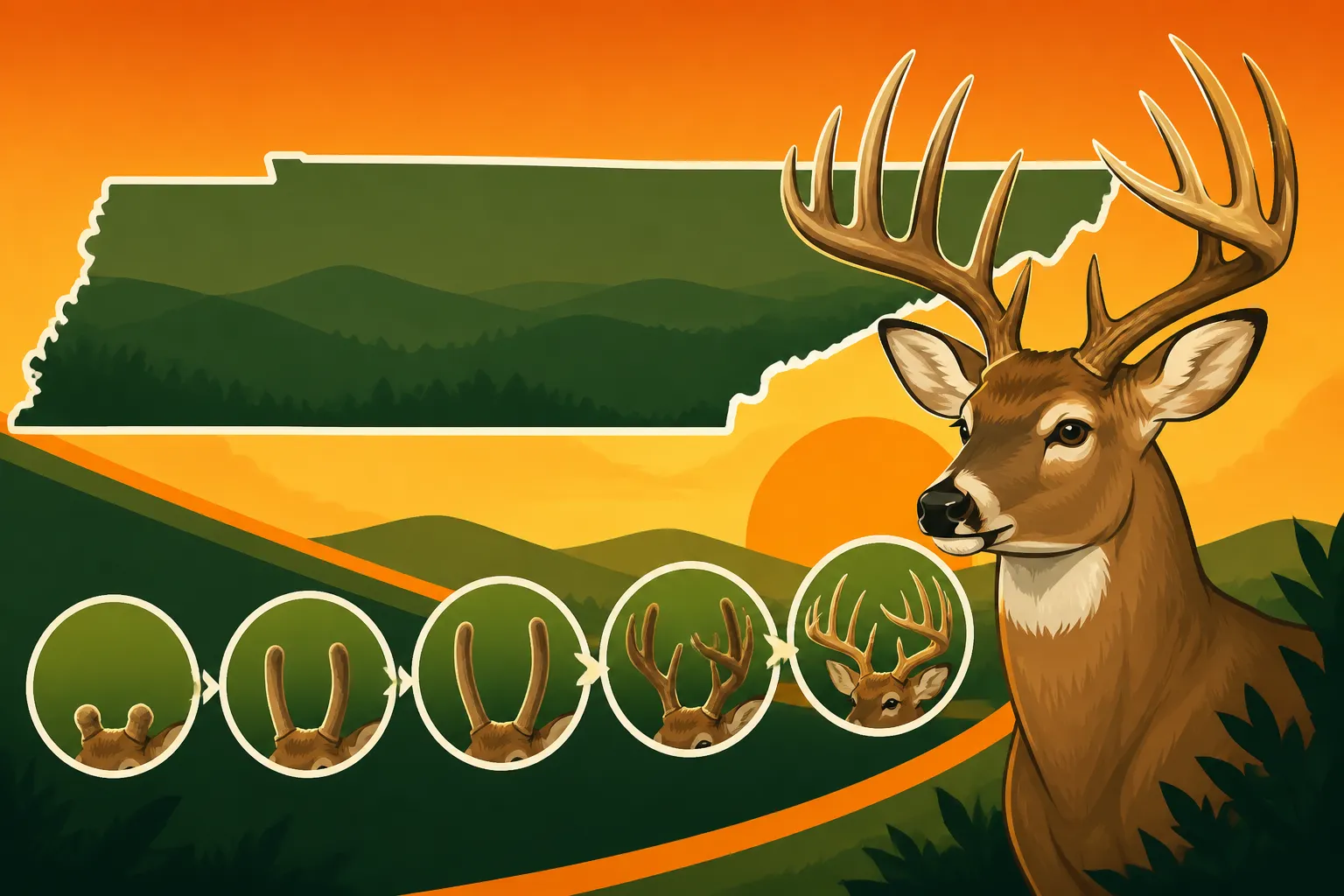
Once the old antlers are shed, the clock immediately restarts. Within a few weeks, sometimes even days, small bumps become visible on the pedicles—the bony structures on the buck’s skull where the antlers grow. This is the beginning of the velvet stage, and it's nothing short of phenomenal. From roughly April through August, these new antlers grow at an astonishing rate, sometimes adding half an inch or more in a single day!
During this period, the antlers are soft, living tissue, covered in a fuzzy, blood-rich skin called velvet. This velvet isn't just for show; it's packed with blood vessels and nerves that supply the rapidly growing bone underneath with all the nutrients it needs. Think of it like a highly efficient scaffolding system, constantly rebuilding and expanding. The speed of growth during the velvet stage is largely dependent on the buck's nutrition. A Tennessee buck with access to lush, high-quality forage—things like native forbs, tender new growth on woody browse, and even agricultural crops—will put on significantly more antler mass than a buck struggling to find enough to eat. It’s during these spring and summer months that a buck truly builds the foundation of his rack. A particularly harsh spring, for example, with late freezes that kill off early green-up, can mean a buck's potential is never quite met, resulting in a less impressive rack by fall.
Factors Influencing Antler Size and Development
While the annual cycle is predictable, the size and shape of a buck's antlers are anything but uniform. There are several key variables that intertwine to determine just how big that rack gets, and understanding them can help us appreciate the individual deer even more.
Age: The Primary Driver of Antler Potential
If there's one factor that dominates antler development, it's age. This isn't just anecdotal hunter talk; it's biologically proven. A young buck, say a yearling (1.5 years old), is still putting most of his energy into body growth. His antlers might be respectable spikes or a small fork horn, but they rarely reflect his full genetic potential. As a buck matures, typically reaching his prime antler production between 4.5 and 7.5 years old in Tennessee, his body has largely finished growing, allowing more energy to be diverted to antler production.
Consider a young 2.5-year-old buck you might see stepping out onto a food plot near the Hunting West Tennessee River Bottoms. He might be a nice 8-point, but he still looks a bit "leggy" and lacks the stout body mass of a truly mature deer. If that buck is allowed to age for another two or three years, with adequate nutrition, you'd likely see a dramatic increase in beam diameter, tine length, and overall mass. Many hunters aim for specific Tennessee Buck Age Structure goals in their management strategies, knowing that giving bucks time is the best way to see those impressive racks. The difference between a 2.5-year-old and a 4.5-year-old buck's antlers can be astounding, even if they share similar genetics and diet.
Nutrition: Fueling the Rack
While age unlocks the potential, nutrition provides the fuel. Without adequate vitamins, minerals (especially calcium and phosphorus), and protein, a buck simply cannot grow large antlers, regardless of his age or genetics. Tennessee is a diverse state, and the availability of quality forage varies greatly from region to region. A buck roaming the rich agricultural lands of West Tennessee's river bottoms, with access to soybeans, corn, and lush native plants, will generally have a much better diet than a buck struggling for sparse browse in the steep, rocky terrain of the Cherokee National Forest.
Think about how much effort goes into rebuilding those antlers from scratch every year. It’s an immense energy drain! A deer's diet, especially during the crucial spring and summer growth phases, directly impacts the quality and quantity of bone produced. Years with abundant mast crops (acorns, hickory nuts) can lead to healthier deer going into winter, which in turn sets them up for better antler growth the following spring. Conversely, a poor acorn year can mean deer are stressed nutritionally, which might be reflected in smaller racks or even a buck developing a "starvation rack" with noticeable abnormalities. Even widespread events like EHD Die-Offs in Tennessee Deer can impact the overall health of a deer herd, with residual effects on antler quality for years. That's why folks using tools like GoHunt pay attention to habitat reports and forage conditions – it directly impacts antler potential.
Genetics: The Blueprint for a Trophy
While we can't control a deer's genetics in the wild, it's an undeniable factor in antler development. Genetics provide the blueprint – the inherent potential for antler characteristics like tine length, beam circumference, number of points, and overall symmetry. Two bucks of the same age and with identical diets might still grow vastly different racks due to their genetic lineage.
You might see a 3.5-year-old buck with a narrow 8-point rack year after year, never seeming to develop the spread or mass of other bucks in the same area. This could be largely genetic. Conversely, another 3.5-year-old might already be displaying a wide, heavy 10-point rack, signaling superior genetics. While hunters can influence age structure and nutrition through management practices, directly managing genetics in a wild, free-ranging herd is nearly impossible on a large scale. However, by allowing younger bucks to mature, we are indirectly allowing those bucks with superior genetics to reach their full potential and potentially pass those traits on. This combination of "age, nutrition, and genetics" is often cited as the trifecta for producing Tennessee Boone and Crockett Whitetails.
From Hard Horn to Rut: The Final Stages
The summer growing period culminates in a transformation that signals the imminent arrival of autumn and the hunting season. The soft, vulnerable velvet gives way to hard, sharp bone, ready for the challenges of the breeding season.
Rubbing Off the Velvet: Hardening the Rack
As summer wanes and the days begin to shorten again, usually around late August to early September in Tennessee, a buck's testosterone levels begin to rise dramatically. This surge of hormones cuts off the blood supply to the velvet. The once vibrant, living skin begins to dry up and die, becoming itchy and irritating to the buck. This is when bucks start the process of rubbing their antlers vigorously against trees and saplings, thrashing their heads to strip off the remaining velvet.
This "velvet shed" is a fascinating time to be in the woods. You'll find fresh rubs everywhere – often on small saplings initially, but sometimes on larger trees as the buck expresses his newfound masculinity. The sight of a buck with bloody strips of velvet hanging from his rack is a clear sign that the hunting season is fast approaching and the hard-horned stage has begun. The antlers are now fully calcified, hardened, and ready for use in sparring matches and territorial displays. This period marks a shift in buck behavior, as they become more aggressive and begin to establish dominance hierarchies. When you're Reading Tennessee Mud for Fresh Deer Movement, pay attention to new rubs—they're a sign a buck has passed through and is feeling feisty.
The Antlers During the Rut
Once the antlers are hard, they become integral tools for the upcoming Hunting the Rut in Early November. During the peak of the rut, these racks are used for everything from intimidating rivals and marking territory to physically sparring with other bucks. The antlers are a billboard, signaling a buck's health, age, and dominance to does and other bucks alike. A larger, more impressive rack can help a buck assert his position in the hierarchy, potentially granting him more breeding opportunities.
However, this intensive use comes at a cost. The antlers endure significant wear and tear throughout the breeding season. It's not uncommon to see bucks with broken tines, snapped points, or even entire main beams fractured from intense fights with other deer. These battle scars are a testament to the brutal reality of the rut and the sheer force exerted during confrontations. While a buck's antlers are designed for this purpose, they aren't indestructible, and many a hunter has found a truly impressive buck whose rack was diminished by a November brawl. Monitoring deer activity during Tennessee's Deer Season Runs Archery to January is when you really get to see these antlers in action.
| Antler Growth Phase | Typical Tennessee Timing | Key Characteristics & Notes |
|---|---|---|
| Shedding | Late January – March | Old antlers drop due to testosterone decrease. Influenced by age, health, and rut intensity. Great time for shed hunting! |
| Velvet Growth | April – August | Rapid bone formation, antlers covered in soft, blood-rich velvet. Nutrition is critical during this period for size and mass. |
| Velvet Shed | Late August – Early September | Testosterone surge causes velvet to dry and peel. Bucks rub antlers on trees to remove it, marking the start of the "hard horn" stage. |
| Hard Horn | September – December/January | Antlers are fully calcified and hard. Used for sparring, territorial displays, and intimidating rivals during the rut. Can suffer damage. |
Understanding Antler Quirks and Anomalies
While most antlers follow a predictable growth pattern, deer are wild animals, and sometimes nature throws us a curveball. These quirks and anomalies add another layer of intrigue to the already fascinating world of whitetail antlers.
Broken Antlers and Injuries
It's a common sight in late season trail camera photos: a big buck that was a perfect 10-point in October suddenly appears with a broken G2 or a missing brow tine. This is almost always the result of an injury, usually sustained during fights with other bucks during the rut. These aren't just minor scrapes; the force of two bucks clashing antlers can be immense. Beyond fighting, a buck might also break an antler by getting tangled in thick brush, running into a fence, or even from a hard fall.
The impact of a broken antler is usually just aesthetic, at least for the current season. It certainly affects the buck's appearance, and for a hunter seeking a symmetrical trophy, it can be a bit disappointing. However, it rarely affects the buck's overall health or ability to survive, though a severe break could potentially cause infection. What's interesting is that sometimes, an injury to the pedicle (the base where the antler grows) or even an injury to a leg can result in a deformed antler on the opposite side the following year. This phenomenon, known as "contralateral effect," is a testament to the complex nervous system and energy allocation within a deer's body.
Non-Typical Racks and Oddities
Every hunter loves to see a unique rack, something that stands out from the typical symmetrical 8 or 10-point. These are often referred to as "non-typical" racks, and they can be caused by a variety of factors. Sometimes, it's purely genetic – a buck is simply predisposed to growing extra points, drops, or abnormal formations. Other times, an injury to the antler while it's in velvet can cause a permanent deformation. For instance, if a buck bumps his soft velvet antler on a tree, that spot might grow abnormally, creating a clubby point or a strange curve.
Hormonal imbalances can also play a role, sometimes leading to bizarre formations or even "cactus bucks" who never shed their antlers and grow a perpetually growing, deformed mass. While non-typical antlers might not score as high under typical scoring systems, they are often cherished by hunters for their unique character and the story they tell. Spotting a buck with a truly unique, non-typical rack is a special event, and makes you wonder what kind of life story that deer has lived out in the Tennessee woods. Many hunters pore over historical Tennessee Deer Harvest Records for examples of these one-of-a-kind trophies. GoHunt often features unique racks in their community spotlights, showcasing the diversity of antler growth.
Shedding and Retention Variations
While we outlined the general shedding period, it’s worth noting that individual bucks can vary significantly in when they drop their antlers. As mentioned, a buck that has been run down and stressed by the rut, perhaps due to a lack of available does or intense competition, might shed earlier. Conversely, a younger, healthier buck who didn't exert himself as much during the breeding season, or one with a later-peaking rut for his specific locale, might hold onto his antlers well into April.
Environmental factors can also play a role. A mild winter with abundant food sources might allow bucks to retain their antlers longer as they are under less physiological stress. A severe winter, however, might hasten the shedding process as the buck's body prioritizes survival over holding onto his headgear. For those of us who enjoy Shed Hunting on Tennessee Public Land, these variations mean you might be finding sheds for a good two or three months, constantly keeping an eye out for those tell-tale dropped antlers in early spring.
Disclaimer
This article is for general informational purposes only and does not constitute professional advice. Laws, prices and regulations vary by location and change over time. Consult a qualified professional for guidance on your specific situation.