Layering for a Tennessee Deer Stand
There’s nothing worse than settling into your deer stand before dawn, the air crisp and promising, only to find yourself either shivering uncontrollably an hour later or sweating through your base layers by mid-morning. We’ve all been there, miserable, distracted, and probably spooking more deer than we see. Getting your layers right for a Tennessee deer hunt isn't just about comfort; it’s about staying focused, silent, and effective, no matter what our notoriously unpredictable weather decides to throw at us. This guide is all about building a smart layering system that keeps you comfortable and in the game from the scorching days of early archery season to the bone-chilling cold of a late January sit.
Understanding Tennessee's Variable Weather
Tennessee's hunting seasons stretch across months, encompassing a huge range of temperatures, humidity, and precipitation. What works in early September will absolutely make you regret your life choices in late December. Understanding these shifts is key to successful layering.
Early Season Warmth and Humidity
When Tennessee's Archery Season Opens, especially for those August antlerless hunts or even into early October, we're still often dealing with summer-like conditions. Picture this: it's 65 degrees at 6 AM, but by 10 AM, the sun is blazing, and it feels like 80 degrees with humidity so thick you could swim through it. You've hiked half a mile to your stand in the dark, already sweating, and now you're stuck in thick camo with no breeze. This is a common frustration, and it's why simply wearing "camo" isn't enough.
During these times, your biggest enemy isn't the cold, but sweat. Excessive sweat can not only make you incredibly uncomfortable but also amplify your scent, which is a massive no-no when deer hunting. The high humidity means sweat doesn't evaporate quickly, so it just sits on your skin, making you feel clammy and hot. Later, if a cold front does push through, that trapped moisture can lead to a quick chill. The ground is often dry and crunchy, making quiet movement difficult, and you might even still be dealing with pesky mosquitoes well into October.
Mid-Season Swings
As we push into late October and through Hunting the Rut in Early November, things start to get interesting. This is arguably the most challenging time for layering because daily temperatures can fluctuate wildly. One morning might be a frosty 30 degrees, perfect for heavy gear, but then the afternoon climbs into the upper 50s, making you feel overheated. Then, a cold rain might blow in, or a sunny day could be followed by a sharp drop in temperature overnight.
This transitional period often brings crisp, beautiful mornings that give way to surprisingly warm afternoons. It's not uncommon to start a morning hunt bundled up, only to find yourself shedding layers by noon. If you're planning a full-day sit, which is often a great strategy during the rut, you need a system that allows for quick adjustments. Wind can also be a significant factor, especially on exposed ridge lines or in open fields, cutting through lighter clothing and making a 40-degree day feel much colder. Packing for these swings means anticipating every possible scenario, which can feel like packing for two different seasons at once.
Late Season Chill
Ah, the Hunting the Late-Season January Lull. This is when Tennessee truly shows its winter colors. Temperatures often hover around freezing, sometimes dipping into the teens or single digits. Combine that with a biting north wind, and sitting still for hours in a tree stand can become an exercise in endurance. Snow and freezing rain aren't uncommon, and the ground is often frozen solid, making every step crunch loudly.
The challenge here is maintaining core body temperature without excessive bulk that restricts movement or makes you noisy. When it's this cold, staying warm isn't just about comfort; it's about safety. Frostbite can become a real concern, and a lack of proper insulation can quickly end your hunt prematurely. Food sources are often limited, so deer movement might be concentrated, making long, patient sits crucial. You'll need every advantage to stay still and quiet, and that includes warm, quiet clothing. This is where Cold-Weather Sitting Strategy in Tennessee truly shines, and layering is at its heart.
The Core Principle: The Three-Layer System
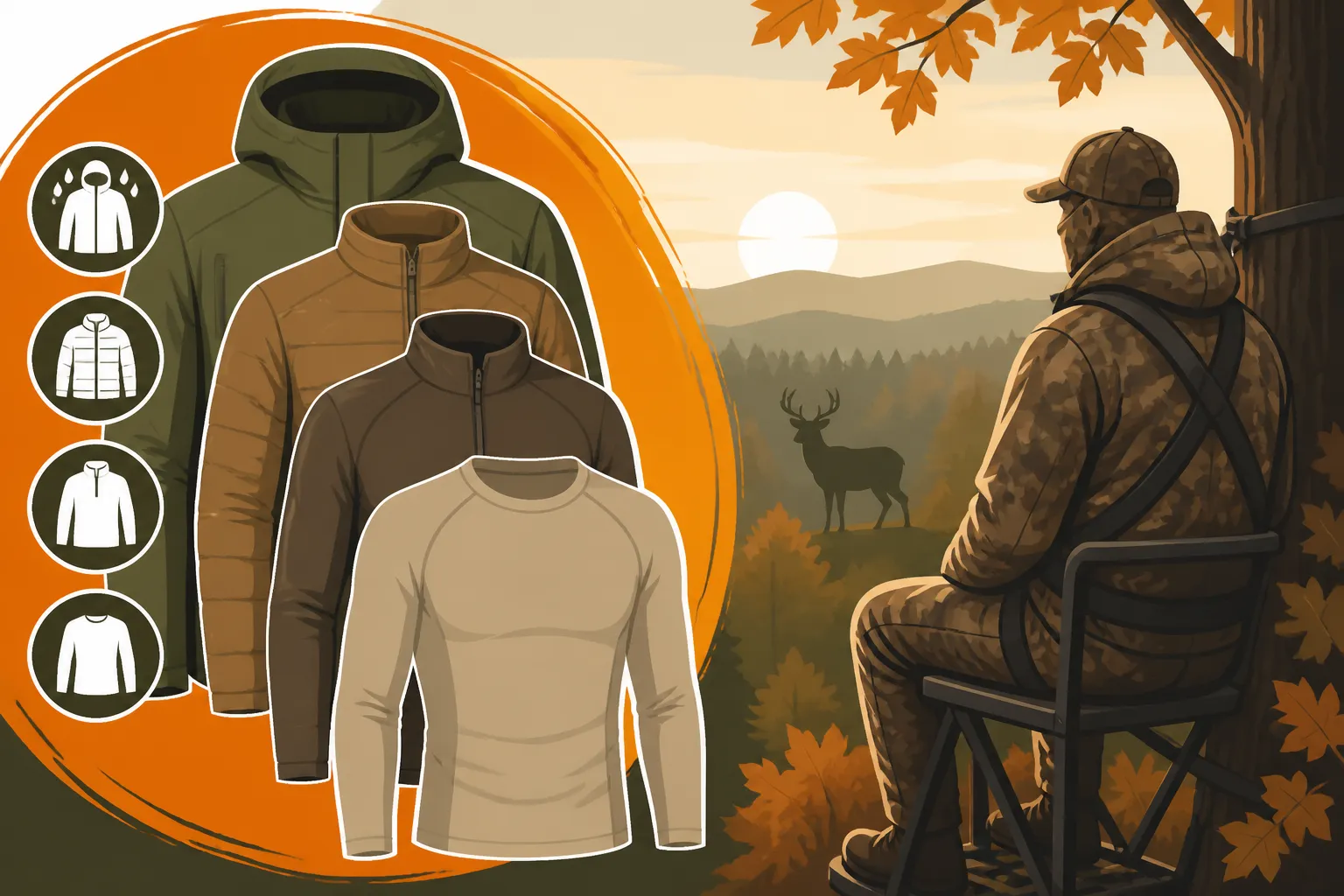
Forget trying to find one "magic" jacket that handles everything. The most effective way to manage your body temperature and adapt to Tennessee's fickle weather is to embrace the three-layer system. It’s a concept that guides everything from mountaineering to military operations, and it works beautifully for deer hunting. Each layer has a specific job, and when used together, they create a versatile, adaptable system.
The Base Layer: Managing Moisture
The base layer is the foundation of your entire system, and its primary job is moisture management. This is the layer that sits directly against your skin, and its goal is to wick sweat away from your body. Why is this so crucial? Because wet skin loses heat far more rapidly than dry skin. Whether it's the 80-degree sweat of September or the clammy chill of a December morning, a wet base layer will make you uncomfortable and cold.
For a Tennessee deer stand, you want something snug but not restrictive, made from materials that excel at moving moisture. Think about the walk into your stand—you're generating heat and sweat. A good base layer pulls that sweat off your skin and transfers it to the outer layers, where it can evaporate. This keeps you dry, which in turn keeps you warm in cold weather and helps you cool down in warmer conditions. Base Layers for a Tennessee November are critical, and choosing the right material here sets the tone for your entire system.
The Mid-Layer: Insulating for Warmth
The mid-layer is your insulation workhorse. Its job is to trap warm air close to your body, providing the bulk of your warmth. This is typically where you adjust the amount of warmth you need by adding or subtracting pieces. For example, on a cool October morning, you might only need a light fleece jacket over your base layer. But come January, you might be adding a heavier fleece, a puffy vest, or even a thicker insulated jacket.
The mid-layer should be breathable enough to allow moisture from your base layer to pass through, yet dense enough to hold heat. It's often the most versatile part of your system because you can easily add or remove these pieces depending on the temperature, your activity level, and how long you plan to sit still. When you’re setting up a Treestand Setups in Cherokee National Forest, you might start with a lighter mid-layer for the hike, then add a heavier one once you're in position and settled.
The Outer Layer: Protection from Elements
The outer layer, sometimes called the shell, is your shield against the elements. Its primary function is to protect you from wind, rain, and snow, while still allowing moisture vapor from your inner layers to escape. This is a delicate balance. A truly waterproof layer might trap all your sweat inside, leading to that clammy feeling we talked about. A highly breathable layer might not keep out a driving rain.
When you're dealing with anything from a misty drizzle to a full-blown downpour, a good rain shell is indispensable. Rain Gear for a Tennessee Downpour needs to be tough, quiet, and truly waterproof. Beyond rain, the outer layer is also critical for blocking wind. Even on a relatively mild day, a strong wind can strip warmth from your body shockingly fast. Your outer layer should be durable enough to withstand brush and briars, and ideally, it should be quiet so you don't spook deer with rustling fabric when you shift in your stand. Remember to consider Tennessee's Blaze Orange and Pink Options for your outer layer during gun season for safety!
Choosing Materials: Pros and Cons for Each Layer
The materials you choose for each layer make a huge difference in performance, comfort, and even scent control. Not all fabrics are created equal, especially when you're spending hours in a deer stand.
Synthetics: Quick-Drying and Durable
Synthetic fabrics, like polyester, nylon, and various blends, are staples in outdoor clothing for good reason. They are generally excellent at wicking moisture away from the skin, drying incredibly fast, and are often very durable. For base layers, synthetics like polypropylene or polyester are fantastic at pulling sweat off your body. They're also relatively inexpensive compared to some natural fibers, making them accessible. Many activewear brands specialize in high-performance synthetic blends specifically designed for vigorous activity.
However, synthetics do have a couple of downsides for hunters. One common complaint is that they can retain body odor over time, even after washing. This is a significant concern for deer hunters who rely on scent control. While many modern synthetics are treated with antimicrobial agents to combat this, it's something to be aware of. They can also feel a bit "plastic-y" or less comfortable against the skin than natural fibers for some people. For outer layers, synthetic shells can be highly waterproof and windproof, but sometimes at the cost of being a bit noisy when moving. Brands like Sitka, Kuiu, and even some offerings from GoHunt often feature advanced synthetic blends in their technical hunting apparel, designed to mitigate these drawbacks.
Merino Wool: Nature's Performance Fabric
Merino wool has become the darling of the hunting and outdoor world, and for good reason. Unlike traditional wool, merino is incredibly fine and soft, making it comfortable directly against the skin – no itchiness! Its natural properties make it an exceptional choice for all three layers, especially base and mid-layers. Merino wool excels at regulating temperature: it keeps you warm when it's cold and helps you stay cool when it's warm by effectively wicking moisture and allowing it to evaporate.
Perhaps its biggest advantage for hunters is its natural antimicrobial properties. Merino wool resists odor buildup remarkably well, meaning you can wear it for multiple days without it smelling like a locker room, which is a huge plus for scent control. It also retains much of its insulating properties even when wet, which is a significant advantage in damp conditions. The main drawback is typically the cost; merino wool garments can be more expensive than their synthetic counterparts. They also tend to be less durable against abrasion over time. However, the performance benefits often outweigh the higher initial investment, especially when considering Wool Versus Synthetics in Wet Cold.
Down and Synthetic Fills: Serious Insulation
When the temperatures really drop, your mid-layer needs some serious insulating power. This is where down and synthetic fills come into play, typically in the form of puffy jackets or vests.
- Down: Nature's best insulator, down (feathers from ducks or geese) offers an incredible warmth-to-weight ratio. It's incredibly compressible, meaning a very warm jacket can pack down into a small space in your pack. This is ideal for bringing along a super warm layer to put on once you're in the stand and stationary. However, down's major weakness is moisture. When wet, down loses most of its insulating properties and takes a long time to dry.
- Synthetic Fills: Materials like Primaloft or Thinsulate are designed to mimic the insulating properties of down but without the moisture drawback. They continue to insulate even when wet and dry much faster than down. While they don't quite match down's warmth-to-weight ratio, modern synthetic fills are getting incredibly close. For hunters, the "wet-weather performance" of synthetic fills often makes them a more practical choice, especially in a damp climate like Tennessee's. Many popular hunting brands incorporate advanced synthetic insulation into their mid and outer layer offerings.
Cotton: The Hunter's Enemy
Let's just say it: cotton kills, or at least it makes you incredibly uncomfortable and potentially unsafe in the outdoors. While cotton is comfortable and breathable for everyday wear, it is absolutely the wrong choice for any layer in a hunting scenario.
The biggest problem with cotton is that it absorbs moisture like a sponge and holds onto it. Once wet, whether from sweat or rain, cotton loses almost all its insulating properties. It dries very slowly, leaving you cold, clammy, and vulnerable to hypothermia in cool or cold weather. Even in warm weather, a sweat-soaked cotton shirt will chafe and make you sticky and miserable. This is why you'll often hear experienced outdoorsmen say, "cotton is rotten." Avoid it in all your hunting layers, from underwear to outer jackets. Stick with performance synthetics or merino wool for all layers that touch your skin or provide insulation.
| Material Type | Pros | Cons | Best Use for Layering |
|---|---|---|---|
| Synthetics | Excellent wicking, fast-drying, durable, often affordable, good wind/water resistance in outer layers. | Can retain odor (even with treatments), less comfortable for some, can be noisy. | Base, Mid, Outer Layers |
| Merino Wool | Superior temperature regulation, naturally odor-resistant, warm when wet, comfortable, quiet. | More expensive, less durable than synthetics, takes longer to dry than synthetics. | Base, Mid Layers |
| Down | Excellent warmth-to-weight, highly compressible. | Loses insulating power when wet, expensive. | Mid Layer (for cold, dry conditions) |
| Synthetic Fills | Insulates when wet, faster drying than down, good warmth. | Heavier/bulkier than down for same warmth, can be expensive. | Mid Layer |
| Cotton | Comfortable in dry, mild conditions, inexpensive. | Absorbs moisture, loses insulation when wet, dries very slowly, heavy. | AVOID for hunting layers |
Tailoring Your Layers to Specific Tennessee Conditions
Knowing the layers is one thing, but knowing how to apply them to Tennessee's specific hunting seasons is where the real skill comes in. It’s about anticipating the day and packing smart.
Early Archery Season: Minimalist Approach
When you’re Hunting the August Antlerless-Only Archery Hunt or even the first few weeks of the general archery season, you're looking at hot, humid conditions. Your layering system needs to be focused on heat and moisture management.
- Base Layer: This is your most critical layer. Opt for a lightweight, breathable, moisture-wicking synthetic or a very light merino wool shirt (150-weight or less). The goal is to get sweat off your skin as quickly as possible. Don't underestimate how much you'll sweat just walking to your stand. Some hunters even bring a second, dry base layer in their pack to change into once they get to the stand and cool down, storing the sweaty one in a scent-proof bag.
- Mid-Layer: Often, you won't need a traditional mid-layer. Instead, think of your "mid-layer" as just your primary hunting shirt or jacket. This should also be lightweight, breathable, and quick-drying. If it's truly warm, a simple long-sleeve performance hunting shirt might be all you wear over your base.
- Outer Layer: A very light, wind-resistant softshell or even just the outer hunting shirt might suffice. Its main job might be just breaking up your silhouette or providing a bit of protection from thorns. Forget heavy rain gear unless a major storm is truly imminent; it will just make you too hot. Focus on breathable fabrics and perhaps even mesh panels for ventilation. For brands like GoHunt, their early season offerings are usually very lightweight and emphasize breathability.
Muzzleloader and Early Gun Season: Adapting to Change
This period, from late October through November and into early December, is the swing season. You need versatility to adapt to those fluctuating temperatures and the possibility of rain or a sudden cold snap. This is often when Hunting the Tennessee Rut in Early November is at its peak, and you want to be able to stay in the stand all day.
- Base Layer: A medium-weight merino wool (200-250 weight) or a mid-weight synthetic base layer is usually a good choice. It provides a little more warmth for those cold mornings but still wicks effectively.
- Mid-Layer: This is where you bring the adaptability. Start with a light to medium fleece jacket or a vest. Consider a slightly heavier fleece or a lightweight synthetic puffy jacket that can be easily added or removed. The key is to have options. Pack an extra layer or two in your daypack.
- Outer Layer: A quiet, water-resistant softshell jacket is often ideal. It offers good wind protection and can handle light rain or snow, all while being quiet for archery or gun hunting. If heavy rain is a possibility, carry a lightweight, waterproof, and breathable rain shell that you can quickly deploy over your softshell. The ability to shed layers for the walk in and then put them back on when you reach your Hanging a Stand on a Cumberland Ridge is crucial.
January's Deep Freeze: Maxing Out Warmth
When you're facing Hunting Deer After a January Cold Front, layering becomes all about maximum insulation and protection from the bitter cold. Long, patient sits are common, so staying warm is paramount.
- Base Layer: A heavy-weight merino wool (250+ weight) or thick synthetic base layer is essential. Don't skimp here; this is your first line of defense against the cold. Consider merino wool leggings for your lower half as well.
- Mid-Layers: This is often a multi-mid-layer approach. You might wear a heavy fleece jacket over your base, and then a thick synthetic puffy jacket or even a down vest over that. The idea is to create multiple air-trapping pockets for insulation. Some hunters even wear insulated bibs as part of their mid-layer system for the lower body.
- Outer Layer: Your warmest, most insulated, and quietest outer layer comes out now. Look for a heavily insulated hunting jacket and pants (or bibs) that are also windproof and waterproof. Many brands offer dedicated late-season systems with high amounts of synthetic or down insulation, designed to be quiet and durable. Think about the outer layer as a fortress against the cold. You'll definitely want to carry these heavy outer layers in your pack and put them on only when you reach your stand after the walk, to avoid overheating and sweating.
Practical Tips for Layering Success in the Stand
Beyond choosing the right materials and applying the three-layer system, there are some practical habits that can make all the difference in your comfort and success on a Tennessee deer stand.
Dressing for the Walk In, Not the Sit
This is one of the most common mistakes hunters make. We tend to put on all our warm layers right at the truck, feeling nice and cozy. Then, we start walking, often carrying a heavy pack, and within five minutes, we're sweating profusely. By the time we reach our stand, we're soaked, and that sweat will quickly turn to a bone-chilling cold once we sit still.
The trick is to dress minimally for the walk. Wear only your base layer and perhaps a very light mid-layer or your main hunting shirt, even if it feels a little chilly at the truck. Pack your bulkier, warmer mid-layers and your insulated outer shell in your backpack. When you arrive at your Setting Up on a West Tennessee Field Edge or Using a Ground Blind on Tennessee Public Land, give yourself a few minutes to cool down and dry off a bit before adding those extra layers. This strategy keeps you from sweating out your insulation, which is key to staying warm for the long haul. Remember, you can always put on more clothes, but it's much harder to dry out layers that are already soaked.
The Importance of Head, Hand, and Foot Protection
Your core layers are vital, but don't overlook your extremities. Your head, hands, and feet are often the first parts of your body to get cold, and they can bleed a surprising amount of heat.
- Headwear: Always carry a warm hat, even on days that don't seem that cold. A significant amount of heat can escape through your head. A simple beanie or a balaclava (which can also double as a neck gaiter) can make a huge difference. In colder weather, a windproof and insulated hat is a must.
- Gloves/Mittens: Your hands need dexterity for shooting, ranging, or adjusting gear, but they also get cold quickly. Many hunters opt for a layering system for their hands too: thin liner gloves for dexterity, covered by warmer, bulkier gloves or mittens for sitting. Fingerless gloves with a fold-over mitten flap are also popular. Always have a pair of really warm mittens in your pack for those truly frigid days; you can slip them on over lighter gloves when not actively needing to manipulate something. Don't forget those Hand Warmers That Last a Full Sit for added comfort.
- Socks and Boots: Good boots are essential for navigating Tennessee's varied terrain, but the right socks are just as important for warmth and comfort. Avoid cotton socks at all costs. Opt for merino wool or synthetic blend socks that wick moisture. In colder weather, layer a thin wicking liner sock under a thicker wool sock. Ensure your boots aren't too tight with thicker socks, as restricted circulation will make your feet colder. Invest in quality Insulated Boots for All-Day Sits to keep your feet warm and dry.
Carrying Extra Layers: The "Sit Bag" Strategy
It's tempting to try and wear everything you might need, but as discussed, that often leads to overheating. A better approach is the "sit bag" strategy. This involves packing additional layers, snacks, water, and other essentials into a backpack you can carry to your stand.
Your sit bag should contain any mid or outer layers you plan to add once you're in the stand. This could include a heavy puffy jacket, insulated bibs, extra gloves, or a warmer hat. Once you reach your stand, shed your pack, cool down, and then methodically add your layers. For a long sit, consider a small, easily accessible pack that allows you to quickly grab a layer or a snack without making too much noise. A good quality hunting pack, perhaps from brands like GoHunt's accessory line, is designed for silent access and comfortable carry. Always ensure your pack has enough space for all your gear, especially when thinking about Packs for a Day on Public Land.
Managing Scent with Layers
Scent control is a constant battle for deer hunters, and your layering system plays a huge role. Every layer you wear can pick up human odor, which is easily detectable by deer.
The first step is always cleanliness: showering with scent-free soap and washing your hunting clothes in scent-free detergent. But beyond that, consider the materials. Merino wool naturally resists odor buildup better than most synthetics. Regardless of material, try to store your hunting clothes in scent-free bags or containers, away from household odors, until you're ready to put them on. When you're using the "dress for the walk in" strategy, immediately put your sweaty base layer into a scent-proof bag in your pack once you swap it out. This prevents that concentrated sweat scent from contaminating your other gear or spooking deer. Some advanced hunting clothing, including options from GoHunt, incorporate technologies like activated carbon or silver-ion treatments to further reduce human odor. While no system is 100% foolproof, a mindful approach to scent control through your layering will give you a better chance when that big buck walks by.
Disclaimer
This article is for general informational purposes only and does not constitute professional advice. Laws, prices and regulations vary by location and change over time. Consult a qualified professional for guidance on your specific situation.