Tennessee’s Blaze Orange and Pink Options
There's nothing quite like the crisp autumn air or the hush of a late-season hunt in Tennessee, but getting those details right, especially around safety gear like blaze orange and pink, can feel like navigating a legal labyrinth. Many hunters grapple with conflicting advice or simply forget which season demands what. This guide is here to untangle the mandates and recommendations for blaze orange and pink, ensuring you stay safe, legal, and ready for your next adventure in the Volunteer State.
The Undeniable Importance of Hunter Visibility
Let's face it, hunting is a passion, a deep connection to nature, and an age-old tradition. But it also carries inherent risks, and among the most preventable are those involving accidental shootings. This isn't about being seen by deer; it's about being unequivocally seen by other hunters. Wearing highly visible clothing isn't just a rule; it's a fundamental pillar of hunter safety, a silent agreement we all make to protect each other in the woods.
The Science Behind Why Blaze Works
Have you ever wondered why wildlife agencies universally recommend blaze orange? It's not just a random bright color. The science behind it is fascinating and incredibly effective. Deer, like many other game animals, are dichromatic. This means their eyes primarily see in two colors: blue and yellow. They largely lack the ability to distinguish red and orange from green or brown, often perceiving these colors as shades of yellow or gray. So, while that vibrant orange might scream "hunter!" to us, to a deer, it often blends into the background of the forest.
For human eyes, however, blaze orange (and blaze pink, which we'll discuss soon) is designed to stand out dramatically against natural foliage. It's a specific fluorescent pigment that reflects light more intensely than other colors, making it highly conspicuous even in dim light, thick cover, or at long distances. This visual pop is what drastically reduces misidentification errors, which are, unfortunately, a leading cause of hunting accidents. It buys you those critical seconds for another hunter to positively identify you as human, not game.
Reducing Accidents in the Field
The practical impact of blaze orange and pink on hunter safety cannot be overstated. Studies and real-world statistics consistently show a significant reduction in hunting accidents, particularly those involving "mistaken for game" or "line of fire" incidents, when hunters adhere to visibility requirements. Imagine still-hunting a ridge on the Cumberland Plateau, slowly working through dense timber. Without that bright visual cue, another hunter might mistake a flicker of movement for a deer or a bear.
Even when hunting with a group, visibility is key. When performing deer drives on public land or simply moving through the woods together, those bright colors ensure that every member of the party knows where others are at all times, preventing someone from stepping into a dangerous line of fire. It's a simple, non-invasive way to make a monumental difference in the safety of every person in the hunting woods. It truly saves lives, year after year.
Navigating Tennessee's Blaze Orange Requirements
Tennessee, like most states, has clear and concise regulations regarding when and how blaze orange (or pink) must be worn. These aren't suggestions; they are legally binding requirements designed to keep everyone safe. Knowing these rules backward and forward is part of being a responsible hunter, and honestly, it's pretty easy to comply once you know what's expected.
Mandatory Seasons and Species
The primary seasons where blaze orange or pink is absolutely mandatory in Tennessee revolve around firearms deer hunting, firearms bear hunting, and firearms elk hunting. This includes both public and private land. Basically, if you've got a gun in your hand and you're pursuing one of these big game animals, you need to be visible. This typically covers the general gun seasons for deer, muzzleloader deer seasons, and any gun seasons for bear and elk in their respective zones. It's also required during the youth deer weekend if firearms are being used.
It's a common mistake to assume it's only required for gun deer season, but remember that the Tennessee Muzzleloader Season Dates also fall under this umbrella. Even though muzzleloaders are a different type of firearm, the same visibility rules apply. You can review the Tennessee Gun Season Dates and Tennessee Muzzleloader Season Dates for exact periods. When thinking about Tennessee Deer Season Structure Explained, remember that once firearms enter the equation for deer, the blaze requirements kick in.
Minimum Coverage and Placement
Tennessee's regulations are specific about how much blaze orange or pink you need to wear and where it must be visible. The rule states that hunters must wear at least 500 square inches of solid blaze orange or pink on their outer garment, visible from both front and back. This typically means a vest, jacket, or hat (or a combination) that meets this minimum.
Think of it this way: a simple blaze orange hat isn't usually enough on its own, as it rarely provides 500 square inches of coverage. You'll almost always need a vest or a jacket. The key is "outer garment," meaning it can't be covered by another layer like a camo jacket. It needs to be the outermost visible layer. This ensures that regardless of your body position, whether you're standing, kneeling, or bending over, a significant amount of the high-visibility material is exposed to other hunters. For more specifics, you can always check the Tennessee Blaze Orange Requirements section in the official regulations.
| Season/Species | Blaze Orange/Pink Required? | Minimum Coverage & Placement | Key Considerations |
|---|---|---|---|
| Firearms Deer Season | Yes | 500 sq. inches, visible front & back (outer garment) | Includes muzzleloader seasons. |
| Archery-Only Deer Season | No | N/A | Unless on a WMA requiring it, or during certain youth hunts. |
| Firearms Bear Season | Yes | 500 sq. inches, visible front & back (outer garment) | Mandatory in all three bear zones. |
| Firearms Elk Season | Yes | 500 sq. inches, visible front & back (outer garment) | Applies to quota hunts. |
| Spring Turkey Season | No | N/A | Turkey hunting typically requires camouflage. |
| Waterfowl Hunting | No | N/A | Focus is on concealment; blaze orange is counterproductive. |
| Small Game Hunting (Firearms) | Recommended (not always req) | Highly recommended, especially in shared areas with deer. | Not mandatory statewide, but wise for squirrel, rabbit, etc., especially during overlapping seasons. |
| Youth Deer Season (Firearms) | Yes | 500 sq. inches, visible front & back (outer garment) | Adults mentoring youth must also comply. |
| CWD Zone Specifics | Yes | 500 sq. inches, visible front & back (outer garment) | Standard requirements apply within Chronic Wasting Disease zones during firearms season. |
Blaze Pink: The Modern Option for Visibility
For years, blaze orange was the only official high-visibility color allowed for hunters. But times change, and so do options! Tennessee, along with several other states, has embraced blaze pink as an equally effective and legal alternative. This offers hunters more choices while maintaining the crucial safety standards we all rely on.
Legalization and Growing Acceptance
The conversation around blaze pink started with a simple question: "Does it work as well as orange, and why limit choices?" Research into the visual perception of blaze pink quickly showed that it performs just as effectively as blaze orange in terms of visibility to the human eye, especially in forest environments. In some lighting conditions, it may even appear more vibrant. This scientific backing, combined with a desire to offer more appealing options for all hunters, particularly women and youth, led to its legalization.
Tennessee was one of the early adopters, acknowledging the scientific data and the positive impact on hunter recruitment and retention. This move signaled a progressive approach to hunter safety, focusing on effectiveness rather than tradition alone. Now, whether you prefer the classic orange or the newer pink, you have an approved option to meet your visibility requirements. It's truly a win-win for hunter safety and personal preference. You can find detailed information on Blaze Pink Options Under Tennessee Law in the official regulations.
How Blaze Pink Compares to Blaze Orange in Visibility
From a purely scientific standpoint, blaze pink and blaze orange are both highly effective at making hunters stand out to other humans while remaining relatively inconspicuous to colorblind deer. Both colors utilize fluorescent dyes that absorb ultraviolet light and re-emit it as visible light, creating that distinctive glow that cuts through natural backgrounds.
Some studies suggest that blaze pink may actually be more visible in certain forest settings, particularly during dusk or dawn, or against specific green and brown backdrops. This is because the human eye is sometimes more sensitive to the magenta-leaning hues of blaze pink. However, the difference is often subtle, and both colors far surpass natural tones in conspicuity. The most important takeaway is that both are equally effective in fulfilling the safety mandate. So, your choice between orange and pink ultimately comes down to personal preference, comfort, and what gear you find that fits your hunting style. Whether you choose to wear blaze orange or pink, the goal is the same: to be seen, be safe, and enjoy your time in the Tennessee woods.
Exemptions and Special Considerations
While blaze orange and pink are critical for safety, the rules aren't universally applied to every hunting scenario. Certain seasons, species, and hunting methods have different requirements, primarily because the risk factors or the hunting techniques themselves demand alternative approaches to visibility. Understanding these nuances is just as important as knowing when to wear the bright colors.
Archery Season Specifics
One of the most common questions revolves around archery season. For most of Tennessee's archery-only deer seasons, blaze orange or pink is generally not required for deer hunters. This includes the early Tennessee Archery Season Opening Day and subsequent archery periods before firearms become legal. The reasoning is straightforward: archery hunting typically involves much closer distances, still-hunting, or stand hunting, where concealment is paramount. The risk of accidental shooting from a long distance, common with rifles, is significantly reduced.
However, there's a critical caveat: always double-check the regulations for specific Wildlife Management Areas (WMAs) or special hunts. Some WMAs may have their own unique requirements for blaze orange, even during archery season, especially if multiple types of hunting or other recreational activities are occurring simultaneously. Furthermore, if you are archery hunting during an overlap period when firearms hunting is also permitted (e.g., late archery season running concurrently with muzzleloader or gun season), the blaze orange/pink requirement typically applies to all hunters in the field. This is why paying attention to the Tennessee Deer Season Structure Explained is so vital. It's always better to err on the side of caution. For detailed guidance, you can refer to Orange Requirements for Archery Hunters.
Waterfowl and Turkey Hunting: Different Visibility Needs
When it comes to species like wild turkey and waterfowl, the rules shift dramatically. For these pursuits, blaze orange or pink is explicitly NOT allowed or recommended during the act of hunting. Why the change? Because concealment is absolutely essential for success. Turkeys have exceptional eyesight and will bust you at the slightest hint of unnatural color or movement. Waterfowl, too, are incredibly wary, making any visible bright color a surefire way to flare ducks and geese away from your decoys.
During Spring Turkey Hunting in Tennessee, you'll be decked out in full camouflage, blending into the woods as much as possible. The same goes for Waterfowl Hunting Reelfoot Lake and Beyond or other duck and goose hunts; your blinds, layout gear, and clothing are all designed for maximum concealment. The key difference here is the nature of the hunt: you're often calling animals in close, and any hint of human form or bright color will ruin your chances. So, while safety is always first, for these specific types of hunting, concealment is the safety measure, as it prevents game from detecting your presence. However, when walking to and from your setup point during legal shooting hours, especially on public land with other hunters present, many turkey and waterfowl hunters will wear a blaze orange or pink vest over their camo. Once they are safely in their blind or against a tree, the vest comes off. This provides a temporary safety measure during movement.
Choosing the Right Visibility Gear
Selecting the right blaze orange or pink gear isn't just about grabbing the first brightly colored item you see. It's about combining safety with comfort, durability, and practicality for the field conditions you'll encounter in Tennessee. From chilly late-season sits to crisp early-gun-season mornings, your gear needs to perform.
Vests, Hats, and Jackets: Options for Compliance
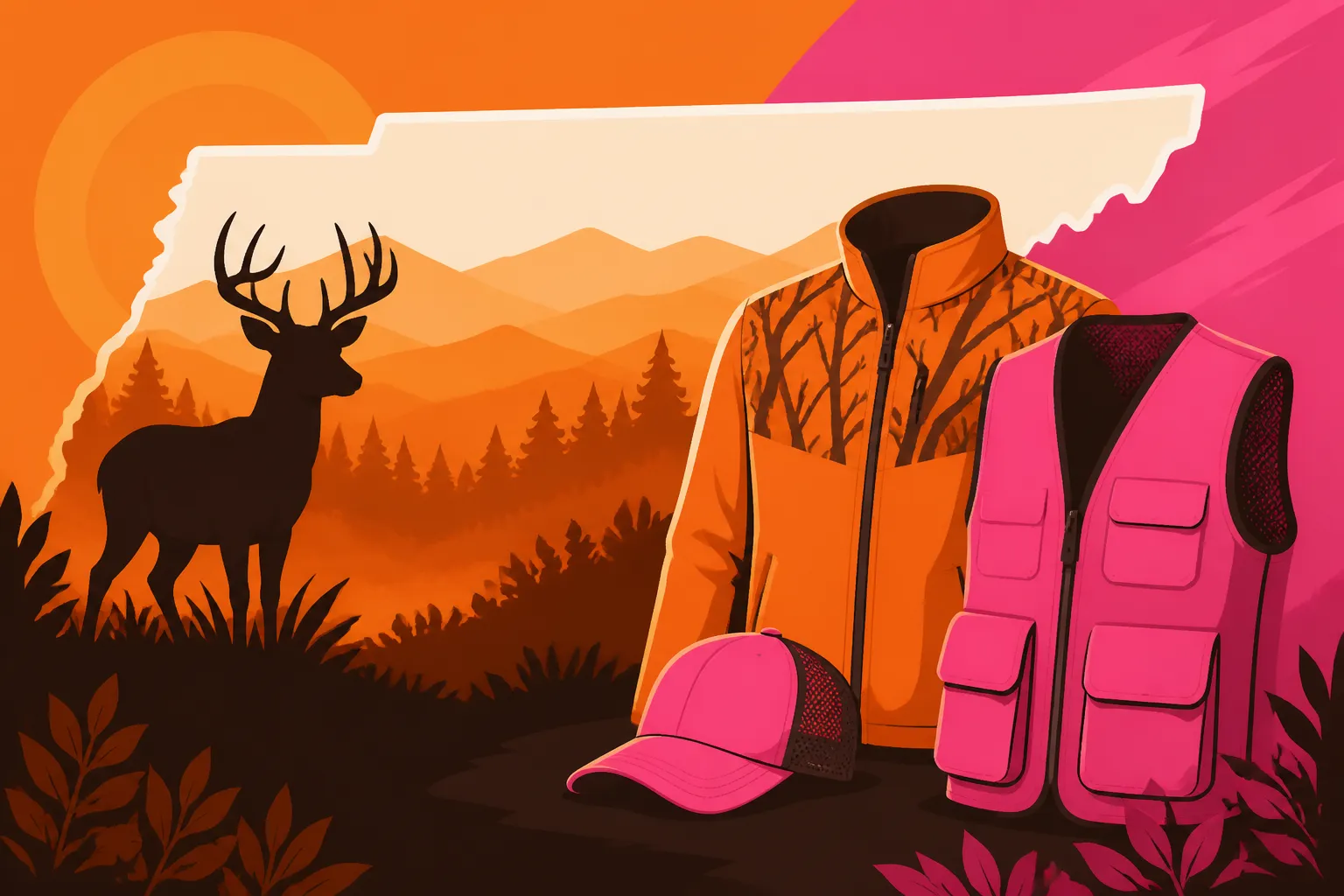
The most common ways to meet Tennessee's 500 square inch requirement are with vests, hats, or full jackets.
- Vests: A simple, uninsulated blaze orange or pink vest is a workhorse for many hunters. It can be easily layered over any camouflage or base layers, and its open design provides excellent ventilation. Look for vests with sturdy zippers or snaps, and perhaps some pockets for small essentials. Many vests are designed to pack down small, making them easy to carry until needed.
- Hats: A solid blaze orange or pink hat is an excellent addition, providing visibility at the highest point of your body and keeping your head warm. However, remember that a hat alone rarely meets the 500 square inch minimum, so it should almost always be combined with a vest or jacket.
- Jackets: For colder weather, an insulated blaze orange or pink jacket is an ideal choice. It provides full coverage and warmth, often incorporating storage pockets and durable outer shells. Some jackets even have reversible sides, with one side being blaze and the other camouflage, offering versatility for different seasons or activities. When choosing a jacket, consider its waterproof and windproof capabilities, crucial for those unpredictable Tennessee weather shifts.
Always ensure that whatever combination you choose, the blaze material is solid and not broken up by large camouflage patterns, as this can reduce its effectiveness in meeting the visibility standard. Check the label or product description to confirm square inch coverage if you're in doubt.
Material and Comfort: Beyond Just the Color
Beyond the color itself, the material and comfort of your visibility gear are incredibly important. You'll be spending hours, sometimes days, wearing this equipment, so it needs to hold up to the elements and feel good against your body.
- Durability: Look for materials like heavy-duty polyester or a blend that can withstand snags from briars, rubbing against tree bark, and general wear and tear in the woods. Ripstop fabrics are a bonus. Reinforced stitching, especially around stress points like zippers and pockets, will extend the life of your gear.
- Weather Resistance: Tennessee weather can be fickle. A vest or jacket with some water resistance or even full waterproofing can be a lifesaver during a sudden rain shower. Breathability is also key, especially if you're hiking into your stand; materials that wick moisture away will keep you more comfortable.
- Quietness: Just because it's blaze doesn't mean it has to be noisy. Avoid overly crinkly or stiff fabrics that will make noise as you move or raise your gun. Soft, quiet materials like brushed fleece or silent polyester blends are available in blaze colors and will ensure you don't spook game while on the move.
- Fit and Layering: Your blaze gear should fit comfortably over your other hunting layers without restricting your movement, especially when shouldering your rifle or bow. Consider sizing up if you plan to wear it over bulky winter clothing. If you use a scouting app or planning tool like GoHunt, you can check weather forecasts for your hunting area, which will help you decide on the right layering system, including your blaze outer layer.
Integrating with Your Existing Hunting System
The best blaze orange or pink gear is one that seamlessly integrates into your overall hunting system. It shouldn't feel like an afterthought or an awkward addition. Modern hunting apparel brands recognize this and offer high-visibility options that are designed with the hunter in mind.
Think about how your blaze layer works with your pack. Does it bunch up uncomfortably under the shoulder straps? Can you still easily access your calls, rangefinder, or water bottle? If you're a treestand hunter, does your blaze vest interfere with your safety harness? Many vests and jackets are designed with harness pass-throughs or specific cuts that make them compatible with common safety systems.
For public land hunters, especially those who rely on maps and GPS, ensuring your blaze gear doesn't hinder access to these tools is important. Many hunters use apps like GoHunt to navigate public land, and you don't want a poorly designed vest to make pulling out your phone or handheld GPS a struggle. By considering these practical aspects, you can choose visibility gear that not only keeps you safe and legal but also enhances your overall hunting experience, allowing you to focus on the hunt itself.
Common Misconceptions and Best Practices
Even with clear regulations, some misconceptions about blaze orange and pink persist. Clearing these up and adopting some best practices can elevate your safety protocol and ensure you're always doing the right thing in the field.
The "More is Better" Mentality (Within Reason)
While Tennessee's regulations specify a minimum of 500 square inches, many seasoned hunters adopt a "more is better" mentality, and for good reason. Exceeding the minimum, perhaps by wearing a full blaze orange jacket and a hat, or a vest over a blaze orange shirt, significantly increases your visibility. In dense cover, over broken terrain, or during inclement weather like fog or light snow, that extra pop of color can make all the difference.
Consider hunting in areas where visibility might be compromised, such as thick river bottoms in West Tennessee, or heavily wooded draws on the Cumberland Plateau. The more surface area you have covered in blaze, the easier it is for another hunter to pick you out, even if only a portion of you is visible through a screen of saplings. This isn't about overkill; it's about maximizing safety in dynamic environments. It's especially prudent when Hunting Pressure on Tennessee Public Land is high, as it might be on opening day of gun season.
Checking Regulations Annually: Laws Can Change
Hunting regulations are not static; they can and do change from year to year. New research, shifting wildlife management goals, and public feedback can all influence updates to seasons, bag limits, and safety requirements. What was legal last year might have a slight modification this year. This is why it's crucial to check the official Tennessee Wildlife Resources Agency (TWRA) regulations every single year before you head afield.
Don't rely on memory, anecdotes from hunting buddies, or information from years past. The TWRA website, their printed digest, or a reputable app like GoHunt are your best sources for the most current information. A quick scan of the big game section or the general regulations page can confirm if there have been any changes to blaze orange or pink requirements. This annual check is a simple but vital step in responsible hunting. It ensures you're always compliant, avoiding potential fines and, more importantly, adhering to the latest safety standards. Think of it as part of your pre-season checklist, right up there with sighting in your rifle and checking your treestand. Completing your Tennessee Hunter Education Requirements also teaches you the importance of staying current on regulations.
Disclaimer
This article is for general informational purposes only and does not constitute professional advice. Laws, prices and regulations vary by location and change over time. Consult a qualified professional for guidance on your specific situation.