How Far to Walk From a Forest Road
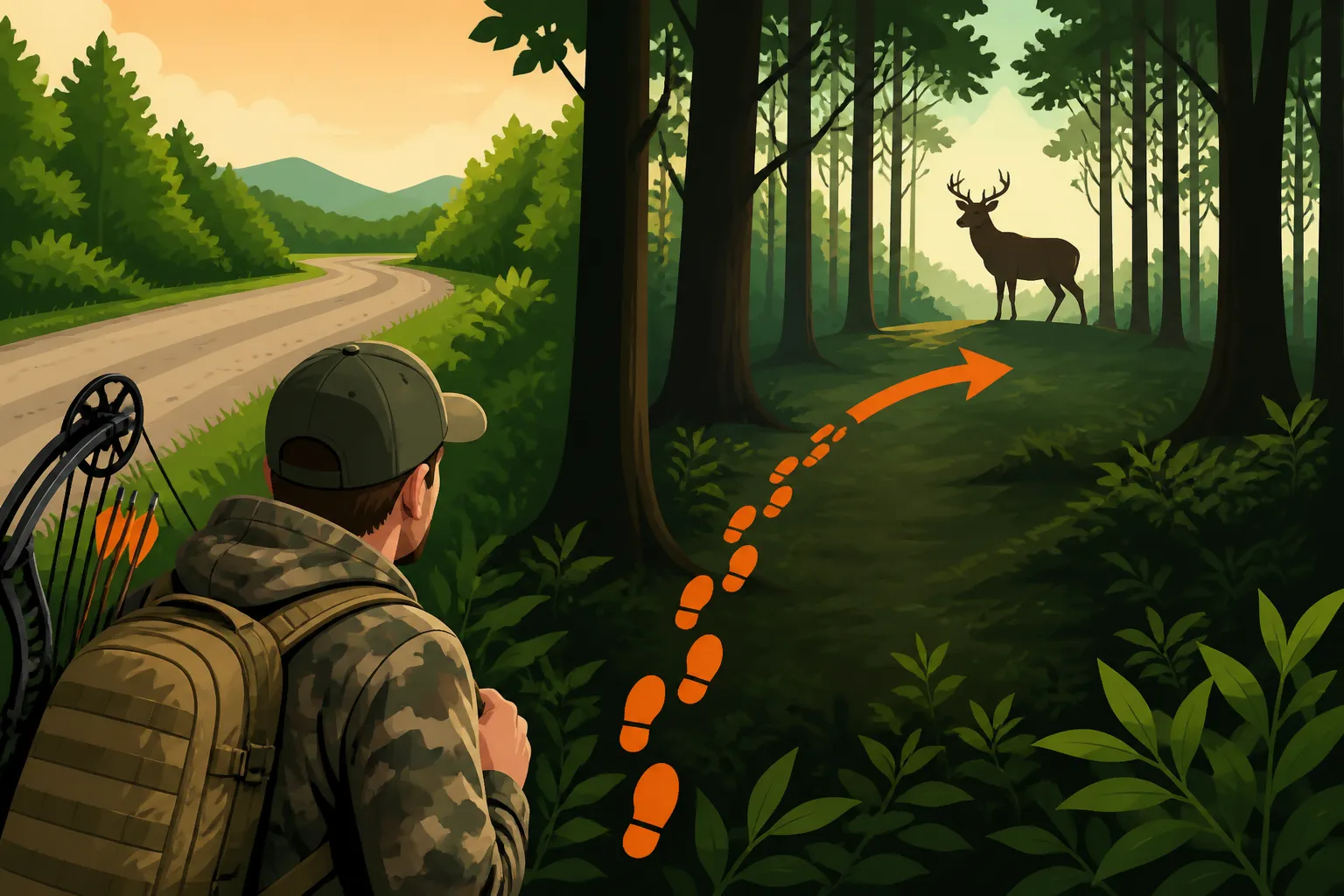
Oh, the age-old question that haunts every public land hunter in Tennessee! You pull off that forest road, engine still ticking, and you’re looking at that beaten-down two-track or a faint game trail. A little voice in your head asks, "Is this far enough? Or do I need to hike another mile to escape the crowds?" It’s a real frustration, feeling like you’re doing all the work only to bump into another hunter right when you finally get to where you think the deer are. This guide is all about figuring out just how far you need to walk from a forest road to find unpressured game and increase your chances of success in the Tennessee woods.
Why "Road Hunting" Rarely Works Anymore
Let's be honest, those days of pulling up to a gravel road, stepping out of the truck, and immediately spotting a big buck in the ditch are pretty much gone. Maybe a generation or two ago, in less populated areas, that was a real possibility. But today, with more hunters accessing public lands and game being pressured year after year, deer, turkeys, and even bears have learned to associate roads and vehicle noise with danger.
The Impact of Easy Access on Game Behavior
Think about it from a deer's perspective. Every time a truck rumbles down that forest road, or a door slams, or human voices carry through the timber, it registers as a threat. Over time, this constant low-level pressure pushes game deeper into the cover. They learn that the areas closest to roads are dangerous, and they will only use them under the cover of darkness or during periods of very low human activity. This behavioral change means that if you're not putting in some boot leather, you're mostly hunting where the animals used to be, or where they only feel safe when you're not there.
The "Orange Army" Effect on Public Land
We all love opening day, right? The excitement, the camaraderie, the pure anticipation. But let's face it, opening morning of rifle season, or even the first few days of archery, can turn public land into what feels like an "orange army" march. Vehicles line the roads, and hunters fan out, often not venturing too far from their easy access points. This creates a ring of intense pressure around roads and parking areas. The deer, having survived multiple hunting seasons, know this pattern. They quickly vacate these accessible zones for thicker cover and more remote areas. If you want to avoid feeling like you're hunting other hunters instead of deer, you simply have to go where others aren't willing to go. This often means walking a bit further than you might initially want.
Factors Influencing Your Hike Distance
So, how far is far enough? It's not a one-size-fits-all answer, unfortunately. The "magic" distance can change dramatically based on several key factors. You need to consider the type of terrain, the species you're pursuing, the specific hunting pressure in the area, and whether you're on public or private ground.
Terrain and Topography as a Natural Barrier
The type of ground you're traversing plays a huge role in how far you need to walk. In flat, open timber, a mile might not feel like much, and deer might move further to escape pressure. But if you're hunting the steep, rugged ridges and hollows of the Cumberland Plateau Ridgelines or the Cherokee National Forest Hunting, even a quarter-mile straight up a mountain can feel like a marathon. Deer, much like us, will often choose the path of least resistance. They know that hunters are less likely to tackle incredibly steep, brushy, or swampy terrain.
For example, a thick laurel tangle on a steep mountainside in East Tennessee might only be a few hundred yards from a forest road, but it can be as effective at deterring hunters as a mile of open hardwoods. If you can navigate that challenging terrain, even short distances from the road can put you into unpressured pockets. Similarly, dense bottomland thickets or flooded timber, common in Hunting West Tennessee River Bottoms, might require less actual "walking distance" but more sheer effort to push through. Always look for natural barriers that make travel difficult for humans, but not necessarily for deer.
Hunting Pressure and Time of Season
This is arguably the most crucial factor. Early in the season, during the first few days of Tennessee Archery Season Opening Day or especially Tennessee Gun Season Opening Day, pressure can be incredibly high. You'll likely need to walk significantly further to get away from the immediate road-based crowds. Deer will be pushed deep.
As the season progresses, especially during the Hunting the Late-Season January Lull, some pressure might subside, but deer have also become more wary. They've been hunted for months. In these late-season scenarios, a deer might not be as far from the road as on opening day, but they will be holding incredibly tight in the thickest cover available, often only moving at night. The key isn't just distance, but also finding that sanctuary cover. Hunting Pressure on Tennessee Public Land is a constant challenge, but understanding how it shifts throughout the season can help you adjust your strategy. If you're hunting a particular WMA known for heavy traffic, assume you need to walk further, plain and simple.
Species Specifics and Cover Preferences
Different game animals have different thresholds for pressure and preferences for cover. A ruffed grouse, for instance, might be found much closer to a road in dense, overlooked cover than a mature whitetail buck. Turkeys, while wary, might venture closer to roads and fields in the early morning before quickly retreating to the woods as human activity picks up.
For deer, especially mature bucks, they thrive on security. They need areas where they feel safe to bed and move during daylight hours. These areas are almost always going to be away from obvious human disturbance. If you're hunting a small game species like squirrels or rabbits, you might not need to hike as far, as they often utilize fencerows and woodlots closer to human activity, as long as there's enough food and cover. Always tailor your walking distance to the specific animal you're after and its known habits in pressured environments.
Tools to Help You Go Deeper
In this modern age, we have incredible resources at our fingertips that can drastically cut down on wasted steps and help us identify those hidden gems far from the roads. Gone are the days of just blindly walking until you feel "far enough." Now, we can scout from our couch.
Satellite Imagery and Topographical Maps
Before you ever leave the house, spend some serious time with satellite imagery and topographical maps. Tools like onX Hunt are invaluable here. You can see terrain features that indicate natural barriers or travel corridors. Look for:
- Thick, unbroken timber: Areas with extensive, dense canopy cover might hold deer seeking security.
- Steep, inaccessible slopes: These often deter other hunters.
- Swamps, bogs, or dense creek bottoms: These can be tough to navigate but offer incredible sanctuary.
- Funnel points: Where two distinct habitat types pinch down, or where a ridge meets a creek. These can be travel routes regardless of distance from a road.
- Remote water sources: Especially in dry years, hidden springs or seeps can draw game.
By studying these maps, you can identify areas that are challenging to access but might not require a physically long walk, just a difficult one. Reading Aerial Photos for Cumberland Plateau Deer can reveal subtle changes in timber type, old logging roads that have grown over, or hidden benches that bucks might use. You're looking for anything that creates a natural "no-go" zone for casual hunters, and then figuring out the best (or at least possible) way to get into it.
Using GPS and Mobile Apps for Navigation
Once you've identified potential spots on the map, a good GPS unit or a reliable hunting app on your phone (like onX Hunt or GoHunt) becomes your best friend in the field. These tools allow you to:
- Pinpoint your exact location: Never get lost, even deep in unfamiliar woods.
- Track your progress: See how far you've walked and how close you are to your marked destination.
- Mark sign and waypoints: Drop pins for rubs, scrapes, tracks, bedding areas, or even where you heard a distant gobble.
- Identify property lines: Crucial for knowing if you're on public or private land, especially near boundaries. The onX Layers feature is excellent for this, showing land ownership in real-time.
Instead of just walking aimlessly, these tools allow you to navigate directly to those remote, overlooked pockets of cover you identified during your scouting. This precision saves energy and ensures you're maximizing your effort. Scouting With the Tennessee TWRA App can also provide valuable insights into WMA boundaries and regulations, further aiding your navigation and planning.
Understanding "Hidden" Access Points
Sometimes, the trick isn't just walking further, but walking smarter. A main forest road might have a heavily used trailhead, but a small, unmarked pull-off a mile down the road might lead to a completely different, less-trafficked section of woods. Or an old, overgrown logging road that isn't on official maps but is visible on satellite imagery could be your ticket to getting past the initial layer of pressure.
Consider where others park. If you see a cluster of trucks at one spot, drive a little further. Look for subtle indications of less-used access points. Sometimes, simply walking a quarter-mile down a powerline or gas line right-of-way that parallels a forest road can put you into a different world, just because most hunters stick to the obvious trailheads. Finding Ground Others Walk Past often comes down to looking for these less obvious entry routes.
Balancing Effort and Reward
It’s easy to get caught up in the idea of "going deeper than anyone else," but there's a point of diminishing returns. You need to balance the effort required to get to a spot with the realistic chances of finding game there, and your ability to safely and successfully retrieve an animal.
Knowing Your Physical Limits
Let's be realistic: not everyone is built for a 5-mile trek up and down steep ridges with a pack full of gear, and then another 5 miles back with a deer on your back. It's crucial to know your own physical limits. If you push too far and exhaust yourself, you might make poor decisions, increase your risk of injury, or be unable to retrieve an animal you successfully harvest.
Start small. Maybe an extra half-mile from your usual spot is a good beginning. As your fitness improves and you learn the terrain, you can gradually increase your distance. Remember, a successful hunt isn't just about the shot; it's about the entire process, including getting your animal out of the woods. Carrying Packs for a Day on Public Land stocked with essentials for a longer hike is a good start.
The "Sweet Spot" and Reading Sign
The "sweet spot" is that area where you've put in enough effort to get past the initial pressure, but not so much that you're exhausted or completely unable to retrieve a deer. This spot is often marked by a noticeable increase in fresh, undisturbed deer sign.
Look for:
- Heavier rub lines: Especially rubs on larger trees, indicating mature buck activity.
- Undisturbed scrape lines: Active scrapes that haven't been walked over by other hunters.
- Fresh tracks: Especially larger tracks, in soft earth or mud, away from human boot prints.
- Browsing and feeding sign: Areas where deer have been actively feeding without disturbance.
- Bedding areas: Find thickets or benches with fresh beds.
When you start seeing significantly more sign that doesn't have human tracks all over it, you're likely in the sweet spot. It might be 500 yards from the road in rugged country, or two miles in flat terrain. The sign tells the story. Finding Sign in Big Cherokee Forest Timber is crucial to confirming you've gone far enough.
Strategies for Retrieval from Remote Locations
If you're going to hike deep, you need a solid plan for getting your animal out. This is where many hunters fail to plan ahead.
| Retrieval Method | Pros | Cons | Ideal Scenario |
|---|---|---|---|
| Dragging (Solo) | Simple, requires no extra gear | Extremely physically demanding, slow, rough on meat | Short distances, relatively flat ground, cooler weather |
| Dragging (Team) | Shares the load, faster than solo | Requires hunting buddy, coordination can be tricky | Moderate distances, varied terrain, multiple strong individuals |
| Deer Sled/Cart | Easier over rough terrain/snow, protects meat | Can be cumbersome, difficult in thick brush or steep hills | Longer distances, less dense timber, moderate terrain |
| Gutless Method/Pack | Lightens load significantly, preserves meat | Requires butchering skills, takes more time in field | Very long distances, steep & rugged terrain, warm weather |
Consider packing a lightweight deer drag or Deer Sleds for Ridge Country if you're on public land where you can't use an ATV. For really deep, rugged country like the mountains, learning the gutless method and carrying a good frame pack for boning out the meat is almost essential. You might even consider caching a small collapsible game cart near a remote access point if regulations allow. Always think about your exit strategy before you even commit to your entry. And never forget a good First Aid Kits for Remote Cherokee Forest Ground when venturing deep.
When it comes to how far to walk from a forest road, there's no magic number. It's an art, not a science, learned through experience and careful observation. But by understanding the factors at play, utilizing modern scouting tools, and being realistic about your capabilities, you can significantly increase your odds of punching that tag on unpressured Tennessee game. Good luck out there, and happy hiking!
Disclaimer
This article is for general informational purposes only and does not constitute professional advice. Laws, prices and regulations vary by location and change over time. Consult a qualified professional for guidance on your specific situation.