Optics for Cumberland Plateau Ridges
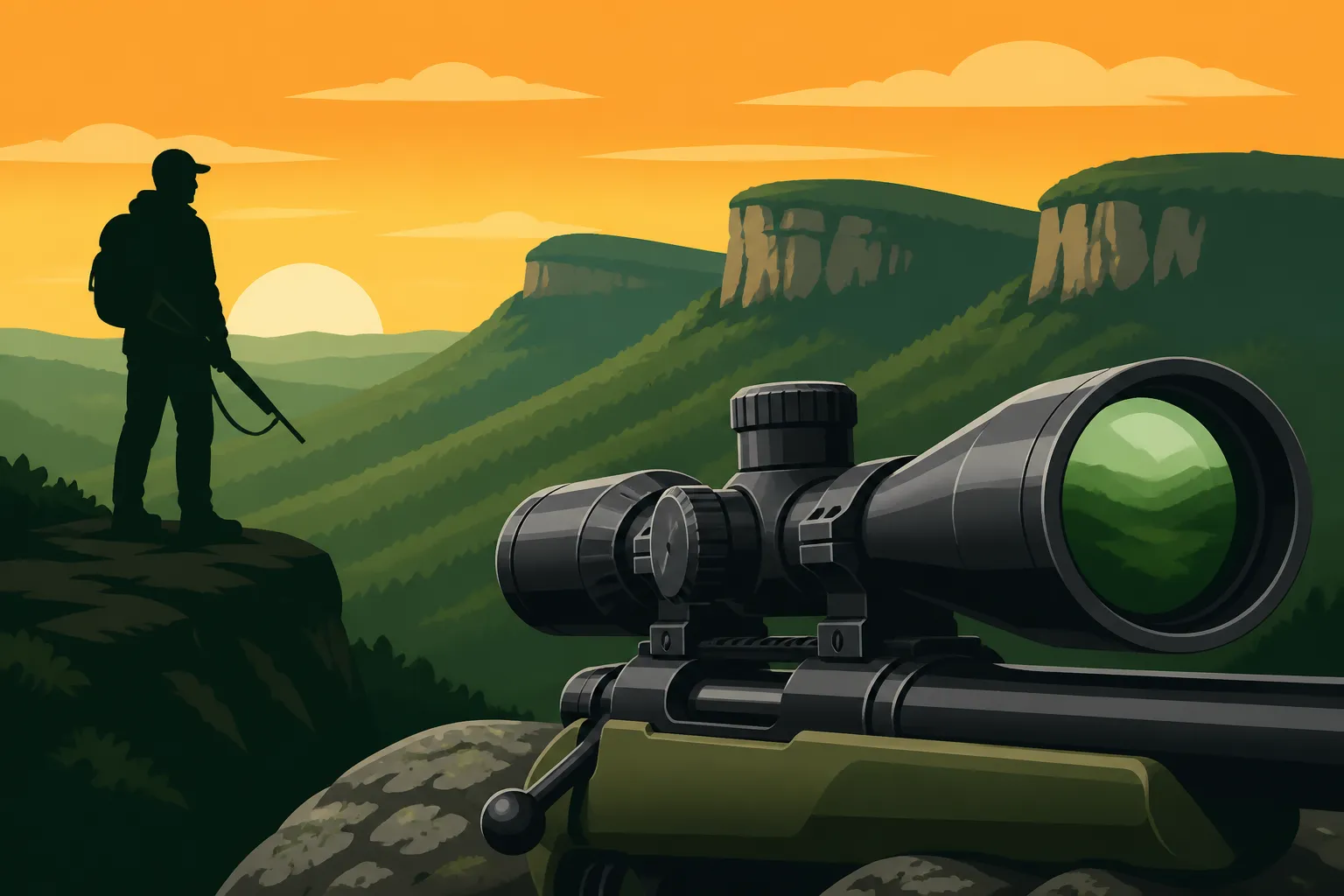
Hunting the Cumberland Plateau in Tennessee can be an incredibly rewarding experience, but let's be honest, it’s also uniquely challenging. The terrain itself, with its steep ridges, deep hollows, and a mix of thick timber and unexpected open overlooks, demands a different approach than hunting flatland fields. One of the biggest frustrations many hunters face is having optics that just don't cut it when you're trying to spot a deer ghosting through shadowed cedars or range a buck across a wide cut. This guide is all about helping you pick and master the right optics to truly excel on those rugged Cumberland Plateaus.
Understanding the Cumberland Plateau's Unique Optical Challenges
The Cumberland Plateau isn't like your typical rolling farmland. It's a land of elevation and contrast, and that very landscape throws a curveball at your optics strategy. You need gear that can handle the extreme variations in light, distance, and cover, often within a single hunting setup. It's about being prepared for a 30-yard shot through thick brush one minute, and then potentially ranging a deer several hundred yards away across an unexpected clearing the next.
Elevation Changes and Thermals
We've all been there: perched on a ridge, feeling that morning sun on your face, only to have the swirling winds and unpredictable thermals play havoc with scent. But these same conditions also affect how light travels and how animals appear through your optics. The dramatic shifts in elevation, from the valley floor to the ridge crests, mean you're often looking down into shadowed hollows or across expansive draws. This can create optical illusions, distort distances, and make it incredibly difficult to judge the true range of an animal, especially when it's moving along a contour. Without optics designed to handle these environmental factors, you might find yourself second-guessing every shot opportunity. Understanding Wind and Thermals on a Ridge System is just as important for your scent control as it is for judging shot placement.
Dense Timber and Low Light
Much of the Cumberland Plateau is covered in dense hardwoods, pines, and thick underbrush, especially in the hollows and along steeper slopes. This means that a significant portion of your hunting time will be spent in low-light conditions, whether it's the pre-dawn darkness, the late-evening gloom, or simply the perpetual shade of a deep valley. Cheap optics often fail miserably here, turning shadowy forms into indistinct blobs. You need binoculars and rifle scopes that can gather every last photon of available light, providing clear, bright images even when the sun hasn't quite crested the ridge or has already dipped below the western horizon. This is where quality glass truly shines, allowing you to identify a deer's antler points instead of just seeing a brown shape.
Open Overlooks and Long Shots
Just when you think you're in a tunnel of trees, the Cumberland Plateau will surprise you with an unexpected powerline cut, an old clear-cut, or a sprawling logging deck. These areas can offer views spanning hundreds of yards, making them prime spots for catching deer moving between bedding and feeding areas. If you're hunting one of these open overlooks, especially near areas like the North Cumberland Wildlife Management Area, your optics need to be capable of long-range identification and precision. A deer that looks like a small speck to the naked eye could be a mature buck if you have the right binoculars and spotting scope to resolve its features. Missing the chance to identify a trophy animal at a distance, or failing to confidently range it, can be the difference between a successful hunt and going home empty-handed. This duality—thick timber and open overlooks—is precisely what makes choosing optics for the Cumberland Plateau so critical.
The Essential Optics for Ridge Country
When you're navigating the rugged slopes and varied cover of the Cumberland Plateau, having the right optical tools isn't just a luxury; it's a necessity. These aren't just gadgets; they're extensions of your senses, allowing you to see further, clearer, and with greater precision than the naked eye ever could. Without these three core pieces of gear, you're leaving a significant edge at home.
Binoculars: Your Primary Scouting Tool
Your binoculars are arguably the most important piece of optical gear you'll carry into the Cumberland Plateau. Forget the idea that they're just for long-range glassing; in this diverse terrain, they are your constant companions for everything from identifying distant game to picking apart thickets just fifty yards away. They allow you to survey distant ridges, check for movement in shadowed draws, and confirm details before you ever raise your rifle or bow. For example, when Scouting Tennessee Public Land Before Season, quality binoculars are invaluable for picking apart potential bedding areas from a safe distance, identifying key travel corridors, or even locating rub lines and scrapes without disturbing the area. A good pair will give you a bright, sharp image, enabling you to detect the subtle flick of an ear or the curve of an antler that your bare eyes would surely miss. This continuous visual information is critical for making informed decisions about your approach and strategy.
Rangefinders: Pinpointing Distances
The undulating topography of the Cumberland Plateau makes judging distance a constant challenge. What looks like 200 yards across a hollow might actually be 250, or even 175 due to the optical illusion created by the slope. This is where a quality rangefinder becomes indispensable. Modern rangefinders with angle compensation are especially crucial here, as they calculate the "shoot-to" distance, which accounts for the uphill or downhill angle to your target. This corrected distance is often significantly different from the true linear distance, and failing to account for it can result in a missed shot or, worse, a wounded animal. Whether you're hunting deer with a rifle or bow, knowing the precise distance to your target, factoring in the steep incline or decline, gives you the confidence to make the shot count. Don't leave home without one; guessing distances in this kind of country is a recipe for frustration.
Rifle Scopes: Precision for Mountain Shots
Your rifle scope is the final piece of the puzzle, allowing you to precisely place your shot once your binoculars have located the game and your rangefinder has provided the exact distance. On the Cumberland Plateau, a rifle scope needs to be versatile. You might need a wide field of view for quick shots in dense timber, but also enough magnification and clarity to make a confident shot across a long cut or down a lengthy draw. Low-light performance is paramount, given the varied light conditions you'll encounter. A crisp, clear image at dawn and dusk is non-negotiable for identifying your target and ensuring an ethical shot. Furthermore, durability is key; your scope needs to withstand the bumps and scrapes of traversing rugged terrain, rain, fog, and fluctuating temperatures without losing its zero. Choosing a scope that balances these features ensures that when the moment of truth arrives, your optic is up to the task, whether you're targeting deer or even a bear in the Bear Hunting Cherokee National Forest.
Choosing Binoculars for Cumberland Plateaus
Selecting the right binoculars for the Cumberland Plateau is a decision that shouldn't be taken lightly. This isn't just about magnifying an image; it's about optimizing your ability to see clearly and consistently in an environment that constantly tests your gear. There are several key factors to consider to ensure your binoculars are an asset, not a hindrance.
Magnification and Objective Lens Size
The classic debate for binoculars usually revolves around 8×42, 10×42, and sometimes 12×50. For the Cumberland Plateau, a good balance is often found with 10×42 binoculars. The "10x" provides enough magnification to pick apart distant ridges and resolve details like antler points, which is vital when Glassing a Powerline Cut at Last Light or searching vast areas. The "42mm" objective lens offers a good compromise between light-gathering capability and manageable size/weight. While 8x magnification offers a wider field of view and is excellent in very thick cover, the extra reach of 10x is often more beneficial for identifying deer across hollows or in sparse timber at greater distances. If you anticipate more open country or primarily long-distance glassing from a stationary position, a 12×50 might be considered, but remember that increased magnification often comes with a narrower field of view and can be harder to hold steady without a tripod. The bigger objective lens of a 50mm will gather more light, which is certainly a bonus in the low-light situations common on the Plateau. Ultimately, it’s a trade-off, and 10×42 tends to be the sweet spot for versatility in this specific terrain.
Field of View and Eye Relief
Field of view (FOV) refers to the width of the area you can see through your binoculars at a certain distance, typically 1,000 yards. A wider FOV is a huge advantage when hunting the Cumberland Plateau because it allows you to quickly scan larger areas for movement, which is essential when deer might be moving rapidly through varied cover. It’s much easier to locate a deer if you're not constantly moving your head around just to see what's happening. While higher magnification typically reduces FOV, quality glass and design can mitigate this. Eye relief is the distance your eye can be from the eyepiece and still see the full, unvignetted image. This is particularly important for hunters who wear eyeglasses, as insufficient eye relief will force you to remove your glasses or only see a partial image. Look for binoculars with at least 15-16mm of eye relief if you wear glasses. Brands like Vortex, Leupold, and Maven typically offer excellent eye relief. If you're on a multi-day hunt, comfort is key, and good eye relief prevents eye strain over long periods of glassing.
Durability and Weatherproofing
Let's face it, hunting the Cumberland Plateau isn't a walk in the park. You're going to be climbing, scrambling, and enduring whatever Mother Nature throws at you. Your binoculars will get bumped, dropped, rained on, and covered in dust or mud. That's why durability and weatherproofing are non-negotiable. Look for binoculars that are nitrogen or argon purged and O-ring sealed. This prevents internal fogging due to temperature changes and stops moisture, dust, and debris from entering the optical system. A robust, rubber-armored housing not only provides a better grip but also offers protection against impacts. It’s also wise to consider a waterproof rating. While you might not be submerging them, standing water, heavy rain, or even just high humidity can wreak havoc on non-sealed optics. Investing in a truly weatherproof pair means you won't miss a beat when a sudden rain shower rolls in or the morning dew clings to everything. This resilience ensures that your investment continues to perform reliably season after season, no matter how rugged your hunt gets.
Selecting a Rangefinder for Hilly Terrain
Just like binoculars, your rangefinder needs to be specifically chosen for the unique demands of the Cumberland Plateau. Generic models might get you by on flat ground, but once you introduce significant elevation changes, you need technology that can keep up. Accuracy and reliability are paramount here, as a miscalculated distance can easily lead to a missed shot or worse.
Angle Compensation Features
This is arguably the single most important feature for a rangefinder on the Cumberland Plateau. Imagine a deer standing 40 yards away horizontally, but it's 30 feet directly below you in a hollow. If you shoot for 40 yards, your bullet will likely fly over its back because gravity has less time to act on the projectile over the actual "shoot-to" distance. Angle compensation technology, often referred to as "horizontal distance," "equivalent horizontal range" (EHR), or "true ballistic range," calculates the distance based on the angle of incline or decline. So, in our example, it might tell you to shoot for 35 yards. This feature is absolutely essential for both rifle and bow hunters in hilly terrain, ensuring precise projectile placement. Brands like Leupold, Vortex, and Sig Sauer are well-known for their accurate angle-compensating rangefinders. Without it, every uphill or downhill shot becomes a guessing game, and that's not a position you want to be in when a buck of a lifetime steps out.
Maximum Range and Target Acquisition
While many shots on the Cumberland Plateau will be within typical hunting distances, the occasional long-range opportunity across a wide-open cut or field edge does occur. Having a rangefinder with a robust maximum range capacity (say, 800-1,000+ yards for reflective targets, and a realistic 400-600 yards for deer) gives you versatility. Equally important is how quickly and consistently the rangefinder acquires a target. In hunting scenarios, animals don't often stand still for extended periods. You need a unit that can quickly lock onto a deer, especially through light brush or against cluttered backgrounds, to provide an instant reading. Some rangefinders feature "scan" modes that allow you to continuously range as you pan across an area, which is incredibly useful for tracking a moving animal or getting multiple readings on different objects. High-quality optics within the rangefinder itself also contribute to better target acquisition, especially in low light. When you're trying to quickly range that buck that just stepped into an Entry Routes Through Standing Beans, speed and accuracy are everything.
Compactness and Ease of Use
You’re already carrying enough gear up and down those hills. A bulky, heavy rangefinder is the last thing you want. Look for a compact, lightweight unit that fits comfortably in your hand or a bino harness pocket. One-handed operation is also a significant advantage; you often only have one hand free when you’re gripping a rifle, holding a bow, or steadying yourself on a steep slope. The button placement should be intuitive, and the display should be clear and easy to read, even in bright sunlight or low light conditions. Some models offer red LED displays, which are fantastic in dim light but can sometimes wash out in very bright conditions, while black LCD displays are great in bright light but can be hard to see in the dark. Consider what conditions you'll primarily be using it in. Ultimately, the best rangefinder is one that you'll actually carry and use consistently, rather than leaving it in your pack because it's too cumbersome or finicky to operate quickly.
Rifle Scope Considerations for Ridge Systems
Your rifle scope is the ultimate interface between you, your rifle, and your target. On the Cumberland Plateau, where shots can vary from tight timber to long-range across clearings, your scope needs to be a versatile workhorse. Skimping on this piece of gear can undermine the accuracy of even the most expensive rifle.
Variable Power for Versatility
A fixed power scope might have its place, but for the diverse hunting environments of the Cumberland Plateau, a variable power scope is almost essential. Think about the scenarios: you might be still-hunting Still-Hunting Cumberland Plateau Ridgelines through dense woods where a low magnification (2x or 3x) provides a wide field of view for quick target acquisition. Then, you might crest a ridge and spot a deer 300 yards away across an old logging cut, requiring you to dial up to 9x, 10x, or even 12x to make a confident, ethical shot. A common power range like 3-9×40, 3-12×44, or even a 4-16x with a larger objective lens offers this crucial versatility. The ability to adjust magnification allows you to adapt to the changing conditions of the terrain and the distance to your target, ensuring you're always prepared for the shot at hand. When selecting, consider the lowest power for close, fast shots and the highest power for precise long-range identification.
Reticle Types for Different Light
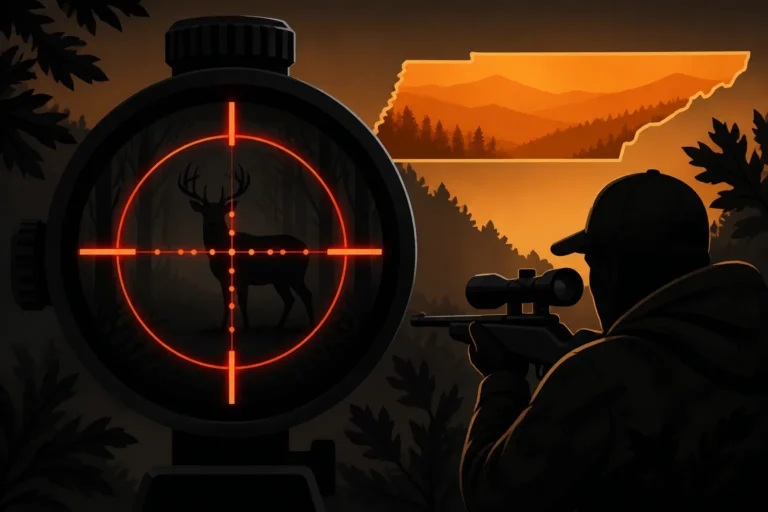
The reticle, or crosshairs, is what you use to aim. On the Cumberland Plateau, where shots often occur in low light or against busy, dark backgrounds (like shadowed timber), the right reticle can make all the difference. A simple duplex reticle is a classic for a reason, but sometimes it can get lost against a dark animal or dense woods. Many modern scopes offer illuminated reticles, which can be invaluable in low-light conditions, allowing your aiming point to "float" clearly against a dim background without obscuring the target. Some reticles also incorporate ballistic drop compensators (BDC) or holdover points, which can be useful for longer shots, especially if you practice with them extensively. For example, a scope with a simple hashmark reticle might help you account for bullet drop on a 250-yard shot across a valley without having to dial turrets. It’s a personal preference, but ensure whatever reticle you choose stands out and provides a clear aiming point under the varied light conditions you'll encounter.
Mounting and Parallax Adjustment
Even the best scope is only as good as its mounting system. On rugged terrain, your scope will take bumps and jostles, so a robust, high-quality mount is non-negotiable. Invest in solid rings and a durable base that will hold zero through all the abuse. Loose mounts are a primary cause of accuracy issues in the field. When Zeroing at 100 Yards for Ridge Hunting, always ensure your scope is mounted correctly and securely.
Parallax is another factor, especially for longer shots. Parallax occurs when the target and the reticle appear to be on different focal planes. This means if your eye isn't perfectly centered behind the scope, the reticle can appear to shift relative to the target, leading to inaccuracy. Many hunting scopes designed for deer hunting have parallax fixed at around 100 or 150 yards, which is fine for most shots. However, for scopes with higher magnification (typically 10x or above) or if you plan on taking longer shots, an adjustable parallax knob (often found on the side of the scope) allows you to fine-tune the focus, ensuring the reticle and target are on the same plane, eliminating parallax error. While perhaps not critical for every shot, it’s a feature that enhances precision when it matters most, especially if you're engaging a target at the edge of your rifle's effective range.
Beyond the Core: Supporting Optics and Accessories
While binoculars, rangefinders, and rifle scopes form the bedrock of your optical system for the Cumberland Plateau, a few other pieces of gear and accessories can significantly enhance your effectiveness and comfort in the field. These aren't always essential, but they can certainly elevate your hunting experience, especially if you spend a lot of time glassing or operating from a fixed position.
Spotting Scopes for Distant Glassing
For some hunters, particularly those who primarily hunt more open areas of the plateau, a spotting scope can be a game-changer. While binoculars are excellent for scanning and initial identification, a spotting scope (with its much higher magnification, often 15-60x or 20-80x) allows you to "spot" a distant animal and determine precise details. This means not just seeing a deer, but discerning if it's a buck or a doe, counting antler points, and assessing its size from hundreds of yards away. This is especially useful in areas with expansive views, like major river bottoms or large clear-cuts that might connect to the Cumberland Plateau fringes, where you might be looking for a Tennessee Boone and Crockett Whitetails. It helps you avoid making long, arduous stalks on animals that aren't what you're looking for, saving valuable time and energy. However, spotting scopes are heavier and bulkier than binoculars, so consider your hunting style and the terrain you frequent. If you’re mostly still-hunting through thick timber, it might be overkill.
Tripods and Bipods for Stability
High-magnification optics are only effective if you can hold them steady. A tripod is absolutely essential for using a spotting scope, transforming it from a shaky, frustrating experience into a clear, stable view. But don't underestimate the value of a lightweight, compact tripod for your binoculars, especially when you're doing extensive glassing from a ridge top. Mounting your binoculars to a tripod (via an adapter) can dramatically reduce eye strain and allow you to pick apart distant cover with far greater detail than freehand glassing.
For your rifle, a bipod offers rock-solid stability for precise shots from a prone position or off a bench. In the varied terrain of the Cumberland Plateau, however, a bipod isn't always practical due to vegetation or uneven ground. Here, a set of shooting sticks can be a much more versatile option, allowing you to steady your rifle from a sitting, kneeling, or even standing position over uneven terrain or brush. Whether it's a dedicated bipod, shooting sticks, or a small tripod for your binoculars, adding a stability aid to your kit will significantly improve the effectiveness of your optics, especially for Shooting Sticks From a Cumberland Overlook.
Harnesses and Protection for Your Gear
You’ve invested good money in quality optics; now protect them. A good binocular harness is a must-have for hunting the Cumberland Plateau. It keeps your binoculars secure against your chest, preventing them from bouncing around, getting snagged on brush, or swinging into trees as you navigate steep terrain. More importantly, it keeps them easily accessible for quick deployment. Many harnesses also include a protective cover for the lenses, shielding them from dust, rain, and impacts. For your rangefinder, a dedicated pouch on your bino harness or a secure pocket on your pack ensures it's protected and readily available. For your rifle scope, flip-up lens caps are a simple but effective way to protect the objective and ocular lenses from scratches, dust, and moisture while you're on the move. Don't let a minor mishap ruin your expensive optics. Proper harnesses and protective covers are small investments that ensure your optical gear lasts for many seasons to come.
Strategic Use of Optics in the Field
Having the best optics won't do you any good if you don't know how to use them effectively in the field. The Cumberland Plateau demands specific techniques that leverage your gear to its fullest potential, transforming your hunting strategy from guesswork to precision.
Glassing Techniques for Plateau Ridges
Glassing is more than just looking through your binoculars; it's a methodical process of breaking down terrain and systematically searching for game. On the Cumberland Plateau, this means starting at the furthest point in your field of view and slowly working your way back, or segmenting a distant hillside into imaginary grids. When perched on a ridge, start by glassing the opposing slopes, looking for horizontal lines or irregular shapes that might indicate a deer's back or belly, contrasting with the vertical lines of trees. Pay close attention to shaded areas and transitions where different types of cover meet, as these are natural travel corridors and bedding areas. Don't just scan; study each section for several seconds. Often, you'll pick up on subtle movement or a hidden form only after a sustained gaze. Using a tripod for your binoculars during long glassing sessions can reduce fatigue and increase your ability to detect fine details. Remember, a deer can be hidden in plain sight, and only meticulous glassing will reveal it. This systematic approach is especially important when you're covering vast areas like those found on the Catoosa Wildlife Management Area.
Judging Distance in Hilly Country
As we've discussed, the Cumberland Plateau's topography makes distance judgment incredibly tricky. This is where your rangefinder with angle compensation truly earns its keep. However, it's not enough to just pull it out when you see a deer. Practice using your rangefinder before you even see an animal. As you sit in your stand or walk a ridge, range prominent landmarks: that big oak tree, the rock outcrop, the edge of the clear-cut. Make mental notes or even physical marks (if ethically allowed and not permanent) of the distances. When a deer appears, you can often quickly relate its position to a pre-ranged landmark, giving you an immediate, accurate distance.
It's also crucial to understand how different surfaces affect your rangefinder's performance. Thick brush or heavy rain can sometimes give inconsistent readings. If you get an unusual reading, try ranging an object just past or to the side of your target to confirm the distance. Never guess if you have a rangefinder available. Even a slight misjudgment on an uphill or downhill shot can lead to a miss or a bad hit, and that's something we all want to avoid. Being confident in your ranging is a critical part of making an ethical shot.
Maintaining Your Optics in Rugged Conditions
Your optics are precision instruments, and the harsh environment of the Cumberland Plateau can take its toll if you're not careful. Proper maintenance ensures they remain clear, functional, and reliable. First, always carry a lens cleaning kit that includes a soft brush, a lens pen, and a micro-fiber cloth. Never wipe dirt or grit off lenses with your shirt or a rough cloth, as this can scratch the coatings. Use the brush to gently remove loose debris, then breathe lightly on the lens and use the lens pen or cloth in a circular motion.
When hunting in wet conditions, make sure your optics are properly sealed, and always dry them thoroughly after a hunt before storing them. A small desiccant pack in your storage case can help absorb any residual moisture. Protect your lenses with caps whenever your optics aren't in active use. When moving through thick brush, ensure your binoculars are securely in their harness and your rifle scope has its caps on. Regular checks for loose mounting screws or signs of wear on rubber armor can prevent bigger issues down the road. Treating your optics with care will ensure they perform optimally season after season, ready for whatever the Hunting Cumberland Plateau Ridgelines throws at them. It's a small investment in time and effort that pays huge dividends in the long run.
| Feature | 8×42 Binoculars | 10×42 Binoculars | 12×50 Binoculars |
|---|---|---|---|
| Magnification | Lower | Mid-range | Higher |
| Objective Lens | 42mm | 42mm | 50mm |
| Field of View | Wider (easier to scan) | Moderate (good balance) | Narrower (harder to find target) |
| Low Light Perf. | Very Good | Good to Very Good | Excellent (larger objective lens) |
| Stability | Easiest to hold steady | Good, may need tripod for long glassing | Often requires tripod for best stability |
| Weight/Bulk | Lighter, more compact | Moderate | Heavier, bulkier |
| Best Use on Plateau | Dense timber, quick close-range ID | Versatile, general purpose | Open overlooks, long-range ID from fixed position |
| Typical Eye Relief | Generally longer | Good | Moderate to good |
Disclaimer
This article is for general informational purposes only and does not constitute professional advice. Laws, prices and regulations vary by location and change over time. Consult a qualified professional for guidance on your specific situation.