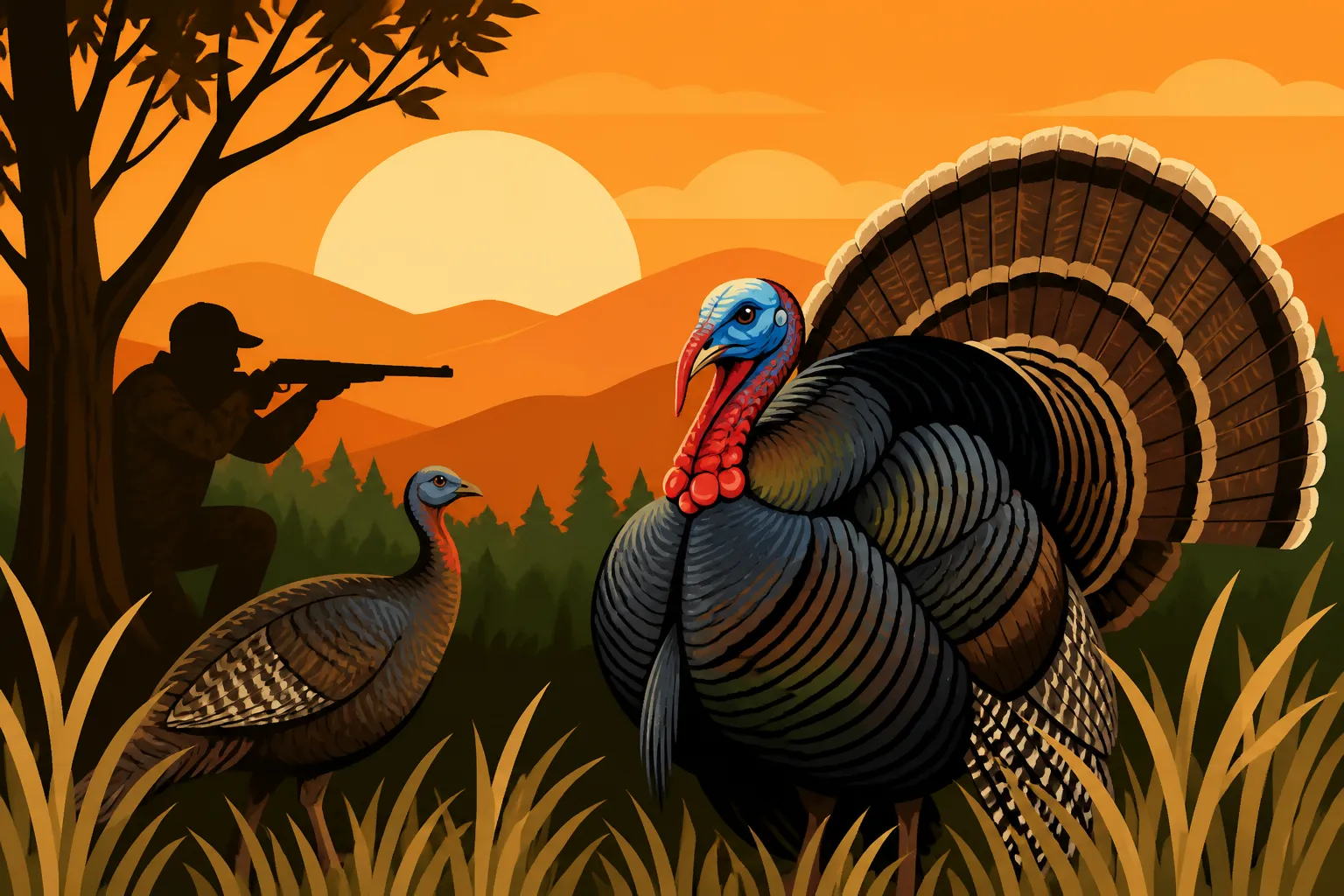
Wild Turkeys in Tennessee
There's nothing quite like the sound of a distant gobble shattering the morning stillness, a primal call that sets every turkey hunter's heart racing. But let's be honest, Tennessee's wild turkeys can be notoriously fickle, sometimes booming from the roost, only to clam up and vanish into the timber, leaving you scratching your head. This comprehensive guide is here to unravel the mysteries of Wild Turkeys in Tennessee, diving deep into their history, behavior, habitats, and how you can better understand these magnificent birds.
A Deep Dive into Tennessee's Wild Turkey Restoration Success Story
It’s hard to imagine, but there was a time not so long ago when the sight and sound of a wild turkey gobbling in Tennessee was a rare occurrence, if not entirely absent in many areas. Our state, like many others, saw its wild turkey populations decimated by unregulated market hunting and extensive habitat loss in the late 19th and early 20th centuries. It’s a somber reminder of how quickly even abundant wildlife can vanish without thoughtful conservation. But thanks to dedicated efforts, we've witnessed one of the greatest wildlife comeback stories right here in our own backyard.
From Near Extinction to Thriving Flocks
Think about what Tennessee must have been like in the early 1900s. Vast tracts of old-growth timber were being cleared, agriculture was expanding rapidly, and there were no real hunting regulations to speak of. Turkeys, being large, relatively easy to spot, and a valuable food source, bore the brunt of this uncontrolled exploitation. By the 1940s, it's estimated that the statewide turkey population had plummeted to just a few thousand birds, clinging to existence in isolated pockets of remote wilderness, primarily in our rugged mountains and dense river bottoms. It was a dire situation, one that truly put into perspective the need for intervention if future generations were ever to hear that iconic gobble.
The frustration for hunters back then must have been immense, knowing what once was, and seeing how little remained. The challenge wasn't just about protecting the remaining birds; it was about bringing them back to areas where they had been entirely extirpated. This wasn't a quick fix, but a multi-decade commitment to restoring a vital part of Tennessee's natural heritage. This period served as a crucial lesson in conservation, demonstrating that without concerted effort, even the most resilient species can be pushed to the brink.
How Tennessee Turkeys Were Restored to Tennessee
The turnaround for wild turkeys began in earnest in the mid-20th century, spurred by the establishment of the Tennessee Wildlife Resources Agency (TWRA) and the implementation of sound wildlife management principles. The primary method for restoration was a technique called "trap and transfer." This wasn't about raising turkeys in captivity and releasing them, which had largely proven unsuccessful in other states. Instead, it involved trapping wild, healthy birds from the few remaining strongholds in places like the rugged mountains of East Tennessee or the expansive bottomlands of West Tennessee. These wild-trapped birds, possessing all the instincts for survival, were then relocated to suitable habitats in other parts of the state where turkeys had long disappeared.
This process was painstaking, often involving cannon nets and specialized equipment to capture turkeys without harming them. The birds were then quickly transported and released into carefully selected areas, typically on public lands or large private tracts with supportive landowners. Each release site was chosen for its potential to provide ample food, water, and cover, allowing the new founding populations to establish themselves and reproduce. Over several decades, literally thousands of wild turkeys were trapped and moved, piece by painstaking piece, rebuilding the flocks from the ground up. This monumental effort is a testament to the dedication of biologists, conservationists, and hunters alike, who understood the long-term vision required for such an ambitious undertaking. For more on this, you can look into how they rebuilt the turkey population in our state, including the specific history of How Turkeys Were Restored to Tennessee.
Current Population Estimates and Key Regions
Today, Tennessee boasts a thriving wild turkey population, a far cry from those bleak numbers of the past. The TWRA regularly conducts surveys and monitoring efforts to estimate the statewide population, which generally hovers in the hundreds of thousands, though exact figures fluctuate based on annual reproduction and survival. This robust population supports one of the most popular hunting seasons in the state. If you want to check out the current status, the Tennessee Turkey Population Trends data shows consistent numbers across the years, a true success.
While turkeys can now be found in all 95 counties, some regions still stand out as prime turkey country due to superior habitat. The Cumberland Plateau, with its mix of hardwoods, agricultural fields, and river breaks, remains a stronghold. Areas of West Tennessee, particularly the expansive bottomlands along the Mississippi and Tennessee Rivers, also hold excellent numbers, often benefiting from fertile soils and abundant mast crops. And, of course, the mountainous regions of East Tennessee, the original refuges for the last remaining birds, continue to provide excellent turkey habitat, though the terrain can make hunting a real challenge. Understanding these regional concentrations is a huge advantage when planning your spring hunts, helping you narrow down where you might find the most active birds.
Understanding Tennessee's Turkey Population Dynamics
Wild turkey populations are incredibly dynamic, constantly ebbing and flowing based on a complex interplay of environmental factors. It's not as simple as "more birds this year." There's a lot going on beneath the surface that influences how many gobblers you hear in the spring or how many poults survive to adulthood. As hunters, grasping these dynamics can give us a much deeper appreciation for the resource and even inform our strategies in the field.
Factors Influencing Turkey Population Trends
Several key factors consistently shape the trajectory of Tennessee's turkey populations. Weather, perhaps more than any other variable, plays a massive role, especially during the critical nesting and brood-rearing periods. A cold, wet spring can devastate a hatch, leading to poor poult survival, which then impacts the number of jakes and adult gobblers available in subsequent seasons. Conversely, mild, dry springs often result in booming hatches, setting the stage for strong populations a couple of years down the road.
Habitat quality is another non-negotiable factor. Turkeys need a mosaic of different habitats: mature timber for roosting, open fields or thinned woods for bugging and strutting, dense cover for nesting and poult rearing, and reliable food sources like acorns, insects, and agricultural crops. As land use changes, so too can the local turkey population. Fragmentation of habitat, whether from development or large-scale timber operations that don't consider turkey needs, can create localized declines even if the statewide trend is positive.
The Role of Poult-to-Hen Ratios
One of the most critical metrics biologists use to gauge the health and reproductive success of a turkey population is the poult-to-hen ratio. This ratio tells us, on average, how many young turkeys (poults) are surviving per adult hen. A healthy ratio, often above 2.0 or 2.5 poults per hen, indicates good reproduction and survival, suggesting the population is stable or growing. If this ratio drops significantly below that, it signals potential problems – perhaps a poor hatch, high predation on poults, or a decline in hen health.
The TWRA conducts summer brood surveys where volunteers and staff observe hens with poults and report their findings. This data is invaluable for understanding how the population is trending and helps the agency make informed management decisions. As a hunter, while you don't get direct access to this raw data in real-time for your specific hunting grounds, understanding its importance helps you appreciate why certain seasons might feel "up" or "down" compared to others. It’s all about the young birds that make it to adulthood.
Predation, Habitat, and Weather Impacts
It's a tough world out there for a young turkey. Predation, from a host of animals like raccoons, opossums, bobcats, coyotes, and even some avian predators, takes a significant toll on turkey nests and poults. While predators are a natural part of the ecosystem, changes in predator populations or severe habitat degradation can sometimes exacerbate these impacts, especially during vulnerable nesting periods.
The structure of the habitat directly influences how well turkeys can evade these predators. Dense nesting cover offers protection, while diverse landscapes provide escape routes and foraging opportunities that reduce exposure to danger. Lastly, as touched on, weather acts as the great equalizer. A late-season cold snap, a prolonged drought, or intense flooding can all disrupt nesting efforts, reduce insect availability for poults, or even directly cause mortality. These factors combined create a constant balancing act that determines the fate of each year's turkey crop, and consequently, the hunting prospects for the seasons to come. It’s a delicate dance between nature’s forces that keeps us on our toes every spring.
Key Habitats and Roosting Preferences Across Tennessee
Tennessee is a state of incredible topographical diversity, from the Appalachian Mountains in the east to the Mississippi River floodplain in the west. This varied landscape means that wild turkeys, while adaptable, will utilize different habitats and have distinct roosting preferences depending on where you're hunting. Understanding these regional nuances is crucial for pinpointing where gobblers might be hanging out and, more importantly, where they're likely to spend the night. Knowing where they feel safe to roost is half the battle when trying to set up on a morning fly-down.
Eastern Mountain Roosts and Terrain
In the rugged mountains of East Tennessee, particularly within the vast expanses of the Cherokee National Forest or other similar public lands, turkeys often gravitate towards mature hardwood ridges and hollows for roosting. The older, taller trees like oaks, hickories, and pines, with strong horizontal limbs, provide excellent perches high above the forest floor, offering a sense of security from ground predators. These birds will often pick roost sites on prominent ridgetops or along the steep slopes overlooking deep hollows.
The terrain here is often steep and broken, making scouting and access challenging. However, those steep hollows and narrow valleys can act as natural sound amplifiers, carrying a gobble a surprising distance. Turkeys in these areas might roost along the same ridge for several nights, moving only slightly, or they might shift between different ridges depending on food sources, weather, and hunting pressure. Look for sign – droppings, feather piles, and fresh tracks – around the bases of these towering trees. Scouting before the season, even just hiking around, using a mapping app like GoHunt, can reveal these critical roosting zones.
Cumberland Plateau's Diverse Turkey Habitat
The Cumberland Plateau offers a fascinating mix of habitats that wild turkeys absolutely thrive in. Here, you'll find a blend of mature mixed hardwood forests, pine plantations, rocky bluffs, agricultural fields (especially on the plateau's fringes), and numerous creek and river drainages. This diversity provides turkeys with everything they need: roosting trees in the hardwoods, open areas for strutting and bugging, and an abundance of food sources throughout the year.
Turkeys on the Plateau are opportunistic roost navigators. They might choose tall oaks or poplars along a creek bottom, especially if there's a strong thermal current in the morning. Or they could be found on a prominent point overlooking a clear-cut or an agricultural field. On private lands with extensive timber, they often favor large, isolated trees within a field, offering an unobstructed view of potential predators. Public lands like Catoosa Wildlife Management Area or Royal Blue Wildlife Management Area exemplify this varied habitat, demanding a flexible approach to scouting and hunting. The key here is recognizing the mosaic – where the fields meet the timber, where the ridges break into hollows, and where water sources are plentiful – as these are often hotbeds for turkey activity.
West Tennessee Bottomlands and Farm Country
West Tennessee presents yet another distinct turkey habitat, characterized by its fertile river bottomlands, extensive agricultural fields, and smaller, often fragmented woodlots. Here, turkeys rely heavily on the mature timber found along rivers and creeks, such as the Tennessee River and Mississippi River bottoms, or smaller drainages. These towering trees provide excellent roosting opportunities, often surrounded by thick undergrowth that offers immediate cover upon fly-down.
In these agricultural regions, turkeys will frequently roost along the edges of vast crop fields – corn, soybeans, or winter wheat – using the fields for feeding and strutting during the day. They'll also utilize isolated timber blocks or even fencerows with mature trees as roosting sites, especially if these spots offer a clear view of their surroundings. Access can be a challenge here, as much of the land is private. Obtaining permission from landowners is often key. You might also find turkeys in areas like the Hatchie National Wildlife Refuge or other local WMAs that protect significant tracts of bottomland timber. Understanding how these birds move between their secure roosting areas and their daytime feeding grounds is essential for success in this flatter, farm-heavy landscape. Hunting these river bottom funnels can be a game-changer.
Tennessee Turkey Harvest Numbers and Trends
Every spring, thousands of hunters across Tennessee hit the woods, hoping to tag a gobbler or two. The total number of birds harvested each season tells an important story, reflecting not just hunter success, but also the overall health of the turkey population. Looking at these trends helps us understand how the resource is holding up and what might be influencing success rates from year to year. It's more than just a tally; it's a snapshot of the season's unfolding narrative.
Analyzing Annual Spring Turkey Harvest Statistics
The Tennessee Wildlife Resources Agency (TWRA) meticulously tracks annual spring turkey harvest numbers, collecting data through their mandatory harvest reporting system. Hunters are required to report their harvested birds, providing crucial information on total kill, county of harvest, and even gender and age (gobbler or jake). Over the past few decades, these statistics show a remarkable increase in harvest, mirroring the success of the restoration efforts. Where once a few thousand birds were taken statewide, annual harvests now regularly top 30,000 birds, and in peak years, can exceed 40,000.
For instance, looking at recent TWRA reports, the total spring turkey harvest typically sees peaks and valleys. A particularly good hatch two to three years prior often translates to more jakes and two-year-old gobblers available, bumping up the harvest numbers. Conversely, a poor hatch year might lead to a slight dip. It's fascinating to watch these numbers, almost like watching a stock market, but for turkeys. You can find detailed breakdowns of Tennessee Turkey Harvest Numbers on the TWRA website, providing insights into which counties consistently produce high harvests and when the strongest harvest periods occur within the season.
| Year | Total Spring Turkey Harvest | Estimated # of Hunters | Average Birds Per Hunter | Top Harvest County |
|---|---|---|---|---|
| 2020 | 32,159 | ~70,000 | 0.46 | Maury County |
| 2021 | 38,728 | ~75,000 | 0.52 | Maury County |
| 2022 | 34,704 | ~72,000 | 0.48 | Maury County |
| 2023 | 31,585 | ~70,000 | 0.45 | Hardeman County |
Note: Data is approximate and subject to TWRA final reports. "Average Birds Per Hunter" is a rough estimate based on total harvest divided by estimated hunter participation.
Factors Influencing Harvest Success Rates
While the overall population health is a major driver, several other factors influence individual hunter success rates. Weather during the season is paramount. A cold, rainy, or windy spring can make turkeys less active and less vocal, severely dampening hunting opportunities. Hunters often find that clear, calm mornings with rising temperatures are the most productive, as gobblers are more likely to strut and respond to calls.
Hunting pressure also plays a significant role, especially on public lands. Areas with high hunter densities often see gobblers become "heavier-pressured birds" – less vocal, more wary, and quicker to shut down when they sense intrusion. This requires more advanced tactics like silent setups, patience, and often, more aggressive run-and-gun approaches to find unpressured birds. The timing of the rut, or peak breeding activity, also heavily influences gobbler behavior. Early in the season, before hens are consistently bred, gobblers might be more responsive. As the season progresses and hens become receptive, gobblers can "hen up," making them incredibly difficult to pull away.
The Impact of Hunter Pressure and Regulations
Tennessee's popularity as a turkey hunting destination means that certain areas, especially easily accessible public lands, can see significant hunter pressure. This pressure has a noticeable effect on turkey behavior. Birds that have been called to repeatedly, or spooked by approaching hunters, often become "call-shy" or will move to more secluded areas. This necessitates smart scouting and the willingness to walk further or hunt less conventional spots.
Regulations are also carefully designed to manage harvest sustainably. Bag limits, season dates, and restrictions (like only one jake counting towards the statewide limit) are all in place to ensure that enough gobblers survive to breed and that the overall population remains healthy. For example, the TWRA's decision regarding Tennessee Statewide Turkey Bag Limit Rules directly impacts how many birds can be taken, ensuring sustained populations for future generations. Understanding these rules and how they contribute to conservation helps every hunter be a responsible steward of the resource, ensuring we can continue to enjoy the thrill of the spring gobble for years to come.
Navigating Tennessee's Turkey Season Rules and Limits
Understanding the ins and outs of Tennessee's turkey hunting regulations is paramount for a safe, legal, and successful spring season. The Tennessee Wildlife Resources Agency (TWRA) sets these rules with conservation in mind, balancing hunting opportunity with the long-term health of the wild turkey population. While it might seem like a lot to take in, knowing the season dates, bag limits, and specific rules like those for jakes will keep you on the right side of the law and help you plan your hunts effectively. There's nothing worse than getting caught off guard by a regulation you weren't aware of.
Statewide Turkey Season Opening Day and Closing Dates
The excitement for Tennessee's statewide turkey season opener is palpable across the state each spring. Historically, the season typically kicks off on the first Saturday of April, running through mid-May. This timeframe is carefully chosen to coincide with the peak of the wild turkey breeding season when gobblers are most vocal and active. It's a strategic window that maximizes hunter opportunity while allowing for successful breeding to occur before significant hunting pressure sets in.
However, it's absolutely crucial to always check the official TWRA hunting guide for the precise dates each year. While the general window remains consistent, specific opening and closing days can shift slightly based on the calendar. For instance, knowing the exact Hunting the Statewide Turkey Opener in April dates is critical. Missing a day could mean missing out on a prime hunting opportunity, or worse, hunting illegally. These dates are uniform across the state for the regular season, meaning no matter if you're chasing birds in West Tennessee bottomlands or the East Tennessee mountains, the calendar applies equally.
The Young Sportsman Turkey Weekend
Before the statewide season kicks off, Tennessee offers a fantastic opportunity for young hunters with the Young Sportsman Turkey Weekend. This special two-day hunt usually takes place the weekend before the general statewide opener, typically the last weekend of March. It's designed to introduce youth to turkey hunting in a less pressured environment, often with higher success rates due to the absence of adult hunters during this specific period.
For youth hunters aged 6-16, this weekend is a cherished tradition. They must be accompanied by a non-hunting adult 21 years of age or older, who doesn't need a license. It’s a wonderful way to pass on the hunting heritage and teach responsible outdoor ethics. The bag limit for this weekend is one (1) bearded turkey, which counts towards the statewide bag limit. This early opportunity not only creates lasting memories but also provides valuable experience for young hunters before the full season gets underway. You can find more specific details about the Tennessee Young Sportsman Turkey Weekend in the TWRA regulations.
Bag Limits and Jake Restrictions Explained
Tennessee's statewide bag limit for the spring turkey season is typically set at two (2) bearded turkeys. A "bearded turkey" refers to any turkey, male or female, that possesses a beard. While hens can occasionally grow beards, in Tennessee, it's usually assumed you're targeting gobblers. This two-bird limit allows for multiple hunting opportunities throughout the season, which is great for hunters who love spending time in the spring woods.
However, there's a critical nuance to this bag limit: only one of the two bearded turkeys taken may be a jake. A "jake" is a juvenile male turkey, typically identifiable by a short beard (usually less than 5 inches), shorter central tail feathers, and sometimes a less prominent fan. The purpose of this jake restriction is to help ensure that a healthy number of young gobblers mature into two-year-old and older birds, which are critical for breeding success and sustaining the population. It's an important conservation measure. So, if you harvest a jake, your second bird must be an adult gobbler. Failing to adhere to the Why Only One Jake Counts Toward the Limit rule can result in penalties, so always be sure of what you're shooting. This attention to detail in the regulations helps maintain the robust turkey population we all enjoy.
Hunting Strategies for Pressured Tennessee Gobblers
Anyone who has chased longbeards in Tennessee knows that our birds can be smart, wary, and downright frustrating, especially on public lands or areas that see consistent hunting pressure. Those loud, eager gobblers on YouTube don't always reflect the reality of a Tennessee spring morning. You can't just walk in, sit down, and expect a bird to march right into your lap every time. Successful hunting in our state often requires a blend of adaptable strategies, patience, and a deep understanding of turkey behavior.
Roost Hunting Tennessee Gobblers Tactics
One of the most thrilling and potentially productive tactics is Roost Hunting Tennessee Gobblers. This strategy revolves around locating birds on the roost the evening before your hunt. As the sun begins to set, turkeys will fly up into tall trees to spend the night, and often, they'll let out a few "fly-up" gobblers as they settle in. You can use locator calls (owl hoots, crow caws, or even coyote howls) at dusk to try and elicit a shock gobble, which will give away their general location.
Once you've pinpointed a roost, the next morning involves a silent, stealthy approach well before daylight. The goal is to set up as close as safely possible to the roost site, usually within 100-200 yards, without disturbing the birds. You want to be positioned between the roost and where you anticipate the gobbler will want to go after fly-down – often an open field, a logging road, or a clear-cut edge where he can strut for hens. Be incredibly quiet, avoid shining your light towards the roost, and get settled against a large tree with excellent concealment before the first hint of dawn. Your initial calls should be soft tree yelps, mimicking a hen waking up, to draw him in as he flies down.
Run-and-Gun Turkey Tactics on Public Land
For many Tennessee public land hunters, the run-and-gun method is a staple. This strategy is particularly effective when you're dealing with pressured birds, or when you simply can't locate a gobbler on the roost. Instead of committing to one spot, you cover ground, stopping frequently to call and listen for responses. It's physically demanding, but it allows you to actively seek out birds rather than passively waiting. This is often the best approach when the initial morning fly-down doesn't produce, or when birds go quiet after an initial burst of gobbling.
When employing Run-and-Gun Turkey Tactics on Public Land, stealth is still critical. You're not just blindly walking; you're moving strategically from vantage point to vantage point, using terrain features for cover. Stop at ridge points, breaks in timber, or openings, let out a series of calls (a few yelps, clucks, and purrs, maybe a cut), and then listen intently for 10-15 minutes. If no response, move to the next promising spot. The key is to be aggressive but patient. Once you get a response, quickly assess the situation, try to pinpoint the gobbler's location, and then make a move to set up, ideally using topography or thick cover to close the distance undetected. This method often involves walking many miles in a single hunt, so comfortable boots and a light pack are essential.
Decoy Placement for Pressured Tennessee Birds
Decoys can be a powerful tool, but their use requires finesse, especially with pressured Tennessee birds. The wrong decoy setup can actually spook a wary gobbler. For these smart birds, less is often more. A single hen decoy, or perhaps a jake and a hen, can be very effective. Positioning is key. You want the decoy to be visible from a distance but not overtly exposed or in an unnatural setting. Think about where a real turkey would naturally be.
When planning Decoy Placement for Pressured Tennessee Birds, consider the approach angle of the gobbler. You want the gobbler to come into the decoy facing away from you, offering a shot at his vitals as he approaches or circles. Often, setting the decoy slightly offset from your shooting lane, at a distance you're comfortable shooting (e.g., 20-30 yards), works best. Avoid using overly aggressive or numerous decoys, particularly full-strut gobblers, as these can deter older, wiser birds who might view it as too much competition or a trap. Sometimes, simply placing a single submissive hen or a relaxed feeding hen is enough to draw in a curious gobbler who’s looking for company. Always ensure your setup allows for a clear, ethical shot while minimizing movement when the bird approaches.
Deciphering Gobbler Behavior and Calling Tactics
The spring woods are a stage, and the wild turkey is its lead actor. Understanding the nuances of gobbler behavior and mastering various calling tactics are the cornerstones of consistent turkey hunting success. It’s a bit like learning a new language – you need to know what to say, when to say it, and how to interpret the response. Simply blasting out a series of aggressive yelps isn't always the answer, especially when dealing with the more elusive longbeards of Tennessee.
Understanding the Spring Breeding Cycle
The entire spring turkey season revolves around the birds' breeding cycle. Early in the season, when hens are just starting to become receptive, gobblers are often highly motivated to seek out any hen they hear. They might gobble aggressively and come running to even minimal calling. This is when you often find the "easy" birds, as they are actively searching for mates.
As the season progresses, and many hens become bred, their behavior shifts. Hens might start seeking out gobblers more, making the gobblers "henned up" – meaning they have real hens around them and are less likely to respond to your calls. This is typically When Tennessee Gobblers Go Quiet in May. During this phase, soft, subtle calling can sometimes work better than aggressive pleading. Also, remember that gobblers are social animals. They want to be with other turkeys. Sometimes, simply sounding like a contented hen feeding can pique a gobbler's interest enough to investigate, even if he has hens with him. Learning to adapt your calling and patience based on where you perceive the birds are in their breeding cycle is a critical skill.
Effective Call Types and When to Use Them
There’s an arsenal of turkey calls out there, and each has its place. Understanding when and why to use certain calls is far more important than just having the latest and greatest.
- Yelps: The most fundamental call. A series of yelps (cluck-yelp-yelp-yelp) is a general locator or conversational call. Vary the volume and intensity. Early in the morning, soft tree yelps are ideal. If you're trying to locate a bird, louder, more excited yelps might be necessary.
- Clucks and Purrs: These are contented, close-range calls. Use them when a gobbler is close, but hanging up, to reassure him. A soft cluck can often be the final convincing note he needs.
- Cuts: Sharp, excited, often rapid yelps. These are aggressive calls, mimicking an excited hen. Use cuts to get a gobbler's attention from a distance or to challenge a dominant gobbler.
- Gobbles: Yes, you can gobble! A gobble tube can be used as a locator call to provoke a shock gobble from a real bird, or to challenge a dominant gobbler. However, use caution, especially on public land, as other hunters might mistake you for a real bird.
- Puts: A single, sharp, alarmed note. This is a danger call. If you hear this from a real turkey, it’s probably time to freeze.
Experiment with different call types – mouth calls, slate calls, box calls. Each has a distinct sound and learning curve. For example, a crisp slate call can cut through windy conditions, while a mouth call allows for hands-free operation when a bird is coming in. The GoHunt app might even have some sound clips to help you practice!
Reading Gobbler Responses and Adjusting Your Approach
This is where the artistry of turkey hunting truly comes in. A gobbler's response, or lack thereof, tells you a lot.
- Hot & Coming: If a gobbler is hammering back at every call, cutting you off, and getting louder, he's likely interested and moving your way. Keep calling, but perhaps temper the aggression as he gets closer.
- Hung Up: This is the classic scenario where a gobbler answers repeatedly but doesn't close the distance. He's interested, but something is making him cautious – often looking for the "hen" to come to him, or he can see too far ahead. This is when patience, soft clucks and purrs, or going silent for a period can work. Sometimes, a subtle change in location, like moving 20 yards to break his line of sight, is all it takes.
- Drifting Away: If his gobble sounds are getting fainter, he's moving off. This often means he's with real hens, or you've spooked him. Time to pick up and try to intercept him or find another bird.
- Silent Approach: The most frustrating, and often, the most successful birds are the ones that come in silent. They heard you, they're interested, but they don't gobble. This is why vigilance is crucial, and why sitting absolutely still is paramount. Assume every gobble you hear, and even the ones you don't, could have a bird moving in. Learning to interpret these subtle cues and adapt your strategy on the fly is what separates consistent turkey hunters from those who just get lucky.
Conservation Challenges and Future Outlook for Tennessee Turkeys
While Tennessee’s wild turkey restoration is undoubtedly a triumph, the work of conservation is never truly finished. Our turkey populations, while robust, face ongoing challenges from various fronts. As hunters and stewards of the land, it’s important to be aware of these issues, as they can influence population health and, consequently, our hunting opportunities in the years to come. Understanding these dynamics helps us appreciate the fragility of even successful conservation stories and highlights the need for continued vigilance and support for wildlife management efforts.
Disease Threats like Avian Pox and Mycoplasma
Like all wildlife populations, wild turkeys are susceptible to various diseases, some of which can cause localized die-offs or impact overall health. Two notable diseases that occasionally surface in turkey populations are Avian Pox and Mycoplasma.
Avian Pox, a viral infection, manifests as wart-like lesions on the unfeathered parts of the turkey's body, such as the head, neck, and legs. While often not fatal on its own, severe cases can impair a bird's ability to feed, drink, or see, making them more vulnerable to predators or starvation. It's unsightly but typically doesn't pose a threat to human health if the meat is properly cooked.
Mycoplasma gallisepticum (MG), another bacterial infection, can cause respiratory issues in turkeys, leading to swollen sinuses, nasal discharge, and overall lethargy. It can be particularly problematic when populations are dense, facilitating transmission. While widespread outbreaks causing massive die-offs are rare, these diseases can weaken individual birds or small localized flocks, contributing to lower survival rates. Hunters who encounter visibly sick birds should always report them to the TWRA, as this data helps monitor disease prevalence and spread. Knowing what signs to look for and reporting them is a simple but effective way to contribute to Tennessee Wildlife Disease Monitoring.
Habitat Fragmentation and Loss
Despite the success of restoration, habitat loss and fragmentation remain persistent long-term threats to wild turkeys in Tennessee. As our state grows, urban and suburban sprawl encroaches on wild lands, converting critical turkey habitat into developments, roads, and other human infrastructure. This breaks up continuous tracts of forest and open land that turkeys rely on for their entire life cycle.
Habitat fragmentation can lead to smaller, isolated turkey populations that are more vulnerable to genetic issues, disease, and localized extinction. It also makes it harder for turkeys to move between different areas to find food, water, and mates, especially during adverse weather conditions. The changing landscape also means changes in agricultural practices. While some row crops provide food, intensive monoculture farming without diverse field edges or adjacent timber can limit suitable nesting and brooding cover. Protecting and enhancing existing quality habitat, and encouraging diverse land management practices on both public and private lands, is crucial for the sustained health of Tennessee's turkey population.
The Importance of Hunter Participation and TWRA Efforts
The future of wild turkeys in Tennessee relies heavily on the continued efforts of the TWRA and, crucially, the participation and support of hunters. Hunter license fees and excise taxes on hunting equipment (through the Pittman-Robertson Act) provide the vast majority of funding for wildlife management, research, habitat acquisition, and law enforcement in our state. Without this financial backbone, the successful turkey restoration story simply wouldn't have happened, and future conservation efforts would be severely hampered.
Beyond funding, hunters play a vital role through their direct involvement. Mandatory harvest reporting provides the TWRA with critical data for population monitoring and setting regulations. Ethical hunting practices ensure the resource is managed sustainably. Furthermore, hunters are often the first to notice changes in wildlife populations or signs of disease, acting as eyes and ears on the ground for wildlife agencies. Supporting organizations that champion wildlife habitat and sound management, like the National Wild Turkey Federation (NWTF), also contributes significantly. The outlook for Wild Turkeys in Tennessee remains bright, thanks to these ongoing partnerships between wildlife managers and the dedicated hunting community, ensuring that the thrill of the spring gobble will echo through our woods for generations to come.
Disclaimer
Please note: The information provided in this guide is for informational purposes only and is based on general knowledge and publicly available resources. Hunting regulations, season dates, and license requirements in Tennessee are subject to change. Always consult the official Tennessee Wildlife Resources Agency (TWRA) website or their current hunting guide for the most accurate and up-to-date regulations before participating in any hunting activities. Adherence to all local, state, and federal laws is the responsibility of the individual hunter.