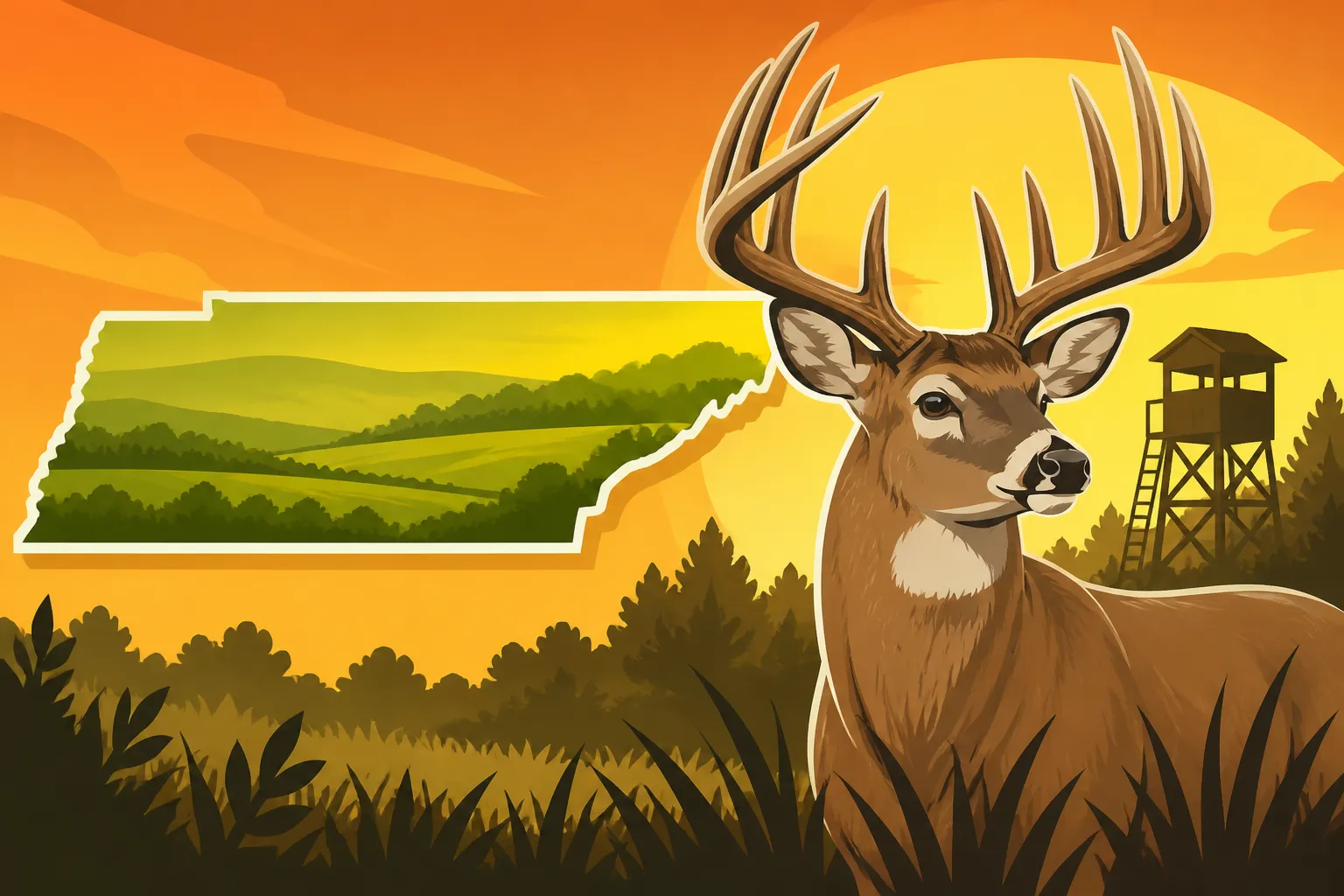
Why West Tennessee Grows Big Bucks
It's a question whispered around campfires and debated in hunt shops across the state: What is it about West Tennessee that just seems to grow bigger bucks? If you've spent any time hunting the rolling hills of the Cumberland Plateau or the rugged terrain of the Cherokee National Forest, you know the frustration of seeing the photos from west of the Tennessee River – the heavy racks, the massive body weights. You're not imagining it; there are very real, compelling reasons why West Tennessee often boasts some truly impressive whitetails, and we're going to dive deep into those factors to understand this phenomenon.
The Unique Landscape and Its Impact on Deer Habitat
When you look at a map of Tennessee, the western third of the state stands out with its gentler topography, carved by major rivers and characterized by vast agricultural lands. This landscape is a far cry from the mountainous east or the more varied, broken terrain of Middle Tennessee, and it profoundly influences the quality and quantity of deer habitat available.
Fertile Soil and Abundant Food Sources
At the heart of West Tennessee's ability to grow big bucks is its incredibly fertile soil, primarily derived from the Mississippi River alluvial plain and its tributaries. This isn't just "dirt;" it's a rich, nutrient-dense foundation that supports an explosion of high-quality forage. Think about the iconic river bottoms and expansive farm fields that stretch for miles. These areas are ecological goldmines for deer. The minerals in the soil translate directly into healthier plants, which means healthier deer. Bucks, in particular, need a massive amount of protein and minerals like calcium and phosphorus to grow those impressive antlers year after year. Where the soil is rich, the forage is rich, and the deer benefit directly. This contrasts sharply with, say, the thin, acidic soils often found on the ridges of the Cumberland Plateau, which simply don't offer the same level of nutrition. Even in years where natural mast crops might be sparse in other regions, the agricultural output of West Tennessee provides a consistent, high-calorie, and nutrient-rich buffer.
These productive lands aren't just about what's growing now, either. Historically, these river bottoms and lowlands have always been incredibly productive ecosystems. Even before widespread agriculture, the natural vegetation fueled a robust deer population. Today, that natural productivity is amplified by modern farming practices, creating a sustained buffet for deer. It's not uncommon to see deer herds thriving adjacent to fields of corn, soybeans, and winter wheat, providing them with everything they need to maximize growth. This continuous access to diverse and highly nutritious food sources is a foundational element in growing deer with larger body masses and impressive antler development.
Lowland Cover and Sanctuary
Beyond the food, West Tennessee offers an unparalleled amount of thick, impenetrable cover that provides deer with crucial sanctuary. We're talking about sprawling bottomland hardwood forests, dense canebrakes, cypress swamps, and countless oxbow lakes and sloughs. These areas are often difficult for humans to navigate, offering deer excellent refuge from hunting pressure and a safe place to grow old. A mature buck needs security more than almost anything else. If he's constantly being pushed and harried, he's spending energy escaping rather than putting it into body and antler growth. The sheer density and vastness of this lowland cover mean that bucks can often find safe havens to retreat to, allowing them to escape detection and live longer. This natural refuge is a significant advantage compared to the more open, often fragmented woodlots found in some other parts of the state.
These vast, often overlooked areas of dense cover also provide thermal protection. In the scorching Tennessee summers, the shade and cooler, more humid air of a swamp bottom offer relief. In the biting cold of winter, thickets and standing timber break the wind and provide insulation. Deer can conserve energy in these areas, rather than expending it trying to regulate their body temperature. This ability to comfortably weather environmental extremes means more energy can be directed towards growth and recovery, directly influencing their overall health and antler potential. Understanding and utilizing these hidden sanctuaries is key for anyone Hunting West Tennessee Bottomland Deer effectively.
Genetics and Herd Management Factors
While habitat is undoubtedly king, the genetic makeup of the deer herd and the way it's managed also play critical roles in producing those trophy-class animals. It’s a combination of inherent potential and the conditions that allow that potential to be realized.
Strong Genetic Potential
Tennessee's deer herd, including those in the western counties, has benefited immensely from restoration efforts that began in the mid-20th century. Deer were reintroduced from various states, and over decades, natural selection has favored genetics that thrive in the specific West Tennessee environment. The deer you see today aren't just random; they are the descendants of animals that successfully adapted and reproduced in an area abundant in resources. When a deer population has access to superior nutrition over many generations, and older, genetically superior bucks are allowed to breed, the overall genetic potential of the herd improves. This means the potential for larger body sizes and impressive antler growth is built right into the local herd. It’s not just about what they eat, but also about their inherent ability to grow given the right conditions.
Consider the Tennessee Deer Herd Size and how it has rebounded. The success of these reintroduction programs, coupled with sound management, has allowed healthy populations to establish. While individual genetics are important, the overall health and vigor of the entire herd also contribute to the prevalence of bigger bucks. A diverse and robust genetic pool, constantly being honed by the environment and hunter selection, ensures that the potential for impressive antlers remains strong.
Strategic Harvest Regulations and Hunter Behavior
The Tennessee Wildlife Resources Agency (TWRA) manages deer populations across the state through a system of Deer Management Units (DMUs), and the regulations in West Tennessee often reflect a focus on herd health and quality. While there aren't necessarily statewide "antler restrictions" in the same way some states mandate, the regulations often encourage hunters to be selective, especially regarding antlerless harvest. In many West Tennessee counties, the antlerless harvest limits are quite generous, which helps manage the overall population density and ensures that more of the available food resources go to fewer, healthier deer. Fewer deer competing for the same buffet means each deer gets a bigger slice, which directly translates to better body condition and antler growth.
Moreover, hunter behavior on private lands, which are prevalent in West Tennessee, often leans towards quality over quantity. Many landowners and hunt clubs implement their own voluntary management strategies, such as passing on younger bucks, to allow them to mature. This is a critical component. A buck cannot grow a massive rack if it doesn't live long enough. The combination of TWRA regulations promoting a healthy buck-to-doe ratio and hunter discretion allowing bucks to reach older age classes (3.5, 4.5, 5.5 years old and beyond) creates the perfect storm for growing truly exceptional animals. This patient approach, often seen when Knocking on Doors in West Tennessee Farm Country, cultivates a culture of letting them grow.
Agricultural Influence and Nutrition
It's impossible to talk about West Tennessee's big bucks without highlighting the immense impact of its agricultural landscape. While natural forage is important, the vast croplands elevate deer nutrition to an entirely different level.
Cropland as a Nutritional Powerhouse
West Tennessee is a land of abundant agriculture, particularly corn and soybeans. These crops aren't just for human consumption or livestock; they are an absolute nutritional jackpot for deer. Corn provides an incredible source of carbohydrates, packing on the crucial fat reserves needed to survive harsh winters and fuel the rigorous rut. Soybeans, on the other hand, are a protein powerhouse, offering the essential building blocks for muscle development and, critically, antler growth. Bucks typically begin antler growth in late winter/early spring, and a diet rich in protein, minerals, and energy during this critical period is paramount for maximizing rack size. A buck with consistent access to a soybean field during spring and summer is essentially on a high-performance growth diet.
The sheer scale of these operations means that deer often have constant access to these highly palatable and nutrient-dense food sources. Imagine acres upon acres of standing beans or corn, providing both food and cover. This isn't just a small food plot; it's a landscape-scale food source. The impact is profound, directly contributing to the impressive body weights and heavy, dense antlers that West Tennessee is known for. It stands in stark contrast to relying solely on natural mast crops, which can fluctuate wildly year-to-year. A Hunting After a Poor Acorn Year strategy would look very different in West Tennessee than in other parts of the state.
Year-Round Food Availability
What makes the agricultural influence even more significant is the year-round availability of food. While corn and soybeans are seasonal, the agricultural cycle often ensures that something nutritious is available for deer almost constantly. After the fall harvest, residual grains remain in the fields, providing important calories into the early winter. Many farmers also plant winter wheat or other cover crops, which become attractive green forage during the colder months when other natural food sources are scarce. This consistent, high-quality food supply through all four seasons prevents the nutritional "dips" that deer in other regions might experience, especially during late winter and early spring.
This continuous nutritional plane allows bucks to recover quickly from the stresses of the rut and immediately begin funneling energy into antler regeneration for the next season. They don't have to spend weeks or months "catching up" nutritionally. Instead, they can maintain a robust health profile, which compounds over their lifespan, contributing to larger body sizes and more impressive antler development with each passing year. Learning to Set Up on a West Tennessee Field Edge requires understanding these seasonal food dynamics.
Hunting Pressure and Deer Age Structure
One of the most crucial, yet often overlooked, factors in growing big bucks is simply allowing them to get old. West Tennessee's unique land ownership patterns and hunting culture often contribute to a healthier age structure within the buck population.
Less Pressure, More Mature Bucks
Compared to the more fragmented public lands and denser hunter populations in other parts of Tennessee, West Tennessee often sees less overall hunting pressure, particularly on its vast private land holdings. Much of the land is comprised of large farms and timber tracts, often leased by hunt clubs or managed by landowners who are keen on quality deer management. This means fewer hunters per acre and less disturbance overall. When bucks aren't constantly being pushed by hunters, ATVs, or excessive foot traffic, they can establish secure routines, travel during daylight hours more confidently, and, most importantly, live longer. A buck that is constantly pressured is a buck that is constantly on the defensive, spending energy avoiding threats rather than growing.
While areas like the Cherokee National Forest offer immense public hunting opportunities, they also concentrate hunters, leading to higher pressure on available deer. In West Tennessee, much of the hunting occurs on private ground where access is controlled. This significantly reduces the odds of a young buck being harvested prematurely, giving him the chance to survive multiple seasons and grow into a truly mature animal. This reduced pressure allows for a much healthier age structure where a greater percentage of bucks reach those older age classes of 3.5, 4.5, and even 5.5+ years old. This is a foundational element in why West Tennessee has a reputation for Best Tennessee Counties for Big Bucks.
Hunter Focus and Selective Harvest
Beyond the sheer volume of hunters, the intent of hunters in West Tennessee often plays a role. Many hunters in this region, especially those involved in managed properties, prioritize harvesting mature animals. This isn't just about "passing on young bucks" but actively focusing on specific age classes or antler characteristics. When a significant portion of the hunting community adopts this mindset, the cumulative effect on the deer herd's age structure is profound. Younger bucks, even those with promising genetics and good nutrition, are given a reprieve, allowing them another year or two (or more) to develop their full potential.
This selective harvest strategy doesn't happen overnight; it's often a cultural shift supported by years of successful management. It demonstrates a long-term vision for the deer herd rather than just focusing on immediate gratification. This approach, combined with abundant resources, allows bucks to grow not just bigger, but older. Age is the single most important factor in antler development; a buck simply needs time to reach his full potential, and West Tennessee's hunting culture often grants him that luxury. Utilizing mapping tools like GoHunt can help hunters identify areas of less pressure and track deer movements over private tracts, allowing for more strategic and selective hunting. The Tennessee Deer Season Structure Explained also plays into these dynamics, influencing hunter choices throughout the long season.
Water Resources and Thermal Cover
Water is life, and in West Tennessee, it's abundant and intricately woven into the landscape, providing critical resources and thermal refuge that further benefit the deer population.
Extensive Water Systems and River Bottoms
The lifeblood of West Tennessee is its extensive network of water systems. The mighty Mississippi River forms its western boundary, but it's the numerous tributaries, rivers like the Obion, Forked Deer, Hatchie, and Wolf, along with countless creeks, sloughs, and oxbow lakes, that truly shape the deer habitat. These water bodies are not just drinking sources; they create the fertile floodplains and bottomlands that support the rich agricultural fields and dense forests we've already discussed. The moist soil along these waterways fuels lush vegetation, providing additional forage and cover. Deer, especially during the hot summer months and the intense rut, need constant access to water to stay hydrated and healthy.
These river bottoms also serve as natural travel corridors, funnels, and escape routes for deer. Bucks will often use the cover along a creek or river to travel safely between bedding areas and food sources. The broken terrain, with its sloughs and wet areas, can also deter human encroachment, creating de facto sanctuaries where deer can move with less disturbance. This intricate relationship between water, terrain, and vegetation creates an ecosystem perfectly tuned for supporting a healthy, thriving deer population. It also affects how diseases like How CWD Spread East From West Tennessee might be managed, as water sources can be hotspots for congregation.
Thermal Protection and Secluded Bedding Areas
Beyond providing sustenance, the wet, lowland areas of West Tennessee offer essential thermal protection and secluded bedding areas. The dense canebrakes, cypress swamps, and thick hardwood bottoms provide shade and cooler temperatures during the brutal summer heat, allowing deer to conserve energy that would otherwise be spent thermoregulating. This is especially vital for bucks growing antlers, as excessive heat stress can impact growth. Conversely, in the winter, these dense thickets and bottomland timber provide a break from cold winds and snow, offering insulation and a place to bed down out of the elements.
These areas are often too wet or difficult for hunters to access, creating pockets of true seclusion. A mature buck understands the value of these hard-to-reach bedding areas and will often use them to escape pressure and rest undisturbed. This combination of thermal regulation and safety contributes significantly to a buck's overall health and longevity. It's not just about having food; it's about having all the environmental conditions aligned to allow a buck to live a low-stress, well-nourished life, which directly leads to bigger bodies and bigger racks. Understanding these nuanced habitat features is crucial for successful Tennessee hunting. Using advanced mapping tools like GoHunt, hunters can pinpoint these secluded bedding areas by analyzing terrain, cover, and water sources, even before stepping foot in the woods.
Comparative Look at Tennessee Deer Regions
To truly appreciate why West Tennessee bucks stand out, it's helpful to compare and contrast its characteristics with other major deer hunting regions within the state. Each area has its unique challenges and advantages.
| Feature | West Tennessee Deer Region | Middle Tennessee Deer Region | East Tennessee Deer Region |
|---|---|---|---|
| Topography | Flat to gently rolling, extensive river bottoms, agricultural plains. | Rolling hills, fragmented forests, mixed agriculture and suburban growth. | Steep mountains, rugged ridges, deep hollows, dense forests. |
| Soil Fertility | Very High (Mississippi Alluvial Plain, river bottoms) | Moderate to High (varied, some fertile river valleys) | Low to Moderate (thin, acidic mountain soils) |
| Primary Food | Abundant agriculture (corn, soybeans), lush natural browse. | Mix of agriculture, mast crops (acorns, persimmons), planted food plots. | Mast crops (oaks, hickory), natural browse, limited agriculture. |
| Cover | Vast, dense bottomland hardwoods, swamps, canebrakes, large timber tracts. | Fragmented woodlots, fencerows, suburban cover, some river bottoms. | Expansive timber (hardwoods, pines), rhododendron thickets, steep terrain. |
| Hunting Pressure | Often lower on large private tracts, higher in public WMAs. | Moderate to high, influenced by suburban expansion and WMA access. | High, especially on easily accessible public lands (Cherokee National Forest). |
| Buck Age Structure | Tendency towards older age classes due to nutrition & lower pressure. | Mixed, with more young bucks harvested due to pressure and accessibility. | Skewed younger due to high pressure and difficult terrain for older bucks to avoid. |
| Average Antler Size | Generally larger body size and heavier antler mass. | Moderate body and antler size, good potential in specific areas. | Often smaller body size, lighter antlers, but still good potential in secluded pockets. |
| Notable Counties | Lauderdale, Dyer, Tipton, Haywood, Fayette, Madison, Crockett | Giles, Maury, Williamson, Hickman, Humphreys, Wayne, Lincoln | Polk, Monroe, Bradley, Cocke, Greene, Carter, Johnson |
This table clearly illustrates the advantages West Tennessee holds in terms of habitat quality and the resulting impact on its deer herd. While a trophy can certainly come from any part of the state, the odds are simply more stacked in favor of hunters in the west. This is why Tennessee Deer Population Estimate and harvest data often show impressive numbers coming from these fertile western counties.
Disclaimer
Always remember that hunting regulations, seasons, and licensing requirements can change. It is your responsibility to consult the most current Tennessee Wildlife Resources Agency (TWRA) regulations before engaging in any hunting activities. This article is for informational purposes only and should not be considered legal advice or a substitute for official TWRA documentation.