Middle Tennessee Versus West Tennessee Deer
For many of us who love chasing whitetails across Tennessee, it's easy to get comfortable with our local hunting grounds. But have you ever wondered how different the deer hunting experience truly is just a few hours away? The truth is, deer populations, their habits, and even the landscape itself can vary dramatically between Middle Tennessee's rolling hills and West Tennessee's sprawling river bottoms. This guide is all about diving deep into those differences, helping you understand what to expect and how to adapt your strategies, whether you're considering a new adventure or just curious about our state's diverse deer herds.
Understanding Tennessee's Diverse Deer Habitats
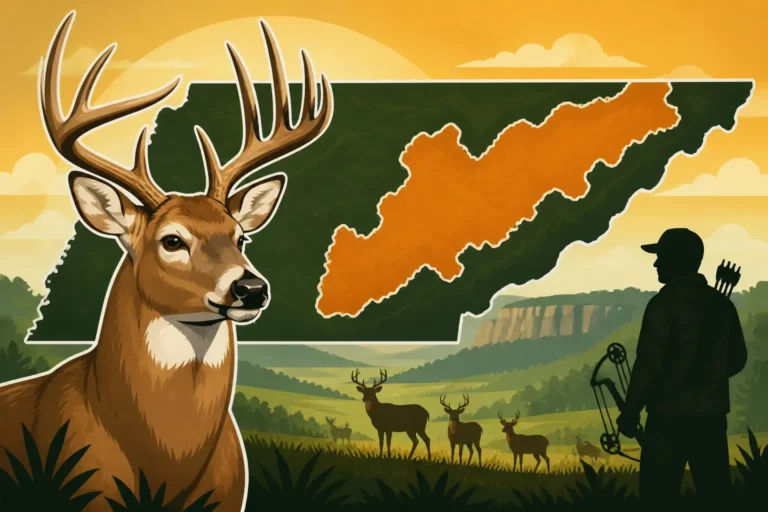
Tennessee is a state of incredible topographical diversity, and these variations play a huge role in shaping our deer herds. From the towering Appalachian Mountains in the east to the mighty Mississippi River in the west, each region offers a unique environment for whitetails, influencing everything from their diet and movement patterns to their overall health and antler potential. It's not just about what a map tells you; it's about the subtle nuances that make a ridge in the Cumberland Plateau feel completely different from a river levee in Obion County.
Geographic and Ecological Distinctions
Let's break down the fundamental geographical differences that carve out Middle and West Tennessee's distinct deer habitats. Middle Tennessee is characterized by its Highland Rim and the Central Basin. The Highland Rim is, as the name suggests, a higher elevation, often featuring mixed hardwood forests, cedar glades, and a good mix of agricultural fields interspersed with timber. It's a land of gradual elevation changes, plenty of creeks, and a patchwork of cover. The Central Basin, on the other hand, is a lower, more fertile area surrounded by the Rim, known for its rich soils, extensive farmlands, and more fragmented timber blocks. Here, you'll find more open spaces, bigger crop fields, and smaller, isolated woodlots that deer often use for bedding and security.
West Tennessee, by contrast, is predominantly part of the Mississippi Alluvial Plain, a much flatter landscape carved by ancient river systems. This region is famous for its vast expanses of agricultural land—think endless corn, soybean, and cotton fields—interspersed with significant tracts of bottomland hardwood forests, particularly along the Mississippi River and its tributaries like the Hatchie, Obion, and Forked Deer Rivers. These bottomlands are prone to flooding, creating unique habitats with distinct tree species like cypress and tupelo. The elevation changes are minimal, and water features, including sloughs, oxbow lakes, and drainage ditches, are prevalent. This distinct hydrology and soil composition create a very different ecosystem for deer compared to Middle Tennessee.
Impact on Deer Behavior and Movement
These geographical differences profoundly impact how deer live and move. In Middle Tennessee, deer often adapt to a more varied landscape. On the Highland Rim, they might traverse longer distances between bedding areas in thick woods and feeding grounds in adjacent fields, often using creek bottoms and gentle ridges as travel corridors. In the Central Basin, with its smaller, more isolated patches of timber, deer often become more nocturnal, moving under the cover of darkness to access widely scattered food sources in large agricultural fields, only retreating to thickets or cedar brakes during the day. Their home ranges might be smaller in areas with adequate cover, but their movements can be more concentrated. For a hunter, this means understanding how deer navigate fragmented cover, often using small hedgerows or ditches that might not even show up on a topographical map.
West Tennessee deer, especially those living in or near the extensive bottomland hardwoods, face entirely different environmental pressures. Flooding dictates much of their movement, pushing them to higher ground, even if it's just a slight rise. They are experts at navigating water, and trails often follow natural levees or the edges of sloughs. Their primary food sources shift seasonally from hard mast (acorns from oaks like Nuttall and Water Oak) in the bottomlands to abundant agricultural crops. This leads to distinct patterns: feeding heavily in fields at night, then retreating to the dense cover of bottomland timber or thick CRP (Conservation Reserve Program) fields during the day. The relatively flat terrain means they often rely on dense cover rather than elevation for security, making thickets and swamps their sanctuary. Understanding these patterns is critical for Hunting West Tennessee Bottomland Deer.
West Tennessee Deer: The Allure of the Delta
West Tennessee holds a special place in the hearts of many deer hunters, particularly those seeking the potential for truly massive whitetails. The combination of nutrient-rich soils, vast agricultural lands, and dense, unpressured bottomland cover creates an ideal environment for deer to thrive and grow old. It's a region where the deer often seem a bit bigger, the antlers a bit wider, and the challenge of finding them in their preferred habitat is truly unique.
Bottomland Hardwoods and River Systems
The defining feature of West Tennessee's deer habitat is its extensive bottomland hardwood forests, particularly along the Mississippi River and its major tributaries. These areas, often subject to seasonal flooding, are characterized by species like various oaks (Nuttall, Willow, Water), sweetgum, cypress, and tupelo. During the fall and winter, these bottomlands become crucial food sources, especially when oak species drop their acorns. Deer will concentrate heavily in areas with abundant mast, sometimes walking significant distances from adjacent agricultural fields to gorge on this natural protein and fat source.
The numerous river systems—the Mississippi, Hatchie, Obion, and Forked Deer—create natural funnels and travel corridors for deer. Hunters often find success by focusing on slight elevation changes, natural levees, and creek drainages that act as high ground during floods or easy travel routes when conditions are dry. These areas are often thick with tangled undergrowth, briars, and cane, providing excellent bedding cover. Deer use these thickets as sanctuaries, making them incredibly difficult to hunt without disturbing the animals. Public land areas like the Reelfoot Lake WMA or the Hatchie National Wildlife Refuge offer a glimpse into these prime bottomland environments, though access can be challenging.
Agricultural Impact and Food Sources
It’s impossible to talk about West Tennessee deer without highlighting the immense impact of agriculture. Miles upon miles of corn, soybeans, and cotton fields provide an almost endless buffet for deer, especially from late summer through the early hunting season. This consistent, high-energy food source is a major driver of antler growth and overall herd health. Deer will routinely move from dense timber or CRP fields to feed in these crops under the cover of darkness.
As the season progresses and crops are harvested, the remaining waste grain in cut fields continues to draw deer. Hunters often position themselves on field edges or internal pinch points to intercept deer moving between their bedding areas and these reliable food sources. This dependence on agriculture means that scouting crop cycles and understanding local farming practices is paramount for success. A well-placed stand overlooking a cut bean field or a standing cornfield can be deadly, but it requires diligent scouting to catch the deer's patterns. For instance, understanding Entry Routes Through Standing Beans can make all the difference.
Deer Characteristics and Trophy Potential
West Tennessee is renowned for its potential to produce trophy-class whitetails. The combination of excellent genetics, abundant nutrition from both natural mast and agricultural crops, and the opportunity for bucks to reach older age classes in dense, often inaccessible cover, contributes to this reputation. Bucks in this region often exhibit heavier body weights and impressive antler development. It's not uncommon to hear tales of bucks grossing well over 150 inches from areas like Lauderdale or Dyer counties.
However, hunting these mature bucks is rarely easy. They are often highly nocturnal, incredibly wary, and adept at using the thick cover and water features to their advantage. Trophy potential exists, but it demands patience, strategic scouting, and often, an intimate knowledge of the specific property being hunted. Many hunters employ trail cameras heavily to pattern these reclusive giants. The effort is often rewarded with a truly magnificent animal, embodying the rugged spirit of the West Tennessee wilderness.
Middle Tennessee Deer: Rolling Hills and Mixed Landscapes
Middle Tennessee, while perhaps not as famous for its "giant buck factory" reputation as some parts of West Tennessee, offers a fantastic and diverse hunting experience. Here, deer have adapted to a landscape that blends significant timber tracts with suburban sprawl, fertile agricultural valleys with rugged cedar glades. It's a hunting environment that demands adaptability, keen observation, and often, a more nuanced approach to understanding deer movement in varied terrain and under consistent human pressure.
Highland Rim and Central Basin Dynamics
The deer hunting in Middle Tennessee is heavily influenced by its two dominant geographical features: the Highland Rim and the Central Basin. The Highland Rim, forming a horseshoe around the lower Central Basin, offers extensive mixed hardwood forests, especially on its western and eastern flanks. Here, deer thrive on acorns, browse, and natural forages. Hunters often find success by navigating these rolling hills, focusing on ridge-top saddles, creek bottoms, and areas with diverse mast crops. Public lands like Cheatham WMA or portions of the Cumberland Plateau WMAs provide classic examples of this habitat, where deer rely on forest cover for security and food. Hunting Cumberland Plateau Ridgelines can be a rewarding challenge in these areas.
The Central Basin, being lower and more agriculturally developed, presents a different scenario. While much of it is open farmland, pockets of timber, cedar thickets, and riparian corridors along creeks and rivers provide critical habitat. Deer in the Basin often utilize these smaller, more fragmented cover types for bedding, venturing out into large crop fields at night. The challenge here is finding those hidden travel routes and sanctuary areas within an otherwise open landscape. This region also has a higher concentration of suburban areas, leading to more deer adapting to living closer to human development, often becoming extremely adept at avoiding detection.
Suburban Edges and Forest Fragments
One of the unique aspects of deer hunting in many Middle Tennessee counties, particularly those surrounding major population centers like Nashville, is the prevalence of suburban edges and fragmented forestland. This isn't just about deer "out in the sticks"; it's about deer living right on the fringes of towns, even within city limits where archery hunting is often permitted. These deer are often accustomed to human presence, but they are also incredibly sensitive to hunting pressure. They learn quickly and adapt to avoid confrontation, becoming ghost-like in their movements.
Hunting in these areas requires a totally different mindset. It's often about identifying small, overlooked woodlots, creek bottoms, or brushy parcels that provide just enough cover for deer to feel secure. Property sizes tend to be smaller, and permission from landowners is often key. Deer here might use residential backyards, golf courses, or small community parks as part of their larger home range, moving between these safer zones and hunting pressure points. The challenge is in understanding these localized patterns and making clean, quick kills in relatively confined spaces.
Deer Adaptations and Hunting Pressure
Middle Tennessee deer are, by necessity, incredibly adaptable. They face consistent hunting pressure, especially on public lands and easily accessible private tracts. This pressure, combined with varied habitat, shapes their behavior. Bucks quickly become nocturnal during the gun season, retreating to the thickest, most difficult-to-access cover during daylight hours. They are highly attuned to human scent, sound, and sight.
For hunters, this means a greater emphasis on low-impact scouting, scent control, and strategic stand placement. Knowing Where Cumberland Plateau Bucks Bed might involve navigating dense laurel thickets or steep ravines that most hunters avoid. Successful hunters in Middle Tennessee often employ tactics like still-hunting, particularly in the vastness of the Highland Rim, or carefully planned deer drives on smaller parcels. Understanding prevailing winds and thermals in rolling terrain is critical, as is adapting to changing food sources, from acorns in the timber to winter wheat in fields, depending on the season.
Hunting Strategies: Tailoring Your Approach
Given the distinct differences in habitat and deer behavior between West and Middle Tennessee, it's no surprise that successful hunting strategies often need to be tailored to the region. What works like a charm in a West Tennessee bottomland might spook every deer in a Middle Tennessee cedar thicket, and vice-versa. Adapting your tactics isn't just smart; it's essential for consistent success.
West Tennessee Tactics: Stand Placement and Food Plotting
In West Tennessee, especially within the vast agricultural landscape and river bottoms, strategy often revolves around food sources and natural travel corridors. During the early archery season, when temperatures are still warm, deer are often highly concentrated around standing crops like corn and soybeans. Setting up on a field edge, or even better, finding internal pinch points or small woodlots within a large field, can be incredibly effective. Consider using a ground blind brushed into a corner of a field for ultimate concealment, especially with wary mature bucks.
As crops are harvested and the season progresses into late fall, deer shift their focus to waste grain in cut fields and, crucially, to the hard mast in the bottomland hardwoods. This is when understanding the river systems and flood plain ecology becomes vital. Focus on natural funnels created by sloughs, old creek beds, or slight rises in elevation that act as travel routes. Identifying concentrations of preferred oak species and setting up along trails leading to them can be a game-changer. Given the often dense cover, using a climbing stand or hang-on stand on a key travel corridor between bedding and feeding is a common and effective tactic. For mapping these intricate movements, resources like GoHunt's mapping features can be invaluable for identifying subtle elevation changes or historical deer movements.
Middle Tennessee Tactics: Scouting and Pressure Management
Hunting deer in Middle Tennessee, particularly in the rolling hills and fragmented cover, demands a greater emphasis on diligent scouting and meticulous pressure management. Deer in these areas often experience consistent hunting pressure, making them highly sensitive to intrusion. For hunters tackling the Highland Rim, understanding how deer use contours, saddles, and drainages on a ridge system is paramount. Setting up on a saddle that connects two bedding areas, or a creek bottom that serves as a highway, can put you in the action. Look for natural funnels and pinch points created by terrain or changes in timber type. For more information, check out Hanging a Stand on a Cumberland Ridge.
In the Central Basin, where cover is more fragmented and suburban edges are common, scouting for small, overlooked parcels of timber or thickets is crucial. Deer might be bedding in a thick cedar grove or a brushy fencerow that's barely visible on an aerial map. Your scouting should identify these micro-habitats and the subtle travel routes deer use to move between them and adjacent food sources. Minimizing your intrusion is key; one over-hunted stand can sour an entire area. Using observation stands to watch deer patterns from a distance before committing to a closer setup can save you from blowing out a prime spot. When using a resource like GoHunt, pay close attention to property lines and potential access points, especially around more populated areas.
Population Dynamics and Management Challenges
Tennessee's deer herd is a remarkable success story, but it's not without its regional variations and ongoing management challenges. Understanding the population dynamics, the role of antlerless harvest, and the ever-present concern of Chronic Wasting Disease (CWD) is crucial for any responsible hunter, no matter which part of the state they hunt.
Deer Density and Herd Health
Generally, West Tennessee, particularly its westernmost counties along the Mississippi River, boasts some of the highest deer densities in the state. The abundant food sources from agriculture and the rich bottomland soils contribute to a robust, healthy herd that often exhibits higher body weights and better antler development. This isn't to say Middle Tennessee doesn't have healthy deer, but the densities can vary more widely depending on habitat quality and agricultural intensity. Areas within the Central Basin with significant crop production can hold high numbers, while more forested or highly pressured regions of the Highland Rim might see more moderate densities.
The Tennessee Wildlife Resources Agency (TWRA) closely monitors these regional differences through harvest data and surveys. Overall, the state's deer population is managed to maintain healthy numbers while balancing ecological needs and human interests. Factors like available forage, predation, and disease all play a role in herd health. Hunters can contribute by understanding their local herd and adhering to bag limits. If you're looking for more information on state-wide numbers, you might want to look into Tennessee Deer Population Estimate.
CWD Considerations and Management Zones
Chronic Wasting Disease (CWD) is an ongoing concern for Tennessee's deer herd, and its distribution currently impacts West Tennessee much more significantly than Middle Tennessee. CWD was first detected in Hardeman County in West Tennessee in 2018 and has since spread to several surrounding counties, establishing a CWD Management Zone. This zone includes areas in West Tennessee like Fayette, Madison, and Lauderdale counties, requiring specific regulations for hunters. These regulations often include mandatory CWD testing in certain zones, carcass transport restrictions (e.g., deboning before leaving the CWD zone), and additional antlerless harvest opportunities through programs like "Earn-a-Buck" to help manage the disease's spread.
While CWD is primarily a West Tennessee issue at present, it's crucial for all Tennessee hunters to stay informed. TWRA is vigilant in its monitoring efforts across the entire state, and regulations can change. For Middle Tennessee hunters, while direct CWD regulations might not apply, understanding the disease and practicing good biosecurity (e.g., properly disposing of carcass waste) is still important. Always check the latest TWRA regulations before you head afield, especially if you're traveling between different regions or within the CWD zone. The latest information on Tennessee's Chronic Wasting Disease Management Zone is always a good read.
Antlerless Harvest and Management Goals
Antlerless harvest plays a critical role in managing deer populations in both regions, albeit with slightly different applications. In West Tennessee, particularly in the high-density agricultural areas, generous antlerless bag limits are often in place to help control the population, reduce crop damage, and maintain a healthy buck-to-doe ratio. Hunters in DMUs (Deer Management Units) like DMU 1, which covers much of West Tennessee, often have opportunities for multiple antlerless deer per day during various seasons. This high antlerless harvest helps prevent overpopulation and can contribute to better nutrition for the remaining deer, potentially leading to larger body sizes and antler growth in bucks.
In Middle Tennessee, antlerless limits also vary by DMU, but they are often more conservative in some of the more forested or suburban-edge areas where deer densities might be lower or localized pressure is higher. For example, in DMU 4, which covers much of the Highland Rim, antlerless limits might be slightly lower than in the fertile crop country of West Tennessee. The goals remain the same: balance the herd with the habitat, manage crop damage, and ensure a healthy population. Hunters should always consult the TWRA hunting guide for the specific DMU they are hunting in to understand the antlerless limits and ensure compliance. Understanding How Many Antlerless Deer DMU One Allows versus other DMUs can make a big difference in your harvest strategy.
Choosing Your Tennessee Deer Hunting Adventure
Deciding where to hunt in Tennessee often comes down to personal preference, the type of experience you're seeking, and the resources you have available. Both Middle and West Tennessee offer incredible deer hunting opportunities, but they cater to slightly different styles and expectations.
Weighing Pros and Cons of Each Region
West Tennessee Deer Hunting:
- Pros: High deer densities, exceptional trophy potential (larger body size, bigger antlers), abundant food sources (agriculture and mast), unique bottomland hunting experience, less topographical challenge.
- Cons: Higher CWD prevalence and associated regulations, often thick and difficult-to-navigate cover, potential for widespread seasonal flooding, can be highly nocturnal.
- Best For: Hunters seeking trophy bucks, those with access to private agricultural lands or large bottomland tracts, hunters who enjoy scouting expansive areas.
Middle Tennessee Deer Hunting:
- Pros: Diverse habitats (rolling hills, mixed forests, cedar glades), challenging but rewarding terrain hunting, opportunities near suburban areas (archery), generally lower CWD risk, good public land access (Cherokee National Forest, WMAs).
- Cons: Can have higher overall hunting pressure, deer may be more wary/nocturnal due to pressure, generally lower trophy potential compared to prime West TN, more fragmented habitat in some areas.
- Best For: Hunters who enjoy working varied terrain, those looking for a consistent hunting experience closer to major population centers, hunters prioritizing an experience over just antler size.
Ultimately, the "best" region is subjective. If you're after a Boone and Crockett buck and have access to prime private land, West Tennessee might call to you. If you enjoy the challenge of diverse terrain, public land adventure, and a more classic woods-hunting experience, Middle Tennessee offers plenty.
Public Versus Private Land Access
Access is a critical factor in both regions.
In West Tennessee, much of the prime deer hunting is on private agricultural land. Gaining permission from landowners can be challenging but is often the key to consistent success, especially given the deer's reliance on private crop fields. Public land options exist along the major river systems and at WMAs like those near Reelfoot Lake or Hatchie National Wildlife Refuge, but these areas can be incredibly thick, hard to access, and experience significant hunting pressure. For those who enjoy the challenge of public land, these areas offer a unique, rugged hunting experience.
In Middle Tennessee, there's a wider array of public land options, including portions of the Cherokee National Forest, numerous TWRA Wildlife Management Areas (WMAs) like Cheatham WMA, and state forests. These areas provide excellent opportunities for hunters willing to put in the scouting and effort to find less-pressured pockets. Private land access can also be found, particularly in the more rural areas of the Highland Rim. However, near major cities, private land can be smaller, more fragmented, and harder to secure permission for. Using mapping apps like GoHunt can be incredibly helpful for identifying public land boundaries, assessing topography, and even locating potential private land for knocking on doors. Don't forget to check out Scouting Tennessee Public Land Before Season for some great tips.
| Feature | West Tennessee Deer Hunting | Middle Tennessee Deer Hunting |
|---|---|---|
| Dominant Habitat | Bottomland hardwoods, vast agricultural fields (corn, soy, cotton) | Rolling mixed hardwood forests, cedar glades, fragmented fields |
| Terrain | Primarily flat, river systems, sloughs | Rolling hills, ridges, valleys, Central Basin plains |
| Deer Density | Generally high, especially in agricultural river bottoms | Moderate to high, varies greatly by specific area |
| Trophy Potential | High (larger body weights, impressive antlers) | Good (solid bucks, but often not as large as West TN giants) |
| Primary Food Sources | Agricultural crops, abundant hard mast from bottomland oaks | Hard mast from mixed oaks, browse, agricultural crops |
| Hunting Pressure | Varies; high on public land, can be lower on well-managed private | Generally consistent, higher near population centers |
| CWD Status | Significant CWD Management Zone, mandatory testing in some areas | Currently lower risk, ongoing monitoring |
| Key Tactics | Field edge setups, funneling deer along water features, mast hunting | Ridge running, scouting contours, pressure management, small woodlots |
| Public Land | Limited but rugged bottomland WMAs | Numerous WMAs, state forests, parts of Cherokee NF |
No matter which region you choose, Tennessee offers fantastic deer hunting. The key is to understand the landscape, adapt your tactics, and always prioritize ethical hunting practices and respect for the resource. Good luck out there!
Disclaimer
Always consult the current Tennessee Wildlife Resources Agency (TWRA) hunting regulations before planning any hunting trip, as seasons, bag limits, and specific rules can change annually. The information provided here is for general guidance and educational purposes only and does not supersede official TWRA guidelines.