Hunting Smoky Mountain Foothill Deer
The Smoky Mountain foothills offer some of the most challenging yet rewarding deer hunting in Tennessee, often presenting a unique blend of steep, unforgiving terrain and pockets of dense cover that make finding and approaching whitetails a true test of skill. If you've ever felt overwhelmed by the sheer vastness and ruggedness, or frustrated by deer that seem to vanish into thin air, you're not alone. This comprehensive guide will equip you with the knowledge and strategies to decode the complex landscape and successfully hunt deer in these majestic, yet demanding, environments.
Understanding the Foothill Environment and Deer Behavior
Hunting the Smoky Mountain foothills isn't like hunting the flat agricultural fields of West Tennessee or even the rolling timber of the Highland Rim. Here, the mountains begin their dramatic rise, creating a distinct environment that shapes deer behavior in profound ways. To be successful, you first need to understand the unique characteristics of this terrain and how deer adapt to it.
The Lay of the Land: Topography and Cover
When you step into the foothills bordering the Great Smoky Mountains National Park – think areas in counties like Blount, Sevier, Cocke, or Monroe – you’re immediately struck by the dramatic elevation changes. You'll encounter steep ridges that drop into deep, dark hollows, sometimes with sheer rock faces or dense rhododendron thickets so thick you can barely crawl through them. The timber is often a mix of hardwoods, with oak and hickory providing mast in good years, interspersed with pine plantations that offer dense thermal and escape cover. Deer are masters of navigating this vertical world. They'll often bed on benches or subtle plateaus along the sides of ridges, seeking areas where they can see, hear, and smell approaching threats from multiple directions. Travel corridors frequently involve saddles connecting ridges or the bottoms of hollows where terrain is less severe. Escape cover is paramount, and those nearly impenetrable rhododendron or mountain laurel thickets are their sanctuary when pressure is on.
The challenge for hunters is obvious: this rugged topography makes travel difficult, silent movement even harder, and visibility often limited. Deer can slip away unseen with astonishing ease. Understanding how they use these features – bedding on lee sides of ridges out of the wind, staging in thickets before moving to feeding areas, or using creek bottoms as travel corridors – is the first step in formulating an effective hunting plan.
Food Sources in the Foothills
Deer, like all wildlife, go where the food is, but identifying reliable food sources in the foothills can be tricky. Natural mast, primarily acorns from various oak species, is a significant draw, but it can be spotty. One ridge might be loaded with white oak acorns, while the next is completely bare, depending on elevation, soil, and microclimates. Hickory nuts are another favorite when available. During years of poor mast production, deer become even more reliant on browse. This includes the tender shoots of woody plants like rhododendron, mountain laurel, greenbriar, and various forbs that grow in clearings. These often overlooked plants become critical sustenance.
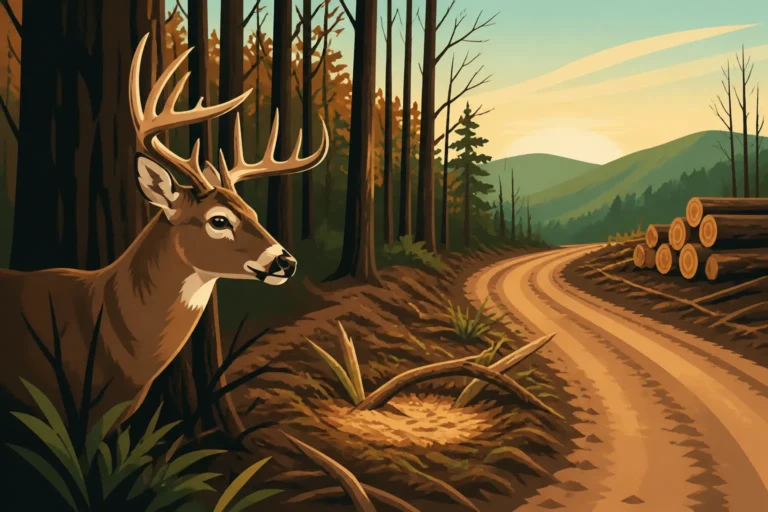
Beyond natural forage, look for edges created by old logging roads, small, scattered clear-cuts, or natural openings where sunlight penetrates to encourage new, succulent growth. The fringes of the foothills, where public land often meets private properties, can be honeycombs of activity. Here, deer will often commute from the safety of the steep, thick public land to agricultural fields on private parcels, feasting on corn, soybeans, or hay. This transition zone where food becomes more abundant is a key area to focus your efforts, but remember to always secure proper permission for private land access.
Deer Movement and Pressure
Deer in the Smoky Mountain foothills, especially those on public lands, are often some of the most pressured and nocturnal deer you'll encounter in Tennessee. They are incredibly savvy, learning quickly to avoid human activity. Opening weekend of gun season, in particular, can send them deep into the thickest, steepest cover imaginable, where they might remain for days. Their movements become highly concentrated in areas where they feel secure, often moving mainly under the cover of darkness.
You’ll typically find that deer here utilize dense cover for bedding, only venturing out to feed during low-light hours or when hunting pressure temporarily subsides. Understanding their escape routes is just as important as knowing their feeding habits. When jumped, they'll usually run uphill into the thickest tangles, using their superior agility on steep ground to their advantage. To consistently find success, you need to think like these pressured deer: where do they feel safe, where are their unpressured travel routes, and what is the path of least resistance for them to get to a preferred food source without being detected?
Scouting Strategies for Foothill Deer
Given the difficulty of the terrain and the wariness of the deer, thorough scouting isn't just an advantage in the foothills – it's an absolute necessity. You can't just walk in on opening day and expect to stumble onto deer. You need to put in the time and effort to understand the subtle nuances of the land and where the deer are moving.
E-Scouting and Topo Maps
Your scouting journey for foothill deer should always begin long before you set foot in the woods, with a good e-scouting session. Digital mapping tools like onX Hunt or GoHunt are invaluable for this type of terrain. Start by analyzing topographical maps, paying close attention to contour lines. Look for subtle terrain features that might not be obvious on the ground: saddles that connect two ridges, flat benches along a steep hillside where deer might bed, creek bottoms that act as natural travel corridors, or finger ridges that extend from a main ridge. These are all potential pinch points or funnels that deer are likely to use.
Use the satellite imagery to identify different habitat types. Can you spot old logging roads that provide easier access for you and potential travel routes for deer? Are there clear-cuts or areas of dense pine regeneration that could offer thick cover? Mark potential bedding areas (often on lee sides of ridges with good visibility) and likely feeding areas (mast trees, clearings, or agricultural fields on adjacent private land). The beauty of a tool like GoHunt is its ability to help you overlay different map layers and pinpoint these crucial spots from the comfort of your home, saving you countless hours of needless walking once you're on the ground. This virtual reconnaissance allows you to enter the woods with a well-researched plan, rather than just wandering aimlessly.
Boots-on-the-Ground Scouting
While e-scouting is a powerful starting point, nothing replaces boots-on-the-ground scouting, especially in the rugged, varied terrain of the Smoky Mountain foothills. This is where you verify your e-scouting theories and discover the details only visible in person. Look for physical deer sign: fresh rubs on trees, indicating a buck has passed through, and active scrapes, especially along logging roads or ridge lines. Pay close attention to tracks and droppings; fresh sign means deer are currently using that area. A high concentration of droppings can tell you a lot about a bedding or feeding area.
Focus on locating natural funnels, pinch points where deer are forced into a narrow corridor, and transition areas between different habitat types. For example, where a dense rhododendron thicket meets an open oak flat, or where a steep hillside transitions to a gentler slope. These are prime locations for ambushing a moving deer. Don't be afraid to crawl into those thickets; you might discover hidden trails or bedding areas deer use for security. Post-season and late summer are ideal times for this kind of rigorous scouting, as there's less foliage to obscure sign, and you won't be disturbing deer during the hunting season itself. If you're really committed, you can even check out the insights in Scouting Tennessee Public Land Before Season for more tips.
Trail Cameras in the Foothills
Deploying trail cameras in the foothills comes with its own set of challenges, from maintaining battery life in cold weather to the unfortunate risk of theft in accessible areas. However, with the right strategy, they can be incredibly effective in patternizing deer movement. Rather than scattering cameras randomly, focus on strategic placement. Put them on established travel corridors between suspected bedding and feeding areas, especially in saddles, creek bottoms, or along the edges of thick cover. Mineral sites can also be effective, where legal, as they draw deer in.
For hard-to-reach or high-risk areas, consider using cellular trail cameras. While more expensive, they allow you to monitor deer activity remotely, without having to disturb the area by checking cards. This can be a game-changer for pressured deer that are quick to detect human intrusion. Make sure to place cameras high and out of sight, pointed down trails, to both deter theft and get a better angle on deer. Remember that in some of the densest cover, deer might be so close to the camera that wide-angle shots are beneficial.
Hunting Tactics and Setups
Once you’ve put in the hard work of scouting, it’s time to choose your hunting method. The ruggedness and the nature of the deer in the Smoky Mountain foothills demand specific tactics and well-thought-out setups to increase your chances of success.
Stand Placement and Access
Choosing the right stand location in the foothills is critical, but often challenging due to the sparse distribution of suitable trees or the sheer steepness of the terrain. If you opt for a treestand, focus on areas along well-used deer trails in saddles, benches, or along creek bottoms that act as natural funnels. Ensure the tree offers good cover to break up your silhouette. For detailed advice, you might want to review Treestand Setups in Cherokee National Forest, as many principles apply directly to the foothills. Sometimes, a traditional hang-on stand with climbing sticks is the only viable option when suitable climbing trees are scarce.
In many parts of the foothills, the cover is so thick, or the terrain so steep, that a ground blind becomes a more practical choice. A well-brushed-in ground blind, placed carefully along a natural pinch point or near a food source, can be incredibly effective. For tips on this, check out Using a Ground Blind on Tennessee Public Land. Regardless of your choice, your access route is paramount. You need a silent, concealed path to your stand that minimizes disturbance to the deer. Utilize the terrain—creek beds, the backsides of ridges, or thickets—to hide your approach. Always consider the unpredictable wind and thermals in steep country; they can swirl and change directions frequently, making scent control even more vital.
Still-Hunting and Drives
For hunters who prefer to be more active, still-hunting is an incredibly effective tactic in the thick cover of the foothills. This involves moving slowly, taking only a few steps at a time, then pausing for several minutes to scan for movement or listen for the subtle sounds of deer. Use your binoculars constantly to pick apart dense rhododendron or look for horizontal lines (a deer's back) in a vertical world. This methodical approach allows you to cover ground, but at a pace where you're not bumping deer before you see them. It's an art form, and for more insights, consider reading Still-Hunting Cumberland Plateau Ridges—the techniques translate well.
When deer are particularly pressured or holed up in specific thickets, small, well-planned drives can be successful. This usually involves two to three hunters: one or two "drivers" who slowly push through a defined block of cover, and one or two "posters" positioned to intercept deer as they try to escape. Safety is paramount, especially in rugged terrain, so clear communication and understanding each person's position and shooting lanes are absolutely essential. This tactic works best on smaller, manageable sections of public land or private parcels where you have a good understanding of deer movement. For more on coordinating small groups, consult Deer Drives With Three or Four Hunters.
Rut Hunting in the Foothills
Hunting the rut in the Smoky Mountain foothills can be a tough nut to crack. Unlike areas with higher deer densities and more open terrain, finding a hot rut sign can be challenging due to the scattered nature of the deer and the sheer amount of cover. However, when you do find it, the action can be intense. Focus your efforts on transition areas, especially saddles and benches that connect doe bedding areas with potential feeding locations. Bucks will be actively cruising these areas in search of estrous does.
Calling tactics, such as rattling and grunting, can work, but often a more subtle approach is better here. A few soft grunts or light rattling sequences might be enough to pique a buck's curiosity without alerting him to your exact location. Keep an eye out for fresh scrape lines and rub lines, which become much more active as bucks increase their scent marking during the rut. Patience is key during this period; stay on stand longer, especially during the middle of the day when bucks are most active. Understanding Hunting the Rut in Early November and Rattling and Grunting in Tennessee can provide a good foundation for applying these tactics effectively in the foothills.
Essential Gear and Safety
The rugged nature of the Smoky Mountain foothills demands specific gear choices, not just for comfort and success, but for your safety. Being prepared for the challenges of this environment can make or break your hunt.
Footwear and Clothing
Your feet will take a beating in the foothills, so investing in durable, waterproof boots with excellent ankle support is non-negotiable. Look for boots designed for mountaineering or serious hiking, as they offer the grip and stability needed for steep, rocky, and often slick terrain. Brands like Crispi, Kenetrek, or even a robust Danner boot can make a huge difference in preventing fatigue and injuries.
Layering your clothing is crucial due to the fluctuating temperatures in the mountains. Mornings can be biting cold, while midday can warm up significantly, especially when climbing steep grades. Start with a moisture-wicking base layer, add insulating layers (fleece or synthetic puffies), and top it with a waterproof and windproof outer shell. This allows you to adjust to changing conditions. Remember Tennessee's blaze orange requirements for safety on public land during gun seasons; typically, 500 square inches on your head and outer torso are required. For more ideas on how to dress for unpredictable weather, check out Clothing for a Tennessee Late Season.
Navigation and Recovery Gear
Getting lost in the vast, confusing terrain of the foothills is a real possibility, especially in thick fog or after dark. A reliable GPS device or a robust phone app like GoHunt, with downloaded offline maps, is an absolute must. Always carry a compass and a physical map as a backup. A powerful headlamp with extra batteries is essential for navigating to and from your stand in the dark.
In addition to navigation, consider what you'll need for game recovery. A first-aid kit is crucial for any hunting trip, but especially in remote, rugged areas where help might be hours away. An emergency whistle, fire starter, and some basic survival gear are always wise additions to your pack. If you're fortunate enough to harvest a deer, retrieving it from a steep hollow can be a monumental task. Game bags are excellent for protecting the meat, and a quality frame pack can allow you to bone out a deer and pack it out in pieces, which is often far more practical than dragging an entire animal. For specific insights into dealing with difficult recoveries, consider reading Recovering a Deer From a Steep Hollow.
| Hunting Method | Best for Foothills? | Key Advantages | Key Disadvantages |
|---|---|---|---|
| Still-Hunting | Excellent | Adaptable to terrain, covers ground, stealthy | Requires extreme patience, highly skilled |
| Treestand (Hang-on/Climber) | Good (selective) | Elevated view, scent advantage, static ambush | Limited suitable trees, difficult access/setup, thermals can swirl |
| Ground Blind | Excellent | Great cover, comfortable, can be placed anywhere | Limited visibility, deer can spot unnatural object |
| Small Deer Drive | Good (with caution) | Pushes pressured deer, can cover small thickets | Requires multiple hunters, safety concerns, deer can escape large drives |
| Ambush (near food/water) | Good | High success if location is active | Deer move mostly at night to exposed food |
Weapon Choice
Your choice of weapon should be well-suited to the conditions of the foothills. For archery hunters, a vertical bow or crossbow is an excellent choice, as shots are often relatively short in the dense cover, typically within 20-40 yards. Ensure your broadheads are sharp and durable enough for potential shoulder shots. Dive deeper into this topic with Bowhunting Tennessee's Long Archery Season.
Muzzleloader season offers a fantastic opportunity to hunt during a prime time in the fall, and a reliable muzzleloader is a solid choice. Keeping your powder dry in the often damp, humid air of the foothills is paramount. Learn more about optimal use in Muzzleloader Deer Hunting in Tennessee. For rifle hunters, a caliber appropriate for deer (like a .270, .308, or 6.5 Creedmoor) is ideal. While some shots might be longer across hollows or ridgelines, many shots will still be relatively close in the thick timber, so knowing your rifle's capabilities at various ranges is crucial. For a deeper look at different calibers and their effectiveness, check out Rifle Setups for Tennessee Deer Hunting.
Disclaimer
Please note that hunting regulations, season dates, and license requirements are subject to change. Always consult the latest Tennessee Wildlife Resources Agency (TWRA) regulations before planning any hunting trip. This guide is for informational purposes only and does not supersede official TWRA guidelines.