Hunting Bear Zone Two Near the Smokies
Hunting bear in Tennessee, especially in the rugged, breathtaking country near the Great Smoky Mountains, presents a challenge unlike any other. The terrain is unforgiving, the woods are thick, and the bears are notoriously intelligent. If you're looking to embark on a bear hunt in Tennessee's Bear Zone Two, you're signing up for an experience that will test your patience, woodsman skills, and endurance. This comprehensive guide will walk you through everything you need to know to pursue a black bear successfully in this unique and demanding region.
Understanding Tennessee's Bear Zone Two
Navigating the nuances of Tennessee's bear hunting regulations can feel like deciphering an ancient map, but understanding Bear Zone Two is your first critical step. This zone is distinct from the others, primarily due to its proximity to the federally protected Great Smoky Mountains National Park, which acts as a massive reservoir for the state's healthy black bear population. This unique geographical feature heavily influences bear behavior and hunting opportunities within the zone.
Geographic Boundaries and Key Counties
Bear Zone Two, often referred to as the Smoky Mountains Zone, encompasses a significant swath of East Tennessee's mountainous and foothill counties. Think of the counties directly bordering the Great Smoky Mountains National Park as the heart of this zone, and then expanding outwards. These include, but aren't limited to, Blount, Sevier, Cocke, Monroe, and Polk counties, along with portions of McMinn, Loudon, Jefferson, and Greene. These areas are characterized by steep, heavily forested slopes, deep hollows, and abundant natural food sources, making them prime bear habitat.
A significant portion of this zone overlaps with the Cherokee National Forest, offering vast tracts of public land for hunters. However, it's crucial to remember that hunting within the actual National Park is strictly prohibited. Bears routinely move in and out of the park boundaries, a fact that both sustains the huntable population and influences bear distribution. Understanding these geographical specifics, down to the county lines and public land management units, is absolutely vital. Using mapping tools, like the ones available on GoHunt, can be incredibly beneficial for pinpointing public access points and understanding the lay of the land before you even set foot in the woods. Always double-check county boundaries against the official Tennessee Wildlife Resources Agency (TWRA) maps, as zone lines can be intricate and specific.
Season Dates and Regulations
The season dates and regulations for Bear Zone Two are often tailored to manage the local bear population effectively, considering the area's high bear density and tourism impacts. Generally, Zone Two features still-hunting seasons, meaning the use of dogs to pursue bears is either prohibited or severely restricted, contrasting sharply with some other zones like Bear Zone One in Northeast Tennessee. This emphasis on still-hunting places a premium on stealth, patience, and meticulous scouting.
The season often opens in the early fall, sometimes overlapping with deer archery seasons, and can extend into late fall or early winter, depending on the year and harvest objectives. It's not uncommon for there to be specific archery-only periods, followed by a muzzleloader and/or general firearms season. These seasons are designed to allow hunters to target bears during periods of peak mast production when bears are actively foraging and more predictable in their movements. You absolutely must consult the current TWRA Hunting and Trapping Guide each year, as dates, specific weapons restrictions, and other regulations can and do change. Missing a crucial detail could result in a citation or, worse, losing your hunting privileges. For more general information on Tennessee's Three Bear Hunting Zones, you can explore our detailed overview.
Harvest Limits and Checking Procedures
In Bear Zone Two, the bag limit is typically one bear per hunter per year. This limit is critical for managing the population sustainably, ensuring a healthy future for Tennessee's black bears. Once you've successfully harvested a bear, the work isn't over—it's just beginning. Tennessee has mandatory bear checking requirements, a process that provides vital data to the TWRA for population management and health monitoring.
Within 24 hours of harvest, or before the carcass is transported out of state, your bear must be reported to the TWRA. This can usually be done online through the Go Outdoors Tennessee platform or by phone. Additionally, hunters are often required to physically take the bear's head to a designated TWRA check station or regional office. At the check station, wildlife biologists will collect biological samples (like a tooth for aging and tissue for DNA analysis) and verify the sex of the bear. This data is invaluable for understanding Tennessee Bear Harvest Trends and the overall health of Tennessee's Black Bear Population. Make sure you understand the exact requirements for your specific season and location, as details can vary. Carrying a small cooler for the head, especially if hunting in warmer early-season conditions, is a wise move to preserve samples.
| Zone Designation | Primary Hunting Method | Typical Season Dates | Bag Limit | Key Counties (Partial List) |
|---|---|---|---|---|
| Zone Two (Smoky Mtn.) | Still Hunting (Archery, Muzzleloader, Gun) | Early Fall – Late Fall/Early Winter | 1 Bear/Hunter/Year | Blount, Sevier, Cocke, Monroe, Polk |
| Zone One (Northeast) | Still Hunting & Dog Hunting | Early Fall – Late Fall/Early Winter | 1 Bear/Hunter/Year | Johnson, Carter, Sullivan, Unicoi |
| Zone Three (South Cherokee) | Still Hunting & Dog Hunting | Early Fall – Late Fall/Early Winter | 1 Bear/Hunter/Year | Parts of Monroe, Polk, McMinn |
Note: Always consult the official TWRA Hunting and Trapping Guide for the most current and precise regulations, as seasons, methods, and boundaries are subject to change annually.
Prime Bear Habitat and Scouting Strategies in Zone Two
Bears are creatures of habit, driven by their stomachs. To consistently find bears in Zone Two, you need to understand their habitat preferences and, more importantly, their food sources. The mountainous terrain near the Smokies provides diverse ecosystems, meaning prime bear habitat can shift based on the time of year and available forage. Effective scouting is about identifying these key areas and understanding how bears utilize them.
Identifying Mast Crops and Food Sources
The diet of a black bear in the Smoky Mountains region is heavily dependent on the abundance of mast crops. Hard mast, primarily acorns from various oak species (red oak, white oak, chestnut oak) and hickory nuts, is the ultimate draw in the fall. Bears will gorge themselves on these calorie-rich foods, packing on fat for the winter. Learning to identify different oak species and scouting for active acorn drops is paramount. Look for areas where the ground is disturbed, leaves are turned over, or fresh scat containing acorn fragments is present. These are sure signs of bears actively feeding.
Beyond hard mast, don't overlook soft mast. Wild berries like blackberries and blueberries, wild grapes, persimmons, and even certain fungi can be crucial food sources, especially in late summer and early fall before the hard mast fully ripens. Creek bottoms and south-facing slopes often have different mast species ripening at various times. A poor acorn crop in one area might push bears to find alternative food sources, making them move more widely. Therefore, your scouting shouldn't be a one-time event; it should be a continuous process of observation and adaptation. Consider how a bear's diet changes throughout the year, and focus your efforts on areas offering the most abundant food.
Locating Bear Sign and Travel Corridors
Finding the actual bear is the goal, but finding their sign is how you get there. Bear sign can be incredibly varied and subtle. Fresh tracks in muddy creek bottoms, along logging roads, or in soft ground are obvious indicators. Look for the distinct five-toed paw print, often showing prominent claw marks. Scat is another key piece of evidence; its content will often tell you what the bear has been eating, confirming active feeding areas. Claw marks on trees, especially larger hardwoods or pine trees, can indicate a bear has been climbing for nuts, rubbing to mark territory, or even just stretching. Torn-up logs, overturned rocks, and disturbed ground can all signal a bear has been foraging for grubs and insects.
Once you find sign, your next task is to identify travel corridors. Bears, like deer, tend to use the path of least resistance. Look for worn trails, especially through dense rhododendron thickets or along benches and saddles on ridgelines. These natural funnels often connect bedding areas (thick, dense cover on steep slopes) with feeding grounds in lower elevations or on more gradual terrain. Understanding Wind and Thermals on a Ridge System is also critical here, as bears will use these to their advantage, often traveling with the wind in their face to detect danger. Don't be afraid to put in the miles; the deeper you go, the less human pressure you'll encounter.
Utilizing Technology for Scouting
In today's hunting world, technology is an invaluable asset for scouting, especially in complex mountainous terrain. Tools like onX Hunt or GoHunt (the official TWRA Go Outdoors app also has mapping features) can be a game-changer. These apps allow you to overlay private and public land boundaries, view topographic maps with contour lines, identify potential funnels, benches, and steep bedding areas from the comfort of your home. You can mark potential food sources, previous bear sightings, or promising travel corridors digitally.
While these tools are fantastic for planning, they are not a substitute for boots-on-the-ground scouting. The real value comes from combining aerial and topographic intelligence with physical reconnaissance. Use the app to identify areas that look promising, then hike into those locations to verify mast production, look for fresh sign, and confirm travel routes. You can even drop pins on active bear sign to build a pattern over time. Remember to download maps for offline use, as cell service can be spotty, or non-existent, deep in the Cherokee National Forest. For more advanced techniques, consider Reading Aerial Photos for Cumberland Plateau Deer, many of which apply directly to finding bear habitat in similar mountainous regions.
Still Hunting and Stalking Tactics in the Smoky Foothills
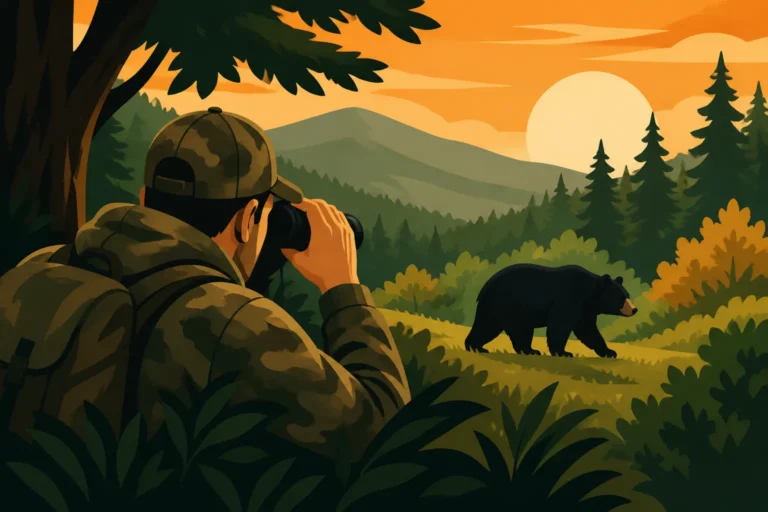
Bear hunting in Zone Two is largely a still-hunting game, which demands a completely different skillset than hunting with hounds. It's an intimate, solitary pursuit that requires extreme stealth, patience, and a keen understanding of bear behavior and the mountain environment.
Slow and Deliberate Movement
Still hunting is an art form, especially in the noisy, leaf-covered floors of the Smoky Mountain foothills. The key is to move incredibly slowly—we're talking five steps, then stop and observe for five minutes. Seriously. Bears have phenomenal hearing, often better than deer, and any hurried movement or rustle of leaves will give you away instantly. Use your eyes more than your feet. Pick apart every shadow, every downed log, every patch of rhododendron. A black bear can disappear in front of your eyes if you blink.
Pay meticulous attention to the wind. Always try to hunt into the wind, or with a slight crosswind, to keep your scent from reaching a bear. Thermals also play a huge role in the mountains; in the morning, air typically flows downhill, and in the evening, it rises. Plan your approach and exit routes with these air currents in mind. Dress in quiet clothing (wool or fleece is excellent) that won't rustle against branches. Soft-soled boots will help you feel the ground and avoid stepping on noisy sticks. It's a grueling, mentally demanding way to hunt, but incredibly rewarding when you finally spot that shadowy form moving through the timber. This type of hunting closely relates to Spot-and-Stalk Tactics for Cherokee Forest Bears.
Reading the Terrain and Setting Ambushes
Bears are creatures of habit and efficiency. They will use the easiest travel routes between food, water, and bedding areas. Your job is to predict these routes and set yourself up in an ambush. Look for natural funnels: saddles between ridgelines, benches or flat spots on steep slopes, draws, and creek bottoms that connect different elevations. These are prime locations for bears to travel, especially during early morning and late evening when they are most active.
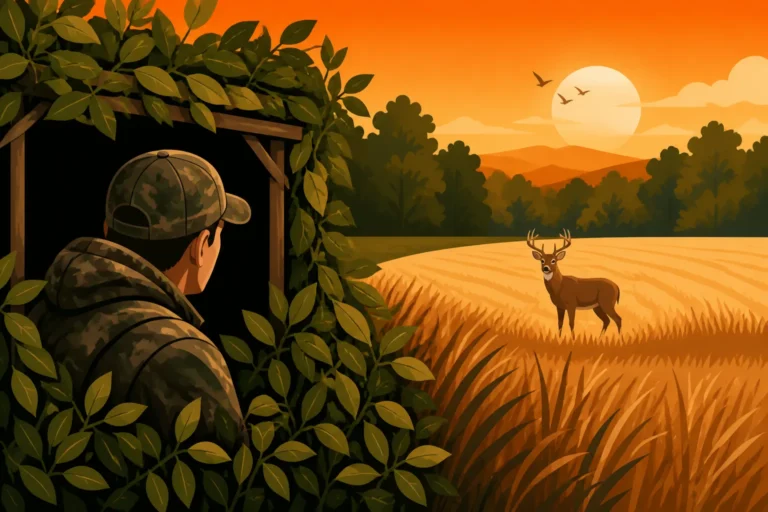
Once you identify a potential travel corridor or an active feeding area (like a cluster of mast-producing oak trees), you need to choose your ambush point carefully. This could be a natural ground blind created by blowdowns or dense undergrowth, or a treestand if the regulations allow and the terrain permits. Position yourself downwind, with good visibility, and a clear shooting lane. Be prepared for long sits, especially if you're hunting an active food source. Bears often move slowly and deliberately, feeding as they go, so you need to be ready for an encounter that might last minutes, not just seconds. Pay close attention to subtle shifts in the wind or thermals, as a change can quickly compromise your position.
Effective Hunting Strategies Without Hounds
Given that Bear Zone Two typically emphasizes still-hunting, understanding bear behavior and applying smart strategies without the aid of dogs is paramount. It's all about becoming a ghost in the woods, anticipating your quarry's moves.
Understanding Bear Behavior and Rut
While the primary bear rut occurs in late spring and early summer, influencing bear movement significantly then, hunters in the fall are dealing with a different set of behavioral drivers. In the fall, bears are in hyperphagia, meaning they are intensely focused on eating to build up fat reserves for hibernation. This makes food sources the absolute most critical factor in their movement. They will follow mast crops wherever they are most abundant.
Bears are also incredibly intelligent and wary animals. They learn quickly from pressure. If an area has been heavily hunted, bears will become more nocturnal, or they'll retreat to the densest, most inaccessible cover during daylight hours. They rely on their senses of smell and hearing more than sight. This means your scent control must be meticulous, and your movements utterly silent. Pay attention to weather patterns; bears often become more active immediately before or after a cold front, especially if it brings rain that quiets the woods. A light drizzle can be your best friend, masking the sound of your footsteps and helping to keep your scent grounded. Remember, How Many Black Bears Tennessee Has and Where Cherokee Forest Bears Range means these animals are abundant but also highly adapted to their challenging environment.
Stand Hunting and Ambush Points
For hunters committed to long sits, stand hunting can be a highly effective strategy in Zone Two. Whether you choose a portable treestand or a carefully brushed-in ground blind, the principle remains the same: get into a prime location well before daylight and remain absolutely still and silent until well after dark. Identifying these prime locations is the hard part. Focus on:
- Active Mast Stands: As discussed, find those oak or hickory groves with fresh sign. Bears will revisit these daily until the mast is depleted.
- Travel Corridors: Ridgeline saddles, benches connecting different elevations, or choke points where dense cover funnels bears into a predictable path.
- Water Sources: While bears don't necessarily drink at predictable times like deer, a secluded spring or seep in a remote hollow can be an attraction, especially during dry periods.
When setting up your stand, consider your approach and exit routes. Can you get in and out undetected? Are there natural landmarks to guide you in the dark? Scent control is paramount. Use scent-eliminating sprays, wash your hunting clothes in scent-free detergent, and store them properly. Always play the wind, even in a stand. A consistent breeze in your face is ideal. For those hunting in the rugged terrain of the Cherokee National Forest, investing in good quality Packs for a Cherokee Forest Day Hunt is essential, allowing you to carry your stand, safety gear, and essentials comfortably.
Essential Gear and Safety for Smoky Mountain Bear Hunts
Hunting bears in the rugged terrain of Zone Two is not for the ill-prepared. The mountains demand reliable gear and a serious approach to safety. Unlike a casual deer hunt, a bear hunt requires attention to detail on every piece of equipment, from your firearm to your navigation tools.
Recommended Firearms and Ammunition
When hunting black bears, you want a firearm that delivers significant energy and penetration. A bear's vitals are well-protected by dense muscle and bone, so a cartridge with a heavy, controlled-expansion bullet is critical. Common and effective rifle calibers include the .30-06 Springfield, .308 Winchester, .270 Winchester, 6.5 Creedmoor (with appropriate bullet choice), and larger calibers like the .300 Win Mag or .338 Win Mag if you prefer more power. For muzzleloaders, a .50 caliber or larger, shooting a heavy conical bullet or sabot, is recommended.
Shot placement is king. Aim for the bear's shoulder to break it down and access the vitals, or behind the shoulder for a double-lung shot. Practice shooting from various field positions to ensure you're proficient when the moment of truth arrives. Ensure your rifle is zeroed correctly, considering the potential for close-range timber shots or longer shots across open ridges. For more specific advice on Rifle Calibers for Tennessee Bear, delve into our dedicated guide. Carry enough ammunition for potential follow-up shots, but prioritize precise first-shot placement above all else.
Navigation, Communication, and Emergency Preparedness
Getting lost in the vastness of the Smoky Mountains or Cherokee National Forest is a real and dangerous possibility. Never rely solely on your phone. Always carry a dedicated GPS unit (like a Garmin InReach or a simple handheld GPS) with extra batteries, a physical map of the area, and a compass. Learn how to use them together. Even with mapping apps like GoHunt or onX Hunt, having offline maps downloaded is crucial, as cell service will vanish in many deep hollows.
Communication is also vital. A two-way radio can be essential if you're hunting with a partner (stay within earshot for safety). Always inform someone back home of your exact hunting location and your expected return time. Carry a first-aid kit, whistle, fire starter, headlamp with extra batteries, and enough water and high-energy snacks for an extra day. The weather can change rapidly in the mountains, so be prepared for rain, cold, or even unexpected snow. A bear encounter can be exhilarating, but getting out safely, especially with a downed bear, is the ultimate goal.
Clothing, Boots, and Meat Care
Layering is key for hunting in Tennessee's mountains. Start with moisture-wicking base layers, add insulating mid-layers (fleece or wool), and finish with a waterproof, breathable outer shell. The temperatures can swing wildly from chilly mornings to warm afternoons, and a system of layers allows you to adapt. Ensure your outer layer is quiet for still hunting. Don't forget your blaze orange; check TWRA regulations for specific requirements, as they vary depending on the season and weapon used. For a thorough understanding, see our guide on Tennessee Blaze Orange Requirements.
Your boots are perhaps your most critical piece of gear. You need comfortable, waterproof, ankle-supporting boots with excellent traction for navigating steep, uneven terrain, slippery leaves, and potentially muddy creek crossings. Broken-in hiking boots are often preferred over heavy, stiff rubber boots for the sheer amount of walking involved.
Finally, consider meat care. Black bear meat is delicious, but it needs to be handled properly, especially if hunting in early fall when temperatures can still be warm. Carry game bags, a sharp field dressing knife, and potentially a bone saw or heavy-duty folding knife. If you harvest a bear, you'll need to field dress it quickly to begin the cooling process. Plan for how you will extract the animal from potentially steep, remote terrain. A deer cart can be useful on gentler slopes or logging roads, but in true backcountry, a frame pack and the gutless method for deboning might be your only option. Ensure you have large coolers and ice ready for transport.
Navigating Public Access and Hunter Pressure
The allure of Bear Zone Two often lies in its extensive public lands, but with that comes the reality of hunter pressure. Successfully hunting these areas requires a strategy to find pockets of unpressured habitat where bears can feel secure during daylight hours.
Understanding WMA and National Forest Rules
Much of Bear Zone Two falls within the boundaries of the Cherokee National Forest (CNF), offering hundreds of thousands of acres of public hunting ground. Within the CNF, you'll also find various Wildlife Management Areas (WMAs) like Tellico WMA, Foothills WMA, and others that are managed by the TWRA. These WMAs often have specific regulations that supersede general statewide or national forest rules. For example, some WMAs might have different season dates, weapons restrictions, or even require a special WMA permit in addition to your regular hunting license.
Always consult the TWRA's WMA-specific regulations for the area you plan to hunt. Maps provided by the TWRA or the Forest Service will delineate WMA boundaries within the national forest. While the vastness of the Cherokee National Forest offers incredible opportunities, Camping Rules on Cherokee National Forest Land and Treestand Rules on Tennessee Public Land are also important to be aware of. Respecting these rules not only keeps you legal but also ensures the sustainability and access for all hunters.
Dealing with Hunting Pressure
Public land hunting, especially during popular seasons, inevitably brings hunter pressure. Bears are highly sensitive to human disturbance and will quickly alter their patterns to avoid it. To find less-pressured areas, you need to think like a bear:
- Go Deeper: Most hunters don't venture far from roads or established trails. If you're willing to put in the miles and tackle steep terrain, you dramatically increase your chances of finding undisturbed bears. Use your mapping apps to identify drainages or ridge systems that are a mile or more from the nearest access point.
- Hunt Mid-Week: Weekends see the highest hunter numbers. If your schedule allows, hunting on a Tuesday or Wednesday can feel like you have the woods to yourself.
- Utilize Topography: Identify the steepest, most rugged sections of the map. These areas are naturally harder to access and often hold older, wiser bears that have learned to avoid human contact. Features like deep ravines, cliff faces, or dense, impenetrable thickets can serve as daytime sanctuaries.
- Target Overlooked Areas: Sometimes, an area that seems too close to civilization or too small is overlooked. A small, steep woodlot adjacent to a housing development or a powerline cut might hold a bear that has adapted to living close to humans but rarely encounters hunters who are willing to put in the effort.
By combining thorough scouting, meticulous planning, and the willingness to go where others won't, you can significantly increase your odds of success when hunting Bear Zone Two near the Smokies.
Disclaimer
Please remember that hunting regulations, season dates, and specific rules for Wildlife Management Areas and National Forests can change annually. It is your responsibility as a hunter to consult the most current Tennessee Wildlife Resources Agency (TWRA) Hunting and Trapping Guide and any relevant National Forest Service or WMA specific regulations before heading afield. This guide is for informational purposes only and should not replace official sources. Always prioritize safety and ethical hunting practices.