Climbing Sticks for Tennessee Hardwoods
Oh, the quintessential struggle of the modern Tennessee deer hunter! We've all been there, standing at the base of a promising oak, knowing a buck is likely to cruise past just out of sight, if only we could get a bit higher. The dense, sprawling hardwoods of our beloved Volunteer State, from the rolling hills of the Highland Rim to the steep ridges of the Cumberland Plateau, present a unique challenge when it comes to getting elevated and staying hidden. This guide is all about mastering the art of the climbing stick, your ticket to silent, efficient vertical access, and how to pick the perfect set for hunting those tricky Tennessee whitetails.
Why Climbing Sticks are Essential for Tennessee Hardwoods
Tennessee's diverse topography, particularly our expansive hardwood forests, demands a flexible and adaptable approach to elevated hunting. Forget those cumbersome, noisy ladder stands that scream "hunter here!" from a mile away. Climbing sticks offer a stealthier, more versatile solution that can truly transform your hunting strategy.
The Challenge of Eastern Hunting Terrain
Let's be real, hunting in Tennessee isn't like walking through an open prairie. Our woods are often thick, tangled, and full of character, which is a nice way of saying "lots of obstacles." You've got dense canopies that demand you get above the deer's line of sight, often necessitating a climb of 20 feet or more. The terrain itself can be unforgiving; think about the steep, rocky slopes you encounter when Hunting Cumberland Plateau Ridgelines, or the thick, vine-choked bottomlands in West Tennessee. In these environments, carrying a bulky ladder stand or trying to use screw-in steps on every tree you might want to hunt just isn't practical, and on public land, screw-in steps are often prohibited entirely.
Many of us have dragged heavy, two-piece ladder stands through briar patches, only to find the perfect tree is just slightly out of reach, or too crooked for a safe setup. It’s frustrating, and it wastes precious hunting time and energy. The sheer density of our timber often means visibility is limited to a few dozen yards at best. Getting that extra bit of elevation can extend your shooting lanes significantly, allowing you to spot deer well before they scent you or see your outline. Without a portable, quick-to-deploy climbing system, you're often left to hunt from the ground, which, while effective in some scenarios, drastically reduces your visibility and scent control advantages in many Tennessee settings.
Mobility and Stealth Advantages
This is where climbing sticks truly shine. Imagine being able to walk into a new area you've scouted, find fresh sign, and within minutes, be silently ascending a tree to set your stand. That's the mobility advantage of climbing sticks. They are designed to be lightweight and compact, easily strapping to your backpack, allowing you to venture deep into public lands like the Cherokee National Forest Hunting or various WMAs where vehicular access is restricted. You're no longer limited to spots accessible by ATV or short walks from a road. This ability to get to untouched areas is a game-changer.
Furthermore, the design of most climbing sticks inherently prioritizes stealth. Unlike the clanking metal of a traditional ladder stand or the creaking of old screw-in steps, modern climbing sticks, especially those with good attachment systems and anti-noise features, can be installed with minimal disturbance. This is critical for pressured deer that spook at the slightest unfamiliar sound. When you’re trying to set up for a morning hunt before daylight breaks, or making a quick move mid-day to adjust to a wind shift, the quietness of climbing sticks is invaluable. You can get higher, faster, and with less commotion, which means less alerting game to your presence and a better chance of harvesting that elusive Tennessee whitetail. It’s about being a ghost in the woods, and climbing sticks help you achieve that.
Types of Climbing Sticks and Their Suitability for Tennessee
The market is awash with different climbing stick designs, and choosing the right one for Tennessee's unique hunting environment can feel a bit overwhelming. But don't fret! We can break them down into a few main categories, each with its own set of pros and cons, making it easier to decide what's best for your personal hunting style here in the Volunteer State.
Aluminum Sticks
Aluminum climbing sticks are often the go-to choice for serious mobile hunters, and for good reason. Their biggest selling point is their lightweight nature. When you're packing your gear miles back into a WMA or tackling a strenuous hike up a steep ridge, every ounce counts. Aluminum sheds that weight significantly compared to other materials. This means less fatigue on your entry and exit, allowing you to hunt harder and longer. They are also generally designed to be quiet, often featuring rubber-coated steps or silent attachment systems to prevent metal-on-metal clanking during transport and setup. Most manufacturers, and even expert review sites like GoHunt, highlight aluminum's superior weight-to-strength ratio.
However, this premium material often comes with a higher price tag. While they are durable, they can sometimes be more prone to bending or denting if dropped on sharp rocks, especially in rocky terrain like parts of the North Cumberland Wildlife Management Area. It's a trade-off: lighter weight for a bit more delicacy in handling. For hunters who prioritize long walks into remote spots, or those who frequently move their stands throughout the season, aluminum sticks are an excellent investment. They make those deep woods treks, which are essential for finding unpressured deer, far more manageable.
Steel Sticks
Steel climbing sticks represent the rugged, dependable workhorses of the climbing stick world. Their primary advantages are durability and affordability. If you're looking for a set of sticks that can take a beating, steel is often the answer. They are incredibly robust and less likely to deform under heavy use or accidental drops. For hunters who might not be hiking miles in, or who are on a tighter budget, steel sticks offer an excellent value proposition. They provide a solid, secure feel when climbing, which can instill more confidence in hunters who are new to elevated setups or those who carry heavier gear.
The obvious downside to steel is its weight. These sticks are significantly heavier than their aluminum counterparts. Hauling a set of four or five steel sticks, plus your treestand, can quickly become an exhausting endeavor, especially if you're venturing far from your vehicle or dealing with elevation changes. This added weight can also contribute to more noise if they're not carefully secured during transport, as they are more prone to clanking. While perfectly suitable for shorter walks to a permanent public land setup or for use on private land, steel sticks may not be the best choice for highly mobile hunters looking to quickly shift locations based on current deer movement or changing conditions. They're a fantastic option for setting up a semi-permanent spot you visit frequently, but less so for the true run-and-gun approach.
Hybrid & Modular Systems
Hybrid and modular climbing stick systems are where innovation really steps in, offering a blend of features or customizable options to meet very specific hunting needs. These systems might combine different materials, such as an aluminum main tube with steel steps for added durability where it counts, or they might feature adjustable sections that allow you to adapt the stick length to different tree heights or ground conditions. Some modular designs even allow you to add or remove sections, letting you carry only what you need for a given setup.
The beauty of these systems lies in their adaptability. Do you hunt areas with extremely crooked trees where a standard stick might not sit flush? Some modular sticks offer pivoting feet or adjustable standoffs to accommodate irregular trunks. Are you looking to achieve varying heights based on the cover available? Adjustable stick lengths can be incredibly useful. These specialized designs can solve problems that standard, fixed-length sticks cannot. For example, if you're frequently Hanging a Stand on a Cumberland Ridge where tree types and ground levels vary wildly, a modular system might be your best friend. The downside can be complexity and, often, an even higher price point than standard aluminum sticks. However, for hunters who encounter a wide range of tree sizes and shapes in their hunting grounds, or who simply appreciate the ability to fine-tune their setup, these systems can provide unparalleled versatility. When you're researching options, check out resources like GoHunt, as they often feature detailed reviews and comparisons of these more specialized systems, helping you understand their nuances.
Key Features to Look for in Tennessee Climbing Sticks
Choosing the right climbing sticks isn't just about material; it's about the details that make them functional, safe, and efficient in the real-world conditions you'll face in Tennessee. From the moment you pack them to the last step onto your stand, these features play a crucial role.
Weight and Packability
For the Tennessee hunter, weight and packability are paramount, especially if you're pursuing deer on public land like the Hunting Small Private Tracts in Tennessee that often require significant walking access, or deep within expansive WMAs. A heavy, awkward set of sticks can turn a promising hunt into a grueling chore before you even reach your chosen tree. Look for sticks that are not only lightweight individually but also designed to nest together efficiently. Many popular models feature a staggered design that allows each stick to fit snugly into the next, minimizing bulk. This creates a compact bundle that can easily be strapped to the side or bottom of your Packs for a Day on Public Land.
Consider the total number of sections you'll need. Most hunters find three to four sections sufficient to reach a comfortable 15-20 foot height when combined with a hang-on stand. Fewer sections mean less to carry, but might limit your maximum height. Also, examine the strapping system on the sticks themselves. Are there integrated bungees or straps to hold the bundle together? Can they be easily attached to your pack without swinging around or creating noise as you walk? Even the most lightweight sticks become a burden if they're cumbersome to transport, rubbing against your back or getting caught on brush. Optimal packability means your sticks become an extension of your body, barely noticeable as you trek through thickets or across open fields.
Step Design and Grip
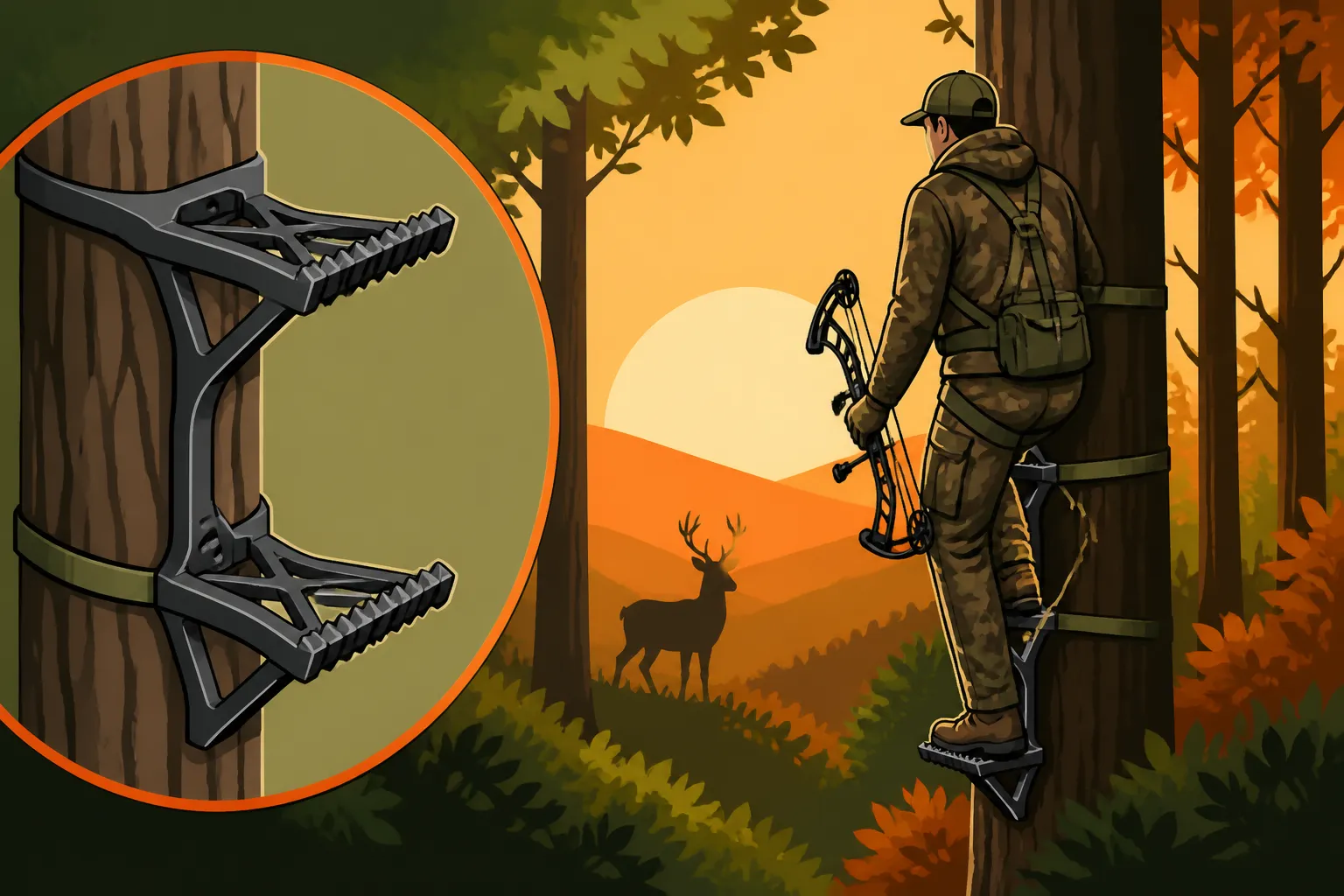
The steps on your climbing sticks are your direct connection to the tree, and their design heavily influences both comfort and safety. You'll primarily encounter single-step or double-step designs. Single-step sticks are often lighter and more compact but require more effort and balance to climb, especially if you're wearing bulky Clothing for a Tennessee Late Season or carrying additional gear. Double-step sticks, with a step on either side of the main beam, provide a more ladder-like ascent, offering greater stability and comfort, albeit with a slight increase in weight and bulk.
Beyond the number of steps, grip is critical. Tennessee weather can be unpredictable, bringing everything from frosty mornings to wet, muddy conditions. Look for steps with aggressive texturing, serrations, or even built-in traction pads. Smooth, slick steps are a recipe for disaster when your boots are wet, muddy, or icy. Some stick designs feature steps that are slightly offset from the main pole, providing more foot room and making it easier to climb around the tree trunk itself. Wider steps generally offer more comfort and stability, reducing foot fatigue during ascent and descent. Don't underestimate the importance of a good step design; it contributes immensely to both your safety and your confidence high above the forest floor.
Attachment Methods and Stability
The way your climbing sticks attach to the tree is crucial for both security and silence. The most common attachment methods involve cam buckles, ratchet straps, or rope systems. Each has its pros and cons in the Tennessee woods.
- Cam buckles are generally quick and quiet to deploy. They cinch down tightly with a pull and release easily. However, on smooth-barked trees (like some mature maples or beech, common in parts of Tennessee), they can sometimes be prone to slight slippage if not applied with significant tension, especially if the tree is wet.
- Ratchet straps offer superior holding power and virtually eliminate slippage. They can really bite into the bark and provide an incredibly secure attachment. The downside is that they can be noisy during installation and removal due to the ratcheting mechanism. Many hunters opt to use them for their treestand itself but prefer quieter methods for sticks if they're constantly moving.
- Rope systems are often the quietest and most forgiving on irregular tree shapes. They typically involve a piece of rope with a specialized knot or cleat that cinches tight around the tree. They are lightweight and virtually silent, making them ideal for stealthy setups. The learning curve for proper rope management and knot tying can be a bit steeper, but once mastered, they offer excellent performance.
Regardless of the method, ensure the sticks feature some form of "standoff" or "V-bracket" that pushes the stick away from the tree, giving you room for your feet and allowing the steps to remain level. A good attachment system prevents "kick-out" – where the bottom of the stick slides away from the tree – and keeps the stick firmly in place as you climb. It's essential that the sticks feel rock-solid once attached, instilling confidence as you ascend and descend, even in gusty winds or after a rainfall. GoHunt reviews often delve into the real-world performance of different attachment systems, highlighting how they fare against various tree species and conditions.
| Feature | Aluminum Sticks | Steel Sticks | Hybrid/Modular Sticks |
|---|---|---|---|
| Weight | Very Lightweight | Heavy | Moderate to Lightweight (depending on design) |
| Durability | Good, but can dent/bend if mishandled | Excellent, very robust | Good, often reinforced in key areas |
| Cost | Higher | Lower to Moderate | Often Highest |
| Noise Potential | Low (if designed well) | Moderate to High (prone to clanking) | Low to Moderate (design dependent) |
| Packability | Excellent (compact nesting) | Fair (bulkier, heavier) | Good (some offer adjustable/collapsible designs) |
| Ideal TN Use | Deep public land, mobile hunting, steep terrain | Shorter walks, semi-permanent setups, budget-conscious | Crooked trees, varied terrain, customizable needs |
| Stability | Very good with proper attachment | Excellent, very solid feel | Very good, often with added adjustability for uneven trees |
Installation Techniques and Safety for Tennessee Trees
Getting your climbing sticks properly and safely installed in Tennessee's diverse hardwood environment requires more than just strapping them to a trunk. It’s an art form that combines strategy, precision, and an unwavering commitment to safety.
Proper Placement and Spacing
The success of your elevated setup begins with the very first stick. When you're Hunting Where the Antlerless Limit Drops to Two or chasing a mature buck, precise placement can make all the difference. Start by assessing the tree: is it healthy? Does it offer good cover? Are there any dead limbs overhead that could fall? Once you've chosen your tree, consider your shooting lanes. You want to place your sticks so they allow you to climb quietly without brushing against branches, but also position yourself strategically so that once you're on the stand, you have clear lines of sight and shot opportunities in the directions you expect deer to approach.
Spacing your sticks correctly is crucial for both comfort and efficiency. Too far apart, and you'll struggle to climb, especially if you're carrying a pack or have limited mobility. Too close, and you'll waste precious stick length, forcing you to carry more than necessary for your desired height. A good rule of thumb is to space them approximately 18-24 inches apart, allowing for a comfortable step-up without over-extending. However, this isn't a hard and fast rule; adapt to the specific tree. On a crooked oak, you might need to adjust spacing to navigate around a bulge or a small limb. Always ensure your sticks are level once attached; climbing on tilted steps is awkward and can be dangerous. Think about the first stick as well – it needs to be high enough off the ground to prevent game from messing with it, but low enough for you to safely step onto it. Many hunters use a single extra section or a small foldable step to get that first stick perfectly positioned.
Safety First: Harnesses and Lifelines
This point cannot be stressed enough: safety is paramount. No deer, no hunt, is worth risking your life or limb. In Tennessee, like anywhere else, falls from treestands are a leading cause of hunting injuries, and they are almost entirely preventable. The moment you step off the ground, you should be connected to the tree with a full-body safety harness. This isn't just a suggestion; it's a non-negotiable requirement for responsible elevated hunting. Treestand Safety Gear for Steep Ground is something every hunter needs to invest in and use correctly, every single time.
A key piece of this safety system is a continuous lifeline. This rope or strap runs from the base of the tree up above your treestand, allowing you to stay tethered to the tree from the moment your feet leave the ground until they return. You attach your harness's tether to the lifeline before you start climbing, sliding it up as you ascend each stick, and down as you descend. This means there is never a moment when you are not attached. Before each hunt, inspect your harness, lifeline, and sticks for any signs of wear, fraying, or damage. Check buckles, straps, and stitching. It's a quick check that could save your life. Even trusted resources like GoHunt consistently emphasize the importance of these safety protocols. Don't ever take a shortcut here; your family and hunting buddies are counting on you to come home safely.
Minimizing Noise and Scent During Setup
Tennessee deer are notoriously sharp-eared and keen-nosed. A noisy setup or a careless scent trail can blow your hunt before it even begins. Minimizing noise is a primary concern with climbing sticks. Before you even head to the woods, take some time to "silence" your sticks. Apply rubber washers to any metal-on-metal contact points, wrap noisy sections with stealth tape or camouflage athletic tape, and ensure all straps are cinched tight during transport to prevent rattling. Practice setting them up in your backyard until you can do it smoothly and quietly. Slow, deliberate movements are your friend. Rushing leads to dropped sticks, clanging, and spooked game.
Scent control is equally important. Always wear clean gloves when handling your sticks and treestand. Human scent left on steps or the tree bark can linger for days, alerting deer to your presence. Consider spraying down your sticks with a scent-eliminating spray before heading out. When selecting your tree, think about your Entry Routes Through Standing Beans or other cover and how you'll approach without leaving a heavy scent trail. Avoid brushing against low-hanging branches with your clothing, which can deposit scent. The goal is to leave as little evidence of your presence as possible, making your setup as silent and scent-free as a falling leaf.
Integrating Climbing Sticks with Your Hunting Strategy
Climbing sticks are more than just a tool for getting elevated; they're a versatile component that can fundamentally change how you approach hunting in Tennessee. Embracing their benefits means thinking differently about scouting, setup, and even your in-season tactics.
Mobile Hunting Applications
The true power of climbing sticks really shines in a mobile hunting strategy, especially during critical periods like Hunting the Rut in Early November. Instead of committing to one or two fixed stand locations, climbing sticks empower you to be dynamic. Imagine spending a morning hunt over a food plot, observing that deer are consistently using a different travel corridor. With a set of sticks and a lightweight hang-on stand, you can pack up, move to that new corridor, and be set up high in a fresh tree within an hour or two. This "run-and-gun" approach allows you to react to fresh sign, changing wind conditions, or shifting deer patterns almost instantaneously.
This mobility is particularly effective on large tracts of public land, where deer behavior can change daily due to hunting pressure or shifting food sources. Instead of relying on old intel, you're constantly adapting. It's not uncommon to hear tales of seasoned hunters who carry their sticks deep into the Land Between the Lakes Hunting area, setting up where the sign is hottest, rather than sticking to predictable spots. Sticks allow you to follow the deer, rather than waiting for them to come to you. This strategy maximizes your chances of encountering that mature buck that might only pass through a specific pinch point for a brief window.
Scouting and Pre-Season Practice
Your off-season scouting efforts become even more impactful when combined with climbing sticks. Instead of just identifying potential stand trees, you can scout for multiple "stand-ready" trees in key areas – along creek bottoms, on ridge-top saddles, or at the edge of a clear-cut. Using tools like the Scouting With the Tennessee TWRA App or aerial photos can help you pinpoint these spots from home. Then, when you're in the field, you can efficiently assess several options, looking for trees that offer good cover, clear shooting lanes, and easy access for your sticks.
Practicing your stick setup in the pre-season is absolutely critical. You don't want to be fumbling with straps and making noise on opening day. Set up your sticks and stand in your backyard or a local woodlot several times. Practice in the dark, with your hunting pack on, and even with your bow or rifle safely attached. This builds muscle memory, increases your speed, and more importantly, ensures you can do it silently and safely when it counts. Familiarity with your gear reduces stress and minimizes the chances of making a mistake in the field. Think of it as preparing for a marathon – you wouldn't just show up and run without training, and the same applies to efficient and safe treestand setup.
Adapting to Different Tennessee Hunting Environments
Tennessee's diverse habitats demand adaptability, and climbing sticks deliver. Your approach will naturally differ whether you're Hunting West Tennessee River Bottoms or climbing a steep incline in the Smoky Mountain Foothill Deer zone. In the flat, dense bottomlands of West Tennessee, where cover can be incredibly thick, getting 20-25 feet up might be necessary to see over the undergrowth and gain an advantage. Here, the lightweight nature of aluminum sticks and quiet rope attachment systems are invaluable as you navigate through mud and thickets.
On the other hand, in the more open timber of some Cumberland Plateau ridges, you might not need to go quite as high, but the challenge becomes finding a straight, healthy tree on an uneven slope. Hybrid sticks with adjustable standoffs can be a lifesaver here, allowing you to level your platform on an angled trunk. In areas with high hunting pressure, like some public lands near urban centers, getting above the deer's typical browse line (the height at which deer eat foliage) can help you remain undetected, as deer often look horizontally, not straight up. Climbing sticks enable you to quickly adapt to these varying conditions, ensuring you always have the best vantage point for success. No matter where you hunt in Tennessee, from the rich farmlands to the rugged mountains, climbing sticks give you the flexibility to meet the environment on its own terms.
Disclaimer
This article is for general informational purposes only and does not constitute professional advice. Laws, prices and regulations vary by location and change over time. Consult a qualified professional for guidance on your specific situation.