Dog Training on Tennessee Public Land
You’ve got a fantastic hunting dog, full of drive and potential, but finding the right place to train them without breaking any rules can feel like navigating a maze. Tennessee offers a wealth of public lands, yet understanding the nuances of where and when you can work your canine companion can be confusing. This guide is here to untangle those complexities, helping you safely and effectively train your dog while respecting regulations and other users.
Understanding the Rules for Dog Training on Public Land
Before you even think about loading up your truck and heading out with your furry hunting partner, you absolutely must understand the rules. Tennessee's public lands, whether they're Wildlife Management Areas (WMAs), National Forests, or other state properties, aren't a free-for-all when it comes to dog training. Each type of land, and sometimes even individual units within a system, will have specific guidelines designed to manage wildlife, reduce conflicts, and ensure public safety. Ignoring these rules isn't just a risk for a citation; it can create dangerous situations for your dog, other users, and even wildlife.
State-Wide Dog Training Laws and General Principles
On a fundamental level, all dogs on public land in Tennessee are subject to general state laws regarding animal control and nuisance. While there isn't one single "dog training" statute that covers everything, the principles of responsible pet ownership apply. This means your dog should always be under your control, whether by leash, voice command, or electronic collar, to prevent them from harassing wildlife, disturbing other recreational users, or wandering onto private property. You wouldn't want someone else's dog disrupting your hunt, so extend that same courtesy.
Beyond general control, always remember that wildlife resources are managed for the benefit of all citizens. This means avoiding any training activities that could harm nesting birds, fawns, or other vulnerable wildlife, especially during sensitive breeding or rearing seasons. It's often common sense, but sometimes, the regulations codify these best practices. Always carry proof of your current hunting license and any necessary permits, as officers can and will check, even if you're "just training." Remember to look up Tennessee Hunting Licenses and What They Cost before you head out, and make sure your paperwork is in order.
WMA-Specific Dog Training Rules
Wildlife Management Areas are the backbone of public hunting in Tennessee, and they come with the most specific rules for dog training. These areas are actively managed by the Tennessee Wildlife Resources Agency (TWRA) for wildlife habitat and public recreation. Because of this intensive management, their rules are often more restrictive than general National Forest lands. Many WMAs have designated dog training areas or specific seasons when training is permitted. You might find that some WMAs allow retriever training in certain ponds year-round, while others might restrict bird dog training to specific field trial seasons.
It's not uncommon for WMAs to close entirely to dog training during deer or turkey seasons to minimize disturbance to game animals and prevent conflicts with hunters. Others might have specific "field trial permits" required even if you're just training. The best advice anyone can give you is to check the specific WMA regulations before you go. The TWRA website is your best friend here. Look up the specific WMA you plan to visit under Tennessee Wildlife Management Areas, and download or print their current rules pamphlet. What's allowed on one WMA, like Cheatham WMA, might be strictly forbidden on another, such as Catoosa WMA. This is where diligent research pays off.
National Forest Guidelines for Dog Training
Areas like the Cherokee National Forest operate under a different set of rules, largely governed by federal regulations in conjunction with state laws. Generally speaking, National Forests tend to be a bit more lenient regarding dog training outside of specific hunting seasons, but "lenient" doesn't mean "unregulated." Leash laws still apply in developed recreation areas, campgrounds, and sometimes near popular hiking trails. In more remote, undeveloped sections, dogs might be allowed off-leash if they remain under immediate voice control, but it's always wise to err on the side of caution.
During big game seasons, especially bear or deer season, you'll need to be acutely aware of other hunters. While some types of hound hunting are permitted in the Cherokee National Forest during specific seasons (like Running Hounds for Cherokee Forest Bears), general dog training that could interfere with other hunters' experiences or push game animals around indiscriminately might be frowned upon or even cited if it's causing a disturbance. Always check the specific Forest Service guidelines for the district you plan to visit, as well as the overarching state hunting regulations. Just because you're in the National Forest doesn't mean you're exempt from Tennessee's Chronic Wasting Disease Management Zone rules or blaze orange requirements during certain times of the year.
Finding Suitable Public Land for Training
Once you've got a handle on the rules, the next step is locating the perfect spot to get your dog's paws dirty (or wet!). Tennessee is blessed with varied terrain, from the sprawling bottomlands of West Tennessee to the steep ridges of the Cumberland Plateau and the majestic mountains of East Tennessee, offering diverse environments for different types of hunting dogs. Matching the terrain to your dog's discipline is key to effective training.
Identifying Prime Training Locations and Features
Think about what kind of hunting your dog is being trained for.
- Bird Dogs (Upland): For pointers and setters working on grouse, quail, or woodcock, you'll need cover that mimics their natural habitat – overgrown fields, young clear-cuts, brushy fencerows, or open timber with a good understory. Places within WMAs that have specific field trial areas or those managed for early successional habitat are ideal. Look for areas away from heavy foot traffic.
- Retrievers (Waterfowl): Labs, Chessies, and Goldens need water. Lots of it. Ponds, lakes, flooded timber, or slow-moving river sections are essential. Access to water that allows for long retrieves, marks, and blind retrieves is crucial. Some WMAs have designated retriever training ponds, which are excellent for this. Waterfowl Hunting Reelfoot Lake and Beyond offers vast opportunities, but check specific refuge rules.
- Scent Hounds (Small Game & Bear): Beagles for rabbits need thick briar patches, honeysuckle, and brushy cover. Squirrel dogs need mature hardwoods with plenty of oak, hickory, and other mast-producing trees. Larger hounds for bear need vast, rugged terrain with good scenting conditions. Public lands with extensive timber, like the Cherokee National Forest or parts of the Cumberland Plateau, are great options.
Consider the time of year too. Early morning or late evening often provides better scenting conditions and fewer conflicts with other users. Always prioritize safety for your dog, yourself, and others.
Using Mapping Tools for Scouting and Planning
In this day and age, digital mapping tools are an absolute game-changer for scouting public land for dog training. Forget trying to decipher faded paper maps. Apps like onX Hunt and GoHunt (and similar platforms) allow you to view public and private land boundaries, topographical maps, satellite imagery, and even layers showing habitat types, roads, and trails.
Here's how they help:
- Boundary Clarity: Instantly see where public land ends and private property begins. This is critical to avoid trespassing, which is a major concern when your dog might be ranging freely.
- Habitat Assessment: Use satellite imagery and vegetation layers to identify dense cover for rabbits, mature timber for squirrels, or open fields for bird dogs. You can scout potential training scenarios from your couch!
- Access Points: Find parking areas, gated roads, and trails that offer the best access to the types of cover you need.
onX Huntoften shows marked trails and forest service roads that might not be on older maps. - Topography: Understand the lay of the land, especially for scent hounds where wind direction and thermals play a role, or for retrievers needing a good vantage point over water.
- WMA Overlays: Many of these apps include WMA boundaries and can sometimes integrate specific WMA rules or zones, further streamlining your planning.
Before you go, pinpoint a few spots, identify potential hazards (steep cliffs, busy roads, deep water), and have a backup plan. Even with the best maps, scouting on foot beforehand is always a good idea to confirm ground conditions. This is essentially part of Scouting Tennessee Public Land Before Season.
Respecting Boundaries and Other Users
Training a dog on public land isn't just about finding a spot; it's about being a good steward and a courteous fellow outdoors enthusiast. Always be mindful of property lines. Your dog doesn't know the difference between public and private land, but you do. If your dog crosses onto private property, you could be in violation of trespass laws, even if you weren't trying to hunt. This is particularly true if your dog is chasing game. Always carry a leash, even if your dog is usually off-leash. There will be times you encounter other users – hikers, mountain bikers, birdwatchers – who might not appreciate an enthusiastic (or muddy!) greeting from your dog. Respect their space, recall your dog, and leash them if necessary.
| Public Land Type | General Dog Training Permissibility | Key Considerations |
|---|---|---|
| Wildlife Management Areas (WMAs) | Highly Regulated | Check specific WMA rules; designated seasons/areas. |
| National Forests (e.g., Cherokee) | More General | Leash laws in developed areas; voice control in remote. |
| State Forests / Natural Areas | Varies Widely | Strict leash rules common; some areas prohibit dogs. |
| TWRA Hatcheries/Lakes | Very Restricted | Often prohibit dogs entirely, or only on leash. |
Training Specific Hunting Dog Breeds and Disciplines
Tennessee's diverse landscape allows for training a wide array of hunting dog breeds. Each discipline has its own unique needs and challenges, and public land provides a realistic environment to hone those skills.
Bird Dogs and Upland Game
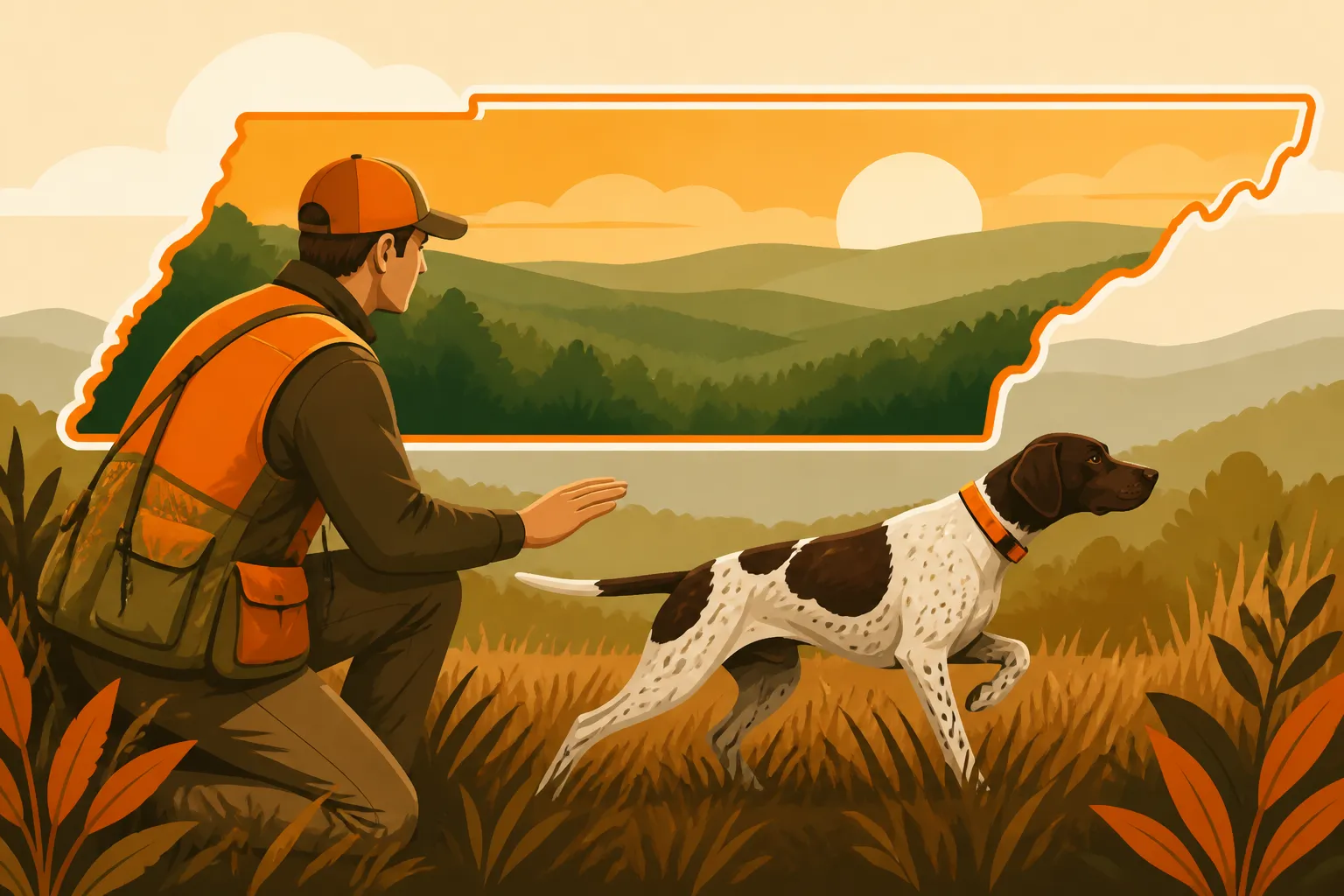
For those training pointers, setters, or flushers for grouse, quail, dove, or woodcock, Tennessee offers decent opportunities, especially for grouse on the Cumberland Plateau or woodcock during migration. When training bird dogs, you're primarily focused on developing their scenting ability, pointing instinct, flushing behavior, and steadiness to wing and shot.
Public lands with good early successional habitat, like certain sections of WMAs or timber cuts in the Cherokee National Forest, can mimic actual hunting conditions. Focus on areas with diverse cover where birds might hold. You might want to carry a few pigeons or chukars for controlled training scenarios, ensuring they are released safely and not creating any unfair advantage for hunting. Always be mindful of Grouse Hunting Cumberland Plateau Cover and other small game habitat. Ensure your dog is wearing a bell or GPS collar, especially in thick cover, so you know where they are. Practice walking a grid pattern, commanding your dog to hunt, and rewarding solid points or flushes.
Retrievers for Waterfowl
Tennessee is a major stop on the Mississippi Flyway, making retriever training for waterfowl a popular pursuit. You'll need access to water — ponds, sloughs, lakes, and rivers. Look for public access points along major rivers or WMAs known for their waterfowl populations. Hunting West Tennessee River Bottoms or Hunting Reelfoot's Flooded Cypress Timber might offer good training environments.
Training involves developing strong retrieve instincts, steady marking of falls (on land and water), and blind retrieve skills. Start with simple marks on the water, gradually increasing distance and complexity. Introduce decoys early on so your dog becomes accustomed to them. Use bumpers or dead fowl trainers initially. Always ensure your dog's safety in and around water; current, underwater hazards, and cold temperatures can be dangerous. Be especially vigilant for boat traffic or other water users who might not be expecting a dog swimming out for a retrieve.
Scent Hounds for Small Game and Bear
Tennessee has a strong tradition of hunting with scent hounds, particularly beagles for rabbit hunting and larger hounds for bear. Training these dogs on public land can be incredibly rewarding.
-
Beagles for Rabbit and Squirrels: For beagles, focus on thick cover where rabbits and squirrels hide. Brushy creek bottoms, old fencerows, and clear-cuts are excellent. Training involves encouraging them to use their nose, unravel a cold trail, and open up (bark) when they're on a hot track. When Running Beagles on Tennessee Cottontails, you'll want to find spots that have strong rabbit populations, often identified by old logging roads or fields reverting to brush. For squirrel dogs, look for areas with mature oak and hickory trees, practicing treeing and barking at squirrels. Start with easily accessible areas, and gradually move to more challenging terrain as your dog gains confidence.
-
Bear Hounds: Training bear hounds is a more specialized pursuit, usually occurring in the rugged terrain of the Cherokee National Forest and other bear zones. This involves conditioning your dogs for long chases over challenging ground, teaching them to track a bear's scent, and tree the bear. This isn't something you just "try out" casually. It requires extensive knowledge of bear behavior, specific regulations (Tennessee's Three Bear Hunting Zones), and proper equipment like GPS collars to keep track of your pack in vast wilderness. Always coordinate with other bear hunters and be mindful of active bear seasons.
Safety and Etiquette on Public Lands
Training your dog on public land isn't just about compliance and technique; it's also about being a responsible outdoorsperson. Safety for both you and your dog, as well as showing courtesy to others, ensures positive experiences for everyone.
Hunter Orange and Visibility
During any hunting season, particularly deer or bear season, wearing hunter orange (or blaze pink, which is also legal in Tennessee) is not just a good idea, it's often legally required. Even if you're not actively hunting, if you're out with your dog in an area where hunting is permitted, wearing bright colors can prevent misunderstandings and accidents. It makes you highly visible to hunters who might be in the area. Dress your dog in an orange vest or collar too. This significantly increases their visibility, especially if they're ranging far from you in dense cover. A bright vest can be a lifesaver. You can find more details on How Much Blaze Orange Tennessee Requires.
Leash Laws and Dog Control
Even in areas where dogs are technically allowed off-leash, maintaining absolute control over your animal is paramount. A dog running wild can cause distress to other users, disturb wildlife, or even get into dangerous situations (like encountering coyotes, or running onto a busy road). Use a reliable e-collar and ensure your dog is conditioned to respond to voice commands. If your dog isn't reliable off-leash, keep them on a long lead or check cord. It's better to be safe than sorry.
When encountering other people on the trail or near a parking area, always call your dog to your side and leash them. Not everyone is comfortable around dogs, and some people might even have a fear of them. A friendly dog can still appear threatening to someone who is nervous. Being courteous and controlling your dog ensures that all users can enjoy the public lands in peace.
Interactions with Other Users and Wildlife
One of the biggest frustrations for hunters and dog trainers alike can be encountering others who don't understand or respect their activity. However, it's a two-way street. Be prepared to politely educate curious onlookers about what you're doing, and always be respectful of their right to be on public land too. If you're working a bird dog and a hiker comes through, simply pause your training, leash your dog, and let them pass. If you're training a retriever at a pond and someone wants to fish, find another spot or work out a shared understanding.
Avoid training activities that directly harass or disturb non-target wildlife. Chasing deer, for instance, is not only unethical but illegal in most contexts (unless you are tracking a wounded deer, and even then, specific rules apply). Always be aware of your surroundings. While dog training is a fantastic way to bond with your animal and prepare for hunting season, it must be done responsibly and with respect for the environment and other people sharing these valuable public resources.
Disclaimer
This article is for general informational purposes only and does not constitute professional advice. Laws, prices and regulations vary by location and change over time. Consult a qualified professional for guidance on your specific situation.