ATV Rules on Tennessee Forest Roads
There's nothing quite like the dream of riding your ATV directly to that secluded treestand or making a quick retrieve of a hard-earned buck from deep within the timber. But for many Tennessee hunters, the reality of navigating ATV rules on our state's forest roads can feel like a frustrating wild goose chase, leaving us wondering where we can legally ride without risking a hefty fine or damaging the very wild places we cherish. This comprehensive guide is designed to unravel that confusion, providing clear, actionable information on where and how you can use your all-terrain vehicle on Tennessee's diverse public lands, helping you stay compliant and focus on the hunt.
Understanding the General Landscape of ATV Rules on Tennessee Public Lands
Before we dive into the nitty-gritty of specific areas, it's crucial to grasp the overarching philosophy behind ATV use on public land in Tennessee. It's not a free-for-all, and understanding this fundamental concept will save you a lot of headache and potential legal trouble.
The Fundamental "No Unless Posted Open" Principle
Here in Tennessee, and really across most public lands in the country, the rule of thumb for ATVs is usually "closed unless posted open." This means you should operate under the assumption that an ATV is not permitted on a particular forest road or trail unless there is explicit signage or official documentation stating otherwise. This can be a major point of frustration for hunters who see an inviting dirt road winding into a promising area, only to find out it's closed to motorized vehicles. Many folks assume that if a road exists, they can drive on it, but that's rarely the case on our public hunting grounds.
The rationale behind these restrictions is multifaceted. Land managers, whether they're with the Tennessee Wildlife Resources Agency (TWRA) or the U.S. Forest Service, are tasked with balancing multiple user groups—hunters, hikers, equestrians, birdwatchers—while also protecting the natural resources. Unregulated ATV use can lead to significant environmental impact, from soil erosion and stream sedimentation to habitat destruction and the spread of invasive plant species. Furthermore, the noise and disturbance from ATVs can push wildlife deeper into cover, impacting hunting opportunities for everyone, and it detracts from the quiet experience many seek in the woods. So, while it feels restrictive, these rules are in place to ensure the long-term health of the land and the quality of the outdoor experience. It's up to us as hunters to do our homework and confirm where we can legally operate our machines.
Defining What Qualifies as an "ATV" and "Forest Road"
It's also important to understand the specific terminology used in regulations. What exactly is considered an "ATV" in the eyes of the law, and what constitutes a "forest road"? These definitions can sometimes have subtle but significant differences that impact your ability to ride. Generally, an ATV (All-Terrain Vehicle) refers to a motorized off-highway vehicle designed to travel on four low-pressure tires, with a seat straddled by the operator, and handlebars for steering. UTVs (Utility Task Vehicles), often called side-by-sides, are similar but feature side-by-side seating, a steering wheel, and roll-over protection. Many regulations group these under a broader "Off-Highway Vehicle" (OHV) category.
A "forest road" on public land is typically a gravel or dirt road maintained, sometimes minimally, for administrative access or specific permitted uses. These are distinct from paved state or county roads, and also from narrow foot trails or designated wildlife openings which are absolutely off-limits to vehicles. The condition of these roads can vary wildly; some are well-graded and easily traversed by a truck, while others might be little more than a two-track path requiring high clearance and four-wheel drive. The key distinction is that just because it looks like a road, or even feels like a trail, doesn't mean it's open for ATV use. Always confirm its designation and open status.
Navigating Specific Rules for Different Public Land Categories
Tennessee is home to a variety of public land types, and each comes with its own set of rules regarding ATV use. What's legal in one area might be a violation in another, making it essential to research your specific hunting destination.
Cherokee National Forest: Designated Routes and Permitted Use
The Cherokee National Forest, a vast expanse of mountainous terrain in East Tennessee, is managed by the U.S. Forest Service. When it comes to ATVs here, the general rule is quite strict: motorized off-road vehicles are typically restricted to designated trail systems only. These are specialized, marked trail networks, often requiring a separate permit or fee beyond your basic hunting license, and are not generally integrated into the network of forest roads used for general access. For example, specific ATV trails might exist in areas like the Indian Mountain ATV Trails, but these are recreational trails, not access points for hunting.
What this means for hunters is that you generally cannot use an ATV on the regular forest roads within the Cherokee National Forest to access your hunting spot or retrieve game. Even if a forest road looks passable and appears to lead right to your favorite ridge, if it's not explicitly marked as an OHV route and open for that purpose, you cannot take your ATV on it. This catches many hunters off guard, especially if they are accustomed to private land rules where vehicle access is less restricted. The Cherokee is a beautiful but rugged place, and accessing remote areas often means a good, long walk. Cherokee National Forest Hunting Therefore, before you head out, always consult the official Cherokee National Forest website or contact a local ranger district for the most current maps and regulations, as openings and closures can change due to weather conditions, maintenance, or other factors. For instance, Camping Rules on Cherokee National Forest Land also vary, reinforcing the need for specific area research.
Wildlife Management Areas (WMAs) and Their Unique Regulations
Tennessee's numerous Wildlife Management Areas (WMAs) are administered by the TWRA and represent some of our state's most popular hunting grounds. The rules for ATV use on WMAs are a mixed bag and can vary dramatically from one WMA to another, sometimes even within different units of the same WMA. This is where hunters really need to pay close attention and do their homework.
Some WMAs might have specific "vehicle access roads" that are open seasonally for hunting purposes, such as allowing limited ATV use for game retrieval or to reach specific hunting zones during certain seasons. However, many WMAs strictly limit vehicles to paved or well-maintained gravel roads, often prohibiting ATVs entirely or restricting them to designated OHV areas that are separate from hunting sections. Imagine you've spent days scouting a prime piece of habitat on a WMA near the Cumberland Plateau, having identified a perfect bedding area and food source. You successfully drop a big buck miles from the main gate. Your first instinct might be to hop on your ATV and drive in, but did you check that specific WMA's regulations? Many only allow ATVs on certain days, or on certain types of roads, and retrieving game might even require a special permit from the WMA manager, or, more likely, a long, arduous drag back to a legal access point. Tennessee Wildlife Management Areas
It is absolutely crucial to review the specific WMA proclamation each year. These detailed documents outline all the rules, including vehicle restrictions, access points, and seasonal closures. You can typically find these on the TWRA website or through the Go Outdoors Tennessee app. This is also where you'll find information on topics like Vehicle Rules on Tennessee Public Land, which might offer further clarification. Always remember, just because a road is shown on a map (even a detailed one like those provided by onX Hunt or GoHunt) doesn't mean it's open for ATV traffic. Official TWRA rules for that specific WMA are the final authority.
Land Between the Lakes (LBL): A Different Management Style
Land Between the Lakes (LBL) National Recreation Area, straddling the Tennessee-Kentucky border, operates under its own distinct set of rules, managed by the USDA Forest Service. This area also sees heavy hunting pressure and offers unique challenges for vehicle use. Like the Cherokee National Forest, LBL has designated OHV (Off-Highway Vehicle) trails, most notably the Turkey Bay Off-Highway Vehicle Area. This area requires specific permits and fees for ATV use and is a recreational zone separate from general hunting access.
For hunting access within LBL, vehicles are generally restricted to maintained, open roads only. Off-road travel, including by ATVs, is typically forbidden outside of the designated Turkey Bay OHV area. This means you cannot simply take your ATV off a main road to access a hunting blind or retrieve game if it's not on a legally open, maintained road. Land Between the Lakes Hunting Hunters here need to be especially mindful of the permit requirements and specific regulations unique to LBL, as they often differ from statewide Tennessee rules. Always check the LBL website or contact their administrative offices for the most current and accurate information before planning your trip.
Practical Considerations, Safety, and Ethical Use
Beyond simply understanding where you can and cannot ride, there are critical practical and ethical considerations for ATV use that every responsible Tennessee hunter should keep in mind.
Scouting and Planning with Mapping Tools
Thorough scouting and meticulous planning are your best allies when integrating an ATV into your hunting strategy, especially on public land. Before you ever hit the throttle, you need a clear understanding of the terrain, potential access routes, and, most importantly, the specific regulations governing vehicle use in your chosen area. Mapping applications have become indispensable tools for hunters, and platforms like onX Hunt are particularly useful. You can often overlay public land boundaries, view topographic maps, and sometimes even see designated roads and trails. This allows you to identify potential legal access points and estimate how far you might need to walk from the nearest legal vehicle access point to your hunting destination.
However, it's vital to remember that while these mapping apps are incredibly powerful guides, they are not official government decrees. What looks like a clear forest road on your onX Hunt map might be gated, washed out, or specifically designated for foot traffic only according to the current WMA proclamation. Always cross-reference your app's information with official TWRA or Forest Service maps and regulations. Another excellent resource can be the GoHunt platform, which often compiles state-specific regulations and provides maps that help visualize permitted vehicle access points. But again, direct TWRA or Forest Service resources should always be your primary and final check for ATV use rules. Don't rely solely on your phone map if you're deep in the Cherokee National Forest where cell service is often non-existent; a printed map, perhaps marked up using information you found on GoHunt or the TWRA site, can be a lifesaver. This proactive approach to scouting and rule confirmation is key to successful and legal public land hunting. Scouting Tennessee Public Land Before Season
Safety, Environmental Impact, and Ethical Hunting
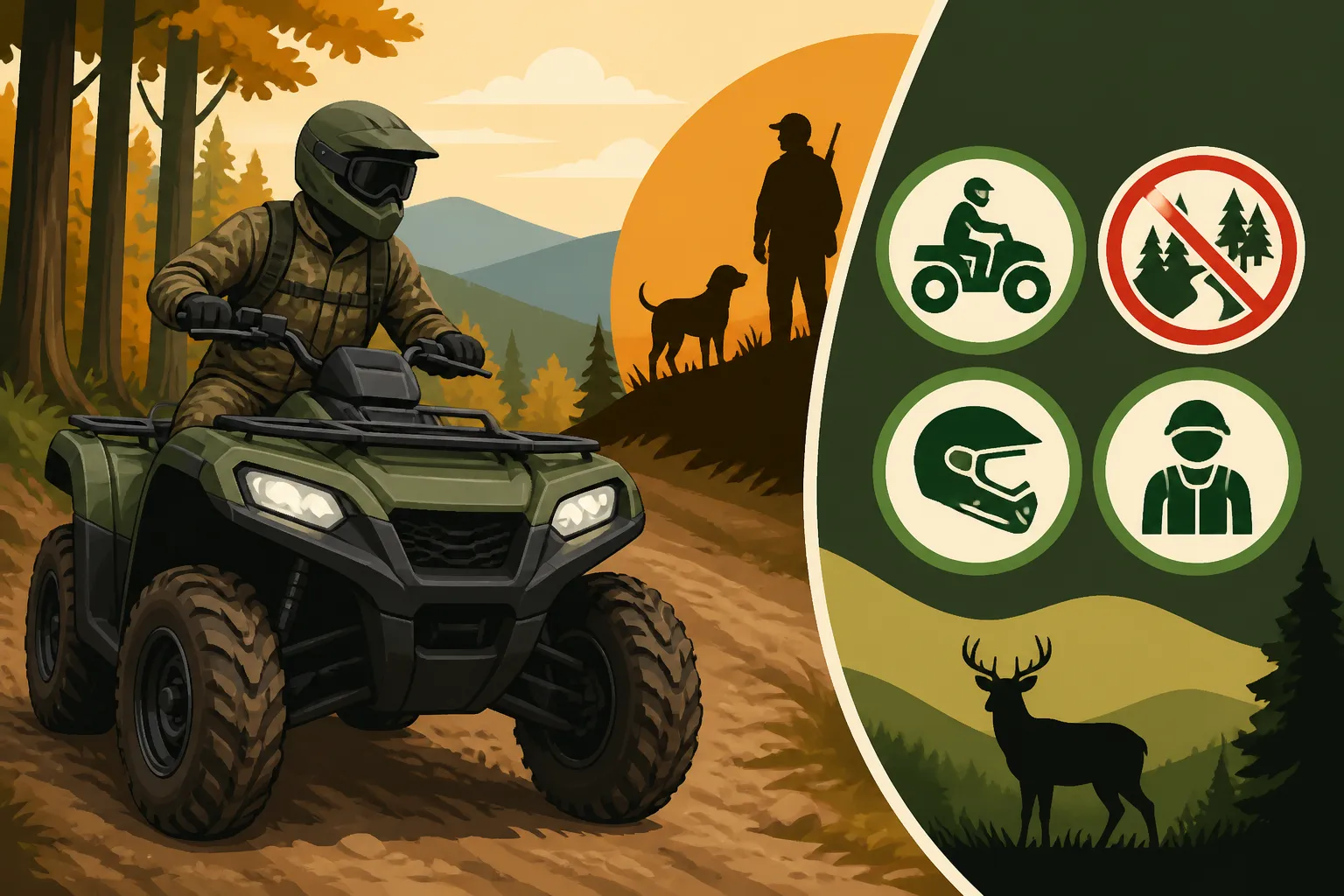
The conversation around ATVs on public land extends far beyond just legality; it delves into safety, environmental stewardship, and the ethics of hunting. From a safety perspective, ATVs are powerful machines that require respect and proper operation. Always wear appropriate safety gear, including a helmet, eye protection, and sturdy footwear. Never overload your machine, and operate it within your skill level, especially on uneven or unfamiliar terrain. Many accidents occur when operators push their limits or disregard basic safety precautions.
Environmentally, responsible ATV use means sticking strictly to designated routes to prevent erosion, minimize habitat damage, and stop the spread of invasive species. Mud bogging, creating new trails, or driving through sensitive areas like stream beds can cause irreparable harm and reflect poorly on all hunters. Our access to these lands is a privilege, not a right, and preserving them for future generations is paramount. Reading Aerial Photos for Cumberland Plateau Deer can sometimes help identify areas of concern.
Ethically, consider the impact of your ATV use on other users. The loud noise of an ATV can disturb wildlife, pushing deer and turkeys deeper into cover and impacting other hunters' success. It also disrupts the quiet solitude many people seek in the woods. While an ATV can be a useful tool, overuse or careless operation can contribute to negative perceptions of hunters and lead to further restrictions. Understanding Hunting Pressure on Tennessee Public Land means recognizing that sharing these spaces respectfully is critical for maintaining good relationships between all outdoor enthusiasts. By operating your ATV safely, legally, and thoughtfully, you contribute to a positive image of hunters and help ensure continued access to our precious public lands.
Avoiding Penalties and Ensuring Compliance
Nobody wants to cut a hunting trip short with a citation, or worse, have their vehicle confiscated. Understanding the rules for ATV use on Tennessee's forest roads is your first line of defense against legal trouble.
Common Violations and Their Consequences
Ignorance of the law is rarely an excuse, especially when it comes to public land regulations. Wildlife officers, Forest Service rangers, and park police are actively patrolling these areas, and they are well-versed in the specifics of ATV rules. Common violations include riding off-trail, operating an ATV on a road or trail that is clearly closed to motorized vehicles, using an ATV outside of designated seasonal openings, or driving without the required permits or safety equipment. Imagine trying to recover a deer in the dark, making a wrong turn onto a closed access road, and suddenly seeing flashing lights. That's a scenario no one wants to experience.
The consequences for illegal ATV use can be significant. Depending on the severity of the infraction, you could face hefty fines, impoundment or even confiscation of your vehicle, and potentially the loss of your hunting and fishing privileges. Repeat offenders can face even more severe penalties. These aren't just minor inconveniences; they can be financially crippling and permanently impact your ability to enjoy the outdoors. The TWRA and Forest Service are serious about protecting these resources, and they expect hunters to be serious about compliance.
How to Find the Most Up-to-Date Information
To avoid these pitfalls, your best strategy is proactive research. Always go to the source for the most current and accurate information. For TWRA-managed lands (WMAs), the official TWRA website is your go-to. Look for the specific WMA's proclamation, which is updated annually. The Go Outdoors Tennessee app is also an invaluable resource, often providing interactive maps and rule summaries. For the Cherokee National Forest and Land Between the Lakes, visit their respective official websites or contact their local ranger districts directly. Phone calls to a specific WMA manager or Forest Service office can also provide crucial, real-time updates that might not yet be published online, such as temporary road closures due to weather or maintenance.
I always recommend checking these resources just before your trip. Regulations can change due to environmental factors, new management initiatives, or even during specific hunting seasons. Printing out maps and relevant regulations is also a smart move, especially if you're venturing into areas with unreliable cell service. While apps like onX Hunt are fantastic for navigation, having a physical copy of the rules ensures you're never caught off guard. Taking the time to understand where Trail Camera Rules on Tennessee Public Land apply, for example, is another layer of due diligence. By making this research a standard part of your pre-hunt routine, you can use your ATV responsibly and enjoy your Tennessee hunting adventures without worry.
Tennessee Public Land ATV Rules Overview
Here's a quick reference guide to general ATV rules across common public land types in Tennessee. Remember, always verify with official sources for your specific location and dates!
| Public Land Type | General ATV Rule | Common Hunting-Related Use | Permit/Fee Often Required | Key Information Source |
|---|---|---|---|---|
| Cherokee National Forest | Restricted to designated OHV trail systems only. | Rarely for general hunting access; usually prohibited on forest roads. | Yes, for OHV trails. | National Forest Website, Local Ranger Districts |
| TWRA Wildlife Mgmt Areas | Varies greatly by WMA; often restricted or specific seasonal/road access. | Sometimes permitted for access/game retrieval on specific, designated roads during certain seasons. | Sometimes. | WMA Proclamation, TWRA Website, Go Outdoors TN App |
| Land Between the Lakes | Restricted to designated OHV area (Turkey Bay). | Not for general hunting access outside of Turkey Bay. | Yes, for OHV area. | LBL Website, USDA Forest Service |
| Tennessee State Parks (Hunting Zones) | Generally prohibited for hunting access. | Highly restricted; vehicles typically limited to main roads or specific management uses. | No, but special hunt permit. | State Park Specific Rules, TWRA Website |
Disclaimer
This article is for general informational purposes only and does not constitute professional advice. Laws, prices and regulations vary by location and change over time. Consult a qualified professional for guidance on your specific situation.