Duck Migration Timing Through Tennessee
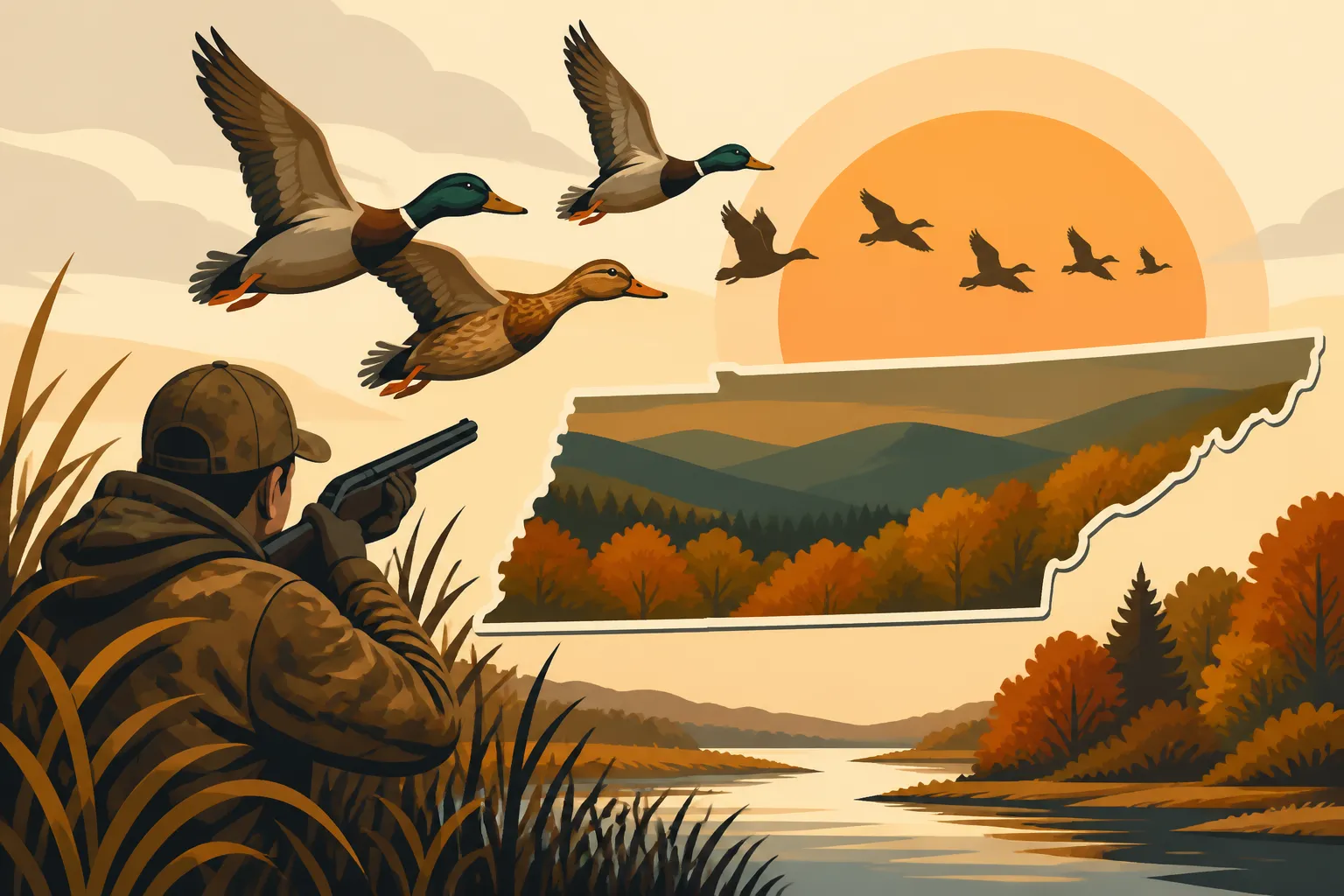
If you're a duck hunter in Tennessee, you know the frustration of staring up at an empty sky, wondering where all the birds are. We've all been there, burning vacation days only to find the local sloughs and fields devoid of the teeming masses we pictured. It often boils down to one critical factor: timing the duck migration. Understanding the ebb and flow of waterfowl through the Volunteer State isn't just about reading a calendar; it's about anticipating weather shifts, monitoring food sources, and knowing how our unique geography funnels these incredible birds. This guide is going to walk you through the nuances of duck migration timing through Tennessee, helping you decipher the patterns so you can be where the ducks want to be, when they want to be there.
Understanding the Mississippi Flyway's Influence on Tennessee Duck Migration
Tennessee holds a prime piece of real estate in the heart of the Mississippi Flyway, one of North America's four major bird migration routes. This isn't just a fun fact; it's the fundamental reason why ducks come through our state in the first place, and why their timing is so crucial. From the vast breeding grounds of the Canadian prairies and the northern US, millions of ducks and geese push south each fall and winter, following this avian superhighway right over our heads.
Our position means we're largely at the mercy of conditions far to our north. A massive cold front sweeping down from Canada doesn't just bring chilly weather to Nashville; it can literally push hundreds of thousands of mallards, gadwall, teal, and pintails south in a mass exodus. We're a crucial stopover, a refueling station, and a wintering ground for a significant portion of the continent's waterfowl. This makes Tennessee Waterfowl Migration Timing an endlessly fascinating, and often challenging, puzzle to solve.
However, it also means our hunting success is tied to a complex interplay of environmental factors both within and far beyond our borders. Local conditions matter immensely once the birds arrive, but the initial impetus for their journey is almost always external. This is why paying attention to what's happening hundreds of miles away is just as important as knowing your local scout reports.
Key Factors Driving Duck Migration Timing Through Tennessee
Duck migration isn't a single event; it's a dynamic, ongoing process influenced by several critical environmental cues. Understanding these factors is like getting a peek behind the curtain of nature's grand design, and it’s how we can try to predict when the best hunting windows will open up.
Temperature Drops and Ice Formation to the North
The most obvious and impactful trigger for major waterfowl movements is cold weather, particularly the kind that brings widespread freezing. When marshes, lakes, and rivers start to lock up with ice in states north of us, ducks are forced to continue their journey south in search of open water and available food. This isn't just about a single cold night; it's about sustained freezing temperatures that make their northern homes uninhabitable.
For instance, if Minnesota and Illinois experience an early and severe cold snap that freezes over their wetlands, you can bet that a significant push of birds is likely heading our way. We often see multiple "pushes" throughout the season, corresponding to these significant cold fronts. These fronts act like a natural conveyor belt, ushering new birds into Tennessee, which often translates to better hunting opportunities as fresh birds are less wary. Keeping an eye on weather forecasts up the flyway is a powerful scouting tool. Tools like GoHunt's weather overlays can sometimes help visualize these large-scale movements.
Availability of Food and Water Sources
Even if the weather is mild, ducks won't stick around if they can't find something to eat. Food availability is a huge driver of where ducks choose to stop and how long they stay. In Tennessee, this means paying close attention to agricultural fields – especially corn and soybean – and natural wetland food sources like smartweed, wild millet, and acorns in flooded timber.
If early season agricultural harvests leave ample waste grain in fields, ducks will congregate there. Conversely, if prolonged drought leaves wetlands dry or early floods wash out natural food, birds might bypass an area quickly. Public land managers often plant "green tree reservoirs" (areas of timber that can be intentionally flooded) with preferred duck foods, and these spots become magnets when flooded. The presence or absence of these key food sources can dictate whether ducks merely pass through or settle in for an extended stay. Late-Season Food Sources for Tennessee Whitetails might focus on deer, but the principles of finding available calories apply equally to waterfowl.
Hunting Pressure Along the Flyway
Let's be realistic: ducks are smart, and they learn quickly. Intense hunting pressure, whether in the states north of us or right here in Tennessee, can move birds around. If ducks are getting hammered daily in Missouri or Arkansas, they're going to keep flying until they find some refuge. Similarly, if a specific WMA or private blind in Tennessee is getting shot up every morning, those birds will soon relocate to quieter areas, whether that's a neighboring private pond, a less-pressured public spot, or even flying further south.
This means that while a big cold front might bring birds, heavy pressure can make them short-lived residents. Savvy hunters often look for those less-pressured spots, even if they require more effort to access. Understanding where birds can find sanctuary, whether on large national wildlife refuges or smaller, overlooked parcels of private land, is key to sustained success throughout the season.
Breaking Down Tennessee's Duck Migration Phases: Early, Peak, and Late Season
Tennessee's duck season isn't just one long stretch; it typically breaks into distinct phases that often align with the migration. Knowing what to expect during each of these phases can help you plan your hunts more effectively.
Early Season Arrivals: Teal and Wood Ducks
When Tennessee's duck season kicks off, usually in late November, the initial wave of migrants typically includes a good number of local birds, along with some of the earlier migrants from the north. Green-winged teal are often among the first long-distance travelers to show up in significant numbers, followed by blue-winged teal (though many blue-wings have already passed through during the earlier September teal season).
Wood ducks, our beautiful resident birds, are also plentiful in the early season, especially in bottomland hardwoods and smaller creeks. These birds are often less pressured early on, making for some exciting hunting opportunities. However, as the season progresses and the water bodies further north freeze, we'll see a shift in the species composition. Early season often provides fast-paced action, but you might not see the sheer numbers of mallards that arrive later. You'll often find these birds in shallow, flooded timber or smaller sloughs before the major river systems draw in the later migrants. Wood Ducks in Tennessee Bottomland are a staple of this early phase.
Peak Migration: The Mallard Masses and Divers
The heart of Tennessee's duck season, typically from mid-December through January, is when we usually see the largest influx of birds, especially mallards. This is often triggered by sustained deep freezes across the northern states of the Mississippi Flyway. When the big water and feeding grounds of Illinois, Missouri, and points north become unusable, those massive flocks of greenheads make their way to places like Tennessee.
During this peak, you'll also see an increase in other puddle ducks like gadwall, wigeon, and pintails. Dive ducks such as ring-necked ducks, scaup, canvasbacks, and redheads will also be more prevalent on larger lakes and rivers. This is the time when the famous Mallards at Reelfoot Lake often reach their zenith, drawing hunters from across the country. These birds are often seeking out larger, more stable bodies of water that are less likely to freeze solid, and they'll feed heavily in surrounding agricultural fields. This is prime time for big decoy spreads and aggressive calling.
Late Season Challenges and Opportunities
As the season progresses into late January, the migration dynamic shifts again. Many birds have settled into their wintering grounds, and those that haven't may be extremely wary due to weeks of hunting pressure. However, late-season hunting can still be excellent, especially during prolonged cold snaps that keep pushing new birds south or if ice-free water becomes scarce elsewhere.
Ducks that have been wintering in Arkansas or Louisiana might make their way north again briefly during milder spells, or a fresh push from further south might bring birds that have dodged pressure all season. This is also when some of the hardest-flying, cold-weather ducks, like certain species of mergansers and goldeneyes, become more common on our larger rivers. Patience, persistence, and an ability to adapt to extremely wary birds are crucial. Looking for obscure pockets of open water, such as spring-fed creeks or areas with strong current, can pay dividends. Hunting After a Poor Acorn Year can also influence where birds spend their late season, as they'll gravitate to any reliable food source.
Regional Nuances: Where and When Ducks Show Up Across Tennessee
Tennessee is a long state, and the duck migration doesn't hit every region equally or at the same time. Our diverse geography means different areas attract different species and see varied migration patterns.
West Tennessee: The Mississippi Flyway's Heartbeat
West Tennessee, with its rich agricultural lands, vast river bottoms, and iconic Reelfoot Lake Waterfowl Access, is undeniably the state's waterfowl epicenter. This region is directly in the main channel of the Mississippi Flyway, making it the first and most significant stopping point for many migrating ducks. Consequently, hunters here often see the largest numbers and the most consistent migration activity, particularly for mallards, gadwall, and pintails.
The timing here is often dictated by the major cold fronts pushing south down the Mississippi River. When those northern marshes freeze, West Tennessee is typically flooded with birds. Public lands like the various West Tennessee River Bottomland WMAs and Hatchie National Wildlife Refuge are magnets for waterfowl. For hunters, success often depends on securing access to these prime spots, whether through quota hunts or early morning races for public blinds. Checking out services like GoHunt for historical satellite imagery can help identify potential holding spots and flight corridors in this region.
Middle Tennessee: Rivers, Reservoirs, and Green Fields
Middle Tennessee offers a different but still rewarding duck hunting experience. While not as heavily influenced by the raw volume of the Mississippi Flyway, the Cumberland and Tennessee River systems, along with their numerous reservoirs (like Old Hickory and Kentucky Lake), provide crucial resting and feeding areas. Here, birds tend to be more spread out, and success often hinges on scouting smaller pockets of flooded timber, river backwaters, and agricultural fields.
Mallards and wood ducks are common, with gadwall and teal showing up in good numbers. Divers can be found on the larger reservoirs. Migration timing in Middle Tennessee can be slightly delayed compared to the western part of the state, but significant cold fronts will still push birds through. Hunters need to be more adaptable, often relying on jump-shooting tactics or setting up on smaller, overlooked ponds or creek bottoms. Hunting a Funnel Between Two Bottoms can be an effective tactic here, as birds use these constricted areas to move between larger bodies of water.
East Tennessee: Mountain Rivers and Smaller Flocks
East Tennessee, with its mountainous terrain and smaller river systems like the Holston, French Broad, and Little Tennessee, presents the most challenging but also unique duck hunting opportunities. While not a primary destination for vast numbers of migrating ducks, it still sees its share of birds, especially wood ducks, mallards, and some diving ducks on the larger rivers and reservoirs like Cherokee Lake or Norris Lake.
Migration here is often less about massive pushes and more about consistent trickles of birds seeking refuge in smaller, protected valleys and river bends. Severe cold fronts that freeze up everything else can actually concentrate birds in the few remaining open water areas. Hunters often focus on jump-shooting river sections or setting up small spreads in overlooked pockets of habitat. Being able to Read a Ridge for East Tennessee Deer means you understand the topography, and that same local knowledge helps locate waterfowl here, where they seek thermal cover and food in unexpected places.
Leveraging Technology and Local Knowledge to Anticipate Duck Movements
In today's world, anticipating duck migration timing isn't just about watching the weather channel. We have more tools than ever at our disposal to make informed decisions, but they still need to be paired with good old-fashioned local knowledge and boots-on-the-ground scouting.
Online Resources and Weather Tracking
One of the most powerful tools available is the internet. You can track long-range weather forecasts not just for Tennessee, but for the entire Mississippi Flyway. Look for those sustained cold fronts, ice formation reports, and significant snowfall events in states like North Dakota, Minnesota, Wisconsin, Iowa, and Illinois. Websites dedicated to waterfowl migration reports can also provide anecdotal evidence of major pushes. Using a platform like GoHunt, you can track weather patterns, overlay public land boundaries, and even analyze previous years' harvest data (where available) to get a sense of historical trends.
Beyond general weather, pay attention to local water levels. Flooding rains can create new hunting opportunities in previously dry areas, while droughts can make traditional spots unusable. Many impoundments are managed for waterfowl, and keeping up with the TWRA's water level management plans for specific WMAs is crucial.
Boots-on-the-Ground Scouting and Adaptability
No amount of online research can replace actual scouting. Once birds are in the state, their movements become highly localized, driven by food, water, and hunting pressure. Drive around, look at agricultural fields, observe open water bodies, and listen for the sounds of ducks at dawn and dusk. Pay attention to changes in bird behavior: where are they flying, where are they feeding, and where are they resting?
Furthermore, be adaptable. What worked yesterday might not work today. If a major cold front hits, birds might move to deeper, more protected waters. If pressure is heavy, they might become nocturnal or stick to private refuges. Always be willing to change your setup, your location, or your calling strategy. The best duck hunters are those who can read the conditions and react quickly. Scouting Tennessee Public Land Before Season is just as vital for ducks as it is for deer.
The Power of Local Intel and Networks
Don't underestimate the value of talking to other hunters, farmers, and local outdoor enthusiasts. While some folks are tight-lipped about their honey holes, many are willing to share general migration observations. Local bait shops, gas stations, and diners frequented by hunters can be informal intelligence hubs. Hearing that "the ducks just aren't here yet" or "they really piled in last night" can be invaluable real-time information.
Join local hunting forums or social media groups where responsible sharing of information occurs. Just remember, what you share might come back to you, so be a good steward of information and don't expect someone to give away their secret spot. Building a network of trusted hunting buddies is perhaps the best way to stay on top of ever-changing migration patterns.
Here's a quick overview of how migration phases typically align with Tennessee's general duck season:
| Migration Phase | Typical Timing | Primary Species | Key Influences | General Strategy |
|---|---|---|---|---|
| Early Season | Late Nov – Early Dec | Wood Ducks, Green-winged Teal, Gadwall | Local birds, initial northern cold fronts | Shallow water, flooded timber, jump shooting |
| Peak Migration | Mid-Dec – Mid-Jan | Mallards, Pintails, Divers, Wigeon | Sustained freezing in northern Flyway states | Large decoy spreads, aggressive calling, fields |
| Late Season | Late Jan | Wary Mallards, Divers, Canada Geese | Extreme cold, heavy pressure, search for refuge | Low pressure areas, open water, patience, small spreads |
This table provides a general guide, but remember, every season is different. Duck migration is a complex, beautiful dance between millions of birds and the ever-changing weather and habitat. Stay diligent, stay adaptable, and most importantly, enjoy every moment you get to spend out in the Tennessee wilds chasing these incredible creatures.
Disclaimer
This article is for general informational purposes only and does not constitute professional advice. Laws, prices and regulations vary by location and change over time. Consult a qualified professional for guidance on your specific situation.