Blood Trailing After Dark in Tennessee
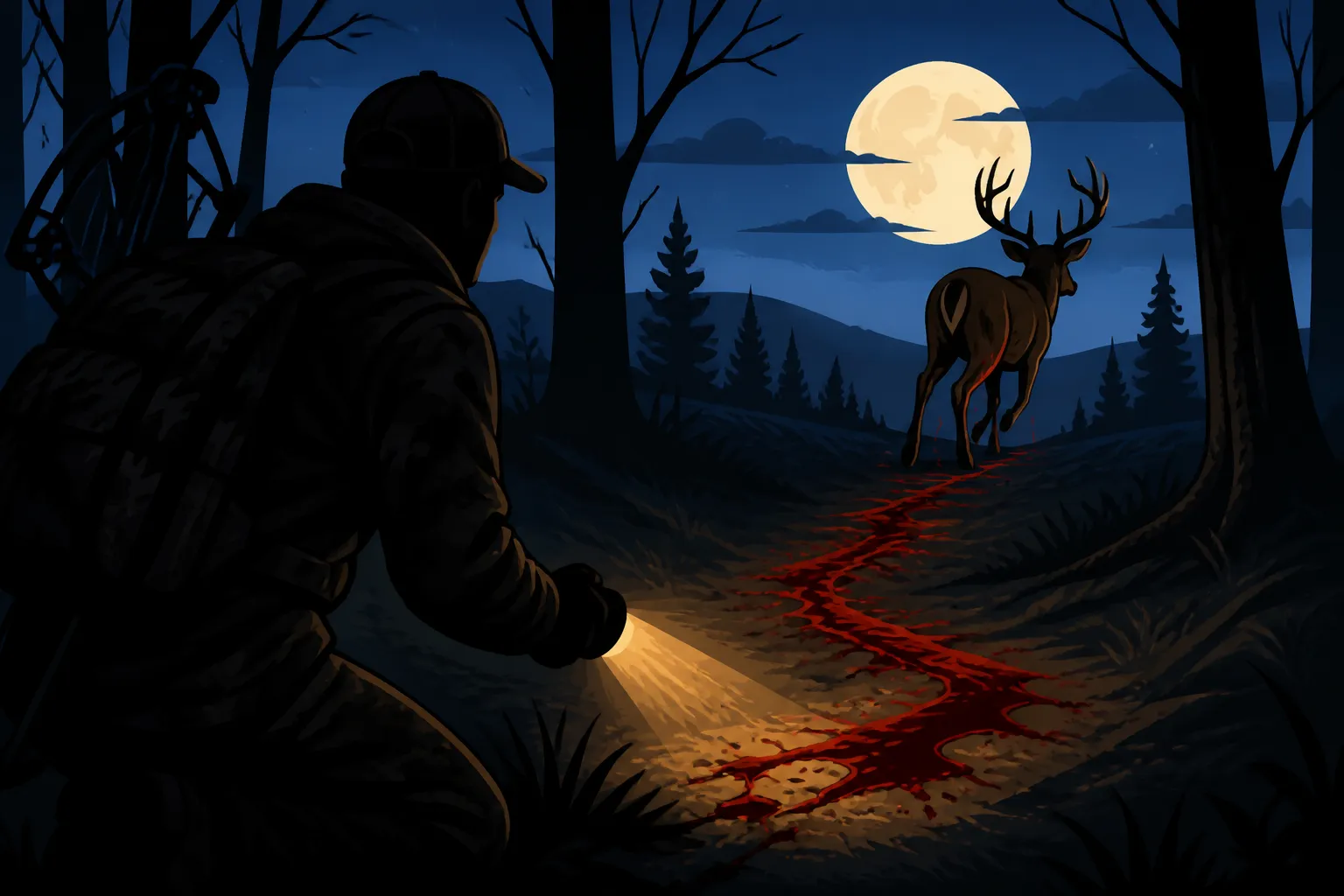
There are few feelings worse for a Tennessee deer hunter than making what you thought was a good shot, only for daylight to fade into an inky black sky with no deer in sight. The pressure mounts, the temperature drops, and the thought of leaving your hard-earned venison out overnight is enough to make any seasoned hunter’s stomach churn. Blood trailing after dark in Tennessee isn't just a challenge; it's an exercise in patience, skill, and making the most of limited visibility. This guide will walk you through the realities, the essential gear, and the strategies for successfully recovering your deer when the sun has long gone down.
The Inevitable Challenge of Darkness
Let's be honest, nobody wants to be blood trailing after dark. It's usually the result of a less-than-ideal shot, a deer that didn't go down quickly, or simply the dwindling minutes of legal hunting light catching up to you after a successful shot late in the afternoon. The dread can be almost paralyzing, but panicking is the worst thing you can do.
Why Night Trailing is Different and Harder
During the day, you have the benefit of natural light, allowing you to scan broader areas, pick up subtle disturbances in the leaves, and follow even sparse blood trails with relative ease. At night, that all changes. Your world shrinks to the beam of your flashlight, and every shadow seems to play tricks on your eyes. What looked like a clear trail in the fading light can disappear into a sea of indistinguishable leaf litter once true darkness sets in. It's not just about visibility; it's about the psychological shift. Every rustle sounds louder, every broken twig seems more significant, and the pressure to find that animal before it's too late can make you second-guess every decision.
Tennessee's diverse terrain, from the steep, rocky hollows of East Tennessee to the thick, tangled bottoms of West Tennessee, presents unique challenges under daylight, let alone after dark. The ground itself can conspire against you, with damp leaves absorbing blood quickly or rocky outcrops offering no sign at all.
The Mental and Physical Toll
Let's not sugarcoat it: blood trailing at night is exhausting, both mentally and physically. You're likely already tired from a day of hunting, possibly walking miles. Now, you’re hunkered over, eyes straining, moving at a snail's pace, often through thick brush or up and down hills. The mental fatigue comes from the intense focus required to find that next drop of blood, the constant self-doubt, and the knowledge that every minute counts. You might feel the clock ticking, worried about coyotes or other scavengers finding your deer before you do.
The cold can amplify this. A cool Tennessee evening quickly turns chilly, especially if you're standing still, bent over, trying to decipher a faint sign. Your hands get cold, your flashlight batteries start to dim, and the temptation to speed up and risk losing the trail entirely becomes very real. This is where discipline kicks in. You have to fight the urge to rush and maintain a methodical, slow pace.
Common Mistakes Made Under Pressure
When the adrenaline is pumping and the light is gone, it’s easy to make mistakes that cost you the deer. One of the most common errors is getting ahead of the last confirmed blood sign. You see a faint splash, assume the deer kept going straight, and then find yourself in an area with no sign, having to back up and restart. Another mistake is hunting alone at night, especially in unfamiliar or rugged territory. It's not only less effective for finding blood, but it can also be a safety hazard. Losing your bearings, twisting an ankle, or having an unexpected encounter are all more likely when you’re by yourself in the dark.
Failing to properly mark the trail as you go is another pitfall. In the dark, once you step away from that last bit of blood, finding it again can be incredibly difficult without a marker. Lastly, giving up too soon or, conversely, pushing too hard when conditions are truly impossible can be detrimental. There’s a fine line between perseverance and knowing when to strategically back out until morning.
Essential Gear for Night Blood Trailing Success
You wouldn't head into the woods for Hunting Tennessee's Restored Elk Herd without a solid rifle, and you shouldn't attempt a night blood trail without the right tools. Good gear won't guarantee success, but it will significantly increase your odds and make the process safer and more efficient.
Lighting the Way: Headlamps and Flashlights
This is your most critical piece of equipment. You need powerful, reliable light sources. I recommend carrying at least two, preferably three, independent lights.
- Headlamp: A good headlamp is non-negotiable. It frees up your hands for holding branches, marking the trail, or even just steadying yourself. Look for one with a high lumen output (300+ lumens) and multiple settings, including a red light option. While a red light doesn't reveal blood, it can help preserve your night vision for when you're looking up from the trail. Brands like Fenix, Petzl, and Black Diamond offer excellent options.
- Handheld Flashlight: A powerful handheld flashlight with a tight, bright beam is perfect for penetrating deeper into the brush, scanning ahead, or shining across a wider area. Some hunters swear by specialized blood-trailing lights that claim to enhance blood visibility, but a good quality, bright white light often works just as well, if not better, by simply overpowering the darkness. Streamlight and SureFire are popular choices for their robust construction and impressive output.
- UV Lights: There’s a lot of debate about UV or "blood tracking" lights. Some hunters find them incredibly useful, claiming they make blood glow. Others say they're no better than a good white light, and often worse, as they can cause other things to glow, creating false positives. If you're going to try one, get a dedicated UV light for tracking, not just a cheap novelty one. Test it at home on a small amount of dried blood before relying on it in the field.
| Lighting Type | Pros | Cons | Best Use Case |
|---|---|---|---|
| Headlamp | Hands-free, consistent illumination, often has red light option | Beam sometimes too broad for precise blood drops, battery life varies | Primary light for direct trail following, general movement |
| Handheld Flashlight | Powerful, focused beam, good for scanning wider areas or deeper cover | Requires one hand, can be cumbersome with other tasks | Secondary light, scanning ahead, confirming faint sign |
| UV (Blood Tracking) Light | Potentially enhances blood visibility in some scenarios | Can cause false positives, effectiveness is debated, not always bright | Supplemental tool, for very sparse trails, requires testing |
Always carry extra batteries, or a portable charger for rechargeable units. Cold weather can drain batteries much faster than you expect.
Marking the Trail: Visibility is Key
This step is absolutely vital for night trailing. Once you find a blood drop, you need to mark it, and every subsequent one.
- Reflective Tacks or Tape: Small reflective tacks are perfect for sticking into trees or saplings. They reflect your flashlight beam from a distance, making it easy to see where you’ve been and where the last sign was. Reflective ribbon or flagging tape tied to branches also works well. The key is to make these markers easy to spot from both directions, especially if you need to back out.
- Toilet Paper/Paper Towels: Simple, biodegradable, and effective. A small piece of toilet paper tucked into a branch or laid on the ground next to a blood sign is a temporary marker that stands out against the dark woods. Just be mindful to pick it up on your way out after the recovery.
- Crayons or Chalk: If the ground is suitable (rocks, smooth bark), a bright crayon or chalk can be used to circle or point to blood signs. Less practical in many Tennessee woods, but worth having for specific situations.
When marking, don't just mark the last drop. Mark the first confirmed drop, and then every subsequent one, especially when the trail is sparse or turns sharply. You're creating a breadcrumb trail for yourself.
Tools for Tracking: Enhancing Your Senses
Beyond lights and markers, a few other items can prove invaluable.
- Gloves: Not just for warmth, but also to protect your hands from briars, sharp branches, and to keep your scent off the trail if you're touching things.
- Kneepads: You'll be spending a lot of time on your hands and knees. Trust me, your knees will thank you.
- Water and Snacks: Dehydration and low blood sugar will quickly impact your focus and decision-making. Stay fueled and hydrated.
- First Aid Kit: Slips, trips, and falls are more common in the dark. A compact first aid kit, as detailed in First Aid Kits for Remote Cherokee Forest Ground, is a smart addition to your pack.
- GPS or Mapping App: An app like GoHunt or onX Hunt on your phone is crucial. It allows you to drop pins at each blood sign, track your progress, and ensure you don't get disoriented. Knowing your exact location is vital, especially on sprawling public land like the Cherokee National Forest or even smaller WMAs. This helps you maintain a grid search pattern and prevents you from walking in circles.
- A Partner: Seriously, a second set of eyes (and ears, and lights) is perhaps the best tool you can have. One person can focus on the immediate trail, while the other scans ahead, marks, or simply keeps watch.
Step-by-Step Night Trailing Strategies
Even with the best gear, strategy is paramount. Haphazard searching will lead to frustration and lost deer.
Re-evaluating the Shot and Waiting It Out (or Not)
Before you even step foot onto the trail in the dark, take a moment to collect yourself and re-evaluate the shot. Where did you hit the deer? What was its reaction? Did you hear it crash? If you truly think it was a gut shot or a marginal hit, the best strategy is often to back out entirely and come back in the morning. A deer with a gut shot can travel a long way if pushed, but will often bed down and expire within a few hours if left undisturbed. Waiting too long is usually better than pushing too hard. However, if you're confident it was a good lung or heart shot, and you just lost the trail in thick cover or fading light, an immediate follow-up might be warranted to prevent spoilage, especially on a warm early season night. The decision point for when to initiate blood trailing versus when to wait is critical.
Consider the ambient temperature. If it's warm, like during Tennessee's early archery season, spoilage becomes a much bigger concern. If it's a frigid late-season night, you have a bit more leeway. This is where understanding Cold-Weather Sitting Strategy in Tennessee can help you assess the situation; if you wouldn't sit out in those conditions for hours, a deer might not fare much better.
Grid Searching and Systematic Progress
Once you commit to trailing, be systematic. Start at the point of impact. Look for any immediate blood, hair, or bone fragments. Mark this spot. Then, begin moving forward slowly.
- Crawl, Don't Walk: Seriously, get on your hands and knees. Your eyes are closer to the ground, increasing your chances of seeing faint specks of blood that you'd miss standing up.
- Slow and Steady: Resist the urge to hurry. If you find blood, mark it. Then, fan out in a circle from that mark, looking for the next sign. It's often easier for one person to stay on the last confirmed blood sign while the other works a small radius around it.
- Look for Secondary Signs: Don't just look for blood. Look for disturbed leaves, broken twigs, tracks in soft earth (though hard to see at night), or a slight indentation in the grass where the deer brushed by. These subtle clues become far more important when blood is scarce. Reading Tennessee Mud for Fresh Deer Movement can give you an edge even if it's not strictly a mud trail.
- The Grid: If you lose the trail completely, implement a grid search. Mark your last known blood. Then, extend your search in widening circles or a grid pattern around that spot. One person can hold a fixed light on the last sign while the other sweeps. Your mapping app can help you visualize and execute this search pattern, dropping pins for areas you've covered.
- Listen: Stop frequently and listen. In the stillness of the night, you might hear the deer breathing, or the rustle of leaves as it takes another step, which can guide you.
When to Call It Quits (for the Night)
This is a tough call, but sometimes, for the safety of yourself and your hunting partners, and for the best chance of recovery, you need to know when to pause the search until morning. If the blood trail vanishes completely, despite diligent searching, or if you're entering extremely hazardous terrain (like a deep, steep hollow that's treacherous in daylight, let alone at night), it might be time to call it.
- Leave a Good Marker: Before leaving, mark your last confirmed blood sign with something obvious that will be visible in the morning light, like a bright piece of flagging tape tied high on a branch or a small piece of blaze orange fabric. Drop a pin on your GoHunt app right on that marker.
- Rest and Recharge: Go back to camp or home, get some rest, warm up, and let your eyes and mind reset.
- Morning Fresh Start: In the morning, bring a fresh set of eyes, and possibly a tracking dog if legal and available in your area. Daylight can reveal trails that were impossible to see in the dark. Remember, a deer left overnight in cold weather is usually fine, especially if it's already expired. The key is knowing you did everything you could before retreating.
Overcoming Specific Tennessee Night Trailing Hurdles
Tennessee's unique landscape presents its own set of challenges that become amplified after dark.
Dealing with Leaf Litter and Tough Terrain
Tennessee is famous for its crunchy leaf litter. Whether it's the oak leaves on the Cumberland Plateau or the varied hardwoods across the state, blood can quickly soak into dry leaves, disappearing from sight. In these situations, you have to be extra vigilant, almost looking for the absence of leaves or disturbed patches rather than just blood. A slight scuff mark, a turned-over leaf showing its damp underside, or a small depression where a hoof landed can be your only clues.
If you're in a situation that demands Tracking a Deer Through Tennessee Leaf Litter, slow down even more. Get low, use a very focused beam, and look at the texture of the leaves. Blood often makes them slicker or darker in specific spots. When traversing ridges, deer often follow the path of least resistance. Keep this in mind, and refer to tips for Reading a Ridge for East Tennessee Deer to anticipate where the deer might have traveled. If the deer goes into a steep hollow, remember that Recovering a Deer From a Steep Hollow is a significant challenge, and night trailing in such areas is extremely risky.
Weather Impact: Rain, Dew, and Cold
Tennessee weather is notoriously unpredictable. A warm, dry evening can quickly turn into a damp, dewy night, or even a sudden rain shower.
- Dew: Heavy dew can make blood appear diluted or cause it to spread, making it harder to discern. It also makes leaves slick and can make tracking more difficult as your boots slip.
- Rain: Rain is the ultimate enemy of a blood trail. Even a light drizzle can wash away fresh blood quickly, especially on hard surfaces or in light leaf cover. If rain starts during your trail, you need to either push hard and fast or retreat immediately and hope for morning light before the trail is completely gone. If it's a heavy downpour, calling it quits for the night and hoping for a visual search in the morning might be your only option.
- Cold: While cold weather can preserve meat longer, making an overnight wait less risky, it can also make the blood less visible. Blood can dry and congeal, becoming less vibrant and harder to spot against the dark ground. The cold also impacts human performance; fingers get numb, focus wanes, and overall discomfort increases.
Understanding Wildlife Scavengers at Night
One of the biggest anxieties of leaving a deer overnight is the thought of scavengers. Tennessee is home to a healthy population of coyotes, bobcats, and even black bears in some areas, all of whom are opportunistic feeders. These animals are most active at night. If you hear sounds in the distance that might indicate animals feeding, you have to make a quick decision: do you push forward, or do you accept that nature might take its course?
While it’s heartbreaking to lose a deer to scavengers, sometimes the risk of pushing too hard in dangerous terrain or worsening your chances by trampling the trail outweighs the possibility of a partial recovery. If you do find your deer and there's been some scavenging, assess the damage. Often, only a small portion is consumed, and the rest can still be processed if handled quickly and properly.
Post-Recovery: Ethical Considerations and Next Steps
Successfully recovering your deer after dark is a huge relief, but the work isn't over yet.
Handling the Harvest Responsibly
Once you locate your deer, the first order of business is to make sure it's fully expired. Approach cautiously. If it's safe, tag it immediately according to Tennessee regulations. Then, the process of field dressing begins. This task is already messy in daylight, but at night, it requires extra care and good lighting. Having bright headlamps for multiple people makes it much easier. Refer to tips on Field Dressing a Deer in Cold Weather for techniques that apply to night conditions, focusing on cleanliness and speed.
Transporting the deer out of the woods, especially if you're deep in public land, can be a major undertaking. If you had to call it quits for the night, consider bringing in a deer cart or a sled like the ones discussed in Deer Sleds for Ridge Country in the morning. If you're on a remote ridge, a game cart might be impractical, making quartering the animal out a more viable option.
Learning from the Experience
Every blood trail, especially one conducted after dark, is a learning experience. Take time to reflect on what happened:
- Shot Placement: Could the shot have been better? Did the deer move?
- Reaction: How did the deer react to the shot? What did that tell you?
- Equipment: Did your lights perform well? Were your marking tools adequate? Did your GoHunt app help with navigation and marking?
- Decision-Making: Was calling for a night trail the right decision, or should you have waited? Did you push too hard or not hard enough?
- Preparation: What could you have done differently to prepare for this possibility? Maybe adding more reflective tape to your pack, or a brighter light.
These reflections make you a better hunter. We all strive for quick, ethical kills, but sometimes things don't go according to plan. Being prepared for blood trailing after dark is a sign of a responsible, ethical hunter who understands that the hunt isn't over until the animal is recovered.
Disclaimer
Always check the latest Tennessee Wildlife Resources Agency (TWRA) regulations before heading afield, as rules and seasons can change.