Where Nontoxic Shot Is Required in Tennessee
It can be incredibly confusing to keep up with all the hunting regulations, especially when it comes to specific equipment requirements like ammunition type. Many hunters, especially those new to waterfowl or venturing onto different public lands, grapple with understanding exactly where and why they might need to switch from traditional lead shot to nontoxic alternatives in Tennessee. This guide is here to clear up that confusion, diving deep into the specific locations and scenarios where nontoxic shot is not just recommended, but legally required, ensuring you stay compliant and contribute to a healthier environment for all.
Understanding Nontoxic Shot: Why It Matters
Let's be honest, for generations, lead shot was just the standard. It was reliable, relatively inexpensive, and performed well in the field. So, when the shift to nontoxic alternatives started, it wasn't just a new rule; it was a whole new learning curve for many of us. But understanding the 'why' behind these regulations can make the transition a lot easier to accept, and even embrace. It's not about making hunting harder; it's about protecting the very wildlife and habitats we cherish.
The Environmental Impact of Lead Shot
The primary driver behind nontoxic shot requirements is the undeniable environmental impact of lead. When we fire lead shot, whether it's at ducks over a flooded field or at upland birds in a cover patch, that lead rains down into the environment. Over time, these tiny lead pellets accumulate, especially in wetlands and agricultural fields that see heavy hunting pressure. Waterfowl, particularly ducks and geese, are especially vulnerable because they forage for food by sifting through mud and sediment. They can inadvertently ingest lead pellets, mistaking them for grit or seeds.
Once ingested, lead can cause severe lead poisoning, leading to paralysis, emaciation, and eventually death. It's a slow, painful process that affects not only the birds that ingest it directly but also predators and scavengers, like bald eagles or coyotes, that feed on contaminated carcasses. Think about how many thousands of rounds are fired across Tennessee's prime duck marshes each season – that's a lot of lead building up. The regulations are a direct response to scientific evidence showing this harmful accumulation and its devastating effects on our wildlife populations.
Federal Regulations and Their Influence on Tennessee
The biggest influence on nontoxic shot requirements comes from federal law. Back in 1991, the U.S. Fish and Wildlife Service implemented a nationwide ban on lead shot for all waterfowl hunting. This wasn't a state-by-state patchwork; it was a blanket rule across the entire country. The reasoning was clear: waterfowl were the most directly impacted by lead poisoning due to their feeding habits in wetlands where lead concentrated. This federal mandate immediately made lead shot illegal for duck, goose, and coot hunting anywhere in the United States, including right here in Tennessee.
Beyond this universal waterfowl ban, federal regulations also extend to lands managed by the U.S. Fish and Wildlife Service, specifically National Wildlife Refuges (NWRs). Many NWRs have additional regulations that go beyond just waterfowl, often requiring nontoxic shot for all hunting, including upland game and even deer or turkey on some refuge lands, depending on their specific management plans. This is where it gets a bit more nuanced, as each refuge can have its own set of rules. It’s a good reminder that federal rules often set a baseline, and state or local area rules can be even more restrictive, which is why checking the specifics for your hunting spot is so crucial.
Specific Areas Where Nontoxic Shot is Mandatory in Tennessee
Now that we understand why nontoxic shot is important, let's get down to the brass tacks of where you absolutely need it in Tennessee. The rules aren't always intuitive, and it's easy to accidentally find yourself in violation if you're not diligent.
Waterfowl Hunting: The Universal Requirement
This is the big one, and the easiest to remember: if you are hunting ducks, geese, or coots anywhere in Tennessee, you must use nontoxic shot. This isn't just for public lands; it applies to private land, too. Whether you're in a blind on Reelfoot Lake or jump-shooting a small creek on your buddy's farm, lead shot for waterfowl is a no-go. This includes all species of ducks – mallards, wood ducks, teal, divers – and all goose species – Canada, snow, specklebellies.
The enforcement of this rule is consistent across the state, from the highly managed Reelfoot Lake Waterfowl Access to smaller flooded timber tracts in West Tennessee. It's a non-negotiable aspect of waterfowl hunting that every hunter needs to internalize. The rationale, as we discussed, is entirely driven by preventing lead poisoning in these sensitive aquatic environments and the birds that call them home. So, before you even think about putting on your waders, make sure your shotgun is loaded with approved nontoxic ammunition. You’ll want to check out Tennessee Waterfowl Zones and Seasons for specific dates, but the nontoxic shot rule is year-round for these birds.
Public Hunting Areas with Extended Nontoxic Rules
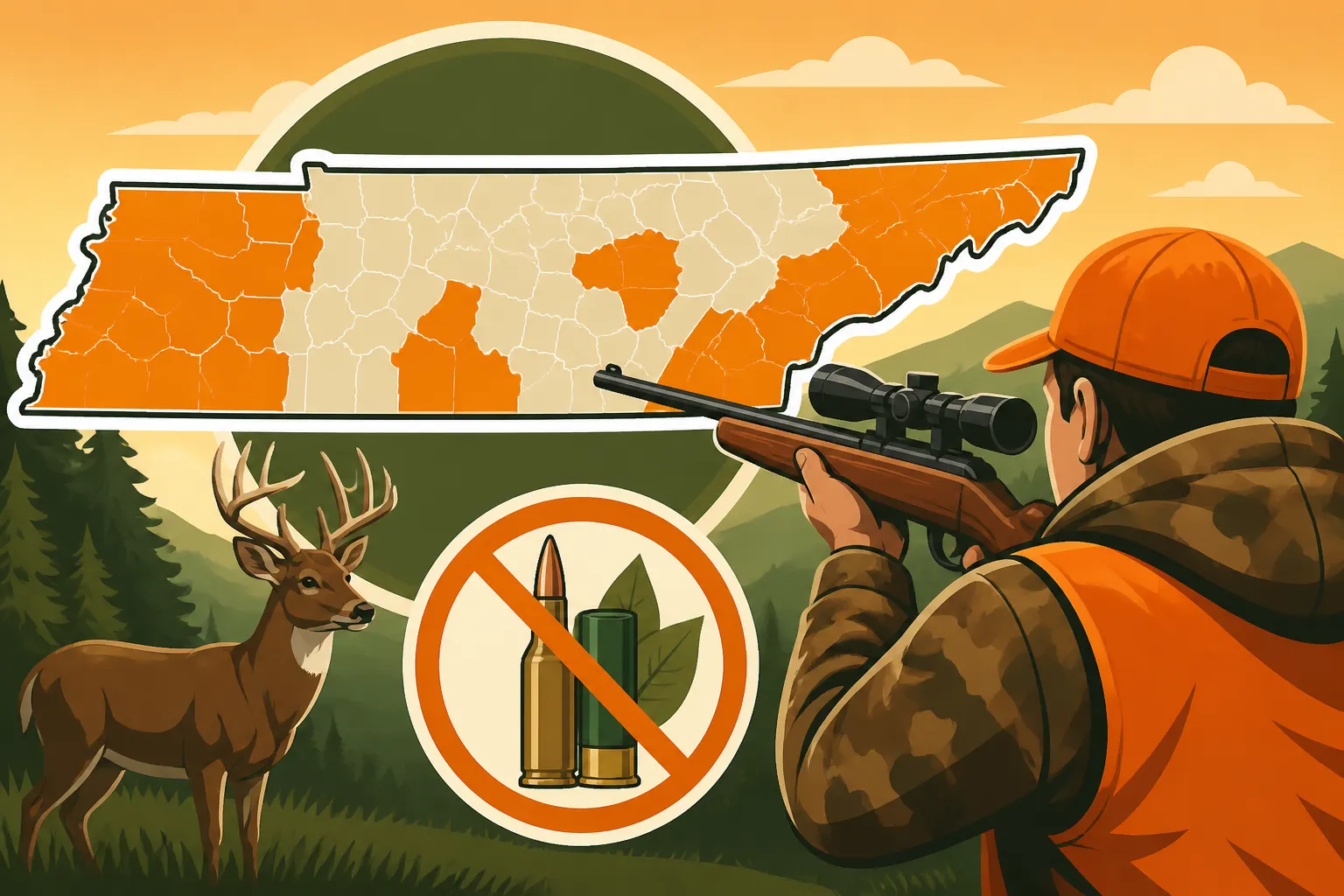
While the federal waterfowl ban is universal, some specific public hunting areas in Tennessee have gone a step further, requiring nontoxic shot for all hunting, or at least for species beyond just waterfowl. These are typically areas with particularly sensitive ecosystems, high hunting pressure, or those managed under specific conservation directives.
National Wildlife Refuges (NWRs) are the prime example. Places like the Hatchie National Wildlife Refuge Hunting in West Tennessee or parts of the Tennessee National Wildlife Refuge complex are federally managed, and their regulations often stipulate nontoxic shot for all game species hunted there. This means if you're chasing deer, turkey, or small game on these lands, you might need to use nontoxic shot, even if state law doesn't require it for those specific species elsewhere. Always, always check the specific refuge's regulations before you hunt. They often have kiosks at entry points, or you can find their rules online through the U.S. Fish and Wildlife Service website.
Beyond federal refuges, some Tennessee Wildlife Resources Agency (TWRA) Wildlife Management Areas (WMAs) may also have expanded nontoxic shot requirements. These are often WMAs that are particularly focused on waterfowl or migratory birds, or those that have experienced issues with lead accumulation in the past. While not every WMA requires it for upland or big game, enough do that it's imperative to consult the WMA-specific regulations. You can find these details on the TWRA website or often in the annual hunting guide. Using a mapping and scouting tool like GoHunt can also be invaluable here, as many such platforms integrate specific WMA rules and boundaries, helping you quickly identify areas with these extended requirements. Remember, ignorance of the law is no excuse, and wardens are out there making sure everyone plays by the rules to protect our resources.
Common Nontoxic Shot Alternatives and Considerations
Okay, so you know where you need nontoxic shot. Now, let's talk about what your options are. The world of nontoxic ammunition has come a long way since the early days of steel shot, offering hunters a variety of choices with different performance characteristics and, let's be honest, different price tags.
Types of Nontoxic Shot Available
When the lead ban first came into play, steel shot was virtually the only game in town. It worked, but it had its drawbacks. Today, you have a much wider array of choices, each with its own benefits and considerations:
- Steel Shot: Still the most common and generally the most affordable nontoxic option. Steel is lighter than lead, so you need to go up a shot size or two (e.g., if you shot #4 lead, try #2 steel) to get similar energy. It patterns tighter, often requiring more open chokes. Its hardness means it can be rough on older barrels not rated for steel shot, so check your gun's specifications. For many hunters Hunting Reelfoot's Flooded Cypress Timber or Layout Blind Hunting West Tennessee Fields, steel is the workhorse option.
- Bismuth Shot: This is a much softer alloy, closer to lead in density and malleability. This means it can often be used in older shotguns that aren't rated for steel, and it patterns more like lead. You can often use your favorite lead-rated chokes. The downside? It's significantly more expensive than steel. Many hunters find bismuth a great compromise for its performance characteristics, especially those with cherished vintage shotguns.
- Tungsten-Alloy Shot (e.g., Tungsten Super Shot – TSS, Hevi-Shot): These are the densest nontoxic options, often denser than lead. This extreme density means you can use much smaller shot sizes (e.g., #9 TSS for turkey) to achieve incredible energy and penetration at longer ranges. They are, however, the most expensive by a considerable margin. Tungsten-alloy shots are often reserved for specialized hunting scenarios, like extreme-range turkey hunting or challenging waterfowl situations, where maximum performance is critical, and the cost is justified.
Here's a quick comparison table to help visualize the differences:
| Shot Type | Density (relative to Lead) | Hardness | Cost (relative) | Barrel/Choke Compatibility | General Performance |
|---|---|---|---|---|---|
| Lead (illegal for waterfowl) | 1.0 (baseline) | Soft | Low | Standard | Good energy, broad patterns, environmental hazard |
| Steel | ~0.7 | Very Hard | Low | Modern barrels/chokes | Lighter, tighter patterns, need larger shot size |
| Bismuth | ~0.9 | Soft | Medium-High | Older barrels/chokes okay | Closer to lead in density/pattern, good energy |
| Tungsten-Alloy | 1.2 – 1.8 | Very Hard | Very High | Modern barrels/chokes | Extreme density/energy, small shot sizes, expensive |
Chokes, Ballistics, and Patterning Your Shotgun
Making the switch to nontoxic shot isn't just about buying a new box of shells; it often requires some adjustments to your setup. For instance, steel shot is very hard and doesn't compress much as it travels down the barrel. This means it can deform standard lead-rated chokes (especially older, tight chokes) and can even scratch barrels not designed for it. Many manufacturers recommend using more open chokes with steel, or dedicated steel-safe chokes, to achieve optimal patterns and prevent damage.
The ballistic properties also differ. Steel shot, being lighter, loses energy and velocity faster than lead or denser nontoxic alternatives. This affects effective range and requires adjustments to your lead if you're used to shooting lead. Bismuth and tungsten-alloy shots, being denser, retain energy better and can often be shot with your usual chokes, much like lead.
Regardless of the nontoxic shot you choose, patterning your shotgun is absolutely critical. Don't just assume a new load will perform the same way your old lead loads did. Get out to the range, set up some large sheets of paper at your typical hunting distances (say, 30-45 yards for waterfowl), and see how your chosen nontoxic load patterns with different chokes. You might be surprised at the results. A well-patterned shotgun with nontoxic shot is far more effective and ethical than simply guessing. This effort upfront ensures that when you're Reading a Bottomland Slough for a Morning Flight, you're ready.
Navigating Regulations and Staying Compliant
Staying on the right side of the law and being an ethical hunter means being informed. Regulations can change, and what's true for one hunting area might not be true for another. It's on us, the hunters, to do our homework.
Checking Local Regulations and WMA-Specific Rules
The single most important piece of advice regarding nontoxic shot requirements (or any hunting regulation, for that matter) is to always check the most current regulations for your specific hunting area. The Tennessee Wildlife Resources Agency (TWRA) is your primary resource for state-level rules. Their annual hunting guide, available online and at license vendors, is packed with information, including WMA-specific regulations. These WMA rules can be quite detailed, outlining everything from hunting hours to specific equipment restrictions.
For example, while the general waterfowl rule is simple, some WMAs might have additional restrictions, such as requiring nontoxic shot for all upland game if those areas are particularly sensitive or prone to lead accumulation. When planning a hunt, especially if it's on a public land area you're not intimately familiar with, make it a habit to look up that specific WMA's regulations. Tools like the GoHunt app or the TWRA's interactive map can be incredibly helpful for this, allowing you to click on a specific WMA and see its unique rules. Don't forget that if you're Hunting the Mississippi Flyway Backwaters, federal lands often intertwine with state lands, meaning you'll need to check both federal refuge rules and TWRA WMA rules.
The Cost and Availability Factor
Let's not sugarcoat it: nontoxic shot, especially bismuth and tungsten-alloy, is generally more expensive than lead shot. This can be a real point of frustration for hunters, especially those who shoot a lot of shells during a season. However, this higher cost is a reality we need to accept for the long-term health of our wildlife and habitats.
Availability can also sometimes be an issue, particularly for specialized loads like TSS or during peak hunting seasons. It’s not always as simple as walking into any big box store and finding every option. Because of this, it's wise to plan ahead. Consider purchasing your nontoxic ammunition well in advance of the season. Shopping online or checking with specialized sporting goods stores often yields better selection and sometimes better prices. Buying in bulk if you plan to hunt extensively can also help mitigate costs. Don't wait until the day before opening morning to try and find your shells; you might be out of luck, or stuck paying a premium. This preparation is part of being a responsible hunter and ensuring you're ready for the Tennessee Duck Phase One and Phase Two Dates or any other season. And, of course, make sure you've taken care of your Tennessee Federal Duck Stamp Requirement and Tennessee Migratory Bird Certification before heading out.
Disclaimer
This article is for general informational purposes only and does not constitute professional advice. Laws, prices and regulations vary by location and change over time. Consult a qualified professional for guidance on your specific situation.