Bone Saws Versus the Gutless Method
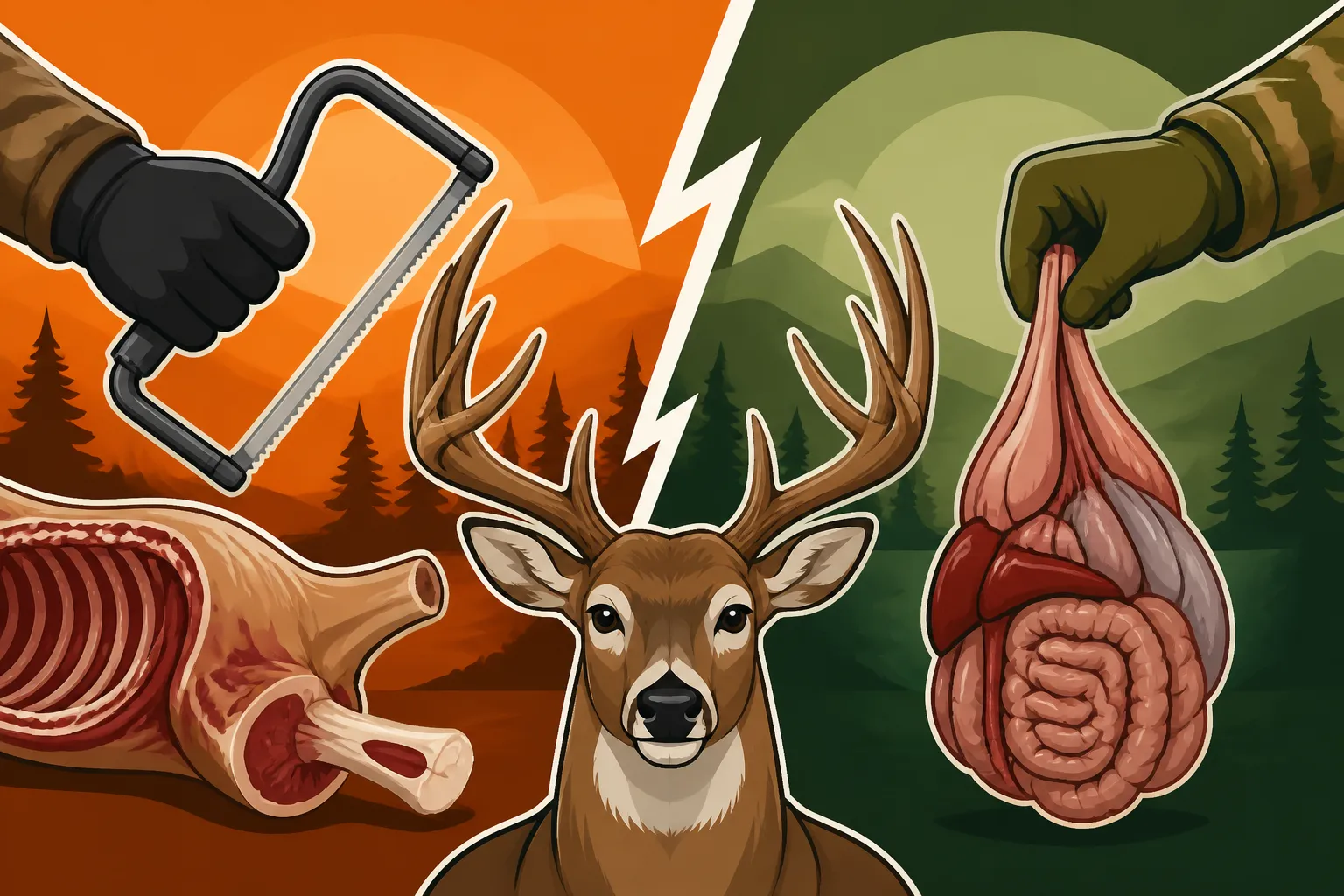
You've just dropped a beautiful Tennessee whitetail, and that initial rush of adrenaline starts to fade, replaced by a very practical question: "Now what?" Dragging a whole deer out of a deep hollow or across a sprawling field is tough enough, but sometimes, field dressing means more than just removing the entrails. You’re faced with a choice: do you go for the familiar, albeit sometimes messy, bone saw approach, or do you dive into the increasingly popular and often cleaner gutless method? This guide is here to walk you through both, helping you decide which technique is best for your situation and ensuring you bring home the best possible meat from your hunt.
The Traditional Bone Saw Approach: Pros, Cons, and Best Practices
For generations, the bone saw has been a staple in many hunters' field dressing kits. It’s a tool that provides brute force for breaking down an animal, allowing access to parts that might otherwise be difficult to separate with just a knife. There’s a comfort in tradition, and many hunters grew up learning to use a saw as part of the process.
When a Bone Saw Shines and When It Doesn't
A bone saw really comes into its own when you need to make quick, decisive cuts through bone. Think about splitting the sternum to open up the chest cavity for gutting, especially if you're dealing with a larger buck or an older doe with calcified cartilage. It’s also incredibly useful if you plan to quarter the animal with the bone in, perhaps to make it easier to load into a vehicle or to fit into specific coolers at camp. For instance, if you're Field Dressing a Deer in Cold Weather and want to get the animal chilled quickly, splitting the carcass can be very effective. It’s also often preferred when you’re not far from your truck or camp, and the extra weight of a saw isn't a significant burden.
However, the bone saw isn't always the perfect solution. They can be bulky, adding extra weight to your pack, which is something to consider if you're planning a long hike into the backcountry or hunting steep, unforgiving terrain like the Cumberland Plateau. Saws can also be messy. Sawdust and bone fragments can contaminate meat if you're not careful, requiring extra cleaning once you get the animal back. In wet or muddy conditions, a saw can become incredibly grimy, and cleaning it properly in the field can be a real hassle. Plus, if you're solo and struggling to maneuver a large deer, trying to wield a saw safely can be tricky.
Essential Bone Saw Techniques for Field Processing
When you do opt for a bone saw, technique matters. For opening the chest cavity, place the deer on its back. Carefully cut through the hide and muscle along the sternum, from the pelvis to the neck. Once the muscle is exposed, use your saw to cut through the breastbone. Always cut away from your body, maintaining a firm grip on both the saw and the animal. Be mindful of internal organs, especially if you're just opening for gutting and not trying to split the entire carcass. You want clean cuts that allow for easy access without puncturing anything you don't intend to.
If you're quartering the animal bone-in, the saw becomes invaluable for separating the pelvis and spine. After removing the hide, you'd typically start by separating the hindquarters. While some might try to "pop" the ball joint with a knife, a saw allows for a much cleaner, more controlled cut through the pelvis if you choose to split it. Similarly, to separate the front quarters from the spine, a saw can make quick work of the rib cage if you're not just separating at the shoulder blade. Remember to carry a good pair of sturdy gloves to protect your hands, not just from the blade, but from sharp bone edges and cold. After each cut, take a moment to wipe down your saw and the surrounding area with a clean cloth or wet wipe to minimize contamination before moving to the next section.
Embracing the Gutless Method: A Modern Game Changer
The gutless method, while not entirely new, has gained immense popularity in recent years, especially among hunters who venture into remote areas or those who prioritize clean meat and a lighter pack-out. It’s a systematic way to remove all the prime cuts of meat from an animal without ever opening the body cavity or disturbing the gut pile.
The Philosophy and Advantages of Going Gutless
The core philosophy behind the gutless method is efficiency and cleanliness. Instead of wrestling a heavy, intact carcass, you're essentially deconstructing the animal layer by layer, starting with the skin and moving to the muscle groups. The biggest advantage is immediately apparent: no gut pile. This means significantly less mess, less blood, and critically, less contact with bacteria-laden organs. This is particularly beneficial in warmer weather, where gutting an animal quickly can prevent bacterial growth and spoilage. Imagine an early September Hunting the August Antlerless-Only Archery Hunt day in Tennessee; keeping the meat as clean and cool as possible is paramount.
Another huge benefit, especially for hunters in physically demanding areas or those who simply prefer to avoid heavy lifting, is the lighter pack-out. Instead of dragging a several-hundred-pound animal, you're hiking out with individual bags of deboned meat. This is a game-changer if you’ve harvested a deer deep in the Cherokee National Forest or at the bottom of a steep ravine. You can carefully pack out your Packs for a Day on Public Land and make multiple trips if necessary, instead of straining your back on one grueling drag. Furthermore, in areas designated as a Chronic Wasting Disease (CWD) management zone, the gutless method allows you to easily bone out the meat and leave the spinal column, brain, and other potentially infectious parts in the field, making compliance with regulations like Deboning Venison Before Leaving the CWD Zone much simpler.
Step-by-Step Guide to the Gutless Method
The gutless method might sound intimidating, but it's a remarkably straightforward process once you understand the steps. First, position the deer on its side. Begin by skinning one side of the animal. Start with a cut along the spine from the neck to the tail, then another cut around the mid-section, joining the first cut down the legs. Carefully peel the hide back, using your knife to separate it from the muscle tissue. The goal is to expose the entire side of the animal.
Once one side is fully skinned, start removing the front quarter. The front shoulder is not attached by bone to the spine; it's held by muscle. Feel for the natural seam and begin cutting around the shoulder blade, separating it from the rib cage. Work your knife around the shoulder until it’s free. Next, move to the hindquarter. Start at the hip and carefully cut around the muscle group, separating it from the pelvis and spinal column. You’ll be essentially carving the meat off the bone. After the front and hindquarters are off, focus on the backstrap, which runs along the spine. Make a deep cut along the top of the spine and another parallel cut along the ribs, then carefully peel the backstrap away. Flip the deer over, skin the other side, and repeat the process for the remaining front quarter, hindquarter, and backstrap. Finally, if you want the tenderloins, you'll need to make a small incision in the flank area to reach into the body cavity and carefully remove them. This is the only point where you might briefly access the abdominal cavity. Pack all your beautiful, clean meat into breathable game bags like Game Bags for Warm September Days immediately.
For those venturing into less familiar territory, especially on public lands, having a reliable mapping tool can be a lifesaver. Tools like GoHunt can help you identify potential game trails, access points, and even optimal spots for field dressing that minimize dragging. Knowing the terrain ahead of time helps you visualize the process and prepare your gear accordingly.
Making the Call: Which Method for Your Tennessee Hunt?
Deciding between a bone saw and the gutless method isn't about one being inherently "better" than the other. It's about choosing the right tool and technique for the specific circumstances of your hunt. Every harvest is different, and what works perfectly one day might be a disaster the next.
Factors Influencing Your Field Processing Choice
Several critical factors should weigh into your decision. Terrain is a huge one. If you’re hunting the steep, rugged hollers of East Tennessee or the thick woods of the Cumberland Plateau, a deer can end up in a spot that's incredibly difficult to access, let alone drag a whole carcass out of. In these scenarios, the gutless method, which allows you to break the animal down into manageable, packable pieces, is often the clear winner. However, if you're hunting relatively flat ground in West Tennessee farm country and your truck is just a short, easy drag away from where your deer dropped, then a traditional gut-and-drag, possibly with some saw use for quicker cooling, might be perfectly fine. Considerations like if you're Dragging a Deer Out of a Steep Hollow are vital.
Distance to your vehicle or camp is another significant factor. A 50-yard drag is very different from a 500-yard, uphill haul. If you're a mile back in on public land and hunting solo, attempting to drag an entire deer could be dangerous or impossible. The gutless method transforms a seemingly insurmountable task into a series of smaller, achievable ones. Temperature plays a massive role in meat preservation. On a warm October day, getting the hide off and the meat cooling as quickly as possible is paramount. The gutless method, by immediately exposing the muscle tissue to air, can speed up the cooling process, especially when combined with game bags that allow airflow. Conversely, during a cold snap in Hunting the Late-Season January Lull, spoilage is less of an immediate concern, giving you more flexibility. Finally, the number of hunters in your party can influence your choice. If you have several strong hands to help with a drag, a bone saw and traditional field dressing might be feasible. If you're alone, the gutless method provides self-sufficiency.
Gear Considerations and Preparation
Regardless of your chosen method, having the right gear is non-negotiable. For a bone saw approach, you'll need a sharp, sturdy bone saw – a folding saw is often a good compromise between portability and effectiveness. Always have multiple sharp knives on hand; a fixed-blade knife for general work and a smaller, caping knife for detailed cuts are a good combination. Gloves are essential for hygiene and warmth, especially when working with cold meat. If you're going gutless, a super-sharp knife (or several, with a sharpener) is your most important tool, as you'll be doing a lot of precision cutting. Breathable game bags are critical for keeping your deboned meat clean and allowing it to cool.
Preparation also extends beyond just physical gear. Understanding the layout of your hunting area is key. Using mapping applications, even basic ones, can help you visualize the terrain and plan for potential recovery scenarios. Advanced tools like GoHunt provide detailed satellite imagery, topo maps, and land ownership information, which can be invaluable for finding optimal access points and planning your exit strategy, whether you're dragging a whole animal or packing out deboned quarters. Knowing where you are relative to roads, trails, and your vehicle can make the difference between a smooth recovery and a frustrating ordeal. Practice both methods at home on something like a five-gallon bucket or even by watching videos and mentally walking through the steps. Confidence in your chosen method comes from preparation.
Maximizing Meat Quality with Either Method
Bringing home high-quality venison is the ultimate goal for many hunters. While the field dressing method you choose plays a big part, it’s only one piece of the puzzle. How you handle the meat immediately after the kill and during transport is equally, if not more, important.
The Importance of Cleanliness and Cooling
No matter if you used a bone saw or went gutless, cleanliness is paramount. Always use clean knives and wipe them down frequently. Keep dirt, leaves, pine needles, and other debris off the meat as much as possible. This is where game bags truly shine, acting as a protective barrier while still allowing air circulation. When you're field dressing, try to position the animal so that gravity works in your favor, keeping blood away from the meat. After gutting, if you went that route, rinse the cavity with clean water if available, or at least wipe it thoroughly with paper towels or a clean cloth. For the gutless method, since you’re never opening the cavity, the meat generally stays much cleaner by default.
Immediate cooling is the second pillar of meat preservation. As soon as the animal is processed, you need to get the heat out of the muscle tissue. This is especially true for early season hunts when temperatures can be warm. Hang the quarters in the shade, if possible, allowing air to circulate around them. If you have access to ice or frozen water bottles, placing them inside the body cavity (if gutted) or directly into game bags with deboned meat can drastically reduce the temperature. Having good Coolers for an Early Archery Kill ready at your vehicle is a smart move. Don't stack meat directly on top of itself without airflow, as this can trap heat and lead to spoilage.
Transporting Your Harvest from the Field
Once the deer is field dressed and cooling, the next challenge is getting it back to your vehicle or camp. Your choice of field dressing method will significantly impact your transport strategy. If you opted for the gutless method, you’ll be carrying out deboned meat in game bags, ideally in a quality hunting pack. A good frame pack can handle heavy, awkward loads, making multiple trips less arduous. This is often the best solution for hunters who are far from a road or are dealing with extremely difficult terrain. Before you even leave home, consider your route and potential obstacles. Using an app like GoHunt to scout Reading a Ridge for East Tennessee Deer or identify Finding Ground Others Walk Past can help you plan the easiest exit strategy.
For a whole or saw-split deer, you might consider using a deer sled or a game cart. Sleds are fantastic for dragging over snow, ice, or even rough ground, spreading the weight and making the job easier than a direct drag. Game carts, with their wheels, are excellent for relatively flat terrain, forest roads, or cleared trails. However, they can become a hindrance in thick brush, deep mud, or extremely steep areas. Always consider the ground you’ll be covering. If you’re Hunting Small Private Tracts in Tennessee with direct vehicle access, a quick drag might be all you need. If you're deep in public land, plan on packing it out. Either way, always have a plan for how you’ll get your harvest from the kill site to your processing area or freezer.
Disclaimer
This article is for general informational purposes only and does not constitute professional advice. Laws, prices and regulations vary by location and change over time. Consult a qualified professional for guidance on your specific situation.