Safety Harnesses and Lifelines
Let's be real for a minute: the thrill of hunting from an elevated stand in Tennessee, seeing the hardwoods stretch out before you or spotting a deer weaving through a creek bottom, is unmatched. But that vantage point comes with a stark, sobering reality – falls from treestands are among the most common and most serious accidents hunters face. This guide isn't about scaring you; it's about empowering you with the knowledge and tools, specifically full-body safety harnesses and lifelines, to ensure you make it home safely after every hunt, ready to tell your stories and pursue your passion again.
Understanding the Risks of Elevated Hunting
We all know the rush of climbing into a stand before dawn, the silence broken only by the chirping of crickets or the distant hoot of an owl. It feels secure, almost peaceful. But that feeling can lull us into a false sense of security. Elevated hunting positions, whether you're 10 feet up or 25, carry inherent risks that simply cannot be ignored. The ground always looks further away once you’re up there, and a moment of inattention can have devastating consequences.
Common Causes of Treestand Falls
It’s rarely one catastrophic failure; often, a fall is a confluence of small errors or unexpected events. Think about it: that slick morning dew on a climbing stick, a rotten step on an old wooden ladder stand, or even just rushing to get settled before shooting light. Hunter surveys consistently point to several common culprits. Equipment failure, like a frayed strap or a failing bolt, is certainly one. But more often, it’s operator error or simple human nature. We get complacent, we’re tired, we’re cold, or we’re overly focused on a deer that just stepped out. Losing your balance while climbing, stepping onto a loose platform, or even just dozing off in the stand are far more frequent causes than a stand spontaneously collapsing. The goal isn't to be paranoid, but to be prepared and methodical every single time you go up.
The Statistics Nobody Wants to Talk About
The numbers are pretty grim, and they don't lie. Year after year, hunting accident reports confirm that treestand falls are the leading cause of serious injury and death in hunting. We’re talking about broken bones, paralysis, and worse. The unfortunate truth is that many of these incidents could have been prevented with the proper use of safety equipment. It’s easy to think, "It won't happen to me," but gravity doesn't discriminate. Every hunter, regardless of experience, is susceptible. That's why the conversation about safety harnesses and lifelines isn't just a recommendation; it's a critical component of responsible hunting, right up there with knowing your target and having a safe backdrop. You wouldn't hunt without checking your rifle's zero or your broadheads; why would you climb without checking your harness?
Your Lifeline to Safety: Harnesses Explained
A full-body safety harness isn't just a piece of gear; it's your first line of defense against a fall. Gone are the days of flimsy waist belts that could do more harm than good. Modern full-body harnesses are designed to distribute the impact of a fall across your entire body, significantly reducing the risk of injury if the unthinkable happens. It’s an investment in your well-being, and frankly, it's non-negotiable for anyone hunting from an elevated position.
Anatomy of a Full-Body Harness
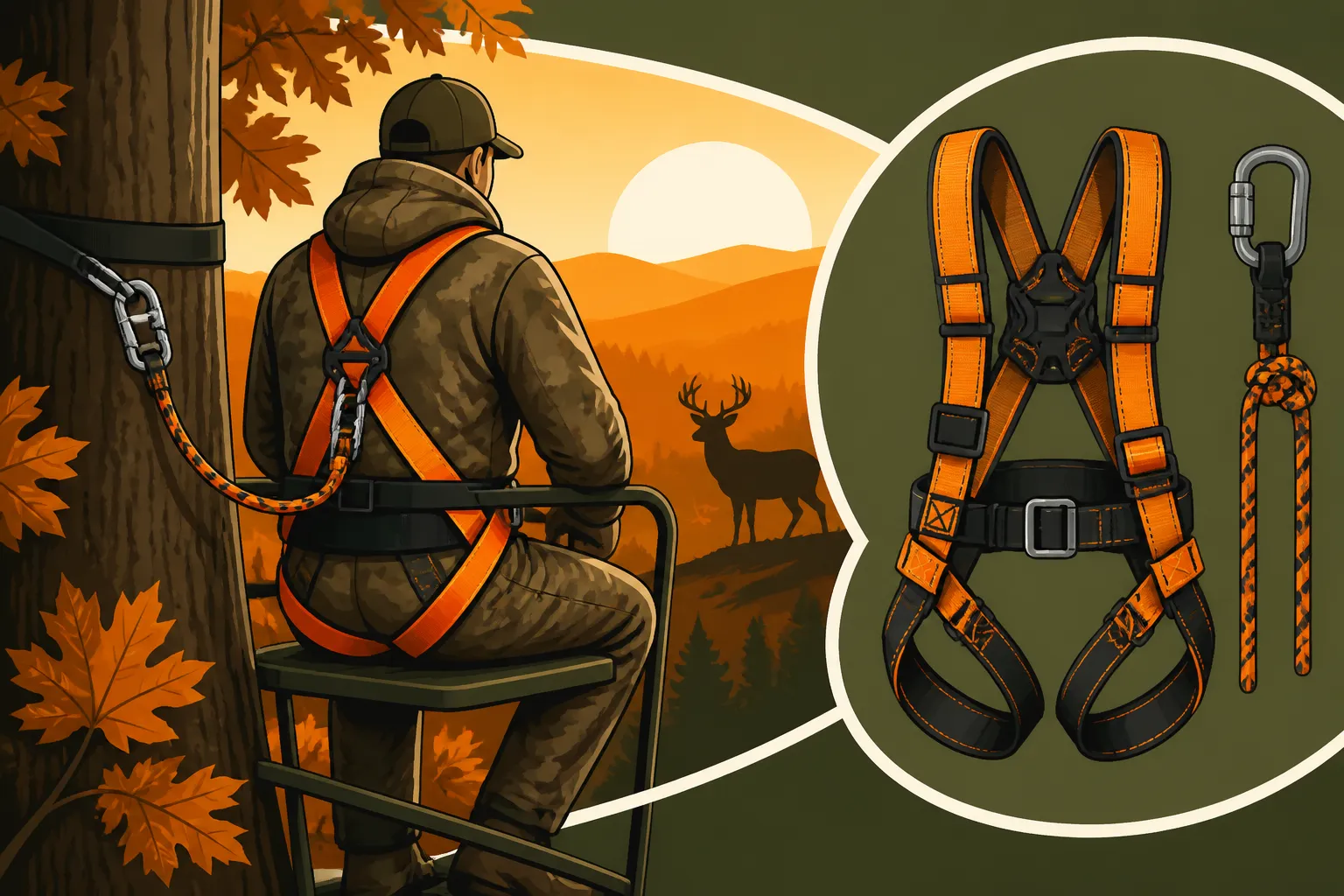
Let’s take a look at what makes up a good harness. You've got sturdy straps that go over your shoulders, around your waist, and through your legs, creating a secure cradle. There are buckles, usually quick-release, that allow for easy donning and removal while ensuring a snug fit. Crucially, there's a D-ring or attachment point, typically on the back between your shoulder blades, where you connect your tether. Many harnesses also feature leg straps that can be adjusted or even have a relief strap to prevent suspension trauma if you do fall. Look for models from reputable brands known for their safety standards; this isn't an area to cut corners. Make sure your harness meets industry safety standards, which are often indicated on the product itself.
How to Properly Wear and Adjust a Harness
Wearing a harness isn't rocket science, but getting it right is crucial. First, untangle all the straps and ensure it's oriented correctly (often, there's a "this side up" indicator). Step into the leg straps, then pull the shoulder straps over your shoulders like a vest. Cinch down the leg straps first, making them snug but not uncomfortably tight – you should be able to slide a flat hand under them. Next, tighten the waist and chest straps, ensuring the harness fits securely against your body without restricting movement. The D-ring should rest between your shoulder blades, easily accessible for your tether. It's a bit like adjusting a backpack; you want even tension and no slack that could allow for a jarring drop if you fall. Practice putting it on at home, even if it feels silly, so you're not fumbling in the dark before a hunt.
Inspecting Your Harness for Wear and Tear
Before every season, and honestly, before every single use, you need to give your harness a thorough once-over. This is a vital step that many hunters overlook, but it could save your life. Check all webbing for cuts, fraying, excessive wear, or discoloration from UV exposure. Look at all stitching for loose threads or signs of stretching. Examine buckles and D-rings for cracks, rust, deformation, or any other damage. The tether line should also be free of nicks or abrasions. If anything looks suspicious, replace it immediately. Don't try to repair it yourself. The materials in a harness are designed for specific stress tolerances, and any compromise can lead to failure. Many manufacturers even recommend replacing harnesses every few years, regardless of apparent wear, as materials can degrade over time. It’s cheap insurance for your life.
The Lifeline System: More Than Just a Rope
While a full-body harness is essential, it's only half of the equation. To be truly safe, you need a comprehensive lifeline system that keeps you connected to the tree from the moment your feet leave the ground until they're back on solid earth. This is where the magic really happens, preventing a freefall entirely rather than just catching you after one.
What is a Treestand Lifeline?
A treestand lifeline is a vertical rope system that you install on the tree where your stand is located. It typically consists of a long rope with a Prusik knot (or similar friction hitch) that slides up and down the main line. One end of the lifeline is secured around the base of the tree, and the other is anchored at the height of your stand, often with a carabiner to a tree strap. This creates a continuous connection point. As you ascend or descend, you slide the Prusik knot up or down the main line. If you slip, the Prusik knot immediately cinches down, stopping your fall instantaneously. It’s simple, effective, and truly makes a world of difference. When Treestand Setups in Cherokee National Forest are discussed, a lifeline should always be part of that conversation.
Installing and Using a Lifeline System Safely
Installing a lifeline is straightforward but requires attention to detail. First, select a strong, healthy tree that can safely support your stand and your weight. Securely attach the top end of the lifeline to the tree at or above your stand's platform height using a tree strap and carabiner. Ensure the strap is tight and positioned so the lifeline hangs straight down. Then, take the bottom end of the rope and secure it firmly around the base of the tree. The lifeline should be taut, with no excessive slack. As you climb, slide the Prusik knot up the main line so it's always above you. When descending, slide it down, always keeping it within arm's reach. The key is to be connected the entire time your feet are off the ground. If you’re scouting new public land before season, like when reading aerial photos for Scouting Tennessee Public Land Before Season, visualize where you’d place your stand and lifeline.
| Safety Step | Correct Action | Incorrect Action | Outcome of Incorrect Action |
|---|---|---|---|
| Harness Fit | Snug, no slack, D-ring centered between shoulder blades | Loose straps, D-ring out of reach | Reduced fall protection, difficult connection |
| Lifeline Anchor | Top anchor above stand, bottom at tree base, taut rope | Loose anchors, excessive slack, no bottom anchor | Ineffective fall arrest, potential for injury |
| Prusik Knot Use | Always above you, sliding as you climb/descend | Not attached, attached too low, left at base | Freefall risk, no fall arrest |
| Inspection | Pre-hunt check of all components for wear and damage | Assumed good, neglected checks, minor damage ignored | Catastrophic failure during fall |
| Connection | Tether securely clipped to Prusik knot | Tether clipped to stand, not lifeline, or not used | No protection from fall |
Connecting Your Harness to the Lifeline
This is the moment of truth. Once your harness is on and your lifeline is installed, you need to connect them. Your harness will have a short tether strap, sometimes called a tree tether or safety strap, that connects from the D-ring on your back to the Prusik knot on the main lifeline rope. As you climb your Climbing Sticks for Tennessee Hardwoods, make sure this tether is clipped into the Prusik knot. The Prusik knot should be adjusted so it slides freely as you ascend, but immediately grabs if you put downward pressure on it, like in a fall. When you reach your stand, you'll slide the Prusik knot up to the desired height, usually just above your head level, and keep your tether connected. This ensures that even if you slip getting onto your stand platform or out of your stand, you're still connected. Some hunters even carry a spare carabiner to attach directly to the tree strap before getting into the stand, providing a quick, initial connection point.
Beyond the Basics: Advanced Safety Considerations
Being safe in a treestand goes beyond just wearing a harness and using a lifeline. It involves understanding potential complications, having a plan for emergencies, and making safety a year-round habit, not just a pre-season chore. Hunters using apps like GoHunt for planning Hunting Cumberland Plateau Ridgelines should also mark their stand locations and emergency contacts.
Suspension Trauma and How to Prevent It
While a safety harness prevents you from hitting the ground, being suspended for an extended period can lead to a serious condition called suspension trauma or orthostatic intolerance. This occurs when your legs dangle motionless, causing blood to pool in your lower extremities. This reduces blood flow to your brain and other vital organs, leading to dizziness, fainting, and potentially severe organ damage or even death. It's a terrifying thought, but it's preventable. Most modern harnesses include a relief strap or foot stirrup that you can deploy to stand up in your harness, allowing blood to circulate more freely. If you find yourself suspended, immediately deploy your relief strap, try to move your legs, and activate your personal locator beacon if you have one. Practice using this strap while safely on the ground to build muscle memory.
Rescue Plans and Emergency Gear
Falling is only one part of the problem; what happens after a fall? You need a rescue plan. Ideally, this means hunting with a buddy who knows your stand location and can assist. If you hunt alone, which many of us do, you need to be self-sufficient. This means carrying a fully charged cell phone (though service can be spotty in places like the Cherokee National Forest Hunting areas), a whistle, and a personal locator beacon (PLB) or satellite messenger device. Having a sharp knife on your person that you can reach with either hand is also crucial in case you need to cut yourself free from something or deploy a self-rescue rope system. Some hunters even carry a small, lightweight rope with an ascender/descender device to perform a self-rescue back to the ground. Planning out your First Aid Kits for Remote Cherokee Forest Ground should definitely include items for fall injuries, but more importantly, think about communicating your emergency. GoHunt's mapping features can be great for sharing your exact location with emergency contacts.
Year-Round Practice and Routine Checks
Safety isn't a "one and done" deal. It's a continuous process that should be integrated into your entire hunting lifestyle. This means practicing with your harness and lifeline well before opening day. Put it on, climb your stand, get familiar with the feeling, and rehearse what you would do if you fell. Check your equipment regularly, not just at the start of the season. Extreme weather, like the freezing rain during a Cold-Weather Sitting Strategy in Tennessee, can impact equipment. Even during the off-season, when you're doing a bit of Shed Hunting on Tennessee Public Land, consider checking your stands and equipment you might have left out. Store your harness in a cool, dry place, away from direct sunlight and pests, to prolong its life. Just like you check your gun or bow, make checking your fall arrest system a routine. Remember, while Tennessee has specific rules about Treestand Rules on Tennessee Public Land, personal safety goes far beyond minimum regulations. Always strive for the highest safety standards to ensure every hunt is a safe one.
Disclaimer
This article is for general informational purposes only and does not constitute professional advice. Laws, prices and regulations vary by location and change over time. Consult a qualified professional for guidance on your specific situation.