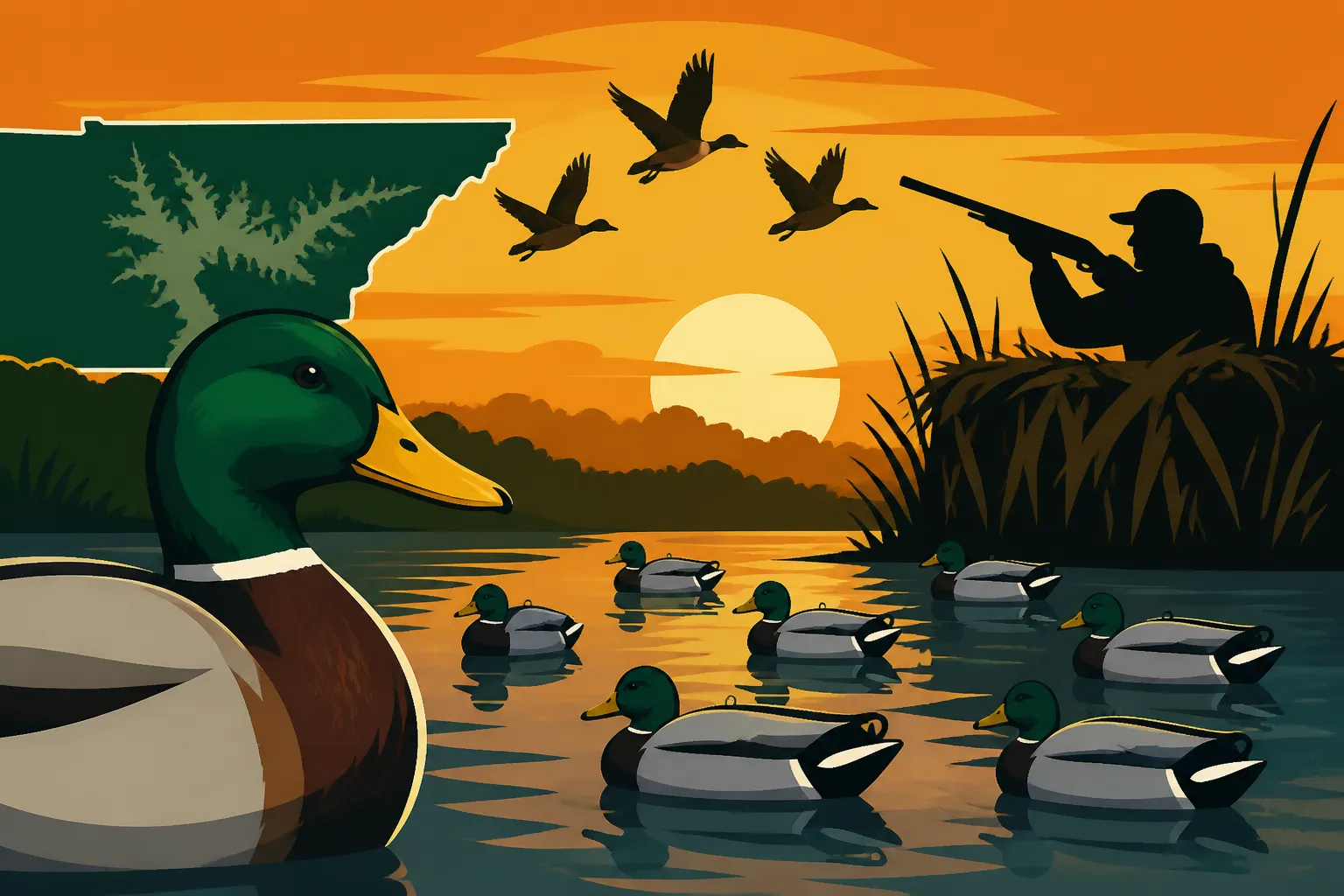
Decoy Spreads for Reelfoot Mallards
Hunting Reelfoot Lake can be an incredible experience, offering some of the best waterfowling in the Southeast, but it also presents a unique set of challenges that can leave even seasoned hunters scratching their heads. If you've ever set out a spread on Reelfoot only to watch mallards cup their wings and flare at the last second, or struggled to even find a spot where ducks want to commit, you know the frustration. This guide is going to dive deep into the art and science of decoy spreads specifically tailored for the demanding environment of Reelfoot Lake, helping you understand how to fool those wary mallards and bring them into range.
The Unique Dynamics of Reelfoot Lake for Decoy Spreads
Reelfoot Lake isn't just another body of water; it's an ecosystem unto itself, shaped by a series of earthquakes over 200 years ago. This history has left behind a landscape unlike almost any other, dominated by flooded cypress trees, shallow water, and a maze of stumps and logs. These unique characteristics, combined with significant hunting pressure, mean that what works for ducks elsewhere might not cut it here. Understanding these dynamics is the first step to building a truly effective decoy spread.
Navigating Flooded Cypress Timber and Open Water
The iconic flooded cypress timber of Reelfoot Lake is both its charm and its challenge. Unlike wide-open agricultural fields or river bottom sloughs, you're often hunting in tight quarters, surrounded by ancient trees rising from the water. This dense cover dictates everything from your blind placement to the type and size of your decoy spread. You can't just throw out 100 decoys in a long line; you have to work with the timber, not against it. The ducks are accustomed to landing in and around these trees, so your spread needs to mimic that natural behavior.
In some areas, however, Reelfoot does open up into larger stretches of water or pockets within the timber. These can present different opportunities and demand a shift in strategy. Here, you might have more room to create larger, more visible spreads, but you also lose some of the natural concealment that the cypress offers. It's a constant mental adjustment, adapting your plan based on whether you're tucked deep in the timber or on the edge of a more open body of water. Each blind location requires a thoughtful assessment of the natural surroundings and how ducks would approach it, especially when considering a Reelfoot Lake WMA Duck Blind Access hunt where blind locations are often fixed.
Understanding Reelfoot's Waterfowl Pressure
Let's be honest: Reelfoot Lake sees a lot of hunters. This isn't a secret honey hole where birds are naive and easily fooled. These mallards, and all the other waterfowl that call Reelfoot home during the migration, are some of the most educated birds you'll ever encounter. They've seen every spread, heard every call, and dodged countless hunters by the time they reach late season. This hunting pressure means that simply putting out a dozen decoys isn't enough; you need subtlety, realism, and a spread that truly looks inviting and safe.
The constant barrage of calls and decoy setups makes ducks wary. They become experts at spotting anything that looks "off." A spread that's too uniform, too tight, or lacks natural movement will often get a wide berth. Your goal isn't just to attract them, but to convince them that your spot is the safest, most appealing place to land, even when they're expecting danger around every cypress knee. This is where attention to detail and a willingness to adapt become paramount, turning a wary bird into a decoying one. For a broader overview of the hunting opportunities, check out Waterfowl Hunting Reelfoot Lake and Beyond.
The Impact of Changing Water Levels
Reelfoot Lake's water levels can fluctuate, sometimes dramatically, throughout the hunting season, and this is a huge factor in decoy placement. A spot that was prime and easily accessible one week might be high and dry, or suddenly much deeper, the next. These changes directly impact how ducks feed and where they prefer to roost and land. If the water drops, ducks might avoid previously productive shallow areas, seeking out new feeding grounds. Conversely, rising water can open up new flooded timber sections, creating fresh opportunities.
You can't just set your decoys and forget them. A good Reelfoot hunter is constantly scouting and observing water levels, often even adjusting their spread mid-hunt if conditions change rapidly. What worked yesterday might not work today, especially if the water has risen or fallen by a significant margin. Planning for these fluctuations, perhaps by carrying decoys with adjustable lines or even a few deeper-water keel models, can save a hunt from becoming a frustrating exercise in futility. It's all part of the dynamic environment you encounter when Hunting the Reelfoot Lake Duck Blinds.
Essential Decoy Choices for Reelfoot Mallards
Choosing the right decoys isn't just about grabbing a box of greenheads from the store. On Reelfoot, every decision, from species mix to realism and durability, plays a critical role in your success. You're trying to create an illusion, a picture of safety and abundance, and that starts with the tools you use.
The Right Mix of Species and Sexes
While we're often targeting mallards, a spread composed solely of mallard drakes can sometimes look unnatural, especially to wary birds. Realism is key. Think about what a natural flock of ducks on Reelfoot looks like. You'll see a mix of mallards, yes, but also wood ducks, gadwall, wigeon, and pintails, depending on the season. Incorporating a few decoys of these other species can add a layer of authenticity to your spread, making it more appealing to passing birds. A balanced ratio of mallard drakes to hens is also important – usually about 60/40 or even 50/50 drakes to hens looks more natural than a sea of bright green heads.
Don't overdo it with too many different species, though. The goal is to mimic what's common in the area you're hunting. If you're seeing mostly mallards and a few wood ducks, then stick to that. A good rule of thumb is to let the birds tell you what they're seeing. If you consistently observe a particular mix of species flying by, it might be worth adding one or two of those decoys to your setup. Remember, Reelfoot is a magnet for all kinds of waterfowl, including the beloved Mallards at Reelfoot Lake.
Motion Decoys and Their Strategic Use
Motion is absolutely critical on Reelfoot. Still, lifeless decoys are a dead giveaway to educated birds that something isn't right. Ducks are constantly moving, preening, tipping up, and splashing, especially when feeding or resting. Incorporating motion into your spread breathes life into it and can be the difference between ducks committing and simply circling out of range. Jerk strings are a classic, highly effective, and relatively inexpensive way to add intermittent motion. A slight twitch that sends ripples across the water or makes a few decoys bob can often be enough to catch a duck's eye.
Spinning-wing decoys (SWDs) can be incredibly effective, particularly on days with low wind or when trying to draw birds from a long distance. However, there's a fine line with SWDs on Reelfoot. Overuse or improper placement can sometimes spook wary birds, making them flare. It's often best to use them judiciously, perhaps one or two placed slightly away from your main landing zone, and to observe how the birds react. Sometimes, less is more, and a subtle flutter is all you need. You might also consider simple floating models with weights and anchor lines for Decoy Spreads for Reelfoot Mallards, allowing them to drift and bob naturally.
The Importance of Realistic Detail and Durability
On a highly pressured lake like Reelfoot, ducks have ample opportunity to scrutinize your spread. Cheap, shiny, or faded decoys that look more like toys than actual ducks are going to send them packing. Invest in decoys with realistic paint schemes, detailed feather patterns, and natural postures. Flocked heads, while a bit more delicate, can significantly reduce glare and add to the realism. Pay attention to the posture: some feeding, some resting, some upright. A mix looks far more natural than a dozen identical ducks.
Beyond aesthetics, durability is crucial. Reelfoot can be tough on gear, with sharp cypress stumps, shallow mud, and the constant ebb and flow of water. Choose decoys made from robust, high-quality plastics that can withstand bumps, drops, and general wear and tear. Keel design matters too; you want decoys that sit realistically on the water and don't get easily tangled or flip over in light chop. A reliable spread that maintains its lifelike appearance throughout the season will serve you far better than one that quickly looks artificial. Brands like Avery, Higdon, and GHG are often favored by serious waterfowl hunters for their blend of realism and ruggedness. When you're using resources like GoHunt to scout areas, you might also find discussions on specific gear preferences for the region.
| Decoy Type | Best Use for Reelfoot | Pros | Cons |
|---|---|---|---|
| Mallard Drakes | Main attraction, highly visible | Attracts dominant mallards, good visibility | Can look unnatural if overused without hens |
| Mallard Hens | Adds realism and balance to the spread | Crucial for natural flock appearance, reassures wary birds | Less visible from a distance than drakes |
| Wood Ducks | Timber holes, shallow water, adds species variety | Blends with natural Reelfoot environment, appeals to diverse birds | Less effective in open water or as primary attraction |
| Gadwall/Wigeon | Mid-range variety, common on Reelfoot | Adds diversity, can attract non-mallards | May not be recognized as quickly by passing mallards |
| Feeding Decoys | Creates appearance of safe, actively feeding birds | Highly realistic, encourages birds to drop in | Can be less visible than upright decoys from far away |
| Upright/Sentry | Good visibility, signals security to incoming birds | Catches distant birds' attention, conveys flock alertness | Too many can make the spread look too "alert" or wary |
| Jerk String | Creates ripples and subtle movement | Inexpensive, highly effective, natural motion | Requires manual operation, limited range |
| Spinning Wing | Attracts from distance, low wind conditions | Excellent visibility and flash, high attraction | Can spook pressured birds if overused or improperly placed, battery life |
Proven Decoy Spreads for Different Reelfoot Scenarios
The beauty of decoy spread design lies in its adaptability. There isn't one perfect spread for Reelfoot; rather, there are classic foundations that you then tweak based on your specific location, the wind, the sun, and how the birds are flying. The goal is always to create an inviting, natural-looking scene that guides ducks right into your shooting pocket.
The Classic J-Hook or Fishhook Spread
The J-Hook, or Fishhook, is a perennial favorite for a reason: it's incredibly effective at funneling birds into a desired landing zone. Imagine a large "J" laid out in the water, with the long arm extending out into the more open water and the curved "hook" pointing towards your blind or hiding spot. The main body of the "J" should consist of a mix of mallard drakes and hens, with perhaps a few other species mixed in for realism. The idea is that incoming birds will follow the line of decoys down the long arm, turn with the hook, and land right in the pocket created by the curve.
This spread works exceptionally well in transitional areas where timber meets a more open pocket or bay. Place your blind at the inside curve of the "J," ensuring you have a clear shot into the landing zone. Vary the density of your decoys; a slightly looser spread on the long arm can suggest a relaxed, feeding flock, while a tighter cluster at the bend can imply a secure resting area. Always consider the wind direction when setting this up; ducks want to land into the wind, so orient your "J" so the landing pocket is downwind of the approaching flight path.
The Power of the Landing Zone or Pocket Spread
Sometimes referred to as a "hole" spread, this is a fantastic option for hunting small timber holes or natural openings within the dense cypress. The concept is simple: create an open space in your decoys that looks like the perfect, safe spot for ducks to land. This involves placing decoys in a roughly horseshoe or "U" shape, leaving a clear, calm patch of water directly in front of your blind. Ducks naturally look for these open landing zones, especially when navigating through thick timber.
The key to a successful pocket spread is making that open water look irresistible. Ensure the decoys surrounding the pocket are realistic, with some feeder decoys facing into the pocket to simulate a feeding frenzy. If you have motion decoys, placing them strategically around the edges of the pocket can draw attention to the opening. This spread is particularly effective on calm days or when the wind isn't strong enough to dictate a precise landing approach, allowing ducks to choose the most appealing open space.
Timber Hole Specific Spreads
Hunting deep within the cypress timber on Reelfoot means adjusting your entire mindset. Here, you're not usually dealing with wide-open approaches. Instead, you're looking for subtle pockets, small clearings, or narrow lanes where ducks feel comfortable dropping in. Your spreads in these areas will be much smaller, often consisting of just a dozen or two decoys, and heavily focused on realism and natural placement. Think about how ducks naturally land in timber – they often filter in, picking their way through the trees.
For timber holes, forgo large, sweeping designs. Instead, scatter a handful of decoys, primarily mallard hens and a few drakes, along the edges of the opening and even tucked amongst some of the cypress knees. Use feeder and rester decoys to create a scene of peaceful contentment. A single spinning-wing decoy placed on a pole high enough to clear some of the timber can be effective for visibility, but ensure it's not directly over your landing zone, which could cause birds to flair. The goal is to make it look effortless and natural, like a small group of ducks has simply settled into a protected spot. This tactic is especially useful when Hunting West Tennessee Bottomland Deer as well, which can often overlap with prime timber duck hunting spots.
Enhancing Your Spread with Motion and Concealment
It's not enough to just put out decoys; you have to bring them to life and ensure you're invisible to the keen eyes of incoming birds. The combination of realistic motion and impeccable concealment is what truly elevates a good Reelfoot spread to a great one.
Incorporating Jerk Strings and Spinners
Motion is life, especially for pressured Reelfoot mallards. A well-placed jerk string can make a huge difference. Imagine sitting quietly, watching a flock of mallards begin to commit, and then giving that string a gentle tug. The sudden ripple on the water, the subtle bobbing of a few decoys, mimics the movement of live ducks and often provides just the reassurance those wary birds need to drop their feet. Position your jerk string line so it pulls decoys in your landing zone, making that area even more inviting. You don't need a lot of decoys on the string—three to five can be plenty.
Spinning-wing decoys (SWDs) also have their place, but use them wisely. On bright, sunny days, the flash from a spinner can be seen from miles away, but if the birds are flaring, it's time to pull them in. On overcast days or when you're trying to pull birds over a long distance, a well-placed spinner, perhaps tucked slightly into the timber at the edge of your spread, can be a game-changer. The key is to be observant. If ducks are shying away, try turning the spinner off or removing it. This adaptability is paramount to success when hunting Tennessee Waterfowl Zones and Seasons.
Effective Blind Placement and Camouflage
Your blind is essentially part of your decoy spread, as it needs to blend seamlessly into the environment. On Reelfoot, whether you're in a permanent blind or a portable setup, concealment is non-negotiable. Ducks fly low over the water and have excellent eyesight, spotting anything out of place. Brush your blind in thoroughly, using natural materials from the surrounding area. Cypress branches, dead reeds, cattails, and even mud can be used to break up the outline of your blind and help it disappear into the timber or bank.
Consider the angle of the sun. Position your blind so that the sun is either at your back or to the side, preventing glare off your face or equipment that could spook incoming birds. Similarly, be mindful of shadows; a harsh, unnatural shadow cast by your blind can be a red flag. Think about how ducks approach, and ensure your blind is positioned to maximize concealment from their typical flight path. A well-hidden blind makes all the difference in getting those birds to commit. When using mobile tools like GoHunt, ensure you've marked your blind location for future reference and optimal approaches.
Adapting to Changing Wind and Light Conditions
Reelfoot weather is famously fickle. The wind can shift direction, strength, and even temperature rapidly, and light conditions can change from bright sun to heavy overcast in a matter of minutes. A successful Reelfoot hunter is always ready to adapt their spread to these conditions. Wind is critical: ducks always land into the wind. If the wind shifts, you might need to quickly re-position some decoys to maintain your landing zone's efficacy. This might mean adjusting anchor lines or even moving a few key decoys to guide birds correctly.
Light also plays a role. On bright days, decoys can appear too shiny, and the glare can be an issue. On darker, overcast days, you might need more contrast or motion to get noticed. Pay attention to how the light hits your decoys. Sometimes, simply rotating a few decoys can change their appearance enough to make them more inviting. Don't be afraid to make adjustments during the hunt. The birds will tell you if your spread isn't working, and a quick, strategic tweak can often turn a slow morning into a successful one.
Troubleshooting Common Reelfoot Decoy Problems
Every duck hunter has faced the frustration of ducks flaring, circling, or simply ignoring their perfectly laid-out spread. Reelfoot's smart birds and challenging environment amplify these problems. Knowing how to diagnose and address these common issues can save a hunt from utter disappointment.
When Ducks Circle But Won't Commit
This is perhaps the most frustrating scenario: ducks fly over, give your spread a good look, circle once or twice, and then decide to move on. They're interested, but something isn't quite right. The first thing to check is your concealment. Are you, or anyone in your blind, moving? Is there any glare from faces, glasses, or equipment? Is your blind perfectly brushed in, or does it stand out against the background? Even a slight movement or flash can send a wary mallard packing.
Next, evaluate your spread's realism. Is the water too calm? Try adding subtle motion with a jerk string. Are your decoys too uniform? Mix up the postures and ensure a good drake-to-hen ratio. Is your landing zone clearly defined and free of obstacles? Ducks need a clear, safe path to land. Lastly, consider your calling. Are you overcalling? Sometimes, less is more. A few soft contented quacks or clucks might be more reassuring than aggressive hails to birds that are already in close. Consider that birds flying over might have recently come from Hunting the Mississippi Flyway Backwaters, where they might have encountered similar hunting pressure.
Battling Ice and Debris
Reelfoot Lake can freeze quickly in sustained cold snaps, and ice can be a major headache for decoy spreads. Ice not only makes it difficult to deploy and retrieve decoys but also affects their movement and realism. If there's skim ice, your decoys will stick, creating an unnatural, static scene. In these conditions, focusing on fewer, strategically placed decoys that you can keep moving with a jerk string or by breaking the ice around them can be more effective. Large, durable decoys that can withstand being frozen in place are also a good investment.
Beyond ice, Reelfoot is prone to collecting floating debris – leaves, branches, and even entire cypress limbs. This debris can foul your decoy lines, push decoys out of position, or simply make your spread look messy and uninviting. Before each hunt, take the time to clear your intended decoy area of any significant debris. During the hunt, be prepared to wade out (with proper Waders for Flooded Timber Hunting) and clear any major blockages. A clean spread looks more natural and welcoming.
Decoy Maintenance and Longevity
Decoys are an investment, and like any good hunting gear, they need proper care to last and perform effectively. Neglected decoys quickly lose their realism and can become a liability. After each hunt, especially in muddy or icy conditions, rinse your decoys thoroughly to remove any grit, mud, or algae. Store them in slotted bags or bins to prevent paint rub and ensure they stay organized and protected.
Periodically, inspect your decoys for faded paint, chipped areas, or damaged keels. Touch up paint as needed, paying special attention to the heads and bills. If a keel is damaged and causing a decoy to sit unnaturally, repair or replace it. Check your lines and weights; frayed lines or lost weights mean your decoys won't hold position. By taking the time to maintain your spread, you ensure that every decoy looks its best, functions correctly, and continues to fool even the wariest Reelfoot mallards for years to come. Don't forget, you also have to ensure you're using compliant ammunition, especially if hunting certain areas; always check Where Nontoxic Shot Is Required in Tennessee.
Disclaimer
This article is for general informational purposes only and does not constitute professional advice. Laws, prices and regulations vary by location and change over time. Consult a qualified professional for guidance on your specific situation.