GPS Collars for Bear Hounds
Hunting black bears with hounds in Tennessee's rugged mountains is an experience unlike any other, demanding not just skill and perseverance, but also a deep trust in your dogs. But let's be honest, the worry of a prized hound getting lost or injured in the vast, unforgiving terrain of the Cherokee National Forest is a constant, gut-wrenching concern for many bear hunters. This guide is here to alleviate some of that stress, diving deep into why GPS collars aren't just a luxury, but an absolute necessity for successful and responsible bear hound hunting in Tennessee, and how to make the most of this vital technology.
Why GPS Collars are Non-Negotiable for Bear Hound Hunters in Tennessee
Anyone who's ever chased a bear with hounds knows the feeling: the thrilling baying fades into the distance, and then, silence. A knot forms in your stomach. Did they go too far? Are they on a different track? Did they cross a road? In the steep hollers and dense timber of East Tennessee, losing a dog can happen in a blink, and finding them without modern technology is akin to finding a needle in a haystack. The terrain itself presents unique challenges that make traditional methods of tracking, like just listening for barks or using older radio telemetry, simply insufficient.
The Challenges of Tennessee's Bear Country
Tennessee's primary bear hunting grounds, particularly within the Cherokee National Forest Hunting areas, are characterized by incredibly steep topography, thick rhododendron slicks, and vast expanses of wilderness. A hound on a hot track can cover miles in a matter of minutes, often traversing areas that are nearly impassable for a human, even one in peak physical condition. The sheer scale of these landscapes means that what sounds close one minute can be a ridge or two away the next, completely out of earshot. It's not uncommon for a bear and the hounds chasing it to drop into a deep gorge, cross a major highway, or even swim a river, leaving you frantically trying to pinpoint their location from miles away. This isn't your grandfather's flat woods deer hunt; this is an environment that actively works against you when it comes to keeping tabs on your prized canine athletes.
Imagine your lead hound, ol' Blue, a seasoned tracker with a nose for bruins, suddenly goes silent. You've heard him baying hard for the last thirty minutes, moving quickly up a steep mountainside. Now, nothing. Without a GPS collar, you're left guessing his last direction and praying he circles back or trees a bear within earshot. This kind of uncertainty isn't just stressful; it can put your dog's life at risk and drastically reduce your chances of a successful hunt.
Ensuring Hound Safety and Swift Recovery
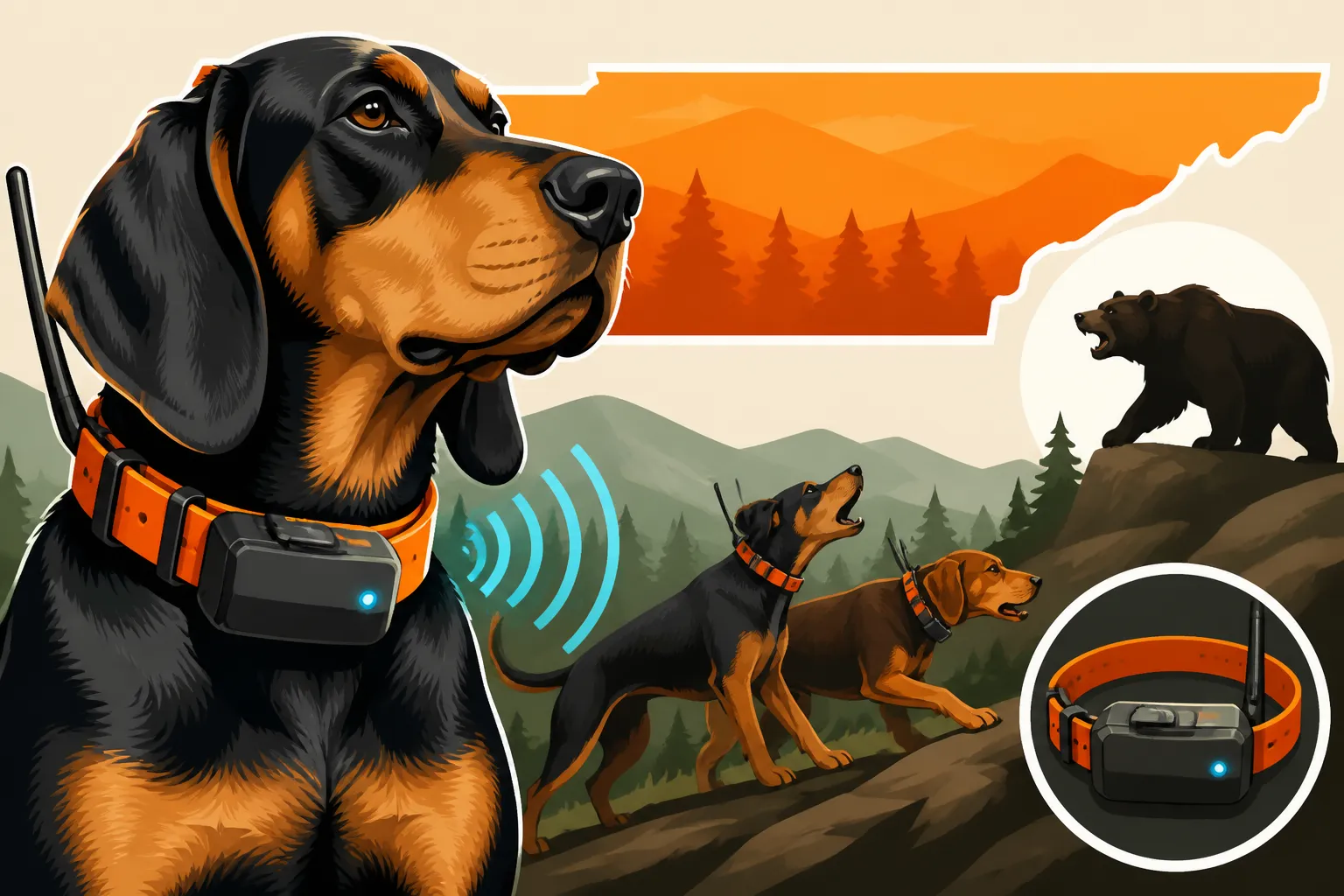
The safety of your hounds is paramount. GPS collars offer an invaluable layer of protection by providing real-time location data. This means you can monitor each dog's movement, speed, and even whether they've stopped and are baying at a treed bear or just checking out a squirrel. More critically, if a hound goes silent or seems to be heading into a dangerous area, you can immediately see their last known location and initiate a recovery plan. This is especially crucial when considering hazards like busy roads, deep ravines, or even private property lines that hounds might unknowingly cross. Being able to quickly locate and retrieve a dog means less time exposed to potential dangers like vehicles, other predators, or simply the elements if they're injured or exhausted.
Consider a scenario where one of your younger hounds, perhaps still learning the ropes, gets separated from the main pack. Without a GPS collar, that dog could be wandering for hours or even days, potentially falling victim to coyotes, becoming entangled, or getting hit by a car. With a GPS collar, you get an alert, see their precise location on your handheld device, and can direct a recovery team straight to them, minimizing their time in harm's way. This ability to monitor and react quickly isn't just convenient; it's a responsible hunter's duty to their animals. It means you can focus more on the hunt itself, knowing you have a reliable digital leash on your valuable partners.
Key Features to Look for in a GPS Collar System
Choosing the right GPS collar system can feel overwhelming with all the options out there. However, for the specific demands of Bear Hunting Cherokee National Forest, certain features rise to the top as absolute must-haves. This isn't about having every bell and whistle, but about ensuring the core functionality is robust enough to handle the challenges of chasing bears across Tennessee's wild landscapes.
Range and Signal Reliability
In the deep hollers and dense canopy of the Cherokee National Forest, line-of-sight is often non-existent. You need a GPS system with excellent range and, more importantly, a reliable signal that can cut through thick timber and navigate varied terrain. Many modern GPS collar systems use a combination of satellite and radio signals. The radio signal is critical for communicating with your handheld tracking device when satellite coverage might be spotty in a deep ravine or under a heavy tree canopy.
Look for systems that boast several miles of reliable range, even in adverse conditions. Some systems offer enhanced antennas or booster options for those particularly challenging areas. It's not just about the maximum stated range, but how consistently that range performs in real-world, mountainous conditions. A collar that drops signal too often is next to useless when you need to know exactly where your hounds are. Companies like Garmin's Alpha series or GoHunt, for example, have built reputations for providing robust tracking solutions designed for these kinds of extreme conditions, often integrating detailed mapping features that show you where your dogs are in relation to topography. Being able to see your dogs' real-time movements on a topographic map display, even when they're miles away and out of sight, is truly a game-changer for effective hound management.
Battery Life and Durability
Bear hunts can be long, grueling affairs. Hounds might be on a track for hours, pushing deep into the backcountry. The last thing you need is a collar dying halfway through the pursuit. Prioritize collars with exceptional battery life, often boasting 20-40 hours or more on a single charge. Rechargeable batteries are standard, but the capacity and efficiency are what truly matter. Many collars also offer different tracking update rates (e.g., every 2.5 seconds vs. every 5 or 10 minutes) which directly impacts battery drain. You'll want the flexibility to adjust this based on the intensity of the hunt.
Durability is another non-negotiable. Hounds are tough on their gear. Collars will be scraped against rocks, dragged through briars, submerged in creeks, and subjected to all sorts of abuse. Look for collars with robust, waterproof casings (IPX7 or IPX8 ratings are excellent) and strong, secure straps that won't come undone or break. The internal components need to be sealed against moisture, dust, and impact. A cheap collar that fails in the middle of a chase is a costly mistake, not just for the money spent, but for the potential loss or injury of your dog.
Mapping and Tracking Interface
The best GPS collars integrate seamlessly with detailed mapping. This isn't just about seeing a dot on a blank screen; it's about seeing your dog's dot on a topographic map, overlaid with property lines, roads, water features, and public land boundaries. This contextual information is critical for making informed decisions on the fly, whether it's planning your approach to a treed bear or figuring out how to retrieve a dog that's veered off course.
Many systems allow you to pre-load detailed maps of the areas you'll be hunting, including WMA boundaries, forest service roads, and even private land boundaries (if you have the right mapping subscriptions, such as those offered by GoHunt, which can be invaluable for scouting and in-field navigation). The handheld device should have a clear, easy-to-read display, even in bright sunlight. Look for features like dog tracking history (so you can review their path), geofencing (to alert you if a dog crosses a boundary), and the ability to mark waypoints for the bear's last known location or a rendezvous point for your hunting party. The more information you have at your fingertips, the safer your hounds will be and the more efficient your hunt will become.
Integrating GPS Collars with Your Bear Hunting Strategy
Having top-tier GPS collars is one thing; effectively integrating them into your overall bear hunting strategy is another. It's not just about turning them on and letting the dogs loose. Thoughtful planning, consistent training, and smart in-field usage will maximize the benefits of this technology, especially when dealing with the unpredictable nature of Tennessee's Black Bear Population in the mountains.
Pre-Hunt Preparation and Training
Before you ever step foot in the woods for a bear hunt, your GPS collars should be part of your routine. First, ensure all collars are fully charged and functioning correctly. Check for software updates for both the collars and your handheld device. Familiarize yourself with the mapping features and any new functions. It's also a good idea to perform a "field test" in terrain similar to what you'll be hunting, just to ensure signal reliability and battery performance are up to par.
Crucially, train your hounds with their collars on. They need to get used to the feel and weight of the collar long before the season starts. While the collars themselves don't typically interfere with a dog's hunting ability, a dog unaccustomed to wearing one might find it distracting. Integrate collar-wearing into their regular exercise and training sessions. This ensures they're comfortable and won't be fussing with the collar when it matters most. For younger dogs, especially, this early exposure is vital. When practicing Running Hounds for Cherokee Forest Bears, always have those collars engaged.
In-Field Tactics and Communication
During the hunt, GPS collars become your eyes and ears in the woods. Assign one person to be the primary "dog tracker" or "hunt master" who monitors the handheld device and communicates dog locations to the rest of the hunting party. This prevents multiple people from giving conflicting directions and ensures everyone is working off the same information. Use the mapping features to anticipate where the dogs might push the bear, allowing you to position catch dogs or road crews strategically.
For example, if the dogs are pushing a bear towards a well-known ridge, you can use the GPS data to direct hunters to cut off escape routes or set up for a shot if the bear is treed. This is especially useful in complex areas where Hunting Bear Zone Two Near the Smokies requires coordinated effort. If a dog separates, you immediately know, rather than waiting for frantic calls or prolonged silence. The ability to monitor individual dogs also helps identify which dog is truly leading the charge, which might be lagging, or if one has gotten off on a different track, potentially saving valuable time and energy. Effective communication, coupled with precise GPS data, transforms a chaotic chase into a more organized and safer operation.
Post-Hunt Analysis and Maintenance
The utility of GPS collars doesn't end when the bear is harvested or the dogs are leashed. Many systems record the entire track history of each dog. Reviewing this data after the hunt can provide invaluable insights into bear behavior, dog performance, and terrain challenges. You can identify preferred bear travel corridors, common treeing spots, and areas where dogs might have struggled. This information is gold for future hunts, helping you fine-tune your strategy for Hunting Bear Zone One in Northeast Tennessee or Hunting Bear Zone Three on South Cherokee.
After each hunt, ensure collars are cleaned of mud and debris. Check for any damage to the casing or antenna. Recharge all batteries promptly. Proper maintenance extends the life of your expensive equipment and ensures it's ready for the next adventure. Just like your firearms or archery equipment, your GPS collars are an investment that needs care to perform reliably season after season. Taking the time to wipe them down, inspect them, and charge them up is a small price to pay for the peace of mind they provide.
Let's look at a comparison of typical features you might encounter in various GPS collar systems:
| Feature | Entry-Level System | Mid-Range System | High-End System |
|---|---|---|---|
| Range | 3-5 miles (line of sight) | 5-8 miles (varied terrain) | 8-10+ miles (rugged terrain) |
| Battery Life | 12-24 hours | 24-36 hours | 36-48+ hours |
| Tracking Update Rate | 5-10 seconds | 2.5-5 seconds | 2.5 seconds (adjustable) |
| Mapping Integration | Basic points/lines | Topographic, land ownership | Detailed topo, aerial, custom |
| Waterproof Rating | IPX6 (splash resistant) | IPX7 (submersible) | IPX7/IPX8 (highly durable) |
| Handheld Display | Monochrome, small | Color, medium | High-res color, larger |
| Connectivity | Radio only, limited dogs | Radio + GPS, multiple dogs | Radio + GPS, Wi-Fi, unlimited |
| Alerts/Notifications | Basic signal loss | Geofence, treeing, bark | Custom, advanced, real-time |
| Durability | Standard plastic | Reinforced polymer | Military-grade, impact-resistant |
This table shows that while an entry-level system might get you by in relatively flat, open areas, the demanding conditions of bear hunting in Tennessee practically necessitate a mid-range to high-end system for optimal performance and peace of mind. The added range, battery life, and superior mapping are truly indispensable when you're dealing with the remote and challenging environments where Tennessee's Black Bear Population thrives.
Disclaimer
This article is for general informational purposes only and does not constitute professional advice. Laws, prices and regulations vary by location and change over time. Consult a qualified professional for guidance on your specific situation.