Tennessee Predator Impact on Fawn Recruitment
It's a question that keeps a lot of us Tennessee hunters up at night: what happens to all those little fawns out there, especially with predators seemingly everywhere? We pour so much into deer season, thinking about the future of our herds, and it's frustrating to wonder if our efforts are being undermined before the fawns even have a chance to grow. This guide will dive deep into the real impact predators have on fawn recruitment in Tennessee, exploring what that means for our deer populations and what, if anything, we can do about it.
Understanding Fawn Recruitment in Tennessee
Before we can truly grasp the impact of predators, we need to understand what "fawn recruitment" actually means for our Tennessee deer herds. It's more than just fawns being born; it's about fawns surviving long enough to become part of the next hunting season's population, ready to reproduce themselves.
What is Fawn Recruitment?
At its simplest, fawn recruitment refers to the number of fawns that survive from birth through their first few months of life, ultimately making it to the fall hunting season and contributing to the deer herd's overall population. Think of it as the herd's future workforce. Every spring, does drop their fawns, typically in May or early June here in Tennessee. From that moment, those tiny, spotted creatures face an uphill battle. They need to navigate everything from weather extremes to disease, but undoubtedly, predation is one of the most significant hurdles. A strong recruitment rate means a healthy, growing deer population, while low recruitment can signal trouble for future hunting opportunities and herd sustainability.
This isn't just an academic term for biologists; it's the lifeblood of our deer herds. When we talk about Tennessee Fawn Survival Rates, we're really talking about the success of these fawns making it past those vulnerable early weeks. If too many don't make it, the herd can't replace itself, leading to fewer deer down the road. It's why hunters often lament seeing fewer fawns trailing does in late summer — that's a direct observation of recruitment in action.
Why Fawn Recruitment Matters for Hunters
For us hunters, strong fawn recruitment is absolutely critical. It directly impacts the number of deer we'll see in the woods in the coming years, the health of the overall herd, and the quality of our hunting seasons. If a significant percentage of fawns don't survive, it means fewer young bucks to grow into mature deer, and fewer does to continue the cycle. This isn't just about how many deer are on the landscape; it's about the age structure and overall vitality of the herd.
A herd with consistently poor recruitment will eventually decline, leading to reduced bag limits, shorter seasons, or even localized population crashes. Conversely, robust recruitment ensures a steady supply of new deer, allowing for consistent hunting opportunities and management flexibility. We might think about White-Tailed Deer Across Tennessee in terms of statewide numbers, but the health of that population starts at the individual fawn level, year after year. It's the engine that drives the entire system. Without new recruits, the herd stagnates.
Typical Fawn Recruitment Rates in Tennessee
What constitutes a "good" fawn recruitment rate? While it can vary based on habitat quality, weather patterns, and regional conditions, wildlife biologists generally look for a recruitment rate that allows the deer population to at least maintain itself, if not grow slightly. In many healthy deer populations, a recruitment rate of around 0.7 to 0.8 fawns per doe (meaning 70-80 fawns surviving per 100 does) is often considered sufficient to maintain stability. Anything consistently below that, especially in areas with high doe-to-buck ratios or heavy harvest pressure, can be a red flag.
Of course, these rates aren't uniform across the state. A dense, well-managed WMA might have different rates than fragmented suburban habitat or vast tracts of Cherokee National Forest Hunting land. Researchers use various methods, including radio-collaring fawns and tracking their survival, to get these numbers. These studies often highlight the intense pressure fawns face in their first few weeks, and it's during this period that predator impact is most keenly felt. Understanding these typical rates helps us set realistic expectations and informs wildlife management decisions across the state.
Key Predators Affecting Fawn Survival
When we talk about things keeping fawns from making it to adulthood, predators are often the first thing that comes to mind for hunters. And for good reason. Tennessee is home to a variety of opportunistic hunters, and fawns, particularly in their first few weeks of life, are incredibly vulnerable.
Coyotes: The Primary Concern
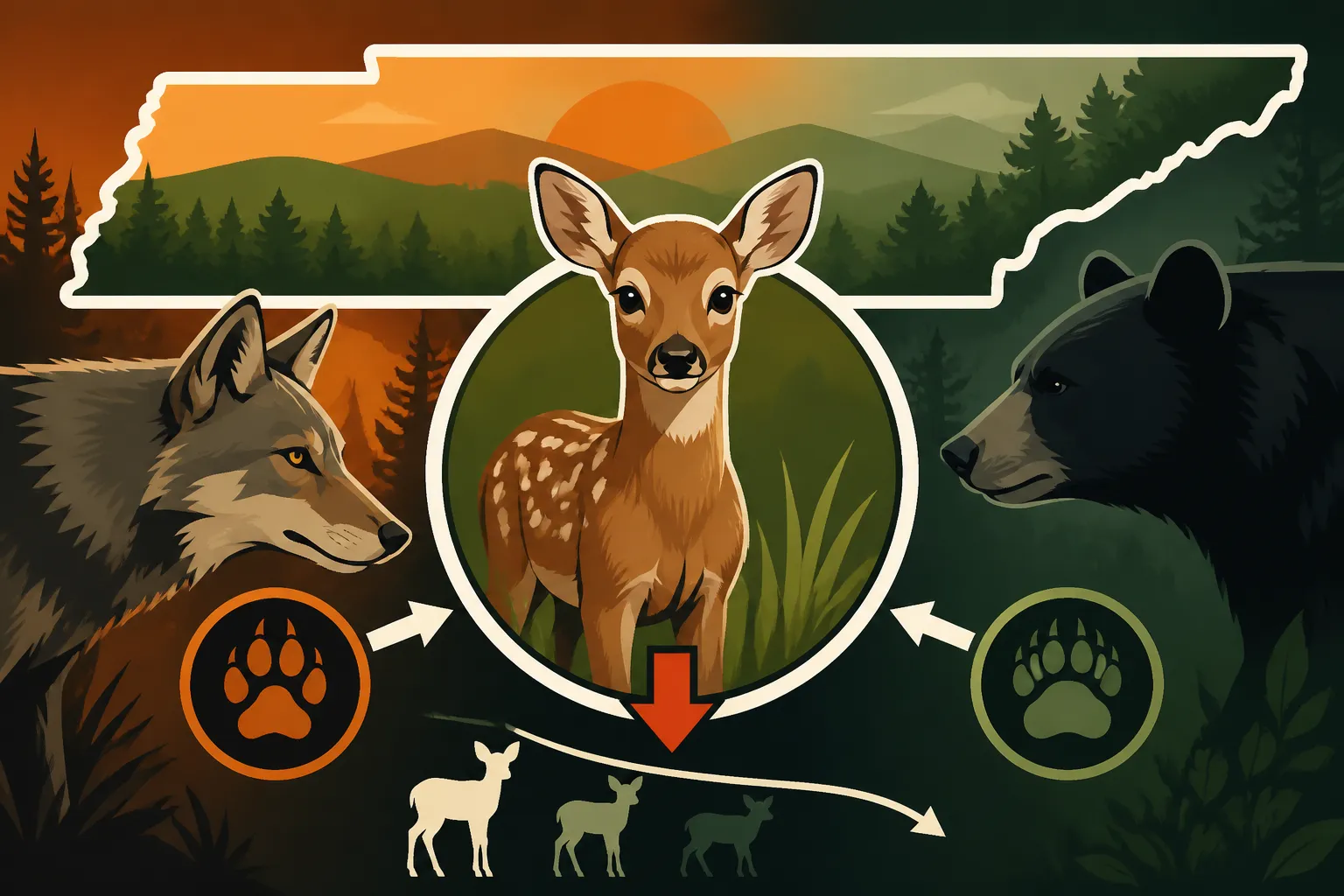
Without a doubt, coyotes are widely considered the most significant predator of white-tailed deer fawns across the Southeast, and Tennessee is no exception. These incredibly adaptable canids have established themselves in virtually every corner of the state, from remote wilderness to the edges of urban centers. They are opportunistic predators, meaning they'll take whatever is easiest to catch, and a newborn fawn, often left hidden by its mother for hours at a time, fits that description perfectly.
Studies have consistently shown that coyotes account for a substantial portion of fawn mortality, especially in the first few weeks post-birth. They have excellent senses, are skilled at sniffing out hidden fawns, and can operate alone or in small groups. Their reproductive success means that even if you thin them out in one area, new coyotes are often quick to move in. Hunters often feel a direct frustration with coyotes, seeing them as direct competition for deer, and many engage in Coyote Calling in Tennessee Farm Country as a form of predator control. The widespread distribution and prolific nature of Coyotes and Predators in Tennessee make them a persistent challenge for fawn survival.
Black Bears: An Emerging Factor
While historically more localized, Tennessee's black bear population has been steadily expanding, particularly in the eastern parts of the state near the Appalachians, but increasingly into other regions. And as their numbers and range increase, so does their potential impact on fawns. Bears are also opportunistic omnivores, and while their diet largely consists of plants, berries, and insects, a defenseless fawn is an easy, protein-rich meal they won't pass up.
Unlike coyotes, bears may not actively hunt fawns with the same systematic approach, but they will certainly take them if encountered. Their sheer size and strength mean that any encounter is almost certainly fatal for a fawn. In areas where both bear and deer populations are dense, such as parts of the Cherokee National Forest Hunting or the North Cumberland region, their impact can be locally significant. Understanding the growing presence of Tennessee's Black Bear Population is becoming an important part of the fawn recruitment puzzle, adding another layer of challenge for our deer herds.
Bobcats and Other Smaller Predators
Beyond coyotes and bears, other predators play a role, though generally to a lesser extent, in fawn mortality. Bobcats, while less common and often more elusive than coyotes, are efficient predators and will certainly take fawns if the opportunity arises. They are ambush hunters, relying on stealth and surprise, and a well-hidden fawn could fall victim to a bobcat's keen senses and quick strike. However, their lower population density compared to coyotes means their overall impact on recruitment is usually smaller statewide.
Other predators like foxes, feral hogs (which, while not traditionally "predators," are certainly opportunistic and will consume fawns), and even large raptors can occasionally prey on fawns. While these individual instances might seem minor, cumulative pressure from various sources adds up. The sum total of all these different threats is what really chips away at the overall recruitment numbers, even if coyotes remain the top concern.
Assessing the Actual Impact of Predation
It's easy to point a finger at predators, especially when you see fewer deer than you'd like. However, the real impact of predation on fawn recruitment is often more nuanced than a simple "predators kill fawns" equation. There are many factors at play that determine just how significant that impact truly is.
The Nuance of Predator-Prey Dynamics
The relationship between predators and their prey is complex and dynamic. It's not a one-way street where predators simply reduce prey numbers. Often, predators target the weakest, sickest, or least vigilant individuals. This can actually strengthen the overall prey population by removing less fit animals, a concept often referred to as "compensatory mortality." In a healthy deer herd, where does are well-fed and habitat provides ample cover, the deer herd can often "afford" a certain level of fawn predation without experiencing a population decline. It's when other stressors are present—like poor habitat, disease, or extreme weather—that predation can tip the balance and become a limiting factor.
For instance, if a doe is malnourished due to poor forage, she might give birth to a weaker fawn or be less attentive, making that fawn more susceptible to predation. So, while predators are indeed the direct cause of death, the underlying conditions might be the true "problem." Understanding these dynamics is crucial for effective deer management.
Tennessee-Specific Research and Findings
Tennessee wildlife agencies and university researchers have conducted studies over the years to better understand fawn survival. While specific findings can vary by region and study design, a consistent theme is that early fawn mortality is high, and predation is a leading cause. These studies often involve radio-collaring fawns shortly after birth and tracking their movements and survival. The data collected from these efforts helps inform management strategies for Tennessee Deer Season Structure Explained and herd health.
These studies don't just tell us that fawns are being preyed upon, but also when and where. It's often during the first 2-4 weeks of life that fawns are most vulnerable, primarily due to their small size, limited mobility, and reliance on hiding. Knowing this helps land managers focus on providing critical fawning cover during those key periods. While I can't cite specific names or figures, the general consensus from such research confirms that coyotes are a major player in reducing Tennessee Deer Herd Size in many areas.
Factors Influencing Predation Rates
Predation rates aren't static; they fluctuate based on several interconnected factors.
- Habitat Quality: This is huge. Areas with dense, diverse fawning cover (thick briar patches, regenerating clear-cuts, tall grasses) offer fawns more places to hide from predators. Conversely, fragmented habitats or areas with poor cover leave fawns exposed. Think about how a mature hardwood forest, while beautiful, often lacks the ground-level cover a fawn needs, making it more vulnerable than a Hunting a Clear-Cut Regrowth Edge.
- Doe Health and Nutrition: As mentioned, healthy does are more likely to produce stronger fawns and be better at caring for them. Good nutrition means better milk production and fawns that grow faster, making them less vulnerable sooner.
- Predator Density: Logically, more predators in an area generally lead to higher predation rates. However, this isn't always a direct correlation, as prey availability and other factors can influence predator behavior.
- Weather Conditions: Extreme cold, prolonged heavy rains, or severe drought can weaken fawns, making them easier targets for predators.
- Human Pressure: While not direct predation, human disturbance, whether from development, off-road vehicle use, or even recreational activities, can displace does and fawns from prime fawning habitat, indirectly increasing their vulnerability.
All these elements interact to create the overall picture of fawn recruitment. It's never just one thing, but a complex web of environmental and biological factors.
Mitigating Predator Impact and Management Strategies
So, what can we, as hunters and land managers, actually do about predator impact on fawn recruitment? It's a question many struggle with, and the answers are often more complex than simply "kill more coyotes."
Habitat Improvement for Fawn Concealment
Perhaps the most effective long-term strategy for improving fawn recruitment is habitat enhancement. Giving those vulnerable fawns more places to hide is often more impactful than trying to eliminate every predator. Think about it: a well-hidden fawn is much harder for a coyote or bear to find, regardless of how many are in the area.
- Dense Thicket Creation: Focus on creating and maintaining dense escape and bedding cover. This includes allowing certain areas to grow into thick briar patches, planting native shrubs, or managing timber harvests to create early successional growth. Regenerating clear-cuts, for instance, can provide excellent fawning cover for several years.
- Food and Cover Integration: The best fawning habitat provides both concealment and nearby food sources for the does. A doe needs to feed regularly to produce milk, so minimizing the distance she has to travel away from her fawn reduces exposure time.
- Edge Feathering: This involves creating a gradual transition from one habitat type to another (e.g., from woods to field) using shrubs and saplings. These "feathery" edges provide excellent cover for fawns and travel corridors for deer. Land managers on Tennessee Wildlife Management Areas often prioritize such habitat improvements.
Targeted Predator Management
This is where things get controversial and complex. While habitat work is almost universally lauded, actively managing predator populations to benefit deer is a hot-button issue.
- Lethal Removal: This involves hunting and trapping predators, primarily coyotes. While individual efforts by hunters can reduce local coyote numbers, broad, sustained efforts are needed to have a significant, long-term impact on fawn recruitment across a larger landscape. Studies have shown that short-term, intensive removal efforts can increase fawn survival, but the effect is often temporary as new coyotes quickly fill the void. This is why many hunters pursue Coyote Calling in Tennessee Farm Country year-round.
- Timing is Key: If lethal removal is used, it's most effective just prior to and during the fawning season (April-June) when fawns are most vulnerable. This focuses the effort on reducing predator numbers during the critical window.
- Context Matters: Predator control is most likely to be effective in areas where other fawn stressors (like poor habitat or disease) are minimal, and predator numbers are indeed limiting deer recruitment. It's rarely a standalone solution. The challenge with Tennessee Coyote Range and Density is their sheer numbers and rapid reproduction.
Doe Management and Herd Health
Sometimes, the best way to help fawns is to ensure their mothers are as healthy as possible.
- Balanced Sex Ratios: An unbalanced doe-to-buck ratio can lead to does breeding later in the season. Late-born fawns are generally smaller, weaker, and have less time to grow before facing winter, making them more susceptible to predation.
- Nutrition and Forage: Ensuring does have access to high-quality forage throughout the year, especially during gestation and lactation, directly impacts fawn health and vigor. A well-nourished doe is more likely to give birth to robust fawns and produce ample milk, giving her offspring a stronger start. You can use tools like GoHunt to scout and identify areas with high-quality forage potential, which might correlate to healthier does and fawns.
- Disease Management: Diseases can weaken does and fawns, making them more vulnerable. Monitoring for and managing diseases falls under broader herd health initiatives. This is why understanding topics like Tennessee Wildlife Disease Monitoring is so important for the overall health of the deer herd.
The Role of Technology for Hunters
In today's world, technology can play a significant role in understanding and potentially influencing fawn recruitment, even if indirectly.
- Mapping and Scouting Tools: Platforms like GoHunt offer detailed satellite imagery, topographic maps, and property boundaries that can help hunters identify potential fawning cover. You can analyze aerial photos to spot thick clear-cuts, dense creek bottoms, or areas with extensive security cover where does might choose to drop their fawns. Knowing these spots can help you focus your efforts, whether that's scouting before season or even considering targeted predator management.
- Trail Cameras: While not directly mitigating predation, trail cameras can provide invaluable insights into herd dynamics, including the presence of fawns and the types of predators in an area. Seeing numerous fawns with does in late summer is a positive sign for recruitment. Conversely, a lack of fawns or a high frequency of coyote or bear sightings in fawning habitat can be an indicator of potential issues. Using these tools for Scouting Tennessee Public Land Before Season can give you a clearer picture of what's happening on the ground.
- Data Analysis: While most hunters won't run full-blown scientific studies, observing trends over time on your hunting property or WMA can inform your strategies. Is fawn recruitment consistently low? Are coyote sightings increasing during fawning season? Tools like GoHunt can help you log observations and compare them year over year.
The key takeaway is that mitigating predator impact is part of a larger, holistic approach to deer management. Focusing solely on removing predators without addressing habitat or herd health issues is often a temporary fix at best.
Predator vs. Fawn: Key Characteristics
To help visualize the dynamics, here's a quick comparison of the primary predators and the fawns they target.
| Feature | Coyote | Black Bear | Bobcat | Deer Fawn |
|---|---|---|---|---|
| Primary Target Age | Newborn to 4-6 weeks old | Newborn to 4 weeks old | Newborn to 2-3 weeks old | Birth to 6-8 months (vulnerable early) |
| Hunting Strategy | Opportunistic, active searching, scent-driven | Opportunistic, encounter-based, visual/scent | Ambush, stealth, visual/hearing | Relies on hiding, camouflage, immobility |
| Key Detection Sense | Smell, hearing, sight | Smell, sight, hearing | Sight, hearing, smell | Hearing, smell (to detect mother/threats) |
| Impact on Fawns | High (significant mortality factor) | Moderate (can be locally high) | Low to Moderate (less widespread impact) | Very High Vulnerability in early weeks |
| Typical Habitat | Highly adaptable (all Tennessee habitats) | Forests, mountains, expanding into other areas | Dense cover, woods, rocky outcrops | Dense thickets, tall grasses, brushpiles |
| Management Focus | Habitat improvement, targeted removal | Habitat management, population monitoring | Habitat management | Habitat improvement, doe health |
Ultimately, managing fawn recruitment in Tennessee involves understanding this complex dance between prey, predators, and habitat. It's a continuous process of observation, adaptation, and thoughtful management.
Disclaimer
This article is for general informational purposes only and does not constitute professional advice. Laws, prices and regulations vary by location and change over time. Consult a qualified professional for guidance on your specific situation.