Tennessee Ruffed Grouse Decline
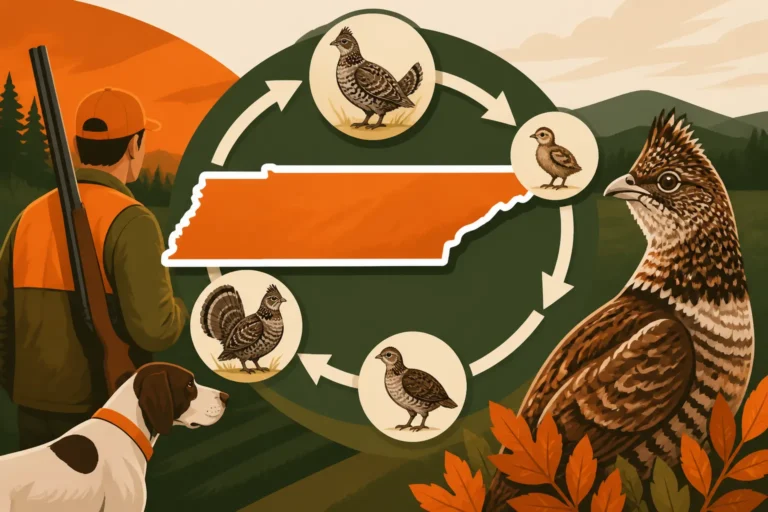
It’s a mournful sound, isn't it? That deep, resonant drumming of a ruffed grouse, once a familiar rhythm in the autumn and spring woods of Tennessee, now feels more like a whisper from a bygone era. For those of us who grew up chasing these feathered rockets through the Appalachian foothills and across the Cumberland Plateau, the dramatic decline of the Tennessee ruffed grouse population is not just a statistic; it's a deeply felt loss, a sign that something fundamental has shifted in our beloved wild places. This guide is here to unravel the complex story behind this heartbreaking trend, exploring the historical highs, the current struggles, and the dedicated efforts being made to bring back the king of game birds.
The Fading Drumbeat: Understanding Tennessee's Ruffed Grouse Decline
There's a unique thrill to hunting ruffed grouse. It's not just about the shot; it's about the sudden explosion of wings from dense cover, the heart-stopping flush, and the challenge of navigating thick briars and steep terrain. For decades, it was a staple of small game hunting in our state, an experience that connected generations to the wild, rugged beauty of Tennessee's forests. But if you've spent any time in grouse cover lately, you know that those explosive flushes are few and far between.
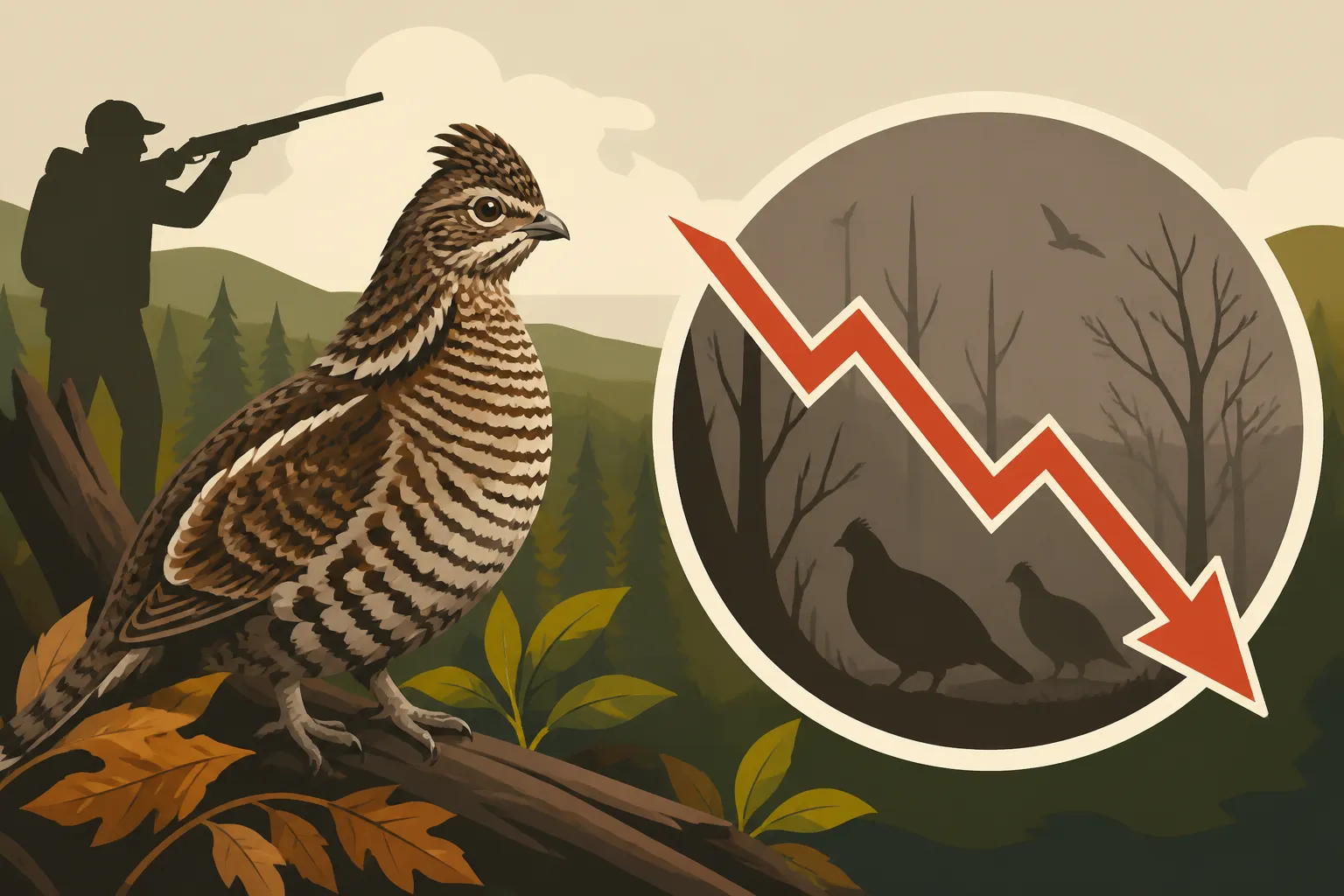
The truth is, Tennessee's ruffed grouse population has been on a downward spiral for a long time, and the trend shows little sign of reversing without significant intervention. It's a complex issue, not attributable to a single cause, but rather a perfect storm of environmental shifts, changing forest dynamics, and the introduction of new threats. Understanding these factors is the first step toward appreciating the monumental task ahead for conservationists and hunters alike who dream of hearing that drumming once more.
The Silent Woods: A Hunter's Perspective
For many, the decline isn't an abstract concept; it's a tangible, boots-on-the-ground reality. I remember days when a good dog could flush a dozen or more birds in a morning, and even still-hunting, you’d walk into enough grouse cover to get your heart pumping. Now, those same covers often yield nothing but memories. It’s hard to stay optimistic when you walk prime habitat, putting in the miles, and come up empty-handed time and again. This isn't just about fewer birds to harvest; it's about a diminishing tradition, a loss of connection to a specific kind of wildness that grouse embody.
The silent woods speak volumes. They tell a story of habitats altered, food sources dwindling, and a bird that simply can't find the niches it needs to thrive. It can be incredibly disheartening to dedicate your time and effort to a pursuit that feels increasingly futile, but this frustration also fuels the passion of those determined to understand and reverse the decline. We feel it in our boots, our lungs, and in the quiet disappointment of a birdless afternoon.
Decades of Diminishing Returns
The decline of the ruffed grouse in Tennessee hasn't been a sudden crash; it's been a slow, insidious erosion over several decades, accelerating noticeably in recent years. While some states farther north have seen more stable or even recovering populations, Tennessee, sitting at the southern edge of the grouse's range, seems particularly vulnerable. The "good old days" of abundant grouse feel increasingly distant, not just for the oldest generation of hunters, but even for those of us who started chasing them a couple of decades ago.
This prolonged decline suggests deeply rooted systemic problems rather than a temporary blip. It points to large-scale changes in our environment that are slowly but surely making Tennessee less hospitable for a species that requires very specific conditions to survive. We're not talking about minor fluctuations; we're talking about a fundamental shift that challenges the very presence of this iconic bird in our state.
Historical Perspective: Where Did All the Grouse Go?
To understand where we are, we have to look back at where we were. The history of ruffed grouse in Tennessee is deeply intertwined with the state's logging and land-use history. There was a time when grouse were widespread and plentiful, their populations benefiting from environmental disturbances that paradoxically created ideal conditions for them.
It’s easy to romanticize the past, but in the case of ruffed grouse, the historical accounts truly paint a picture of abundance that's hard to imagine today. Their presence wasn't just limited to the highest, wildest mountain peaks; they were a common sight across much of the state's forested regions.
Peak Populations and the Timber Boom
Believe it or not, the logging boom of the late 19th and early 20th centuries actually created a temporary paradise for ruffed grouse in Tennessee. Extensive clear-cutting, followed by natural regeneration, produced vast acreages of young, dense forest – exactly the kind of early successional habitat grouse thrive in. Think about dense thickets of saplings, briar patches, and regenerating timber stands that were nearly impenetrable to humans but perfect for grouse to find food, shelter, and escape from predators.
This period, roughly from the 1920s through the 1950s, saw grouse populations peak across much of their range, including Tennessee. The continuous cycle of timber harvest and regrowth meant that there was always a patchwork of these essential young forests available. Hunters flocked to these areas, and the "drumming" of grouse was a common sound throughout the spring breeding season. It was a golden age for the bird, driven by human activity, albeit unintendedly beneficial.
Shifting Landscapes and Forest Maturity
However, as timber harvest practices changed, becoming less widespread and more selective, and as large tracts of land recovered from intensive logging, the forests began to mature. Mature, open stands of hardwoods, while beautiful, lack the dense understory that ruffed grouse depend on. This shift from early successional habitat to mature forest is arguably the single biggest factor in the grouse's decline. The thick cover they need for nesting, brooding, and escaping predators simply isn't as prevalent as it once was.
Furthermore, fire suppression efforts, while beneficial in some ways, also contributed to this forest maturation. Historically, natural wildfires, especially in the more rugged areas, would create disturbances that reset forest succession, leading to new patches of young growth. With these natural cycles interrupted, vast expanses of forest grew older and denser, pushing grouse out of their preferred habitats. You can learn more about Grouse Hunting the Cumberland Plateau and how these habitat changes have impacted hunting.
The End of an Era for Grouse Hunters
For many seasoned hunters, the decline has been a slow, sad process to witness. The areas that were once reliably productive for grouse now stand silent, or perhaps hold only a token few. This isn't just a lament for the past; it’s a recognition that a particular kind of wild hunting experience is slipping away. Generations of knowledge about specific grouse covers, the best ways to work them, and the joy of a good dog on point are becoming less relevant as the birds themselves vanish.
It's a stark reminder that wildlife populations are dynamic and deeply intertwined with their habitats. When the habitat changes on a landscape scale, even hardy species like the ruffed grouse can struggle immensely. The shift in forest age class across much of Tennessee has fundamentally altered the playing field for these birds, making the "end of an era" not just a poetic phrase, but a grim reality for the future of grouse hunting.
Habitat Loss and Fragmentation: The Primary Culprit
When we talk about the Tennessee Ruffed Grouse Decline, habitat is almost always at the heart of the conversation. It's not just the sheer loss of habitat, but also the fragmentation of what remains, that creates such significant challenges for these birds. Grouse are not long-distance travelers; they need suitable habitat patches close enough together to move between safely, but also large enough to support a viable population.
Imagine trying to raise a family in a house with no walls, or where your pantry is miles away from your bedroom, with open, dangerous terrain in between. That's essentially what habitat loss and fragmentation do to grouse populations. They isolate them, expose them, and make their lives incredibly difficult.
The Need for Early Successional Habitat
Ruffed grouse absolutely depend on early successional habitat. What does that mean? It means young forests, typically 1-20 years old, characterized by dense undergrowth, saplings, and thick cover. This is where they find food – buds, catkins, berries, and insects – and, crucially, protection from predators both avian and terrestrial. This thick cover allows them to move relatively undetected and provides a hiding place from hawks, owls, foxes, and coyotes.
Without this dense, tangled mess of vegetation, grouse are incredibly vulnerable. Older, more open forests simply don't provide the same level of security or the concentrated food sources they need, especially for chicks. Think about a dense blackberry thicket or a stand of young poplar and oak growing back after a timber harvest – that's grouse heaven. If you're wondering How Old a Cut Should Be for Grouse, generally anything under 15-20 years is considered ideal for high bird density, with pockets of even younger growth being critical for brood rearing.
Forest Maturation and Fire Suppression
As we touched on, a major contributing factor to the lack of early successional habitat is forest maturation and historical fire suppression. Much of Tennessee’s forested landscape, particularly in the Appalachian Mountains and across the Cumberland Plateau, has been allowed to mature for decades without significant disturbance. While mature forests are vital for many species, they are detrimental to grouse.
The problem isn't just the lack of new young forest, but also the aging of existing grouse habitat. Patches that were ideal 15-20 years ago have now grown too open, losing their dense understory. Without natural or managed disturbances like timber harvests or prescribed burns, this trend of aging forests will continue, further squeezing grouse populations into smaller, less viable pockets. This is a critical challenge, especially on public lands where active forest management can be complex. Utilizing mapping tools like those offered by GoHunt can help hunters identify areas with recent timber activity, which might be potential grouse hot spots.
Development and Disconnected Patches
Beyond forest maturation, direct habitat loss due to human development also plays a role, though perhaps less dramatically than in more urbanized states. Roads, housing developments, energy infrastructure, and other human encroachments can directly destroy existing grouse habitat. Even if a small patch of woods remains, if it's surrounded by development, it becomes an isolated "island" of habitat, difficult for grouse to reach or expand from.
This fragmentation isolates grouse populations, making them more susceptible to localized extinctions. If a small, isolated patch of birds experiences a tough winter or an outbreak of disease, there's no influx of birds from adjacent areas to bolster their numbers. This lack of connectivity is a serious issue for a species that, while not migratory, needs to be able to move and disperse, particularly juvenile birds seeking new territories. It means that even seemingly healthy pockets can eventually wink out if they're too cut off from the larger landscape.
| Factor | Description | Impact on Grouse |
|---|---|---|
| Forest Maturation | Forests growing older, becoming more open with less dense understory due to lack of natural or managed disturbance. | Reduces critical dense cover for protection from predators and nesting, limits food sources, directly shrinks viable habitat. |
| Fire Suppression | Historical and ongoing efforts to prevent and extinguish wildfires. | Prevents natural cycles of forest regeneration that create early successional habitat, leading to widespread aging of forests. |
| Habitat Fragmentation | Breaking up large, continuous habitat into smaller, isolated patches by roads, development, or unsuitable forest types. | Isolates grouse populations, limits dispersal, increases exposure to predators during movement, makes populations more vulnerable to localized extinctions. |
| Increased Predation | Rise in populations of opportunistic predators (coyotes, raccoons, owls). | Higher pressure on vulnerable nests, broods, and adult grouse, especially in less dense cover. |
| Climate Change | Warmer winters, changes in precipitation patterns, increased frequency of extreme weather events. | Can reduce winter food availability, increase energy expenditure, stress birds, potentially affect breeding success, may expand range of disease vectors. |
| Disease (West Nile Virus) | Mosquito-borne virus impacting grouse survival and reproduction. | Direct mortality, especially in years with high mosquito populations, can weaken birds and reduce reproductive output, compounding other stressors. |
Predation and Competition: Natural Pressures on a Struggling Population
While habitat loss is often cited as the primary driver of the Tennessee Ruffed Grouse Decline, it's critical to understand that predation and competition with other species also play significant roles. These aren't new pressures, but their impact is amplified when grouse populations are already stressed and their habitat is suboptimal.
Think of it like this: a healthy grouse population in ideal habitat can withstand a certain level of predation. But when habitat is sparse and fragmented, and grouse numbers are low, every lost bird, every failed nest, has a much greater impact on the overall population's ability to recover.
Opportunistic Predators and Vulnerable Nests
Ruffed grouse face a gauntlet of predators throughout their lives, from the egg to adulthood. Nest predation is particularly high, with species like raccoons, opossums, skunks, and snakes preying on eggs and newly hatched chicks. Avian predators such as great horned owls and various hawk species are a constant threat to adults. In areas where grouse are already struggling, a single successful nest can be crucial for the local population.
When grouse are forced into less-than-ideal habitat – areas with thinner undergrowth or smaller, more exposed clearings – they become even more vulnerable. Predators have an easier time locating nests and ambushing adults. It’s a cascading effect: poor habitat leads to increased vulnerability, which in turn leads to higher predation rates, further suppressing a struggling population. This cycle makes it incredibly difficult for populations to rebound naturally.
Increasing Coyote and Raccoon Populations
Over the past few decades, Tennessee has seen a significant increase in the populations of certain opportunistic predators, particularly coyotes and raccoons. Coyotes, relative newcomers to much of the eastern U.S., are highly adaptable and effective predators of a wide variety of small game, including grouse. Raccoon populations have also boomed, thriving in both rural and suburban environments, and they are notorious nest predators.
This surge in predator numbers adds immense pressure to already declining grouse populations. While these predators are a natural part of the ecosystem, their increased prevalence, especially in conjunction with diminished grouse habitat, creates an imbalance. It means that grouse, already struggling to find safe haven, are facing more eyes and noses intent on finding them. You can learn more about Coyote Calling in Tennessee Farm Country and their impact on game species.
Competing Species and Resource Scarcity
Beyond direct predation, grouse also face competition for resources, particularly in areas where their preferred food sources are limited. While not always a direct, aggressive competition, the presence of high densities of other wildlife species can put additional strain on the limited food and cover available in suboptimal grouse habitat. For example, deer can browse heavily on understory vegetation, reducing the very cover and food plants that grouse rely on.
Even species like wild turkeys, while often coexisting with grouse, can sometimes utilize similar food sources and habitat, especially during certain times of the year. When food and cover are abundant, this isn't an issue. But in areas where grouse habitat is scarce and fragmented, any additional pressure from other wildlife, whether through browsing or feeding, further exacerbates the challenges grouse face in finding sufficient resources to thrive and reproduce. It's another layer of complexity in the already difficult puzzle of the Tennessee Ruffed Grouse Decline.
Climate Change and Disease: Emerging Threats to Grouse Resilience
Beyond the direct impacts of habitat loss and predation, broader environmental shifts, particularly those associated with climate change and the emergence of new diseases, are adding further layers of stress to Tennessee's ruffed grouse populations. These are often subtle, long-term threats that can subtly erode the resilience of a species already teetering on the edge.
It’s easy to feel overwhelmed by such large-scale issues, but ignoring them would be a disservice to a comprehensive understanding of the challenges facing grouse. These factors highlight the interconnectedness of ecosystems and how global changes can have very local, very tangible impacts on our favorite game birds.
Warmer Winters and the Impact on Survival
Tennessee is at the southern edge of the ruffed grouse's range, which means they are already adapted to warmer conditions than their northern cousins. However, consistently warmer winters, a hallmark of climate change, can still pose significant problems. Grouse in colder climates often "snow roost," burying themselves in soft snow to insulate against extreme cold and hide from predators. While snow roosting isn't as common or as crucial in Tennessee's milder winters, the lack of consistent cold can still have negative impacts.
Warmer winters can lead to an increase in parasite loads and disease vectors, as harsh freezes that would normally kill off these threats don't occur. It can also cause early bud break on trees, which, if followed by a late cold snap, can destroy critical food sources for grouse. Additionally, less persistent snow cover means grouse lose a natural protective blanket, potentially increasing their vulnerability to predators during times when they might typically be more secure. These subtle shifts can incrementally chip away at survival rates, especially for juvenile birds.
West Nile Virus and Other Pathogens
One of the most concerning emerging threats to ruffed grouse populations across their range, including Tennessee, is West Nile Virus (WNV). This mosquito-borne illness, which first appeared in North America in 1999, has been shown to cause significant mortality in grouse, particularly during peak mosquito season. While WNV can affect many bird species, grouse appear to be particularly susceptible, with studies linking outbreaks to local population declines.
The severity of WNV impacts can vary year to year, largely dependent on mosquito populations and weather patterns. Years with warm, wet springs and summers, which favor mosquito breeding, often correlate with higher WNV prevalence and subsequent grouse mortality. This disease adds another layer of pressure, acting as an unpredictable "tax" on grouse numbers, potentially wiping out a significant portion of annual production even when other conditions seem favorable. Beyond WNV, a host of other pathogens and parasites, potentially exacerbated by warmer temperatures, could also contribute to the overall stress on grouse health and reproduction.
Compounding Stressors on Grouse Health
The real danger of climate change and disease isn't just the direct impact of any single factor, but how these stressors compound with existing challenges. A grouse population already struggling with fragmented habitat and high predation pressure will be far less resilient to a WNV outbreak or a string of unusually warm winters than a robust, healthy population. Each added stressor chips away at the birds' ability to cope, survive, and reproduce.
It's a cumulative effect. Weakened birds are more susceptible to disease, and a lower population density makes it harder for them to find mates and maintain genetic diversity. These larger environmental shifts, while often invisible to the casual observer, are silently but powerfully shaping the future of grouse in Tennessee, making the task of conservation even more urgent and complex.
Conservation Efforts: A Glimmer of Hope for Tennessee Grouse
Despite the daunting challenges and the significant decline, there is a dedicated group of wildlife biologists, conservation organizations, and passionate hunters who refuse to give up on Tennessee's ruffed grouse. Their work, though often slow and arduous, offers a glimmer of hope that we might yet be able to reverse some of these trends and ensure the future of this iconic bird.
It’s going to take a concerted, long-term effort, but understanding what’s being done, and how we as individuals can contribute, is crucial. This isn't just about saving a game bird; it's about preserving a vital part of Tennessee's wild heritage and maintaining healthy forest ecosystems.
Targeted Habitat Management Programs
Recognizing that habitat loss is the primary driver of the decline, many conservation efforts focus squarely on creating and maintaining early successional forest. This often involves active forest management practices, such as timber harvests designed to regenerate young stands. While clear-cutting can be controversial, when done correctly and strategically, it is one of the most effective tools for creating grouse habitat.
The Tennessee Wildlife Resources Agency (TWRA) and federal partners like the U.S. Forest Service are working on specific projects, particularly on public lands like the Cherokee National Forest Hunting and various Tennessee Wildlife Management Areas. These projects involve carefully planned timber sales, mechanical clearing, and prescribed burning to create a mosaic of forest age classes. The goal is to provide a continuous supply of the dense, young cover grouse need, ensuring that as one area matures, another young stand is coming online. Groups like the Ruffed Grouse Society are also instrumental in advocating for and funding these crucial habitat projects across the grouse's range.
Collaborations and Funding for Grouse Restoration
Effective grouse conservation is not a solo endeavor; it requires significant collaboration and funding. Wildlife agencies, non-profit conservation groups, private landowners, and even universities are working together, pooling resources and expertise. This collaboration is essential for both implementing habitat projects on the ground and conducting the scientific research needed to understand grouse ecology better and refine management strategies.
Funding often comes from a variety of sources, including hunting license sales (which directly support TWRA's wildlife programs), federal grants, and donations from conservation organizations and individuals. These funds are critical for everything from acquiring specialized equipment for habitat work to supporting biologists' research on grouse populations, disease prevalence, and habitat use. The more support these efforts receive, the better chance we have of making a meaningful impact. Tools like GoHunt also help by providing mapping resources for hunters to find public land that might be undergoing habitat improvements or already offers suitable habitat.
The Role of Hunters in Advocacy and Data Collection
Hunters are, and always have been, key to conservation. For grouse, this role is more vital than ever. First, hunters are often the first to notice changes in game populations, and their observations from the field provide valuable anecdotal data. More formally, participation in surveys and accurate harvest reporting helps biologists track trends in Tennessee Ruffed Grouse Numbers Today and understand the impact of management efforts.
Beyond direct participation, advocacy is crucial. Speaking up for sound forest management, supporting conservation organizations, and encouraging public land agencies to prioritize early successional habitat creation can make a real difference. Attending public meetings, writing letters, and educating others about the needs of grouse helps build the public and political will necessary for these sometimes-intensive habitat projects. The future of grouse in Tennessee hinges on the continued dedication of those who love these birds and the wild places they call home. If we want to continue hearing that drumming, we need to be active participants in their recovery.
Disclaimer
This article is for general informational purposes only and does not constitute professional advice. Laws, prices and regulations vary by location and change over time. Consult a qualified professional for guidance on your specific situation.