Red Wolf History in Tennessee
It's easy to think of Tennessee's wild places as they are today, full of whitetails, turkeys, and bears. But what many of us don't realize is that our state, like much of the American Southeast, once harbored another significant predator: the red wolf. Their story is one of fascinating history, a tragic decline, and a powerful lesson in what we can lose if we're not careful with our wild spaces and the creatures that inhabit them. This guide will walk you through the surprising and often heartbreaking history of the red wolf in Tennessee, exploring their place in the ecosystem, why they disappeared, and what their absence teaches us about conservation today.
The Original Tennesseans: Red Wolves Before European Settlement
Imagine a Tennessee wilderness teeming with life, where the howl of a powerful predator echoed through the river bottoms and deep forests. That was the reality for centuries before modern settlement, and the red wolf was an integral part of that vibrant tapestry. These creatures weren't just animals; they were an ecological force, shaping the landscape in ways we're still trying to understand.
A Native Apex Predator
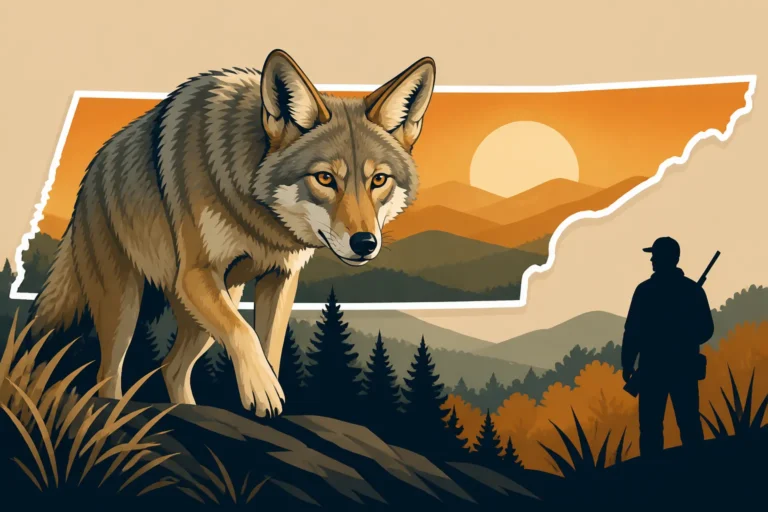
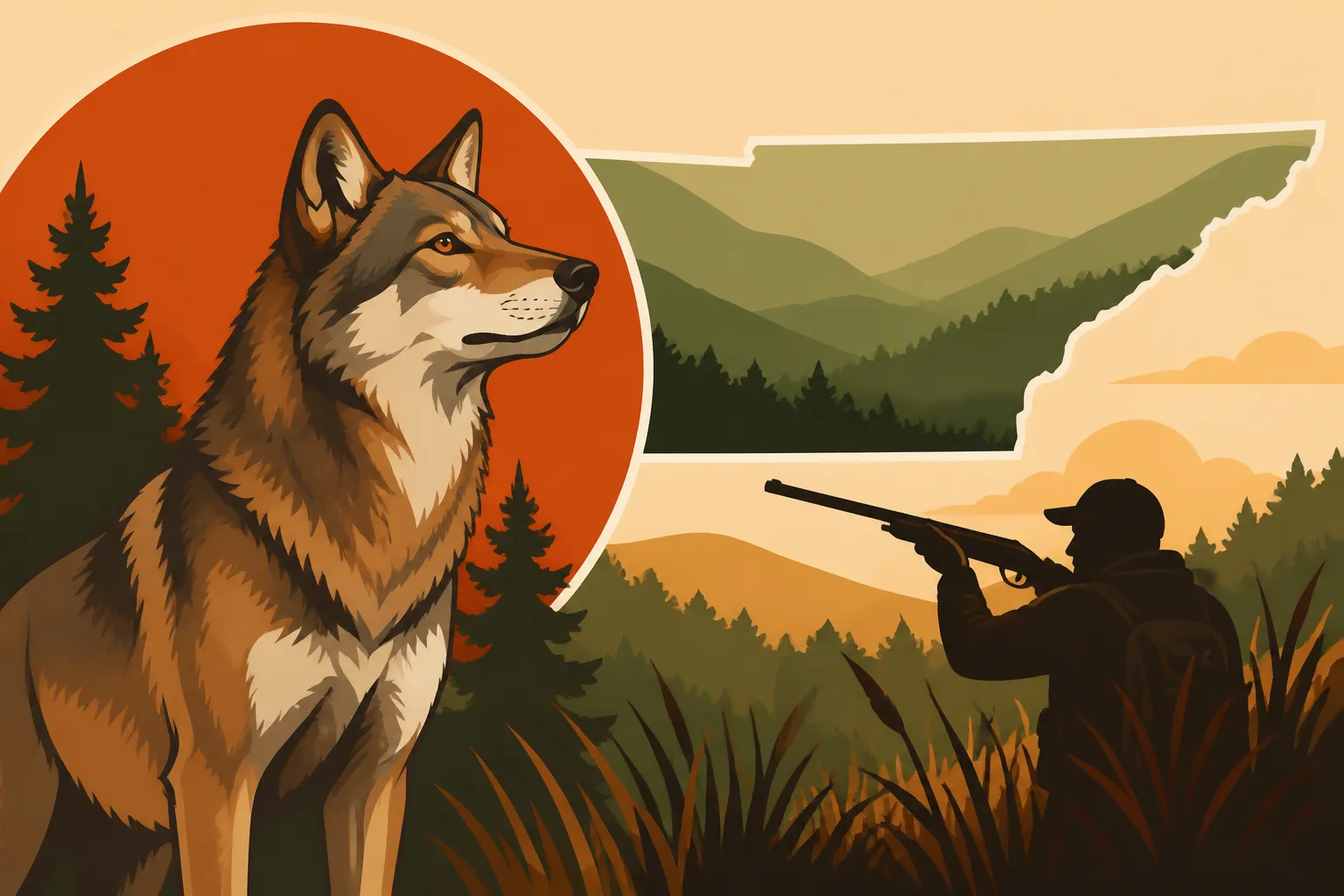
The red wolf (Canis rufus) was once a majestic sight across the southeastern United States, including vast stretches of Tennessee. They were beautifully adapted to the diverse habitats found here, exhibiting a sleek, somewhat lanky build, and a coat that often featured a rich reddish or cinnamon hue, particularly on their muzzle and legs, though their coloring could vary quite a bit. Distinctly different from the larger gray wolf of the northern and western states and the smaller, more adaptable coyote, the red wolf occupied a unique niche. They were true apex predators, meaning they sat at the top of the food chain, playing a crucial role in maintaining the health and balance of their ecosystems.
These wolves were intelligent, social animals, typically living in small family packs that worked together to hunt and raise their young. Their diet was varied, focusing primarily on deer, but also including smaller prey like rabbits, raccoons, and rodents, essentially helping to keep these populations in check and ensuring the overall vitality of the prey species. Their presence naturally culled the weak and the sick, strengthening the herds and ensuring a healthy natural selection process was always at work. If you've ever scouted a river bottom in West Tennessee or hiked a ridge in the Cumberland Plateau, it's a powerful thought to consider these magnificent hunters once roamed those very same woods.
Habitat and Range Across the State
Historically, red wolves ranged across much of Tennessee, from the bottomland hardwoods of the Mississippi River floodplains in West Tennessee to the rolling hills of Middle Tennessee and even into the foothills and lower elevations of the Appalachian Mountains in the east. They were incredibly adaptable, thriving in a mosaic of swamps, forests, and open woodlands, always preferring areas with ample cover and a consistent food supply. Their preferred territories often included river valleys and creek bottoms, places that offered both dense vegetation for denning and travel, as well as easy access to water and a rich bounty of prey.
For example, imagine the expansive forests that once dominated areas like what is now Land Between the Lakes or the dense riverine habitat along the Tennessee River Corridor Public Access. These were prime red wolf territories, offering everything they needed to survive and thrive. Their presence in these areas would have naturally influenced the movement and behavior of deer and other game animals, creating a complex web of interactions. They were deeply woven into the fabric of the state’s natural heritage, an unseen force that shaped everything from plant communities to the health of the game herds. It really makes you think about how different the forest must have sounded and felt.
The Onset of Conflict: Human Expansion and Decline
As European settlers moved westward, bringing with them livestock and agricultural practices, the once-uninterrupted domain of the red wolf began to shrink. The natural balance that had existed for millennia was dramatically disrupted, leading to a direct and often violent clash between humans and these native predators. It wasn't just about land; it was about fear, misunderstanding, and a fundamental shift in how the landscape was valued.
Persecution and Misunderstanding
From the earliest days of settlement, red wolves were viewed primarily as a threat. To a farmer trying to establish a livelihood in a challenging new world, a wolf was not a fascinating apex predator; it was a killer of calves, lambs, and chickens, a direct economic adversary. This perception led to widespread persecution. Settlers, often struggling to carve out a living, saw the eradication of wolves as a necessary step for safety and prosperity. There was little understanding or appreciation for the ecological role these animals played; they were simply "vermin" to be eliminated.
This fear and misunderstanding fueled widespread, often government-sponsored, extermination campaigns. Bounty programs were established, encouraging hunters and trappers to kill wolves, often for a modest sum, which nevertheless provided an incentive. People would organize wolf drives, using large groups of people to push wolves into ambushes, all in an effort to clear the land of perceived threats. It's a sobering thought to consider how systematic and relentless these efforts were, not just here in Tennessee but across the entire range of the red wolf. The combined pressure from individual landowners, state-sponsored bounties, and a lack of ecological awareness sealed their fate.
Habitat Loss and Fragmentation
Beyond direct killing, the relentless march of human development relentlessly chipped away at the red wolf's remaining strongholds. As forests were cleared for agriculture, timber, and towns, the vast, unbroken territories these wide-ranging animals needed to survive became smaller and more fragmented. Imagine a deer hunter today using a tool like GoHunt to scope out a large, contiguous block of public land for deer hunting; the red wolves needed that kind of space, but on a much grander scale. They relied on large tracts of wilderness, away from human disturbance, to hunt, den, and raise their young.
The construction of roads, railways, and eventually highways further broke up their habitat, creating barriers to movement and isolating populations. This fragmentation led to smaller, less viable groups of wolves that struggled to find mates outside their immediate family, leading to inbreeding and reduced genetic diversity. A wolf pack might have roamed freely for miles along a river like the Cumberland River Corridor, but then a new settlement or farm would appear, shrinking their range and forcing them into smaller, more perilous pockets of wilderness. This constant pressure, combined with direct persecution, left them with fewer and fewer places to hide and thrive, making their long-term survival in Tennessee increasingly precarious.
The Road to Extirpation: Last Stands and Disappearance
As the 20th century dawned, the red wolf's situation in Tennessee, and indeed across its entire range, became increasingly dire. The relentless pressure from humans, coupled with an insidious new threat, pushed the species to the very brink of oblivion. The story of their final disappearance from the wild is a stark reminder of the fragile balance of nature.
Genetic Dilution with Coyotes
One of the most significant and often overlooked factors in the red wolf's decline was the arrival and proliferation of the coyote (Canis latrans). As gray wolves were extirpated from much of the continent and red wolf populations dwindled, coyotes, highly adaptable and opportunistic canids, expanded their range eastward into areas they hadn't traditionally occupied. This meant that as red wolf numbers became critically low, particularly in the mid-20th century, pure red wolves found it increasingly difficult to find mates of their own species.
When pure red wolves encountered coyotes, they began to hybridize, producing offspring that were a mix of both species. These hybrids, often more genetically robust due to the broader gene pool and more adaptable to fragmented, human-dominated landscapes, effectively "diluted" the remaining pure red wolf genetics. This process, known as introgressive hybridization, became a conservation nightmare. It meant that even animals that looked like red wolves might not be genetically pure, making the task of identifying and saving the last true red wolves incredibly challenging. It was a race against time and biology, a battle against an invisible enemy that further complicated an already desperate situation.
The Final Years in Tennessee
By the mid-20th century, the presence of pure red wolves in Tennessee had become exceptionally rare. Records from the 1960s and 70s suggest that if any truly pure red wolves remained, they were isolated individuals or small, fragmented family groups clinging to existence in the most remote corners of the state, perhaps deep within the Cherokee National Forest or the most secluded parts of the Cumberland Plateau. However, these sightings were increasingly hard to confirm as genuine red wolves, given the rampant hybridization with coyotes. The combined pressures of relentless hunting, trapping, habitat destruction, and genetic dilution ultimately proved too much for the species to withstand within Tennessee's borders.
The last confirmed wild red wolves in the entire Southeast were eventually found in a small coastal area of Louisiana and Texas. From this tiny, remaining population, a heroic effort was launched to capture the last pure individuals for a captive breeding program. By 1980, the red wolf was declared extinct in the wild across its entire historic range, including Tennessee. This moment marked the official extirpation of the species from our state, a quiet disappearance that left an enormous ecological void. It’s a somber chapter in our state’s wildlife history, a loss that reminds us how quickly even a powerful predator can vanish under sustained pressure.
A Glimmer of Hope: National Conservation Efforts and Beyond
While the red wolf was extirpated from Tennessee, its story didn't end there. A desperate, last-ditch effort was launched to save the species from complete global extinction, leading to one of the most remarkable conservation stories in American history. This effort, while not directly involving Tennessee for reintroduction, offers profound lessons for wildlife management everywhere.
Captive Breeding Programs
Facing the imminent loss of the red wolf, the U.S. Fish and Wildlife Service (USFWS) embarked on a groundbreaking initiative: capturing the last remaining pure wild red wolves to establish a captive breeding program. This wasn't an easy task, as distinguishing pure red wolves from hybrids required meticulous genetic testing and careful observation. Only 14 individuals were deemed genetically pure enough to form the foundation of this desperate new population. These animals were brought to Point Defiance Zoo & Aquarium in Tacoma, Washington, which became the initial hub for what would become a network of zoos and facilities dedicated to restoring the species.
The goal was to create a genetically healthy and diverse population in captivity, essentially building an "ark" for the species. Through careful management and breeding, the captive population slowly grew, ensuring that the unique genetic lineage of the red wolf would not be lost forever. These efforts, though far removed from the Tennessee wilderness, represent a crucial turning point, moving the species from the brink of total disappearance to a fragile, but existing, future. The success of this program is a testament to dedicated conservationists and the critical role that zoos and wildlife centers play in species survival.
Reintroduction Attempts and Challenges
With a viable captive population established, the next ambitious step was reintroduction into the wild. The first major reintroduction began in 1987 in northeastern North Carolina, specifically within the Alligator River National Wildlife Refuge. This marked the first time a top predator, declared extinct in the wild, had been reintroduced to its native habitat. The hope was that these captive-bred wolves would adapt to the wild, establish territories, and begin to reproduce naturally.
While initial results were promising and a small wild population did take hold, the program has faced significant, ongoing challenges. Human conflict, often stemming from the same misunderstandings that led to their initial decline, remains a major hurdle. Illegal shootings, vehicle collisions, and perhaps most critically, continued hybridization with coyotes, threaten the genetic integrity of the wild population. Efforts to manage coyote populations and educate landowners are continuous, but the challenges are immense. The red wolf's struggle in North Carolina highlights just how difficult and complex species reintroduction can be, even with dedicated efforts and advanced tools, teaching us valuable lessons about predator management and community engagement that could inform future considerations for Tennessee wildlife.
What We Learned: Lessons for Tennessee Wildlife
The story of the red wolf in Tennessee is more than just a historical account of loss; it's a powerful and enduring lesson for anyone who cares about our state's rich natural heritage. Understanding their extirpation helps us appreciate the intricate web of life and the consequences of disrupting it. It guides our thinking on current wildlife management and future conservation efforts across Tennessee.
The Importance of Apex Predators
The disappearance of the red wolf from Tennessee created an ecological vacuum. Apex predators like the red wolf play a vital role in keeping ecosystems healthy by regulating prey populations, especially deer. Without natural predators to cull the weak, old, and diseased, deer populations can sometimes grow too large for the available habitat, leading to overbrowsing of vegetation, reduced plant diversity, and increased spread of diseases like Chronic Wasting Disease in Tennessee Deer. While deer hunting is a crucial management tool today, it cannot entirely replicate the selective pressures applied by a natural predator.
The absence of red wolves also had cascading effects on other species. Their presence influenced the behavior of smaller predators and scavengers, and even the health of riparian zones through reduced deer browsing. Their story underscores a fundamental principle of ecology: every species, especially a top predator, has a critical role to play. The challenges we sometimes face today with deer management or even local wildlife imbalances can be seen, in part, as a legacy of losing such a critical component of our native fauna. It’s a complex puzzle, and we lost a significant piece of it when the red wolf vanished.
| Feature | Red Wolf | Coyote | Gray Wolf (Historical TN) |
|---|---|---|---|
| Size/Build | Medium, slender (40-80 lbs, 26" at shoulder) | Small to Medium (20-50 lbs, 20" at shoulder) | Large, robust (70-130 lbs, 30" at shoulder) |
| Snout/Ears | Moderately long snout, relatively large ears | Slender, pointed snout, relatively large ears | Broad snout, shorter, rounded ears |
| Tail | Bushy, often held down, black tip | Bushy, often held down, black tip | Bushy, often held out or slightly upward |
| Coloration | Tawny, reddish, with black along back and tail | Grayish-brown, often yellowish-red legs and ears | Varied (gray, black, white, brown), often grizzled |
| Historical TN Range | Widespread across much of Tennessee | Expanded into TN as red wolves declined, now common | Limited to mountainous east, possibly western TN |
| Primary Diet | Deer, rabbits, raccoons, small mammals | Rodents, rabbits, small mammals, some deer | Large ungulates (deer, elk, bison) |
| Current Status in TN | Extirpated from wild, critically endangered (captive/reintroduced elsewhere) | Abundant | Extirpated from wild |
Future Conservation Considerations
The red wolf's history in Tennessee provides invaluable lessons for current and future wildlife conservation efforts. It teaches us the importance of habitat connectivity, recognizing that even our best-managed areas like the Cherokee National Forest Hunting or various Tennessee Wildlife Management Areas can't function as isolated islands for wide-ranging species. Protecting and restoring large, contiguous blocks of habitat, and ensuring wildlife corridors between them, is crucial for the long-term health of many species. This is something modern scouting tools like those from GoHunt can help us visualize, even if we're only looking at deer sign.
Furthermore, the red wolf's story highlights the need for public education and engagement. Misinformation and fear were major drivers of their persecution. Today, fostering a deeper understanding of ecology, predator roles, and the benefits of biodiversity is essential for preventing similar tragedies. Whether it's through hunter education programs or community outreach, ensuring that Tennesseans understand and value our native wildlife is paramount. While a wild red wolf reintroduction in Tennessee might be a distant dream given the challenges, the lessons learned from their loss continue to shape how we approach the stewardship of our remaining and recovering wildlife populations, from the healthy White-Tailed Deer Across Tennessee to the growing Tennessee's Black Bear Population. We owe it to the memory of the red wolf to learn from the past and strive for a more harmonious future with our natural world.
Disclaimer
This article is for general informational purposes only and does not constitute professional advice. Laws, prices and regulations vary by location and change over time. Consult a qualified professional for guidance on your specific situation.