Tennessee Deer Harvest Records
It can feel overwhelming trying to make sense of all the information out there when you're planning your next deer hunt in Tennessee. From fluctuating regulations to whispers about population changes, knowing where to focus your efforts can be a real headache. This guide is here to cut through the noise, breaking down Tennessee's deer harvest records so you can understand what the numbers truly mean and how to use them to become a more successful hunter.
Deciphering Tennessee's Annual Deer Harvest Data
Every year, thousands of deer hunters across Tennessee head into the woods, fields, and mountains with high hopes. When they're successful, those harvests contribute to a vast pool of data collected by the Tennessee Wildlife Resources Agency (TWRA). These numbers aren't just for statisticians; they offer incredible insights into the health of our deer herd, regional differences, and even how effective certain management strategies are. Understanding this data is like getting a behind-the-scenes look at the whitetail world.
What the Numbers Actually Tell Us
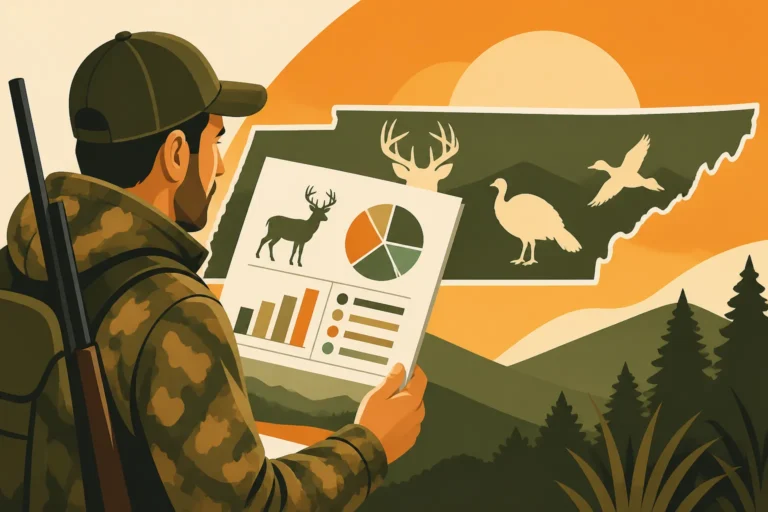
When we talk about "deer harvest records," we're not just looking at a single grand total. The TWRA meticulously tracks several key metrics that paint a much more detailed picture. This includes the total number of deer harvested statewide, but also breaks it down by county, by game species (primarily white-tailed deer, but sometimes feral hogs harvested alongside), and importantly, by antlered bucks, antlerless deer (does and button bucks), and even by weapon type. Knowing these distinctions is critical. For instance, a high overall harvest might sound great, but if it's heavily skewed towards antlerless deer in a specific management unit, it tells a different story than a harvest dominated by mature bucks. These granular details help us understand how management strategies like Tennessee's Six Deer Management Units are performing in different areas. We can also infer things about the age structure of the herd in a given area by looking at buck harvest data over time—are hunters taking younger bucks, or are older, more mature deer making it through to later seasons? These insights are gold for planning where and when to hunt.
Where to Find Official Harvest Information
Accessing this wealth of information is easier than you might think, thanks to the TWRA's commitment to transparency. The primary source for official, up-to-date harvest data is the TWRA website. They typically publish detailed reports, often broken down by season, county, and even public lands. You'll find historical data going back many years, which is invaluable for spotting trends. Beyond the official TWRA site, many third-party platforms and apps, like GoHunt, compile and present this public data in user-friendly formats, often with additional mapping and analytical tools. These tools can help you visualize harvest hotspots and overlay them with public land boundaries or habitat features. When you report a Tennessee deer harvest online, you're directly contributing to this vital database, helping the agency make informed decisions and providing fellow hunters with the information they need. It's a cooperative effort that benefits everyone who loves chasing whitetails in the Volunteer State.
Long-Term Trends and Influencing Factors
Tennessee's deer herd has seen its fair share of ups and downs over the decades. From near extirpation in the early 20th century to a remarkable recovery, and now facing new challenges like Chronic Wasting Disease, the long-term harvest data tells a compelling story of resilience, management efforts, and environmental shifts. Understanding these trends helps us appreciate where we are today and anticipate what might be on the horizon.
The Boom and Bust Cycles of Deer Populations
Tennessee's deer population, like any wildlife population, isn't static; it experiences cycles of growth and, occasionally, decline. The incredible success story of White-Tailed Deer Across Tennessee began with restocking efforts in the mid-20th century, leading to a steady increase in deer numbers and, consequently, harvest totals. We saw peak harvest numbers in the early 2000s, reflecting a robust and expanding herd. However, deer populations rarely grow indefinitely. Factors like habitat saturation, increased predation, and disease can lead to stabilization or even slight declines. Recent years have shown some plateaus or minor dips in total harvest, which wildlife biologists constantly monitor. These fluctuations don't necessarily mean the sky is falling, but rather that the herd is responding to various ecological pressures and management adjustments. For instance, sometimes a reduction in antlerless tags in certain Tennessee's Six Deer Management Units can lead to fewer does being harvested, which in turn might influence future buck harvests as the population structure shifts.
How Habitat and Weather Shape Harvests
It's no secret that deer thrive in good habitat, and changes in land use directly impact deer numbers and harvest success. Agricultural practices, timber operations, and urban expansion all play a significant role. For example, counties with extensive row crops or managed timberlands often provide excellent forage and cover, leading to higher deer densities and, predictably, higher harvest numbers. Weather also throws a significant curveball into the harvest equation. A harsh winter can reduce fawn survival rates, impacting future recruitment. Conversely, mild winters can lead to healthier does and more fawns. Droughts can affect food availability, forcing deer to travel more and potentially making them more visible. Rainy, windy opening weekends might keep some hunters out of the woods, temporarily depressing harvest numbers, while a crisp, clear cold front can get deer on their feet and hunters eager to participate. These environmental variables are constantly interacting with the deer population, making each hunting season unique. For instance, understanding Late-Season Food Sources for Tennessee Whitetails becomes paramount in years where natural mast crops might have failed due to weather extremes.
Impact of Increased Hunter Participation
Over the years, Tennessee has seen a consistent interest in deer hunting, with many passionate individuals heading afield. The number of active deer hunters can directly influence harvest totals. More hunters, especially if they are skilled and persistent, can naturally lead to a higher harvest, assuming the deer population can sustain it. However, high hunter participation also means increased pressure on public lands, which can make deer more nocturnal or force them into thicker, harder-to-reach cover. The TWRA carefully balances hunter opportunity with herd management, often adjusting season lengths, bag limits, and specialized hunts to manage both. The increasing popularity of advanced scouting tools and platforms like GoHunt also allows hunters to be more efficient, potentially increasing individual success rates. This blend of traditional knowledge, robust data, and modern technology shapes the dynamics of each hunting season and the overall Tennessee Deer Harvest Numbers.
Regional Harvest Disparities Across Tennessee
Tennessee is a geographically diverse state, stretching from the Mississippi River bottomlands in the west to the Appalachian Mountains in the east, with rolling hills and the Cumberland Plateau in between. This variety in landscape translates directly into distinct differences in deer habitat, population densities, and, consequently, deer harvest success rates. What works in one region might not work in another, and the harvest data reflects this beautifully.
West Tennessee's Big Buck Reputation
If you've spent any time talking to deer hunters in Tennessee, you've likely heard the tales of West Tennessee. This region, characterized by its fertile river bottoms, extensive agriculture (corn, soybeans, cotton), and large timber tracts, often boasts some of the highest deer densities and produces some of the state's largest bucks. The consistent food sources, combined with ample cover and often less severe hunting pressure on private lands compared to some public areas, contribute to deer having the nutrition and age to reach their full potential. Harvest records from counties like Carroll, Weakley, and Henry consistently show impressive buck-to-doe ratios and high overall deer harvests. It's a prime example of Why West Tennessee Grows Big Bucks. Hunters here often focus on hunting field edges, creek bottoms, and thickets adjacent to agricultural fields, knowing that the deer have everything they need to thrive.
The Cumberland Plateau and East Tennessee Challenges
Moving eastward, the landscape changes dramatically, and so do the hunting opportunities. The Cumberland Plateau, with its rugged terrain, dense hardwood forests, and often lower soil fertility, presents a different set of challenges and rewards. Deer densities here are generally lower than in West Tennessee, and the hunting is often more physically demanding. Harvest numbers tend to reflect this, with hunters working harder for their deer. East Tennessee, especially the more mountainous regions near the Cherokee National Forest, presents even steeper grades and vast stretches of public land. While these areas hold deer, the sheer scale and difficulty of access mean lower deer densities in many parts, and thus, lower overall harvest numbers per square mile. Hunters in these regions often rely heavily on scouting techniques like Reading Aerial Photos for Cumberland Plateau Deer to find pockets of deer activity in an otherwise expansive landscape. Success here often comes down to intimate knowledge of specific ridge systems, hollows, and mast crop locations, and understanding Deer Density by Tennessee Region is crucial for setting realistic expectations.
Middle Tennessee's Steady Productivity
Middle Tennessee offers a blend of agricultural lands, rolling hills, and suburban areas, creating a mosaic of deer habitat. While not typically known for the sheer volume of "giant" bucks that West Tennessee might produce, the region consistently offers solid hunting opportunities and healthy deer populations. Counties surrounding major metro areas can surprise hunters, with deer adapting well to fragmented habitats and often benefiting from less hunting pressure in closer proximity to human development. The harvest data from Middle Tennessee often shows a steady, reliable output of both antlered and antlerless deer, making it a good choice for hunters looking for consistent success without having to travel to the far corners of the state. This region often benefits from a mix of private land with good habitat management and accessible public lands, providing diverse opportunities.
Here's a simplified look at how harvest numbers might vary by region, based on general trends observed in Tennessee Deer Population Estimate and harvest reports:
| Region | Average Annual Antlered Buck Harvest (Approx.) | Average Annual Antlerless Deer Harvest (Approx.) | Typical Habitat Factors | General Hunter Experience |
|---|---|---|---|---|
| West Tennessee | High | High | Fertile river bottoms, extensive agriculture, large timber blocks | High success rates, potential for larger bucks |
| Middle Tennessee | Moderate to High | Moderate to High | Rolling hills, mixed agriculture, suburban interfaces, woodlots | Consistent success, diverse opportunities |
| Cumberland Plateau | Moderate | Moderate | Rugged terrain, dense hardwoods, mixed timber, lower agriculture | More challenging, rewards scouting and persistence |
| East Tennessee | Moderate | Moderate | Steep mountains, vast public forests (e.g., Cherokee National Forest) | Physically demanding, lower density, focus on specific areas |
Note: These numbers are generalized and can fluctuate significantly year-to-year and by specific county within each region. Always consult current TWRA data for precise figures.
The Influence of Regulations and Disease Management
Deer hunting in Tennessee isn't just about finding deer; it's also about navigating a comprehensive framework of regulations designed to manage the herd sustainably. These rules, along with the growing concern over Chronic Wasting Disease (CWD), directly shape harvest strategies and impact hunter behavior and success. Ignoring them isn't an option, and understanding their influence is key to responsible hunting.
How DMU Rules Affect Antlerless Harvests
Tennessee is divided into Tennessee's Six Deer Management Units (DMUs), each with specific regulations for antlered and antlerless deer. These rules are not arbitrary; they are carefully crafted by the TWRA based on local deer densities, habitat conditions, and biological data. For example, DMUs with high deer populations and significant agricultural damage might have very liberal antlerless bag limits, encouraging hunters to take more does to help control the herd size. Conversely, DMUs with lower deer densities or areas where herd growth is desired might have more restrictive antlerless limits. These rules directly influence the composition of the annual harvest. A year with liberal doe days in a certain DMU will naturally see a higher antlerless harvest than a year with fewer such opportunities. Hunters need to stay updated on these specific regulations, as they can change annually based on herd health assessments. This ensures that the overall Tennessee Deer Season Structure Explained is adaptive and responsive.
Chronic Wasting Disease CWD and Its Harvest Ramifications
Perhaps no single factor has influenced Tennessee deer management and harvest records more recently than the presence of Chronic Wasting Disease in Tennessee Deer. CWD is a fatal neurological disease that affects deer, elk, and moose, and it poses a serious long-term threat to the health of our deer herd. Since its detection in West Tennessee, the TWRA has implemented a CWD Management Zone with specific rules that significantly impact hunters. These rules often include mandatory CWD testing in certain counties, carcass export restrictions, and special "Earn-a-Buck" programs. The goal of these measures is to monitor the spread of the disease and, where possible, reduce deer densities to slow its transmission. This has directly led to altered harvest patterns, with increased efforts to harvest antlerless deer in CWD-positive areas, and programs like Earning a Buck Tag Through CWD Testing encouraging hunter participation in disease management. Hunters in these zones face additional responsibilities, and the harvest data within these areas is scrutinized intensely for signs of disease prevalence and impact.
Hunter Education and Ethical Considerations
While not a direct regulation on harvest numbers, the importance of hunter education and ethical hunting practices cannot be overstated. A well-educated hunter is not only safer but also more effective and more likely to adhere to regulations, contributing accurate harvest data. Tennessee Hunter Education Requirements ensure new hunters understand safe firearm handling, game laws, and ethical shot placement. Ethical considerations also influence harvest. Responsible hunters strive for quick, humane kills and accurate harvest reporting. This commitment to ethics, while intangible in direct harvest numbers, underpins the entire management system. An educated and ethical hunting community is crucial for maintaining public support for hunting and ensuring the long-term health of Tennessee's deer herd, indirectly supporting consistent and healthy harvest numbers.
Using Harvest Records to Plan Your Next Hunt
Understanding Tennessee's deer harvest records isn't just an academic exercise; it's a powerful tool that can significantly enhance your hunting strategy. By looking at historical data, you can move beyond guesswork and make informed decisions about where, when, and how to hunt. This proactive approach can save you countless hours of unproductive scouting and increase your chances of success.
Identifying High-Producing Counties and WMAs
One of the most immediate benefits of studying harvest records is the ability to identify areas that consistently produce a high volume of deer. If a county or a specific Wildlife Management Area (WMA) shows consistently high harvest numbers year after year, it's a strong indicator of a healthy deer population and good hunting opportunities. This doesn't necessarily mean it's easy hunting, but it suggests the deer are there. You can delve deeper, too. Look not just at total deer, but at the buck-to-doe harvest ratio. An area with a relatively balanced ratio, or even a higher proportion of antlered bucks in the harvest, might indicate a healthier age structure and more mature deer. Tools like GoHunt often integrate TWRA harvest data with detailed mapping, allowing you to easily pinpoint these hotspots and scout them virtually before ever setting foot in the woods. This can be especially useful for planning trips to unfamiliar public lands or new private land leases, giving you a valuable head start on your Scouting Tennessee Public Land Before Season efforts.
Predicting Peak Activity Based on Past Data
Harvest data can also help you refine your timing. While the exact date of the rut varies slightly year-to-year due to factors like weather and moon phase, historical harvest peaks can give you a strong indication of when the majority of mature buck activity occurs in a given region. For instance, if data consistently shows a spike in buck harvests during the second week of November in a particular county, that's a good bet for when Hunting the Rut in Early November might be most productive there. Similarly, looking at antlerless harvest trends can indicate when does are most active and visible, which might align with specific food sources or early season patterns. Don't just look at the statewide averages; dig into the data for the specific county or WMA you plan to hunt. This hyper-local information can be much more valuable for predicting when deer are most likely to be on the move during legal shooting hours.
Scouting Smarter with Historical Information
Combining harvest records with other scouting methods creates a powerful synergy. Once you've identified a promising area based on harvest data, you can then focus your on-the-ground scouting or detailed map analysis. For example, if a particular WMA shows consistent harvests, you might then use aerial imagery and topographic maps to look for features that would concentrate deer, such as pinch points, saddles, or creek crossings. Knowing that an area has a history of high harvests gives you confidence that your scouting efforts are directed at a productive spot, rather than wasting time in low-density areas. Furthermore, understanding the predominant habitat types in a high-harvest area (e.g., heavily timbered, agricultural fringe, swampy bottomland) helps you anticipate what kind of sign you should be looking for and what hunting tactics might be most effective. This iterative process of data review, digital scouting, and boots-on-the-ground confirmation is how modern, successful deer hunters operate.
Disclaimer
The information provided in this guide is for general informational purposes only and is subject to change. Hunting regulations, season dates, and deer management strategies in Tennessee are set by the Tennessee Wildlife Resources Agency (TWRA) and can be modified annually. Always consult the most current TWRA hunting guide and official website for the definitive and up-to-date rules and regulations before planning or engaging in any hunting activities.