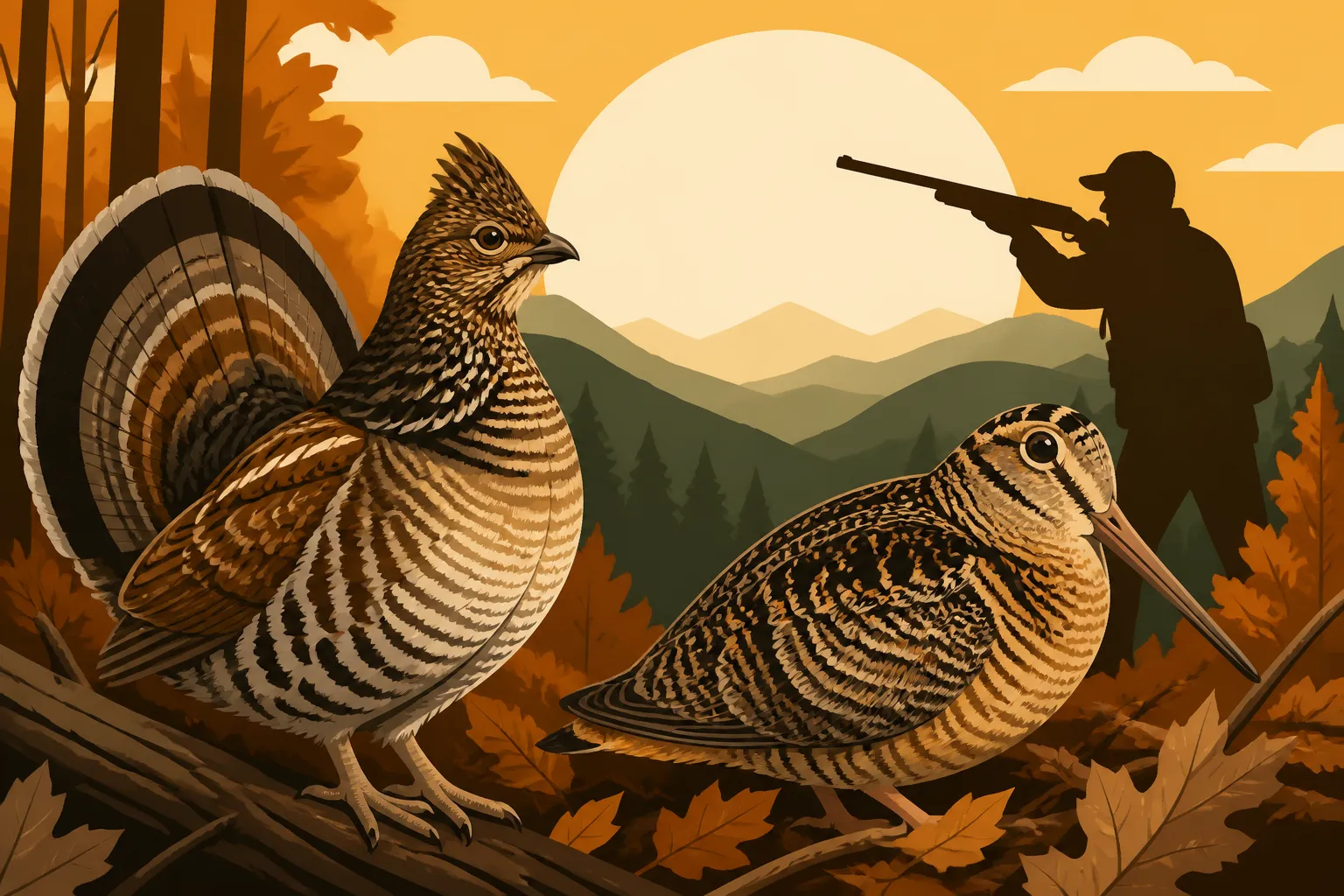
Grouse and Woodcock in Tennessee
The pursuit of ruffed grouse and American woodcock in Tennessee isn't always about filling a limit; often, it's about the challenge, the dog work, and the sheer joy of experiencing some of the state's wildest places. For many hunters, getting reliable, up-to-date information on where these elusive upland birds might be found, or even how to effectively hunt them in a state not always known for its "birdy" cover, can feel like an impossible task. This comprehensive guide aims to cut through that confusion, offering an in-depth look at Tennessee's grouse and woodcock populations, their habitats, and proven tactics to make your hunts more successful and enjoyable.
Understanding Tennessee's Ruffed Grouse Population
The ruffed grouse (Bonasa umbellus) is a bird steeped in tradition and admired for its explosive flush. However, in Tennessee, it's a species that has faced significant challenges, and understanding its current status and habitat is paramount for any hunter hoping to pursue it. Tennessee sits at the southern edge of the ruffed grouse’s range, making its populations inherently more susceptible to environmental changes and habitat shifts than those in northern states.
The Historical Decline and Current Status
For decades, grouse hunting in Tennessee was a viable pursuit in the eastern mountains and parts of the Cumberland Plateau. However, the story of the ruffed grouse in Tennessee over the last 50 years is largely one of decline. Several factors have contributed to this concerning trend, making it a stark reality for today's upland hunters. One major culprit has been the changing landscape of timber management. Grouse thrive in early successional forest — young, regenerating woodlands typically 5-20 years old, often resulting from clear-cuts, wildfires, or intense storms. This dense cover provides both protection from predators and essential food sources like buds, catkins, and berries.
As timber practices shifted away from smaller, rotational clear-cutting in some areas towards either older, more mature forests or larger, less frequent timber operations, the critical patches of young forest grouse need have become scarcer and more fragmented. This loss of suitable habitat directly impacts grouse survival and reproduction. Furthermore, the spread of West Nile Virus has been identified as a significant factor in some areas, particularly in the southern reaches of the grouse's range, where milder winters might allow for greater mosquito populations that carry the disease. Predation pressure from coyotes, bobcats, and raptors also plays a role, especially when grouse habitat becomes less dense. While precise population figures are hard to come by for such an elusive bird, the general consensus among biologists and seasoned hunters is that Tennessee's grouse numbers are significantly lower than in past decades, with their distribution becoming more restricted to specific, managed areas.
Habitat Requirements and Preferred Cover
Ruffed grouse are incredibly particular about their habitat. They are not birds of open fields or mature, park-like timber. Instead, they demand dense, multi-layered cover that offers both escape routes and consistent food sources. Ideal grouse habitat is a mosaic of different forest ages and types. They utilize sapling-stage hardwoods for brooding cover and protection, thicker brushy areas along creek bottoms or ridge lines for roosting, and older timber patches interspersed with these younger areas for nesting.
Key components of prime grouse cover include thick stands of young hardwoods like oaks, maples, and hickories, often mixed with evergreens such as hemlock, pine, or rhododendron thickets. These evergreens provide crucial thermal cover during harsh winters and visual breaks from aerial predators. The understory must be thick enough to impede ground predators and offer concealment. In areas with historical timber activity, you'll often find grouse near old logging roads, around recent clear-cuts (especially those 5-15 years post-cut, where dense regrowth is taking hold), or on the edges of small forest openings. These areas provide the "structure" that grouse need to survive. A clear-cut that's too recent might not offer enough cover, while one that's too old might have grown past the dense sapling stage they prefer. Learning to read the age of a timber cut, as discussed in How Old a Cut Should Be for Grouse, can significantly improve your scouting efforts.
Where to Find Remnant Populations
Given their decline and specific habitat needs, finding grouse in Tennessee requires focused effort and a willingness to explore remote, rugged terrain. The best opportunities lie in the eastern part of the state, particularly within the vast confines of the Cherokee National Forest. Areas around the Unaka and Ocoee-Hiwassee units still hold pockets of grouse, though even here, the populations are localized and far from abundant. Hunters often target high-elevation coves, steep hillsides, and areas where previous timber harvests have created that vital early successional growth.
The Cumberland Plateau also offers some potential, particularly on larger public land tracts like parts of Catoosa Wildlife Management Area or the Big South Fork National River and Recreation Area. These regions still have significant forested acreage, and where active timber management or natural disturbances have occurred, small, isolated grouse populations persist. Access to these areas can be challenging, often requiring extensive walking along old logging roads or through dense brush. Don't expect to find grouse easily; it often takes years of dedicated scouting and hunting in specific locales to consistently encounter these magnificent birds. Scouting remote sections and focusing on dense cover, as explored in Grouse Hunting the Cumberland Plateau, is often the only way to find success.
The Elusive American Woodcock
While ruffed grouse are resident upland birds, the American woodcock (Scolopax minor) is a migratory species, bringing a different dynamic to Tennessee's upland hunting scene. Often called "timberdoodles" for their habitat and unique appearance, woodcock offer a fantastic challenge and a different kind of reward for hunters willing to seek them out.
Migration Patterns Through Tennessee
American woodcock are fascinating birds that breed in the northern United States and Canada, migrating south for the winter to the Gulf Coast states. Tennessee sits squarely in a key migratory corridor, meaning we see a significant influx of woodcock during both fall and spring migration. The peak of their southbound migration typically occurs from late October through November, coinciding perfectly with prime fall hunting seasons. During this time, birds are moving through, pausing in suitable habitat to feed and rest before continuing their journey.
The timing can vary slightly each year depending on weather patterns and cold fronts to the north. A sharp drop in temperatures or an early snowstorm in the Great Lakes region can push birds south quickly, leading to "flights" of woodcock appearing in Tennessee overnight. Conversely, mild weather can spread out their migration, making them harder to concentrate. In Tennessee, woodcock are primarily a migratory game bird, with relatively few individuals choosing to breed here compared to states further north. However, some do linger and breed, especially in the western and middle parts of the state. Understanding When Woodcock Migrate Through Tennessee is crucial for timing your hunts.
Prime Woodcock Habitat and Scouting Tips
Unlike grouse, which prefer drier, upland forests, woodcock are drawn to moist, soft soil where they can probe for their primary food source: earthworms. This means you'll find them in bottomland areas, along the edges of creeks, streams, and rivers, in young, regenerating clear-cuts that retain moisture, and in swampy thickets. Key cover types include dense stands of alders, willows, dogwoods, sweetgum, and often invasive species like multiflora rose or privet. The ideal habitat is characterized by dense vertical cover from knee-high to around 15 feet, providing both concealment and shade to keep the soil moist.
Scouting for woodcock involves looking for these specific habitat characteristics. Pay attention to soil composition; if it's too sandy or rocky, it won't hold the worms woodcock need. Look for areas with a thick overhead canopy but relatively open ground beneath, allowing them to walk and probe. Old fields that have grown into brushy thickets, power line cuts that have been allowed to reforest with dense, young growth, and the edges of agricultural fields adjacent to woody cover can also be hotspots. Don't forget to look for their "borings" – small, round holes in the mud or soft soil where they've probed for worms – which are a sure sign that woodcock are in the area. The unique "singing ground surveys" that TWRA conducts, as outlined in Tennessee Woodcock Singing Ground Surveys, highlight these preferred breeding and stopover spots.
The Unique "Timberdoodle" Behavior
The woodcock's endearing nickname, "timberdoodle," comes from its unique appearance and behavior. They are compact, plump birds with remarkably long bills, large eyes set high on their heads (giving them excellent rear vision), and short legs. When flushed, a woodcock's flight is distinctive: it often flushes vertically in a rapid, spiraling ascent before leveling off and flying a relatively short distance, usually no more than 50-75 yards, before dropping back into thick cover. This makes for challenging but often repeatable shots.
Woodcock are primarily crepuscular, meaning they are most active at dawn and dusk. During the day, they tend to sit tight in dense cover, relying on their incredible camouflage to avoid detection. This is why a good bird dog is almost essential for consistent woodcock hunting. When a dog goes on point, a woodcock will often hold incredibly tight, sometimes allowing a hunter to walk right up to it before flushing. Their diet of earthworms gives their meat a rich, distinct flavor that is prized by gourmets and hunters alike. Their comical appearance, unusual flight, and penchant for thick cover make them a true delight to pursue.
Key Differences and Similarities for Hunters
While both grouse and woodcock fall under the umbrella of "upland birds," they present very different challenges and experiences for the Tennessee hunter. Understanding these distinctions and overlaps is crucial for effective hunting and appreciating each species on its own terms.
Identifying Grouse Versus Woodcock in the Field
At first glance, especially in the fleeting moment of a flush, it might be hard to tell a grouse from a woodcock. However, once you get a closer look, their differences are stark. A ruffed grouse is a much larger, more robust bird, roughly the size of a small chicken, with a broad, fan-shaped tail that it can "ruff" up during displays. Its plumage is mottled brown, gray, and black, providing superb camouflage in forest settings. Its short, conical bill is typical of a seed-eating bird.
The American woodcock, by contrast, is a smaller, more compact bird, perhaps the size of a large robin or small dove. Its most distinguishing feature is its incredibly long, straight bill, perfectly adapted for probing soft soil. Its eyes are set unusually high and far back on its head. Its plumage is a rich, mottled brown, often with bars across its head and a somewhat "squat" appearance. When flushed, a woodcock will typically make a whistling sound with its wings as it flushes, whereas a grouse's flush is a thunderous burst of wings and a guttural cackle.
Behavioral Contrasts and Hunting Approaches
The behavioral differences between grouse and woodcock dictate vastly different hunting strategies. Grouse, particularly in Tennessee, are notoriously wary and wild. They often flush at a distance, preferring to run or fly rather than hold tight for a dog. When they do flush, it's often an explosion of wings, weaving through dense timber at lightning speed. Hunting grouse usually involves covering significant ground, walking old logging roads, contouring hillsides, and navigating thick, regenerating clear-cuts. It’s a game of persistence, quick reflexes, and often, educated guessing as to where the bird might appear next. Flushing Grouse Without a Dog discusses strategies for those who don't hunt with canine companions, emphasizing stealth and understanding cover.
Woodcock, on the other hand, are famous for their willingness to hold tight, often not flushing until you are practically on top of them. Their flight, while quick, is typically shorter and more predictable, often in a looping or spiraling pattern before they drop back into cover. This makes them an absolute dream for dog hunters, as a good pointing dog can pinpoint a bird, allowing the hunter to walk in for a shot. For hunters without dogs, it means walking slowly and deliberately through their preferred dense, moist cover, ready for an unexpected flush from underfoot.
Overlap in Habitat and Multi-Species Opportunities
While their primary habitats are distinct, there are certainly transitional zones where you might encounter both grouse and woodcock on the same hunt. Picture the edge of a regenerating clear-cut that slopes down into a moist creek bottom, or a power line right-of-way that crosses through a varied forest type. The higher, drier sections of the clear-cut or power line might hold grouse, especially if there's sufficient young, brushy growth. As you descend into the wetter, thicker bottomland along the creek, conditions become ideal for woodcock.
These "edge" habitats, or areas where different forest types and moisture levels converge, are goldmines for the upland hunter. It's not uncommon to flush a grouse on a hillside and then, a few hundred yards later in the same area but lower down, have your dog go on point for a woodcock. This potential for a mixed bag adds an exciting dimension to Tennessee upland hunting, demanding versatility in both your hunting approach and your dog's training. It's a fantastic way to experience the diverse challenges these two remarkable birds offer.
Tennessee Season Dates and Regulations
Understanding the regulations, season dates, and specific requirements for hunting grouse and woodcock in Tennessee is critical to staying legal and ensuring a safe, ethical hunt. The Tennessee Wildlife Resources Agency (TWRA) sets these rules, and they can vary, so always check the most current regulations before heading afield.
Grouse Season Dates and Bag Limits
Tennessee’s ruffed grouse season is typically one of the shorter upland bird seasons, reflecting the species' sensitive population status. Historically, the season has run from around the second Saturday in October through January 31st. However, due to ongoing population concerns, it's crucial to verify the exact dates each year. For instance, in recent years, the TWRA has occasionally adjusted or even closed the season in certain zones to protect declining populations.
The daily bag limit for ruffed grouse in Tennessee is also quite conservative, usually set at three birds per hunter per day. There is typically no possession limit, but the daily bag limit still applies to the number of birds you can harvest in a single day. These regulations underscore the rarity and fragility of Tennessee's grouse population compared to more robust populations in states further north. Hunters should treat any harvested grouse as a special trophy and focus more on the experience and conservation of the species. It's a true privilege to even encounter a grouse in the deep woods of Tennessee today, let alone harvest one. You can find the most current status information in articles like Tennessee Grouse Season Status.
Woodcock Season Dates, Bag Limits, and HIP Requirements
The American woodcock season in Tennessee is a different beast altogether, largely because they are migratory birds falling under federal as well as state regulations. The season typically opens in November and extends into January, often running concurrently with parts of the duck and goose seasons. This longer season, usually with a generous bag limit of three to five birds per day, reflects the healthier continental woodcock population and their migratory nature through the state.
Crucially, because woodcock are migratory game birds, hunters are required to obtain a Federal Duck Stamp and register with the Harvest Information Program (HIP) in addition to their regular Tennessee hunting license and appropriate permits. The HIP certification, as detailed in Tennessee HIP Certification for Bird Hunters, helps wildlife agencies gather data on migratory bird harvests, which is vital for sound conservation management. Failure to possess these can result in significant fines. Always double-check the exact season dates, bag limits, and specific regulations for migratory birds each year, as they can sometimes shift based on federal frameworks.
Important Gear Considerations and Blaze Orange Rules
While not always explicitly required for upland bird hunting in Tennessee, wearing blaze orange or blaze pink is highly recommended, especially when hunting public lands or in areas where other hunters might be pursuing deer. For grouse and woodcock, you'll often be pushing through thick cover, and visibility to other hunters is paramount for safety. During big game seasons, specific blaze orange requirements apply, even if you are only hunting upland birds. Always consult the TWRA regulations for the specific area and time of year you plan to hunt to ensure compliance.
Beyond visibility, consider practical gear for the terrain. Good briar-resistant pants or chaps are invaluable when pushing through thickets. Sturdy, waterproof boots with good ankle support are essential for navigating uneven terrain, wet creek bottoms, and slick leaf litter. A comfortable upland vest or small pack to carry shells, water, snacks, and any harvested birds is also a must. Unlike big game hunting where calls are common, grouse and woodcock hunting is primarily a silent pursuit, relying on stealth and dog work. A reliable shotgun with an open choke is also key, which we'll delve into further in the gear section.
Effective Hunting Tactics for Upland Birds
Hunting grouse and woodcock successfully in Tennessee isn't just about finding the right habitat; it's about employing smart tactics that exploit their behavior and the specific terrain. Whether you're navigating the steep slopes of the mountains or the dense bottomlands, a well-thought-out approach makes all the difference.
Hunting Grouse in Mountainous Terrain
Hunting ruffed grouse in the mountains of East Tennessee is a physically demanding endeavor that rewards patience and a keen eye for cover. Since grouse prefer young, dense forest, focus your efforts on areas that have seen recent timber cuts (5-20 years old), areas recovering from natural disturbances like wildfires, or along the edges of clear-cuts where dense saplings have grown in. Old logging roads and skid trails can serve as excellent access points and travel corridors, but the real hunting often happens by working the dense cover adjacent to them.
The key is to walk slowly and deliberately, pausing frequently. Grouse will often hold tight, relying on their camouflage, but these pauses can make them nervous enough to flush. Walk in a zigzag pattern through thickets, trying to flank areas of particularly dense cover. If hunting with a partner, spread out enough to cover a wider swath of cover, but always maintain visual or auditory contact for safety. Pay close attention to ridge-tops, saddles, and hollows that offer a mix of food sources (like acorns or wild grapes) and escape cover. The explosive flush of a grouse in heavy timber requires lightning-fast reflexes and intuitive shooting. It's not about volume; it's about making the most of a few, challenging opportunities.
Flushing Woodcock in Bottomland Thickets
Woodcock hunting is generally less physically demanding than grouse hunting, but it requires navigating different types of challenging cover: dense, often wet, thickets in bottomland areas. The goal is to systematically walk through these areas, pushing birds to flush. Since woodcock typically hold very tight, a slow, methodical pace is crucial. Walk in a crisscrossing pattern, making sure to cover all suitable ground.
Focus on areas with moist, soft soil – often identifiable by the presence of specific plants like alders, willows, or young river birches – especially along creek beds, sloughs, or the edges of flooded timber. Look for their "borings" in the mud, which indicate active feeding areas. When a woodcock flushes, it often spirals upwards before leveling out. Try to anticipate this flight path and be ready for a quick, overhead shot. If you miss, mark where the bird went down, as they typically don't fly far, offering a chance for a re-flush. These tactics are effective whether you're Flushing Grouse Without a Dog (or woodcock, in this case) or working with one.
Working Dogs for Both Species
For both grouse and woodcock, a well-trained bird dog is an invaluable asset, almost a necessity for consistent success. Pointing breeds like English setters, Brittanys, German shorthaired pointers, and Pointers are excellent for both species, as they can scent birds that would be impossible for a human to find, then hold them on point, allowing the hunter to walk in for a flush and shot. Flushing breeds like English springer spaniels can also be highly effective, methodically working cover and flushing birds within gun range.
Training a dog for Tennessee upland hunting involves exposing them to dense cover, developing their scenting abilities, and reinforcing good manners on point or flush. An e-collar can be an essential tool for communicating with your dog and ensuring their safety and adherence to commands in thick terrain. When hunting with a dog, pay attention to their body language. A dog on point or working birdy scent will tell you exactly where to focus your attention. The dog not only helps find birds but also significantly aids in retrieving downed game from dense cover, reducing the chance of lost birds. Companies like GoHunt provide valuable resources and forums where hunters discuss dog training tips and even connect with professional trainers.
Conservation Efforts and Future Outlook
The future of grouse and woodcock hunting in Tennessee, especially for grouse, hinges heavily on ongoing conservation efforts. These species face significant environmental pressures, and hunters play a vital role in their survival.
Grouse and Woodcock Conservation Initiatives
Numerous organizations and state agencies are dedicated to the conservation of upland birds. The Ruffed Grouse Society and American Woodcock Society are national organizations that actively advocate for and fund habitat management projects across the country. In Tennessee, the TWRA collaborates with these groups and other partners like the National Wild Turkey Federation and the U.S. Forest Service to implement habitat improvements.
For grouse, these initiatives primarily focus on creating and maintaining early successional forests. This often involves strategic timber harvesting (like rotational clear-cutting on a smaller scale), prescribed burning, and creating brush piles or dense shrub cover. These practices mimic natural disturbances that historically created the diverse forest age classes grouse depend on. For woodcock, conservation efforts often focus on managing riparian zones (areas along rivers and streams), restoring degraded wetlands, and maintaining areas with dense, young, woody vegetation and moist soil. These efforts are crucial to provide both migratory stopover points and potential breeding habitat.
Challenges Facing Upland Birds in Tennessee
Despite these efforts, upland birds in Tennessee face a multitude of ongoing challenges. Habitat loss and fragmentation remain the most significant threats. Urban sprawl, changes in agricultural practices, and shifts in timber management away from early successional stages continue to reduce the quantity and quality of suitable habitat. Climate change also poses a long-term threat, particularly for ruffed grouse, which are at the southern edge of their range and sensitive to warmer temperatures and altered precipitation patterns.
Diseases like West Nile Virus, as mentioned earlier, can also impact grouse populations. For migratory woodcock, changes in wintering grounds or migratory stopover points due to habitat loss elsewhere in their range can also affect their numbers. Furthermore, predator populations, particularly coyotes, are robust across Tennessee and can exert significant pressure on ground-nesting birds like grouse and woodcock, especially in areas with suboptimal escape cover. Addressing these complex, interconnected challenges requires sustained commitment and collaborative efforts from conservationists, landowners, and hunters.
How Hunters Can Contribute to Conservation
Hunters are often the most passionate advocates for wildlife and wild places, and their contributions are foundational to conservation. The most direct way hunters contribute is through the purchase of hunting licenses, permits, and stamps. A portion of these funds directly supports wildlife management, research, and habitat improvement projects conducted by the TWRA. This also includes the federal excise tax on firearms, ammunition, and archery equipment through the Pittman-Robertson Act, which channels millions of dollars into wildlife conservation annually.
Beyond financial contributions, hunters can volunteer their time for habitat projects, participate in bird surveys, or report sightings of grouse and woodcock to the TWRA to help monitor populations. Advocating for responsible land management practices, such as promoting sustainable forestry that creates diverse age classes, is also crucial. By actively engaging in these efforts, hunters ensure that future generations will have the opportunity to experience the thrill of a flushing grouse or the unique charm of a timberdoodle in Tennessee's wild landscapes.
Gear and Preparations for Upland Hunting
Equipping yourself properly for a Tennessee upland bird hunt can make a huge difference in your comfort, safety, and overall success. The terrain, weather, and specific nature of these hunts demand reliable gear that can stand up to tough conditions.
Shotgun and Ammunition Choices
When it comes to shotguns for grouse and woodcock, fast-handling and lightweight are the names of the game. You'll be walking through dense cover, often with the gun at the ready, and shots are typically close-range and quick. Many upland hunters prefer a 20-gauge or even a 28-gauge shotgun due to their lighter weight and reduced recoil, allowing for quicker follow-up shots in tight quarters. A 12-gauge can certainly be used, but opting for lighter target loads (like 1 oz. or 1 1/8 oz. loads) can make for a more pleasant experience.
As for chokes, an open choke is almost universally preferred. Skeet or Improved Cylinder chokes provide a wider pattern at close range, which is exactly what you need when a bird flushes just feet away in thick brush. Tighter chokes will often result in missed birds or excessively damaged meat at such close distances. Ammunition-wise, common shot sizes for grouse and woodcock are 7.5, 8, or even 9. The goal is a dense pattern of small pellets that delivers enough energy to humanely dispatch the bird without over-penetrating and ruining meat. Make sure your shotgun is unplugged for upland bird hunting, unless specific regulations for a WMA require a plug.
Clothing and Footwear for Tough Terrain
Tennessee's upland cover can be brutal on clothing. Briar-resistant pants or chaps are an absolute must. Brands like Filson, Orvis, and even some workwear brands offer options that can withstand thorns, briars, and abrasive undergrowth. Layering is key for comfort, as temperatures can vary throughout the day, and you'll be exerting a lot of energy. A moisture-wicking base layer, an insulating mid-layer (fleece or wool), and a durable, breathable outer layer are ideal. Waterproof and windproof options are beneficial for unpredictable weather.
For footwear, prioritize comfort and support. Sturdy, waterproof boots with good ankle support are essential for navigating uneven terrain, slick leaves, and wet creek bottoms. Look for boots that are durable enough to withstand miles of walking through brush. Many hunters opt for rubber-bottomed leather boots for their combination of waterproofing and support. Given the often dense nature of the cover, safety glasses are a wise choice to protect your eyes from snapping branches. An upland vest or a small pack, like those offered by GoHunt, is ideal for carrying shells, water, snacks, a first-aid kit, and any birds you might harvest. Think about the specific needs detailed in Upland Vests With Water Capacity.
Mapping and Navigation Tools
Navigating remote public lands and dense cover in Tennessee requires reliable mapping and navigation tools. While traditional paper maps and a compass are always good backups, modern GPS devices and smartphone apps have become indispensable. Apps like onX Hunt and GoHunt offer detailed satellite imagery, topographic maps, and crucially, property boundary lines. These features are invaluable for staying on public land, identifying potential habitat features (like clear-cuts or creek bottoms), and marking points of interest or flushed birds.
Before heading out, download offline maps of your hunting area, as cell service can be spotty in remote parts of the Cherokee National Forest or Cumberland Plateau. Use these tools to scout potential areas from home, identify access points, and plan your routes. During the hunt, they help you track your movement, locate your vehicle, and navigate back out of thick cover. A portable power bank for your phone is also a smart addition. Understanding the terrain and how to read a map, as well as finding ground others walk past by studying aerial photos, can drastically increase your chances of finding these elusive birds.
| Feature | Ruffed Grouse | American Woodcock |
|---|---|---|
| Size | Larger, chicken-sized | Smaller, robin-sized |
| Bill | Short, conical | Very long, slender |
| Eyes | Located more forward | Large, set high and far back on head |
| Habitat | Upland, young regenerating forests, dry clear-cuts | Moist bottomlands, dense wet thickets, creek edges |
| Diet | Buds, catkins, berries, seeds, insects | Earthworms (primary), insects |
| Flight | Explosive, thundering, fast through timber | Spiraling, whistling, typically short distance |
| Behavior | Wary, often runs or flushes wild | Holds tight, relies on camouflage |
| Season | Shorter (Oct-Jan), lower bag limit | Longer (Nov-Jan), higher bag limit |
| Migration | Non-migratory (resident) | Migratory |
| Requirements | TN Hunting License | TN Hunting License, Federal Duck Stamp, HIP |
Disclaimer
Hunting involves inherent risks, including but not limited to injuries, falls, and wildlife encounters. The information provided in this guide is for informational purposes only and is not a substitute for professional advice, landowner permission, or local regulations. Always verify current hunting seasons, bag limits, and specific rules with the Tennessee Wildlife Resources Agency (TWRA) before hunting. Ensure you have all required licenses and permits. Practice firearm safety and responsible hunting ethics at all times. The author and publisher are not responsible for any accidents, injuries, or legal issues that may arise from using this information.