Which Tennessee WMAs Restrict Turkey Hunting
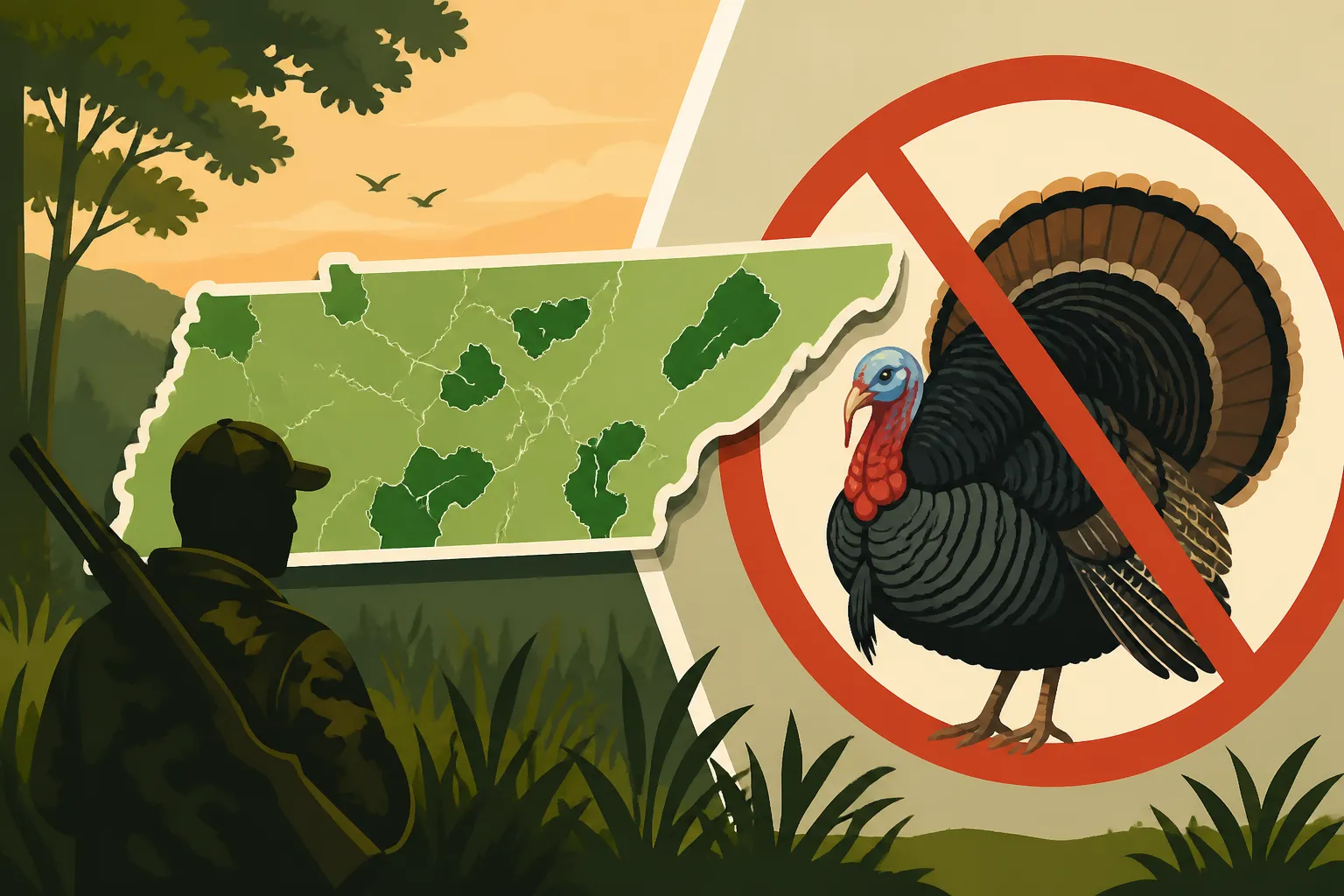
It’s a truly frustrating experience to get all geared up for turkey season, only to realize that the Wildlife Management Area (WMA) you planned to hunt has a completely different set of rules than the statewide season you’ve been studying. Many hunters, myself included, have shown up bright and early, only to be turned away or, worse, to discover they're hunting illegally because they didn't dive deep enough into the specific WMA regulations. This guide is here to untangle the complexities of turkey hunting on Tennessee WMAs, helping you understand where restrictions apply and how to navigate them so your next gobbler hunt is successful and legal.
Understanding WMA Regulations for Turkey Hunting
Hunting on Tennessee's Wildlife Management Areas offers incredible opportunities, but it comes with a unique set of challenges, especially when it comes to spring turkey season. Unlike private land or even some of the more open public lands that might simply follow the general statewide regulations, WMAs often operate under their own distinct rules. It’s not just about having a valid hunting license; it’s about understanding the nuances of each specific tract of public ground.
Why WMAs Have Different Rules
The primary reason WMAs have these specific rules isn't to make your life harder, though it can certainly feel that way sometimes! It’s all about wildlife management, plain and simple. Each WMA is a unique ecosystem, and the Tennessee Wildlife Resources Agency (TWRA) manages these areas to achieve several goals:
- Population Management: Some WMAs might have lower turkey densities, or they might be crucial restoration areas. Restricting hunting pressure through shorter seasons, reduced bag limits, or weapon-specific hunts helps ensure the turkey population remains healthy and sustainable. It’s a delicate balance trying to provide ample hunting opportunities while also safeguarding the future of the flock.
- Habitat Management: WMAs are often actively managed through timber harvests, prescribed burns, and food plot plantings. These activities can temporarily displace wildlife or create specific conditions that necessitate special hunting rules to maximize effectiveness or minimize disturbance during critical times. If a section is undergoing a major habitat restoration project, for example, it might be temporarily closed to hunting.
- Hunter Experience and Safety: In areas that receive heavy hunter pressure, such as those close to major population centers like Nashville or Knoxville, special rules might be implemented to spread out hunters, reduce crowding, and enhance safety. This could mean quota hunts, specific days of the week for hunting, or even designated hunting zones to separate different user groups. The goal is to provide a quality experience, not just a chance to harvest a bird.
- Unique Geographic or Ecological Features: Tennessee is incredibly diverse, from the Mississippi River bottoms of West Tennessee to the rugged peaks of the Appalachian Mountains. A WMA in the Cumberland Plateau might have different challenges and opportunities than one nestled along a major river system, and its rules will reflect those unique characteristics.
The frustration you feel when trying to decipher these varying regulations is completely valid. It can feel like you need a law degree just to figure out where and when you can hunt. But once you understand why these rules exist, it becomes a little easier to accept the homework involved.
The General Statewide Season vs. WMA Specifics
The statewide spring turkey season in Tennessee generally kicks off in early April and runs through mid-May, offering a generous period for most hunters. During this time, the statewide bag limit is typically four bearded turkeys, with certain restrictions on jakes. You can find all the details on the general season by looking up Tennessee Spring Turkey Season Rules. However, WMAs often deviate significantly from this standard, and failing to acknowledge these differences is where many hunters run into trouble.
Think of the statewide season as the default operating system, and WMA rules as custom software updates. Some WMAs might shorten their season dramatically, perhaps only allowing hunting for two weeks in April. Others might maintain the full season length but drastically reduce the daily or seasonal bag limit, perhaps to just one bird per hunter for the entire WMA season.
It’s not uncommon to find WMAs where certain weapons are restricted. While the statewide season generally permits shotguns, archery equipment, and some air guns, a WMA might be designated as "archery-only" for turkeys, or conversely, limit the use of certain types of calls or decoys. This patchwork of regulations means that simply knowing the statewide rules is not enough. Before you even think about packing your vest and shotgun, you must consult the specific WMA regulations for your chosen hunting ground. Trying to apply Run-and-Gun Turkey Tactics on Public Land without first checking the WMA rules could lead to a very bad day. This diligence is not just good practice, it's essential for a responsible hunter.
Navigating Specific WMA Turkey Hunting Restrictions
Once you accept that WMAs are a world unto themselves when it comes to turkey hunting rules, the next step is to understand the types of restrictions you might encounter. This isn't just about reading the rulebook; it's about knowing what to look for and anticipating potential hurdles.
Quota Hunts and Application Periods
Perhaps the most significant restriction on many prime WMAs is the implementation of quota hunts. These are hunts where the number of participants is strictly limited, often to a very small number, to control hunter pressure and ensure a high-quality experience. If you’re dreaming of a hunt on an unpressured WMA with a good chance at a gobbler, a quota hunt might be your ticket. However, that ticket requires some serious planning.
- What is a Quota Hunt? It's essentially a lottery. Hunters apply during a specific window, and then a random draw selects who gets to hunt. This means you can't just show up and expect to hunt. You need to apply well in advance, sometimes months before the season even begins.
- Why Quota Hunts? These are typically implemented on WMAs that either have very sensitive turkey populations, particularly excellent habitat that attracts many hunters, or areas where the TWRA wants to maintain a wilderness-like hunting experience. Think of WMAs like Catoosa WMA or Chuck Swan WMA, which are renowned for their game populations but have very specific, limited-access quota hunts for deer and sometimes turkey. These hunts ensure the birds aren't constantly harassed and have a chance to mature.
- The Application Process: This is where you really need to be on top of things. The application periods are usually in the fall for the following spring's turkey season. You'll need to use the TWRA's online system, often accessible through their Go Outdoors Tennessee platform. It can be a bit daunting, especially for new hunters. Hunters often use tools like GoHunt to keep track of these dates and simplify the application process, making sure they don't miss those crucial deadlines. Missing the application window means missing out on the hunt entirely. And remember, applying doesn't guarantee you a spot; it just gives you a chance in the draw.
The disappointment of not drawing a tag for a coveted quota hunt is real, but applying is the only way to get a shot. Always verify the specific WMA you're interested in for any quota hunt requirements.
Archery-Only or Shotgun-Only Zones
Another common restriction you'll find on certain WMAs involves weapon choices. While the statewide season is pretty open to various methods, some WMAs narrow the options significantly.
- Archery-Only Zones: You'll find these areas, often within larger WMAs or specific parts of them, where only archery equipment (compound bows, recurve bows, longbows, and sometimes crossbows, depending on state law) is permitted for turkey hunting. These zones are usually designed to extend opportunities for bowhunters, reduce overall hunting pressure, or provide a quieter hunting experience. If you prefer to Bowhunting Tennessee's Long Archery Season for deer, you might feel right at home in an archery-only turkey zone. These hunts demand a different skillset and strategy than typical shotgun hunting.
- Shotgun-Only Zones: While less common as an explicit restriction compared to archery-only, some WMAs might, by omission or specific rule, only list shotguns (and perhaps certain air rifles) as legal for turkey. It's rare to find an explicit "no archery" rule unless it's a safety measure in a very dense area or during a specific youth hunt. However, always double-check the legal weapons section for each WMA. You certainly don't want to show up with your trusty muzzleloader if only shotguns are permitted, even if Muzzleloader Deer Hunting in Tennessee is legal elsewhere in the state.
- Why Weapon Restrictions? These rules often tie back to safety in areas with high human traffic, or to specific management goals. An archery-only area might be near a residential zone, or it might be aimed at creating a less disruptive hunting environment for wildlife. It’s crucial to match your gear to the regulations before you even consider setting up your Turkey Gear for a Tennessee Spring.
Shorter Seasons and Bag Limit Differences
Beyond quota hunts and weapon restrictions, WMAs frequently alter the length of the season and the number of birds you can harvest compared to the general statewide regulations. This is where hunters can easily get caught off guard.
- Condensed Seasons: Many WMAs will have a turkey season that is significantly shorter than the statewide 6-week period. It might only be open for two weeks, or even a series of staggered 3-day hunts throughout April. This is typically done to control pressure on the turkey population, especially in areas where birds are less abundant or more susceptible to overhunting. Imagine spending weeks scouting a WMA only to find out its season closed last week! That's a gut punch no one wants to experience.
- Reduced Bag Limits: While the statewide bag limit for spring turkey is usually four bearded birds, WMAs often reduce this number. It's common to see a WMA limit of one bearded turkey per season, or even one per hunt period if it's a staggered quota hunt. Some WMAs might even specify that only gobblers (adult males) can be harvested, implicitly protecting jakes. Always check the Tennessee Statewide Turkey Bag Limit Rules for the general picture, then cross-reference with your specific WMA.
- Daily and Possession Limits: Some WMAs might also impose daily limits that are stricter than the statewide one-bird-per-day rule, or they might have specific possession limits if you're hunting multiple WMAs or multiple periods. It all comes back to managing hunter impact on a localized turkey population. The smaller the WMA, the more likely you are to see more stringent limits.
These restrictions are designed to maintain a healthy turkey population and a quality hunting experience over the long term. It’s a conservation effort that requires cooperation from every hunter.
Key Resources for Planning Your WMA Turkey Hunt
Alright, so you know that WMA rules are different, and you understand why they’re different. Now, let’s talk about how you actually figure out the specifics for your hunt, because nobody wants a citation for a preventable mistake.
The TWRA Annual Hunting and Trapping Guide
This is your bible, folks. Seriously. Every year, the TWRA publishes its Hunting and Trapping Guide, and it’s the single most authoritative source for all hunting regulations in Tennessee. You can pick up a physical copy at most TWRA offices, sporting goods stores like Bass Pro Shops or Academy Sports + Outdoors, or anywhere hunting licenses are sold. However, the most up-to-date version is always available online.
- Where to Find It: Head over to the official TWRA website. They’ll have a PDF version that you can download to your phone or tablet, or print out specific pages. This online version is key because sometimes last-minute changes or clarifications are made that might not be in the print edition.
- How to Use It: Don't just skim the general turkey season section. You need to navigate to the "Wildlife Management Area Regulations" section. This part of the guide is organized alphabetically by WMA. Find the specific WMA you plan to hunt and read every single word under its heading. Look for specific dates, legal weapons, bag limits, and any other special conditions like check-in/check-out requirements or vehicle restrictions. This is where you'll find out if you need a Tennessee WMA Permit Requirement in addition to your general hunting license.
- The Frustration of Detail: Yes, it’s dense. Yes, it’s often written in legalistic language. It can be a real headache to parse through. But think of it as part of your scouting. Just like you’d Scouting Tennessee Public Land Before Season for turkey sign, you need to scout the regulations just as thoroughly. It's the only way to guarantee you're compliant.
Online Tools and Mapping Applications
In today’s digital age, there are fantastic tools available that can make navigating WMA rules a little less painful, and greatly improve your chances of a successful, legal hunt.
- TWRA Website Specific WMA Pages: Beyond the annual guide, the TWRA website often has individual pages for each WMA. These pages can sometimes offer maps, contact information for the WMA manager, and quick overviews of specific regulations or recent changes. Always cross-reference this with the official guide, but it can be a good starting point. Knowing How Tennessee WMAs Are Managed can also give you insight into why certain regulations exist.
- Go Outdoors Tennessee App: The official TWRA "Go Outdoors Tennessee" app is incredibly useful. You can purchase licenses, report harvests (which is mandatory for deer and turkey), and often access basic regulation info directly from your phone in the field. This can be a lifesaver if you have cell service and need to quickly verify a rule. You can also use it for Reporting a Tennessee Deer Harvest Online, so it’s an essential tool for any serious Tennessee hunter.
- Third-Party Mapping Applications: This is where services like GoHunt truly shine. While not directly replacing the official TWRA guide for legal regulations, these apps integrate public and private land boundaries, WMA boundaries, and often provide overlays with general hunting zone information. They are invaluable for visualising where you can and cannot hunt, and for understanding property lines which is crucial when hunting near WMA borders.
- Scouting: Before you ever step foot on a WMA, you can use GoHunt to study aerial photos, identify potential roosting areas (great for Roost Hunting Tennessee Gobblers), locate access points, and mark historical turkey sightings. Knowing precisely where the WMA boundary is can prevent accidental trespassing.
- In the Field: With GPS capabilities, these apps help you stay within legal hunting areas. If you're on a WMA with specific archery-only zones, an app like GoHunt can clearly show you those boundaries, preventing you from inadvertently taking a shotgun into a restricted area. It's an indispensable tool for public land hunters.
- Calling the WMA Manager: When in doubt, call the WMA manager or your local TWRA regional office. Their contact information is usually listed in the annual guide or on the WMA’s dedicated webpage. A quick phone call can clear up any confusion and ensure you're squared away before you head out. These folks are usually more than happy to help hunters understand the rules.
Using a combination of these resources will set you up for success. Don't rely on word-of-mouth or last year's regulations. Turkey hunting on Tennessee WMAs is a fantastic challenge, but it demands respect for the rules.
Common WMA Turkey Hunting Restrictions (Examples)
To give you a clearer picture, here's a table summarizing some common types of WMA restrictions you might encounter. Please note: This table provides general examples and does NOT replace checking the current TWRA Hunting and Trapping Guide for specific WMA regulations.
| Type of Restriction | Description | Potential WMA Examples (General) | Impact on Hunter |
|---|---|---|---|
| Quota Hunt | Limited number of hunters selected via lottery application. | Catoosa WMA, Chuck Swan WMA | Must apply well in advance; not guaranteed a spot. |
| Shorter Season Length | Season open for fewer days/weeks than statewide. | Various smaller WMAs | Must plan hunt dates carefully; fewer opportunities. |
| Reduced Bag Limit | Lower annual or daily limit (e.g., 1 bearded bird per season). | Many WMAs | Limits total harvest; focuses on quality over quantity. |
| Archery-Only Zones | Only bows and arrows (and sometimes crossbows) permitted. | Specific zones within WMAs | Requires specific equipment and skills; no firearms. |
| Sign-In/Out Required | Hunters must register at a check station before/after hunting. | Many larger WMAs (e.g., Land Between the Lakes) | Adds a step to the hunting process; ensures compliance. |
| No Pre-Season Scouting | Access prohibited on WMA before a certain date. | Some high-pressure WMAs | Limits ability to find fresh sign; relies on historical knowledge. |
| Vehicle Restrictions | Limited to paved roads, specific parking areas, or ATVs prohibited. | Most WMAs | May require more walking; plan for longer treks. |
This table isn't exhaustive, but it highlights the variety of rules you might encounter. Always remember that the exact rules can change year to year, so always consult the most current TWRA regulations. By diligently checking these resources, you'll be well-prepared to chase those Tennessee gobblers wherever legal opportunities arise, from the Hunting the Statewide Turkey Opener in April on private land to a specialized WMA hunt.
Disclaimer
Please note: The information provided in this article is for general guidance and informational purposes only and does not constitute legal advice. Hunting regulations in Tennessee are subject to change, and it is the hunter's responsibility to consult the most current official Tennessee Wildlife Resources Agency (TWRA) Hunting and Trapping Guide and any specific WMA regulations before engaging in any hunting activities. Always confirm season dates, bag limits, weapon restrictions, and licensing requirements directly with the TWRA. Failure to do so may result in legal penalties.