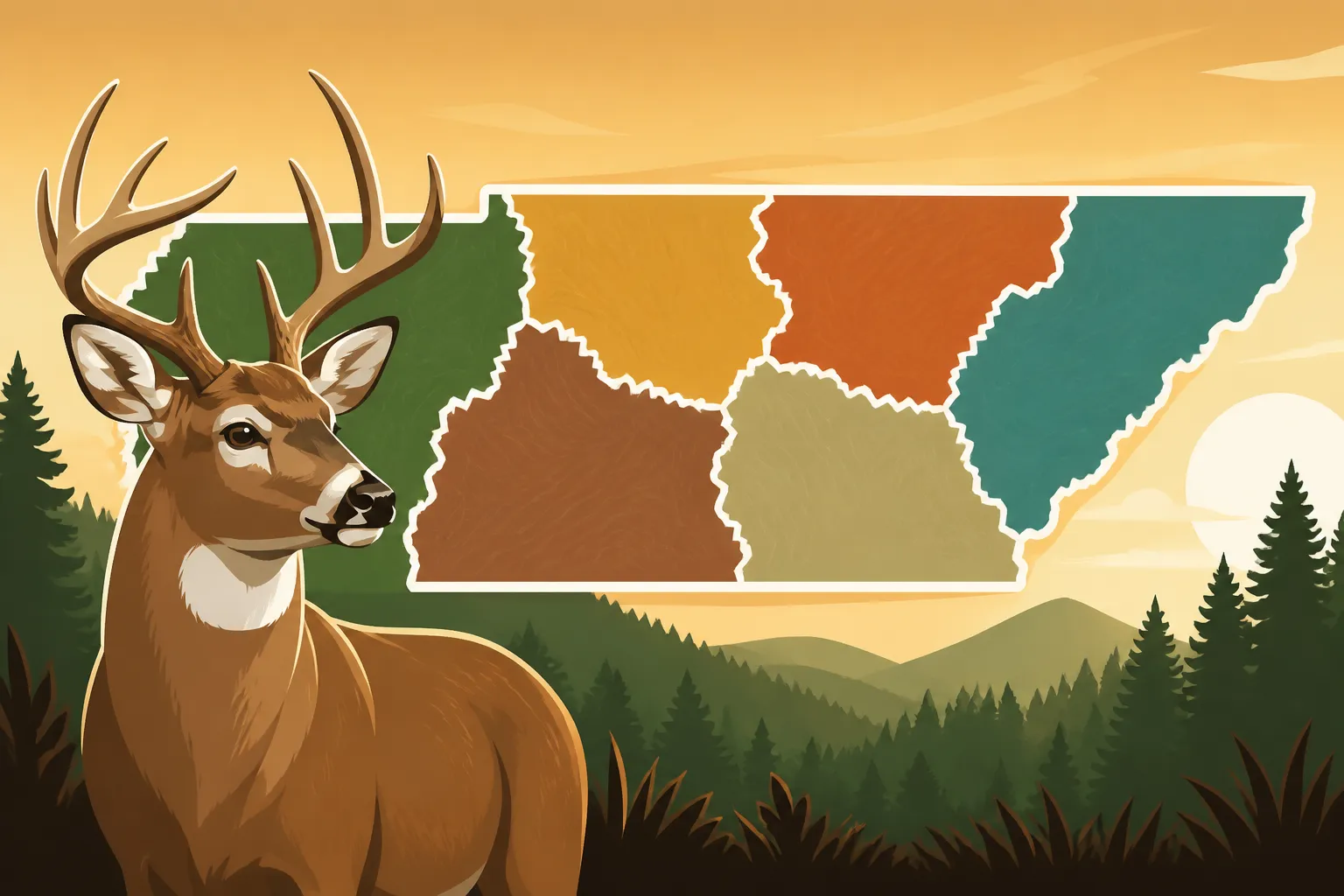
Tennessee’s Six Deer Management Units
Trying to navigate Tennessee's deer hunting regulations can feel like deciphering an ancient scroll, especially when you start looking at those infamous Deer Management Units, or DMUs. It's not always clear-cut which counties fall where, what the daily limits are, or why one area has wildly different rules than another. This comprehensive guide is here to untangle the complexities of Tennessee's six DMUs, helping you understand the "why" behind the rules and how they impact your hunting strategy, no matter where you plan to chase whitetails in the Volunteer State.
Why Tennessee Needs Deer Management Units (DMUs)
Tennessee is an incredibly diverse state, stretching from the rolling bottomlands of the Mississippi River in the west, across the flat agriculture of the central basin, over the rugged Cumberland Plateau, and into the towering Appalachian Mountains in the east. Expecting a single set of deer hunting regulations to effectively manage deer populations across such varied landscapes would be like trying to fit a square peg in a round hole – it just wouldn't work. The Tennessee Wildlife Resources Agency (TWRA) developed the DMU system precisely to address these regional differences in deer density, habitat, and human impact, ensuring localized, effective management.
Addressing Diverse Landscapes and Deer Populations
Think about it: the fertile agricultural fields of West Tennessee offer an abundance of food, allowing deer populations to thrive and often reproduce at a higher rate. A deer in a vast cornfield near Dyersburg or down in the bottomlands of the Hatchie River has a very different life than one trying to survive in the rugged, food-scarce high country of the Cherokee National Forest. These environmental variations directly influence how many deer an area can sustain, how quickly the herd grows, and how much pressure hunters can reasonably exert without harming the long-term health of the population.
In areas with rich farmlands and dense deer numbers, managing the herd often involves encouraging a more liberal harvest of does to prevent overpopulation, which can lead to crop damage, increased disease transmission, and more deer-vehicle collisions. Conversely, in the tougher, mountainous regions where natural food sources are scarcer and deer densities are naturally lower, the focus shifts to protecting the herd, allowing it to grow slowly and steadily. This nuanced approach, made possible by the DMU system, ensures that regulations are tailored to the specific ecological needs and challenges of each region, making sure there's healthy habitat and plenty of deer for years to come.
Balancing Hunter Opportunity with Herd Health
For hunters, it can sometimes feel frustrating to see different bag limits or season structures just a county away. You might ask yourself why you can only take one antlerless deer in one area, but three in another. The truth is, these regulations are carefully crafted by the TWRA to strike a balance between providing ample hunting opportunities and maintaining a healthy, sustainable deer population. The primary goal is always herd health, which, in turn, ensures future hunting opportunities for all of us.
In areas like West Tennessee, where deer populations are robust and sometimes exceed what the habitat can optimally support, liberal antlerless limits provide hunters with more chances to fill their freezers. This helps thin the herd, reducing competition for food and improving the overall health of the remaining deer, potentially even leading to larger-bodied, healthier bucks. On the other hand, in the more fragile, low-density regions of East Tennessee, tighter restrictions on antlerless deer are a critical tool to allow the herd to rebound or expand, ensuring that there are enough does to continue the breeding cycle. It's a dynamic system, constantly evaluated and adjusted, all with the long-term sustainability of Tennessee's deer hunting tradition in mind.
Understanding the Core of Tennessee's DMU System
While the DMU system primarily focuses on managing antlerless deer harvest, it’s crucial to remember that some statewide rules apply no matter which DMU you're hunting in. Knowing these foundational rules helps prevent accidental violations and ensures you're always hunting legally. It’s not just about the local daily limit; it’s about understanding the overarching framework that guides all deer hunting in Tennessee.
The Statewide Antlered Deer Bag Limit
One of the most consistent rules across the entire state of Tennessee, regardless of the DMU, is the statewide antlered deer bag limit. For all hunters, the limit is two antlered deer per license year. This means that whether you're chasing bucks in the rich bottomlands of West Tennessee or scaling the steep ridges of the Cherokee National Forest, you can only harvest two bucks total during any given hunting season. This consistency helps manage the statewide buck population, preventing overharvesting of antlered deer, and is a key component of the TWRA's quality deer management initiatives.
It’s also important to note the daily restriction: you can only harvest one antlered deer per day. So, even if you’re having an incredible day and see multiple shooter bucks, you must stop at one. This rule helps ensure ethical hunting practices and prevents a single hunter from drastically impacting local buck populations in a single outing. Hunters often forget this critical detail when the excitement is high, but it’s a hard and fast rule that applies across all DMUs and seasons, from the earliest archery hunts to the late-season muzzleloader opportunities. Always refer to the current Tennessee Deer Season Structure Explained for the most up-to-date details.
Antlerless Deer: Where DMUs Really Matter
This is where the DMU system truly comes into play and where hunters need to pay the most attention. While the antlered deer limit is consistent statewide, the regulations for antlerless deer vary dramatically from one DMU to another. These variations are the backbone of localized deer management, allowing the TWRA to fine-tune harvest rates based on specific regional conditions, deer densities, and habitat carrying capacities. Understanding your DMU's antlerless limits is perhaps the single most important piece of information you need before heading out on a deer hunt in Tennessee.
The differences can be stark. In some DMUs, you might be allowed to harvest multiple antlerless deer per day for an extended portion of the season, reflecting a management strategy focused on population reduction. In others, antlerless hunting might be restricted to just a few specific dates, or even completely closed for certain seasons, indicating a need to protect and grow the local herd. These nuances make it imperative to not only know which DMU you are hunting in but also to consult the specific TWRA regulations for that DMU and season segment. Using resources like the official TWRA app or online tools from platforms like GoHunt can be invaluable for quickly pinpointing your location and understanding the immediate regulations.
DMU 1: The High-Opportunity Zone
DMU 1 is often considered Tennessee's deer hunting powerhouse, a region where liberal regulations reflect a thriving deer population and abundant resources. If you're looking for high-volume opportunities and the chance to fill your freezer, this is often where hunters from across the state—and even outside it—focus their efforts. But even with generous limits, understanding the specific characteristics of this zone is key to success.
Geographical Scope and Deer Density
DMU 1 encompasses the majority of West Tennessee, stretching across the fertile lands west of the Tennessee River. This region is characterized by extensive agriculture, including vast fields of corn, soybeans, and cotton, interspersed with hardwood bottomlands, swampy areas, and river systems like the Mississippi, Obion, Forked Deer, and Hatchie. The abundant food sources and prime bedding cover create an ideal environment for whitetails to flourish, leading to some of the highest deer population densities in the state.
Counties firmly within DMU 1 include Obion, Lake, Dyer, Lauderdale, Tipton, Crockett, Haywood, Fayette, Hardeman, and parts of others further east. The rich soil and endless buffet provided by farming operations mean does often have excellent fawn recruitment rates, and bucks can quickly grow to impressive sizes. It’s common for hunters here to see large numbers of deer during a single sit, making it a favorite for those prioritizing quantity or seeking to put venison in the freezer. Knowing where to set up on a West Tennessee river bottom funnel or along field edges can be incredibly productive.
Antlerless Limits and Season Length
The regulations in DMU 1 are designed to encourage a robust harvest, particularly of antlerless deer, to manage the healthy and often booming population. For most of the deer season, hunters in DMU 1 are typically allowed to harvest three antlerless deer per day. This is the most liberal antlerless limit in the state, a direct reflection of the TWRA's strategy to keep deer numbers in balance with the available habitat and reduce agricultural damage.
The season length for antlerless deer in DMU 1 is also often more extended, overlapping significantly with the archery, muzzleloader, and gun seasons. This provides ample opportunity for hunters to contribute to herd management. For example, during the Tennessee Archery Season Opening Day in DMU 1, you can be actively targeting both antlered and antlerless deer with generous bag limits. It’s a zone where consistent success is often more attainable, but hunters still need to be diligent about Scouting Tennessee Public Land Before Season or securing private land access to find those prime spots.
DMU 2: Balancing Pressure and Production
As you move eastward from DMU 1, Tennessee’s landscape begins to subtly shift, and with it, the deer management strategy. DMU 2 represents a transition zone, where the balance between agricultural abundance and more diverse timbered habitats leads to a slightly different approach to deer harvest. Hunters here will find opportunities still plentiful, but with regulations that reflect a slightly less explosive deer population than its western neighbor.
Transition Zone Characteristics
DMU 2 generally covers a band of counties east of DMU 1, still within West Tennessee but extending further into areas with more mixed agriculture and significant tracts of timber. While fertile farmland is still a major feature, you'll start to see more expansive hardwood forests and less intense agricultural pressure compared to the extreme western counties. This transition offers a blend of habitats, from river bottomlands to rolling hills, providing a diverse environment for deer.
Counties commonly found in DMU 2 include Weakley, Henry, Carroll, Henderson, Madison, Chester, and McNairy, among others. Deer densities remain strong in this zone, supported by both agricultural food sources and robust mast crops from the timbered areas. However, the slightly less intensive farming and greater forested acreage often result in a deer population that, while healthy, may not be quite as prolific as in DMU 1. Hunters here often focus on how Tennessee's Deer Season Runs Archery to January to maximize their chances.
Moderate Antlerless Harvest Rules
The antlerless regulations in DMU 2 reflect this transitional nature, typically allowing for a moderate harvest designed to maintain a healthy population without over-reducing numbers. In DMU 2, hunters are generally permitted to take two antlerless deer per day during the appropriate season segments. This is a step down from the three-per-day limit in DMU 1 but still offers significant opportunity for hunters to fill their tags.
These limits aim to keep the deer population in check, preventing potential issues like habitat degradation or disease spread, while also recognizing that the habitat might not support the same incredibly high densities as DMU 1. Season lengths for antlerless hunting in DMU 2 are still generous, extending through much of the archery and gun seasons, but they might be slightly shorter in certain periods compared to DMU 1. Hunters need to pay careful attention to the specific dates for Tennessee Gun Season Dates and Tennessee Muzzleloader Season Tactics as they apply to DMU 2. Using a tool like GoHunt to quickly visualize DMU boundaries on a map and confirm regulations is a great way to stay compliant.
DMU 3: The Central Tennessee Management Strategy
Venturing into Middle Tennessee, DMU 3 presents yet another unique set of challenges and opportunities for deer hunters. This zone captures the heart of the state, a diverse region that blends rural agricultural lands with expanding suburban areas and extensive timbered hills. The management strategy here is tailored to address the unique dynamics of a population that is robust but also increasingly encountering human development.
Middle Tennessee's Diverse Landscape
DMU 3 encompasses a large portion of Middle Tennessee, stretching across a wide array of landscapes. You’ll find productive farm fields reminiscent of West Tennessee, but also rolling hills, expansive timber tracts, and increasingly, suburban developments creeping into prime deer habitat. This creates a complex mosaic where deer populations can be high in certain pockets, particularly those with good cover and food, but also face pressure from habitat fragmentation and increased human activity.
Key counties in DMU 3 include Stewart, Montgomery, Henry, Dickson, Humphreys, Cheatham, Robertson, Sumner, Wilson, Davidson, Williamson, Maury, Giles, Marshall, and many others. The mix of agriculture, mature hardwoods, and encroaching urban fringes means deer management must be adaptable. Hunters often grapple with finding accessible land, given the higher proportion of private property and growing population centers. This zone highlights the importance of tools that help hunters find and Find Ground Others Walk Past or understand property boundaries when Reading Aerial Photos for Cumberland Plateau Deer.
Tailored Antlerless Regulations
The antlerless regulations in DMU 3 reflect this diverse and often transitional landscape. While still allowing for significant harvest, the limits are typically more conservative than in the western DMUs. Hunters in DMU 3 are generally permitted to take one or two antlerless deer per day, depending on the specific season segment and county. For instance, early archery season might allow two, while later gun seasons might revert to one or have specific limited dates.
The TWRA's goal in DMU 3 is to manage a healthy deer population while being mindful of the increasing human footprint and the potential for localized over-harvest. These regulations also consider factors like disease management, as several counties within DMU 3 fall within or border Tennessee's Chronic Wasting Disease Management Zone. The need for precise management here is paramount, balancing recreational hunting with ecological sustainability. Always double-check the current year's hunting guide for the specific county and season segment you plan to hunt in DMU 3.
DMU 4: The Cumberland Plateau and Highland Rim
Moving further east, the landscape dramatically changes, and so does the deer hunting experience. DMU 4 covers the rugged and often wild expanse of the Cumberland Plateau and parts of the Highland Rim. This is a region defined by its topography, vast forests, and lower human population density, which naturally influences deer populations and, consequently, the hunting regulations.
Mountainous Terrain and Forested Habitat
DMU 4 is characterized by the distinctive geology of the Cumberland Plateau, featuring expansive, unbroken tracts of hardwood forest, deep hollows, steep ridges, and rocky terrain. Agriculture is less prevalent here, and while deer can be found throughout, their densities are generally lower than in the fertile regions of West and Middle Tennessee. The primary food sources for deer in this zone are natural mast crops like acorns, along with browse, which can fluctuate year to year.
Counties such as Putnam, Cumberland, Fentress, Morgan, Scott, Campbell, Anderson, Roane, Rhea, Bledsoe, Van Buren, Grundy, Marion, Warren, Coffee, and Franklin are largely within DMU 4. Hunting here is often more challenging, requiring greater physical exertion and skilled woodsmanship. Deer movements are heavily influenced by topography, food availability, and hunting pressure. Successfully hunting here might involve tactics like Still-Hunting Cumberland Plateau Ridges or locating late-season food sources.
Conservative Antlerless Harvest
Given the lower deer densities and the reliance on natural habitat, the antlerless regulations in DMU 4 are typically more conservative. Hunters in this zone are usually restricted to one antlerless deer per day, and often, antlerless harvest may only be permitted during specific portions of the season, or on designated "doe days" within the gun season. The aim here is to allow for herd growth and stability without putting undue pressure on the population.
This conservative approach ensures that enough does are left to contribute to future fawn crops, fostering a slow but steady increase in deer numbers over time. While the overall Tennessee Deer Population Estimate may still be healthy, the distribution is sparser in DMU 4, meaning hunters need to work harder for their opportunities. Those pursuing deer here often prioritize quality hunts and the experience of hunting wilder country, rather than focusing on high volume. Checking the TWRA's specific season dates for your chosen county is critical, as antlerless opportunities can be highly specific.
DMU 5: Eastern Tennessee's Mountainous Challenge
As we push into the easternmost reaches of Tennessee, the terrain becomes even more dramatic, and the deer hunting landscape transforms into one of the state's most challenging and wild experiences. DMU 5 encapsulates a significant portion of East Tennessee's Appalachian Mountains, a region where deer populations are naturally sparse, and every harvest is hard-earned.
Rugged Appalachian Landscape
DMU 5 covers the rugged, high-elevation terrain of the Appalachian Mountains, including much of the Cherokee National Forest. This area is characterized by extremely steep slopes, dense timber, limited agricultural land, and expansive wilderness. Natural food sources are often less abundant and more scattered, meaning deer densities are significantly lower than anywhere else in the state. Hunting in DMU 5 is a true test of endurance and woodcraft, often demanding long walks, steep climbs, and a deep understanding of how deer use such formidable terrain.
Counties that fall largely within DMU 5 include Monroe, Polk, McMinn, Loudon, Blount, Sevier, Cocke, Jefferson, Hamblen, Greene, Hawkins, Hancock, Claiborne, Union, and Grainger. While there are some pockets of private land and valleys with better habitat, the dominant feature is the vast, rugged public land. Finding deer here often means focusing on specific food sources, understanding Wind and Thermals on a Ridge System, and being prepared for physically demanding hunts. This zone is also home to a significant portion of Tennessee's Black Bear Population, adding another layer of wilderness experience for hunters.
Highly Restricted Antlerless Hunting
Given the naturally low deer densities in DMU 5, the antlerless regulations are among the most restrictive in the state. In many areas within DMU 5, antlerless harvest is either severely limited to a few specific days during the entire season, or in some instances, completely prohibited for most, if not all, of the season. The primary management objective here is herd preservation and slow, careful growth.
The TWRA prioritizes protecting the breeding stock in this challenging habitat, recognizing that deer populations take much longer to rebound here. Hunters focusing on DMU 5 typically do so for the quality of the wilderness experience and the challenge of pursuing a truly wild deer, rather than the expectation of filling multiple tags. Any antlerless opportunities are precious and must be confirmed precisely with the current TWRA regulations for the specific county and wildlife management area you intend to hunt. This zone truly emphasizes the "hunt" in hunting, often rewarding perseverance more than volume.
DMU 6: The Extreme East Tennessee Mountains (Special Regulations)
At the very pinnacle of Tennessee's eastern frontier, nestled in the highest and most remote corners of the Appalachians, lies DMU 6. This is the smallest of the DMUs, characterized by extreme elevations and the most stringent deer hunting regulations in the state. For hunters, it represents a unique opportunity to experience true mountain hunting, albeit with very limited harvest potential.
High Elevation, Low Density
DMU 6 encompasses the highest elevation areas in Tennessee, primarily focusing on the counties directly bordering North Carolina, within the Blue Ridge Mountains. This is exceptionally rugged country, often consisting of steep, heavily timbered slopes and limited flat ground. The harsh conditions, coupled with historically low deer numbers, mean that deer populations here are sparse and often exist in isolated pockets.
Counties like Johnson, Carter, Unicoi, and Washington, particularly their eastern, mountainous sections, are key components of DMU 6. The habitat offers limited high-quality forage compared to the rest of the state, making it difficult for deer populations to flourish. Hunters here will find vast tracts of public land, but they'll also find some of the most challenging conditions to locate deer. Successfully hunting this region demands exceptional physical fitness, advanced scouting techniques, and a deep respect for the unforgiving landscape. Finding good cover and bedding areas might be the easiest part, but finding the deer themselves requires tenacity.
Very Limited Opportunity
The regulations for DMU 6 are the most restrictive in Tennessee, reflecting the extremely low deer densities and the TWRA's absolute priority on protecting and slowly growing the resident herd. In DMU 6, antlerless harvest is often only allowed for a very short, specified period, sometimes just a few days, or is entirely prohibited depending on the specific area and year. Hunters must meticulously check the current year's TWRA hunting guide for the precise dates and rules for their intended hunting location within DMU 6.
This approach is vital for the long-term health of these fragile deer populations. While it means fewer opportunities to fill a tag, it ensures that every effort is made to allow the herd to expand naturally. For hunters, success in DMU 6 is often measured not by the number of deer harvested, but by the accomplishment of navigating the demanding terrain and the rare sighting of a truly wild mountain whitetail. It’s a testament to the dedication of hunters in Tennessee that they continue to pursue game in these incredibly challenging, yet rewarding, areas.
Navigating Your Hunt with DMU Knowledge
Understanding Tennessee's DMU system isn't just about avoiding a citation; it's about becoming a more informed and effective hunter. Knowing the "why" behind the regulations allows you to tailor your strategy, whether you're planning a high-volume antlerless hunt in West Tennessee or a challenging, trophy-focused trip in the eastern mountains. This knowledge also helps you contribute to sustainable wildlife management, ensuring healthy deer populations for generations to come.
How to Confirm Your DMU and Regulations
With counties sometimes split or regulations changing annually, confirming your DMU and the specific rules for your hunt is paramount. The best resource is always the official Tennessee Wildlife Resources Agency (TWRA) hunting guide, published yearly. You can find this online as a PDF or pick up a physical copy at license agents across the state. Pay close attention to the detailed maps and county-by-county breakdowns.
Many hunters also find digital tools incredibly helpful. The TWRA offers an excellent mobile app that often includes interactive maps showing DMU boundaries and current regulations based on your GPS location. Additionally, mapping platforms like GoHunt offer detailed overlays that can show you property lines, public land, and even DMU zones, making it easier to plan your hunt down to the foot. Before any hunt, take a moment to confirm: which DMU am I in, what is the current date, and what are the specific antlered and antlerless limits for that DMU and season segment? Don't leave it to chance!
Planning Your Strategy Around DMU Rules
Once you know your DMU, you can start to develop a more effective hunting strategy. For instance, if you're in a high-opportunity zone like DMU 1 or 2, you might focus on maximizing antlerless harvest to fill your freezer, perhaps combining it with efforts to find a mature buck. You might also find more success with Deer Drives With Three or Four Hunters in these areas, where higher deer densities can make such tactics more effective.
Conversely, in DMU 4, 5, or 6, where deer densities are lower and antlerless opportunities are limited, your focus might shift entirely. Here, you'll want to prioritize thorough scouting to locate prime habitat and travel corridors, perhaps spending more time Hunting a Ridge-Top Saddle for Rutting Bucks or understanding specific late-season food sources like acorns. These zones often reward patience and deep woodsmanship over aggressive tactics. Always consider the overall Tennessee Deer Herd Size in your chosen DMU to inform your approach.
DMU Summary Table
To help visualize the differences between Tennessee's six Deer Management Units, here's a quick overview. Remember, these are general guidelines, and specific daily limits and season dates can vary slightly year to year and depend on the exact county and season segment. Always consult the current TWRA hunting guide for the most up-to-date information.
| DMU | General Location | Typical Antlerless Limit (Per Day) | Primary Management Goal | Typical Deer Density |
|---|---|---|---|---|
| 1 | West Tennessee River Bottoms, Agriculture | 3 | Population Reduction, Crop Damage Control | High to Very High |
| 2 | Central West Tennessee, Mixed Habitat | 2 | Maintain Healthy Population, Moderate Harvest | High |
| 3 | Middle Tennessee, Mixed Rural/Suburban | 1-2 (Varies by Season/County) | Balanced Harvest, Disease Management | Moderate to High |
| 4 | Cumberland Plateau, Forested | 1 (Limited Dates) | Herd Growth & Stability, Quality Deer | Low to Moderate |
| 5 | East Tennessee Mountains, Appalachian | Very Limited (Specific Dates/Closed) | Herd Preservation, Slow Growth | Low |
| 6 | Extreme East TN Mountains, High Elevation | Extremely Limited/Prohibited | Absolute Protection, Rebuilding Herd | Very Low |
This table provides a quick reference, but nothing beats reading the full TWRA regulations for the year you are hunting. It's a small investment of time that can save you a lot of headache and ensure a legal, enjoyable hunt.
Final Thoughts on Tennessee's Deer Management Units
The DMU system in Tennessee might seem complex at first glance, but it's a testament to the TWRA's commitment to science-based wildlife management. By understanding why these units exist and how they affect your specific hunting area, you become a more responsible and effective conservationist. It allows for a more personalized hunting experience, tailored to the unique characteristics of Tennessee's diverse landscapes and deer populations. So, the next time you're planning a trip to a new part of the state, be sure to confirm your DMU, study the regulations, and hit the woods with confidence, knowing you're doing your part to ensure healthy deer herds for future generations.
Disclaimer
The information provided in this guide is for general informational purposes only and is subject to change. Hunting regulations, including DMU boundaries, bag limits, and season dates, are established by the Tennessee Wildlife Resources Agency (TWRA) and can be modified annually. Hunters are solely responsible for consulting the most current official TWRA hunting guide and regulations prior to engaging in any hunting activities to ensure compliance with all applicable laws and rules.