Setting Up Against a Big Oak
There's a special kind of magic, and sometimes a lot of frustration, that comes with hunting around those majestic, sprawling oak trees in Tennessee. We've all seen them: the towering monarchs, heavy with acorns, practically screaming "deer cafeteria!" But just because deer use them doesn't mean setting up is a no-brainer. Too often, hunters spot a big oak, throw up a stand, and wonder why the deer give them the slip. This guide is all about unlocking the secrets to effectively setting up against a big oak, turning those prime feeding locations into successful hunt spots, not just pretty scenery.
The Irresistible Pull of a Big Oak: Why Deer Love Them (and Hunters Get Tricked)
There's no denying it: a mature oak tree, particularly one that's dropping a bounty of acorns, is a deer magnet. When those nuts start falling, especially in late summer and through the fall, whitetails will abandon almost everything else to gorge on them. It's like finding a five-star buffet in the middle of the woods for them, packed with protein and fat to carry them through the colder months. But this very attraction can be a hunter's downfall if not approached strategically.
Acorns: The Whitetail Superfood
Acorns are the gold standard of deer food. Unlike browse or even agricultural crops, acorns offer a perfect balance of carbohydrates and fats, providing crucial energy for the rut and for winter survival. Different oak species drop their acorns at different times, creating a prolonged smorgasbord for deer throughout the fall. White oaks, for instance, typically drop their sweeter acorns earlier, often starting in late August or September, making them prime targets for early archery season. Red oaks, with their more bitter but longer-lasting acorns, often hold deer well into late fall and even early winter. Knowing which type of oak you're dealing with can give you a crucial edge, dictating when that particular tree will be most active. A single large white oak might pull deer from a quarter-mile away, drawing them away from less desirable food sources.
Common Mistakes Hunters Make Around Big Oaks
The most common mistake is simply assuming that because a big oak has acorns, it's automatically a killer spot. Hunters often rush in, hang a stand directly over a well-worn trail leading to the tree, or plop a ground blind down with little regard for wind direction or entry and exit routes. This leads to blown opportunities, educated deer, and ultimately, disappointment. Deer are incredibly wary, especially around consistent food sources. They know when they're being watched, and they can smell you from a long way off. Hunting pressure on Tennessee public land means that by the time you're out there, many deer have already had a few close calls. You've got to be smarter, subtler, and more strategic than the average hunter to consistently succeed around these coveted food sources.
Scouting Smart: Reading the Ground Around Your Oak
Before you even think about hanging a stand or setting up a blind, you need to become a detective. The big oak itself is just one piece of the puzzle; the real story is told by the sign on the ground around it, and how deer are using the area to approach and leave. This meticulous scouting is what separates a hopeful hunter from a successful one.
Identifying Key Travel Routes and Entry/Exit Points
Deer don't just materialize at a big oak; they follow established travel corridors. Look for heavily used trails radiating out from the oak, especially those leading to bedding areas, water sources, or other preferred cover. These trails will often be worn down, with tracks, droppings, and even rubs and scrapes if it's nearing the rut. Pay close attention to how deer are entering and exiting the feeding area. Are they using a subtle creek bottom, a hidden saddle, or a dense fencerow? Are they approaching from thick cover during daylight, or only hitting the oak after dark from more open areas? Identifying these specific pathways is critical for choosing your setup location. Often, the best spot isn't at the tree, but 50-70 yards away, intercepting deer before they get to the main feeding area, or after they leave heading back to bed. Using mapping apps like GoHunt can be incredibly helpful here, allowing you to mark observations, plot potential routes, and analyze topography without constantly checking your phone.
Interpreting Sign: Rubs, Scrapes, and Droppings
Beyond just trails, other deer sign can tell you a lot about the quality of the spot and the deer using it. Fresh rubs on saplings and small trees indicate a buck has been in the area recently, marking his territory. Scrape lines along a logging road or field edge can be huge indicators of where bucks are actively cruising during the rut. The size of droppings can give you a clue about the size of the deer, and their freshness indicates recent activity. Chewed-up acorns on the ground, or even fragments of shells, are direct evidence that deer are actively feeding under that specific oak. Don't just look for sign; interpret it. Is the rub line heading to the oak or from it? Are the scrapes active or old? These details will help you piece together the deer's daily patterns. If you're seeing lots of big tracks and fresh sign, that oak is truly a hot spot. If it's just a few old droppings, perhaps the primary drop isn't active yet, or pressure has pushed deer elsewhere.
Wind and Thermals: Your Invisible Ally or Enemy
This is arguably the most critical factor when setting up against any big oak, or frankly, any hunting scenario. You simply cannot fool a deer's nose. Before you even think about setting up, check the wind direction. Then, consider how thermals might affect that wind, especially in hilly terrain like the Cumberland Plateau or the foothills of the Cherokee National Forest. In the mornings, air warms and rises, often carrying your scent uphill. In the evenings, air cools and falls, pulling your scent downhill. If you're hunting a ridge-top saddle for rutting bucks with a big oak, your scent will likely drift down both sides of the ridge in the evening. You need to position yourself so that your scent cone blows away from the likely approach routes of the deer. This often means sacrificing a perfect view for a perfect wind. I always recommend having multiple setup options around a prime oak, allowing you to switch based on the wind. Always double-check wind conditions with a wind checker, and remember that GoHunt often integrates real-time weather data and wind mapping features, which can be invaluable for planning your approach.
The Strategic Setup: Positioning for Success
Once you've done your homework and identified the key factors, it's time to decide where and how you'll set up. This isn't just about finding a tree for your stand; it's about creating a holistic ambush that accounts for scent, sight, and sound.
Treestand Placement: Angles, Cover, and Background
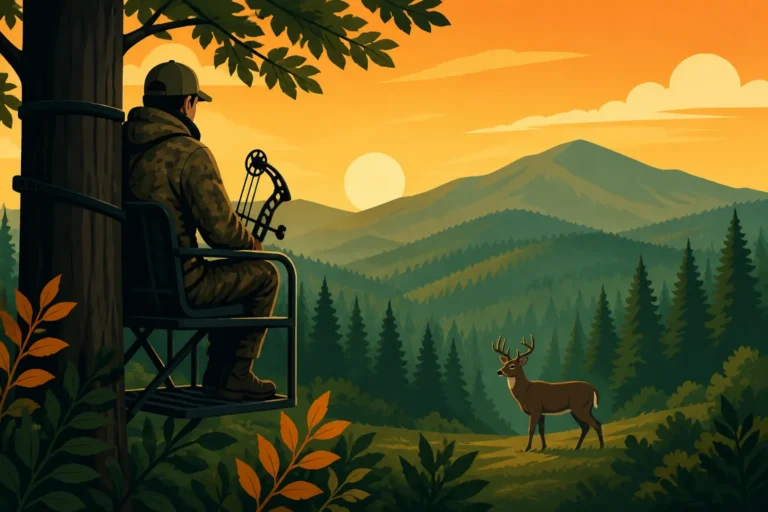
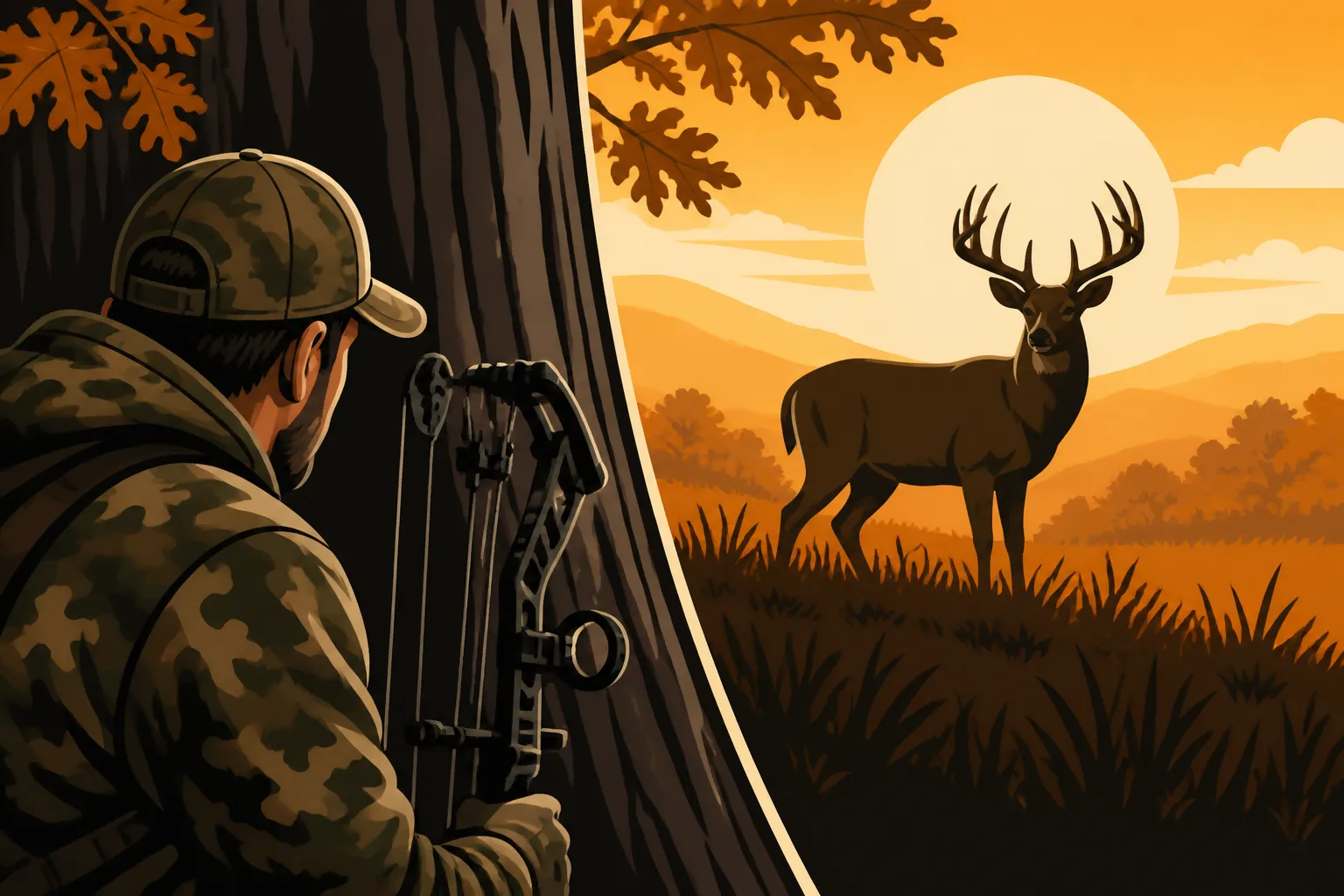
When using a treestand, your goal is to be invisible. Don't just pick the nearest tree to the oak. Look for a tree that offers good cover to break up your silhouette, ideally with some background behind you, like a thick pine or a hill, rather than silhouetting you against the open sky. Consider the sun's position throughout the hunt to avoid being backlit. Your shot angle is also crucial; you want to be able to comfortably take a shot at the primary feeding zone and the major trails without extreme contortions. Often, setting up slightly downwind and off to the side of the main feeding area, perhaps 20-30 yards away, provides the best balance of wind advantage and shot opportunities. This allows you to observe deer as they approach the oak and gives you a good ethical shot when they pause to feed. When you're Hanging a Stand on a Cumberland Ridge, remember how thermals and wind can interact, making precise placement even more vital.
Ground Blind Tactics: Concealment and Vantage Points
Ground blinds offer excellent concealment and can be a fantastic option, especially in areas where suitable treestand trees are scarce or on public lands where rules for Using a Ground Blind on Tennessee Public Land might be more relaxed. The key with a ground blind is to set it up well in advance, if possible, allowing deer to get used to its presence. Brush it in thoroughly with natural foliage from the area so it blends seamlessly into the surroundings. Just like with a treestand, consider wind direction paramount. Position the blind downwind of the oak and any primary trails. If you can tuck it into a thicket, against a fallen log, or on the edge of a small rise, that's ideal. Ensure your shooting lanes are clear but that your view isn't compromised by dense brush directly in front of you. A major advantage of a ground blind is that it allows for more movement, which can be a lifesaver on long sits, especially if you're trying to stay warm during Cold-Weather Sitting Strategy in Tennessee.
Entry and Exit Strategies: The Silent Approach
This is where many hunts around big oaks are won or lost. Even the best setup is ruined if deer bust you coming in or going out. Plan your entry and exit routes meticulously. Can you use a creek bed, a ditch, a fencerow, or a thick line of pines to approach your stand undetected? Can you use the topography, like a dip in the terrain or the back side of a ridge, to stay out of sight? Your goal is to get to your stand without alerting a single deer to your presence. This means moving slowly, quietly, and, whenever possible, using the wind to cover your approach. Don't walk directly down a main deer trail to your stand. Skirt around it, staying in dense cover. For example, if you're hunting in a West Tennessee bottomland, approaching through a dry slough or along the backside of a raised bank can be effective. Leaving after the hunt is just as important. Wait until dark if possible, or until you are certain the deer have moved off, to avoid bumping them and educating them for future hunts.
Adapting Your Big Oak Strategy Throughout the Season
The big oak itself might stay put, but deer behavior around it changes dramatically as the season progresses. What works in early archery might fail miserably during the peak of the rut or in the late season chill.
Early Season: The Acorn Feast Focus
In the early archery season, especially in September and early October, deer are almost entirely focused on food. Those early-dropping white oaks are king. During this time, deer patterns can be very predictable: bed, feed, bed. Your strategy should center around intercepting deer moving between their bedding areas and the preferred oak. Often, this means hunting mornings and evenings, focusing on the trails leading directly to and from the oak. Consider that deer might move into these feeding areas much earlier in the evening during the early season, making an earlier setup critical. This is a great time to implement tactics like Hunting the August Antlerless-Only Archery Hunt if you're targeting does, as they'll be heavily concentrated on these food sources. Be extra mindful of scent, as the warmer temperatures mean your scent will linger and spread more easily.
The Rut: Shifting Priorities and Cruising Bucks
As the rut approaches and peaks, typically in Hunting the Rut in Early November in Tennessee, deer behavior around big oaks becomes a bit more erratic, especially for bucks. While does will still frequent the oaks to feed, bucks are primarily focused on finding receptive does. They will still pass through these feeding areas, scent-checking for does, but they might not linger as long. During this period, your setup should account for cruising bucks. Instead of positioning yourself directly over the feeding zone, consider setting up on a travel corridor near the oak that also connects to bedding areas or known doe bedding thickets. A funnel between two bottoms with a big oak in the middle can be absolutely deadly. Bucks will use these natural travel ways as they search for does. This is also a fantastic time to use rattling and grunting in Tennessee to attract those curious bucks.
Late Season: The Last Stand of Sustenance
When the late season hits, often into Hunting the Late-Season January Lull, and other food sources become scarce, red oaks and other hard mast that holds onto its nuts longer become invaluable. Deer are now trying to pack on calories to survive the cold, and patterns will once again revolve heavily around remaining food sources. Your big oak strategy should shift back to a food-centric approach, but with a few caveats. Deer will often feed more heavily during daylight hours as they desperately seek calories. They'll also be much warier due to increased hunting pressure. Consider setting up on the sunny side of a ridge or in a sheltered hollow near a productive red oak, where deer might seek refuge from the cold while feeding. Look for Late-Season Food Sources for Tennessee Whitetails like corn fields or brassicas if available, but a consistent oak drop can still hold deer, especially after a cold front.
Table: Common Oak Species and Acorn Drop Times in Tennessee
Understanding which oak is which can seriously fine-tune your hunting strategy around these crucial trees.
| Oak Species | Acorn Appearance | Drop Time (Tennessee) | Deer Preference | Notes |
|---|---|---|---|---|
| White Oak | Roundish, shallow cap | Late Aug – Early Oct | High (sweet) | Drops earlier, highly preferred, short availability. |
| Chestnut Oak | Large, oblong, deep cap | Late Sept – Mid Oct | High (sweet) | Good size, preferred, often found on drier slopes. |
| Swamp Chestnut | Large, round, deep cap | Late Sept – Late Oct | High (sweet) | Similar to Chestnut Oak, but prefers moist bottomlands. |
| Pin Oak | Small, round, shallow cap | Mid Oct – Late Nov | Medium (bitter) | Abundant, holds acorns on tree longer, good late-season option. |
| Red Oak | Oblong, deep cap | Late Oct – Dec | Medium (bitter) | Drops later, bitter but lasts longer, important for late season. |
| Scarlet Oak | Round, deep cap | Mid Oct – Late Nov | Medium (bitter) | Similar to Red Oak, often in drier, upland sites. |
| Water Oak | Small, round, shallow cap | Late Oct – Dec | Medium (bitter) | Common in bottomlands, provides consistent late-season food. |
Disclaimer: Drop times can vary slightly based on specific weather patterns, region within Tennessee, and individual tree health.
Beyond the Setup: Mindset and Maintenance
Setting up is just one part of the equation. Your mindset, patience, and ongoing attention to detail will ultimately determine your success around that big oak. Don't get discouraged if the first sit isn't a success. Hunting is about adaptation.
Patience and Adaptability
Even with the perfect setup, deer are still wild animals. They don't always read the script. You might have to sit through multiple hunts before the conditions are just right, or before a buck decides to show up during daylight. Be patient. If you're not seeing deer, or if they're acting wary, be willing to adapt. Can you move your stand a few yards? Can you switch to a ground blind for better concealment? Are you making too much noise on your approach? Sometimes, even a slight change in wind direction can necessitate a move, or even a different approach angle to your stand. Use the detailed mapping features available on tools like GoHunt to mark new observations and adjust your strategy in real-time.
Minimizing Your Impact and Scent Control
Every time you visit your big oak, you're leaving a mark. Minimize your impact by limiting your trips to the stand, especially during hunting hours. Use scent control religiously: clean clothes, scent-eliminating sprays, and attention to personal hygiene. Always consider the wind when scouting and setting up cameras, not just when hunting. Remember, deer remember. If you bump them once, they'll be much harder to hunt in that area again. For crucial hunts, don't walk directly to your stand; make a wide loop, or follow a less-traveled path. The less deer know you're there, the more likely they are to act naturally around that big, delicious oak tree.
Disclaimer
Hunting involves inherent risks, including but not limited to those associated with firearms, archery equipment, treestands, and outdoor conditions. Always prioritize safety, follow all local and state regulations, and ensure you have proper training and licensure before engaging in hunting activities. The information provided in this guide is for educational purposes only and should not replace professional instruction or local wildlife agency guidelines.